
The case involves a dispute over the rights of female heirs in a Hindu Undivided Family (HUF). The key issue was whether the Hindu Succession (Amendment) Act, 2005, which granted ...
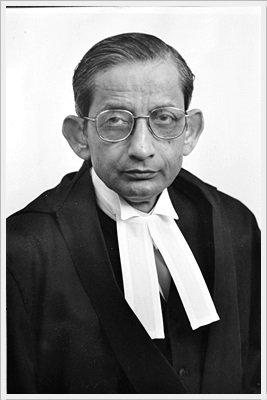

No Acts & Articles mentioned in this case
REPORTABLE
IN THE SUPREME COURT OF INDIA
CIVIL APPELLATE JURISDICTION
CIVIL APPEAL NO. 2535 OF 2009
[Arising out of SLP (Civil) No. 9221 of 2007]
G. Sekar …Appellant
Versus
Geetha & Ors. …Respondents
J U D G M E N T
S.B. SINHA, J :
1. Leave granted.
2. Effect of the amendment in the Hindu Succession Act, 1956 (for short
“the Act”) by reason of the Hindu Succession (Amendment) Act, 2005 (for
short “the 2005 Act”) insofar as therein Section 23 has been omitted is the
question involved herein.
3. The said question arises in the following factual matrix.
The property in suit was owned by one Govinda Singh. He purported
to have executed a Will in favour of his son, the appellant herein on
29.11.1995. His wife Sakunthala Bai predeceased him. The said Govinda
Singh died on 9.01.1996 leaving behind the appellant (original defendant
No. 1) and four daughters, viz., Geetha and Vijaya (plaintiffs) and Shanthi
and Uma (original defendant Nos. 2 and 3).
Indisputably, the parties to the suit were residing in the premises in
suit. Govinda Singh was also a government contractor. He was running a
business of transport. His daughters were also partners in the firm. Inter
alia on the premise that Govinda Singh died intestate and as disputes and
differences arose between the plaintiffs and the defendants as regards
enjoyment of the property, a suit for partition was filed on 11.03.1996
(marked as C.S. No. 153 of 1996) in the High Court of Judicature at
Madras. The suit property inter alia consisted of residential premises being
No. 36, First Cross Street, West C.I.T. Nagar, Madras – 600 035 as also
some movable properties.
4. Defendant No. 4 Ramesh filed an application for impleadment in the
said suit alleging that Govinda Singh had married one ‘Saroja’ who was,
thus, his second wife and through her he had two daughters and one son,
2
viz., Jothi, Maya and himself. It was on the aforementioned premise,
Ramesh was impleaded as a party in the said suit.
Appellant in his written statement inter alia contended:
(i)In terms of the aforementioned Will dated 29.11.1995, the suit
property, having been bequeathed in his favour, has vested in him
absolutely.
(ii)In any event, having regard to the provisions of Section 23 of the
Act, the suit for partition was not maintainable.
5. Defendant No. 4 also filed a written statement alleging that the Will
was not a genuine one and was prepared subsequent to 10.12.1995.
In the said suit, the following issues were framed:
“(1)Whether the deceased Mr. M.K. Govinda
Singh died intestate?
(2)Whether the suit for partition by the
daughters of the deceased M.K. Govinda Singh,
who died intestate, is maintainable or not?
(3)Whether the alleged will dated 29.11.1995
said to have been executed is genuine one and, if
so, who are the beneficiaries?”
3
6. On or about 7.01.1999, an additional issue was framed, which reads
as under:
“Whether the D-4 is entitled to have any share in
the schedule property? If so what is his share?
7. Indisputably, the appellant also initiated a testamentary proceedings
for grant of Letters of Administration with a copy of the Will annexed
thereto, which was marked as O.P. NO. 329 of 1996. The plaintiffs of the
suit No. 153 of 1996 entered caveat in the said proceeding; it was marked as
T.O.S. No. 4 of 1998.
The issue framed in the said testamentary proceedings was:
“(1)Whether the Will of Late M.K. Govinda
Singh is true, valid and genuine?”
8. The learned Single Judge held that the appellant could not prove due
execution of the Will as several suspicious circumstances surrounded the
same.
It was furthermore held that having regard to the omission of Section
23 of the Act and in view of the fact that even the Defendant No. 4 in his
4
written statement asked for partition of the property, Section 23 of the Act
would not stand in the way of plaintiffs’ suit for partition. It was directed:
“28.In the result, T.O.S. No. 4 of 1998 is
dismissed with cost of the defendants. In C.S. No.
153 of 1996, there shall be a preliminary decree
for partition of the suit property into eight equal
shares and allotment of two shares together to the
plaintiffs. C.S. No. 153 of 1996 shall stand
adjourned sine die.”
9. Two intra-court appeals were preferred against the said judgment and
decree, which were marked as O.S.A. Nos. 196 and 197 of 2001. By reason
of the impugned judgment, the said appeals have been dismissed.
As regards the issue of the validity and/ or genuineness of the Will,
the Division Bench held:
“21.It is no doubt true that P.W.4 belongs to a
noble profession and ordinarily great weight is to
be attached to such evidence. However, apart
from the fact that several contradictions are
available from the evidence, P.W.4 cannot be
characterized as an independent witness as it is she
who had given the reply notice Ex. D-3 on behalf
of the propounder of the Will. At the time when
she gave the reply, there is no whisper in such
reply that in fact she had drafted the will and
attested the same. These are many of the aspects
appearing from the evidence of P.Ws. 1 to 4 which
create sufficient doubt regarding the due execution
of the Will. It is of course true that many of the
contradictions may appear to be innocuous in
5
isolation. But, when all these contradictions are
considered together along with the fact that thumb
impression was given by the executant, even
though he was obviously signing the document,
and the fact that in the typed will line-spacing in
different pages appear to be irregular, they create
sufficient doubt regarding the due execution and
genuineness of the will.”
As regards application of Section 23 of the Act, it was opined:
“…It is no doubt true that such amendment has
come into force during pendency of the appeal.
However, even assuming that there was any
embargo at the time of filing the suit or passing
the judgment by the learned Single Judge as
contemplated under Section 23 of the Act as it
stood, in view of the amendment and deletion of
such provision, it is obvious that there is no such
embargo after 9.9.2005. In other words, after
9.9.2005 any female heir can seek for partition
even in respect of a dwelling house. This
subsequent event arising out of change in law is
obviously to be applied and, therefore, the
question of applying bar under Section 23 of the
Act no longer arises for consideration.”
10. Mr. K.V. Viswanathan, learned counsel would, in support of the
appeal, raise the following contentions:
(i)The High Court committed a serious error in passing the impugned
judgment insofar as it failed to take into consideration that the
amendment carried out in the Act by reason of the 2005 Act is
6
only prospective in nature, as would be evident from the report of
the Law Commission as also the Statement of Objects and
Reasons thereof and, thus, the impugned judgment is liable to be
set aside.
(ii)The 2005 Act, on a plain reading, cannot be held to have
retrospective effect and, thus, rights and obligations of the parties
should have been determined as were obtaining on the date of
institution of the suit.
(iii)If Section 23 of the Act is given retrospective effect, Section 6 of
the Act will also stand amended with retrospective effect.
(iv)In view of the fact that execution of the said Will had been proved
and all purported suspicious circumstances had been explained,
the High Court committed a serious error in opining that the Will
dated 25.11.1995 had not duly been proved.
11. Mr. K. Ramamoorthy, learned senior counsel appearing on behalf of
the respondents, on the other hand, would support the impugned judgment.
12.Before adverting to the rival contentions raised herein, we may place
on record that the High Court by reason of the impugned judgment has set
7
aside that part of the order of the learned single judge whereby Govinda
Singh was held to have married Saroja and had begotten Ramesh and two
other daughters, viz., Jothi and Maya. Ramesh has accepted the said finding
as no appeal has been preferred therefrom.
13. The Act brought about revolutionary changes in the old Hindu Law.
It was enacted to amend and codify the law relating to intestate succession
amongst Hindus. By reason of the Act, all female heirs were conferred
equal right in the matter of succession and inheritance with that of the male
heirs.
Section 8 of the Act reads as under:
“8 - General rules of succession in the case of
males
The property of a male Hindu dying intestate shall
devolve according to the provisions of this
Chapter—
(a) firstly, upon the heirs, being the relatives
specified in class I of the Schedule;
(b) secondly, if there is no heir of class I, then
upon the heirs, being the relatives specified in
class II of the Schedule;
(c) thirdly, if there is no heir of any of the two
classes, then upon the agnates of the deceased; and
(d) lastly, if there is no agnate, then upon the
cognates of the deceased.”
8
The Schedule appended to the Act specifies the persons who would
be the relations of Class I, viz.:
“Class I : Son; daughter; widow; mother; son of a
pre-deceased son; daughter of a pre-deceased son;
son of a pre-deceased daughter; daughter of a pre-
deceased daughter; widow of a pre-deceased son;
son of a pre-deceased son of a pre- deceased son;
daughter of a pre-deceased son of a pre-deceased
son; widow of a pre-deceased son of a pre-
deceased son…”
14. By reason of Section 14 of the Act, a woman who had limited interest
in the property but was possessed of the same was to become absolute
owner. Section 6 of the Act, however, makes an exception to the
aforementioned rule by providing the manner in which the interest in the
coparcenary property shall devolve upon the heirs stating that the rule of
survivorship would operate in respect thereof. The right, title and interest of
an heir, whether male or female, thus, are governed by the provisions of the
Act.
15.The property in the hands of Govinda Singh was not a coparcenary
property. It was his self-acquired property. The parties hereto, therefore,
obtained equal shares being the relatives specified in Class-I of the
Schedule. Plaintiffs – Respondents, therefore, became owners to the extent
9
of 1/5
th
share of the said property. The title to the aforementioned extent of
each co-sharer, having devolved upon them by reason of operation of
statute, was absolute.
16. Section 23 of the Act, however, curtails the rights of the daughters to
obtain a decree for partition in respect of dwelling houses, stating:
“23. Special provision respecting dwelling
houses.— Where a Hindu intestate has left
surviving him or her both male and female heirs
specified in Class I of the Schedule and his or her
property includes a dwelling house wholly
occupied by members of his or her family, then,
notwithstanding anything contained in this Act,
the right of any such female heir to claim partition
of the dwelling house shall not arise until the male
heirs choose to divide their respective shares
therein; but the female heir shall be entitled to a
right of residence therein:
Provided that where such female heir is a
daughter, she shall be entitled to a right of
residence in the dwelling house only if she is
unmarried or has been deserted by or has separated
from her husband or is a widow.”
The proviso appended to Section 23 of the Act confers right of the
daughter who is separate from her husband and giving the right to the
widow in spite of the fact that her husband has left a dwelling house. The
right of a female heir to claim partition of the family dwelling house
10
although restricted so long as the male heirs do not choose to affect partition
of the same but it expressly recognizes her right to reside therein.
17. The said property belonging to Govinda Singh, therefore, having
devolved upon all his heirs in equal share on his death, it would not be
correct to contend that the right, title and interest in the property itself was
subjected to the restrictive right contained in Section 23 of the Act. The
title by reason of Section 8 of the Act devolved absolutely upon the
daughters as well as the sons of Govinda Singh. They had, thus, a right to
maintain a suit for partition.
Section 23 of the Act, however, carves out an exception in regard to
obtaining a decree for possession inter alia in a case where dwelling house
was possessed by a male heir. Apart therefrom, the right of a female heir in
a property of her father, who has died intestate is equal to her brother.
18. Section 23 of the Act merely restricts the right to a certain extent. It,
however, recognizes the right of residence in respect of the class of females
who come within the purview of proviso thereof. Such a right of residence
does not depend upon the date on which the suit has been instituted but can
also be subsequently enforced by a female, if she comes within the purview
of proviso appended to Section 23 of the Act.
11
19. We have been taken through the 174
th
Report of the Law Commission
which recommended omission of Section 23 of the Act in view of
amendment in Section 6 of the Act.
Report of the Law Commission although may be looked into for the
purpose of construction of a statute but, it is trite that the same would not
prevail over a clear and umambiguous provision contained therein. We
may, however, notice Clause 3.2.9 of the Report of the Law Commission, to
which our attention has been drawn to, reads as under:
“3.2.9 It is further felt that once a daughter is made
a coparcener on the same footing as a son then her
right as a coparcener should be real in spirit and
content. In that event section 23 of the HSA
should be deleted. Section 23 provides that on
the death of a Hindu intestate, in case of a
dwelling house wholly occupied by members of
the joint family, a female heir is not entitled to
demand partition unless the male heirs
choose to do so; it further curtails the right of
residence of a daughter unless she is unmarried or
has been deserted by or has separated from her
husband or is a widow. Section 23 of HSA
needs to be deleted altogether and there is great
support for this from various sections of
society while replying to the questionnaire.”
12
The last sentence of the said paragraph clearly shows that it was
thought necessary to delete the said provision as there was a great support
therefor from various sections of the society. Indisputably, the amending
Act was not enacted in total consonance of the recommendations of the Law
Commission.
20. We may in the aforementioned backdrop notice the relevant portion
of the Statement of Objects and Reasons of the 2005 Act, which reads as
under:
“3.It is proposed to remove the discrimination
as contained in section 6 of the Hindu Succession
Act, 1956 by giving equal rights to daughters in
the Hindu Mitakshara coparcenary property as the
sons have. Section 23 of the Act disentitles a
female heir to ask for partition in respect of a
dwelling house wholly occupied by a joint family
until the male heirs choose to divide their
respective shares therein. It is also proposed to
omit the same section so as to remove the
disability on female heirs contained in that
section.”
21. It is, therefore, evident that the Parliament intended to achieve the
goal of removal of discrimination not only as contained in Section 6 of the
Act but also conferring an absolute right in a female heir to ask for a
partition in a dwelling house wholly occupied by a joint family as provided
for in terms of Section 23 of the Act.
13
22. Section 23 of the Act has been omitted so as to remove the disability
on female heirs contained in that Section. It sought to achieve a larger
public purpose. If even the disability of a female heir to inherit the equal
share of the property together with a male heir so far as joint coparacenary
property is concerned has been sought to be removed, we fail to understand
as to how such a disability could be allowed to be retained in the statute
book in respect of the property which had devolved upon the female heirs in
terms of Section 8 of the Act read with the Schedule appended thereto.
Restrictions imposed on a right must be construed strictly. In the context of
the restrictive right as contained in Section 23 of the Act, it must be held
that such restriction was to be put in operation only at the time of partition
of the property by metes and bounds, as grant of a preliminary decree would
be dependant on the right of a co-sharer in the joint property. Concededly a
preliminary decree could be passed declaring each co-sharer to be entitled to
1/5
th
share therein in terms of the provisions contained in Section 8 of the
Act. 1/5
th
share in each co-sharer upon death of the predecessor-in-interest
of the parties is absolute. They cannot be divested of the said right as the
restriction in enjoyment of right by seeking partition by metes and bounds is
removed by reason of Section 3 of the 2005 Act. We may notice Sub-
section (5) of the 2005 Act, which reads as under:
14
“(5) Nothing contained in this section shall apply
to a partition, which has been effected before the
20th day of December,2004
Explanation- For the purposes of this section
"partition" means any partition made by execution
of a deed of partition duly registered under the
Registration Act, 1908 or partition effected by a
decree of a court.”
Thus, where a partition has not taken place, the said provision shall
apply.
Reliance has also been placed by Mr. Viswanathan on Eramma v.
Verrupanna & ors. [(1966) 2 SCR 626], wherein it was held:
“It is clear from the express language of the
section that it applies only to coparcenary property
of the male Hindu holder who dies after the
commencement of the Act. It is manifest that the
language of s. 8 must be construed in the context
of s. 6 of the Act. We accordingly hold that the
provisions of s. 8 of the Hindu Succession Act are
not retrospective in operation and where a male
Hindu died before the Act came into force i.e.,
where succession opened before the Act, s. 8 of
the Act will have no application.”
15
In the factual matrix obtaining in Eramma (supra), Section 8 was
construed in the light of Section 6 of the Act, as one of the questions raised
therein was as to whether the property was a coparcenery property or not.
Neither the 1956 Act nor the 2005 Act seeks to reopen vesting of a
right where succession had already been taken place.
23. The operation of the said statute is no doubt prospective in nature.
The High Court might have committed a mistake in opining that the
operation of Section 3 of the 2005 Act is retrospective in character, but, for
the reasons aforementioned, it does not make any difference. What should
have been held was that although it is not retrospective in nature, its
application is prospective.
24.It is now a well settled principle of law that the question as to whether
a statute having prospective operation will affect the pending proceeding
would depend upon the nature as also text and context of the statute.
Whether a litigant has obtained a vested right as on the date of institution of
the suit which is sought to be taken away by operation of a subsequent
statute will be a question which must be posed and answered.
16
25. It is trite that although omission of a provision operates as an
amendment to the statute but then Section 6 of the General Clauses Act,
whereupon reliance has been placed by Mr. Viswanathan, could have been
applied provided it takes away somebody’s vested right. Restrictive right
contained in Section 23 of the Act, in view of our aforementioned
discussions, cannot be held to remain continuing despite the 2005 Act.
Reliance has been placed by Mr. Viswanathan on The State of Orissa
v. Bhupendra Kumar Bose & ors. [AIR 1962 SC 945] wherein the effect of
a lapsing of the ordinance vis-à-vis non applicability of Section 6 of the
General Clauses Act to such a situation was examined by this Court to hold
that even in the case of right created by a temporary statute if the right is of
an enduring character and has vested in the person that right cannot be taken
away because the statute by which it was created has expired. We are not
faced with such a situation.
We may notice that a Constitution Bench of this Court in Kolhapur
Canesugar Works Ltd. & Anr. v. Union of India & Ors. [(2000) 2 SCC 536]
considered the effect of omission of the Rules in a subordinate legislation,
holding:
17
“34… It is not correct to say that in considering
the question of maintainability of pending
proceedings initiated under a particular provision
of the rule after the said provision was omitted the
Court is not to look for a provision in the newly
added rule for continuing the pending
proceedings. It is also not correct to say that the
test is whether there is any provision in the rules to
the effect that pending proceedings will lapse on
omission of the rule under which the notice was
issued. It is our considered view that in such a case
the Court is to look to the provisions in the rule
which has been introduced after omission of the
previous rule to determine whether a pending
proceeding will continue or lapse. If there is a
provision therein that pending proceeding shall
continue and be disposed of under the old rule as
if the rule has not been deleted or omitted then
such a proceeding will continue. If the case is
covered by Section 6 of the General Clauses Act
or there is a pari materia provision in the statute
under which the rule has been framed in that case
also the pending proceeding will not be affected
by omission of the rule. In the absence of any such
provision in the statute or in the rule the pending
proceedings would lapse on the rule under which
the notice was issued or proceeding was initiated
being deleted/omitted. It is relevant to note here
that in the present case the question of divesting
the Revenue of a vested right does not arise since
no order directing refund of the amount had been
passed on the date when Rule 10 was omitted.”
The observations made therein instead of advancing the cause of the
appellant goes against his contentions.
18
We are not oblivious of the fact that correctness of the said decision
was doubted in S.L. Srinivasa Jute Twine Mills (P) Ltd. v. Union of India &
Anr. [(2006) 2 SCC 740] wherein omission of Section 16(1)(d) of the
Employees’ Provident Fund & Miscellaneous Provisions Act, 1952, which
gave infancy protection, was held not to take away the right of parties
existing on that date, opining that the right to infancy protection accrued
prior to that date held continue to survive for the balance infancy period.
The said decision has no application in the fact of the present case.
We may, however, notice that in Brihan Maharashtra Sugar Syndicate
Ltd. v. Janardan Ramchandra Kulkarni & ors. [AIR 1960 SC 794], while
dealing with the scope of Section 6 of the General Clauses Act, this Court
held:
“5. Now it has been held by this Court in State
of Punjab v. Mohar Singh (AIR 1955 SC 84), that
S. 6 applies even where the repealing Act contains
fresh legislation on the same subject but in such a
case one would have to look to the provisions of
the new Act for the purposes of determining
whether they indicate a different intention. The
Act of 1956 not only repeals the Act of 1913 but
contains other fresh legislation on the matters
enacted by the Act of 1913. It was further
observed in State of Punjab v. Mohar Singh (AIR
1955 SC 84), that in trying to ascertain whether
there is a contrary intention in the new legislation,
"the line of enquiry would be not whether the new
19
Act expressly keeps alive old rights and liabilities
but whether it manifests an intention to destroy
them."”
It was furthermore observed:
“9. We are unable to accept these contentions.
Section 10 of the Act of 1956 deals only with the
jurisdiction of courts. It shows that the District
Courts can no longer be empowered to deal with
applications under the Act of 1956 in respect of
matters contemplated by s. 153-C of the Act of
1913. This does not indicate that the rights created
by s. 153-C of the Act of 1913 were intended to be
destroyed. As we have earlier pointed out from
State of Punjab v. Mohar Singh (AIR 1955 SC
84), the contrary intention in the repealing Act
must show that the rights under the old Act were
intended to be destroyed in order to prevent the
application of s. 6 of the General Clauses Act. But
it is said that s. 24 of the General Clauses Act puts
an end to the notification giving power to the
District Judge, Poona to hear the application under
s. 153-C of the Act of 1913 as that notification is
inconsistent with s. 10 of the Act of 1956 and the
District Judge cannot, therefore, continue to deal
with the application. Section 24 does not however
purport to put an end to any notification. It is not
intended to terminate any notification; all it does is
to continue a notification in force in the stated
circumstances after the Act under which it was
issued, is repealed. Section 24 therefore does not
cancel the notification empowering the District
Judge of Poona to exercise jurisdiction under the
Act of 1913. It seems to us that since under s. 6 of
the General Clauses Act the proceeding in respect
of the application under s. 153-C of the Act of
1913 may be continued after the repeal of that Act,
it follows that the District Judge of Poona
20
continues to have jurisdiction to entertain it. If it
were not so, then s. 6 would become infructuous.”
Yet again in Raja Narayanlal Bansilal v. Maneck Phiroz Mistry [AIR
1961 SC 29] this Court, while interpreting the provisions of Section 645 of
the Companies Act, opined:
“The effect of this section is clear. If an inspector
has been appointed under the relevant section of
the old Act, on repeal of the old Act and on
coming into force of the new Act, his appointment
shall have effect as if it was made under or in
pursuance of the new Act. Indeed it is common
ground that if s. 645 had stood alone and had not
been followed by s. 646 there would have been no
difficulty in holding that the inspector appointed
under the old Act could exercise his powers and
authority under the relevant provisions of the new
Act, and the impugned notices would then be
perfectly valid. Incidentally we may refer to the
provisions of s. 652 in this connection. Under this
section any person appointed to that office under
or by virtue of any previous company law shall be
deemed to have been appointed to that office
under this Act.”
In State of Punjab & Ors. v. Bhajan Kaur & Ors. [2008 (8) SCALE
475], while dealing with the question as to whether the quantum of no fault
liability enhanced from Rs.15,000/- to Rs.50,000/- could be awarded, it was
held:
21
“13. No reason has been assigned as to why the
1988 Act should be held to be retrospective in
character. The rights and liabilities of the parties
are determined when cause of action for filing the
claim petition arises. As indicated hereinbefore,
the liability under the Act is a statutory liability.
The liability could, thus, be made retrospective
only by reason of a statute or statutory rules. It
was required to be so stated expressly by the
Parliament.
Applying the principles of interpretation of
statute, the 1988 Act cannot be given retrospective
effect, more particularly, when it came into force
on or about 1.07.1989.
14. Reference to Section 6 of the General
Clauses Act, in our opinion, is misplaced. Section
217 of the 1988 Act contains the repeal and saving
clause. Section 140 of the 1988 Act does not find
place in various clauses contained in Sub-section
(2) of Section 217 of the 1988 Act. Sub-section (4)
of Section 217 of the 1988 Act reads, thus:
“(4) The mention of particular matters
in this section shall not be held to
prejudice or affect the general
application of Section 6 of the
General Clauses Act, 1897 (10 of
1897) with regard to the effect of
repeals.””
26. Indisputably, the question as to whether an amendment is prospective
or retrospective in nature, will depend upon its construction.
22
It is merely a disabling provision. Such a right could be enforced if a
cause of action therefor arose subsequently. A right of the son to keep the
right of the daughters of the last male owner to seek for partition of a
dwelling house being a right of the male owner to keep the same in
abeyance till the division takes place is not a right of enduring in nature. It
cannot be said to be an accrued right or a vested right. Such a right
indisputably can be taken away by operation of the statute and/or by
removing the disablement clause.
In Bhajan Kaur (supra), it was held:
“16. Section 6 of the General Clauses Act,
therefore, inter alia saves a right accrued and/ or a
liability incurred. It does not create a right. When
Section 6 applies only an existing right is saved
thereby. The existing right of a party has to be
determined on the basis of the statute which was
applicable and not under the new one. If a new Act
confers a right, it does so with prospective effect
when it comes into force, unless expressly stated
otherwise.”
In Vishwant Kumar v. Madan Lal Sharma & Anr. [(2004) 4 SCC 1], a
three judge Bench of this Court repelled a similar contention that Section 9
of the Delhi Rent Control Act providing for the exclusion of operation
thereof in the following words:
23
“…There is a difference between a mere right and
what is right acquired or accrued. We have to
examine the question herein with reference to
Sections 4, 6 and 9 of the Act. It is correct that
under Section 4 of the Rent Act, the tenant is not
bound to pay rent in excess of the standard rent,
whereas under Section 9 he has a right to get the
standard rent fixed. Such a right is the right to take
advantage of an enactment and it is not an accrued
right.”
It was furthermore opined:
“What is unaffected by repeal is a right acquired or
accrued under the Act. That till the decree is
passed, there is no accrued right. The mere right
existing on date of repeal to take advantage of the
repealed provisions is not a right accrued within
Section 6(c) of the General Clauses Act. Further,
there is a vast difference between rights of a tenant
under the Rent Act and the rights of the landlord.
The right of a statutory tenant to pay rent not
exceeding standard rent or the right to get standard
rent fixed are protective rights and not vested
rights. On the other hand, the landlord has rights
recognised under the law of Contract and Transfer
of Property Act which are vested rights and which
are suspended by the provisions of the Rent Act
but the day the Rent Act is withdrawn, the
suspended rights of the land lord revive.”
A similar question came up for consideration recently in Subodh S.
Salaskar v. Jayprakash M. Shah & Anr. [2008 (11) SCALE 42], wherein it
was noticed:
24
“25. In Madishetti Bala Ramul (Dead) By LRs.
v. Land Acquisition Officer [(2007) 9 SCC 650],
this Court held as under:
“18. It is not the case of the appellants
that the total amount of compensation
stands reduced. If it had not been, we fail
to understand as to how Section 25 will
have any application in the instant case.
Furthermore, Section 25 being a
substantive provision will have no
retrospective effect. The original award
was passed on 8-2-1981: Section 25, as it
stands now, may, therefore, not have any
application in the instant case.”
The question is now covered by a judgment
of this Court in Anil Kumar Goel v. Kishan Chand
Kaura [2008 AIR SCW 295] holding:
“8. All laws that affect substantive
rights generally operate prospectively
and there is a presumption against
their retrospectivity if they affect
vested rights and obligations, unless
the legislative intent is clear and
compulsive. Such retrospective effect
may be given where there are express
words giving retrospective effect or
where the language used necessarily
implies that such retrospective
operation is intended. Hence the
question whether a statutory
provision has retrospective effect or
not depends primarily on the
language in which it is couched. If the
language is clear and unambiguous,
effect will have to be given to the
provision is question in accordance
25
with its tenor. If the language is not
clear then the court has to decide
whether, in the light of the
surrounding circumstances,
retrospective effect should be given
to it or not. (See: Punjab Tin Supply
Co., Chandigarh etc. etc. v. Central
Government and Ors., AIR 1984 SC
87).
9. There is nothing in the amendment
made to Section 142(b) by the Act 55
of 2002 that the same was intended to
operate retrospectively. In fact that
was not even the stand of the
respondent. Obviously, when the
complaint was filed on 28.11.1998,
the respondent could not have
foreseen that in future any
amendment providing for extending
the period of limitation on sufficient
cause being shown would be
enacted.””
In Southern Petrochemical Industries Co. Ltd. v. Electricity Inspector
& Etio & ors. [(2007) 5 SCC 447], it was held:
“…The expression "privilege" has a wider
meaning than right. A right may be a vested right
or an accrued right or an acquired right. Nature of
such a right would depend upon and also vary
from statute to statute.”
26
Strong reliance has been placed by Mr. Viswanathan on Atma Ram
Mittal v. Ishwar Singh Punia [[(1988) 4 SCC 284], wherein it was held:
“8. It is well-settled that no man should suffer
because of the fault of the Court or delay in the
procedure. Broom has stated the maxim "actus
curiam neminem gravabit"-an act of Court shall
prejudice no man. Therefore, having regard to
the time normally consumed for adjudication, the
10 years exemption or holiday from the
application of the Rent Act would become
illusory, if the suit has to be filed within that
time and be disposed of finally. It is common
knowledge that unless a suit is instituted soon
after the date of letting it would never be
disposed of within 10 years and even then within
that time it may not be disposed of. That will
make the 10 years holidays from the Rent Act
illusory and provide no incentive to the landlords
to build new houses to solve problem of
shortages of houses. The purpose of legislation
would thus be defeated. Purposive interpretation
in a social amelioration legislation is an
imperative irrespective of anything else.”
Yet again, reliance has been placed on M/s Kesho Ram & Co. & ors.
etc. v. Union of India & Ors. [(1989) 3 SCC 151], wherein it was held:
“13. Learned Counsel urged that the impugned
Notification enlarged the period of exemption for
an indefinite period and it tends to amend Section
13 of the Act and it is contrary to the object and
purpose of the Act. Developing the argument it
27
was submitted that the Notification granted
exemption to newly constructed buildings in the
urban area of Chandigarh for a period of five years
only from the operation of Section 13 of the Act,
therefore, no exemption could be available to
newly constructed buildings after the expiry of
five years. A suit if instituted during the period of
exemption could not be decreed, nor such decree
could be executed after the expiry of five years
period but the last portion of the Notification
which states that Section 13 of the Act shall not
apply to decree of civil courts whether such decree
was passed during the period of exemption or "at
any time thereafter" enlarged the period of
exemption for an indefinite period of time, and it
seeks to amend Section 13 of the Act. We do not
find merit in the submission. As noticed earlier
Section 13(1) imposes a complete ban against the
eviction of a tenant in execution of a decree passed
by a civil court before or after the commencement
of the Act and it further lays down that a tenant in
possession of a building or rented land shall not be
evicted except in accordance with the provisions
of Section 13 or an order made in pursuance of the
provisions of the Act. Sub-Section (2) of Section
13 sets out statutory grounds on which the
Controller, an authority constituted under the Act
has power to pass order of eviction against a
tenant. Section 13 takes away the jurisdiction of
civil court to pass a decree of eviction or
execution thereof against a tenant in respect of a
building which is subject to the provisions of the
Act The impugned Notification grants immunity to
newly constructed buildings from the shackles of
Section 13 of the Act for a period of five years.
While doing so, the Notification has taken care to
make the exemption effective by providing that
the exemption shall be available to the building
even if the decree is passed after the expiry of the
period of five years provided the suit is instituted
28
during the period of exemption. The emphasis is
on the institution of the suit within the period of
exemption of five years. Once the landlord
institutes a suit before the expiry of the period of
exemption, the decree even if passed after the
period of five years will not be subject to the
provisions of Section 13 of the Act. This is the
true meaning of the Notification The Notification
does not enlarge the period of exemption instead it
safeguards the rights of the parties which
crystalise on the date of institution of the suit.
The aforementioned decisions for the reasons stated supra are not
applicable in the instant case.
As indicated hereinbefore, the institution of a suit is not barred. What
is barred is actual partition by metes and bounds.
Reliance has also been placed on Sheela Devi & ors. v. Lal Chand &
Anr. [(2006) 8 SCC 581]. The question which arose therein was vesting of
right of a coparcener of a mitakshra family under the old Hindu Law vis-à-
vis Hindu Succession Act, 1956. The contention raised therein that the
provisions of the Amendment Act, 2005 will have no application as the
succession had opened in 1989 was negatived, holding:
“21. The Act indisputably would prevail over the
old Hindu Law. We may notice that the
Parliament, with a view to confer right upon the
female heirs, even in relation to the joint family
29
property, enacted Hindu Succession Act, 2005.
Such a provision was enacted as far back in 1987
by the State of Andhra Pradesh. The succession
having opened in 1989, evidently, the provisions
of Amendment Act, 2005 would have no
application. Sub-section (1) of Section 6 of the Act
governs the law relating to succession on the death
of a coparcener in the event the heirs are only male
descendants. But, proviso appended to Sub-section
(1) of Section 6 of the Act creates an exception.
First son of Babu Lal, viz., Lal Chand, was, thus, a
coparcener. Section 6 is exception to the general
rules. It was, therefore, obligatory on the part of
the Plaintiffs-Respondents to show that apart from
Lal Chand, Sohan Lal will also derive the benefit
thereof. So far as the Second son Sohan Lal is
concerned, no evidence has been brought on
records to show that he was born prior to coming
into force of Hindu Succession Act, 1956. Thus, it
was the half share in the property of Babu Ram,
which would devolve upon all his heirs and legal
representatives as at least one of his sons was born
prior to coming into force of the Act.”
The said decision, thus, cannot be said to have any application
whatsoever in this case.
Reliance has also been placed by Mr. Viswanathan in Shyam Sunder
& Ors. v. Ram Kumar & Anr. [(2001) 8 SCC 24], wherein it was held that
ordinarily a statute should be construed to have prospective operation. In
that case, a right of pre-emption was sought to be taken away by Section 15
30
of the Punjab Pre-emption Act, 1913 as substituted by Haryana Act 10 of
1995 and it was on that premise, held:
“28.From the aforesaid decisions the legal
position that emerges is that when a repeal of an
enactment is followed by a fresh legislation such
legislation does not effect the substantive rights of
the parties on the date of suit or adjudication of
suit unless such a legislation is retrospective and a
court of appeal cannot take into consideration a
new law brought into existence after the judgment
appealed from has been rendered because the
rights of the parties in an appeal are determined
under the law in force on the date of suit.
However, the position in law would be different in
the matters which relate to procedural law but so
far as substantive rights of parties are concerned
they remain unaffected by the amendment in the
enactment. We are, therefore, of the view that
where a repeal of provisions of an enactment is
followed by fresh legislation by an amending Act
such legislation is prospective in operation and
does not effect substantive or vested rights of the
parties unless made retrospective either expressly
or by necessary intendment. We are further of the
view that there is a presumption against the
retrospective operation of a statue and further a
statute is not to be construed t have a greater
retrospective operation than its language renders
necessary, but an amending act which affects the
procedure is presumed to be retrospective, unless
amending act provides otherwise.”
27. Mr. Viswanathan also placed strong reliance upon a decision of this
Court in Narashimaha Murthy v. Susheelabai (Smt) and Others [(1996) 3
31
SCC 644]. The principal question which arose for consideration therein
was as to whether the premises which are tenanted ones would come within
the definition of ‘dwelling house’ so as to attract the rigours of Section 23
of the Act. This Court clearly held that the succession cannot be postponed
and Section 23 has been engrafted “respecting tradition of preserving family
dwelling house to effectuate family unity and prevent its fragmentation or
disintegration by dividing it by metes and bounds”. It was furthermore held
that “the prohibition gets lifted when male heirs have chosen to partition it”.
28. Thus, a right in terms of Section 23 of the Act to obtain a decree for
partition of the dwelling house is one whereby the right to claim partition by
the family is kept in abeyance. Once, the said right becomes enforceable,
the restriction must be held to have been removed. Indisputably, when there
are two male heirs, at the option of one, partition of a dwelling house is also
permissible.
29. Another aspect of the matter must also be borne in mind.
In terms of Articles 14 and 15 of the Constitution of India, the female
heirs, subject to the statutory rule operating in that field, are required to be
32
treated equally to that of the male heirs. Gender equality is recognized by
the world community in general in the human rights regime.
It is of some significance to notice that the South African
Constitutional Court in Bhe & Ors. v. The Magistrate, Khayelisha & Ors.
[(2004) 18 BHRC 52] declared the Black Administration Act, 1927 (South
Africa) and the Regulations of the Administration and Distribution of the
Estates of Deceased Blacks (South Africa) ultra vires as in terms whereof
the customary law of succession where principle of male primogeniture was
central to customary law of succession was provided for.
It was held by the majority that the rule of male primogeniture as it
applied in customary law to the inheritance of property was inconsistent
with the constitution and invalid to the extent that it excluded or hindered
women and extra-marital children from inheriting property. The rules of
succession in customary law had not been given the space to adapt and to
keep pace with changing societal conditions and values. Instead, they had
over time become increasingly out of step with the real values and
circumstances of the societies they were meant to serve. The application of
the customary law rules of succession in circumstances vastly different from
their traditional setting caused much hardship. Thus the official rules of
33
customary law of succession were no longer universally observed. The
exclusion of women from inheritance on the grounds of gender was a clear
violation of the constitutional prohibition against unfair discrimination.
The said view of the Constitutional Court of South Africa has been
noticed by this Court in Anuj Garg & Ors. v. Hotel Association of India &
ors. [AIR 2008 SC 663].
Even otherwise, it is not a fit case where we should exercise our
discretionary jurisdiction under Article 136 of the Constitution of India as
the fact remains that Section 23 of the Hindu Succession Act as it stood was
to be applicable on the date of the institution of the suit. Respondents may
file a new suit and obtain a decree for partition.
30. The question as to whether the Will was validly executed or not is
essentially a question of fact. Both the learned Single Judge as also the
Division Bench pointed out a large number of prevailing suspicious
circumstances to opine that the same had not been validly executed.
Let us now briefly consider the question as to whether the execution
of the Will has duly been proved.
34
Appellant stated in his evidence that one Ms. Radhai, Advocate (PW-
4) prepared the Will and that the testator gave instructions in the morning of
29.11.1995 therefor. He further stated that at the time his father gave
instructions for preparation of the Will, their neighbour Vishwanathan (PW-
3) and Mrs. Radhai, Advocate were present. He further stated:
“I do not know where exactly the Will was
typewritten”.
However, in Ex. D-3, it has not been mentioned that Ms. Radhai
prepared the Will and had attested the same.
PW-3 Vishwanathan deposed that “at the instance of Govinda Singh,
Radhai brought the typedwritten Will”. However, in cross examination, he
stated: “I do now know where the Will was typed”. He furthermore stated:
“I was present when Govinda Singh gave
instructions to Mrs. Radhai for preparation of the
Will. None else were present. Govinda Singh
gave instructions to Mrs. Radhai by 10.00 A.M.
She brought the typed Will by 2.00 P.M., I was not
present throughout in the hospital.”
PW-4 Ms. Radhai in her examination in chief stated:
35
“On 29.11.1995 at 10.00 a.m. I went to Devaki
Hospital. I met Govinda Singh, PW-2 and PW-3
were present in the hospital. PW-2 going here and
there in the hospital. The testator gave
instructions to me to draft the Will. I noted the
instructions in a piece of paper, came to High
Court and got the Will typed. The Will was typed
by a typist who was available in the corridors.
The typist was s. Teresa. At about 2.00 P.M. I
went to the hospital on the same day, read the
contents of the Will to the testator, then he affixed
his left thumb impression…then I signed the Will.
Thereafter PW-3 signed the Will.”
However, in the cross-examination, she stated:
“On 29.11.95 at about 8.00 a.m. in the morning
Vishwanathan came to my house and told that the
testator wanted me to meet him…I do not know
the mother-tongue of the testator. I did not retain
the note of instructions given by the testator for
drafting the Will. Teresa was the regular typist.
Because the testator used to talk to me in Tamil, I
drafted the Will in Tamil. The testator had not
instructed me that the Will should be in Tamil
only. I was not by the side of Teresa when she
typed the Will. I only gave instructions to her.
Teresa had not drafted the Will. I drafted the Will
in writing and gave it to her for typing. I do not
have the manuscript. I did not compare the typed
Will with the manuscript.”
36
Appellant filed an affidavit in support of his case, which was attested
and drafted by PW-4 Ms. Radhai in English. Appellant did not speak of this
affidavit. PW-3 Vishwanathan in the cross-examination admitted:
“I do not know whether Govinda Singh signed any
other paper apart from Ex. P.1”.
PW-4 Ms. Radhai in the cross-examination stated:
“I have notarized the affidavit of Govinda Singh
few days after attesting the Will.”
However, she admitted:
“I do not remember whether the testator signed
any other affidavit on 29.11.95 apart from the
Will.”
On further cross-examination, she deposed:
“Ex. P.2 is an affidavit which I have attested on
29.11.95. I have attested P-2 in my office. I have
drafted the affidavit. I supplied the stamp paper
for drafting the affidavit. Because the attestator
wanted an affidavit to confirm the Will, Ex. P.2
was drafted. I purchased the stamp papers for
drafting the affidavit.”
However, it has been brought to our notice that the stamp paper had
been purchased by PW-4 on 11.10.1995 in the name of M.K. Govinda Singh
37
from a place called Thiriuviyaru in Thanjore District which is 200 miles
away from Chennai. She further deposed:
“I do not remember where I purchased the stamp
papers for drafting Ex. P.2. There is no particular
reason as to why the affidavit was drafted in
English”.
31. Both the courts below have considered all the essential ingredients of
proof of Will, viz., preparation of the Will, attestation thereof as also
suspicious circumstances surrounding the same. They have arrived at a
concurrent finding that the Will was not validly proved. We do not find any
reason to differ therewith.
32. For the reasons aforementioned, the appeal is dismissed. However, in
the facts and circumstances of the case, there shall be no order as to costs.
………………………….J.
[S.B. Sinha]
..…………………………J.
[Dr. Mukundakam Sharma]
New Delhi;
April 15, 2009
38

 Login with google
Legal Notes
Add a Note....