
Judges must administer law according to the provisions of law. It is the bounden duty of judges to discern legislative intention in the process of adjudication. Justice administered according to individual’s whim, desire, ...

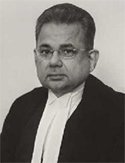
No Acts & Articles mentioned in this case
http://JUDIS.NIC.IN SUPREME COURT OF INDIA Page 1 of 16
CASE NO.:
Appeal (civil) 2083 of 2006
PETITIONER:
Gurdev Kaur & Ors.
RESPONDENT:
Kaki & Ors.
DATE OF JUDGMENT: 18/04/2006
BENCH:
Ruma Pal & Dalveer Bhandari
JUDGMENT:
J U D G M E N T
[Arising out of SLP (C) No. 20797 of 2003]
Dalveer Bhandari, J.
Leave granted.
Judges must administer law according to the provisions
of law. It is the bounden duty of judges to discern legislative
intention in the process of adjudication. Justice administered
according to individual's whim, desire, inclination and notion
of justice would lead to confusion, disorder and chaos.
Indiscriminate and frequent interference under Section
100 C.P.C. in cases which are totally devoid of any substantial
question of law is not only against the legislative intention but
is also the main cause of huge pendency of second appeals in
the High Courts leading to colossal delay in the administration
of justice in civil cases in our country.
Despite declaration of law in numerous judgments, it is
evident that the scope and ambit of Section 100 C.P.C. has not
been properly appreciated and applied in a large number of
cases. We are, once again making a serious endeavour to
discern legislative intention, ambit and scope of interference
under Section 100 C.P.C.. We plan to carry out this exercise
by critically examining important judgments decided before
and after 1976 amendment in the Section 100 C.P.C.. This
effort is made with the hope that in future the High Courts
would decide according to the scope of Section 100 C.P.C. and
this Court may not be compelled to interfere with the
judgments delivered under Section 100 C.P.C..
Brief factual background
This appeal is directed against the judgment of the
Punjab & Haryana High Court dated 1.8.2003 passed in Civil
Regular Second Appeal 885 of 1983. By this judgment the
High Court has set aside the concurrent findings of facts of the
Courts below. The High Court consequently cancelled the
mutation of the property belonging to the deceased Chanan
Singh in favour of his wife Bhagwan Kaur and directed that
the property be mutated in favour of the heirs of the deceased
Chanan Singh in accordance with the Hindu Succession Act,
1956. This Court on 3.11.2003, while issuing notice on the
Special Leave Petition, directed the status-quo be maintained
in the meantime. Now this appeal has been placed before us
for final adjudication.
Brief facts, which are necessary to dispose of this appeal,
are recapitulated as under:
http://JUDIS.NIC.IN SUPREME COURT OF INDIA Page 2 of 16
The case relates to the validity of the Will of the deceased,
Chanan Singh. The relationship between the parties is as
follows. The deceased Chanan Singh, s/o Hira Singh died on
6.2.1969. He had two wives. The first wife was Sham Kaur,
who died before Chanan Singh and the second wife was
Bhagwan Kaur. From the first wife Sham Kaur he had two
daughters Kaki and Har Kaur. Har Kaur also died on
29.9.1984. Kaki and Har Kaur are the plaintiffs in the Civil
Suit filed before the Subordinate Judge, 1st Class, Barnala
Bhagwan Kaur also had three daughters - Dalip Kaur,
Gurdev Kaur and Mukhtiar Kaur. Chanan Singh deceased did
not have a son either from Bhagwan Kaur or from Sham Kaur.
The plaintiffs Kaki and Har Kaur filed a suit for joint
possession of the property of deceased Chanan Singh. It is not
disputed that the deceased Chanan Singh had two wives
Bhagwan Kaur and Sham Kaur. According to the plaintiffs
Kaki and Har Kaur, the deceased Chanan Singh did not
execute any Will out of his free will because he was not in a
position to protect his own welfare and in fact he was not in a
position to execute any Will at all.
Chanan Singh died on 6.2.1969 in Barnala and the
defendant Bhagwan Kaur got the mutation of inheritance of
Chanan Singh sanctioned from the concerned authority on the
basis of the alleged Will dated 18.1.1969. The case of the
plaintiffs is that they never received any notice about the
sanctioning of mutation and this has been carried out by
defendant Bhagwan Kaur in connivance with the revenue
authorities.
According to the plaintiffs, the parties are governed by
the Hindu Succession Act. The plaintiffs were entitled to 1/3rd
share in the inheritance of Chanan Singh. According to the
plaintiffs, the defendants are in illegal possession of the suit
land and that the defendants had threatened to alienate the
suit land on 6.3.1980.
The defendants in the written statement had admitted
the relationship of the plaintiffs with the deceased Chanan
Singh. The defendant Bhagwan Kaur alleged that she is the
owner and in possession of the suit land on the basis of the
Will dated 18.1.1969 executed by her husband in her favour.
The defendant Bhagwan Kaur also alleged that she was
the only one who all through stayed and looked after the
deceased Chanan Singh during his life time. She further
stated that Chanan Singh had got his all daughters married
after spending huge amount of money in their marriages. She
also alleged that the daughters of Chanan Singh never served
him during his lifetime. In fact the plaintiffs had never even
visited him. The deceased Chanan Singh had executed a
valid Will in her favour out of his free will on 18.1.1969
because of the life long service rendered by her. She prayed
that the suit filed by the plaintiffs be dismissed.
The Trial Court, on the basis of the pleadings of the
parties and documents on record, framed eleven issues. The
plaintiffs produced five witnesses and the defendants
produced three witnesses in support of their respective stands
before the Trial Court. The plaintiffs had also examined K.C.
Jaidka, Handwriting Expert. In the cross-examination he
stated that the Will bears the thumb impression of the right
hand of the deceased, but the usual practice is of obtaining
http://JUDIS.NIC.IN SUPREME COURT OF INDIA Page 3 of 16
the thumb impression of left hand on the Will.
According to the plaintiffs the Will is alleged to have been
attested by three witnesses and only one attesting witness was
examined by the defendants and even that witness had not
fully supported the case of the defendants. The Will is not a
registered document and is written at the house of the
deceased Chanan Singh. He was about 70 years of age at the
time of execution of the Will and, according to the plaintiffs, he
could not protect his own interest and welfare. The
propounder of the Will was present at the time of the
execution of the Will. According to the plaintiffs, the
defendants had failed to discharge the onus regarding
execution of the Will by leading cogent evidence.
On the contrary, it was argued by the defendants that
Exhibit D-1 is a natural document and had been executed by
the deceased Chanan Singh in favour of his wife Bhagwan
Kaur. It is an admitted case of the parties that the deceased
Chanan Singh had no son and all his daughters were married
long ago. In order to protect the interest of his wife Bhagwan
Kaur and to ensure that she does not have to depend on
anyone for her maintenance and welfare the deceased Chanan
Singh had executed the Will in favour of his wife Bhagwan
Kaur. The deceased Chanan Singh had put left hand thumb
impression on the Will. The defendants had examined Amar
Singh D.W. 1 and Mittar Singh, D.W.2 who is the scribe of the
Will, deposed that the Will was scribed by him at the instance
of Chanan Singh. Amar Singh D.W.1 and other attesting
witnesses of the Will did not fully support the defendant
Bhagwan Kaur as she had filed a suit against one Jangir
Singh and the attesting witnesses had resiled at the instance
of the said Jangir Singh.
The mutation on the basis of the Will was entered
immediately after the death of Chanan Singh and, according to
the defendants, the Will was shown to the plaintiffs at that
time. It is further submitted that the plaintiffs have filed this
suit at the instance of the said Jangir Singh. It was submitted
by the defendants that, in these circumstances, the Court
could rely on that part of the statement which seemed to be
true. According to the defendants they have proved execution
of the Will beyond doubt and the plaintiffs' suit deserves to be
dismissed.
In the Will, the deceased, Chanan Singh had recited that
he has had five daughters and all of them were married. He
has further recited that he had spent huge amount in their
marriages, even more than the share which the daughters
could have got in the inheritance of the deceased Chanan
Singh. It is also mentioned that his wife defendant Bhagwan
Kaur alone used to reside with him and dutifully served her
husband. Whereas, the plaintiffs Kaki & Har Kaur never
visited the deceased, Chanan Singh.
According to the Trial Court, in this background, it has to
be seen whether the deceased had in fact executed the Will out
of his free will or not? It is mentioned that in the ordinary
course when a person has no son and all his daughters are
happily married, the normal anxiety is to ensure the future of
his wife, particularly when she alone had stayed with him all
his life and look after him till the last. The Trial Court did
mention in the judgment that Amar Singh D.W.1 did not
support the case of the defendant. He was declared hostile.
The counsel for the defendants sought permission to cross-
examine him. In the cross-examination it is clearly stated that
http://JUDIS.NIC.IN SUPREME COURT OF INDIA Page 4 of 16
Bhagwan Kaur used to take care of the deceased, Chanan
Singh. He also stated that the deceased Chanan Singh might
have executed the Will giving the entire property to his wife,
Bhagwan Kaur. He also stated that the deceased Chanan
Singh had put his thumb impression in his presence on the
Will. He also stated in his statement that the testator Chanan
Singh could converse at the time of the execution of the said
Will meaning thereby that he was in sound disposing mind at
the time of the execution of the Will.
The Trial Court stated that the other attesting witness of
the Will Pundit Raghbar Dayal was also present when he had
put a thumb mark in the Will. He further stated that Pundit
Raghbar Dayal was present at the time of execution of the
Will. This witness has stated that Bhagwan Kaur was present
at the time of execution of the Will but she had not uttered
any word and Chanan Singh was sitting at the time of the
execution of the Will. According to the Trial Court,
requirement of law is that for the purpose of proving the
attesting document, at least one attesting witness is required
to be examined by the party. It is not the requirement of the
law that the attesting witness must also support him on every
aspect. The requirement of law is that the testator should put
his mark on the Will in the presence of the attesting witnesses
and the attesting witnesses should attest the Will in the
presence of the testator, has been fulfilled in the present case,
as is evident from the statement of Amar Singh D.W.1.
The plaintiffs argued before the Trial Court that the
deceased Chanan Singh was under the influence of the
defendant Bhagwan Kaur, but according to the Trial Court it
was not the pleaded case of the plaintiffs in the plaint.
Therefore, no significance was attached to this submission.
The Trial Court also stated that the Will in the present case
was immediately produced before the revenue authorities and
was not kept secretly. The plaintiffs have admitted that this
Will was shown to the daughters of Chanan Singh immediately
after his death, but the plaintiffs have alleged that the Will was
in favour of the daughters. It was also not the pleaded case of
the plaintiffs in the plaint. Thus, the Trial Court after
evaluating the entire evidence on record held that the Will
Exhibit D-1 was duly executed by the deceased Chanan Singh
in favour of his wife Bhagwan Kaur and was a natural
document.
The relevant part of the Will reads as under:
"I have already incurred expenditure on
the marriages, Chhaks (presents given to
the bride by her maternal uncles or grand
parents) and Chhuchaks (articles given
on the birth of daughter's child)
ceremonies of my five daughters, more
than the value of their share in the
property. All of them are Abad (Happy) in
their respective matrimonial houses.
Now my wife Smt. Bhagwan Kaur takes
care of me. I, having been pleased with
her services, want to devolve my entire
property upon my wife Smt. Bhagwan
Kaur."
When execution of the Will is fully proved then in order to
ascertain the wishes of the testator we have to look to the text
of the Will. The intention of the testator has to be discerned
http://JUDIS.NIC.IN SUPREME COURT OF INDIA Page 5 of 16
from the language used in the Will. In view of such clear and
unambiguous language used in this Will perhaps, no other
interpretation was possible. The Trial Court clearly arrived at
a conclusion that the deceased Chanan Singh had executed
the Will in favour of his wife, Bhagwan Kaur.
Aggrieved by the order of the Subordinate Judge, Grade
II, Barnala, the appellants filed an appeal before the learned
Additional District Judge, Barnala. After hearing counsel for
the parties, the learned Additional District Judge dismissed
the appeal on the following reasons:
1. The Trial Court correctly came to a definite finding that
the propounder of the Will proved that the testator was in
a sound disposing mind when he had executed the Will
in question.
2. The Appellate Court observed that if the conscience of the
Court is satisfied on the point of due execution of the Will
because the testator was in a sound disposing mind, in
that event even if the Will is not registered, the same has
to be upheld as a valid and genuine document.
3. The Appellate Court also observed that in the case in
hand, Bindraban, the scribe and Amar Singh, D.W.1,
attesting witness examined by Bhagwan Kaur defendant,
have amply proved that Chanan Singh, (who was about
70 years of age), was in sound disposing mind when he
dictated the terms of the Will and after admitting its
contents to be correct, had affixed his thumb impression
in their presence.
The Additional District Judge also stated that there is
nothing on record to show that the appellants (who were
plaintiffs in the Trial Court) ever visited the deceased Chanan
Singh or rendered any service to him during his life time. In
the said judgment, it is also noted that the Will was not
challenged for a period of 11 years since its execution in 1969.
He also stated that it is evident from the mutation order that
Bhagwan Kaur, after the death of Chanan Singh promptly
produced the Will before the revenue authorities and on that
basis they sanctioned the mutation in respect of the land in
dispute in her favour. According to the Appellate Court, it is
unbelievable that the appellants remained ignorant of the
attestation of the mutation or the attestation of the Will set up
by Bhagwan Kaur.
In the Appellate Court's judgment, it is also mentioned
that Bhagwan Kaur uninterruptedly remained in peaceful
possession of the entire suit land since the death of the
deceased Chanan Singh in 1969 till this date. It is also
mentioned in the judgment that Bhagwan Kaur, as is evident
from the certified copy of the judicial record of this case,
remained interlocked in civil proceedings with Jangir Singh,
tenant, which are still pending and in all probability the
present suit was got instituted at the behest of Jangir Singh.
The Appellate Court also observed that, in view of the
facts and circumstances of the case, the learned Trial Court
was fully justified in upholding the Will as a genuine and valid
document and the mutation attested on its basis was
unexceptionable. The learned Additional District Judge, by a
comprehensive judgment, affirmed all the findings of the Trial
Court and dismissed the appeal with costs.
http://JUDIS.NIC.IN SUPREME COURT OF INDIA Page 6 of 16
The appellants, aggrieved by the judgment of the Trial
Court and the Appellate Court, preferred second appeal under
Section 100 C.P.C. before the High Court of Punjab and
Haryana.
The learned Single Judge of the High Court set aside the
concurrent findings of facts arrived at by the Courts below
predominantly on the ground that, in the normal
circumstances, a prudent man would have bequeathed the
property in favour of his legal heirs. However, in the present
case, the testator has disinherited the plaintiffs.
The findings arrived at by the High Court are totally
erroneous. The Court does not sit in appeal over the
testator's decision. The Court's role is limited to examining
whether the instrument propounded as the last Will of the
deceased is or is not that by the testator and whether it is the
product of the free and sound disposing mind.
Amar Singh D.W.1, in the examination-in-chief, did not
support the case of the defendants. He was declared hostile
and the counsel for the defendants sought permission to
cross-examine him. In the cross-examination, he clearly
stated that Bhagwan Kaur used to take care of the deceased
Chanan Singh. He also stated that the deceased Chanan
Singh might have executed the will giving the entire property
to his wife Bhagwan Kaur. He also stated that the deceased
Chanan Singh had put his thumb mark on the Will in his
presence. He also stated in his statement that the testator
Chanan Singh could converse at the time of execution of the
will, meaning thereby that he was in sound disposing mind at
the time of execution of the will.
The learned Single Judge of the High Court did not take
into consideration the entire statement of Amar Singh D.W.1
in proper perspective while setting aside the concurrent
findings of the Courts below. The findings of the High Court
are erroneous and contrary to record.
The question which now arises for our adjudication is
whether, according to the true delineated scope of Section 100
of the Code of Civil Procedure, the High Court was justified in
interfering with the concurrent findings of fact.
We deem it appropriate to reproduce Section 100 C.P.C.
before amendment.
Section 100 of the Code of Civil Procedure, 1908 (for
short, C.P.C.) corresponds to Section 584 of the old Civil
Procedure Code of 1882. The Section 100 (prior to 1976
amendment) reads as under :
"100. Second appeal \026 (1) "Save where
otherwise provided in the body of this
Code or by any other law for the time
being in force, an appeal shall lie to the
High Court from every decree passed in
appeal by any Court subordinate to a
High Court on any of the following
grounds, namely :
(a) the decision being contrary to law or
to some usage having the force of
law;
(b) the decision having failed to
determine some material issue of
law or usage having the force of law;
(c) a substantial error or defect in the
http://JUDIS.NIC.IN SUPREME COURT OF INDIA Page 7 of 16
procedure provided by this Code or
by any other law for the time being
in force, which may possibly have
produced error or defect in the
decision of the case upon the merits.
(2) An appeal may lie under this section from
an appellate decree passed ex parte."
A reference of series of cases decided by the Privy
Council and this Court would reveal true import, scope and
ambit of Section 100 C.P.C..
Cases decided prior to 1976 amendment both by the Privy
Council and the Supreme Court dealing with the scope of
Section 100 C.P.C.
The Privy Council, in Luchman v. Puna [(1889) 16
Calcutta 753 (P.C.)], observed that a second appeal can lie
only on one or the other grounds specified in the present
section.
The Privy Council, in another case Pratap Chunder v.
Mohandranath [(1890) ILR 17 Calcutta 291 (P.C.)], the
limitation as to the power of the court imposed by sections 100
and 101 in a second appeal ought to be attended to, and an
appellant ought not to be allowed to question the finding of the
first appellate court upon a matter of fact.
In Durga Chowdharani v. Jawahar Singh (1891) 18
Cal 23 (PC), the Privy Council held that the High Court had no
jurisdiction to entertain a second appeal on the ground of
erroneous finding of fact, however gross or inexcusable the
error may seem to be. The clear declaration of law was made
in the said judgment as early as in 1891. This judgment was
followed in the case of Ramratan Shukul v. Mussumat
Nandu (1892) 19 Cal 249 (252) (PC) and many others. The
Court observed :
"It has now been conclusively settled that
the third court...cannot entertain an
appeal upon question as to the
soundness of findings of fact by the
second court, if there is evidence to be
considered, the decision of the second
court, however unsatisfactory it might be
if examined, must stand final."
In the case of Ram Gopal v. Shakshaton [(1893) ILR 20
Calcutta 93 (P.C.)], the Court emphasized that a court of
second appeal is not competent to entertain questions as to
the soundness of a finding of facts by the courts below.
The same principle has been reiterated in Rudr Prasad
v. Baij Nath [(1893) ILR 15 Allahabad 367]. The Court
observed that a judge to whom a memorandum of second
appeal is presented for admission is entitled to consider
whether any of the grounds specified in this section exist and
apply to the case, and if they do not, to reject the appeal
summarily.
Similarly, before amendment in 1976, this Court also had
an occasion to examine the scope of Section 100 C.P.C.. In
Deity Pattabhiramaswamy v. S. Hanymayya and Others
[AIR 1959 SC 57], the High Court of Madras set aside the
findings of the District Judge, Guntur, while deciding the
http://JUDIS.NIC.IN SUPREME COURT OF INDIA Page 8 of 16
second appeal. This Court observed that notwithstanding the
clear and authoritative pronouncement of the Privy Council on
the limits and the scope of the High Court's jurisdiction under
section 100, Civil Procedure Code, "some learned Judges of
the High Courts are disposing of Second Appeals as if they
were first appeals. This introduces, apart from the fact that
the High Court assumes and exercises a jurisdiction which it
does not possess, a gambling element in the litigation and
confusion in the mind of the litigant public. This case affords
a typical illustration of such interference by a Judge of the
High Court in excess of his jurisdiction under Section 100,
Civil Procedure Code. We have, therefore, no alternative but to
set aside the judgment of the High Court which had no
jurisdiction to interfere in second appeal with the findings of
fact arrived at by the first appellate Court based upon an
appreciation of the relevant evidence.
In M. Ramappa v. M. Bojjappa [(1963) SCR 673], the
Andhra Pradesh High Court interfered with the finding
recorded by the Appellate Court which, in turn, had itself
reversed the Trial Court's finding on the same question of fact.
While setting aside the decree of the second Appellate Court,
this Court observed :
"It may be that in some cases, the High
Court dealing with the second appeal is
inclined to take the view that what it
regards to be justice or equity of the case
has not been served by the findings of
fact recorded by courts of fact, but on
such occasions it is necessary to
remember that what is administered in
courts is justice according to law and
considerations of fair play and equity
however important they may be, must
yield to clear and express provisions of
the law. If in reaching its decisions in
second appeals, the High Court
contravenes the express provisions of
section 100, it would inevitably introduce
in such decisions an element of
disconcerting unpredictability which is
usually associated with gambling; and
that is a reproach which judicial process
must constantly and scrupulously
endeavour to avoid."
It may be pertinent to mention that as early as in 1890
the Judicial Committee of the Privy Council stated that there
is no jurisdiction to entertain a second appeal on the ground
of an erroneous finding of fact, however, gross or inexcusable
the error may seem to be and they added a note of warning
that no Court in India has power to add, or enlarge, the
grounds specified in Section 100 of the Code of Civil
Procedure.
Even before the amendment, interference under Section
100 C.P.C. was limited, which has now been further curtailed,
which we would be dealing in cases decided by this Court after
the amendment.
We have given reference of a large number of cases
decided by the Privy Council and this Court to clearly
understand the ambit and scope of Section 100 before
amendment.
The Amendment Act of 1976 has introduced drastic
http://JUDIS.NIC.IN SUPREME COURT OF INDIA Page 9 of 16
changes in the scope and ambit of Section 100 C.P.C. A
second appeal under Section 100 C.P.C. is now confined to
cases where a question of law is involved and such question
must be a substantial one. Section 100, as amended, reads as
under:
"100. Second appeal.
(1) Save as otherwise expressly provided in the
body of this Code or by any other law for the time
being in force, an appeal shall lie to the High Court
from every decree passed in appeal by any Court
subordinate to the High Court, if the High Court is
satisfied that the case involves a substantial
question of law.
(2) An appeal may lie under this section from
an appellate decree passed ex parte.
(3) In an appeal under this section, the
memorandum of appeal shall precisely state the
substantial question of law involved in the appeal.
(4) Where the High Court is satisfied that a
substantial question of law is involved in any case,
it shall formulate that question.
(5) The appeal shall be heard on the question
so formulated and the respondent shall, at the
hearing of the appeal, be allowed to argue that the
case does not involve such question:
Provided that nothing in this sub-section shall
be deemed to take away or abridge the power of the
Court to hear, for reasons to be recorded, the appeal
on any other substantial question of law, not
formulated by it, if it is satisfied that the case
involves such question."
Cases decided after 1976 amendment
In Bholaram v. Amirchand (1981) 2 SCC 414 a three-
Judge Bench of this Court reiterated the statement of law.
The High Court, however, seems to have justified its
interference in second appeal mainly on the ground that the
judgments of the courts below were perverse and were given in
utter disregard of the important materials on the record
particularly misconstruction of the rent note. Even if we
accept the main reason given by the High Court the utmost
that could be said was that the findings of fact by the courts
below were wrong or grossly inexcusable but that by itself
would not entitle the High Court to interfere in the absence of
a clear error of law.
In Kshitish Chandra Purkait v. Santosh Kumar
Purkait [(1997) 5 SCC 438], a three judge Bench of this Court
held: (a) that the High Court should be satisfied that the case
involved a substantial question of law and not mere question
of law; (b) reasons for permitting the plea to be raised should
also be recorded; (c) it has the duty to formulate the
substantial questions of law and to put the opposite party on
notice and give fair and proper opportunity to meet the point.
The Court also held that it is the duty cast upon the High
Court to formulate substantial question of law involved in the
case even at the initial stage.
http://JUDIS.NIC.IN SUPREME COURT OF INDIA Page 10 of 16
This Court had occasion to determine the same issue in
Dnyanoba Bhaurao Shemade v. Maroti Bhaurao Marnor
(1999) 2 SCC 471. The Court stated that the High Court can
exercise its jurisdiction under Section 100 C.P.C. only on the
basis of substantial questions of law which are to be framed at
the time of admission of the second appeal and the second
appeal has to be heard and decided only on the basis of the
such duly framed substantial questions of law.
A mere look at the said provision shows that the High
Court can exercise its jurisdiction under Section 100 C.P.C.
only on the basis of substantial questions of law which are to
be framed at the time of admission of the second appeal and
the second appeal has to be heard and decided only on the
basis of such duly framed substantial questions of law. The
impugned judgment shows that no such procedure was
followed by the learned Single Judge. It is held by a catena of
judgments by this Court, some of them being, Kshitish
Chandra Purkait v. Santosh Kumar Purkait (1997) 5 SCC 438
and Sheel Chand v. Prakash Chand (1998) 6 SCC 683 that the
judgment rendered by the High Court under Section 100
C.P.C. without following the aforesaid procedure cannot be
sustained. On this short ground alone, this appeal is required
to be allowed.
In Kanai Lal Garari v. Murari Ganguly (1999) 6 SCC
35 the Court has observed that it is mandatory to formulate
the substantial question of law while entertaining the appeal
in absence of which the judgment is to be set aside. In
Panchugopal Barua v. Umesh Chandra Goswami (1997) 4 SCC
713 and Santosh Hazari v. Purushottam Tiwari (2001) 3 SCC
179 the Court reiterated the statement of law that the High
Court cannot proceed to hear a second appeal without
formulating the substantial question of law. These judgments
have been referred to in the later judgment of K. Raj and Anr.
v. Muthamma (2001) 6 SCC 279. A statement of law has been
reiterated regarding the scope and interference of the Court in
second appeal under Section 100 of the Code of Civil
Procedure.
Again in Santosh Hazari v. Purushottam Tiwari
(deceased) by Lrs. (2001) 3 SCC 179, another three-Judge
Bench of this Court correctly delineated the scope of Section
100 C.P.C.. The Court observed that an obligation is cast on
the appellant to precisely state in the memorandum of appeal
the substantial question of law involved in the appeal and
which the appellant proposes to urge before the Court. In the
said judgment, it was further mentioned that the High Court
must be satisfied that a substantial question of law is involved
in the case and such question has then to be formulated by
the High Court. According to the Court the word substantial,
as qualifying "question of law", means \026 of having substance,
essential, real, of sound worth, important or considerable. It
is to be understood as something in contradistinction with \026
technical, of no substance or consequence, or academic
merely. However, it is clear that the legislature has chosen not
to qualify the scope of "substantial question of law" by
suffixing the words "of general importance" as has been done
in many other provisions such as Section 109 of the Code of
Article 133(1) (a) of the Constitution.
In Kamti Devi (Smt.) and Anr. v. Poshi Ram (2001) 5
SCC 311 the Court came to the conclusion that the finding
thus reached by the first appellate court cannot be interfered
http://JUDIS.NIC.IN SUPREME COURT OF INDIA Page 11 of 16
with in a second appeal as no substantial question of law
would have flowed out of such a finding.
In Thiagarajan v. Sri Venugopalaswamy B. Koil
[(2004) 5 SCC 762], this Court has held that the High Court in
its jurisdiction under Section 100 C.P.C. was not justified in
interfering with the findings of fact. The Court observed that
to say the least the approach of the High Court was not
proper. It is the obligation of the Courts of law to further the
clear intendment of the legislature and not frustrate it by
excluding the same. This Court in a catena of decisions held
that where findings of fact by the lower appellate Court are
based on evidence, the High Court in second appeal cannot
substitute its own findings on reappreciation of evidence
merely on the ground that another view was possible.
In the same case, this Court observed that in a case
where special leave petition was filed against a judgment of the
High Court interfering with findings of fact of the lower
Appellate Court. This Court observed that to say the least the
approach of the High Court was not proper. It is the
obligation of the Courts of law to further the clear intendment
of the legislature and not frustrate it by excluding the same.
This Court further observed that the High Court in second
appeal cannot substitute its own findings on reappreciation of
evidence merely on the ground that another view was possible.
This Court again reminded the High Court in
Commissioner, Hindu Religious & Charitable
Endowments v. P. Shanmugama [(2005) 9 SCC 232] that the
High Court has no jurisdiction in second appeal to interfere
with the finding of facts.
Again, this Court in the case of State of Kerala v. Mohd.
Kunhi [(2005) 10 SCC 139] has reiterated the same principle
that the High Court is not justified in interfering with the
concurrent findings of fact. This Court observed that, in
doing so, the High Court has gone beyond the scope of Section
100 of the Code of Civil Procedure.
Again, in the case of Madhavan Nair v. Bhaskar Pillai
[(2005) 10 SCC 553], this Court observed that the High Court
was not justified in interfering with the concurrent findings of
fact. This Court observed that it is well settled that even if the
first appellate court commits an error in recording a finding of
fact, that itself will not be a ground for the High Court to upset
the same.
Again, in the case of Harjeet Singh v. Amrik Singh
[(2005) 12 SCC 270], this Court with anguish has mentioned
that the High Court has no jurisdiction to interfere with the
findings of fact arrived at by the first appellate court. In this
case, the findings of the Trial Court and the lower Appellate
Court regarding readiness and willingness to perform their
part of contract was set aside by the High Court in its
jurisdiction under Section 100 C.P.C.. This Court, while
setting aside the judgment of the High Court, observed that
the High Court was not justified in interfering with the
concurrent findings of fact arrived at by the Courts below.
In the case of H. P. Pyarejan v. Dasappa [(2006) 2 SCC
496] delivered on 6.2.2006, this Court found serious infirmity
in the judgment of the High Court. This Court observed that it
suffers from the vice of exercise of jurisdiction which did not
vest in the High Court. Under Section 100 of the Code (as
http://JUDIS.NIC.IN SUPREME COURT OF INDIA Page 12 of 16
amended in 1976) the jurisdiction of the Court to interfere
with the judgments of the Courts below is confined to hearing
of substantial questions of law. Interference with the finding
of fact by the High Court is not warranted if it invokes
reappreciation of evidence. This Court found that the
impugned judgment of the High Court was vulnerable and
needed to be set aside.
Legislative Background in the 54th Report of the Law
Commission of India submitted in 1973
The comprehensive 54th Report of the Law Commission of
India submitted to the Government of India in 1973 gives
historical background regarding ambit and scope of Section
100 C.P.C.. According to the said report, any rational system
of administration of civil law should recognize that litigation in
civil cases should have two hearings on facts \026 one by the Trial
Court and one by the Court of Appeal.
In the 54th Report of the Law Commission of India, it is
incorporated that it may be permissible to point out that a
search for absolute truth in the administration of justice,
however, laudable, must in the very nature of things be put
under some reasonable restraint. In other words, a search for
truth has to be reconciled with the doctrine of finality. In
judicial hierarchy finality is absolutely important because that
gives certainty to the law. Even in the interest of litigants
themselves it may not be unreasonable to draw a line in
respect of the two different categories of litigation where
procedure will say at a certain stage that questions of fact
have been decided by the lower courts and the matter should
be allowed to rest where it lies without any further appeal.
This may be somewhat harsh to an individual litigant; but, in
the larger interest of the administration of justice, this view
seems to us to be juristically sound and pragmatically wise. It
is in the light of this basic approach that we will now proceed
to consider some of the cases which were decided more than a
century ago.
The question could perhaps be asked, why the litigant
who wishes to have justice from the highest Court of the State
should be denied the opportunity to do so, at least where there
is a flaw in the conclusion on facts reached by the trial Court
or by the Court of first appeal. The answer is obvious that even
litigants have to be protected against too persistent a pursuit
of their goal of perfectly satisfactory justice. An unqualified
right of first appeal may be necessary for the satisfaction of
the defeated litigant; but a wide right of second appeal is more
in the nature of a luxury.
The rational behind allowing a second appeal on a
question of law is, that there ought to be some tribunal having
jurisdiction that will enable it to maintain, and, where
necessary, re-establish, uniformity throughout the State on
important legal issues, so that within the area of the State, the
law, in so far as it is not enacted law, should be laid down, or
capable of being laid down, by one court whose rulings will be
binding on all courts, tribunals and authorities within the area
over which it has jurisdiction. This is implicit in any legal
system where the higher courts have authority to make
binding decisions on questions of law.
It may be relevant to recall the statement of Douglas
Payne on "Appeals on Questions of Fact" reported in (1958)
http://JUDIS.NIC.IN SUPREME COURT OF INDIA Page 13 of 16
Current Legal Problem 181. He observed that the real
justification for appeals on questions of this sort is not so
much that the law laid down by the appeal court is likely to be
superior to that laid down by a lower court as that there
should be a final rule laid down which binds all future courts
and so facilitates the prediction of the law. In such a case the
individual litigants are sacrificed, with some justification, on
the altar of law-making and must find such consolation as
they can in the monument of a leading case.
Historical perspective
The predecessors of the High Courts in their Civil
appellate jurisdiction were the Sadar Divani Adalats. The right
of appeal to the Sadar Divani Adalat was very wide initially,
but came to be severely curtailed in the course of time. The
"Conwallis Scheme", for example, made provision for two
appeals in every category of cases, irrespective of its value. By
1814, this was reduced to one appeal only. Only in cases of
Rs.5,000 or over, there could be two appeals; one to the
Provincial Court of Appeal and second to the Sadar Divani
Adalat. As Lord Hastings observed, -
"The facility of appeal is founded on a
most laudable principle of securing, by
double and treble checks, the proper
decision of all suits, but the utopian idea,
in its attempt to prevent individual injury
from a wrong decision, has been
productive of general injustice by
withholding redress, and general
inconvenience, by perpetuating
litigation".
Arrears
The primary cause of the accumulation of arrears of
second appeal in the High Court is the laxity with which
second appeals are admitted without serious scrutiny of the
provisions of Section 100 C.P.C. It is the bounden duty of the
High Court to entertain second appeal within the ambit and
scope of Section 100 C.P.C.
The question which is often asked that why a litigant
should have the right of two appeals even on questions of law.
The answer to this query is that in every State there are
number of District Courts and courts in the District cannot be
final arbiters on questions of law. If the law is to be uniformly
interpreted and applied, questions of law must be decided by
the highest Court in the State whose decisions are binding on
all subordinate courts.
Rationale behind permitting second appeal on question of
law
The rationale behind allowing a second appeal on a
question of law is, that there ought to be some tribunal having
a jurisdiction that will enable it to maintain, and, where
necessary, re-establish, uniformity throughout the State on
important legal issues, so that within the area of the State, the
law, in so far as it is not enacted law, should be laid down, or
capable of being laid down, by one court whose rulings will be
binding on all courts, tribunals and authorities within the
area over which it has jurisdiction. This is implicit in any legal
system where the higher courts have authority to make
binding decisions on question of law.
The analysis of cases decided by the Privy Council and
http://JUDIS.NIC.IN SUPREME COURT OF INDIA Page 14 of 16
this Court prior to 1976 clearly indicated the scope of
interference under Section 100 C.P.C. by this Court. Even
prior to amendment, the consistent position has been that the
Courts should not interfere with the concurrent findings of
facts.
Now, after 1976 Amendment, the scope of Section 100
has been drastically curtailed and narrowed down. The High
Courts would have jurisdiction of interfering under Section
100 C.P.C. only in a case where substantial questions of law
are involved and those questions have been clearly formulated
in the memorandum of appeal. At the time of admission of the
second appeal, it is the bounden duty and obligation of the
High Court to formulate substantial questions of law and then
only the High Court is permitted to proceed with the case to
decide those questions of law. The language used in the
amended section specifically incorporates the words as
"substantial question of law" which is indicative of the
legislative intention. It must be clearly understood that the
legislative intention was very clear that legislature never
wanted second appeal to become "third trial on facts" or "one
more dice in the gamble". The effect of the amendment
mainly, according to the amended section, was:
(i) The High Court would be justified in admitting the
second appeal only when a substantial question of law is
involved;
(ii) The substantial question of law to precisely state such
question;
(iii) A duty has been cast on the High Court to formulate
substantial question of law before hearing the appeal;
(iv) Another part of the Section is that the appeal shall be
heard only on that question.
The fact that, in a series of cases, this Court was
compelled to interfere was because the true legislative
intendment and scope of Section 100 C.P.C. have neither been
appreciated nor applied. A class of judges while administering
law honestly believe that, if they are satisfied that, in any
second appeal brought before them evidence has been grossly
misappreciated either by the lower appellate court or by both
the courts below, it is their duty to interfere, because they
seem to feel that a decree following upon a gross
misappreciation of evidence involves injustice and it is the
duty of the High Court to redress such injustice. We would
like to reiterate that the justice has to be administered in
accordance with law.
When Section 100 C.P.C. is critically examined then,
according to the legislative mandate, the interference by the
High Court is permissible only in cases involving substantial
questions of law.
The Judicial Committee of the Privy Council as early as
in 1890 stated that there is no jurisdiction to entertain a
second appeal on the ground of an erroneous finding of fact,
however, gross or inexcusable the error may seem to be and
they added a note of warning that no Court in India has power
to add to, or enlarge, the grounds specified in Section 100.
The High Court seriously erred in interfering with the
findings of facts arrived at by the Trial Court and affirmed by
the first Appellate Court.
http://JUDIS.NIC.IN SUPREME COURT OF INDIA Page 15 of 16
The High Court in the impugned judgment has observed
as under :-
"In the normal circumstances a prudent
man would have bequeathed the property
in favour of his legal heirs. However, in
the present case, the testator has
disinherited the plaintiffs."
The High Court also observed that "no father in normal
circumstances would like to disinherit the daughters."
The High Court has clearly deviated from the settled
principle of interpretation of the Will. The Court does not sit
in appeal over the right or wrong of the testator's decision.
The Court's role is limited to examining whether the
instrument propounded as the last Will of the deceased is or is
not that by the testator and whether it is the product of the
free and sound disposing mind. It is only for the purpose of
examining the authenticity or otherwise of the instrument
propounded as the last Will, that the Court looks into the
nature of the bequest.
The learned Single Judge of the High Court has not even
properly appreciated the context of the circumstances. The
contents of the Will have to be appreciated in the context of
his circumstances, and not vis-`-vis the rules for intestate
succession. It is only for this limited purpose that the Court
examines the nature of bequest. The Court does not
substitute its own opinion for what was the testator's Will or
intention as manifested from a reading of the written
instrument. After all, a Will is meant to be an expression of
his desire and therefore, may result in disinheritance of some
and grant to another. In the instant case, wife of the testator
Bhagwan Kaur alone had lived with the deceased and only she
had looked after him throughout his life. The other daughters
were all happily married a long time ago and in their weddings
the testator had spent huge amount of money. In his own
words, he had spent more than what they would have got in
their respective shares out of testator's property.
If a Will appears on the face of it to have been duly
executed and attested in accordance with the requirements of
the Statute, a presumption of due execution and attestation
applies.
It may be pertinent to mention that in the memorandum
of second appeal filed before the High Court no substantial
question of law was formulated. Similarly, the High Court in
its judgment has not formulated question of law before hearing
the appeal.
Despite repeated declarations of law by the judgments of
this Court and the Privy Council for over a century, still the
scope of Section 100 has not been correctly appreciated and
applied by the High Courts in a large number of cases. In the
facts and circumstances of this case the High Court interfered
with the pure findings of fact even after the amendment of
Section 100 C.P.C. in 1976. The High Court would not have
been justified in interfering with the concurrent findings of fact
in this case even prior to the amendment of Section 100
C.P.C.. The judgment of the High Court is clearly against the
provisions of Section 100 and in no uncertain terms clearly
violates the legislative intention.
http://JUDIS.NIC.IN SUPREME COURT OF INDIA Page 16 of 16
In view of the clear legislative mandate crystallized by a
series of judgments of the Privy Council and this Court
ranging from 1890 to 2006, the High Court in law could not
have interfered with pure findings of facts arrived at by the
courts below. Consequently, the impugned judgment is set
aside and this appeal is allowed with costs.

 Login with google
Legal Notes
Add a Note....