
As per case facts, a specific performance decree directed the defendant to execute a sale deed upon the plaintiff depositing the balance sale consideration within three months. The plaintiff failed ...
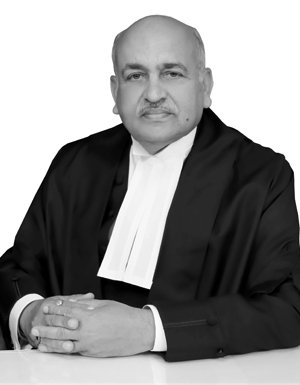

2026 INSC 451 1
REPORTABLE
IN THE SUPREME COURT OF INDIA
CIVIL APPELLATE JURISDICTION
CIVIL APPEAL NO. OF 2026
(Arising out of Special Leave Petition (C) No. 14479 of 2025)
HABBAN SHAH …APPELLANT(S)
VERSUS
SHERUDDIN …RESPONDENT(S)
J U D G M E N T
PANKAJ MITHAL, J.
1. Heard Shri Manoj Swarup, learned senior counsel for the
defendant-appellant and Shri Divyesh Pratap Singh,
learned counsel for the plaintiff-respondent.
2. Leave granted.
3. A short but an intricate question of law which arises for
our consideration in this appeal is: whether the decree of
specific performance passed by the court of first instance
on 31.10.2012 directing for the execution of sale deed on
deposit of the balance sale consideration within three
2
months would be inexecutable for the reason that the
balance sale consideration was not deposited within the
time stipulated.
4. The suit property is an agricultural land admeasuring 12
kanals and 19 marlas situate in village Shikarpur, Tehsil
Tauru, District Mewat in the state of Haryana. The said
land belonged to Habban (defendant -appellant). He
entered into an agreement to sell the said land to
Sheruddin (plaintiff-respondent) for a sale consideration of
Rs.5,00,000/- per acre and received a sum of Rs.80,000/-
in advance. It was agreed that the sale deed shall be
executed on or before 15.03.2006 and that balance sale
consideration would be payable at the time of execution
and registration of sale deed.
5. Upon non-execution of the sale deed within the time
stipulated, the plaintiff-respondent instituted a suit for
specific performance of the aforesaid agreement to sell
dated 19.10.2005. The said suit after contest by the
defendant-appellant was decreed on 31.10.2012 by the
court of first instance. The said decree specifically provided
that the defendant-appellant shall execute the sale in
3
favour of plaintiff-respondent in respect of suit land in
terms of the agreement after receiving the balance sale
consideration within a period of three months from the
date of the judgment and if the sale is not so executed, the
plaintiff-respondent would be entitled to get it executed
through the process of the court.
6. It is not in dispute that the aforesaid decree was
challenged in a first appeal wherein on 17.12.2012 an
interim order was passed restraining both the parties from
alienating suit property till 25.01.2013. The said interim
order was not extended and as such lapsed on 25.01.2013
itself. Finally, the said appeal was dismissed on
11.11.2014 upholding the decree of the first court.
7. The decree so passed by the court of first instance and
confirmed by the first appellate court was taken to the
High Court by means of a second appeal by the defendant-
appellant. Ultimately the same was also dismissed on
12.01.2017. It may be worth noting that in the second
appeal no interim order of any nature was ever passed.
8. In the meantime, the plaintiff-respondent as a decree
holder on 04.03.2013 applied for the execution of the
4
aforesaid decree dated 31.10.2012. However, the said
execution was dismissed for want of prosecution on
01.08.2014. It appears that the execution may not have
been pressed for the reason that an appeal was preferred
by the other side which continued to remain pending
wherein though an interim order was passed for a short
period which lapsed with the efflux of time.
9. Subsequently, the plaintiff-respondent moved another
application dt. 08.01.2015 for execution of the aforesaid
decree of specific performance. In the said execution, the
defendant-appellant filed objections dated 14.07.2015 to
the effect that the execution is barred by time as the
execution has been moved after a gap of three years and
that the decree allowed only three months’ time for
depositing the balance sale consideration.
10. The objections filed in the aforesaid Execution Petition
were dismissed by the Executing Court vide order dated
07.09.2015 primarily on the ground that the plaintiff-
respondent was always ready and willing to perform his
obligation and that the balance sale consideration could
5
not have been deposited due to the interim order passed
in the first appeal or due to its pendency.
11. Not satisfied by the above order passed by the Executing
Court, the defendant-appellant preferred Civil Revision
No.7232 of 2015 before the High Court specifically
contending that the decree of specific performance, in
unequivocal terms directed for the execution of the sale
deed upon receiving the balance sale consideration within
a period of three months. Therefore, the plaintiff -
respondent was under an obligation to deposit the balance
amount within three months and since neither the amount
was deposited nor any extension of time to deposit the
same was applied, he is not entitled to execute the decree.
The decree as such has become inexecutable.
12. The aforesaid revision preferred by the defendant -
appellant has been dismissed by the High Court by order
impugned dated 24.03.2025 , more or less on similar
grounds as assigned by the Executing Court with a further
reasoning that the plaintiff-respondent had in the
meantime moved an application on 05.03.2013 and again
on 08.01.2015 for the deposit of the balance sale
6
consideration and the second application seeking
permission to deposit the balance amount was allowed on
09.10.2015 by the Executing Court and the amount of
Rs.6,92,410/- was duly deposited.
13. The above orders passed by the Executing Court and the
Revisional Court dismissing the objections of the
defendant-appellant and affirming the same, have been
assailed in this appeal.
14. The submission of Shri Manoj Swarup, learned senior
counsel for the defendant-appellant is that the decree
provided for the deposit of balance sale consideration
within a period of three months and since it was not
deposited within the time provided, the decree is no longer
executable. The plaintiff-respondent never moved any
application for the extension of time to deposit the balance
sale consideration and has not even explained the reason
for the delay in making the deposit. Therefore, the
defendant-appellant is entitled to the revocation of the
contract in accordance with provisions of Section 28 of the
Specific Relief Act, 1963
1. In support of his contentions, he
1
Hereinafter referred to as ‘the Act’
7
has relied upon a number of decisions, to be precise four
in number, of this Court in which the latest is Balbir
Singh and Another v. Baldev Singh (Dead) Through his
legal representatives and Others
2.
15. From the other side, it is contended that the decree of
specific performance is clear enough and is an executable
decree. The court of first instance had decreed the suit
after recording clear finding of fact that the plaintiff-
respondent was always ready and willing to perform his
obligations under the agreement. Therefore, the question
of readiness and willingness does not arise at this stage of
the execution. The plaintiff-respondent never denied to
deposit the balance sale consideration rather it was on
account of the defendant-appellant filing an appeal and
obtaining interim order restraining parties from alienating
the property that it was not possible for the plaintiff-
respondent to deposit the amount. There was no need on
his part to deposit the amount as directed, as under the
order of the appellate court sale/alienation was not
permissible. Moreover, once the application of the plaintiff-
2
(2025) 3 SCC 543
8
respondent to permit him to deposit the balance sale
consideration was allowed, it was no longer open for the
defendant-appellant to allege non-compliance of the
decree. In such a scenario, the delay, if any, in depositing
the amount stands condoned or in other words the time
for making the deposit stands extended. It is also
submitted that the defendant-appellant is not entitled to
any benefit under Section 28 of the Act as he never moved
any application for rescinding the contract as envisaged
therein.
16. It is in the above factual position that we have to examine
whether the decree of specific performance passed by the
court of first instance is executable or has become
inexecutable on account of default in depositing the
balance sale consideration within the time stipulated
under the decree.
17. The operative portion of the judgment and decree dated
31.10.2012 reads as under:-
“As a sequel to the findings on issue wise,
the suit of the plaintiff is decreed with costs.
The defendant is directed to execute the sale
deed in favour of the plaintiff in reject to the
suit land in view of the agreement to sell
dated 19.10.2005 after receiving the balance
9
sale consideration within the period of three
months from the date of this judgment failing
which the plaintiff will be at liberty to get
execute the sale deed by approaching this
court. The defendant is also directed to hand
over the possession over the possession of
the suit land legally and the defendant is
restrained from alienating the suit land.
Decree-sheet be prepared accordingly. File
be consigned to the record-room after due
compliance.”
18. A simple reading of the aforesaid directions contained in
the order would reveal that the court had directed the
defendant-appellant to execute the sale deed in favour of
the plaintiff-respondent in terms of the agreement after
receiving the balance sale consideration within the period
of three months from the date of the judgment. Therefore,
the direction is to the defendant-appellant to execute the
sale deed within a period of three months after receiving
the balance sale consideration. There appears to be no
specific direction to the plaintiff-respondent that the
balance sale consideration has to be deposited by him
within three months. The direction in this regard is
specifically to the defendant-appellant to execute the sale
deed within three months on receipt of the balance sale
consideration, which by implication means that there is
10
reciprocal obligation upon the plaintiff-respondent to
deposit the amount within three months. It is only by
necessary implication that the plaintiff-respondent was
required to deposit the amount within three months.
19. It is trite to mention that in view of Order XX Rule 12A CPC
it is mandatory that every decree of specific performance
of a contract must specify the period within which the sale
consideration/the balance sale consideration should be
paid. It is in consonance with the aforesaid provision that
the decree of specific performance in the case at hand
provides for the execution of the sale deed after receiving
the balance sale consideration within a period of three
months.
20. Thus, we assume that there was a specific direction to the
plaintiff-respondent to deposit the amount within three
months of the judgment and therefore, the issue as stated
earlier is; whether non-deposit of the balance sale
consideration within the time stipulated above would be
fatal and would make the decree inexecutable which
otherwise is an executable decree.
11
21. Before we dwell on the merits of the above issue, we would
like to mention that a feeble attempt was made to contend
that the execution as filed by the plaintiff-respondent is
barred by time and that the first execution having been
dismissed, the second was not maintainable.
22. As regards limitation, the decree is dated 31.10.2012
whereas the second execution was filed on 08.01.2015 i.e.,
within three years of the decree and as such the same was
clearly within time. Article 136 of the Schedule to the
Limitation Act, 1963, provides for a period of twelve years
from the decree or the time when it becomes enforceable
in law for filing an application for the execution of any
decree. The execution in the case at hand was moved
within the aforesaid period of twelve years and as such
cannot be said to be barred by limitation.
23. The aforesaid execution is maintainable even otherwise for
the simple reason that the first application was not decided
on merits but was simply dismissed for want of
prosecution. In this connection, reference may be made to
paragraph 25 of Bhagyoday Cooperative Bank Limited
12
v. Ravindra Balkrishna Patel
3, wherein also a second
Execution Petition was filed after the first was dismissed
on the ground of default and the court held that mere
dismissal of the first application on the ground of default
does not preclude the decree holder from filing a fresh
execution within limitation.
24. In view of the above, the objections to the limitation and
maintainability of the execution are not tenable and stand
overruled.
25. Now coming to the merits of the executability of the decree
for specific performance dated 31.10.2012. It may be noted
that the aforesaid decree is an executable decree but is a
conditional decree. It provides for the execution of the sale
deed by the defendant-appellant within three months,
subject to the plaintiff-respondent depositing the balance
sale consideration. Therefore, as stated earlier, the decree
imposes reciprocal obligations upon both the parties. The
obligation of executing the decree is upon receipt of the
balance sale consideration. Therefore, by necessary
implication for the purposes of executing the sale deed, the
3
(2022) 14 SCC 417
13
plaintiff-respondent had to deposit/pay the balance sale
consideration within the time stipulated for depositing the
aforesaid amount or for executing the sale deed, as the
case may be.
26. Admittedly, in the present case, the plaintiff-respondent
had not deposited the balance sale consideration within
the period of three months stipulated under the decree. He
had not even moved any application within the said time
for seeking extension of time, either under Section
148/151 of the CPC or under Section 28 of the Act.
27. The interim order dated 17.12.2012 passed in first appeal
preferred by the defendant-appellant, only restrained the
parties from alienating the suit property. It nowhere
prohibited the plaintiff-respondent from depositing the
balance sale consideration as a prelude to the execution of
the sale deed. Moreover, the aforesaid stay order elapsed
on 25.01.2013 and the first appeal itself was dismissed on
11.11.2014. No doubt, the plaintiff-respondent had moved
application on 05.03.2013 seeking extension of time for
depositing the balance sale consideration but no orders
were ever passed on the said application. The said
14
application was filed after the stay in the first appeal had
expired. Therefore, there was no application seeking
extension of time within the period of three months
stipulated under the decree.
28. Subsequently, plaintiff-respondent filed second
application to deposit balance sale amount on which the
court permitted the deposit of balance sale consideration
vide order dated 09.10.2015, in pursuance whereof the
balance amount was deposited. This was done much after
the first appeal itself was dismissed. The question,
therefore, is whether such permission to deposit or the
deposit itself would ipso facto amount to condoning the
delay in making the deposit and resultantly it amounts to
deemed extension of time. The answer of the above
proposition is an absolute ‘No’.
29. In this connection, it would be profitable to refer to a
decision of this court in P.R. Yelumalai v. N.M. Ravi
4. In
the said case the court was dealing with a similar issue
where the decree holder failed to make the deposit within
the time stipulated under the decree. The court refused to
4
(2015) 9 SCC 52
15
accept the plea that once the deposit is made and accepted
by the court, though beyond the period stipulated under
the decree, it would amount to deemed extension of time.
It was held that the conditional decree is self-operative,
therefore, non-compliance of any condition leads to
automatic dismissal of the suit. In a case, the deposit is
not made within the time permitted and no application is
moved for the extension of time within the said time, it
would amount to failure to comply with the condition of
the decree which leads to the automatic dismissal of the
suit. In other words, it was held that the suit for specific
performance of a contract stands automatically dismissed
when the conditions under the decree are not complied
with by the decree holder and he is not entitled to seek
execution of the decree as it ceases to exist in the eyes of
law due to deemed dismissal of the suit.
30. This being the position in law, the submission that the
plaintiff-respondent had deposited the balance sale
consideration with the permission of the court and the
same was accepted and as such the condition stands
complied with, cannot be accepted.
16
31. One of the other arguments is that the defendant -
appellant had not even filed any application under Section
28 of the Act for rescinding the contract, therefore, no relief
to the above effect could be granted to the defendant-
appellant.
32. The aforesaid argument does not tie down our hands as
this aspect of the matter stands covered by one another
decision of this court rendered in Prem Jeevan v. K.S.
Venkata Raman and Another
5.
33. In the aforesaid case one of the contentions advanced on
behalf of decree holder was that unless an application
seeking recession of the contract in terms of Section 28 of
the Act is filed, judgment debtor is not entitled to the relief
of rescinding the contract. The court upon due
consideration held that failure of the judgment debtor to
seek recession of the contract in terms of Section 28 of the
Act does not imply that the decree which has become
inexecutable would revive and would be executable when
the deposits were not made in time and no application for
extension of time was moved.
5
(2017) 11 SCC 57
17
34. In view of the above decision, it is settled that moving of an
application under Section 28 of the Act for rescinding the
contract for non-compliance of the condition is not
mandatory rather optional and immaterial and that the
court in a given circumstance is not powerless to treat the
contract as having rescinded for non-compliance of the
condition.
35. In view of the ratio laid down in P.R. Yelumalai (supra)
that the suit for specific performance of contract stands
automatically dismissed, no sooner than the condition
contemplated under the decree is not complied with,
coupled with the fact that there is no mandatory
requirement of moving an application for rescinding a
contract in terms of Section 28 of the Act in view of Prem
Jeevan (supra), we are of the opinion that the plaintiff-
respondent having not only failed to deposit the balance
sale consideration within the time stipulated under decree
but also having failed to move any application for
extension of time within the time permitted disentitled
himself from executing the decree. There is neither
automatic extension of time nor condonation of delay in
18
making the deposit. The decree ceases to exists due to non-
compliance and becomes inexecutable.
36. Shri Manoj Swarup, learned senior counsel for the
defendant-appellant had placed strong reliance upon the
recent decision of this court in Balbir Singh and Another
v. Baldev Singh (Dead) through its legal
representatives and others
6. The aforesaid decision
reiterating the earlier precedents holds that the language
of Section 28(1) of the Act establishes that the court does
not lose its jurisdiction after the grant of decree for specific
performance and it does not become functus officio as the
very said provision gives discretionary power to the court
to grant extension of time to comply with the conditions
under the decree and even for the recession of the contract.
Thus, the court retains its power and jurisdiction to deal
with the decree of specific performance till the sale deed is
executed or the decree is rendered inexecutable.
37. The court therein took cognizance to the fact that neither
the deposit was made within the stipulated time nor
extension of time was sought or granted within the time
6
(2025) 3 SCC 543
19
permitted. Further, no explanation was furnished for the
delay in making the deposit and as such held the view
taken that the decree is inexecutable is correct.
38. The aforesaid decision though relied upon by both the
sides does not render much assistance to the plaintiff-
respondent rather helps the defendant-appellant.
39. The above discussion leads us to the following
conclusions:
i. The decree passed in a suit for specific performance is
in the nature of a preliminary decree.
ii. Since the decree of a specific performance is in the
nature of preliminary decree, the Court passing the
same does not become functus officio as soon as the
decree is passed but retains control over the decree
even after the passing of the decree till the sale deed
is executed or the decree is rendered inexecutable.
iii. Section 28 (1) of the Act provides for depositing or
paying the balance sale consideration within the time
allowed or to seek recession of the contract in the
event of default even though the decree of specific
performance has been granted.
20
iv. Sub-Section (4) of Section 28 of the Act bars a
separate suit for any relief which can be claimed in
the same suit by moving an application under Section
28 of the Act.
v. The power of the Court under Section 28 of the Act is
discretionary and can be exercised on equitable
consideration. The exercise of such discretion must be
equitable to both the sellers and purchasers.
vi. The default, if any, subsequent to decree for the
specific performance resulting in the recession of
contract has to be decided having regard to the broad
terms of Section 28 (1) and Section 28 (4) in exercise
of equity jurisdiction so as to give quietus to the
dispute; and
vii. It is not mandatory to move an application under
Section 28 and that the Court in the given
circumstances is not powerless to treat the contract
as having rescind it for non-compliance of the
condition.
21
40. The plaintiff-respondent has placed reliance upon Dr.
Amit Arya v. Kamlesh Kumari
7 which is also a very
recent decision of this court. In the said case, the court
observed that the power to extend time granted can be
exercised by the court, however, non-grant of extension of
time cannot be the end of the transaction. Such non -
extension of time would be a classic example of a hyper
technical approach which the court must eschew in view
of Ram Lal v. Jarnail Singh (now Deceased), through
its LRs and Others
8, wherein it has been observed that
“non-payment of balance sale consideration within the
time period fixed by the trial court does not amount to
abandonment of the contract and consequent rescinding
of the same. The real test must be to see if the conduct of
the decree holder amounts to a positive refusal to complete
his part of the contract”.
41. In view of the above decision, we have to examine whether
there was any positive act on part of the plaintiff-
respondent for non-compliance of his obligation of
7
2025 SCC OnLine SC 2886
8
2025 SCC OnLine SC 584
22
depositing the balance sale consideration as per the
decree.
42. At the cost of repetition, we must remind that the decree
for specific performance was passed on 31.10.2012 and
the interim order granted in first appeal lapsed on
25.01.2013, but the plaintiff-respondent neither deposited
the balance sale consideration, if he was ready and willing
to perform his obligation, within the period of three months
contemplated under the decree nor cared to move any
application seeking extension of time for depositing the
balance amount on any ground, much less for the reason
that the decree had not attained finality and was subject
matter of appeal. This shows that the plaintiff-respondent
was shying away from performing his obligation.
43. It is pertinent to mention here that the relief of specific
performance of an agreement is an equitable and a
discretionary relief in terms of Section 16 (C) and Section
20 of the Act. It is not mandatory upon the court to grant
the relief of specific performance even if it legally appears
to be correct.
23
44. In N.P. Thirugnanam (Dead), by LRs v. Dr. R. Jagan
Mohan Rao and Others
9, the court observed that to
adjudge whether the plaintiff is ready and willing to
perform his part of the contract, it must take into
consideration the conduct of the plaintiff, both prior to the
filing of the suit and subsequent to the filing of the suit
along with other attending circumstances. The court is not
bound to grant the relief of specific performance merely
because there was a valid agreement or at one point of time
the plaintiff was ready and willing to perform his
obligation. The relief of specific performance is an
equitable remedy and it is on the discretion of the court to
grant or not to grant such a relief.
45. Once it is accepted that the relief of specific performance
is an equitable and a discretionary relief, therefore, he who
seeks equity must ensure that equity is done to the
opposite party. The final end of law is nothing but justice,
therefore, the parties to the suit for specific performance
should be informed by equity. In other words, he who
seeks equity must do equity.
9
(1995) 5 SCC 115
24
46. In view of the above legal position when the relief of specific
performance is an equitable and a discretionary relief and
the same having been granted, the plaintiff-respondent
must perform his part of the obligation in time. The
condition to deposit the balance sale consideration within
three months under the decree partakes the condition
under the agreement and makes the aforesaid time as an
essence of the agreement. Therefore, the plaintiff -
respondent is obliged to establish his readiness and
willingness to perform his obligation by depositing the
balance sale consideration strictly within the time allowed.
It is not at all equitable to condone the delay on his part in
depositing the balance sale consideration or extending the
time for the same, more particularly when due to non-
compliance, the suit itself stands automatically dismissed
and the decree vanishes. The conduct of the plaintiff-
respondent disentitles him the relief which was earlier
granted in view of the long passage of time since 2005
when the agreement was entered into till date as in
between land prices might have increased manifold.
25
47. In the end, an attempt has been made from the side of the
plaintiff-respondent to contend that when valuable rights
have accrued in his favour on account of the decree of
specific performance, such rights cannot be taken away
and that the view which assist the decree must be adopted.
48. It is true that the rights accrued ought not to be disturbed
unless there are strong reasons for the same. In the
present case, the plaintiff-respondent got the decree by
establishing his readiness and willingness to perform his
part of the agreement but n onetheless he failed to
establish his continuous readiness and willingness till the
execution of the sale deed. If he was ready and willing to
perform his part of the agreement till the stage of decreeing
the suit, there would have been no problem on his part in
immediately complying with his obligation under the
decree by depositing the balance sale consideration within
the time permitted. The plaintiff-respondent having failed
to abide by such a condition indicates that he was not
actually ready and willing to perform his obligation under
the decree which obligation, in essence, took the shape of
a condition under the agreement. In such circumstances,
26
the plaintiff-respondent disentitled himself from the
benefit of the decree of specific performance. Therefore, the
submission that the view which assist the decree must be
adopted is not tenable in the facts and circumstances of
the present case.
49. It is trite to mention that Section 28 of the Act provides
that the Court has to pass an order as the justice of the
case may require. The parties approaching the Court must
have the feeling that justice has been done to either of
them in the facts and cir cumstances of the case
particularly when the decree relates to specific
performance of a contract based upon equity, equality and
fairness. Therefore, it is incumbent upon the Court to pass
an equitable order accordingly, balancing the equities
between the parties.
50. In the above context, post-hearing, we interacted with the
learned counsel for the parties. Shri Manoj Swarup,
learned senior counsel for the defendant -appellant,
submitted that the defendant-appellant is not in a position
to offer any amount and that at best he can leave one-half
acre out of the two and a half acres involved in the
27
agreement, i.e., 4 kanals to make good the loss, if any,
suffered by the plaintiff-respondent. It may be worth
noting that the defendant-appellant had received part of
the sale consideration amounting to Rs. 80,000/- on
19.10.2005. Therefore, in the facts and circumstances, we
consider it prudent to order refund of the earnest money
with simple interest so as to adjust the equities.
51. We have deliberately not touched the submission of the
parties on the doctrine of merger as facts in that regard
were not clear on record. Moreover, the parties have
proceeded to make their submissions on the basis of the
judgment and decree passed by the court of first instance
rather than that of the first appellate Court or the second
appellate Court. The first appellate Court and the Court of
second appeal have not granted any time either for the
execution of the sale deed or for the deposit of balance sale
consideration. Therefore, the time provided by the Court of
first instance under the decree is the material time within
which the parties were required to fulfil their reciprocal
obligations. Accordingly, we have not dealt with the
decision in the case of Surinder Pal Soni vs. Sohan Lal
28
(Dead) through LRs.
10 which is primarily on the doctrine
of merger.
52. In view of the aforesaid facts and circumstances, the
decree of specific performance dated 31.10.2012 is
rendered inexecutable on account of non-compliance of
the condition to deposit the balance sale consideration
within the time of three months stipulated therein and the
contract as a whole stand rescinded in terms of Section 28
of the Act.
53. Accordingly, the impugned judgment and order dated
24.03.2025 passed by the High Court of Punjab and
Haryana at Chandigarh in Civil Revision No.7232 of 2015
and that of the Executing Court dated 07.09.2015
dismissing the objections, are hereby set aside. The
objections are upheld and the execution proceedings are
directed to be closed with the direction to the defendant-
appellant to refund of the part sale consideration or the
earnest money of Rs.80,000/- received by him with simple
interest at the rate of 8 percent per annum from the date
of its receipt i.e.,19.10.2005 till its refund. In the event, the
10
(2020) 15 SCC 771
29
defendant-appellant is unable to refund the said amount,
it would be open for him to sell his ½ acre of the said land
to the plaintiff-respondent or to any other third party if he
refuses to purchase and may make the payment of the
aforesaid amount by the sale of the said land within a
period of three months.
54. The appeal is allowed accordingly.
55. Pending application(s), if any, stands disposed of.
…………………………….. J.
(PANKAJ MITHAL)
…………………………….. J.
(S. V. N. BHATTI)
NEW DELHI;
MAY 6, 2026.

 Login with google
Legal Notes
Add a Note....