

No Acts & Articles mentioned in this case
2025 INSC 178 REPORTABLE
IN THE SUPREME COURT OF INDIA
CRIMINAL APPELLATE JURISDICTION
CRIMINAL APPEAL NO. 1387 OF 2012
HANSRAJ …APPELLANT(S)
VERSUS
STATE OF CHHATTISGARH …RESPONDENT(S)
J U D G M E N T
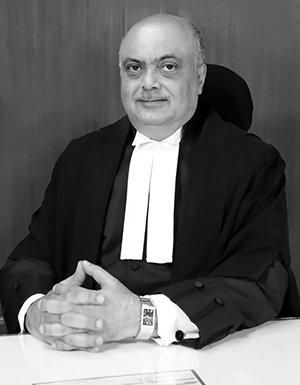
PANKAJ MITHAL, J.
1. The appellant Hansraj is a convict for offence under Section
302 IPC
1
for murdering Ramlal of village Ghotha Sakulpara
Bhanupratappur, District Kanker, Chhattisgarh and has
been awarded life imprisonment and fine of Rs.1000/-.
2. The order of conviction and sentence of the Trial Court
dated 19.12.2002 has been confirmed by the High Court in
1 Indian Penal Code
1
appeal by the impugned judgment and order dated
30.07.2010.
3. The appellant preferred the Special Leave Petition with delay
of 653 days which was condoned and leave to appeal was
granted. Since the appellant had remained in jail for over 10
years, he was directed to be released on bail by this Court.
4. The case of the prosecution is based only on circumstantial
evidence and there is no eyewitness to the incident.
5. The argument of the learned counsel for the appellant is
that it is a completely false case and that even the
circumstances have not been proved conclusively to hold the
appellant guilty and there are stark contradictions in the
testimonies of the prosecution witnesses.
6.The incident is of 28.03.2002. It is alleged that the
appellant was residing with the deceased and was assisting
him in his work for the last over two months. On the fateful
day the appellant at 7:00 am in the morning left for his
native place on cycle with a bag but is set to have returned
2
at around 9:00 am claiming that his cycle got punctured. He
therefore asked for money from Budhiyarin Bai (PW-5) the
wife of the deceased, to get the puncture repaired.
Budhiyarin Bai told him that she had no money readily
available at home and that he can take paddy and sell it in
the market, but he refused. So, Budhiyarin Bai herself went
to the market to sell the paddy, leaving the appellant and
her husband at home. When she returned at about 9:30
am, she saw the appellant fleeing with a farsi (Ex P/6) in his
hand and discovered that her husband is lying on the floor,
profusely bleeding with his neck severed. She therefore
raised an alarm and upon hearing her cries her neighbours
Jogeshwar (PW-3) and Jhadu Ram (PW-4) came and they
also saw her husband lying dead. The neighbours informed
another villager namely Jogi Ram (PW-1) who also came on
the spot and thereafter proceeded to the Police Station
Bhanupratappur to lodge an FIR. He lodged the FIR at
11:15 am on the same day.
3
7.It is alleged that the relationship of the appellant with the
deceased was strained probably on account of non-
payment/untimely payment of his wages. The appellant was
the person last seen in the company of the deceased and
that the weapon of recovery i.e., farsi was recovered at his
pointing out. The injuries sustained by the deceased were
opined to have been caused by the weapon recovered. In
these circumstances, the prosecution asserts that the
evidence on record proves beyond reasonable doubt that the
appellant alone is the person who committed the offence
and that he has been rightly convicted and sentenced by the
two Courts below.
8.Undisputedly, the case of the prosecution is based on
circumstantial evidence and there is no eyewitness to the
commission of the offence in as much as the wife of the
deceased, Budhiyarin Bai, was also not present at the time
of the commission of the offence and had discovered that
her husband was lying on the floor bleeding profusely with
4
neck severed upon returning from the market. She probably
saw the accused fleeing from the scene of crime.
9.The law with regard to a case based purely on
circumstantial evidence stands crystalised by the decision
of this Court in the case of Sharad Birdhichand Sarda vs
State of Maharashtra
2
wherein five golden principles
known as panchsheel proof of a case based on
circumstantial evidence were enshrined namely (i) the
circumstances from which the conclusion of guilt is to be
drawn should be fully established crafting out a distinction
between ‘may be’ established and ‘must or should’ be
established; (ii) the facts established should be consistent
with the hypothesis of the guilt of the accused; (iii) the
circumstances should be of a conclusive nature; (iv) the
circumstance should exclude every other possible
hypothesis except the one to be proved i.e., the guilt of the
accused; and (v) there must be a chain of evidence so
complete as not to leave any reasonable ground for
2 (1984) 4 SCC 116
5
conclusion that the accused is innocent and must show
that in all human probability the act must have been done
by the accused.
10.In other words, the chain of events leading to the
prosecution of the convict must conclusively be established
with certainty and there shall not be any room for any
second opinion which may lead to the innocence of the
accused.
11.The appellant is said to have a motive to kill the deceased.
The alleged motive being that he was living as a servant of
the deceased for the last two months and there was some
discord between him and the deceased in connection with
non-payment/untimely payment of wages. However, such a
discord is not of such a nature of extent which may lead to
such a drastic action on part of the appellant to kill the
deceased. The issue of non-payment of wages is hardly
material and is so trivial a matter so as to compel anyone to
take an extreme step of committing a crime of such a grave
6
nature. Moreover, there is no material evidence to prove any
discord between the two.
12.In so far as the last seen theory is concerned, that the
appellant was in the company of the deceased at the time
when Budhiyarin Bai (PW-5) the wife of the deceased went
to the market to sell paddy also appears to be a little
doubtful. It is the consistent case of all the witnesses
including Budhiyarin Bai (PW-5) that the appellant had left
in the morning at about 7:00 am for his native place and
that as told by Budhiyarin Bai (PW-5) he returned around
9:00 am as his cycle’s tyre got punctured. The fact that he
actually returned as alleged does not stand established by
any independent evidence except for the statement of
Budhiyarin Bai (PW-5). However, her statement could not be
corroborated by any piece of evidence. It is hardly believable
that a person whose relationship with the deceased was not
cordial and has left for his native place in disgust would
return soon thereafter. The cycle of the appellant was
recovered by the police but no effort was made to find out if
7
either of the tyres was actually punctured, which could have
proved that the appellant may have returned as the cycle’s
tyre got punctured.
13.The weapon of crime i.e., farsi (Ex P/6) was set to have been
recovered after 20-25 days of the incident on the pointing
out of the appellant. It has come in evidence that it had
some blood stains. However, no forensic report was brought
on record to prove that the blood stains on it matched with
that of the blood of the deceased. Merely for the reason that
the doctor opined that the injuries on the deceased may
have been caused by a similar weapon would not conclude
that the recovered farsi was the weapon of crime. Similar
and identical instruments like farsi are found in almost
every home in the village as it is one of the most used
farming equipment. That apart, Jogi Ram, who lodged the
complaint, in his cross examination stated that the farsi
was lying in an open place, referring to the place of the
commission of the crime. The said statement completely
belies the fact that the farsi was recovered subsequently
8
from the field of one Chamaru Ram. The recovery of the
weapon of crime or the farsi, which was recovered, is
doubtful and it is also not certain that it was actually the
weapon of crime.
14.One important circumstance pointing to the involvement of
the appellant is that he was seen running from the village
both by Budhiyarin Bai (PW-5) and Jogi Ram (PW-1).
Budhiyarin Bai in her statement in unequivocal terms
stated that when she returned home after selling the paddy,
the appellant had fled. It means that she had not found and
seen the appellant at the place of the crime after her return
as he had already fled. However, in her cross examination
she took a summersault and stated that when she came
back, she saw the appellant Hans Raj running from the
house with the farsi. Jogi Ram (PW-1) who at the time of
occurrence of the incident was working in his field, stated
that he had seen the appellant running before he came to
know about the incident through Jogeshwar (PW-3),
whereupon he went to the house of the deceased. In his
9
cross examination, he further stated that the wife of the
deceased, Budhiyarin Bai, told him that when she came
back after selling paddy, her husband was lying on the spot
and the appellant had disappeared. PW-1 nowhere stated
that Budhiyarin Bai saw the appellant fleeing from the spot
rather, she only informed that the appellant had already
disappeared when she returned from the market. Later, in
the cross-examination, Jogi Ram stated that while working
in the field collecting mahuva he only saw a man running
from a distance of more than a furlong. But he never named
the person who was running. Therefore, the evidence of
none of the two witnesses could conclusively establish that
they saw the appellant running or fleeing from the place of
crime or from the village. The identity of the person running
away had not been established by any evidence.
15.In addition to this, according to the prosecution, the clothes
of the appellant which he was wearing at the time of the
incident were produced by one Pritam Singh (PW-9) who
was declared to be hostile. The said clothes again had the
10
blood stains but no forensic report was produced to prove
that the blood of those stains matched with the blood of the
deceased.
16.In the aforesaid facts, the circumstances raising finger upon
the appellant, are not of a conclusive nature to prove beyond
the shadow of doubt that the appellant was the person
responsible for the commission of the crime. The possibility
of innocence of the appellant does not stand excluded as per
the chain of events.
17.Thus, in the facts and circumstances of the case, the
appellant cannot be held guilty of the commission of the
offence beyond reasonable doubt and therefore, in such
circumstances the benefit of doubt goes in his favour.
Accordingly, we are of the opinion that the Courts below
have manifestly erred in convicting him for the aforesaid
offence.
18.The impugned judgment and orders dated 19.12.2002 and
30.07.2010* are hereby set aside and the appellant is
acquitted from the offence charged with. He has already
11
suffered incarceration for over 10 years. He is already on
bail. His sureties and bail bonds are discharged.
19.The appeal is allowed accordingly.
.........………………………….. J.
(PANKAJ MITHAL)
...……………………………….. J.
(AHSANUDDIN AMANULLAH)
NEW DELHI;
FEBRUARY 10, 2025.
* Corrected in terms of Corrigendum dated 26.03.2025.
12

 Login with google
Legal Notes
Add a Note....