
As per case facts, the petitioner's husband, an Army officer, along with their two minor sons, were injured in a road accident caused by a State Road Transport Corporation bus. ...
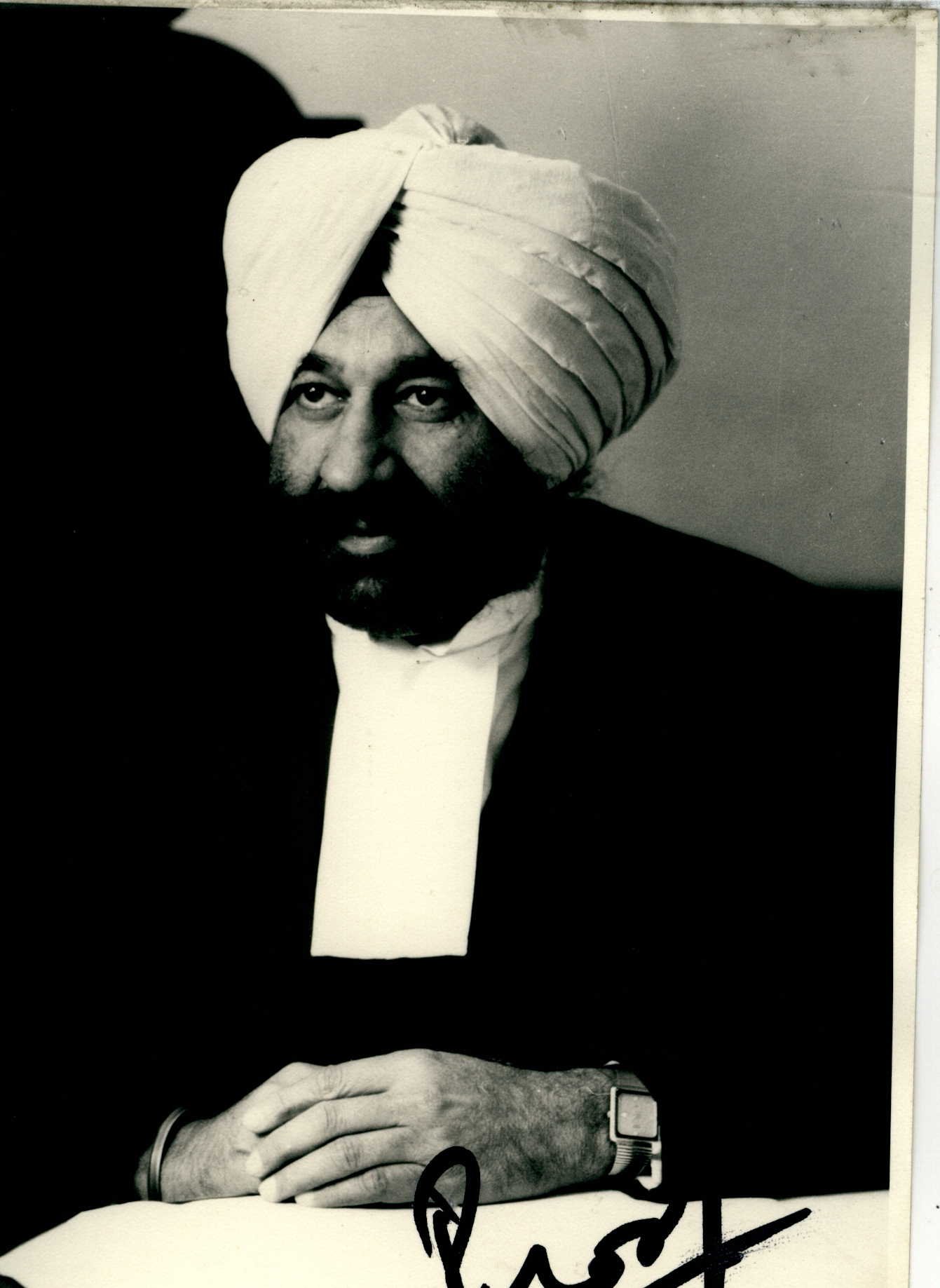
No Acts & Articles mentioned in this case
http://JUDIS.NIC.IN SUPREME COURT OF INDIA Page 1 of 6
PETITIONER:
HERDEO KAUR AND ORS.
Vs.
RESPONDENT:
RAJASTHAN STATE TRANSPORT CORPORATION AND ANR.
DATE OF JUDGMENT13/03/1992
BENCH:
KULDIP SINGH (J)
BENCH:
KULDIP SINGH (J)
YOGESHWAR DAYAL (J)
CITATION:
1992 AIR 1261 1992 SCR (2) 272
1992 SCC (2) 567 JT 1992 (2) 409
1992 SCALE (1)662
ACT:
Motor Vehicles Act, 1939:
Section 110 and 110-B-Accident claim-Award of
compensation-Criteria for-Determination of-Adoption of
Liberal approach-Need for.
HEADNOTE:
The first appellant, her husband a young Army officer
of 36 years and their two minor sons were injured in a road
accident when the respondent-State Road Transport
Corporation's bus struck against the car in which they were
travelling. While the appellant's husband succumbed to the
injuries, one of he sons received multiple injuries and
another received injury on the forehead and multiple
abrasions on various parts of the body. The first
appellant, however, received minor injuries.
The first appellant, her two minor sons and daughter
filed a claim petition before the Motor Accidents Claims
Tribunal. The Tribunal found that the accident took place
due to rash and negligent driving of the bus by the driver.
Regarding quantum of compensation, it held that the deceased
was spending half of his salary on his personal needs, that
the normal life expectancy of the deceased, who was 36 years
of age when the mishap occurred, was 20 years since the
normal life span of an army Officer was 56 years and,
therefore, a compensation of Rs. 2,64,000 should be awarded
for the loss of the deceased's and that after deduction of
1/3 on account of lumpsum payment, an amount of Rs. 1,76,000
should be paid as damages to heirs of the deceased. The
Tribunal also awarded Rs. 3.000 and Rs.1,000 respectively to
the two sons. It further awarded interest at the rate of 6
per cent per annum from the date of application before the
Tribunal till the date of realisation. The widow and her
children filed appeal before the High Court for enhancement
of compensation but the same was dismissed.
In the appeal, by special leave, before this Court on
behalf of the
273
widow, and her minor children, it was contended that the
finding of the Courts below that the deceased, being an army
officer used to spend one half of his salary on personal
http://JUDIS.NIC.IN SUPREME COURT OF INDIA Page 2 of 6
expenditure, was grossly erroneous and based on mere
surmised and conjectures, that it was specifically pleaded
before the Tribunal that the deceased used to spend nearly
Rs. 1,400 per month on his family, which was solely
dependent upon him, that there was no basis to take the life
span of an army officer to be 56 years, and it should be
taken to be 70 years in the modern environments, that the
deduction of 1/3rd assessed compensation on account of
lumpsum payment was wholly unjustified, that the
compensation awarded to the minor children was on the lower
side and that no compensation was awarded for loss of
consortium to wife and the minor children
Allowing the appeal, this Court,
HELD : 1.1 There was no basis or justification before
the Tribunal to have reached the finding that the deceased
was spending half of the salary on himself. On the other
hand, it was specifically claimed by the appellants that he
was spending nearly Rs. 1,400 per month to support his
family. It is common knowledge that personal needs of army
officers including drinks are supplied to them at a
subsidised price through the Army canteens. Therefore, the
finding of the courts below is set aside. The deceased was
spending Rs. 1,400 per month on his family. [277B-C]
1.2 The span of life should be taken to be 70 years in
view of the high rise in life expectancy. It is specially
so in the case of Army officers who are disciplined to live
an active and energetic life. the courts below were,
therefore, not justified in taking the normal span of life
to be 60 years and that of an Army officer 56 years. [277D]
Jyotsna Dey v. State of Assam, (1987) ACJ 172, applied.
1.3 The deduction of 1/3rd out of the assessed
compensation on account of lumpsum payment is not justified.
The accident took place in July, 1977 and the litigation has
come to an end, 15 years thereafter. The delay in the final
disposal of motor accident compensation cases, as in all
other classes of litigation, takes a sting out of the laws
of compensation and added to that the monstrous inflation
and the consequent fall in the value of rupee makes the
compensation demanded years ago, less than quarter of its
value when it is received after such a long time. With the
274
value of rupee dwinding, due to high rate of inflation,
there is no justification for making deduction due to
lumpsum payment. Therefore, the courts below were not
justified in making lumpsum deduction in this case.
[277E-F, G]
Motor Owners Insurance Company Ltd v. J.K. Modi,
(1981) ACJ 507; Manju Shri Raha v. B.L. Gupta (1977) ACJ 134
and India Insurance Co. Ltd. v. Nirmala Devi, (1980) ACJ 55,
relied on.
1.4 The Tribunal became oblivious of the fact that
there is time bound consideration for promotion in the Army.
Apart from that there have been upward revisions in the pay-
scales of Army personnel. No compensation was awarded for
the loss of consortium to the wife and children. Even the
life expectancy was taken to be as low as 56. Considering
all these circumstances a multiplier of 24 would meet the
ends of justice.
[278B-C]
1.5 Thus, the annual amount which the deceased was
spending for his family comes to Rs.16,800 (Rs. 1400 x 12)
which multiplied by 24 comes to Rs.4,03,200. Therefore, the
amount of damages to be allowed to the appellant-claimants
is assessed at Rs.4,03,200. [278D]
1.6 The Tribunal was right in holding that the injuries
http://JUDIS.NIC.IN SUPREME COURT OF INDIA Page 3 of 6
on the person of the first appellant were not such as to
entitle her to claim compensation. However, the
compensation awarded to the young boys is on the lower side.
It should be Rs. 10,000 in the case of first son and
Rs.5,000 in the case of second son. [278E]
1.7 In the circumstances, the claimants are entitled to
a total sum of Rs.4,18,200 as damages on account of the
death of the first appellant's husband and injuries received
by the two sons. They are also entitled to claim interest
@ 12% p.a. instead of 6% awarded by the Tribunal from the
date of the application before the Tribunal till the date of
realisation. Both the opposite parties are jointly and
severely responsible to pay the decretal amount. [278G-H,
279A]
Chameliwati v. Delhi Municipal Corporation, (1985) ACJ
645 and Jagbir Singh and Others v. General Manager, Punjab
Roadways and Others, (1987) ACJ 15, relied on.
275
JUDGMENT:
CIVIL APPELLATE JURISDICTION : Civil Appeal No. 2559 of
1992.
From the Judgment and Order dated 2.3.1988 of the
Allahabad High Court in F.A.F.O. No. 309 of 1980.
Praveen Kumar for the Appellants.
Yogeshwar Prasad and Sushil Kumar Jain for the
Respondents.
The Judgment of the Court was delivered by
KULDIP SINGH, J. Special leave granted.
Major Dalip Singh, alongwith his wife Hardeo Kaur and
his two sons Jasminder Singh (10 years) and Balvinder Singh
(7 years), was travelling in his Ambassodor car from Mathura
to Delhi on July 30, 1977. A Rajasthan State Road Transport
Corporation's bus driven by Ramesh Chandra Sharma struck
against the Ambassador car driven by Major Dalip Singh.
Major Dalip Singh, his wife and sons were injured in the
accident. Unfortunately Major Dalip Singh succumbed to the
injuries. Master Jasvinder Singh received multiple injuries
including fracture of nasal bone. His yonger brother
Balvinder Singh received injury on the forehead and multiple
abrasions on various parts of body. Hardeo kaur, however,
received minor injuries. A claim petition was filed by
Hardeo Kaur, her two minor sons and daughter Davendra Kaur
(6 years) before the Motor Accidents Claims Tribunal,
Mathura. The Tribunal by its judgment dated January 29,
1980 found on the basis of the evidence adduced before it
that the accident took place due to rash and negligent
driving of the bus by the driver Ramesh Chandra Sharma.
Regarding quantum and assessment of compensation the
Tribunal held as under :
"In the present case the evidence shows that Major
Dalip Singh was drawing a monthly salary of Rs.
2200. He died leaving a wife and three minor
children. Normally it is to be presumed that the
deceased was spending 1/3rd of his salary on
personal expenses. In the present case the deceased
was an Army Officer. Experience shows that the
personal expenses of Army Officers are more than
the other Civil servant specially because they have
to spend amount on mess expenses and on drinks etc.
Evidence also shows that Major Dalip Singh."
276
occasionally used to take drinks, though
http://JUDIS.NIC.IN SUPREME COURT OF INDIA Page 4 of 6
moderately. In view of all these facts I am of the
opinion that it must be held that Major Dalip Singh
was spending half of his salary on personal
expenditure while the remaining half was spent on
his family. He was aged 36 at the time when this
occurrence took place. The normal span of life is
taken as 60 years, but in my opinion in the case of
army officers this span should be taken as 56
years. Army officers are also retired about 4
years earlier than civil government servants. Thus
the normal expectancy of life of Major Dalip Singh
was (56-36) 20 years. Thus the annual amount which
Major Dalip Singh was spending for his family comes
to Rs. 1100x12 = 13,200.00 which multiplied by 20,
which was the average expectancy of life in his
case, amounts to Rs.2,64,000. Out of this,
deduction of 1/3rd should be made on account of
lumpsum payment. The balance amounts to Rs.
1,76000 which should be the amount of damages to be
allowed to the heirs of deceased Major Dalip
Singh."
So far as Jasminder Singh and Balvinder Singh are
concerned the Tribunal awarded Rs. 3,000 and Rs. 1,000
respectively. the Tribunal thus awarded a sum of Rs.
1,80,000 as damages on account of the death of Major Dalip
Singh and injuries received by his minor sons. The Tribunal
further awarded interest at the rate of 6 per cent per annum
from the date of application before the Tribunal till the
date of realisation. Hardeo kaur and her children filed
appeal before the High Court for enhancement of
compensation but the same was dismissed on March 2, 1988.
Hence this appeal by the widow and her minor children.
The learned counsel for the appellants has argued that
the courts below have grossly erred in reaching a finding
that the late Major Dalip Singh being an army officer used
to spend one half of his salary on personal expenditure.
According to him the finding is based on mere surmises and
conjectures. He has stated that it was specifically pleaded
before the Tribunal that Major Dalip Singh used to spend
nearly 1400 per month on his family which was solely
dependent upon him. The learned counsel has also argued
that there was no basis to take the life span of an army
officer to be 56 years. According to him the life span
should be taken to be 70 years in the modern environments.
The learned counsel has contended that the deduction of
1/3rd assessed compensation on account of lumpsum
277
payment is wholly unjustified. He further contended that
the compensation awarded to the minor children is on the
lower side and no compensation was awarded for loss of
consortium to wife and the minor children.
We see considerable force in the arguments of the
learned counsel for the appellants. There was no basis or
justification before the Tribunal to have reached the
finding that Major Dalip singh was spending have the salary
on himself. On the other hand it was specifically claimed
by the appellant that he was spending nearly 1400 per month
to support his family. It is common knowledge that personal
needs of army officers including drinks are supplied to them
at a subsidised price through the Army canteens. We
therefore, set aside the finding of the courts below and
hold that late Major Dalip Singh spending Rs. 1400 per
month on his family.
This Court in Jyotsna Dey v. State of Assam, (1987) ACJ
172 has observed that the span of life should be taken to be
http://JUDIS.NIC.IN SUPREME COURT OF INDIA Page 5 of 6
70 years in view of the high rise in life expectancy. It is
specially so in the case of Army officers who are
disciplined to live an active and energetic life. The
courts below were not justified in taking the normal span of
life to be 60 years and that of an Army officer 56 years.
We are of the view that deduction of 1/3rd out of the
assessed compensation on account of lump-sum payment is not
justified. The accident took place in July, 1977 and the
litigation has come to an end, hopefully, today, 15 years
thereafter. This court in Motor Owners Insurance Company
Ltd v. J.K. Modi, (1981) ACJ 507 held that the delay in the
final disposal of motor accident compensation cases, as in
all other classes of litigation, takes a sting out of the
laws of compensation and added to that the monstrous
inflation and the consequent fall in the value of rupee
makes the compensation demanded years ago, less than quarter
of its value when it is received after such a long time. In
Manju Shri Raha v. B.L. Gupta, (1977) ACJ 134 this Court
awarded compensation by multiplying the life expectancy
without making any deductions. With the value of rupee
dwindling due to high rate of inflation, there is not
justification for making deduction due to lump-sum payment.
We, therefore, hold that the courts below were not justified
in making lump-sum deduction in this case.
This Court in India Insurance Co. Ltd v. Nirmla Devi,
(1980) ACJ
278
55 held as under :
"The determination of the quantum must be liberal,
not niggardly since the law values life and limb in
free country in generous scales."
The Tribunal became oblivious of the fact that there is
time-bound consideration for promotion in the Army. Apart
from that there have been upward revisions in the pay-scales
of Army personnel. No compensation was awarded for the loss
of consortium to the wife and children. Even the life
expectancy was taken to be as low as 56. Considering all
these circumstances we are of the view that a multiplier of
24 would meet the ends of justice.
Thus the annual amount which Major Dalip Singh was
spending for his family comes to Rs. 16,800 (Rs. 1400x12)
which multiplied by 24 comes to Rs. 4,03,200. We,therefore,
assess the amount of damages to be allowed to the appellant-
claimants at Rs. 4,03,200.
We agree with the tribunal that the injuries on the
person of Hardeo kaur were not such as to entitle her to
claim compensation. The compensation awarded to the young
boys, according to us, is on the lower side. We assess Rs.
10,000 in the case of Jasminder Singh and Rs. 5000 in the
case of Balwinder Singh.
The tribunal has awarded interest @ 6% p.a. from the
date of filing of the application before the tribunal till
the date of realistion. In Chameliwati v. Delhi Municipal
Corporation, (1985) ACJ 645 this Court awarded interest @
12% p.a. from the date of the application similarly in
Jagbir Singh and Others v. General Manager, Punjab Roadways
and Others, (1987) ACJ 15, this Court enhanced the interest
from 6% p.a. to 12% p.a. We, therefore, hold that apart
from the damages the appellants are entitled to claim
interest @ 12% p.a. instead of 6% awarded by the tribunal.
In view of above discussion the claimants are entitled
to a total sum of Rs. 4,18,200 as damages on account of the
death of Major Dalip Singh and injuries received by
Jasminder Singh and Balwinder Singh. The appellants are
also entitled to claim interest @ 12% p.a. from September 3,
http://JUDIS.NIC.IN SUPREME COURT OF INDIA Page 6 of 6
1977, the date of the application before the tribunal till
the date of
279
realisation. Both the opposite parties are jointly and
severely responsible to pay the decretal amount.
The judgments of the tribunal and of the High Court are
modified and the appeal is allowed in the terms indicated
above with costs which are assessed at Rs. 5,000.
N.P.V Appeal allowed.

 Login with google
Legal Notes
Add a Note....