
As per case facts, Petitioners sought re-evaluation of their answer sheets for Additional District Judge posts, alleging arbitrary mark cuttings. Petitioner-1 failed the written exam, while Petitioner-2, despite performing well ...
CWP-29498-2024 (O&M) -1-
CWP-3255-2025 (O&M)
IN THE HIGH COURT OF PUNJAB & HARYANA
AT CHANDIGARH
Reserved on : 18.11.2025
Pronounced on : 17.02.2026
Uploaded on : 17.02.2026
Whether only operative part of the judgment is
pronounced or the full Judgment is pronounced: Full judgment.
1. CWP-29498-2024 (O&M)
PUNEET AGGARWAL
... PETITIONER
Versus
PUNJAB AND HARYANA HIGH COURT AND OTHERS
... RESPONDENTS
2. CWP-3255-2025 (O&M)
HARVINDER SINGH JOHAL
... PETITIONER
Versus
PUNJAB AND HARYANA HIGH COURT AND OTHERS
... RESPONDENTS
CORAM:- HON'BLE MR. JUSTICE SHEEL NAGU, CHIEF JUSTIC E
HON'BLE MR. JUSTICE SANJIV BERRY
Present:- Mr. Kanwaljit Singh, Senior Advocate,
with Mr. Deepkaran Dalal, Advocate,
and Mr. Nishant, Advocate,
for the petitioner (in CWP-29498-2024).
Mr. Prashant Bhushan, Senior Advocate,
(through Video Conferencing)
with Mr. Vishal Aggarwal, Advocate,
for the petitioner (in CWP-3255-2025).
Ms. Munisha Gandhi, Senior Advocate,
with Ms.Shubreet Kaur Saron, Advocate,
CWP-29498-2024 (O&M) -2-
CWP-3255-2025 (O&M)
and Ms. Manveen Narang, Advocate,
for respondent-High Court.
*****
SANJIV BERRY, J.
1. Both the aforesaid writ petitions under Article 226 and 227 of the
Constitution of India have been preferred by the respective petitioners seeking
quashing of the act of respondents in not considering their candidature for the
post of Additional District Judge based on the notifications dated 14.11.2023 and
15.11.2023 issued by the respondent High Court, and further seeking writ of
mandamus directing respondents to consider their candidature for the said post.
2. In nut shell, the case pleaded by the petitioners in their respective
petitions happens to be that the petitioner in CWP-29498-2024 (hereinafter
referred to as petitioner-1) had applied for the post of Additional District Judge
in the State of Haryana on the basis of notification no. 188 Gaz.I/VI.F.2 dated
15.11.2023, while the petitioner in CWP-3255-2025 (hereinafter referred to as
petitioner-2) had applied for the post of Additional District Judge in the States of
Punjab as well as Haryana on the basis of respective notifications No. 185
Gaz.I/VI.F.2 dated 14.11.2023 and 188 Gaz.I/VI.F.2 dated 15.11.2023.
2.1 As per the said notifications, the examination comprised of two
stages i.e. written test as well as viva voce. The syllabus and format was duly
published in Annexure-II of the notification. The result of written examination of
Haryana Superior Judicial Service Examination 2024 based on the aforesaid
notification was declared wherein petitioner-1 was shown unsuccessful in the
written examination.
2.2 While petitioner-2 who had applied for Haryana as well as Punjab
Superior Judicial Service, was declared successful in the written examinations
CWP-29498-2024 (O&M) -3-
CWP-3255-2025 (O&M)
and then appeared in the viva voce. The final results of the examinations were
declared wherein petitioner-2 was found unsuccessful, falling short of 09 and 14
marks respectively in the examination for the respective States of Haryana and
Punjab. Petitioner-2 sought information under RTI and found there were cuttings
of marks in various papers. It is claimed by petitioner-2 that he had successfully
topped Delhi Higher Judicial Service Examination 2023 but was declared
unsuccessful in the Punjab and Haryana Superior Judicial Service examination
2024 despite having scored 2
nd
highest marks in the written examination therein,
for unknown reasons to deny him the post.
2.3 Thus, claiming primarily the re-evaluation of their answer-sheets
suspecting the act of alleged cuttings in the answer-sheet, the petitioners have
preferred the present writ petitions.
3. The main issue raised in the instant petitions happens to be as to
whether the petitioners are entitled to get their answer-sheets re-evaluated in the
light of alleged cuttings in the marks in the answer sheets.
4. Learned Senior counsels representing the petitioners have inter alia
assailed the rampant cuttings in the awarded marks in the answer-sheets of the
petitioners claiming the same to have been done without any justifiable reason in
an arbitrary manner. They contend that such cuttings certainly lead to the
inference that the examiners were not clear in their mind as to the correctness of
the answers which lead to rampant cuttings in the marks awarded to various
questions attempted by the petitioners. They claimed that had such unwanted
cuttings be not there, the petitioners would have been successful candidates.
4.1 The learned Senior counsel representing petitioner-2 has
emphasized that petitioner-2 was declared unsuccessful for the post of
CWP-29498-2024 (O&M) -4-
CWP-3255-2025 (O&M)
Additional District Judge in the States of Punjab and Haryana on account of
having falling short by merely 14 and 09 marks respectively although he had
fared well in written examination as well as viva voce. He pointed out that
petitioner-2 had even scored 2
nd
highest marks in the written examination.
4.2 Learned Senior counsel representing the petitioner-2 has further
pointed out that petitioner-2 eventually topped the Delhi Higher Judicial Service
Examination 2023 and had such rampant cuttings being not their in the marks
awarded, he would have been successful in the examination conducted in the
States of Punjab and Haryana as well.
4.3 The learned senior counsel have submitted that the undesired
cuttings in the evaluation process by the examiners have marred the careers of
the petitioners.
4.4 They further submit that the powers of the Court under Article 226
of the Constitution of India are much wide enough to undo the injustice where
ever found and as such the re-evaluation of the answer-sheets of the petitioners is
sought to be done by way of issuance of writ to undo the injustice done to the
petitioners due to undesired cuttings in the award of marks in their respective
answer-sheets. They have relied upon the judgment cited as Pranav Verma and
others vs. Registrar General of the High Court of Punjab and Haryana at
Chandigarh & Anr. 2020(15) SCC 377; Rustam Garg vs. Punjab and Haryana
High Court Chandigarh and others. Neutral Citation No.2025:PHHC:103042-
DB; and Jasmine vs. State of Haryana and Ors. 2025(1) PLR 385.
5. Per contra learned Senior counsel representing the respondent High
Court submits that petitions lack merits and deserve dismissal. She submitted
that the re-evaluation is not allowed as it is specifically and clearly mentioned in
CWP-29498-2024 (O&M) -5-
CWP-3255-2025 (O&M)
the notifications itself. She has referred to Clause 12.18 of the relevant
notifications dated 15.11.2023 and 14.11.2023 pertaining to Direct recruitment
of Punjab Superior Judicial Service 2023-2024 and Haryana Superior Judicial
Service 2023-2024 respectively which provide for prohibition for re-evaluation
and only limited rechecking. Learned Senior Counsel categorically contends that
such clause in the respective notifications was never challenged by the
petitioners. As such once re-evaluation is not permissible under Rules, the
petitioners have no case in their favour to seek judicial review thereof. In
support of her contention she has referred to the judgments cited as Mukul
Dhankar Vs. State of Haryana and Others, CWP No. 34049 of 2024; Vikesh
Kumar Gupta and another vs. State of Rajasthan and others, (2021) 2 SCC
309; Ran Vijay Singh and Others Vs. State of Uttar Pradesh and others,
(2018) 2 SCC 357; Pramod Kumar Srivastava vs. Chairman, Bihar Public
Service Commission, Patna, (2004) 6 SCC 714; Board of Secondary
Education vs. Pravas Ranjan Panda and another, (2004) 13 SCC 383;
Himachal Pradesh Public Service Commission vs. Mukesh Thakur and
another, (2010) 6 SCC 759; and Dr. NTR University of Health Sciences vs.
Dr. Yerra Trinadh and Others, (2022) 18 SCC 716.
6. It is further contended by learned Senior Counsel for the respondent
that as far as the petitioner-2 is concerned, he after being declared successful in
written examinations of Punjab Higher Judicial Service as well as Haryana
Judicial Service, had even appeared in the viva voce without raising any
grievance or protest regarding the issue of alleged cuttings. She contends that in
fact the alleged cuttings in the award of marks in the answer sheet are actually
the corrections/rectifications made by the Evaluators during evaluation process
CWP-29498-2024 (O&M) -6-
CWP-3255-2025 (O&M)
itself which were duly initialed/signed by them. She emphasized that infact there
is no cutting or overwriting on the title sheet of the answer sheet of the
petitioners and such corrections are done with a view to ensure error free
evaluation. Such corrections during evaluation process did not amount to any
tampering as alleged by the petitioners especially when the evaluation was
conducted by way of ‘table marking’ thus maintaining absolute uniformity. By
referring to the evaluation process, learned Senior Counsel pointed out that the
evaluation process is under the direct personal supervision of Co-coordinator
who is a senior academician of the rank of Vice Chancellor of the National Law
School and in the evaluation process one question is assigned to each evaluator
for evaluation of all law papers of the candidates thereby making a common
yardstick to be followed for all the candidates without there being any scope of
discrepancy. She further submitted that as far as petitioner-2 is concerned he had
made the representation regarding re-evaluation, which was rejected by the
Recruitment Committee (Superior Judicial Service) in its meeting dated
20.01.2025 and conveyed to the petitioner vide letter dated 23.01.2025
(Annexure A-2). She submitted that the examination had been conducted in a
fair and impartial manner, evaluation was carried under the Supervision of
Coordinator who happens to be a Senior Academician, by way of table marking,
leaving no scope of any error. The cuttings so alleged by the petitioners in the
answer sheet are nothing but just corrections/ rectifications made by the
Evaluators under their signatures with no such cuttings on the title page of the
answer sheet. She thus submitted that once the re-evaluation is especially
prohibited in the notification itself, which has never been challenged by the
CWP-29498-2024 (O&M) -7-
CWP-3255-2025 (O&M)
petitioners, the petitioners have no case in their favour for grant of writ as prayed
for. Hence she prayed for dismissal of the writ petitions.
7. We have considered the respective arguments and also perused the
record. It is not disputed that the respondent had issued notification dated
14.11.2023 and 15.11.2023 for the direct recruitment to Punjab Superior Judicial
Service 2023-24 and Haryana Superior Judicial Service 2023-24, respectively
both the petitioners being fulfilling the eligibility criteria applied thereunder. The
examination comprised of written examination as well as viva voce of 750 marks
and 250 marks respectively. As per the Scheme of the examination notified, the
candidates securing 40% or more marks in each paper in the written examination
were to be called for viva voce and required to secure 50% aggregate as
qualifying marks. It is evident from the record that petitioner-1 could not qualify
written examination, failing to obtain qualifying marks of 40% in Civil Law and
Criminal Law papers and as such was not called for viva voce. Whereas
petitioner-2 qualified the written examination having scored 346/750 marks and
351/750 marks in the written examination for the States of Punjab and Haryana
respectively and was called for viva voce wherein he obtained 140/250 marks as
is evident from the result declared but could not secure 50% aggregate marks to
qualify, he fell short of 14 and 09 marks respectively to qualify for the post of
Additional District Judge in the States of Punjab and Haryana respectively.
8. Apart from aforesaid factual position, petitioner-2 also made
representations for re-evaluation dated 08.11.2024 and 16.11.2024 which were
rejected by the Recruitment Committee (Superior Judicial Service) in its meeting
dated 20.01.2025. The decision of the committee dated 20.01.2025 was
conveyed to the petitioner vide letter dated 23.01.2025 (Annexure A-2). It is
CWP-29498-2024 (O&M) -8-
CWP-3255-2025 (O&M)
apprised by learned Senior Counsel for the High Court that while rejecting the
representations, the Committee had observed as under:-
“Meeting Note and representations perused. The representationist
failed to secure the place in the selection process of Punjab and
Haryana Superior Judicial Service 2023%24. The submission made
by the representationist with regard to cutting, overwriting,
alteration etc. In the answer sheets are actually
corrections/rectifications made by the evaluators during the
evaluation process. There is no cutting/overwriting or alteration in
the marks posted on the title page of the answer sheets by the
evaluators. Nothing has come to notice that there is any change of
marks to the disadvantage of the candidate to fail him. The
allegations of the representationist are baseless and frivolous as the
entire selection process is carried out with utmost confidentiality
and transparency. Thus, the representation, being devoid of merit is
hereby rejected. He be informed accordingly.”
9. Before proceedings further, a glance at the relevant provision
contained in notifications No. 185 Gaz.I/VI.F.2 dated 14.11.2023 and 188
Gaz.I/VI.F.2 dated 15.11.2023, would reveal that as per clause 12.18 thereof, the
re-evaluation of answer sheet was specifically barred. The relevant clause reads
as under:-
“ 12.18 Re-evaluation of answer sheets is not allowed. Only re-
checking of answer sheets (i.e no part of the answer sheets has
been left unevaluated or there is no totaling error) can be allowed
on a written request from a candidate addressed to the Registrar
(Recruitment), High Court of Punjab and Haryana, Chandigarh
through Co-ordination Branch, High Court of Punjab and
Haryana, Chandigarh, on payment of fee of Rs. 500/- per answer
CWP-29498-2024 (O&M) -9-
CWP-3255-2025 (O&M)
sheet (in the shape of Indian Postal Orders payable in favour of
Registrar General, High Court of Punjab and Haryana,
Chandigarh) within thirty days from the date of display of marks
on the official website of this Court. No separate request in this
regard by any candidate or any other person on their behalf shall
be entertained under the RTI Act for re-evaluation/re-checking
etc.”
10. The perusal of the aforesaid provision clarifies that the re-evaluation
of the answer sheets was not allowed and only rechecking of the answer sheets,
so as to ascertain that there is no totaling error, was permissible for which
specific procedure has been prescribed therein.
10.1 Admittedly none of the petitioner applied for the permissible re-
checking.
10.2 Only petitioner-2 had moved representations for re-evaluation dated
08.11.2024 and 16.11.2024 which were however rejected by the Recruitment
Committee (Superior Judicial Service). It is not out of place to mention here that
the representations moved by him were not as per the prescribed format for
rechecking which was permissible under Clause 12.18.
10.3 It is also not disputed that after having obtained the response under
RTI, the petitioners have not disputed any answer attempted by them having
been left un-evaluated.
10.4 In view of the existence of the specific Clause in the advertisement
itself barring any re-evaluation, it is apt to mention here that such clause has
never been challenged by either of the petitioners nor the same could have been
challenged once they have actually participated in the selection process.
CWP-29498-2024 (O&M) -10-
CWP-3255-2025 (O&M)
11. Considering the above facts and circumstances, it is observed that in
view of the specific clause in the relevant notifications making the re-evaluation
not permissible, in the advertisement itself on the basis of which the petitioners
actually participated in the selection process, the petitioners have no right to
claim re-evaluation.
12. It has been laid down by Hon’ble Apex Court in Vikesh Kumar
Gupta’s case (supra) that in the recruitment process scope for judicial review is
limited. It has further held that though re-evaluation can be directed if rules
permit, but practice of re-evaluation and secreting of questions by Courts which
lack expertise in academic matters must be discouraged. It is also held therein
that it is not permissible for High court to examine question papers and answer
sheets itself, and the Court must show deference and consideration to the
recommendation of expert committee.
13. Further, the Hon’ble Apex Court while examining the scope of
judicial review with particular reference to re-evaluation has held in Ran Vijay
Singh’s case (supra) that the Court should not re-evaluate or scrutinize the
answer sheets of a candidate as it has no expertise in the matter and academic
matters are best left to the academicians. The relevant part of the assertions made
by Hon’ble Supreme Court in Ran Vijay Singh’s case (supra) are as under:-
“30.1. If a statute, Rule or Regulation governing an examination
permits the re%evaluation of an answer sheet or scrutiny of an
answer sheet as a matter of right, then the authority conducting the
examination may permit it;
30.2. If a statute, Rule or Regulation governing an examination
does not permit re%evaluation or scrutiny of an answer sheet (as
CWP-29498-2024 (O&M) -11-
CWP-3255-2025 (O&M)
distinct from prohibiting it) then the court may permit re%evaluation
or scrutiny only if it is demonstrated very clearly, without any
“inferential process of reasoning or by a process of rationalisation”
and only in rare or exceptional cases that a material error has been
committed;
30.3. The court should not at all re%evaluate or scrutinise the
answer sheets of a candidate—it has no expertise in the matter and
academic matters are best left to academics;
30.4. The court should presume the correctness of the key answers
and proceed on that assumption; and 30.5. In the event of a doubt,
the benefit should go to the examination authority rather than to the
candidate.
31. On our part we may add that sympathy or compassion does not
play any role in the matter of directing or not directing re%
evaluation of an answer sheet. If an error is committed by the
examination authority, the complete body of candidates suffers. The
entire examination process does not deserve to be derailed only
because some candidates are disappointed or dissatisfied or
perceive some injustice having been caused to them by an erroneous
question or an erroneous answer. All candidates suffer equally,
though some might suffer more but that cannot be helped since
mathematical precision is not always possible. This Court has
shown one way out of an impasse — exclude the suspect or
offending question. 32. It is rather unfortunate that despite several
decisions of this Court, some of which have been discussed above,
there is interference by the courts in the result of examinations. This
places the examination authorities in an unenviable position where
they are under scrutiny and not the candidates. Additionally, a
massive and sometimes prolonged examination exercise concludes
with an air of uncertainty. While there is no doubt that candidates
put in a tremendous effort in preparing for an examination, it must
not be forgotten that even the examination authorities put in equally
CWP-29498-2024 (O&M) -12-
CWP-3255-2025 (O&M)
great efforts to successfully conduct an examination. The enormity
of the task might reveal some lapse at a later stage, but the court
must consider the internal checks and balances put in place by the
examination authorities before interfering with the efforts put in by
the candidates who have successfully participated in the
examination and the examination authorities. The present appeals
are a classic example of the consequence of such interference where
there is no finality to the result of the examinations even after a
lapse of eight years. Apart from the examination authorities even
the candidates are left wondering about the certainty or otherwise
of the result of the examination — whether they have passed or not;
whether their result will be approved or disapproved by the court;
whether they will get admission in a college or university or not;
and whether they will get recruited or not. This unsatisfactory
situation does not work to anybody's advantage and such a state of
uncertainty results in confusion being worse confounded. The
overall and larger impact of all this is that public interest suffers.”
13.1 Similar is the decision of the Division Bench of this Court in Mukul
Dhankar’s case (supra) wherein the aforementioned view has also been
followed.
14. The Hon’ble Apex court in Pramod Kumar Srivastava’s (supra) has
held that the re-evaluation of the answer books cannot be permitted in the
absence of any specific provision/rule in that regard.
15. In this regard, learned counsel for the High Court has also referred
to the judgment of Hon’ble Supreme Court in Dr. NTR University of Health
Sciences case (supra) wherein also the emphasis has been laid on the
impermissibility of issuing directions to re-evaluate the answer scripts in absence
of any specific provision in relevant rules. The practice of calling for answer
CWP-29498-2024 (O&M) -13-
CWP-3255-2025 (O&M)
sheets and thereafter ordered re-evaluation in the absence of any specific
provision in the relevant rules for re-evaluation and that too in exercise of
powers under Article 226 of the Constitution of India was strongly disapproved
by Hon’ble Apex Court.
16. Similarly, it has been held by the Hon’ble Supreme Court in
Mukesh Thakur’s case (supra) that the Court cannot take on itself the task of
examiner and examine the discrepancy or inconsistency in the question papers
and the valuation thereof it was observed that it is not permissible for High Court
to examine the question paper and answer sheets itself. It has further been held
therein that in a recruitment process, the re-evaluation of answer books is not
permissible in the absence of any specific provision under the statutory
Rules/Regulations and therefore, the Court should not generally direct the re-
evaluation.
17. The aforesaid pronouncements have, therefore, clarified the position
that in a selection process until and unless the Rules specifically so permit, the
re-evaluation of answer sheets cannot be undertaken. It is also worth mentioning
here that the scheme of examination in the present case provided for subjective
type answers in the main written examination and the response given by the
different candidates differ from person to person as every candidate has his own
mindset and the qualitative analysis of a particular question to be answered in the
way he thinks more appropriate. The answers so given by different candidates
happen to be qualitative and not quantitative and hence a proper assessment
thereof could only be done by none else than the expert in the subject. The Court
in such a situation cannot, certainly, attain the role of a super examiner.
CWP-29498-2024 (O&M) -14-
CWP-3255-2025 (O&M)
18. Much emphasis has been laid on behalf of petitioners on the fact
that there happens to be alleged cuttings in the marks in the answer sheets on
account of which they seek re-evaluation, however considering the fact that the
scheme of the examination required descriptive answers, the evaluation thereof is
precisely in the domain of the subject experts, which in the present case was
done by way of table marking by the experienced examiners under direct
supervision of a senior academician of the rank of Vice Chancellor of National
Law School and further one particular question was assigned to one particular
evaluator for evaluation of that very question attempted by all the candidates,
there being a common yard stick followed for all candidates, thus maintaining
absolute uniformity. Simply on account of the alleged cuttings in the marks, by
itself, would not be a sufficient ground for ordering the re-evaluation especially
when the Rules do not permit re-evaluation.
18.1 To ascertain the effect of alleged cuttings in the marks in the answer
sheets of the petitioners, their answer sheets were called for and perused which
show that in fact the alleged cuttings are nothing but the rectifications made by
the evaluators during the evaluation process itself to avoid any error or omission
in awarding marks to any particular part of a question. This entire process
appears to have been done during the process of evaluation itself which was
undertaken by way of table marking. Moreover, such alleged rectification bears
the initials/signatures of the respective examiners. Further, there is no cutting or
over writing on the title page of the answer sheets of the petitioners. The
corrections/rectification which have been projected as ‘alleged cuttings’ by the
petitioners, are nothing but constitute part of evaluation process itself being duly
initialed by the respective examiners, and there being no cutting or rectification
CWP-29498-2024 (O&M) -15-
CWP-3255-2025 (O&M)
on the title page of the answer sheets would also negate the allegations of post
evaluation tampering, especially when the evaluation process was undertaken by
way of table marking by the academic experts in the respective subjects under
the supervision of senior academician, each being allocated one particular
question, which tantamount to applying common yard stick to be followed for all
the candidates and therefore the alleged cuttings cannot in any manner be
termed as tampering in any manner.
18.2 In fact, on account of the alleged cuttings, the marks of petitioner-1
had increased in Civil Law-I paper which ironically was the only paper wherein
he qualified in written examination. As regards petitioner-2 he had qualified in
the written examinations and even participated in the viva voce without raising
any objection to the alleged cuttings and it was only when he failed to qualify in
the overall aggregates in both the examinations that he moved the representations
for the first time. It is, therefore observed that the alleged cuttings in the answer
sheets were nothing but a routine evaluation process duly initialed by the
examiners for the respective question in the table marking process and there
being no cutting on the title page of the answer sheets, thus the same cannot be
termed as post evaluation tampering and we find no merit in this argument
advanced on behalf of the petitioners.
19. Much emphasis has been laid by the petitioners to the judgment
rendered in Pranav Verma’s case, Rustam Garg’s case and Jasmine’s case
(supra), however the preposition laid down therein is clearly distinguishable
from the facts of the present case.
19.1. In Pranav Verma’s case (supra) the issue was of uniformly strict
marking in the examination of Haryana Civil Services (Judicial Branch) wherein
CWP-29498-2024 (O&M) -16-
CWP-3255-2025 (O&M)
only 9 out of 1195 candidates qualified for viva voce and considering the same
Hon’ble Apex Court had held the necessity of moderation of marks to remedy
the harsh evaluation in the examination. Hon’ble Apex Court while exercising
the power under Article 142 of the Constitution of India had uniformly awarded
grace marks to all the candidates who appeared in the examination process and
not just to a particular petitioner. Even the Hon’ble Supreme Court had not
acceded to the prayer for re-evaluation in that case too. The relevant portion of
the judgment reads as under:-
“ 14. In the instant case, Justice Sikri critically examined the
selection process as well as the evaluation method and it is explicit
from his report that the procedure of evaluation was ‘uniform’. We
are of the view that evaluation done by multiple evaluators i.e. one
Evaluator examining and marking one question in all the mark%
sheets, ensures uniformity and prevents chance grading. Every
candidate’s answers are marked on same parameters by the same
examiner. There can possibly be no other better method to ensure
uniformity in evaluation. The petitioners have stated that as per the
information received via RTI no model ‘answer key’ was present. It
gives more credance to the afore%stated method of evaluation as no
model ‘answer key’ ought to be devised for the Main Exam, the
purpose whereof is not to just assess the knowledge of candidates
but also to evaluate their analytical ability. In the present case,
there was no Examiner Variability, therefore, Justice Sikri has very
aptly remarked that, “this was well intended move to attain
uniformity in evaluation”. This method ensures equal level play
field for all candidates. The only setback was lack of holistic view
and lack of realistic expectations in the examiner’s mind, for which
there are adequate remedies as discussed in the later part of this
order.
15. The marking criteria and evaluation method was strict but it was
so for everyone. This was may be for the reason that one Evaluator
CWP-29498-2024 (O&M) -17-
CWP-3255-2025 (O&M)
checked one answer in each script and in this manner the entire lot
of scripts were marked. The Evaluators failed to keep a pragmatic
view that source of recruitment was likely to be the same in a fresh
attempt also and that candidates had only 8.5 minutes to answer
each question and time constraint did not allow them to give their
best of performance. Even those candidates who covered all aspects
briefly were not awarded proper marks. Unlike the hypothetical
illustration given in Sanjay Singh’s case (supra), it was not a case
where some candidates were subjected to strict marking and others
had an advantage of lenient marking, so as to draw an inference
that the evaluation method was discriminatory or arbitrary.
xxxx
23. Firstly, we may very briefly emphasise the need of viva%voce as
an integral part of selection process for certain posts. This Court
in Lila Dhar v. State of Rajasthan (1981) 4 SCC 159, observed that
“6. … The written examination assesses the man's intellect
and the interview test the man himself and “the twain shall
meet” for a proper selection.... [I]n the case of services to
which recruitment has necessarily to be made from persons
of mature personality, interview test may be the only way,
subject to basic and essential academic and professional
requirements being satisfied...”
The viva%voce and Written Examination (Main Exam), thus,
both have their own importance in a selection process and it is for
the interviewing panel to decide how many marks be awarded to a
candidate keeping in view his/her performance in interview.
Secondly, the composition of Selection Committee is the sole
prerogative of Chief Justice of the High Court and this Court need
not venture into the issue which pertains to exercise of
administrative power (s) of the Chief Justice.
24. The alternative prayer of the petitioners for re%evaluation by an
Independent Expert Committee is not worth acceptance. Firstly, for
the reason that these 107 posts are already lying vacant for a
CWP-29498-2024 (O&M) -18-
CWP-3255-2025 (O&M)
considerable long period and the re%evaluation would further delay
it. Secondly, Justice Sikri has thoroughly examined the fact situation
before recommending the award of grace marks. Thirdly, there is no
provision for re%evaluation in the Recruitment Rules and any such
direction would run counter to the mandate of this Court in H.P.
Public Service Commission v. Mukesh Thakur , laying down that in
the absence of any provision under the statute or statutory
rules/regulations, the Courts should not generally direct re%
evaluation.”
19.2. So far as, Rustam Garg’s case (supra) is concerned, in that case
the controversy pertained to the meaning and usage of an English idiom which
did not require qualitative and subjective analysis, but the English idiom had an
accepted meaning and it did not require analysis of legal reasoning, narrative
composition, and therefore ordered re-evaluation only to that particular meaning
of English idiom from independent expert. The aforesaid case is distinguishable
from the facts of the present case wherein the petitioners have sought re-
evaluation of the papers attempted by them in various subjects of law as well as
languages which happens to be descriptive in nature, requiring essay type
descriptive answers involving the qualitative analysis thereof by the candidates.
19.3. In Jasmine’s case (supra) in fact the writ petition was dismissed by
this Court. The relevant para is reproduced as under:-
“Reverting to the case in hand, the expert/examiner has perused the
answer given by the petitioner to the question in issue and
thereafter has chosen to award zero marks to the petitioner for the
answer. We have perused the question in issue and answer thereto
given by the petitioner and, in our considered opinion, it cannot be
said that such evaluation was palpably incorrect or egregious. The
petitioner is verily seeking this Court to be a super%evaluator,
CWP-29498-2024 (O&M) -19-
CWP-3255-2025 (O&M)
supplanting its view for that of the examiner/expert. This Court is
indubitably convinced that, it cannot tread this path, in the factual
matrix of the present case. Further, Clause 33 of the Advertisement
clearly proscribes re%evaluation of the answer sheets. It only
permits limited re%checking of the answer sheets, to the extent i.e.
as to whether some part of the answer sheet has been left
unevaluated or there is a totalling error. In the case in hand, none
of these situations emerge, much less are pleaded. Ergo in the
attending the facts and circumstances of the writ petition in hand,
the same deserves to be rejected.”
20. Thus, from the above discussion it emerges that the petitioners have
sought re-evaluation in the answer sheets merely on the premise that there have
been alleged cuttings in the marks awarded to the various answers. As have been
discussed above, the alleged cuttings in the awards for different answers have
been found to have been done in the evaluation process itself under the
initials/signatures of the respective examiners. Moreover, the evaluation process
had been done by way of table marking with particular question allocated to a
particular examiner, expert in the subject, for all the candidates, under direct
supervision of senior academician of the level of Vice-Chancellor of a National
Law School, coupled with the fact that there is no cutting in the awards
mentioned in the title page of the answer sheets, would lead to the only inference
that such cuttings were not in any manner post evaluation tampering but a
routine bona fide rectification done during the evaluation process itself. The
rules for the examination did not permit any re-evaluation, to be specific clause
12.18 prohibits the same. Therefore, in such circumstances, no question of any
re-evaluation arises at all. Only re-checking was permissible but none of the
CWP-29498-2024 (O&M) -20-
CWP-3255-2025 (O&M)
petitioners applied for re-checking in accordance with the process duly notified
in the advertisement.
21. Thus, the petitioners have not been able to point out any infirmity in
the selection process, so as to call for any interference therein.
22. As a consequent, finding no merits in the instant writ petitions the
same are hereby dismissed.
23. Pending application(s) if any, shall also stand disposed of.
(SANJIV BERRY) (SHEEL NAGU)
JUDGE CHIEF JUSTICE
Dated: 17.02.2026
Gyan
i) Whether speaking/reasoned? Yes/No
ii) Whether reportable? Yes/No
The recent judgment in Harvinder Singh Johal Vs PB & HR High Court serves as a definitive guide on the limitations of judicial intervention in academic grading, now featured prominently on CaseOn. This professional case analysis explores how the Punjab & Haryana High Court draws a firm line regarding the re-evaluation of answer sheets in competitive recruitment, establishing critical precedents for judicial transparency.
The core legal question addressed by the Court was whether candidates can demand a re-evaluation of their answer sheets under Article 226 of the Constitution when they suspect marking errors or notice corrections, despite specific rules prohibiting such a process.
Every competitive exam carries a story behind the result sheet, and this case is one such example where disappointment reached the courtroom.
The matter began when two candidates, Puneet Aggarwal and Harvinder Singh Johal, challenged the recruitment process for the post of Additional District Judge conducted by the Punjab & Haryana High Court.
Both believed something was not right in the evaluation of their answer sheets.
The petitioners noticed several cuttings and corrections in marks and started suspecting that these changes had affected their final result.
Johal argued that having topped the Delhi Higher Judicial Service Examination earlier, failing here did not make sense to him.
The petitioners sought to determine if the Court should use its powers under Article 226 of the Constitution to correct what they perceived as an injustice.
The legal framework governing this dispute rests on the specific recruitment notifications and established Supreme Court precedents regarding academic expertise.
The recruitment notifications were issued in November 2023 for Punjab and Haryana Superior Judicial Services.
The process consisted of two stages: a written examination and a viva voce.
The Punjab & Haryana High Court administration pointed out that the recruitment notification itself clearly stated that re-evaluation was not allowed.
Only limited re-checking for totalling errors was permitted under the rules.
Rechecking only means checking for basic mistakes like totalling errors, unchecked answers, or calculation mistakes; marks are not changed based on the quality of answers.
Re-evaluation means the answers are read again and marks can be increased or decreased based on a fresh assessment of the quality or content of the answers
The Court relied on several Supreme Court judgments stating that judges should not act as "super examiners" in academic matters.
Unless rules specifically allow re-evaluation or there is clear proof of illegality, courts generally stay away from interfering in exam results.
The Court’s analysis centered on the distinction between administrative errors and the exercise of academic judgment by expert examiners.
The High Court administration explained that evaluation was conducted via a “table marking” method, where one examiner checked the same question for all candidates to ensure uniformity.
The judges carefully reviewed the whole evaluation process and personally examined the answer sheets.
They observed that the cuttings were simply corrections made by the examiners while marking and were properly signed.
The final marks written on the main page were unchanged, which the Court found showed no signs of manipulation or tampering.
The Punjab & Haryana High Court held that corrections or cuttings made during evaluation do not amount to tampering.
It reaffirmed that academic assessment is primarily within the domain of expert examiners, not courts.
Professional Insight: Understanding the nuances of "table marking" and "re-evaluation" is essential for modern practitioners. CaseOn’s 2-minute audio briefs help legal professionals analyze these specific rulings and their procedural implications on the go.
The Court addressed the "Biggest Question": does this make examiners “too powerful”?
Practically, the examiner’s assessment becomes very decisive because courts refuse to re-evaluate answer sheets if the rules prohibit it.
This tension reflects a classic legal debate of individual fairness vs. institutional stability.
While candidates want fairness in their individual case, the Court is protecting the larger system’s functioning.
The Court essentially stated: “We trust the system unless there is clear evidence of unfairness or illegality.”
The Court concluded that the integrity of the examination process outweighs individual grievances in the absence of proven illegality.
Finally, the Court dismissed both writ petitions.
It held that since the rules specifically barred re-evaluation, the petitioners could not demand it after participating in the same process.
The cuttings were treated as part of normal evaluation and not evidence of unfairness.
This judgment highlights a difficult balance — candidates may feel wronged, but courts prefer to protect the stability of examination systems.
The decision reinforces that academic evaluation belongs mainly to experts, not judges.
It raises an interesting debate about how much trust should be placed in examiners and the remedies available to candidates.
For Lawyers, this case clarifies the high threshold required to challenge recruitment results under writ jurisdiction. For Students, it underscores the importance of understanding examination bylaws—specifically the difference between re-checking and re-evaluation—before approaching the bench.
About the Author
Aryan Dutt is a 4th-year BA LLB student at Krishna Institute of Law, affiliated with Chaudhary Charan Singh University, Meerut. Through this blog, the aim is to explain complex legal reasoning in clear and practical language. This is curated by CaseOn editorial team.
Note: This blog is written for educational and informational purposes only. Readers are encouraged to read the full judgment and relevant laws before forming any legal opinion or relying on this analysis.

 Login with google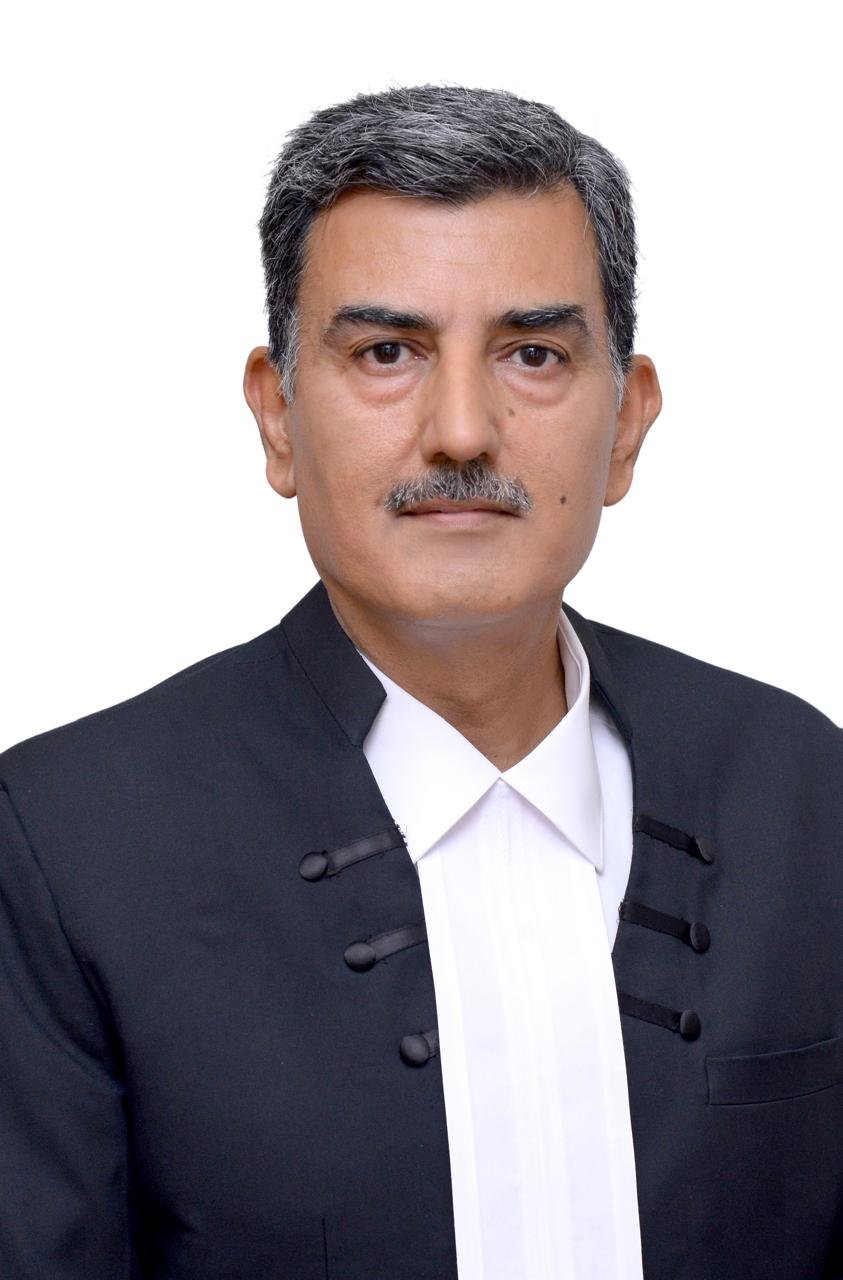

Legal Notes
Add a Note....