
As per case facts, the High Court, exercising its writ jurisdiction, questioned the appointment of Shri N.A. Acharya, seeking to determine if a writ of quo warranto should be issued. ...
No Acts & Articles mentioned in this case
http://JUDIS.NIC.IN SUPREME COURT OF INDIA Page 1 of 8
CASE NO.:
Appeal (civil) 8574-8577 of 2001
PETITIONER:
High Court of Gujarat & Anr.
RESPONDENT:
Gujarat Kishan Mazdoor Panchayat & Ors.
DATE OF JUDGMENT: 10/03/2003
BENCH:
S.B. Sinha
JUDGMENT:
J U D G M E N T
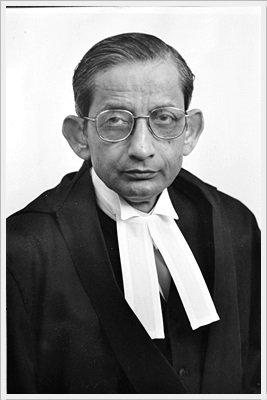
S.B. SINHA, J :
Although I agree with the conclusions arrived at by my learned
Brother, having regard to the importance of the question involved, I would
like to assign additional reasons therefor.
The High Court in exercise of its writ jurisdiction in a matter of this
nature is required to determine at the outset as to whether a case has been
made out for issuance of a writ of certiorari or a writ of quo warranto. The
jurisdiction of the High Court to issue a writ of quo warranto is a limited
one. While issuing such a writ, the court merely makes a public declaration
but will not consider the respective impact of the candidates or other factors
which may be relevant for issuance of writ of certiorari. [See R.K. Jain Vs.
Union of India and Others reported in (1993) 4 SCC 119 para 74]
A writ of quo warranto can only be issued when the appellant is
contrary to statutory rules. [See Mor Modern Cooperative Transport Society
Ltd. Vs. Financial Commissioner & Secretary to Govt. of Haryana and
Another (2002) 6 SCC 269]
When questioned, Mr. R. Venkataramani, learned senior counsel on
behalf of the respondents fairly stated that in this case the High Court was
concerned with the question as to whether a writ of quo warranto can be
issued or not. Thus, with a view to find out as to whether a case has been
made out for issuance of quo warranto, the only question which was required
to be considered was as to whether Shri N.A. Acharya fulfilled the
qualifications laid down under sub-section (4) of Section 10 of the Bombay
Industrial Relations Act 1946 or not. The Full Bench of the High Court has
mainly proceeded on the basis that the Industrial Court was required to have
three or more members, one of whom shall be President as specified in sub-
section (2) of Section 10 and, thus, a person before he is appointed as the
President must necessarily be appointed as a Member. In my opinion, while
arriving at the said finding what the High Court has failed to take into
consideration was that sub-section (2) of Section 10 did not impose any
restriction on the power of the State to appoint a Member or a President.
The said provision merely speaks of the composition of the Court of
Industrial Arbitration. The expression 'shall consist of three or more
Members' is important. Sub-section (2) of Section 10 provides for the
composition of the Tribunal and nothing else. By necessary implication a
President of the Court of Industrial Arbitration would also have to be a
Member and precisely that was the reason why no separate qualification for
the appointment of a qualification has been laid down in the Act. Sub-
section (4) of Section 10 of the Act lays down the eligibility criteria of a
Member only. It is, therefore, significant that for the purpose of
http://JUDIS.NIC.IN SUPREME COURT OF INDIA Page 2 of 8
appointment of a Member as also the President of the Court of Industrial
Arbitration the eligibility criteria remain the same.
The legitimate expectation of a Member to be promoted to the Post of
the Chairman as has been submitted by Mr. Venkataramani will, thus, have
no relevance as nobody has a vested right to be promoted.
It may be true that reference has been made by the High Court while
making the recommendations to the draft rules known as Draft Recruitment
Rules but it appears from the records that the said draft rules, purported to
have been framed by the High Court for replacing the Recruitment Rules for
the Post of President as contained at Item 34 in the Handbook of Guidelines
on Recruitment Rules of Officers under Labour and Employment
Department, Government of Gujarat, Gandhinagar, December, 1990, were
published in the year 1992.
It is now trite that draft rules which are made to lie in a nascent state
for a long time cannot be the basis for making appointment or
recommendation. Rules even in their draft stage can be acted upon provided
there is a clear intention on the part of the Government to enforce those rules
in the near future. (See Vimal Kumari Vs. State of Haryana and Others
reported in (1998) 4 SCC 114)
Sub-section (4) of Section 10 of the Act states that a Member of the
Industrial Court shall be a person who is or has been a Judge of High Court
or is eligible for being appointed a Judge of such Court. Article 217 of the
Constitution of India inter alia lays down the qualification to be possessed
by a citizen for his appointment as a High Court Judge. It has not been and
could not be disputed that Shri N.A. Acharya has the requisite qualification.
The other and further qualifications for appointment of a member have been
laid down in the provisos appended thereto. The qualifications specified in
the said provisos are meant for those who do not satisfy the requirements of
main provision. First and Second provisos appended to sub-section (4) of
Section 10 are exceptions to the main provision. Once it is held that sitting
judicial officers can be appointed either as Member or President of the Court
of Industrial Arbitration, indisputably the High Court is required to be
consulted therefor. It is for the High Court and High Court alone to
nominate a person of its choice. Such a practice is followed by all the High
Courts of the country and although the ultimate authority is the State, the
recommendations made by the High Court is normally accepted.
A statute as is well-known must be interpreted having regard to the
purport and object which it seeks to achieve. The object of the Act is to
constitute Industrial Arbitration Court for the purpose of adjudication of the
disputes between the management and the workmen. Such courts which are
normally manned by the judicial officers cannot be kept vacant for a long
time. Whenever they are meant to be filled up by the sitting judicial
officers, consultation with the High Court is imperative.
Although we do not find any difficulty in interpreting the provisions,
even if it be assumed that the provisions of Sub-section (2) and sub-section
(4) of Section 10 of the Act render two different meanings, it is trite, that in
such an event the rule of purposive construction should be taken recourse to.
In Jt. Registrar of Cooperative Societies, Kerala Vs. T.A. Kuttappan
and Others [(2000) 6 SCC 127] while interpreting the provisions dealing
with the question as regard the duties and functions of Committee of
Management of the Society constituted under Kerala Cooperative Societies
Act, 1969 this Court observed:
"The duty of such a committee or an administrator
is to set right the default, if any, and to enable the
society to carry on its functions as enjoined by law.
Thus, the role of an administrator or a committee
appointed by the Registrar while the Committee of
http://JUDIS.NIC.IN SUPREME COURT OF INDIA Page 3 of 8
Management is under supersession, is, as pointed
out by this Court, only to bring on an even keel a
ship which was in doldrums. If that is the
objective and is borne in mind, the interpretation
of these provisions will not be difficult."
In Associated Timber Industries and Others Vs. Central Bank of India
and Another [(2000) 7 SCC 93], while considering the provisions of the
Bombay Money Lenders Act vis--vis the provisions of other Acts upon a
purposive and meaningful interpretation held that the banks do not come
under the purview of the Assam Money Lenders Act.
In United Bank of India, Calcutta Vs. Abhijit Tea Co. Pvt. Ltd. and
Others [(2000) 7 SCC 357] this Court noticed:
"25. In regard to purposive interpretation, Justice
Frankfurter observed as follows:
Legislation has an aim, it seeks to obviate
some mischief, to supply an inadequacy, to
effect a change of policy, to formulate a plan
of government. That aim, that policy is not
drawn, like nitrogen, out of the air; it is
evidenced in the language of the statute, as
read in the light of other external
manifestations of purpose [Some Reflections
on the Reading of Statutes, 47 Columbia LR
527, at p. 538 (1947)].
26. That principle has been applied to this very Act
by this Court recently in Allahabad Bank Vs.
Canara Bank. If the said principle is applied, it is
clear that the provision in Section 31 must be
construed in such a manner that, after the Act, no
suit by the Bank is decided by the civil court and
all such suits are decided by the Tribunal."
In K. Duraisamy and Another Vs. State of T.N. and Others [(2001) 2
SCC 538] it was held:
"The mere use of the word 'reservation' per se
does not have the consequence of ipso facto
applying the entire mechanism underlying the
constitutional concept of a protective reservation
specially designed for the advancement of any
socially-and-educationally-backward classes of
citizens or for the Scheduled Castes and Scheduled
Tribes, to enable them to enter and adequately
represent in various fields. The meaning, content
and purport of the expression will necessarily
depend upon the purpose and object with which it
is used."
The Court while interpreting the provision of a statute, although, is
not entitled to re-write the statute itself, is not debarred from "ironing out the
creases". The court should always make an attempt to uphold the rules and
interpret the same in such a manner which would make it workable.
It is also a well settled principles of law that an attempt should be
made to give effect to each and every word employed in a statute and such
interpretation which would render a particular provision redundant or otiose
should be avoided.
http://JUDIS.NIC.IN SUPREME COURT OF INDIA Page 4 of 8
In Reserve Bank of India vs. Peerless Co. reported in 1987(1) SCC
424, this Court said:-
"Interpretation must depend on the text and the context.
They are the basis of interpretation. One may well say if
the text is the texture, context is what gives the colour.
Neither can be ignored. Both are important. That
interpretation is best which makes the textual
interpretation match the contextual. A statute is best
interpreted when we know why it was enacted. With this
knowledge, the statute must be read, first a whole and
then section by section, clause by clause, phrase by
phrase and word by word. If a statute is looked at, in the
context of its enactment, with the glasses of the statute
maker, provided by such context, its scheme, the sections
clauses, phrases and words may take colour and appear
different than when the statute is looked at without the
glasses provided by the context. With these glasses we
must look at the Act as a whole and discover what each
section, each clause, each phrase and each word is meant
and designed to any as to fit into the scheme of the entire
Act. No part of a statute and no word of a statute can be
construed in isolation, Statutes have to be construed so
that every word has a place and everything is in its
place.."
In "The Interpretation and Application of Statutes" by Reed
Dickersen, the author at page 135 has discussed the subject while dealing
with the importance of context of the statute in the following terms:-
".The essence of the language is to reflect,
express, and perhaps even effect the conceptual matrix of
established ideas and values that identifies the culture to
which it belongs. For this reason, language has been
called 'conceptual map of human experience'."
The purport and object of the Statute is to see that a Tribunal becomes
functional and as such the endeavors of the Court would be to see that to
achieve the same, an interpretation of Section 10 of the Act be made in such
a manner so that appointment of a President would be possible even at the
initial constitution thereof.
Such a construction is permissible by taking recourse to the doctrine
of strained construction, as has been succinctly dealt with by Francis
Bennion in his Statutory Interpretation. At Section 304, of the treatise;
purposive construction has been described in the following manner:-
"A purposive construction of an enactment is one
which gives effect to the legislative purpose by
(a) following the literal meaning of the enactment
where that meaning is in accordance with the legislative
purpose (in this Code called a purposive-and-literal
construction), or
(b) applying a strained meaning where the literal
meaning is not in accordance with the legislative purpose
(in the Code called a purposive-and-strained
construction).
In DPP vs. Schildkamp (1971) AC 1, it was held that severance may
be effected even where the 'blue pencil' technique is impracticable.
http://JUDIS.NIC.IN SUPREME COURT OF INDIA Page 5 of 8
In Jones vs. Wrotham Park Settled Estates (1980) AC 74 at page
105, the law is stated in the following terms:-
"I am not reluctant to adopt a purposive
construction where to apply the literal meaning of the
legislative language used would lead to results which
would clearly defeat the purposes of the Act. But in
doing so the task on which a court of justice is engaged
remains one of construction, even where this involves
reading into the Act words which are not expressly
included in it. Kammins Ballrooms Co. Ltd. vs. Zenith
Investments (Torquay) Ltd. (1971 AC 850) provides an
instance of this; but in that case the three conditions that
must be fulfilled in order to justify this course were
satisfied. First, it was possible to determine from a
consideration of the provisions of the Act read as a whole
precisely what the mischief was that it was the purpose of
the Act to remedy; secondly, it was apparent that the
draftsman and Parliament had by inadvertence
overlooked, and so omitted to deal with an eventuality
that required to be dealt with if the purpose of the Act
was to be achieved; and thirdly, it was possible to state
with certainty what were the additional words that would
have been inserted by the draftsman and approved by
Parliament had their attention been drawn to the omission
before the Bill passed into law. Unless this third
condition is fulfilled any attempt by a court of justice to
repair the omission in the Act cannot be justified as an
exercise of its jurisdiction to determine what is the
meaning of a written law which Parliament has passed."
In Principles of Statutory Interpretation of Justice G.P. Singh, 5th
Edition, 1992, it is stated:
"The Supreme Court in Bangalore Water Supply vs. A.
Rajappa (AIR 1978 SC 548) approved the rule of
construction stated by DENNING, L.J. while dealing
with the definition of 'Industry in the Industrial Disputes
Act, 1947. The definition is so general and ambiguous
that BEG, C.J. said that the situation called for "some
judicial heroics to cope with the difficulties raised". K.
IYER, J., who delivered the leading majority judgment in
that case referred with approbation the passage extracted
above from the judgment of DENNING,L.J. in Seaford
Court Estates Ltd. vs. Asher. But in the same
continuation he also cited a passage from the speech of
LORD SIMONDS in the case of Magor & St. Mellons
R.D.C. vs. Newport Corporation, 1951(2) All ER 839
as if it also found a part of the judgment of DENNING,
L.J. This passage reads: "The duty of the court is to
interpret the words that the legislature has used. Those
words may be ambiguous, but, even if they are, the
power and duty of the Court to travel outside them on a
voyage of discovery are strictly limited." As earlier
noticed LORD SIMONDS and other Law Lords in
Magor and St. Mellon's case were highly critical of the
views of DENNING, L.J. However, as submitted above,
the criticism is more because of the unconventional
manner in which the rule of construction was stated by
him. In this connection it is pertinent to remember that
although a court cannot supply a real casus omissus it is
equally clear that it should not so interpret a statute as to
create a casus omissus when there is really none."
http://JUDIS.NIC.IN SUPREME COURT OF INDIA Page 6 of 8
In Hameedia Hardware Stores vs. B. Mohan Lal Sowcar reported in
(1988) 2 SCC 513 at 524 the rule of addition of word had been held to be
permissible in the following words:-
"We are of the view that having regard to the pattern in
which clause (a) of sub-section (3) of Section 10 of the
Act is enacted and also the context, the words 'if the
landlord required it for his own use or for the use of any
member of his family' which are found in sub-clause (ii)
of Section 10(3)(a) of the Act have to be read also into
sub-clause (iii) of Section 10(3)(a) of the Act. Sub-
clauses (ii) and (iii) both deal with the non-residential
buildings. They could have been enacted as one sub-
clauses by adding a conjunction 'and' between the said
two sub-clauses, in which event the clause would have
read thus : 'in case it is a non-residential building which
is used for the purpose of keeping a vehicle or adapted
for such use if the landlord required it for his own use or
for the use of any member of his family and if he or any
member of his family is not occupying any such building
in the city, town or village concerned which is his own;
and in case it is any other non-residential building, if the
landlord or member of his family is carrying on, a non-
residential building in the city, town or village concerned
which is his own'. If the two sub-clauses are not so read,
it would lead to an absurd result.
In Punjab Land Development and Reclamation Corporation Ltd.,
Chandigarh vs. Presiding Officer, Labour Court, Chandigarh and Ors.
reported in (1990) 3 SCC 682, this Court held:
"The court has to interpret a statute and apply it to the
facts. Hans Kelsen in his Pure Theory of Law. (p. 355)
makes a distinction between interpretation by the science
of law or jurisprudence on the one hand and
interpretation by a law-applying organ (especially the
court) on the other. According to him "jurisprudential
interpretation is purely cognitive ascertainment of the
meaning of legal norms. In contradistinction to the
interpretation by legal organs, jurisprudential
interpretation does not create law". "The purely cognitive
interpretation by jurisprudence is therefore unable to fill
alleged gaps in the law. The filling of a so-called gap in
the law is a law-creating function that can only be
performed by a law-applying organ; and the function of
creating law is not performed by jurisprudence
interpreting law. Jurisprudential interpretation can do no
more than exhibit all possible meanings of a legal norm.
Jurisprudence as cognition of law cannot decide between
the possibilities exhibited by it, but must leave the
decision to the legal organ who, according to the legal
order, is authorised to apply the law". According to the
author if law is to be applied by a legal organ, he must
determine the meaning of the norms to be applied : he
must 'interpret' those norms (p. 348). Interpretation
therefore is an intellectual activity which accompanies
the process of law application in its advance from a
higher level to a lower level. According to him, the law
to be applied is a frame. "There are cases of intended or
unintended indefiniteness at the lower level and several
possibilities are open to the application of law." The
traditional theory believes that the statute, applied to a
concrete case, can always supply only one correct
decision and that the positive-legal 'correctness' of this
decision is based on the statute itself. This theory
http://JUDIS.NIC.IN SUPREME COURT OF INDIA Page 7 of 8
describes the interpretive procedure as if it consisted
merely in an intellectual act of clarifying or
understanding; as if the law-applying organ had to use
only his reason but not his will, and as if by a purely
intellectual activity, among the various existing
possibilities only one correct choice could be made in
accordance with positive law. According to the author :
"The legal act applying a legal norm may be performed
in such a way that it conforms (a) with the one or the
other of the different meanings of the legal norm, (b)
with the will of the norm-creating authority that is to be
determined somehow, (c) with the expression which the
norm-creating authority has chosen, (d) with the one or
the other of the contradictory norms; or (e) the concrete
case to which the two contradictory norms refer may be
decided under the assumption that the two contradictory
norms annul each other. In all these cases, the law to be
applied constitutes only a frame within which several
applications are possible, whereby every act is legal that
stays within the frame."
In S. Gopal Reddy vs. State of Andhra Pradesh reported in
(1996) 4 SCC 596 this Court observed :
"It is a well-known rule of interpretation of statutes that
the text and the context of the entire Act must be looked
into while interpreting any of the expressions used in a
statute. The courts must look to the object which the
statute seeks to achieve while interpreting any of the
provisions of the Act. A purposive approach for
interpreting the Act is necessary."
In Public Services Tribunal Bar Association Vs. State of U.P. and
Another [2003 AIR SCW 653] this Court noticed Section 3 of U.P. Public
Services (Tribunal) Act which provided for different qualifications for
Chairman, Vice-Chairman (Judicial) and Vice-Chairman (Administration) as
also Judicial and Administrative Members of the Service Tribunal. A Bench
of this Court of which one of us (Hon'ble the Chief Justice of India) was a
member held that as appointment of Chairman, Vice Chairman (Judicial),
Vice-Chairman(Administration) and Members are to be made in
consultation with the Chief Justice of the High Court, the Act is intra vires.
The said decision is also a pointer to show that whenever a post is to
be filled up by the Judicial Member who is eligible to be appointed as a High
Court Judge, consultation with the High Court is imperative.
Furthermore, if the interpretation of Section 10 of the Act as
propounded by the High Court is accepted, no President can be appointed
directly by the State at the time of Constitution of the Court. Such a
situation, therefore, would lead to absurdity if it is held that the candidate
must first be appointed as a Member and the Post of President can be filled
up inter alia by way of promotion or otherwise. When literal interpretation
of a provision leads to absurdity or manifest injustice, it is trite, the same
must be avoided.
Furthermore, if the legislature intended to lay down different
qualifications or eligibility criteria for the President and the Members, it
would have expressly stated so. We may in this connection notice the
provisions of the Consumer Protection Act.
In absence of an express provision providing either for different
qualification or eligibility criteria or the selection process, the same
procedure for appointment must be followed.
Both under the existing rules as also the Draft Rules mode and manner
of appointment have been laid down. Even in absence of the Draft Rules in
http://JUDIS.NIC.IN SUPREME COURT OF INDIA Page 8 of 8
terms of Rule 34 of the Recruitment Rules for the President of Industrial
Court appointment can be made by nomination. Thus, appointment to the
Post of President could be made by way of nomination also subject to the
nominees holding requisite qualifications laid down therefor.
It is further trite that non-mentioning or wrong mentioning of a
provision of law would not invalidate an order if a source therefor can be
found out either under general law or a statute law.
It is further well-settled that when there are two sources of power,
even if one is not applicable, the order will not become invalid if the power
of the statutory authority can be traced to another source.
For the reasons aforementioned, taking any view of the matter it
cannot be said that the appointment of Shri N.A. Acharya was illegal or
invalid. The impugned judgment, therefore, cannot be sustained which is,
therefore, set aside. The appeal is allowed.

 Login with google
Legal Notes
Add a Note....