
By way of Appeal , the Appellant seeks to challenge the judgement and order passed by the Divisional Bench of Rajasthan High Court in Civil Writ petition.
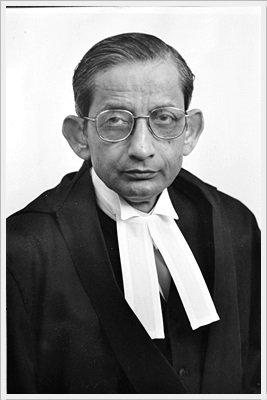
No Acts & Articles mentioned in this case
http://JUDIS.NIC.IN SUPREME COURT OF INDIA Page 1 of 13
CASE NO.:
Appeal (civil) 59 of 2001
PETITIONER:
High Court of Judicature for Rajasthan
RESPONDENT:
P.P. Singh & Anr.
DATE OF JUDGMENT: 27/01/2003
BENCH:
CJI,S.B. Sinha & AR. Lakshmanan
JUDGMENT:
J U D G M E N T
W I T H
CIVIL APPEAL NOS. 60, 61, 62, 63 AND 64 OF 2001
S.B. SINHA, J :
The effect of the recommendations of a Committee of two
Judges as regards criteria for grant of selection scale appointed by an
Acting Chief Justice which have subsequently been approved by a
Full Court of the High Court is in question in these appeals which
arise out of a judgment and order passed by a Division Bench of
Rajasthan High Court dated 23rd November, 2000 in D.B. Civil Writ
Petitions No. 671 of 2000, 987 of 2000 and 1263 of 2000.
The High Court of Rajasthan in exercise of its power conferred
upon it under Section 46 of the Rajasthan High Court Ordinance 1949
read with Article 225 of the Constitution of India and all other powers
enabling it in that behalf made Rules known as Rules of the High
Court of Judicature for Rajasthan, 1952 (hereinafter called and
referred to as "the Rules").
The Rules came into force on or about 1st October, 1952.
Chapter 3 of the said Rules refers to Administrative Business of the
High Court.
The Rules of the High Court were amended by a Resolution of
the Full Court of the High Court on 26.11.1966; and the relevant
portion of the Minutes thereof are as under :-
"Minutes of the proceedings of the Full Court
Meeting held on Saturday, the 26th November,
1966, at 11 A.M. in the Chamber of the Hon'ble
the Chief Justice.
***
AGENDA :
I. Amendment in the High Court Rules
relating to the Administrative Business of
the Court.
II. Any other matter which Hon'ble the Chief
Justice may like to be discussed.
DECISIONS :
ITEM NO. II :-
The amendments proposed by the Hon'ble
http://JUDIS.NIC.IN SUPREME COURT OF INDIA Page 2 of 13
Administrative Judge in Chapter III of the High
Court Rules relating to the administrative and
executive business of the Court were considered.
Resolved that in exercise of the powers
conferred by Section 46 of the Rajasthan High
Court Ordinance, 1949, and Articles 225, 227, 233,
234 and 235 of the Constitution of India and all
other powers enabling the Court in that behalf, the
following changes and amendments in Chapter III
of the High Court Rules relating to the
administrative and executive business of the Court
be effected :-
1. The words "Executive and" occurring
in the heading of Chapter III shall be
omitted;
2. For rules 14 to 22 the following rules
shall be substituted :-
"14. Administrative business relating to
control over subordinate courts and to
superintendence over courts and tribunals. All
administrative business of the Court relating to the
control over subordinate courts vested in the Court
under Article 235 of the Constitution or otherwise
and to the superintendence over the courts and
tribunals vested in the Court under Article 227 of
the Constitution or otherwise shall be disposed of
as provided hereinafter.
15. Matters on which all Judges shall be
consulted. On the following matters all the Judges
of the Court shall be consulted, namely :-
(c) proposals as to changes in or the issue
of new rules for the guidance of
subordinate courts;
(d) appointment, promotion and seniority
of Judicial offices;
(e) withholding of promotion,
supersession or reduction of Judicial
Officers;
(f) removal or dismissal of any Judicial
Officer;
(g) compulsory retirement of Judicial
Officers otherwise than by way of
punishment;
(h) important questions of policy or those
affecting the powers and status of the
Court laid before the Court by the
Chief Justice or any other Judge;
(l) any matter which the Chief Justice or
the Administrative Committee, as
constituted under Rule 16, may
consider fit to be laid before them for
consideration.
http://JUDIS.NIC.IN SUPREME COURT OF INDIA Page 3 of 13
16. Administrative Committee. (1) A
Committee of Judges shall be formed composed of
the Chief Justice, the Administrative Judge and
such other Judge or Judges as the Chief Justice
may, from time to time, appoint. This Committee
shall be called the Administrative Committee.
(2) Subject to these Rules, the
Administrative Committee shall act for the Court
in its administrative business in respect of the
matters enumerated in rule 17.
17. Matters on which the Administrative
Committee shall be consulted. The
Administrative Committee shall be consulted on
the following mattes, namely
(a) the issue of general letters to subordinate
courts;
(b) the issue of directions regarding the
preparation of returns and statements; and
(c) any other matter which the Chief Justice or
the Administrative Judge may desire to be
brought before it.
18. Consultation how made.- The
consultation with the Judges and the
Administrative Committee, referred to in Rules 15
and 17 respectively, shall be made either by
circulating the papers connected with the matter
among the Judges or the Administrative
Committee, as the case may be, or by laying the
matter before a meeting of the Judges or the
Administrative Committee called by the Chief
Justice.
19. Decision in case of difference of opinion.-
All the matters referred to in Rules 15 and 17 shall
be disposed of in accordance with the views of the
majority, and in case the Judges, including the Chief
Justice, are equally divided, in accordance with the
views of the Chief Justice.
20. Administrative business to be disposed of
by the Chief Justice.- Subject to Rules 15 and 17,
the administrative business referred to in Rule 14
shall be disposed of by the Chief Justice.
21. Appointment of Administrative Judge
and allocation of work.- (1) The Chief Justice shall
appoint a Judge to carry on the general
administration of the Court. Such Judge shall be
called the Administrative Judge and shall dispose
of the administrative business in accordance with
rule 22.
(2) The Chief Justice may also, by a general
or special order, allocate specified business for
disposal to any other Judge or a Committee of
Judges, and such Judge or Committee of Judges
shall dispose of the same, subject to any special
http://JUDIS.NIC.IN SUPREME COURT OF INDIA Page 4 of 13
directions of the Chief Justice.
"26. Papers to be submitted to the Chief
Justice after circulation.- After any papers have
been circulated for opinion, they shall be submitted
again to the Chief Justice, who shall examine the
matter and issue orders in accordance with Rule
19."
"29.- Quorum.- The quorum necessary for
the transaction of business shall be not less than
two-third of the Members in the case of a meeting
of the Administrative Committee and not less than
one-half of the Judges in the case of a Judges'
meeting."
1. The existing Rule 32 shall be re-
numbered as Sub-Rule (1) of that
Rule, and the following new Sub-Rule
(2) shall be added :-
"(2) For the removal of doubt, it is hereby
mentioned that all administrative work
disposed of by the Chief Justice, the
Administrative Judge or any other Judge or
Judges to whom the work has been assigned
by the Chief Justice for disposal shall be
deemed to be disposed of by the Court."
Rule 32 of the said Rules is as under:
32. Effect of any irregularity in or omission
to follow the procedure laid down in this
Chapter :-
(1) No irregularity in, or omission to follow,
the procedure laid down in this Chapter shall affect
the validity of any order passed or anything done
under these Rules.
(2) For the removal of doubt, it is hereby
mentioned that all administrative work disposed of
by the Chief Justice, the Administrative Judge or
any other Judge or Judges to whom the work has
been assigned by the Chief Justice for disposal
shall be deemed to be disposed of by the Court."
On or about 17.1.1969 Rajasthan Higher Judicial Service Rules,
1969 came into being which inter alia contained a provision relating
to grant of selection scale in terms of Rule 23 thereof which reads as
under :-
"Appointments to posts in the Selection Grade
:- Appointments to the posts in the selection
grade of the service shall be made by the
Governor in consultation with the Court on the
basis of merit.
On or about 30th of April, 1990 a Committee of two Hon'ble
Judges of the said Court was constituted by the Full Court for the
purpose of consideration of individual merit of the judicial officers of
Rajasthan Higher Judicial Service (RHJS) relating to appointment to
http://JUDIS.NIC.IN SUPREME COURT OF INDIA Page 5 of 13
selection scale. Pursuant to or in furtherance thereof a Committee of
two Judges considered the same and suggested that last five years of
ACRs to be considered in the merit criteria therefor. However, the
Full Court by Resolution dated 5th October, 1990 took a decision to
take into consideration three good ACRs out of five ACRs only for
the said purpose. As regards grant of super time scale to Rajasthan
Judicial Service, the Full Court of the High Court by a Resolution
dated 14.8.1997 adopted the criteria of five good ACRs out of seven
ACRs for grant of super time scale.
The Acting Chief Justice of the High Court, however,
constituted a Committee consisting of two Judges of the said Court to
consider/ examine and to make recommendations for formation of
officiating promotee RHJS officers for their substantive appointment
in their service and for promotion of RHJS officers in the ordinary
scale to selection scale by an order dated 26th March, 1998. The
Committee submitted its report on 30th March, 1998, upon considering
the cases of all eligible candidates in the light of the existing Rules as
also the Full Court Resolutions. With a view to arrive at its finding,
the Committee, however, found those officers fit and meritorious for
grant of selection grade who obtained at least five outstanding/ very
good/ good ACRs out of seven and where no adverse entry was
recorded. As regards those, whose ACRs have not been recorded for
one reason or the other, the Committee deferred consideration of their
cases for the time being. The Committee, however filed an additional
report on 27.4.1999 whose cases were deferred earlier.
The matter was placed before the Full Court on 30th April, 1999
by the Chief Justice. Twenty Hon'ble Judges of the High Court
participated therein. By Resolution dated 30th April, 1999, the Full
Court considered the report submitted by the said two Judges
Committee and approved the name of 25 officers who were found fit
for grant of selection scale. The cases of the respondents herein along
with four others, however, were deferred. The matter relating to the
additional report of the said two Judges' Committee was again placed
before the Full Court on 27-11-1999. It accepted the report of the
Committee and declined to grant selection scale to the respondents
herein. Pursuant to or in furtherance of the aforementioned
recommendations made by the High Court, the Governor by a
notification dated 5.2.2000 made appointment to the officers of
Higher Judicial Service named therein to the post of selection grade
with effect from the date mentioned against their names respectively.
The first respondent in each of these appeals filed writ petitions
questioning non-grant of selection grade to them by filing writ
petitions before the Jaipur Bench of the Rajasthan High Court.
By reason of the impugned judgment the High Court inter alia
held :
(1) The Acting Chief Justice was not authorised to constitute the
two Judges Committee, and, thus, it could not make/ lay
down any merit criteria.
(2) As all the Judges of the High Court have not been consulted,
the Committee appointed by the Acting Chief Justice alone
could not evolve the merit criteria in view of sub-rule (h) of
Rule 15 of 1952 Rules.
(3) The earlier policy decision adopted by the Full Court could
not be changed as Rule 15 of 1952 provides for prior
consultation of the Judges of the High Court and as all
Judges were not consulted in the matter subsequent approval
thereof could not cure illegality.
The said writ petitions were disposed of with the following
http://JUDIS.NIC.IN SUPREME COURT OF INDIA Page 6 of 13
directions :-
(i) We direct the respondents to consider the
cases of all the three petitioners afresh against the
vacancies occasioned in 1998 and 1999 in view
of the merit criterion evolved and approved by
the Full Court in the year 1990 and 1994. If they
are found eligible for promotion to selection
scale of the RHJS, they can be accorded the
selection scale by creating supernumerary posts
in terms of Rule 18 of the Rajasthan Service
Rules.
(ii) This decision shall not affect the order dated
February 5, 2000 whereby selection scale of the
RHJS was granted to twenty six officers.
(iii) The fresh consideration as directed above is
expected to be done as expeditiously as possible,
in the meanwhile three posts in the selection
scale of the RHJS shall be kept vacant.
However, it was observed:
"It is however made clear that though we
have declared the entire exercise of the
respondents in granting selection scale as illegal
yet we do not intend to unsettle the grant of
selection scale to twenty six judicial officers as
they are not before us. We, therefore, direct that
this decision shall not affect the order dated
February 5, 2000 of the respondent whereby
selection scale was granted to twenty six judicial
officers. But if the petitioners, after
consideration of their service record from 1993 to
1997 and from 1994 to 1998 are found eligible
for selection scale, they shall be considered with
reference to the selection of 1998 and 1999 when
their junior colleagues were promoted. The
petitioners in that event can be accorded the
selection scale of the RHJS by creating
supernumerary posts in terms of Rule 18 of the
Rajasthan Service Rules."
Learned counsel appearing on behalf of the appellant, would
submit that having regard to the provisions of the Rules, the High
Court must be held to have committed an error in holding that the
Acting Chief Justice had no jurisdiction to constitute the Committee.
It was contended that once it is held that the Acting Chief Justice had
the jurisdiction to constitute a Committee and the decision of the said
Committee was approved by the Full Court, the earlier policy decision
must be held to have been varied by the High Court. The learned
counsel in support of the said contentions has placed strong reliance in
State of Uttar Pradesh v. Batuk Deo Pati Tripathi and Another
reported in [(1978) 2 SCC 102], Brij Nath Pandey v. State of U.P. &
Ors. [JT 2000 (9) SC 464], Registrar, High Court of Madras v. R.
Rajiah [(1988) 3 SCC 211].
Mr. Surya Kant, learned counsel appearing on behalf of the first
respondent in each case, would, on the other hand, submit that as the
power of the Chief Justice to constitute a Committee is governed by a
statutory rule, he must be held to have acted without jurisdiction in
appointing the said Committee. Strong reliance in support of the said
contention has been placed in Orissa Small Industries Corpn. Ltd. and
http://JUDIS.NIC.IN SUPREME COURT OF INDIA Page 7 of 13
Another v. Narasingha Charan Mohanty and others [(1999) 1 SCC
465].
The term "Chief Justice" will include the Judges authorised to
act on his behalf in view of interpretation clause contained in Section
3. Chapter III of the Rules provides for administrative business of the
Court. In terms of Rule 14 of the Rules, Administrative Business of
the Court relating to control over subordinate courts vested either
under Article 235 or 227 of the Constitution of India were to be
disposed of as provided therein.
The Rules have been made by the High Court. The High Court,
therefore, can also amend the rules. It is not the case of the writ
petitioners-First respondents herein that the High Court had no
jurisdiction to evolve the criteria for grant of selection scale to the
officers of the Rajasthan Judicial Service or Rajasthan Higher Judicial
Service. It may be true that by reason of Resolution dated 5th October,
1990 the Full Court inter alia opined that for the purpose of grant of
selection scale three good ACRs out of five ACRs were to be taken
into consideration but the said decision of the Full Court was subject
to amendment/modification thereof.
A reading of the aforementioned rules clearly goes to show that
the Chief Justice has the requisite jurisdiction to constitute a
Committee and the report of the Committee upon consultations of all
the Judges of the High Court in terms of Rule 15 shall become a
decision of the Court. Rule 29(2) and Rule 32 as quoted (supra) also
clearly show that even no irregularity which might have taken place in
the procedure laid down in Chapter III shall not affect the validity of
the order passed or anything done in the Rules and the same shall be
deemed to be disposed of by the Court. The legal fiction created must
also be given its full effect.
It is beyond any pale of controversy that the control over the
subordinate courts within the meaning of Article 235 of the
Constitution of India is that of the High Court. Such control of the
High Court includes general superintendence of the working of the
subordinate courts, disciplinary control over the Presiding Officers,
disciplinary proceedings, transfer, confirmation and promotion and
appointment etc. Such control vested in the High Court is complete.
[See High Court of Judicature for Rajasthan v. Ramesh Chand
Paliwal, (1998) 3 SCC 72, District Judges Baradakanta Mishra v.
High Court of Orissa (1976) 3 SCC 327, High Court of Punjab v.
State of Haryana, (1975) 1 SCC 843, Yoginath D. Bagde v. State of
Maharashtra (1999) 7 SCC 739, State of Haryana v. Inder Prakash
Anand, (1976) 2 SCC 977 and State of Assam v. S.N. Sen (1971) 2
SCC 9].
It is also true that the powers of the Chief Justice under Articles
235 and 229 of the Constitution of India are different and distinct.
Whereas control over the subordinate courts vests in the High Court
as a whole, the control over the High Court vests in the Chief Justices
only. [See All India Judges' Association v. Union of India, (1992) 1
SCC 119]. However, the same does not mean that a Full Court cannot
authorise the Chief Justice in respect of any matter whatsoever. In
relation to certain matters keeping the rest of it in itself by the Full
Court, authorization to act on its behalf in favour of the Chief Justice
on a Committee of Judges is permissible in law. How far and to what
extent such power has been or can be delegated would be discernible
only from the rules. Such a power by the Full Court can also be
exercised from time to time.
The Judges of the Rajasthan High Court, as noticed
hereinbefore, in terms of sub-rule (2) of Rule 21 of the Rules
authorised the Chief Justice to constitute a committee. Such
http://JUDIS.NIC.IN SUPREME COURT OF INDIA Page 8 of 13
constitution of the committee by the Chief Justice having been made
in terms of the rules must be held to have been made by the High
Court itself. Such authorization is not a limited one as thereby the
extent to which such authorization can be exercised has not been spelt
out. Furthermore, authorization in terms of sub-rule (2) of Rule 21 of
the Rules having been laid down in Chapter III which relates to the
Administrative Business of the Court, there cannot be any doubt
whatsoever even in the matter of control of the High Court in terms of
Article 235 of the Constitution of India, the Chief Justice of the High
Court had the jurisdiction to exercise the said power.
Once such a resolution authorising the Chief Justice to
constitute a committee has been passed; having regard to the decision
of this Court in the High Court of Judicature of Bombay v. Shirish
Kumar Rangrao Patil [(1997) 6 SCC 339], there cannot be doubt
whatsoever that the exercise of power by the Chief Justice in that
behalf was absolutely valid. It is, therefore, not correct to contend
that the Chief Justice could appoint the two-Judges committee only
with the approval of the Full Court.
Exercise of power by the Chief Justice, however, indisputably
must be made in terms of the rules. The questions raised in these
appeals must, therefore, be considered from that angle.
The High Court, in our opinion, therefore, clearly erred in
arriving at the aforementioned finding that the constitution of the
committee was illegal.
The submission on behalf of the respondents to the effect that in
the matter relating to fixation of criteria for the purpose of
appointment to the selection grade, the two-Judges committee could
not be made without consulting all the Judges is stated to be rejected.
The said submission is based on a total misconception. Laying down
the merit criteria for appointment to the selection grade also was
within the domain of the High Court. It could not only lay down such
criteria but also amend or modify the same from time to time. For the
said purpose also the Chief Justice could appoint a committee, the
recommendation whereof was to be subject to the approval of the Full
Court. Rule 15 of the Rules does not say that before an action can be
initiated in that behalf by the Chief Justice all the Judges are to be
consulted. Rule 15 of the Rules postulates a final decision in the
matter specified therein and not initiation of process therefor.
It is also incorrect to contend that all the Judges of the High
Court are required to be consulted at a time.
The learned counsel appearing on behalf of the respondents is
again not correct in contending that the two-Judges Committee was
not justified in evolving a merit criteria different from the one
approved by the Full Court. The two-Judges Committee did not take
any final decision in that behalf. It having regard to the facts and
circumstances of the case and upon consideration of the extant rules
as well as the earlier decisions of the Full Court applied certain
principles and criteria which inevitably was subject to approval of the
Full Court.
The procedure for holding a Full Court meeting as quoted supra
would clearly show that the meeting which had requisite quorum as
contemplated under Rule 29 would amount to compliance of the
Rules.
Although Rule 15 provides that all the Judges shall be
consulted in the matters enumerated therein but Rule 18 provides for
the mode and manner thereof.
http://JUDIS.NIC.IN SUPREME COURT OF INDIA Page 9 of 13
If such consultation is to be made by circulation, undoubtedly,
the relevant documents are required to be circulated to all the Judges.
In the event, however, such consultation is to be effected by placing
the matter before a Full Court, all the Judges are therefor invited but
the same would not mean that in the event, one or more Judge (s)
does/do not attend the Full Court, the resolution passed by it shall be
invalid. Rule 29 provides for a quorum. In the case of a meeting of
the Judges of the court, the quorum will be complete if one-half or
more of the Judges attend the same. Consultation with all the Judges
would, thus, not mean that even if some of the Judges do not choose
to make themselves available in a Full Court Meeting, consultation
with all the Judges shall not be complete.
We may notice that even in the Full Court meeting held on 26th
November, 1966 all the Hon'ble Judges of the High Court were not
present.
The Committee was constituted for the purpose of considering
the cases of concerned officers. It is not and cannot be the case or the
contention of the writ petitions that even for the purpose of
considering the case of the eligible judicial officers at the threshold, it
was absolutely necessary to place the matter before the Full Court.
The Acting Chief Justice constituted the Committee for a specific
purpose. The Committee merely submitted its opinion which was
subject to approval by the Full Court. Once the opinion of the matter
is approved by the Full Court, in our opinion, it must be held that
there had been a compliance of Rule 15 of the Rules.
Interpretation of a Statute depends upon the text and context
thereof. A Statute should be interpreted having regard to the purpose
and object for which the same was made. The Chief Justice of a High
Court although first amongst the Judges, by the nature of office he
holds, he is the head of the State Judiciary. Authorisation by the Full
Court in favour of the Chief Justice to constitute a Committee and/or
take actions for the subordinate judiciary must be viewed from that
context. Rule 15 of the Rules provides for such matters which require
consultations with the other Judges of the High Court.
Question of consultation with the Judges would not arise unless
the subject matter therefor is identified. It is for Hon'ble the Chief
Justice of the High Court to identify such matters and place the same
before the Full Court with relevant papers and documents.
It is, therefore, axiomatic that not only the Chief Justice of High
Court was free to initiate any proceedings and obtain the opinion of a
Committee of Judges on such matters and the only legal requirement
therefor is to place such proposals together with the opinion of the
Committee before the Judges of the High Court so that the matter can
be fully thrashed out. Once the Full Court approves the
recommendations made by the Committee of Judges, it becomes
decision of the Court which could be sent to the Governor for acting
thereupon.
An almost identical question came up for consideration whether
the High Court can delegate its power to a Judge or a small
Committee of the Judges of the Court so as to authorise it to act on
this behalf in State of Uttar Pradesh v. Batuk Deo Pati Tripathi and
Another (supra). In no uncertain terms it was held :-
"The control vested in the High Courts by that
article comprehends, according to our decisions,
a large variety of matters like transfers,
subsequent postings, leave, promotions other
than initial promotions, imposition of minor
penalties which do not fall within Article 311,
http://JUDIS.NIC.IN SUPREME COURT OF INDIA Page 10 of 13
decisions regarding compulsory retirements,
recommendations for imposition of major
penalties which fall within Article 311, entries in
character rolls and so forth. If every Judge is to
be associated personally and directly with the
decision on every one of these matters, several
important matters pertaining to the High Court's
administrative affairs will pile into arrears like
court arrears. In fact, it is no exaggeration to say
that the control will be better and more
effectively exercised if a smaller committee of
Judges has the authority of the court to consider
the manifold matters falling within the purview
of Article 235. Bearing in mind therefore the
nature of the power which that article confers on
the High Court, we are of the opinion that it is
wrong to characterize as 'delegation' the process
whereby the entire High Court authorises a Judge
or some of the Judges of the Court to act on
behalf of the whole Court. Such an authorization
effectuates the purpose of Article 235 and indeed
without it the control vested in the High Court
over the subordinate courts will tend gradually to
become lax and ineffective. Administrative
functions are only a part, though an important
part, of the High Court's constitutional functions.
Judicial functions ought to occupy and do in fact
consume the best part of a Judge's time. For
balancing these two-fold functions it is inevitable
that the administrative duties should be left to be
discharged by some on behalf of all the Judges.
Judicial functions brook no such sharing of
responsibilities by any instrumentality."
In Registrar, High Court of Madras v. R. Rajiah (supra), it was
observed :
"23. In Rajiah's case, a Review Committee
consisting of three judges was appointed by a
resolution of the High Court. In the meeting of
the Review Committee held on June 25, 1979 to
consider the case of the respondent Rajiah, only
two judges of the High Court were present. The
two judges came to the conclusion that the
respondent, Rajiah, should be compulsorily
retired with effect from April 2, 1980. The
Division Bench found that the third judge had no
notice of the meeting held on June 25, 1979, but
he agreed with the view expressed by the two
judges with a slight modification that the
respondent would retire with effect from March
3, 1980 under Rule 56(d) of the Fundamental
Rules. The Division Bench of the High Court
took the view that as all the three judges had not
sat together and considered the question of
compulsory retirement of respondent Rajiah, and
that, further the third judge having also modified
the decision of the two judges, namely, that the
respondent would be compulsorily retired with
effect from March 3, 1980, the impugned order
of compulsory retirement of the respondent,
Rajiah, was vitiated. It is true that the members
of the Review Committee should sit together and
consider the question of compulsory retirement,
http://JUDIS.NIC.IN SUPREME COURT OF INDIA Page 11 of 13
but simply because one of them did not
participate in the meeting, and subsequently
agreed with the view expressed by the other two
judges, it would not vitiate the decision of the
Committee to compulsorily retire the respondent.
The third judge might (sic not) be justified in
correcting the date with effect from which the
respondent would compulsorily retire, but that is
a very minor issue and would not, in our opinion,
make the decision invalid.
24. In regard to the case of the other
respondent, namely, K. Rajeswaran, the High
Court took the view that the constitution of the
Review Committee by the Chief Judge and not
by the Full Court was illegal. We are unable to
accept the view of the High Court. We fail to
understand why the Chief Justice cannot appoint
a Review Committee or an Administrative
Committee. But in one respect the High Court is,
in our opinion, correct, namely, that the decision
of the Review Committee should have been
placed before a meeting of the judges. In the
case of the respondent, K. Rajeswaran, the
decision and recommendation of the Review
Committee was not placed before the Full Court
Meeting. Nor is there any material to show that
the same was circulated to the judges. In that
sense, the recommendation of the Review
Committee was not strictly legal."
Furthermore, the terminology 'consultation' used in Rule 15
having regard to purport and object thereof must be given its ordinary
meaning. In Words and Phrases (Permanent Edition, 1960, Volume
9, page 3) to 'consult' is defined as 'to discuss something together, to
deliberate'. Corpus Juris Secundum (Volume 16A, Ed. 1956, page
1242) also says that the word 'consult' is frequently defined as
meaning 'to discuss something together, or to deliberate'. By giving
an opportunity to consultation or deliberation the purpose thereof is to
enable the Judges to make their respective points of view known to
the others and discuss and examine the relative merits of their view. It
is neither in doubt nor in dispute that the Judges present in the
meeting of the Full Court were supplied with all the requisite
documents and had full opportunity to deliberate upon the Agenda in
question.
There is another aspect of the matter which may require
consideration. For all intent and purport the report of the two Judges
Committee has been approved by the Full Court. Once approved, it
terminated into a decision of the Full Court itself. In the instant case
even the Governor has acted upon the recommendations of the High
Court. The writ petitioners-first respondents herein did not question
the appointments of the appointees not the High Court. Thus, there
cannot be any doubt whatsoever that for all intent and purport the
opinion of the two Judges Committee received approval at the hands
of the Full Court.
The High Court, in our opinion, further committed a manifest
error in arriving at its conclusion in so far as it failed to take into
consideration that Rule 15 does not postulate the prior approval of the
Full Court in relation to any action which may be initiated by the
Chief Justice.
When an approval is required, an action holds good. Only if it
http://JUDIS.NIC.IN SUPREME COURT OF INDIA Page 12 of 13
disapproved it losses its force. Only when a permission is required,
the decision does not become effective till permission is obtained.
(See U.P. Avas Evam Vikas Parishad and Another v. Friends Coop.
Housing Society Ltd and Another [(1995) Supp (3) SCC 456]. In the
instant case both the aforementioned requirements have been fulfilled.
There is another aspect of the matter. In terms of Rule 2(2) of
the Rules, the decision of the Full Court would have a retrospective
effect and retroactive operation.
In any view of the matter, even in a case where the initial action
is illegal, the same can be ratified by a body competent therefor. This
aspect of the matter has not been considered by the High Court at all.
In Sri Parmeshwari Prasad Gupta v. the Union of India [(1973) 2
SCC 543] this Court held :
"Even if it be assumed that the telegram and
the letter terminating the services of the
appellant by the Chairman was in pursuance to
the invalid resolution of the Board of Directors
passed on December 16, 1953 to terminate his
services, it would not follow that the action of
the Chairman could not be ratified in a
regularly convened meeting of the Board of
Directors. The point is that even assuming that
the Chairman was not legally authorised to
terminate the services of the appellant, he was
acting on behalf of the Company in doing so,
because, he purported to act in pursuance of the
invalid resolution. Therefore, it was open to a
regularly constituted meeting of the Board of
Directors to ratify that action which, though
unauthorized, was done on behalf of the
Company. Ratification would always relate
back to the date of the act ratified and so it must
be held that the services of the appellant were
validly terminated on December 17, 1953"
(See also Marathwada University v. Seshrao Balwant Rao
Chavan (1989) 3 SCC 132 para 28], Babu Verghese and Others v. Bar
Council of Kerala and Others [(1999) 3 SCC 422 para 35] and
Barnard v. National Dock Labour Board [(1953) 1 All ER 1113] ).
In Orissa Small Industries Corpn. Ltd. And Another v.
Narasingha Charan Mohanty and Others (supra) where upon the
learned counsel has placed strong reliance, this Court held :
"That apart, the Court is not entitled to assess
the respective merit of the candidates for
adjudging their suitability for being promoted
and the only right the employee has is a right of
consideration. The said right of consideration
not having been infringed in the present case,
the High Court was not justified in issuing the
impugned direction for reconsideration of his
case."
The said decision, therefore, mutilates against the contentions
of the respondents.
Furthermore, the first respondent herein in these cases Shri P.P.
Singh, Shri G.P. Pandey has been granted selection scale in RHJS
with effect from 1.8.2000 and Shri P.K. Bhatia has been given with
effect from 29.3.2000. Shri P.P. Singh has also retired from service
http://JUDIS.NIC.IN SUPREME COURT OF INDIA Page 13 of 13
on superannuation.
We are of the opinion that impugned judgment of the High
Court cannot be sustained which is set aside accordingly. The appeals
are allowed but in the facts and circumstances of the case, there shall
be no order as to costs.
New Delhi;
29

 Login with google
Legal Notes
Add a Note....