
The case revolves around the acquisition of land by Hindustan Petroleum Corporation Ltd. (HPCL), which sought to retain the premises it had been leasing by invoking provisions of the Land ...
No Acts & Articles mentioned in this case
http://JUDIS.NIC.IN SUPREME COURT OF INDIA Page 1 of 8
CASE NO.:
Appeal (civil) 2254 of 2005
PETITIONER:
Hindustan Petroleum Corpn. Ltd.
RESPONDENT:
Darius Shapur Chenai & Ors.
DATE OF JUDGMENT: 20/09/2005
BENCH:
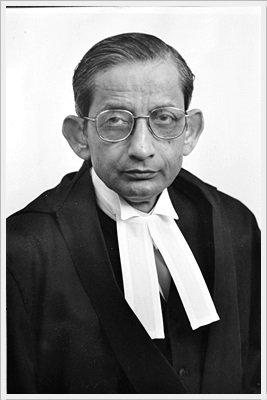
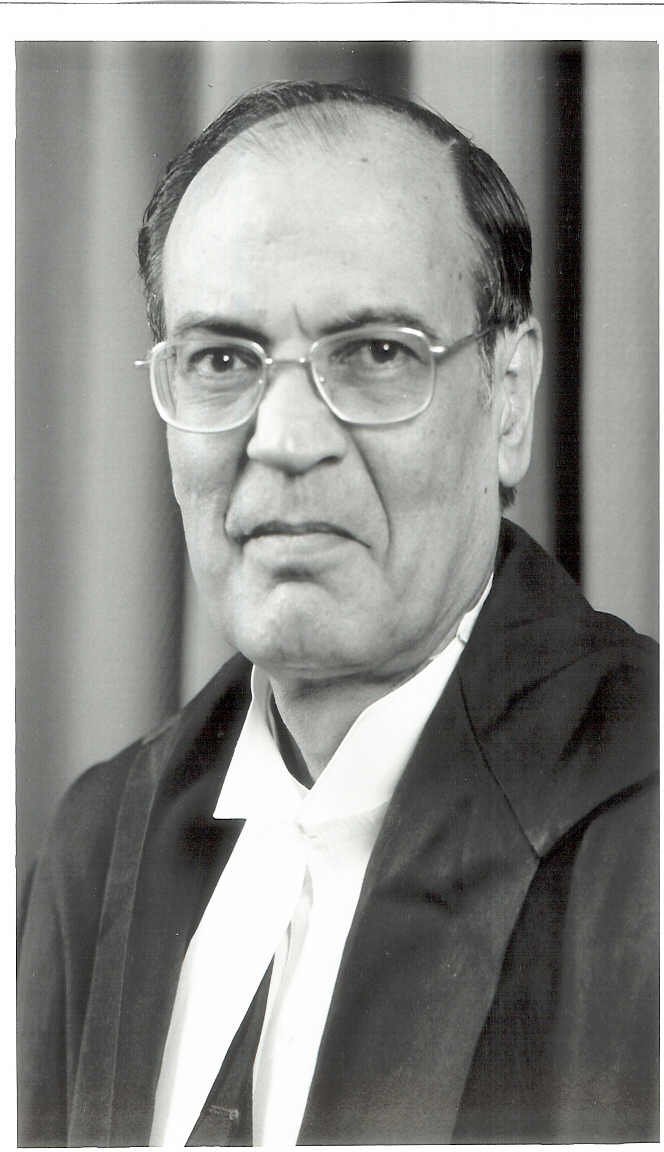
S.B. Sinha & C.K. Thakker
JUDGMENT:
J U D G M E N T
W I T H
CIVIL APPEAL NO. 2253 OF 2005
S.B. SINHA, J :
Hindustan Petroleum Corporation Limited was a tenant in the
premises in question wherefor an agreement of tenancy was entered into by
and between the father of the First Respondent and Caltex (India) Limited
for a period of ten years from 15.12.1965. On or about 24.12.1974, another
deed of lease was executed by the mother of the Respondent No. 1 in favour
of Caltex (India) Limited for a period of five years expiring on 31.7.1979.
On or about 30.12.1976, the Caltex (Acquisition of Shares of Caltex Oil
Refining (India) Limited and of the Undertakings in India of Caltex (India)
Limited) Ordinance, 1976 (which was replealed and replaced by the Caltex
(Acquisition of Shares of Caltex Oil Refining (India) Limited and of the
Undertakings in India of Caltex (India) Limited) Act, 1977) was
promulgated whereby and whereunder right, title and interest of Caltex
(India) Ltd. in relation to its undertakings in India stood transferred to and
vested in the Central Government. The Central Government, however, in
exercise of its power conferred upon it under Section 9 of the said Act
directed that the said undertakings shall, instead of continuing to vest in the
Central Government, vest in Caltex Oil Refining (India) Ltd., a Govt.
company with effect from 30.12.1976. Caltex Oil Refining (India) Ltd. was
later on amalgamated with the Appellant herein in terms of Sub-section 3 of
Section 7 of the said Act. The Appellant herein, thus, was at the liberty to
renew the period of lease for a period of further five years with effect from
1.8.1979 on the same terms and conditions as contained in the deed of lease
dated 24.12.1974. The Appellant herein exercised its option of renewing
the lease with effect from 24.4.1979. On the expiry of the said period, an
eviction proceeding was initiated by the First Respondent against the
Appellant by filing a suit which was marked as O.S. No. 737 of 1985. The
said suit for eviction was decreed. An appeal preferred thereagainst was
dismissed. The Regional Manager of the Appellant herein thereafter sent a
requisition to the Special Deputy Collector for acquisition of the land for the
purpose of continuing the business wherefor a notification was published on
15.10.1985. However, the said notification lapsed. On or about 3.6.1989, a
fresh notification was issued under Section 4(1) of the Land Acquisition Act
(for short "the Act"). The First Respondent filed a detailed objection on 20th
July, 1989 contending that there existed no public purpose for acquisition of
the said land and in any event, other suitable lands are available therefor.
Upon giving an opportunity of hearing to the Respondents, the Collector is
said to have conducted an enquiry and submitted his Report to the
Government on or about 28.8.1989. A declaration thereafter was issued
http://JUDIS.NIC.IN SUPREME COURT OF INDIA Page 2 of 8
under Section 6 of the Act on 25.9.1989. Questioning the said notification,
the First Respondent herein filed a writ petition in the High Court which was
marked as W.P. No. 16012 of 1989. Although, the Deputy Collector and the
Appellant filed their counter affidavits in the said proceedings, no counter
affidavit was filed by the State of Andhra Pradesh.
A learned Single Judge of the High Court allowed the said writ
petition. An appeal thereagainst was filed before this Court marked as Civil
Appeal No. 910 of 1998 and by an order dated 19.8.1998 the judgment of
the High Court was set aside and the matter was remitted to the High Court
on the ground that several other contentious issues have been raised. The
parties were, however, granted liberty to file additional pleadings. Pursuant
to or in furtherance of such liberty, the First Respondent herein raised
additional grounds by filing a Miscellaneous Application which was marked
as WPMP No. 27633 of 2003 contending inter alia therein that there had
been a total non-application of mind on the part of the State Government
both before issuing the notification under Section 4(1) and the declaration
under Section 6 of the Act. A counter-affidavit was filed by Respondent
Nos. 2 and 3 affirmed by one Shri B. Venkataiah, Special Deputy Collector,
Land Acquisition (General) both for himself as also the State in the said
Miscellaneous Application.
It is not in dispute that the High Court upon satisfying itself directed
the State to produce the records relating to the case. An affidavit affirmed
by one Shri K.V. Rao was filed on 7th November, 2003 stating that the
records were not readily traceable in view of shifting of Industries and
Commerce Department within the premises of the Secretariat Buildings
twice in four years. An apology was also tendered for non-production of
records. By reason of the impugned judgment, the writ petition has been
allowed. The Appellant being aggrieved thereby are before us. We may,
however, notice that the Appellant herein had prayed for twelve weeks of
time to vacate the premises which was granted by an order dated 19th
December, 2003.
Mr. K. Ramamoorthy, learned senior counsel appearing on behalf of
the Appellant and Mr. Anoop G. Chaudhari, learned senior counsel
appearing on behalf of the State inter alia raised the following contentions:
(i) Having regard to the scheme of the Act if a public purpose is
established, the declaration made would be conclusive in terms of
Section 6(3) of the Act in respect of both the need and the public
purpose.
(ii) In view of the provision contained in Section 3(f)(iv) of the Act, the
Respondents could not contend that the purpose for which the
notification under Section 4(1) of the Act was issued, was not public
purpose.
(iii) Once the owner of the land has been given an opportunity to file his
objections which were considered by the Collector; and if the
recommendation made by him is accepted by the Government, the
owner is not entitled to be afforded any further opportunity of hearing.
(iv) It is not open to the owner of the land to challenge the proceedings on
the ground that the Government has not assgined reasons for rejecting
the objection.
(v) On the facts and circumstances of this case when the acquisition
proceedings have been done in accordance with law, the submission
on behalf of the Respondents that the same has been exercised for a
colourable exercise of power is not tenable in law.
(vi) Even if the acquisition has the effect of nullifying a decree passed by
a civil court, the same would not be a ground for quashing the
acquisition proceedings.
Dr. Rajeev Dhavan, learned senior counsel appearing on behalf of the
First Respondent would, on the other hand, submit:
(i) Although the Act is an imperial legislation, it has essentially three
http://JUDIS.NIC.IN SUPREME COURT OF INDIA Page 3 of 8
broad components:
(a) The acquisition for a public purpose.
(b) Payment of compensation
(c) By taking appropriate due process both while determining
suitability for the public purpose and other acquisitory and
compensatory aspects.
(ii) The purpose although may a public purpose within the meaning of
Section 3(2)(f) of the Act and a declaration is made under Section 6
thereof, it would not be correct to contend that the acquisition would
be beyond the pale of judicial review.
(iii) Since by reason of the provisions of the Act, the owner is deprived of
his right to property, the provisions thereof must be strictly construed.
(iv) Section 5-A of the Act being the heart of the Act gives the citizen to
avail of the only opportunity to make submissions both on the public
purpose and the suitability of the acquisition in respect of his land,
and, thus, being a valuable right which is akin to a fundamental right,
the procedures laid down therein must be strictly complied with.
(v) Section 5-A consists of two parts, viz., hearing of objections by the
Collector and decision of the Government on the objections on the
basis of the Collector's Report and both the parts must be strictly
complied with.
(vi) Ideally, reasons are required to be assigned while passing an order
under Section 5-A of the Act but even if the same is not required to be
assigned, reasons for order must exist on the record.
(vii) There exists a difference between a subjective satisfaction clause,
where the Government has to be satisfied, and a dispositive clause,
where the Government has to decide on the basis of submissions made
to it. In the latter case, there is an even stricter scrutiny to consider
whether a determination has been properly made after due
consideration.
(viii) Where the Court feels that the appropriate scrutiny requires that
records be examined in land acquisition cases, such records must be
made available.
The main question which fell for its consideration before the High
Court was whether the objections raised by the Appellant objecting to the
acquisition of land on various grounds have been considered by the
Government.
It is not in dispute that Section 5-A of the Act confers a valuable right
in favour of a person whose lands are sought to be acquired. Having regard
to the provisions contained in Article 300A of the Constitution of India, the
State in exercise of its power of 'eminent domain' may interfere with the
right of property of a person by acquiring the same but the same must be for
a public purpose and reasonable compensation therefor must be paid.
Indisputably, the definition of public purpose is of wide amplitude
and takes within its sweep the acquisition of land for a corporation owned or
controlled by the State, as envisaged under Sub-clause (iv) of Clause (f) of
Section 3 of the Act. But the same would not mean that the State is the sole
judge therefore and no judicial review shall lie. [See Jilubhai Nanbhai
Khachar and Others vs. State of Gujarat and Another \026 (1995) Supp (1) SCC
596] .
The conclusiveness contained in Section 6 of the Act indisputably is
attached to a need as also the purpose and in this regard ordinarily, the
jurisdiction of the court is limited but it is equally true that when an
opportunity of being heard has expressly been conferred by a statute, the
same must scrupulously be complied with. For the said purpose, Sections 4,
5-A and 6 of the Act must be read conjointly. The court in a case, where
there has been total non-compliance or substantial non-compliance of the
provisions of Section 5-A of the Act, cannot fold its hands and refuse to
grant a relief to the writ petitioner. Sub-section (3) of Section 6 of the Act
renders a declaration to be a conclusive evidence. But when the decision
http://JUDIS.NIC.IN SUPREME COURT OF INDIA Page 4 of 8
making process itself is in question, the power of judicial review can be
exercised by the court in the event the order impugned suffers from well-
known principles, viz., illegality, irrationality and procedural impropriety.
Moreover, when a statutory authority exercises such enormous power it must
be done in a fair and reasonable manner.
It is trite that hearing given to a person must be an effective one and
not a mere formality. Formation of opinion as regard the public purpose as
also suitability thereof must be preceded by application of mind as regard
consideration of relevant factors and rejection of irrelevant ones. The State
in its decision making process must not commit any misdirection in law. It
is also not in dispute that Section 5-A of the Act confers a valuable
important right and having regard to the provisions contained in Article
300A of the Constitution of India has been held to be akin to a fundamental
right.
In State of Punjab and Another Vs. Gurdial Singh and Others [(1980)
2 SCC 471], it was held :
"\005Hearing him before depriving him is both reasonable
and pre-emptive of arbitrariness, and denial of this
administrative fairness is constitutional anathema except
for good reasons\005"
This Court in Om Prakash and Another Vs. State of U.P. and Others
[(1998) 6 SCC 1] held, thus:
"21. Our attention was also invited by Shri Shanti
Bhushan, learned Senior Counsel for the appellants to a
decision of a two-Judge Bench of this Court in the case
of State of Punjab v. Gurdial Singh wherein Krishna
Iyer, J. dealing with the question of exercise of
emergency powers under Section 17 of the Act observed
in para 16 of the Report that save in real urgency where
public interest did not brook even the minimum time
needed to give a hearing, land acquisition authorities
should not, having regard to Articles 14 and 19, burke an
inquiry under Section 17 of the Act. Thus, according to
the aforesaid decision of this Court, inquiry under
Section 5-A is not merely statutory but also has a flavour
of fundamental rights under Articles 14 and 19 of the
Constitution though right to property has now no longer
remained a fundamental right, at least observation
regarding Article 14, vis-`-vis, Section 5-A of the Land
Acquisition Act would remain apposite."
The said decision has been cited with approval in Union of India and
Others Vs. Krishan Lal Arneja and Others [(2004) 8 SCC 453].
Recently, this Court in Union of India and Others Vs. Mukesh Hans
[(2004) 8 SCC 14] observed:
"35. At this stage, it is relevant to notice that the limited
right given to an owner/person interested under Section
5-A of the Act to object to the acquisition proceedings is
not an empty formality and is a substantive right, which
can be taken away for good and valid reason and within
the limitations prescribed under Section 17(4) of the Act.
The object and importance of Section 5-A inquiry was
noticed by this Court in the case of Munshi Singh v.
Union of India wherein this Court held thus: (SCC p.
342, para 7)
"7. Section 5-A embodies a very just and
http://JUDIS.NIC.IN SUPREME COURT OF INDIA Page 5 of 8
wholesome principle that a person whose property is
being or is intended to be acquired should have a
proper and reasonable opportunity of persuading the
authorities concerned that acquisition of the property
belonging to that person should not be made. ... The
legislature has, therefore, made complete provisions
for the persons interested to file objections against the
proposed acquisition and for the disposal of their
objections. It is only in cases of urgency that special
powers have been conferred on the appropriate
Government to dispense with the provisions of
Section 5-A:""
Such an opportunity of being heard is necessary to be granted with a
view to show that the purpose for which the acquisition proceeding is sought
to be made is not a public purpose as also the suitability of land therefor.
[See Madhya Pradesh Housing Board Vs. Mohd. Shafi and Others, (1992) 2
SCC 168, State of Tamil Nadu and Another Vs. A. Mohammed Yousef and
Others, (1991) 4 SCC 224, Bharat Singh and Others Vs. State of Haryana
and Others, (1988) 4 SCC 534 and Shri Farid Ahmed Abdul Samad and
Another Vs. The Municipal Corporation of the City of Ahmedabad and
Another, (1976) 3 SCC 719].
In Mohinder Singh Gill and Another Vs. The Chief Election
Commissioner, New Delhi and others [(1978) 1 SCC 405], this Court
observed:
"43. Indeed, natural justice is a pervasive facet of secular
law where a spiritual touch enlivens legislation,
administration and adjudication, to make fairness a creed
of life. It has many colours and shades, many forms and
shapes and, save where valid law excludes it, applies
when people are affected by acts of authority. It is the
hone of healthy government, recognised from earliest
times and not a mystic testament of judge-made law.
Indeed, from the legendary days of Adam \027 and of
Kautilya's Arthasastra \027 the rule of law has had this
stamp of natural justice which makes it social justice. We
need not go into these deeps for the present except to
indicate that the roots of natural justice and its foliage are
noble and not new-fangled. Today its application must be
sustained by current legislation, case-law or other extant
principle, not the hoary chords of legend and history. Our
jurisprudence has sanctioned its prevalence even like the
Anglo-American system."
Even a judicial review on facts in certain situations may be available.
In Cholan Roadways Ltd. Vs. G. Thirugnanasambandam [(2005) 3 SCC
241], this Court observed:
"34\005It is now well settled that a quasi-judicial authority
must pose unto itself a correct question so as to arrive at
a correct finding of fact. A wrong question posed leads to
a wrong answer. In this case, furthermore, the
misdirection in law committed by the Industrial Tribunal
was apparent insofar as it did not apply the principle of
res ipsa loquitur which was relevant for the purpose of
this case and, thus, failed to take into consideration a
relevant factor and furthermore took into consideration
an irrelevant fact not germane for determining the issue,
namely, that the passengers of the bus were mandatorily
required to be examined. The Industrial Tribunal further
failed to apply the correct standard of proof in relation to
http://JUDIS.NIC.IN SUPREME COURT OF INDIA Page 6 of 8
a domestic enquiry, which is "preponderance of
probability" and applied the standard of proof required
for a criminal trial. A case for judicial review was, thus,
clearly made out.
35. Errors of fact can also be a subject-matter of
judicial review. (See E. v. Secy. of State for the Home
Deptt.) Reference in this connection may also be made to
an interesting article by Paul P. Craig, Q.C. titled
"Judicial Review, Appeal and Factual Error" published in
2004 Public Law, p. 788."
Section 5-A of the Act is in two parts. Upon receipt of objections, the
Collector is required to make such further enquiry as he may think necessary
whereupon he must submit a report to the appropriate Government in respect
of the land which is the subject matter of notification under Section 4(1) of
the Act. The said Report would also contain recommendations on the
objections filed by the owner of the land. He is required to forward the
records of the proceedings held by him together with the report. On receipt
of such a Report together with the records of the case, the Government is to
render a decision thereupon. It is now well-settled in view of a catena of
decisions that the declaration made under Section 6 of the Act need not
contain any reason. [See Kalumiya Karimmiya Vs. The State of Gujarat and
Others, (1977) 1 SCC 715 and Delhi Administration Vs. Gurdip Singh Uban
and Others, (2000) 7 SCC 296].
However, considerations of the objections by the owner of the land
and the acceptance of the recommendations by the Government, it is trite,
must precede a proper application of mind on the part of the Government.
As and when a person aggrieved questions the decision making process, the
court in order to satisfy itself as to whether one or more grounds for judicial
review exists, may call for the records whereupon such records must be
produced. The writ petition was filed in the year 1989. As noticed
hereinbefore, the said writ petition was allowed. This Court, however,
interfered with the said order of the High Court and remitted the matter back
to it upon giving an opportunity to the parties to raise additional pleadings.
Contention of Mr. Chaudhari to the effect that for long the additional
ground relating to non-application of mind on the part of the State had not
been raised and, thus, it might not be necessary for the State to file a
counter-affidavit does not appeal to us. When a rule nisi was issued the
State was required to produce the records and file a counter-affidavit. If it
did not file any counter-affidavit, it may, subject to just exceptions, be held
to have admitted the allegations made in the writ petition.
In view of the fact that the action required to be taken by the State
Government is distinct and different from the action required to be taken by
the Collector; when the ultimate order is in question it was for the State to
satisfy the court about the validity thereof and for the said purpose the
counter-affidavit filed on behalf of a Collector cannot be held to be
sufficient compliance of the requirements of law. The job of the Collector in
terms of Section 5-A would be over once he submits his report. The Land
Acquisition Collector would not know the contents of the proceedings
before the State and, therefore, he would be incompetent to affirm an
affidavit on its behalf.
Furthermore, the State is required to apply its mind not only on the
objections filed by the owner of the land but also on the Report which is
submitted by the Collector upon making other and further enquiries therefor
as also the recommendations made by him in that behalf. The State
Government may further inquire into the matter, if any case is made out
therefore, for arriving at its own satisfaction that it is necessary to deprive a
citizen of his right to property. It is in that situation production of records by
the State is necessary.
http://JUDIS.NIC.IN SUPREME COURT OF INDIA Page 7 of 8
In Gurdip Singh Uban (supra), whereupon Mr. Ramamoorthy placed
strong reliance, this Court observed:
"50. No reasons or other facts need be mentioned in the
Section 6 declaration on its face. If the satisfaction is
challenged in the court, the Government can show the
record upon which the Government acted and justify the
satisfaction expressed in the Section 6 declaration."
It was, thus, for the State to justify its action by production of record
or otherwise.
The counter-affidavit filed on 30th October, 2003 was also affirmed by
a Special Deputy Collector. A presumption having regard to the passage of
time can be raised that he was not the Collector who had made enquiry
under Section 5-A of the Act and given an opportunity of hearing to the
owner of the land. It has not been averred by him as to who had authorized
him to affirm the affidavit on behalf of the State or how he was acquainted
with the fact of the matter. In terms of the Rules of Executive Business, he
is not authorized to act on behalf of the State. We have noticed
hereinbefore, that only when the High Court directed production of records a
Principal Secretary to the Government affirmed an affidavit wherein it was
not stated that the records are lost but it was merely stated that they were not
readily traceable.
The Court in a situation of this nature expects that the authorities of
the State would take due care and caution in preserving the records in
relation whereto a lis is pending before a court of law.
The State was also a party in Civil Appeal No. 910 of 1998. It is also
relevant to note that even at that point of time, the State did not choose to
prefer any appeal before this Court against the judgment and order passed by
a learned Single Judge of the High Court dated 27.3.1997. The learned
counsel appearing on behalf of the Appellant herein accepted that the
satisfaction required to be arrived at is not a subjective one but based on
objective criteria.
Submission of Mr. Chaudhary to the effect that the circumstances
pointed out in the counter-affidavit filed in WPMP No. 27633 of 2003
should be held to be substitute for the reasons which the State must be held
to have arrived at a decision, cannot be countenanced. When an order is
passed by a statutory authority, the same must be supported either on the
reasons stated therein or the grounds available therefor in the record. A
statutory authority cannot be permitted to support its order relying on or on
the basis of the statements made in the affidavit de'hors the order or for that
matter de'hors the records.
In Commissioner of Police, Bombay vs. Gordhandas Bhanji [AIR
1952 SC 16], it is stated :
"\005We are clear that public orders, publicly made, in
exercise of a statutory authority cannot be construed in
the light of explanations subsequently given by the
officer making the order of what he meant, or of what
was in his mind; or what he intended to do. Public
orders made by public authorities are meant to have
public effect and are intended to affect the actings and
conduct of those to whom they are addressed and must
be construed objectively with reference to the language
used in the order itself."
Yet again in Mohinder Singh Gill (supra), this Court observed :
http://JUDIS.NIC.IN SUPREME COURT OF INDIA Page 8 of 8
"The second equally relevant matter is that when a
statutory functionary makes an order based on certain
grounds, its validity must be judged by the reasons so
mentioned and cannot be supplemented by fresh reasons
in the shape of affidavit or otherwise. Otherwise, an order
bad in the beginning may, by the time it comes to court
on account of a challenge, get validated by additional
grounds later brought out. We may here draw attention to
the observations of Bose, J. in Gordhandas Bhanji."
Referring to Gordhandas Bhanji (supra), it was further observed :
"Orders are not like old wine becoming better as they
grow older."
[The said decisions have been followed by this Court in Bahadursinh
Lakhubhai Gohil Vs. Jagdishbhai M. Kamalia and Others [(2004) 2 SCC
65].
Although assignment of reasons is the part of principles of natural
justice, necessity thereof may be taken away by a statute either expressly or
by necessary implication. A declaration contained in a notification issued
under Section 6 of the Act need not contain any reason but such a
notification must precede the decision of the appropriate Government.
When a decision is required to be taken after giving an opportunity of
hearing to a person who may suffer civil or evil consequences by reason
thereof, the same would mean an effective hearing.
The Act is an expropriatory legislation. This Court in State of
Madhya Pradesh and Ors. Vs. Vishnu Prasad Sharma and Ors. [1966 (3)
SCR 557] observed that in such a case the provisions of the statute should be
strictly construed as it deprives a person of his land without consent. [See
also Khub Chand and Ors. Vs. State of Rajasthan and Ors., 1967 (1) SCR
120 and Collector of Central Excise, Ahmedabad vs. Orient Fabrics (P) Ltd.,
(2004) 1 SCC 597].
There cannot, therefore, be any doubt that in a case of this nature due
application of mind on the part of the statutory authority was imperative.
It is not a case where this Court is required to go into the question of
malice either in fact or in law or the question of colourable exercise of
power by the State any other statutory authority.
In view of our findings aforementioned, it is not necessary for us to go
into the other questions raised by the parties.
For the reasons aforementioned, we are of the opinion that the
impugned judgment suffers from no legal infirmity. These Appeals are,
therefore, dismissed. No costs.

 Login with google
Legal Notes
Add a Note....