
The dispute arose from a claim for specific performance of an agreement of sale involving multiple parties who were co-owners of a property. The plaintiff, H.P. Pyarejan, alleged that he ...
No Acts & Articles mentioned in this case
http://JUDIS.NIC.IN SUPREME COURT OF INDIA Page 1 of 7
CASE NO.:
Appeal (civil) 1501 of 2000
PETITIONER:
H.P. Pyarejan
RESPONDENT:
Dasappa(dead) by L.Rs. & Ors.
DATE OF JUDGMENT: 06/02/2006
BENCH:
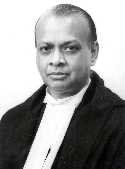
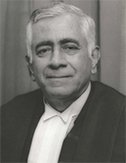
ARIJIT PASAYAT & TARUN CHATTERJEE
JUDGMENT:
J U D G M E N T
ARIJIT PASAYAT, J.
Challenge in this appeal is to the judgment rendered by a
learned Single Judge of the Karnataka High Court allowing the
second appeal filed by the plaintiff.
Factual background in a nutshell is as follows:
The case of the plaintiff was that he entered into an
agreement of sale on 22.8.1977. Though defendants 1 to 5
were to execute the agreement, at the time of agreement, the
fifth defendant went out saying that he would come and sign
later, but did not sign it at all and only defendants 1 to 4
signed the agreement of sale. However, the plaintiff claimed
that defendant-5 must also join in execution of the sale deed
and prayed for a decree for specific performance.
In the written statement filed by the first defendant, it
was contended that all the defendants are tenants in common
and co-owners. Defendants 2 to 4 were in need of money
during 1977 and approached the plaintiff to advance loan.
The plaintiff agreed to advance loan provided the defendants
execute an agreement of sale in his favour for the security of
the loan borrowed and expressed his intention that all the
defendants should execute nominal agreement of sale and
then only he would pay the amount. Under the circumstances
the first defendant and defendants 2 to 4 who were in need of
money were forced to sign the document and believing the
words of the plaintiff, executed a nominal agreement of sale.
The fifth defendant who filed a separate written statement,
however, claimed that there is a collusion between the plaintiff
and defendants 1 to 4 and the suit was brought to harass him
and deprive him of his legal right and interest over the suit
property. They also contended that there is undue delay on
the part of the plaintiff and the suit was instituted just to
overcome the period of limitation which was about to expire.
The Trial Court as well as the First Appellate Court held
that there was no evidence adduced by the plaintiff to show
that he was ready and willing to perform his part of the
contract. It was also noticed that there was no specific
pleading showing readiness and willingness of the plaintiff to
perform his part of the contract. Accordingly the suit and the
first appeal were dismissed. Plaintiff filed second appeal
under Section 100 of the Code of Civil Procedure, 1908 (in
http://JUDIS.NIC.IN SUPREME COURT OF INDIA Page 2 of 7
short the 'Code'). The High Court framed the following
questions for adjudication:
1) Whether the lower Courts were in error in holding
that there is no specific pleading showing the
readiness and willingness of the plaintiff to perform
his part of the contract?
2) Whether the lower appellate Court was in error in
taking the view that the contract of sale is
indivisible and that defendants 1 to 4 cannot
convey their even 4/5th share?"
The High Court held that there was specific pleading as
regards the readiness and willingness of the plaintiff to
perform his part of the contract. It, however, did not record
any finding so far as the second question is concerned. It
accordingly allowed the second appeal.
Learned counsel for the appellant has submitted that in
order to satisfy the requirement of Section 16(c) of the Specific
Relief Act, 1963 (in short the 'Act') the plaintiff not only
requires to plead that he is ready and willing to perform his
part of the contract but also to prove that aspect. In the
instant case no proof was adduced. On the contrary, the
findings of fact recorded by the Trial Court and the First
Appellate Court to the effect that the plaintiff had failed to
establish that he was ready and willing to perform his part of
the contract have been set aside without even formulating a
question of law, which is impermissible. It was further
submitted that the High Court has placed reliance on some of
the discussions made by the Trial Court and the First
Appellate Court completely ignoring the findings recorded.
Learned counsel for the respondents on the other hand
submitted that the High Court has taken note of the factual
position and on a proper analysis of the judgments of the Trial
Court and the First Appellate Court recorded a finding that
requirement of Section 16(c) of the Act was fulfilled.
The Trial Court recorded the following findings:
"Therefore, the evidence of the plaintiff is
an utter lie and he has not offered any
amount as alleged on 22.11.1977.
Even conceding for a moment that the
plaintiff offered to pay Rs.11,000/- on
22.11.977 and the first defendant has agreed
to execute the sale deed only on 30.11.1977,
the point is, whether the plaintiff again
offered to pay the amount on 30.11.1977.
Admittedly according to P.W.2, the plaintiff
has not offered to pay the defendants 2 to 5.
So far as defendants 2 to 5 are concerned, the
plaintiff has not performed his part of the
contract by offering to pay the balance of the
amount to them. Secondly, there is no
evidence to show whether the plaintiff has
offered to pay the said amount again on
30.11.1977. So far as the plaintiff himself is
concerned, he has clearly admitted in his
evidence that only once i.e. about 3 or 4 days
prior to the expiry of three months period
http://JUDIS.NIC.IN SUPREME COURT OF INDIA Page 3 of 7
from the date of agreement he has offered to
pay to the defendants and thereafter he has
never offered the amount. This clearly shows
that the plaintiff has never offered the amount
on 30.11.1977."
These conclusions were affirmed by the First Appellate
Court.
In order to appreciate the rival submissions Section 16(c)
needs to be quoted along with the Explanations. The same
reads as follows:
"16. Personal bars to relief:
(a) .........
(b) .........
(c) who fails to aver and prove that he has
performed or has always been ready and
willing to perform the essential terms of
the contract which are to be performed by
him, other than terms of the performance
of which has been prevented or waived by
the defendant.
Explanation- For the purpose of clause (c)-
(i) where a contract involves the
payment of money, it is not essential
for the plaintiff to actually tender to
the defendant or to deposit in Court
any money except when so directed
by the Court;
(ii) the plaintiff must aver performance
of, or readiness and willingness to
perform, the contract accordingly to
its true construction."
In Ardeshir H. Mama v. Flora Sassoon (AIR 1928 PC
208), the Privy Council observed that where the injured party
sued at law for a breach, going to the root of the contract, he
thereby elected to treat the contract as at an end himself and
as discharged from the obligations. No further performance by
him was either contemplated or had to be tendered. In a suit
for specific performance on the other hand, he treated and was
required by the Court to treat the contract as still subsisting.
He had in that suit to allege, and if the fact was traversed, he
was required to prove a continuous readiness and willingness
from the date of the contract to the time of the hearing, to
perform the contract on his part. Failure to make good that
averment brings with it and leads to the inevitable dismissal of
the suit. The observations were cited with approval in Prem
Raj v. The D.L.F. Housing and Construction (Private) Ltd. and
Anr. (AIR 1968 SC 1355).
The requirements to be fulfilled for bringing in
compliance of the Section 16(c) of the Act have been delineated
by this Court in several judgments. While examining the
requirement of Section 16(c) this Court in Syed Dastagir v.
T.R. Gopalakrishna Settty (1999 (6) SCC 337) noted as follows:
"So the whole gamut of the issue raised is, how
to construe a plea specially with reference to
http://JUDIS.NIC.IN SUPREME COURT OF INDIA Page 4 of 7
Section 16(c) and what are the obligations
which the plaintiff has to comply with in
reference to his plea and whether the plea of
the plaintiff could not be construed to conform
to the requirement of the aforesaid section, or
does this section require specific words to be
pleaded that he has performed or has always
been ready and is willing to perform his part of
the contract. In construing a plea in any
pleading, courts must keep in mind that a plea
is not an expression of art and science but an
expression through words to place fact and law
of one's case for a relief. Such an expression
may be pointed, precise, sometimes vague but
still it could be gathered what he wants to
convey through only by reading the whole
pleading, depending on the person drafting a
plea. In India most of the pleas are drafted by
counsel hence the aforesaid difference of pleas
which inevitably differ from one to the other.
Thus, to gather true spirit behind a plea it
should be read as a whole. This does not
distract one from performing his obligations as
required under a statute. But to test whether
he has performed his obligations, one has to
see the pith and substance of a plea. Where a
statute requires any fact to be pleaded then
that has to be pleaded may be in any form. The
same plea may be stated by different persons
through different words; then how could it be
constricted to be only in any particular
nomenclature or word. Unless a statute
specifically requires a plea to be in any
particular form, it can be in any form. No
specific phraseology or language is required to
take such a plea. The language in Section 16(c)
does not require any specific phraseology but
only that the plaintiff must aver that he has
performed or has always been and is willing to
perform his part of the contract. So the
compliance of "readiness and willingness" has
to be in spirit and substance and not in letter
and form. So to insist for a mechanical
production of the exact words of a statute is to
insist for the form rather than the essence. So
the absence of form cannot dissolve an essence
if already pleaded."
Again in Motilal Jain v. Ramdasi Devi (Smt.) and Ors.
(2000 (6) SCC 420) it was noted as follows:
"7. The other contention which found favour
with the High Court, is that plaint averments
do not show that the plaintiff was ready and
willing to perform his part of the contract and
at any rate there is no evidence on record to
prove it. Mr. Choudhary developed that
contention placing reliance on the decision in
Varghese case ((1969) 2 SCC 539). In that
case, the plaintiff pleaded an oral contract for
sale of the suit property. The defendant denied
the alleged oral agreement and pleaded a
different agreement in regard to which the
plaintiff neither amended his plaint nor filed
subsequent pleading and it was in that context
http://JUDIS.NIC.IN SUPREME COURT OF INDIA Page 5 of 7
that this Court pointed out that the pleading
in specific performance should conform to
Forms 47 and 48 of the First Schedule of the
Code of Civil Procedure. That view was
followed in Abdul Khader case (1989) 4 SCC
313).
8. However, a different note was struck by
this Court in Chandiok case ((1970) 3 SCC
140). In that case 'A' agreed to purchase from
'R' a leasehold plot. 'R' was not having lease of
the land in his favour from the Government
nor was he in possession of the same. 'R',
however, received earnest money pursuant to
the agreement for sale which provided that the
balance of consideration would be paid within
a month at the time of the execution of the
registered sale deed. Under the agreement 'R'
was under obligation to obtain permission and
sanction from the Government before the
transfer of leasehold plot. 'R' did not take any
steps to apply for the sanction from the
Government. 'A' filed the suit for specific
performance of the contract for sale. One of the
contentions of 'R' was that 'A' was not ready
and willing to perform his part of the contract.
This Court observed that readiness and
willingness could not be treated as a
straitjacket formula and that had to be
determined from the entirety of facts and
circumstances relevant to the intention and
conduct of the party concerned. It was held
that in the absence of any material to show
that 'A' at any stage was not ready and willing
to perform his part of the contract or that he
did not have the necessary funds for payment
when the sale deed would be executed after the
sanction was obtained, 'A' was entitled to a
decree for specific performance of contract.
9. That decision was relied upon by a three-
Judge Bench of this Court in Syed Dastagir
case ((1999) 6 SCC 337) wherein it was held
that in construing a plea in any pleading,
courts must keep in mind that a plea is not an
expression of art and science but an
expression through words to place fact and law
of one's case for a relief. It is pointed out that
in India most of the pleas are drafted by
counsel and hence they inevitably differ from
one to the other; thus, to gather the true spirit
behind a plea it should be read as a whole and
to test whether the plaintiff has performed his
obligations, one has to see the pith and
substance of the plea. It was observed :
"Unless a statute specifically
requires a plea to be in any
particular form, it can be in any
form. No specific phraseology or
language is required to take such a
plea. The language in Section 16(c)
of the Specific Relief Act, 1963 does
not require any specific phraseology
but only that the plaintiff must aver
that he has performed or has always
been and is willing to perform his
part of the contract. So the
http://JUDIS.NIC.IN SUPREME COURT OF INDIA Page 6 of 7
compliance of 'readiness and
willingness' has to be in spirit and
substance and not in letter and
form."
It is thus clear that an averment of readiness
and willingness in the plaint is not a
mathematical formula which should only be in
specific words. If the averments in the plaint
as a whole do clearly indicate the readiness
and willingness of the plaintiff to fulfil his part
of the obligations under the contract which is
the subject-matter of the suit, the fact that
they are differently worded will not militate
against the readiness and willingness of the
plaintiff in a suit for specific performance of
contract for sale."
Lord Campbell in Cork v. Ambergate etc. and Railway Co.
(1851) 117 ER 1229 observed that in common sense the
meaning of such an averment of readiness and willingness
must be that the non-completion of the contract was not the
fault of the plaintiffs, and that they were disposed and able to
complete it had it not been renounced by the defendant.
The basic principle behind Section 16(c) read with
Explanation (ii) is that any person seeking benefit of the
specific performance of contract must manifest that his
conduct has been blemishless throughout entitling him to the
specific relief. The provision imposes a personal bar. The
Court is to grant relief on the basis of the conduct of the
person seeking relief. If the pleadings manifest that the
conduct of the plaintiff entitles him to get the relief on perusal
of the plaint he should not be denied the relief.
Section 16(c) of the Act mandates the plaintiff to aver in
the plaint and establish as the fact by evidence aliunde that he
has always been ready and willing to perform his part of the
contract. The principles were recently elaborated in Aniglase
Yohannan v. Ramlatha and Ors. (2005 (7) SCC 534).
As rightly contended by learned counsel for the appellant
no question was even formulated regarding the correctness or
otherwise of the findings of facts recorded by the Trial Court.
The High Court has also not discussed as to in what way the
requirement of Section 16(c) regarding the proof of readiness
and willingness of the plaintiff to perform his part of the
contract was fulfilled.
In our opinion, therefore, the judgment of the High Court
suffers from serious infirmities. It suffers from the vice of
exercise of jurisdiction which did not vest in the High Court
under the law. Under Section 100 of the Code (as amended in
1976) the jurisdiction of the High Court to interfere with the
judgments of the courts below is confined to hearing on
substantial questions of law. Interference with finding of fact
by the High Court is not warranted if it involves re-
appreciation of evidence (see Panchugopal Barua v. Umesh
Chandra Goswami (1997) 4 SCC 713) and Kshitish Chandra
Purkait v. Santosh Kumar Purkait (1997) 5 SCC 438). High
Court has not even discussed any evidence. No basic finding
of fact recorded by the courts below has been reversed much
less any reason assigned for taking a view contrary to that
taken by the Courts below. The finding on the question of
readiness and willingness to perform the contract which is a
mixed question of law and fact has been upset. It is
http://JUDIS.NIC.IN SUPREME COURT OF INDIA Page 7 of 7
statutorily provided by Section 16(1)(c) of the Act that to
succeed in a suit for specific performance of a contract the
plaintiff shall aver and prove that he has performed and has
always been ready and willing to perform the essential terms
of the contract which were to be performed by him other than
the terms the performance of which has been prevented or
waived by the defendant.
Looked at from any angle the judgment of the High Court
is vulnerable and needs to be set aside and it is so directed.
The appeal is allowed without any order as to costs.

 Login with google
Legal Notes
Add a Note....