
The present appeal contests the final judgment and order issued by the High Court of Judicature at Bombay, which, while rejecting the Arbitration Petition, determined that the appellants had forfeited ...


No Acts & Articles mentioned in this case
REPORTABLE
IN THE SUPREME COURT OF INDIA
CIVIL APPELLATE JURISDICTION
CIVIL APPEAL NO(s). 6300 OF 2009
JAYESH H. PANDYA & ANR. ….APPELLANT(S)
VERSUS
SUBHTEX INDIA LTD. & ORS. ….RESPONDENT(S)
J U D G M E N T
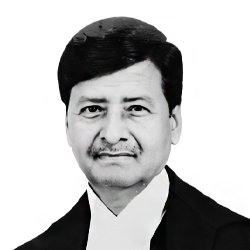
Rastogi, J.
1.The instant appeal is directed against the final judgment
and Order dated 14
th
March, 2008 passed by the High Court of
Judicature at Bombay whereby the High Court while dismissing
the Arbitration Petition held that the appellants had waived their
right to the extension of time for completion of the arbitration
proceedings and making the award, beyond the stipulated period
of four months.
1
2.The seminal facts in brief relevant for the present purpose
are that the appellants are partners of a partnership firm by the
name Hetali Construction Company. The first respondent is a
company incorporated under the Companies Act, 1956 and is a
claimant in the arbitral proceedings which was initiated pursuant
to the arbitration agreement dated 28
th
April, 2000. The first
respondent Subhtex India Limited instituted an application
under Section 11 of the Arbitration and Conciliation Act,
1996(hereinafter being referred to as the “Act 1996”) for
appointment of an Arbitrator in A.P. No. 150 of 2003 before the
High Court of Judicature at Bombay despite resistance by the
present appellants that the agreement dated 28
th
April, 2000 was
a collusive and a forged document. Initially, by an Order dated
14
th
November, 2003, late Shri Justice V.D. Tulzapurkar, former
Judge of this Court was appointed as a sole Arbitrator without
prejudice to the rights and contentions of the parties and it was
clarified that the views expressed in the order dated 14
th
November, 2003 about the existence, validity and effect of the
arbitration agreement were prima facie and it would be open to
be examined by the learned Arbitrator under Section 16 of the
Act, 1996. The order passed by the Single Judge of the High
2
Court dated 14
th
November, 2003 was a subject matter of
challenge in a writ petition filed under Article 226 of the
Constitution of India which was dismissed vide judgment and
order dated 20
th
January, 2004 with an observation that
adequate remedies are available under Section 16 of raising all
contentious issues relating to the existence of the arbitration
agreement and constitution of the Arbitral Tribunal, before the
Tribunal.
3.The order of the Division Bench of the High Court dated 20
th
January, 2004 came to be challenged in a Special Leave Petition
(Civil) No. 3919 of 2004 before this Court. This Court issued
notice on 8
th
March, 2004 and stayed proceedings before the
learned Arbitrator until further orders. Unfortunately, the sole
Arbitrator appointed pursuant to Order dated 14
th
November,
2003 died in October, 2004. The said special leave petition was
dismissed on 24
th
April, 2007 with the following observation as
under:
“Heard.
In the facts and circumstances of the present
case, we are not inclined to exercise our jurisdiction
3
under Article 136 of the Constitution of India. The
special leave petition is dismissed.
We are informed that Mr. Justice V.D.
Tulzapurkar, former Judge of this Court, who was
appointed as the Arbitrator, has passed away.
Counsel for the parties are agreed that Hon’ble
Mr. Justice S.N. Variava, a former Judge of this Court
be appointed in place of Mr. Justice V.D. Tulzapurkar,
as the Arbitrator. We order accordingly. Learned
Arbitrator shall fix his remuneration etc.
All the points including the existence, validity
and enforceability of the contract, as indicated by the
Division Bench in its Judgment, shall be decided by
the learned Arbitrator.
Parties are directed to appear before the learned
Arbitrator on 4
th
of May, 2007 with a certified copy of
this order for further directions. The address and
contact numbers of the learned Arbitrator are as
under:
7B, Rockside,
116, Walkeshwar Road,
Mumbai – 400 006.
Phone Nos. (022) 23620614, 23620598
Copy of this order be sent to the learned Arbitrator.”
4.It will be apposite to take note of the terms of the Arbitration
Agreement dated 28
th
April, 2000 relevant for the purpose which
are extracted hereunder:
“1….
2….
3…
4
4. Arbitrator shall follow the procedure of allowing
parties to file their respective claims & contention
and to file documents within reasonable time as the
arbitrator may deem fit.
5.The arbitrator will make his award within a period
of 4 months from the date of service of copy of
agreement.
6.The arbitrator shall have power to extend the
period for making and publishing the award from
time to time, with the consent of both the parties.
7.The Arbitrator shall give reasons for his award.
8.The arbitrator will follow provisions of Arbitration
& Reconciliation Act, 1996.
The parties here to and the parties
represented by party of the first part be bound by
the award that will be given by arbitrator.”
5.In terms of the conditions of the agreement dated 28
th
April,
2000, apart from the procedure to be followed by the Arbitrator,
he was under an obligation to make his award within a period of
four months from the date of service of copy of agreement with a
proviso that the Arbitrator would have the power to extend the
period for making and publishing the award, with the consent of
both the parties.
6.Indisputedly, the first preliminary meeting before the
Arbitrator was held on 4
th
May, 2007. As per clause 5 of the
terms of the agreement dated 28
th
April, 2000, four months
5
period which was available at the disposal of the Arbitrator for
passing of an award in the ordinary course of his business
subject to extension with the consent of both the parties was to
expire on 4
th
September, 2007. The claimant was permitted to
file its statement of claims and a compilation of documents and
the defendants to the arbitral proceedings(appellants) were to file
written statement and counter claims on or before 6
th
July, 2007
and thereafter a discovery and inspection was to be completed by
27
th
July, 2007 and the parties were directed to make their
statements of admission and/or denials by 10
th
August, 2007, in
respect of the documents disclosed. A preliminary meeting was
to be held on 13
th
August, 2007. The fact which came on record
is that the appellants alleged that they had received the
statement of claim on 6
th
June, 2007 and extension of time was
sought for compilation of documents in order to file their written
statement. The compilation of documents was received on 15
th
June, 2007. The fact is that the time was consumed in exchange
of claims and counter claims and compilation of documents.
Date of 27
th
August, 2007 was fixed for hearing before the
Arbitrator. In the course of hearing, it was urged by the
appellants that even if the agreement dated 28
th
April, 2000 for
6
the sake for submission is to be taken as a genuine agreement,
arbitration proceedings have to be culminated within a period of
four months from the date of service of a copy of the agreement
and the time could be extended only with the consent of both the
parties. He further contended that the appellants had refused to
consent to an extension of time; and since the Tribunal held its
first meeting on 4
th
May, 2007, the arbitral proceedings could not
be concluded within a period of four months; and no purpose is
going to be served to continue the arbitral proceedings further,
even with the hearing on the applications filed by the parties.
7.On objection being raised by the appellants before the
learned Arbitrator, in his meeting on 27
th
August, 2007, it was
observed that had this point been urged on 4
th
May, 2007, a
shorter time frame could have been fixed and dates would have
been allotted and proceedings could have been completed within
time. In the given circumstances, it would be more appropriate if
the claimants obtain an extension of time or a clarification from
this Court that the time could be extended of the Tribunal even
without the consent of the parties to the arbitral proceedings.
7
The matter was adjourned for obtaining extension of time or a
clarification from this Court.
8.Indisputedly, no interim application was filed for extension
of time or a clarification in this Court, as a result, jurisdiction to
continue with the proceedings came to an end by passage of time
on 4
th
September, 2007 and it was observed by the learned
Arbitrator to continue with the arbitral proceedings and if the
issue so urged by the parties is raised in writing, it could be
decided at the appropriate stage. Accordingly, learned Arbitrator
fixed a meeting on 26
th
October, 2007 in pursuance of the
communication dated 3
rd
October, 2007. At this stage, the
appellants filed a written application before the Arbitrator stating
therein that the period of four months from the date of first
preliminary meeting had expired on 4
th
September, 2007 and the
Arbitral Tribunal has become functus officio with no power to
proceed with the arbitral proceedings any more. But that came
to be rejected by the learned Arbitrator vide Order dated 31
st
December, 2007 which came to be challenged by the appellants
in Arbitration Petition( L) No. 59 of 2008 before the High Court of
Judicature at Bombay invoking Section 14 of the Act, 1996
8
seeking a declaration that the Arbitrator has become de jure
unable to perform his functions and the mandate to act as an
Arbitrator in the arbitral proceedings between the parties has
terminated. The arbitration petition filed at the instance of the
present appellants came to be dismissed by the High Court under
its Order dated 14
th
March, 2008 holding that the appellants by
their conduct have waived their defence to enforce a punctilious
observance of the time schedule of four months; and sustaining
objection would frustrate the object and purpose of the arbitral
proceedings and will bring the whole machinery provided by the
Act to facilitate an efficacious recourse to arbitration into a grave
peril which is a subject matter of challenge in the instant
proceeding before us.
9.Learned counsel for the appellants submits that there is no
dispute on facts that after Mr. Justice S.N. Variava, former Judge
of this Court, was appointed as a substitute Arbitrator pursuant
to the Order of this Court dated 24
th
April, 2007, the first
preliminary meeting was held by the Arbitrator on 4
th
May, 2007
and in the hearing which took place before the Arbitrator on 27
th
August, 2007, an objection was raised by the appellants that the
9
Arbitrator has to make his award within a period of four months
from the date of service of copy of the agreement and the time
could only be extended with the consent of both the parties. The
appellants had instructed to refuse to consent to an extension of
time, and despite their specific objection, followed with an
application being filed at a later stage, noticing refusal to consent
for extension of time which had been arbitrarily rejected by the
Arbitrator, and genesis of the terms of the agreement has not
been looked into by the learned Single Judge of the High Court
under the impugned judgment and after the expiry of four
months, in the absence of time being extended with the consent
of both the parties, the Arbitrator becomes functus officio and all
subsequent proceedings stands abated and has placed reliance
on the judgment of this Court in NBCC Limited Vs. J.G.
Engineering Private Limited
1
and submits that order of the
High Court of Bombay impugned herein is not sustainable in law
and deserves to be interfered by this Court.
10.Per contra, learned counsel for the respondents, while
supporting the finding recorded by the High Court in the
1 2010(2) SCC 385
10
impugned judgment submits that once the appellants have
participated in the arbitration proceedings which for all practical
purposes could not be concluded within a period of four months
and it reveals from the proceedings that delay in furnishing
written statements/counter claims were attributable to the
appellants and in the given circumstances, the very participation
in the arbitration proceedings with their right to claim objection
for extension of time for the Arbitrator to complete the arbitral
proceedings in submitting an award stands waived by their
implied consent and this has been noticed by the High Court in
the impugned judgment and submits that if the objection which
has been raised by the appellants is taken to its logical
conclusion the very object and intent of the Parliament in
enacting the law to facilitate an efficacious recourse to arbitration
will be in jeopardy and the High Court has rightly observed that
the Arbitrator is justified in coming to the conclusion that the
appellants with their conduct waived their objection to enforce a
punctilious observance of the time schedule of four months
under the terms of the agreement for the Arbitrator to conclude
the arbitral proceedings and it needs no interference by this
Court.
11
11.We have heard learned counsel for the parties and with
their assistance perused the material available on record.
12.As noted herein earlier, an application was filed by the
appellants under Section 14 of the Act, 1996 before the High
Court of Bombay with a declaration that the Arbitrator has
become de jure unable to perform his functions and the mandate
of the Arbitrator to act as an Arbitrator in the arbitral
proceedings between the parties stood terminated. As already
mentioned, that came to be rejected by the High Court under its
Order dated 14
th
March, 2008 and because of the interim Order
passed by this Court dated 1
st
September, 2008, Arbitrator was
unable to conduct arbitral proceedings and the same is lying in
the storage for the last eleven years.
13.The indisputed facts manifest from the record are that after
the appointment of a substituted Arbitrator, in compliance of
Order of this Court dated 24
th
April, 2007, the first preliminary
meeting was held before the learned Arbitrator on 4
th
May, 2007
and four months from the date of first preliminary meeting was to
12
expire on 4
th
September, 2007 and in the hearing which took
place before the Arbitrator on 27
th
August, 2007, objection was
raised by the appellants that apart from their objection that the
agreement dated 28
th
April, 2000 is a collusive and forged
document, even if taken at its face value, taking note of the
clause of arbitration under the agreement dated 28
th
April, 2000,
the Arbitrator has to make his award within a period of four
months from the date of service of a copy of the agreement and
time may be extended only with the consent of both the parties;
and despite an opportunity being granted by the learned
Arbitrator on their objection, recording refusal for extension of
time to the parties to obtain an extension of time or clarification
from this Court, no such application was filed by the
respondents/claimants either for seeking extension of time or for
clarification from this Court. The respondents, on the other
hand, vide application dated 1
st
October, 2007 expressly refused
not to file any application seeking extension or clarification from
this Court and when the Arbitrator proceeded with the
proceeding, a written application was filed by the appellants
before the Arbitrator stating inter alia that four months period
had expired and the Arbitral Tribunal has become de jure unable
13
as an Arbitrator in this matter which came to be rejected by the
learned Arbitrator vide Order dated 31
st
December, 2007.
14.From the records before us, it is established that the
Arbitrator was unable to complete the arbitral proceedings within
four months from the date of the first preliminary meeting held
on 4
th
May, 2007 in terms of clause (5) of the arbitration
agreement and objection to extend the time was recorded by the
appellants before the Arbitrator. The Arbitrator having failed to
do so rejected their application by an Order dated 31
st
December
2007 that came to be challenged by the appellant invoking
Section 14 of the Act 1996 by filing an Arbitration Petition in the
High Court of Bombay with a declaration that the Arbitrator has
become je jure unable to perform his functions and the mandate
to act as an Arbitrator in the arbitral proceedings between the
parties stood terminated which came to be dismissed by the High
Court under the impugned judgment dated 14
th
March, 2008.
15.It is necessary to mention Section 14 and 15 of the Act,
1996 for the sake of convenience which is as under:
14
“14. Failure or impossibility to act—(1) The
mandate of an arbitrator shall terminate and he shall
be substituted by another arbitrator, if—
(a) he becomes de jure or de facto unable to
perform his functions or for other reasons
fails to act without undue delay; and
(b) he withdraws from his office or the parties
agree to the termination of his mandate.
(2) If a controversy remains concerning any of the
grounds referred to in clause (a) of subsection (1), a
party may, unless otherwise agreed by the parties,
apply to the Court to decide on the termination of the
mandate.
(3) If, under this section or subsection (3) of Section
13, an arbitrator withdraws from his office or a party
agrees to the termination of the mandate of an
arbitrator, it shall not imply acceptance of the validity
of any ground referred to in this section or subsection
(3) of Section 12.
15. Termination of mandate and substitution of
arbitrator — (1) In addition to the circumstances
referred to in Section 13 or Section 14, the mandate of
an arbitrator shall terminate—
(a) where he withdraws from office for any
reason; or
(b) by or pursuant to agreement of the
parties.
(2) Where the mandate of an arbitrator terminates, a
substitute arbitrator shall be appointed according to
the rules that were applicable to the appointment of
the arbitrator being replaced.
(3) Unless otherwise agreed by the parties, where an
arbitrator is replaced under subsection (2), any
hearings previously held may be repeated at the
discretion of the Arbitral Tribunal.
15
(4) Unless otherwise agreed by the parties, an order or
ruling of the Arbitral Tribunal made prior to the
replacement of an arbitrator under this section shall
not be invalid solely because there has been a change
in the composition of the Arbitral Tribunal.”
16.It is clear from the bare reading of subsection 1(a) of
Section 14 that mandate of an arbitrator shall terminate if it fails
to act without undue delay. In the present case, the first
preliminary meeting was held on 4
th
May, 2007 and the Arbitrator
in terms of the agreement was supposed to conclude and pass
the award within a period of four months which indisputedly
stood expired on 4
th
September, 2007 and in the meantime the
appellants recorded their objection of not consenting for
extension of time beyond 4
th
September, 2007 and thus, it can
be construed that parties were not in agreement for extension to
the mandate of the Arbitrator failing which the arbitral
proceedings automatically stood terminated.
17.Subsection(2) of Section 14 clearly stipulates that if a
controversy remains concerning any of the grounds referred to in
clause (a) of subsection (1), the party may, unless otherwise
agreed by the parties, apply to the Court to decide on the
16
termination of the mandate and the appellants rightly applied to
the Court for termination of the mandate of the Arbitrator
pursuant to the provisions of this Section and the Court was
within its jurisdiction to decide accordingly.
18.It is true that the object of the scheme of the Act, 1996 is to
secure expeditious resolution of disputes and it is based on the
fulcrum of promptitude but at the same time the Arbitrator is
required to adjudicate the disputes in view of the agreed terms of
contract and the procedure. Therefore, the arbitration
proceedings are supposed to be governed and run by the terms
as agreed by the parties. The Arbitrator, therefore, cannot go
beyond the clause of the arbitration agreement. We all need to
respect the legislative intent underlying the Act. The speedy and
alternative resolution to the dispute thus cannot be overlooked
but at the same time, proceedings have to be governed and run
by the terms agreed between the parties in concluding the
arbitral proceedings failing which it will frustrate the mandate of
the object of the Act with which it has been legislated by the
Parliament to act upon on agreed terms and conditions of the
agreement in concluding the arbitral proceedings. The exposition
17
of law has been considered by this Court in NBCC Limited
case(supra) in para 12 and 22 as under:
“12. A perusal of the arbitration agreement quite
clearly reveals that the arbitrator has the power to
enlarge the time to make and publish the award by
mutual consent of the parties. Therefore, it is obvious
that the arbitrator has no power to further extend the
time beyond that which is fixed without the consent of
both the parties to the dispute. It is an admitted
position that the respondent did not give any consent
for extension of time of the arbitrator. Thus given the
situation, the arbitrator had no power to further
enlarge the time to make and publish the award and
therefore his mandate had automatically terminated
after the expiry of the time fixed by the parties to
conclude the proceedings.
22. Taking into consideration the arguments of the
appellant, it is necessary to mention here that the
Court does not have any power to extend the time
under the Act unlike Section 28 of the 1940 Act which
had such a provision. The Court has therefore been
denuded of the power to enlarge time for making and
publishing an award. It is true that apparently there is
no provision under the Act for the Court to fix a time
limit for the conclusion of an arbitration proceeding,
but the Court can opt to do so in the exercise of its
inherent power on the application of either party.
Where however the arbitration agreement itself
provides the procedure for enlargement of time and the
parties have taken recourse to it, and consented to the
enlargement of time by the arbitrator, the Court cannot
exercise its inherent power in extending the time fixed
by the parties in the absence of the consent of either of
them.”
19.In the instant case, from the pleadings on record and
noticed by the High Court in its impugned judgment dated 14
th
March, 2008, the proceedings stood terminated as the appellants
18
have not recorded their consent for extension of time which was
the requirement and essence of the conditions of the agreement
and the Arbitrator became de jure unable to perform his
functions after the expiry of four months from the date of first
preliminary meeting held on 4
th
May, 2007 but that was declined
by the High Court on the premise that after the appellants have
participated in the arbitral proceedings, that waived their right to
question extension of time as it was inpracticable for the
Arbitrator to conclude the proceedings within a period of four
months and the High Court was of the view that the Act has been
legislated with an object to facilitate an efficacious recourse to
arbitration failing which it will be in grave peril.
20.The essential element of waiver is that there must be a
voluntary and intentional relinquishment of a right. The
voluntary choice is the essence of waiver. There should exist an
opportunity for choice between the relinquishment and an
enforcement of the right in question. It cannot be held that there
has been a waiver of valuable rights where the circumstances
show that what was done was involuntary. That apart, the
doctrine of “waiver” or “deemed waiver” or “estoppel” is always
19
based on facts and circumstances of each case, conduct of the
parties in each case and as per the agreement entered into
between the parties and this exposition has been affirmed by this
Court in NBCC Ltd.(supra) regarding adherence to the imposition
of time limit for the conclusion of the arbitral proceedings. The
parties have to stand by the terms of contract including the
Arbitrator.
21.The clause so referred indicates that the parties have
admittedly agreed and the time period so prescribed is final and
binding. It means the arbitration proceedings should commence
and end within the prescribed period of time which in the instant
case was of four months and expired on 4
th
September, 2007 and,
there was no occasion for either party to raise an objection as
long as the time was available at the command of the Arbitrator
to conclude the arbitral proceedings and pass an award within
the time schedule fixed under the terms of contract as agreed by
the parties.
22.That apart, there is no provision under the arbitration
agreement to condone the delay when agreement between the
20
parties binds them to see that the arbitration proceedings should
be concluded within the time prescribed. This time restriction is
well within the scope and purport of the Act, 1996 at national
and international arbitrations.
23.The time fixed for the arbitration and/or schedule of time
limit in such arbitration proceedings, as it is recognised by law,
there is no reason not to accept the same, basically in the
present facts and circumstances where the parties themselves
agreed to bind themselves by the time limit. Section 14 read with
Section 15 of the Act, 1996 also recognise this mechanism and
after the expiry of four months period from the date of first
preliminary meeting held on 4
th
May, 2007, the Arbitrator indeed
became de jure unable to perform his functions and the mandate
to act as an Arbitrator in the arbitral proceedings between the
parties as prayed for stood terminated.
24.Consequently, in our considered view, the appeal deserves
to succeed and is accordingly allowed. The judgment and order
of the High Court dated 14
th
March, 2008 is hereby set aside.
21
The respondents are at liberty to ventilate their grievance as
admissible under the law. No costs.
25.Pending application(s), if any, stand disposed of.
…………….………………………….J.
(N.V. RAMANA)
……………..…………………………J.
(MOHAN M. SHANTANAGOUDAR)
……………………………………….J.
(AJAY RASTOGI)
NEW DELHI
AUGUST 27, 2019
22

Legal Notes
Add a Note....