
As per case facts, the original plaintiff Munnan Devi filed a suit challenging a sale deed, claiming it was executed by an imposter. During the suit's pendency, Munnan Devi executed ...
1
A227 No. - 4747 of 2019
Reserved on: 09.10.2025
Delivered on: 19.01.2026
HIGH COURT OF JUDICATURE AT ALLAHABAD
MATTERS UNDER ARTICLE 227 No. - 4747 of 2019
Jeera Devi and another
…..Petitioner(s)
Versus
Additional District Judge Court No.12, Varanasi and 2 others
…..Respondent(s)
Counsel for Petitioner(s):Brij Raj
Counsel for Respondent(s):Pratik J. Nagar, Shambhu Nath,
Triveni Shanker
Court No. - 3
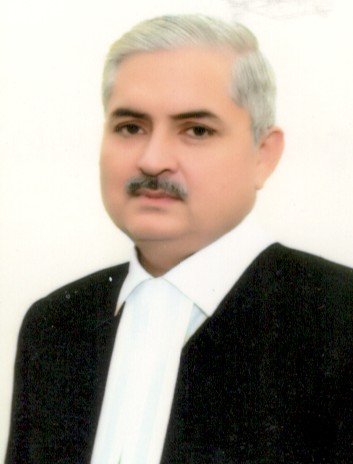
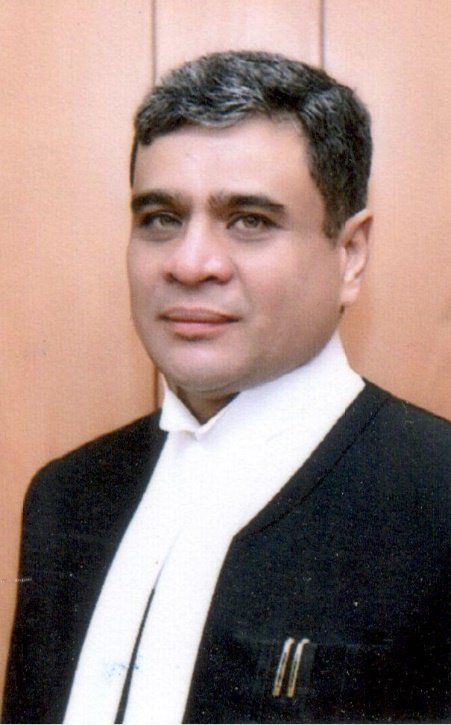
HON'BLE SAUMITRA DAYAL SINGH, J.
HON'BLE RAJEEV MISRA, J.
HON'BLE AJAY BHANOT, J.
1. The present reference to a larger bench has arisen on a reference
made by a learned single judge, on two questions of law framed by
his lordship:
“(i) Whether the decision of this Court in Raisa Sultana Begam,
AIR 1996 Allahabad 318 holding that an application under
Order XXIII Rule 1 of the Code of Civil Procedure, 1908 once
moved, leads to a withdrawal of the suit ipso facto without the
Court passing an affirmative order, is still good law, in view of
2
A227 No. - 4747 of 2019
the subsequent decision of the Full Bench in The Sunni Central
Board v. Sri Gopal Singh Visharad, 2010 ADJ 1 (SFB)(LB)
and the Supreme Court in M. Siddiq (dead) through legal
representatives (Ram Janmabhoomi Temple case) v. Mahant
Suresh Das and others, (2020) 1 SCC 1 and Anurag Mittal v.
Shaily Mishra Mittal, (2018) 9 SCC 691 ?
(ii) Whether the decision in Meera Rai v. Additional Sessions
Judge and others, 2017 (12) ADJ 817 does not lay down the law
correctly, in view of the law laid down by the Supreme Court in
Anurag Mittal v. Shaily Mishra Mittal, (2018) 9 SCC 691 on
the issue if the mere lodging of an application to unconditionally
withdraw a suit under Order XXII Rule 1 of the Code of Civil
Procedure, 1908 operates as a withdrawal of the suit ipso facto
and without an affirmative order?“
2. The facts giving rise to the present reference have been
summarised by the learned single judge in the reference order, as
below:
“2. The facts giving rise to this petition, in necessary detail, are
these :
Plot No. 40 admeasuring 0.243 hectare and Plot No. 156
admeasuring 0.72 decimal, situate in Village Mauza Saraimugal,
Pargana Athagaon, Tehsil Pindra, District Varanasi was recorded
in the name of one Smt. Munnan Devi. She was a co-sharer in the
two plots to the extent of a half share along with her co-tenure
holder, Smt. Ramdei Devi, wife of Ramdas. One Smt. Amrawati
Devi, wife of Late Panna Lal, claimed that Smt. Munnan Devi
had executed a sale deed of her half share in the plots of land
above mentioned on 09.10.1998. Smt. Amrawati Devi got her
name recorded as a co-tenure holder along with Smt. Ramdei
Devi, after mutating out the name of Smt. Munnan Devi in the
revenue records on 11.08.1999. This was done on the basis of the
sale deed dated 09.10.1998. On 08.02.1999, Smt. Munnan Devi
brought a prompt action against Smt. Amrawati Devi, seeking a
declaration that the sale deed dated 09.10.1998 was null and
void, with a prayer that the declaration granted be communicated
to the Sub-Registrar, where the deed had been registered for
recording the declaration. A permanent injunction was also
claimed against Smt. Amrawati Devi to the effect that the
defendant be restrained from interfering with the plaintiff's title
and possession in the suit property or otherwise creating an
obstruction in any manner, and further not to destroy the standing
3
A227 No. - 4747 of 2019
crops in the suit property. The aforesaid suit brought by Smt.
Munnan Devi against Smt. Amrawati Devi was numbered on the
file of the Civil Judge (Junior Division) Haveli, Varanasi as
Original Suit No. 154 of 1999. The short case of Smt. Munnan
Devi in the suit was that the impugned conveyance dated
09.10.1998 was not her deed. It had been got executed by Smt.
Amrawati Devi through the agency of an imposter, a woman,
different from Smt. Munnan Devi. The sale deed was, therefore,
impugned as a void document.
3. On 03.07.2000, a written statement was filed by Smt. Amrawati
Devi, contesting the plaintiff's case. It would not be material, for
the purpose of this petition, to enumerate what her defence was.
Smt. Munnan Devi put in a replication on 29.08.2000. On
30.08.2000, the Trial Court struck issues, a total of seven. What
the issues were is also not relevant for the purpose of this
petition. The sole plaintiff, Smt. Munnan Devi, was examined as
P.W.1. She testified in the dock on 11.02.2003 and 17.07.2003.
Pending suit, Smt. Munnan Devi executed two sale deeds - one in
favour of Smt. Jeera Devi, conveying her half share in Plot No.
156, that is to say, the area of 0.298 hectare out of the total of
0.596 hectare; and the other in favour of Ghanshyam Patel,
conveying her half share in Plot No. 40 admeasuring 0.121
hectare out of the total of 0.243 hectare. Both these sale deeds
were executed on 21.05.2011 and admitted to registration by the
Sub-Registrar, Pindra, Varanasi on 23.05.2011. On the 9th of
February, 2013, Smt. Munnan Devi passed away, while the suit
was still pending.
4. On 15.04.2013, Smt. Phulpatti Devi, daughter of Smt. Munnan
Devi, applied to be substituted in place of the sole plaintiff. The
substitution application was granted by the Trial Court on
05.07.2013. Smt. Phulpatti Devi, the substituted plaintiff, seems
to have prosecuted the suit for a period of approximately five
years until 05.04.2018, when she made an application under
Order XXIII Rule 1 of the Code of Civil Procedure, 1908 seeking
to unconditionally withdraw the suit. The aforesaid application is
numbered on the record of the Trial Court as Paper No. 45ग—.
5. Close on heels of the sudden termination of action by Smt.
Phulpatti Devi, Smt. Jeera Devi filed an application bearing
Paper No. 48क under Order XXII Rule 10 of the Code, seeking
leave of the Court to continue the suit.
6. On 22.08.2018, Smt. Jeera Devi filed objections to the
application dated 05.04.2018 made by Smt. Phulpatti Devi,
seeking to withdraw the suit. On the 4th of July, 2018,
4
A227 No. - 4747 of 2019
Ghanshyam Patel made an application 54क under Order XXII
Rule 10 of the Code, seeking leave of the Court to continue the
suit. On 13.07.2018, Smt. Jeera Devi and Ghanshyam Patel made
an application, seeking recall of the order granting substitution in
favour of Smt. Phulpatti Devi, but no orders were passed on the
said application by the Trial Court. The Trial Court, by its order
dated 04.09.2018, allowed the applications 48क and 54क made
by Smt. Jeera Devi and Ghanshyam Patel, respectively, seeking
leave to continue the suit and rejected the application 45ग—
made by Smt. Phulpatti, praying for withdrawal of the suit.
7. Smt. Phulpatti Devi preferred Misc. Civil Appeal No. 143 of
2018 to the District Judge of Varanasi under Order XLIII Rule
1(l) of the Code, seeking reversal of the order dated 04.09.2018
passed by the Additional Civil Judge (Junior Division) Court No.
7, Varanasi. The appeal, upon assignment, came up for
determination before the Additional District Judge, Court No. 12,
Varanasi on 04.05.2019, who proceeded to allow the appeal, set
aside the order dated 04.09.2018, rejected the two applications
seeking leave to continue the suit and accepted Smt. Phulpatti
Devi's application to withdraw.
8. Aggrieved by the order dated 04.05.2019, Smt. Jeera Devi and
Ghanshyam Patel have instituted this petition under Article 227
of the Constitution.”
3. Heard Sri Atul Dayal, learned Senior Advocate assisted by Sri Brij
Raj, learned counsel for original petitioners, Sri Triveni Shankar
alongwith Sri Ajay Shankar, learned counsel appearing for respondent
No. 4, Sri J. Nagar, learned Senior Advocate assisted by Sri Shambhu
Nath, learned counsel for original respondent No. 3 and Sri Saurabh
Pandey, Advocate, who has been heard upon intervention granted by
the Court.
4. Sri Atul Dayal would submit, that the issue has been squarely
answered by a two-judge bench decision of the Supreme Court, in
Rajendra Prasad Gupta Vs. Prakash Chandra Mishra & Ors.;
AIR 2011 SC 1137. Therein, it was observed "there is no express bar
5
A227 No. - 4747 of 2019
in filing an application for withdrawal of the withdrawal application",
in a suit proceeding.
5. According to him Anurag Mittal Vs. Shaily Mishra Mittal;
(2018) 9 SCC 691 is wholly distinguishable. That decision had arisen
under the provisions of the Hindu Marriage Act, 1955 (hereinafter
referred to as 'HMA') read with Family Courts Act,1984 to which
Order XXII Rule 10 has no application. Even otherwise, on facts, the
said case is distinguishable.
6. Referring to Order XXII Rule 6 of the Code of Civil Procedure,
1908 (hereinafter referred to as the 'Code') read with Section 146 of
the Code, he contends that the rights of an assignee to continue the
suit proceeding cannot be eclipsed or foreclosed by the assignor. Smt.
Raisa Sultana Begam & Ors. Vs. Abdul Qadir & Ors.; AIR 1966
All 318 is described to have lost it’s efficacy on being specifically
overruled by a Special Full Bench in Sunni Central Board of Waqfs
Vs. Sri Gopal Singh Visharad & Ors.; 2010 ADJ 1 (SFB) (LB).
Though that decision of the Special Full Bench itself was reversed by
the Supreme Court, the reasoning given by the Special Full Bench to
overrule Smt. Raisa Sultana Begam (supra), remains.
7. Also, he would submit, "automatic order" is inconsistent to inherent
character of judicial functions of Court - to grant or withhold a
remedy. He has relied on Gamlen Chemical Co. (UK) Ltd. Vs.
Rochem Ltd. & Ors.; (1980) 1 WLR 614.
8. He has also drawn our attention to Sunder Vs. Mohd. Ismail;
2004 (3) ALD 318, a decision of Andhra Pradesh High Court to
submit, a plain reading of Order XXIII Rule 3 does not suggest that
such application is required to be "ordered automatically".
6
A227 No. - 4747 of 2019
9. Responding to the above, Sri Triveni Shankar along with Sri Ajay
Shankar, learned counsel for the respondents would submit that the
Supreme Court decision in Rajendra Prasad Gupta (supra) does
not refer to the provisions of Order XXII and Order XXIII of the
Code. The said decision of the Supreme Court is with reference to
powers of the Civil Courts under Section 151 of the Code and not
with reference to Order XXII rule 6 of the Code
10. In contrast, in Anurag Mittal (supra), full consideration has been
made of the statutory and the presidential law. Thereafter, considering
K. S. Bhoopathy Vs. Kokila; (2000) 5 SCC 458, it was observed
that a suit would stand withdrawn on the date of the withdrawal
application being filed as the trial court "has to grant it", without
exception.
11. Relying on earlier, Full Bench (three judge bench) decision of this
Court in Gopal Krishna Indley Vs. 5th Additional District Judge,
Kanpur & Ors.; AIR 1981 All 300, it has been urged, that the later
decision of the Supreme Court in Anurag Mittal (supra) lays down
the law more elaborately. Hence it is good law. Also, relying on yet
another Full Bench (three judge bench) decision of this Court in
Ganga Saran Vs. Civil Judge, Hapur, Ghaziabad & Ors.; AIR
1991 All 114, it has been urged, the later decision of the Supreme
Court is binding.
12. Sri J. Nagar learned Senior Advocate would submit that an act of
withdrawal is an act of retirement from contest. It requires no further
act of the Court to complete that action or its consequence.
13. While such submissions have been advanced, we are required to
answer the question as referred for our consideration by the learned
single judge. In that, an element of uncertainty/conflict of law has
7
A227 No. - 4747 of 2019
been noticed between Smt. Raisa Sultana (supra) as dealt with by
the Special Full Bench in Sunni Central Board of Waqfs (supra),
reversed in M. Siddiq (dead) through legal representative (Ram
Janmabhoomi Temple case) Vs. Mahant Suresh Das & Ors.;
(2020) 1 SCC 1 and the decision of the Supreme Court in Anurag
Mittal (supra).
14. Second, the learned single judge has observed uncertainty of law
declared in Meera Rai (supra), in view of Anurag Mittal (supra).
15. Taking the first doubt expressed to Smt. Raisa Sultana Begam
(supra), the precise question referred to a larger bench (of two
judges) in that case, was noted as below:
"Can the plaintiff who has already moved an application under
Sub-rule (1) of Order XXIII, Rule 1, C.P.C. withdraw the
application for the withdrawal of the suit before orders are
passed on the withdrawal application, i.e., the suit is, as far as
the plaintiff is concerned, struck off from the file ?"
16. There, the plaintiff – Gufran, filed an application in a pending suit
proceeding, to withdraw the same. While that application remained
pending, he filed another application to withdraw his withdrawal
application (filed earlier), alleging fraud. Yet, the trial court allowed
his first/withdrawal application. In revision, the above noted issue
was referred to a larger bench.
17. The conflict of opinion between different single judge bench
decisions, was resolved in Raisa Sultana Begum (supra), by a
division bench, on the reasoning that there existed no provision to
confer a right to revoke withdrawal from a suit and that the right to
withdraw from a suit did not include a right to revoke that
withdrawal. Further, the act of withdrawal is complete or effective at
once i.e. on information being conveyed to the court, and no formal
8
A227 No. - 4747 of 2019
order is required to effectuate or recognize it. Accordingly, the
question referred to that division bench was answered in the negative.
18. Thus, the earlier view taken in Ram Bharos Lall vs. Gopee
Beebee (1874) 6 NWP 66 was observed to be not a good law - to the
extent it held:
“It is difficult to understand why a plaintiff should have liberty to
withdraw from a suit and not have equal liberty to rescind the act
of withdrawal at any time before final judgment.”
19. Later, the Special Full Bench in Sunni Central Board of Waqfs
(supra) overruled that dictum of Smt. Raisa Sultana Begam
(supra). It was observed:
“1035. Once a suit is duly instituted, the Court would pass order
issuing summons to the defendants to appear and answer the
plaint. Such summons, vide Order V Rule 3, are required to be
signed by the Judge or such officer as he appointed, and also the
seal of the Court. A suit once duly instituted and registered in the
Court would not struck off from the record of the Court on the
mere communication by the plaintiff orally or in writing that he
intends to withdraw unless an order is passed by the Court to the
said effect, which would have the legal consequence of bringing
the proceedings set in motion by instituting the suit, to a halt.
Mere absence of any provision permitting withdrawal of the
application filed by a plaintiff for withdrawing the suit does not
mean that no such power is vested in the plaintiff. So long as an
order is not passed by the Court, if the plaintiff informs the Court
by moving an application that he intends to withdraw the
application for withdrawal of suit, he can always request or
inform the Court that he does not want to press the application
and the same may be dismissed as not pressed or withdrawn. It is
only where the plaintiff press his application before the Court
requiring it to pass the order for withdrawal of the Suit, the Court
would pass the said order in accordance with law since it cannot
compel a plaintiff to pursue a suit though he want to withdraw the
same. It would thus be wholly unjust to hold that once an
application to withdraw the suit is filed by a plaintiff, he cannot
withdraw the same and the suit would stand dismissed as
withdrawn. This would have serious and drastic consequences in
as much as he cannot file a fresh suit on the same cause of action.
9
A227 No. - 4747 of 2019
1036. Moreover, the existence of a provision i.e. Rule 1(3),
empowering the Court to consider as to whether the plaintiff
should be saddled with the liability of payment of cost or not also
contemplates that an application for withdrawal of suit by itself
would not result in any consequences whatsoever unless the
Court has applied its mind regarding the cost. If what has been
held in Smt. Raisa Sultana Begam (supra) is taken to be correct,
it would mean that there would be no occasion for the Court to
apply its mind on the question of cost under Rule 1(3) since the
suit would stand dismissed as withdrawn as soon as the plaintiff
informs the Court about his decision for withdrawal of the suit
either orally or in writing. This is nothing but making Rule 3 (1)
redundant. The earlier judgement of this Court in Raja
Shumsher Bahadoor Vs. Mirja Mahomed Ali (1867) Agra
H.C.R. 158 wherein this view was taken that the withdrawal must
be regarded as terminating automatically the proceedings in the
suit involving the suit's immediate dismissal was not found to be
correct subsequently by the Division Bench in Ram Bharos Lall.
We, therefore, find it appropriate in the entire facts and
circumstances to take a different view and have no hesitation in
holding though with great respect to the Bench, that the law laid
down in Smt. Raisa Sultana Begam (supra) is not correct. In our
view, the law laid down in Ram Bharos Lall (supra),
Mukkammal Vs. Kalimuthu Pillay (supra), Raj Kumari Devi
Vs. Nirtya Kali Debi (supra) and Yeshwant Govardhan Vs.
Totaram (supra) lay down the correct law. We also find that a
Division Bench of Orissa High Court in Prema Chanda Barik
Vs. Prafulla Kumar Mohanty AIR 1988 Orissa 33 has also taken
the same view and did not find itself agreeable with the Division
Bench decision in Smt. Raisa Sultana Begam (supra). In fact, a
Division Bench of Calcutta High Court in Rameswar Sarkar Vs.
State of West Bengal and others AIR 1986 Cal. 19 has gone
slightly further by observing that where there is no provision
under the Code providing for withdrawal of application for
withdrawal of suit, Section 151 C.P.C. would apply.”
(emphasis supplied)
20. However, it is equally true that the said decision of the Special
Full Bench has itself been reversed by the Supreme Court in M.
Siddiq (supra).
21. Therefore, if there existed no other binding precedent, it may have
been said that Smt. Raisa Sultana Begam (supra), is good law. To
the extent, Meera Rai (supra) is a decision of the bench presided by
10
A227 No. - 4747 of 2019
a learned single judge, it may not prevail over Smt. Raisa Sultana
Begam (supra), a decision rendered by a division bench.
22. Yet, to complete our discussion, it may further be noted, that there
exists yet another earlier division bench decision of this Court in
Kanhaya Lal and Others vs. Partab Chand (1931) 29 ALJ 232
authored by Sulaiman, J, one of the most distinguished jurists
produced by this Court. In that case, an application was filed under
Order XXIII Rule 1 of the Code, to withdraw the appeal filed by the
defendants in the suit. It was opposed by the respondents. They filed
an application against grant of permission to withdraw. However, they
had not filed any cross-objection to the appeal. It was opined that the
appellant did not have an absolute right to withdraw the suit, to
nullify the decree (in that case). Yet, on the interpretation of Order
XXIII Rule 1 sub-rule (1) and sub-rule (2), the learned jurist opined
as below:
“Reading these two provisions of law together it seems to us that
an appellant has the right to withdraw his appeal
unconditionally, his only liability being to pay costs.”
23. The said bench also noted with approval the ratio of a still earlier
decision of the Court in Kalyan Singh vs. Rahmu, I.L.R. (1901) 23
All. 130 wherein it was held that appellant had absolute right to
withdraw his appeal, at any time before judgment, and in substance,
application filed to that effect is not an application for permission to
withdraw the appeal but an intimation of withdrawal. Thereafter that
appeal was declared withdrawn, however with costs awarded to the
respondents.
24. Coming to Rajendra Prasad Gupta (supra), it is a decision of
the Supreme Court. We may first note, that matter travelled to the
Supreme Court from this Court, in Prakash Chandra Mishra and
11
A227 No. - 4747 of 2019
Others vs. Rajendra Prasad Gupta and Others, 2004 (55) ALR
282. There, the plaintiffs Rajendra Prasad Gupta and Others had
instituted an injunction suit. In that an application for temporary
injunction was also filed. It was granted. Thereafter, on 12.12.1997,
the plaintiffs moved an application to withdraw the suit before any of
the defendants had entered appearance. The Court fixed the date
07.01.1998, on that application, it being the date fixed (earlier) for
appearance of the defendants. Before any further order could be
passed, the plaintiffs filed a further application to withdraw the earlier
application filed by them - to withdraw the suit proceeding. It was
rejected. The trial court opined that the withdrawal application was
filed under Order XXIII Rule 1 of the Code. Therefore, no specific
order was required to be passed on that application to cause the effect
of withdrawal of the suit. It relied on the division bench decision of
this Court in Smt. Raisa Sultana Begam (supra). In appeal, the said
order was set aside by the first appeal court, and the matter was
remitted to the trial court for disposal of the dispute on merit. In a
First Appeal From Order filed before this Court, the learned single
judge allowed the defendants’ appeal following Smt. Raisa Sultana
Begam (supra). For ready reference, the facts noted in Prakash
Chandra Mishra (supra) by the learned single judge are as below:
“2. The trial court was of the opinion that the application for
withdrawal of the suit was under Order XXIII, Rule 1 of the Code
of Civil Procedure. No specific order for withdrawal of the suit
was required. Therefore, for all practical purposes the suit stands
withdrawn. In that view of the matter the application to withdraw
the application for withdrawal of the suit is not maintainable.
Reliance was placed upon a Division Bench judgment of this
Court. By order dated 18.9.1998 application No. 14-Ka was
rejected and the suit was treated to have been dismissed. This
order has been set aside by the Court below in Civil Appeal No.
262 of 1998 by its judgment and order dated 5.5.2003. The matter
has been remanded to the Court below for disposal of the dispute
12
A227 No. - 4747 of 2019
on merit. Aggrieved by this order the defendants have come up
before this Court in present appeal.”
25. Thus, the defendants First Appeal From Order was allowed with
the following observation:
“7. In view of the above ruling it is clear that the present one is
the case of abandonment of the suit and it was complete as soon
as application was filed. There is no allegation of any fraud or
collusion etc. In this view of the matter order of the Court below
cannot be sustained. Thus, the first point raised by the respondent
has no merit.”
26. That matter was carried to the Supreme Court by the plaintiff’s
side in Rajendra Prasad Gupta (supra). Therein it was observed as
below:
“3. The High Court was of the view that once the application for
withdrawal of the suit is filed the suit stands dismissed as
withdrawn even without any order on the withdrawal application.
Hence, the second application was not maintainable.
4. We do not agree. Rules of procedure are handmaids of justice.
Section 151 of the Code of Civil Procedure gives inherent powers
to the court to do justice. That provision has to be interpreted to
mean that every procedure is permitted to the court for doing
justice unless expressly prohibited, and not that every procedure
is prohibited unless expressly permitted. There is no express bar
in filing an application for withdrawal of the withdrawal
application.”
27. Thus, it would be erroneous to assume that in Rajendra Prasad
Gupta (supra) the application to withdraw the suit had been filed
under Section151 of the Code. On the contrary, from the perusal of
the order of this Court [i.e. in Prakash Chandra Mishra (supra)] the
contrary is true. The application to withdraw the suit proceeding was
filed under Order XXIII Rule 1 of the Code, and not Section 151 of
the Code. In fact, the further application to withdraw the application
to withdraw the suit is referable to section 151 of the Code.
13
A227 No. - 4747 of 2019
28. Therefore, brief as it may be, by virtue of Article 141 of the
Constitution of India, the declaration of the law made by the Supreme
Court in Rajendra Prasad Gupta (supra) cannot be avoided by this
Court. To that extent, this Court may remain bound to apply that law
declared by the Supreme Court and it may not attempt to interpret the
same. In Fuzlunbi vs. K. Khader Vali (1980) 4 SCC 125, the
Supreme Court through the eloquence of Justice V.R. Krishna Iyer
observed as below:
“7. We need not labour the point because this Court has already
interpreted Section 127(3)(b) in Bai Tahira [(1979) 2 SCC 316 :
1979 SCC (Cri) 473] and no Judge in India, except a larger
Bench of the Supreme Court without a departure from judicial
discipline can whittle down, wish away or be unbound by the
ratio thereof. The language used is unmistakable, the logic at
play is irresistible, the conclusion reached is inescapable, the
application of the law as expounded there is an easy task. And
yet, the Division Bench, if we may with respect say so, has, by the
fine art of skirting the real reasoning laid down “unlaw” in the
face of the law in Bai Tahira [(1979) 2 SCC 316 : 1979 SCC
(Cri) 473] which is hardly a service and surely a mischief,
unintended by the Court maybe, but embarrassing to the
subordinate judiciary.”
29. Thus, it appears that the ratio in Raisa Sultana Begam (supra)
lost its binding force in view of the contrary ratio emerging from
Rajendra Prasad Gupta (supra), by own force of Article 141 of the
Constitution of India. Hence, we must consider the other aspect of the
reference made by the learned single judge contained in the later part
of question number (i) and question number (ii), as referred, i.e.
whether the later decision of the Supreme Court in Anurag Mittal
(supra) runs contrary to the reasoning of the Supreme Court in
Rajendra Prasad Gupta (supra). Only if it is so, the next question
may arise whether ratio of Anurag Mittal (supra) overrides
Rajendra Prasad Gupta (supra), on the strength of the further
14
A227 No. - 4747 of 2019
reasoning that a more reasoned and later decision of the Supreme
Court may be binding.
30. In Anurag Mittal (supra), the marriage between Anurag Mittal
and his first wife was dissolved at the instance of the first wife-spouse
of Anurag Mittal, by the judgement and decree of the trial court dated
31.08.2009. Simultaneously, another suit for restitution of conjugal
rights brought by the husband-spouse Anurag Mittal, against his first
wife, was dismissed. Upon appeals filed by the husband-spouse
thereagainst, the High Court stayed the decree of divorce vide order
dated 20.11.2009. Pending such appeals, those parties reached a
settlement on 15.10.2011. Thereunder, the husband spouse Anurag
Mittal undertook to withdraw his appeals (pending before the High
Court), within 30 days. He filed such application. On 28.11.2011, his
statement was recorded before the Registrar of the High Court -
confirming the settlement reached between the parties. Consequently,
the appeals were dismissed as withdrawn in terms of that settlement,
vide order dated 20.12.2011.
31. Meanwhile, the husband-spouse i.e. Anurag Mittal remarried on
06.12.201. Unfortunately, his second marriage also suffered
matrimonial discord. In that circumstance, his second wife i.e. Shaily
Mishra Mittal sought a declaration that her marriage was void under
Section 5(1) read with Section 11 of the HMA. According to her, on
the date of her marriage 06.12.2011, Anurag Mittal was married to his
first wife. The suit filed by Shaily Mishra Mittal was dismissed by the
Family Court. That order was set aside by the High Court.
32. In such facts an issue arose before the Supreme Court, whether the
dismissal of appeal filed by the husband-spouse “relates back” to the
date of filing of the application for withdrawal. The Supreme Court
15
A227 No. - 4747 of 2019
noticed the provisions of Order XXIII Rule 1 of the Code as also its
earlier decision in Kokila (supra) and thereafter observed as below:
“16. The question for consideration in the present case is whether
the High Court has exercised the discretion vested under Order
XXIII Rule 1(3) CPC on consideration of matters relevant for
exercise of such power. On perusal of the impugned order it is
clear to us that the learned Judge has not considered the matter
in its proper perspective while allowing the prayer of the plaintiff
for permission to withdraw the suit with leave to file a fresh suit.
The order is vitiated on account of non-application of mind to the
relevant aspects of the matter. This position is clear from some
observations in the impugned order which are extracted
hereinbelow:
“But, one fact-situation has to be remembered in this
case, viz., that it was the appellants who succeeded in
the trial court in obtaining a decree and in the appeal
against such decree by the respondents, which was
partly allowed, the appellate court found that the
pathway was common to both the parties, but the right
was not gone into, title was not determined, in such a
situation withdrawal of the suit at the appellate stage
although it may amount to withdrawal or nullification
of the appellate court's order, still did not hurt any party
other than the withdrawing plaintiffs, because they are
also having the right to use the common pathway and
the decree preventing installation of the machinery is
nullified. Therefore, the contention that withdrawal will
prejudice the respondents, has no basis. The
apprehended prejudice can be safeguarded by keeping
the right to use the pathway by both the parties till the
disposal of the suit.
… In view of this settled position, it is appropriate to
permit withdrawal of the suit with a liberty to file a
fresh suit for declaration of title which they ought to
have done at the initial stage. By withdrawal, the
respondents should not be deprived of the benefit of
usage of that passage till the final adjudication. If there
are valid defences, they can raise all such defences.”
17. From the above it appears that the approach of the High
Court was that the plaintiff should have prayed for declaration of
title which they had omitted to include in the plaint. It was for the
plaintiffs to frame their suit in any form as advised. If they felt
that there was a cause of action for declaration of their title to the
suit property they could have made a prayer in that regard. If
they felt that a declaration of their right to exclusive user of the
pathway was necessary they should have framed the suit
16
A227 No. - 4747 of 2019
accordingly. On the other hand the plaintiffs merely sought a
decree of injunction permanently restraining the defendants from
disturbing their right of user of the property. From the facts and
circumstances of the case as emanating from the judgments of the
trial court and the first appellate court it is clear that the
plaintiffs realised the weakness in the claim of exclusive right of
user over the property and in order to get over the findings
against them by the first appellate court they took recourse to
Order XXIII Rule 1(3) CPC and filed the application for
withdrawal of the suit with leave to file a fresh suit. The High
Court does not appear to have considered the relevant aspects of
the matter. Its approach appears to have been that since the
interest of the defendants can be safeguarded by giving them
permission for user of the pathway till adjudication of the
controversy in the fresh suit to be filed, permission for withdrawal
of the suit as prayed for can be granted. Such an approach is
clearly erroneous. It is the duty of the court to feel satisfied that
there exist proper grounds/reasons for granting permission for
withdrawal of the suit with leave to file fresh suit by the plaintiffs
and in such a matter the statutory mandate is not complied with
by merely stating that grant of permission will not prejudice the
defendants. In case such permission is granted at the appellate or
second appellate stage prejudice to the defendant is writ large as
he loses the benefit of the decision in his favour in the lower
court.
18. Order 23 Rule 1(1) CPC enables the plaintiff to abandon his
suit or abandon a part of his claim against all or any of the
defendants. Order 23 Rule 1(3) CPC requires the satisfaction of
the Court for withdrawal of the suit by the plaintiff in case he is
seeking liberty to institute a fresh suit. While observing that the
word abandonment in Order 23 Rule 1(1) CPC is “absolute
withdrawal” which is different from the withdrawal after taking
permission of the court, this Court held as follows [K.S.
Bhoopathy v. Kokila, (2000) 5 SCC 458] : (Kokila case [K.S.
Bhoopathy v. Kokila, (2000) 5 SCC 458] , SCC pp. 463-64, para
12)
“12. The law as to withdrawal of suits as enacted
in the present Rule may be generally stated in two
parts:
(a) a plaintiff can abandon a suit or
abandon a part of his claim as a matter
of right without the permission of the
court; in that case he will be precluded
from suing again on the same cause of
action. Neither can the plaintiff abandon
17
A227 No. - 4747 of 2019
a suit or a part of the suit reserving to
himself a right to bring a fresh suit, nor
can the defendant insist that the plaintiff
must be compelled to proceed with the
suit; and
(b) a plaintiff may, in the circumstances
mentioned in sub-rule (3), be permitted
by the court to withdraw from a suit with
liberty to sue afresh on the same cause
of action. Such liberty being granted by
the court enables the plaintiff to avoid
the bar in Order 2 Rule 2 and Section 11
CPC.”
19. Order 23 Rule 1(1) CPC gives an absolute right to the
plaintiff to withdraw his suit or abandon any part of his claim.
There is no doubt that Order 23 Rule 1 CPC is applicable to
appeals as well and the appellant has the right to withdraw his
appeal unconditionally and if he makes such an application to the
Court, it has to grant it. [Bijayananda Patnaik v. Satrughna Sahu,
(1964) 2 SCR 538 at p. 550 : AIR 1963 SC 1566, p. 1571, para 7]
Therefore, the appeal is deemed to have been withdrawn on 28-
11-2011 i.e. the date of the filing of the application for
withdrawal. On 6-12-2011 which is the date of the marriage
between the appellant and the respondent, Ms Rachna Aggarwal
cannot be considered as a living spouse. Hence, Section 5(i) is
not attracted and the marriage between the appellant and the
respondent cannot be declared as void.”
33. The Supreme Court considered the effect in law caused by the
mandatory provisions of Section 15 of the HMA - to the extent it
provides a statutory injunction against another marriage being
solemnized by the party seeking divorce, during the pendency of a
regular appeal against that decree of divorce. The purpose of that
provision was read, to avert complications and to protect the
matrimonial rights of the spouse contesting a decree of divorce.
However, since settlement had been reached by Anurag Mittal with
his first wife-spouse and therefore, he wanted to withdraw from
contest against the decree of divorce pertaining to that marriage, and
since he had made an application to withdraw that appeal, it was held
18
A227 No. - 4747 of 2019
- he was not required to wait (to re-marry), till formal order came to
be passed on his appeal. That purposive construction was offered to
the provisions of Section 15 of the HMA, a social welfare and
beneficial legislation - to advance its object of social reform.
34. As to law considered by the Supreme Court in Anurag Mittal
(supra), Shiv Prasad vs. Durga Prasad and Others (1975) 1 SCC
405 arose from Order XXI Rule 90 of the Code. Clearly it has no
bearing on the issue engaging our attention. Then, Anil Dinmani
Shankar Joshi and another vs. Chief Officer, Panvel Municipal
Council, Panvel and another, 2003 SCC OnLine Bom 24 is a
decision of the Bombay High Court. It recognized the ‘right’ of a
plaintiff to withdraw his suit. However, that ‘right’ may remain
independent of costs that may be imposed by the Court on such
plaintiff.
35. In Kokila (supra), the Supreme Court noted the difference
between Order XXIII Rule 1 sub-rule (1) and sub-rule (3). It
recognized the ‘discretion of the Court’ in exercise of that power. It
thus observed as below:
“13. The provision in Order XXIII Rule 1 CPC is an exception to
the common law principle of non-suit. Therefore on principle an
application by a plaintiff under sub-rule (3) cannot be treated on
a par with an application by him in exercise of the absolute
liberty given to him under sub-rule (1). In the former it is actually
a prayer for concession from the court after satisfying the court
regarding existence of the circumstances justifying the grant of
such concession. No doubt, the grant of leave envisaged in sub-
rule (3) of Rule 1 is at the discretion of the court but such
discretion is to be exercised by the court with caution and
circumspection. The legislative policy in the matter of exercise of
discretion is clear from the provisions of sub-rule (3) in which
two alternatives are provided; first where the court is satisfied
that a suit must fail by reason of some formal defect, and the
other where the court is satisfied that there are sufficient grounds
for allowing the plaintiff to institute a fresh suit for the subject-
matter of a suit or part of a claim. Clause (b) of sub-rule (3)
19
A227 No. - 4747 of 2019
contains the mandate to the court that it must be satisfied about
the sufficiency of the grounds for allowing the plaintiff to institute
a fresh suit for the same claim or part of the claim on the same
cause of action. The court is to discharge the duty mandated
under the provision of the Code on taking into consideration all
relevant aspects of the matter including the desirability of
permitting the party to start a fresh round of litigation on the
same cause of action. This becomes all the more important in a
case where the application under Order XXIII Rule 1 is filed by
the plaintiff at the stage of appeal. Grant of leave in such a case
would result in the unsuccessful plaintiff to avoid the decree or
decrees against him and seek a fresh adjudication of the
controversy on a clean slate. It may also result in the contesting
defendant losing the advantage of adjudication of the dispute by
the court or courts below. Grant of permission for withdrawal of
a suit with leave to file a fresh suit may also result in annulment
of a right vested in the defendant or even a third party. The
appellate/second appellate court should apply its mind to the
case with a view to ensure strict compliance with the conditions
prescribed in Order XXIII Rule 1(3) CPC for exercise of the
discretionary power in permitting the withdrawal of the suit with
leave to file a fresh suit on the same cause of action. Yet another
reason in support of this view is that withdrawal of a suit at the
appellate/second appellate stage results in wastage of public time
of courts which is of considerable importance in the present time
in view of large accumulation of cases in lower courts and
inordinate delay in disposal of the cases.”
(emphasis supplied)
36. Then, Bijayananda Patnaik Vs. Satrughna Sahu; 1963 SCC
OnLine SC 231 was a case arising on an election petition. It did not
consider the scope of Order XXIII Rule 1. In that, it also noted the
earlier decisions of this court in Kalyan Singh (supra) and Kanhaya
Lal (supra). At the same time, in the facts of that case, it was
recognized that in absence of any permission sought to file a suit etc.,
the plaintiff would have “absolute power" to withdraw his suit or a
part of his claim.
37. Thus, we are unable to accept the submission as correct - that the
ratio of Anurag Mittal (supra) is contrary to Rajendra Prasad
Gupta (supra). Both decisions operate in different fields of law. In
20
A227 No. - 4747 of 2019
the first place, Rajendra Prasad Gupta (supra) is law laid down by
the Supreme Court with reference to Order XXIII Rule 1 of the Code,
applicable to suit proceedings whereas the ratio of Anurag Mittal
(supra) applies to cases arising under the HMA, to which the Code
does not apply, per-se. Precisely, it deals with an interpretation and
effect of Section 15 of the HMA.
38. Second, the question involved was confined to the legal issue
whether the order of withdrawal of an appeal filed under the Family
Courts Act, 1984 ‘relates back’ to the date of filing of the application.
As noted above, the application to withdraw the appeal was filed by
the husband spouse on the strength of a settlement reached between
the parties. It was confirmed before the Registrar of the Delhi High
Court. Thereafter, the husband spouse, solemnized second marriage.
Later, his appeal against the decree of divorce was dismissed as
withdrawn by the order of the Delhi High Court. That order was
found to relate back to the date of application filed to withdraw to the
extent that the settlement had been reached, and it had led the
husband spouse to file an application to withdraw his appeal against
the decree of divorce. Thus, the protection granted to him under
section 15 of the HMA was found to have been lifted, at the own
instance of the appellant.
39. Before we conclude, we may also note that interpretation of Order
XXIII Rule 1 of the Code has also engaged the attention of different
High Courts. A division bench of the Bombay High Court in
Yeshwant Govardhan Vs. Totaram Avasu, AIR 1958 Bombay 28,
observed as below:
"8. … and so long as the Court has not made an order showing
that the withdrawal has become complete or effective, there is
21
A227 No. - 4747 of 2019
always a locus poenitentiae for the plaintiff to withdraw his
withdrawal."
40. In Thomas George Vs. Skariah Joseph & Anr.; AIR 1973
Kerala 140, the Kerala High Court disagreed with the view taken by
the division bench of this Court in Raisa Sultan Begum (supra); and
Amalgamated Electricity Co. Ltd. Vs. Kutubuddin; AIR 1970
Mys 155. In that, learned single judge of the Kerala High Court
observed as below:
"4. ... It appears to me that though no order on an application for
withdrawal under Order 23. Rule 1(1) is called for nevertheless
withdrawal be comes irrevocable only when the Court has
occasion to exercise its mind on the factum of withdrawal brought
to its notice. After that moment, it is not open to the party to back
out of it. Until that is brought to its notice, the withdrawal has not
been acted upon. .."
41. Then, a division bench of the Calcutta High Court in Rameswar
Sarkar Vs. State of West Bengal; AIR 1986 Calcutta 19 also had
the occasion to consider the aforesaid issue. It disagreed with the
division bench decision of this Court in Raisa Sultan Begum
(supra). Referring to Section 151 of the Code, the Calcutta High
Court found that the said provision would allow for withdrawal of an
application seeking to withdraw a suit. It thus observed:
"14. The scope of S. 151 is very wide. Where there is no provision
under the Code of Civil Procedure prescribing any remedy, S. 151
will apply. O. 23, R. 1 provides withdrawal of a suit with or
without liberty to file a fresh suit. There is no provision for
getting an order passed on withdrawal application set aside or
praying for withdrawal of an application for withdrawal of the
suit. In such circumstances, in our opinion, the Court is not
powerless to allow withdrawal of an application for withdrawal
of a suit in exercise of its inherent power in a proper and suitable
case. ..."
22
A227 No. - 4747 of 2019
42. Last, the Rajasthan High Court in Thakur Pehp Singh Vs.
Thakur Prathvi Singh & Ors.; AIR 2011 Rajasthan 22 also opined
that the plaintiff would have right to withdraw his withdrawal
application so long as the Court may not have made any order
thereon.
43. Interestingly, it is the view taken by the Calcutta High Court that
resonates in the decision of the Supreme Court in Rajendra Prasad
Gupta (supra), to the extent the Supreme Court has reasoned that the
plaintiff would remain empowered to withdraw his application filed to
withdraw a suit, till any order is passed on such withdrawal
application. By virtue of section 151 of the Code, any plaintiff who
may have filed an application to withdraw a suit proceeding may
remain empowered to withdraw that application itself, before any
order is passed on the application to withdraw the suit.
44. Thus, to the doubt expressed by the learned single judge, we
respond: The decision in Meera Rai (supra) is good law as its
reasoning is protected and preserved under the ratio of the decision of
the Supreme Court in Rajendra Prasad Gupta (supra). The decision
of the Supreme Court in Anurag Mittal (supra) is wholly
distinguishable, being applicable to the interpretation and
determination of the scope of section 15 HMA.
45. Thus, the two decisions of the Supreme Court in Rajendra
Prasad Gupta (supra) and Anurag Mittal (supra) operate in
different fields. In so far as the division bench decision in Smt. Raisa
Sultana Begam (supra) is concerned, it is no longer a good law in
view of the law pronounced by the Supreme Court in Rajendra
Prasad Gupta (supra).
23
A227 No. - 4747 of 2019
46. We also observe that the view taken in Meera Rai (supra) is
consistent to the view taken by the Bombay, Kerala, Calcutta and
Rajasthan High Courts in - Yeshwant Govardhan (supra), Thomas
George (supra), Rameswar Sarkar (supra) and Thakur Pehp
Singh (supra), respectively.
47. Before we part, first, we may observe in brief - Order XXIII Rule
1 creates a ‘right’, sometimes described as ‘power’ on the plaintiff to
withdraw from a suit proceeding, instituted by them. That right is
absolute and one that may not require any further action on part of the
Court, to fructify. Yet, that ‘right’ or ‘power’ is not in derogation,
either to Section 151 of the Code which vests on the same plaintiff a
right to seek withdrawal of his application to withdraw from a suit -
before the Court grants its imprimatur and thus renders itself functus
officio. That little window of time exists.
48. In that, to read the withdrawal of a suit proceedings as complete
immediately or forthwith - upon communication of the intent (by the
plaintiff), to withdraw from a suit proceeding, besides needlessly
defeating Section 151 of the Code, would also militate against the
other discretionary powers of the trial court - whether with respect to
award of cost or to allow a party to be transposed as a plaintiff or to
allow an assignee to continue the suit.
49. If allowed ‘automatically’, besides leading to multiplicity of
proceedings, it would result in obstructing the fair path of justice
itself. The court would become a mere postman or spectator, entirely
dependent on the conduct of a plaintiff (except in cases of fraud), with
no eye on or intent to address the needs of justice. That dictation of
the procedural law to override the substantive law may never be
consistent to the ends of justice. Therefore, it may never be desirable.
24
A227 No. - 4747 of 2019
50. Accordingly:
Question number (i) is answered in the negative. We hold that the
ratio laid down in Smt. Raisa Sultana Begam (supra) is no longer a
good law in view of the later pronouncement of the Supreme Court in
Rajendra Prasad Gupta (supra).
Question number (ii) framed in the negative, is answered in the
negative. We opine that Meera Rai (supra) is a good law being
consistent to the ratio of the Supreme Court in Rajendra Prasad
Gupta (supra).
51. By way of clarification, we reiterate that Anurag Mittal (supra),
though a decision of the Supreme Court has no applicability while
interpreting Order XXIII Rule 1 of the Code. That decision is relevant
for an interpretation of Section 15 HMA.
52. The reference is answered accordingly. Let the record be placed
before regular bench.
(Ajay Bhanot,J.) (Rajeev Misra,J.) (Saumitra Dayal Singh,J.)
January 19, 2026
Faraz/Prakhar/Abhilash

 Login with google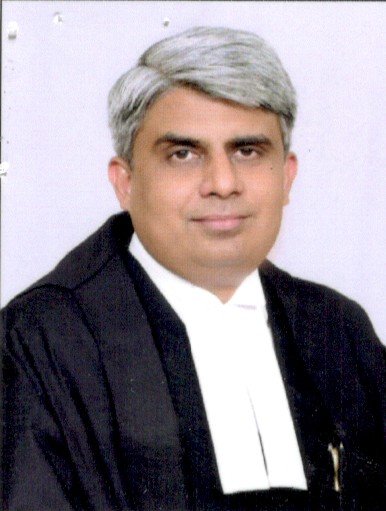
Legal Notes
Add a Note....