
☐An Appeal on the judgment of the Division Bench of Kerala Hight Court.

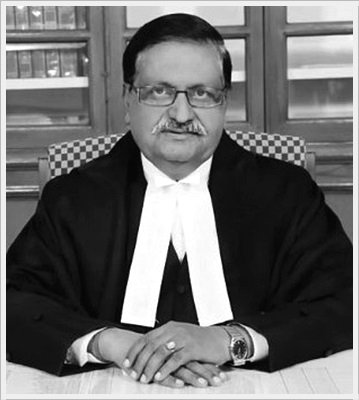
No Acts & Articles mentioned in this case
Page 1 REPORTABLE
IN THE SUPREME COURT OF INDIA
CIVIL APPELLATE JURISDICTION
CIVIL APPEAL NOs. 49454946 OF 2013
(arising out of SLP(C)Nos.2055720558 of 2007)
JIJU KURUVILA & ORS. … APPELLANTS
Versus
KUNJUJAMMA MOHAN & ORS. … RESPONDENTS
WITH
CIVIL APPEAL NO. 4947 OF 2013
(arising out of SLP(C)No.16078 of 2008)
THE ORIENTAL INSURANCE CO. LTD. … APPELLANT
Versus
SMT. CHINNAMMA JOY AND ORS. … RESPONDENTS
CIVIL APPEAL NO. 4948 OF 2013
(arising out of SLP(C)No.15992 of 2008)
ORIENTAL INSURANCE CO. LTD. … APPELLANT
Versus
SMT. CHINNAMMA JOY AND ORS. … RESPONDENTS
J U D G M E N T
SUDHANSU JYOTI MUKHOPADHAYA, J.
Delay condoned. Leave granted.
1
Page 2 2. These appeals are directed against the
judgment of the Division Bench of the Kerala High
Court dated 12
th
April, 2007 in M.F.A. Nos. 1162
and 1298 of 2001(D) whereby compensation awarded
to the claimants by Motor Accident Claims
Tribunal, Kottayam (hereinafter referred to as
‘the Tribunal’, for short) was enhanced and the
liability for the accident was apportioned at the
ratio of 50:50.
3. The facts that lead to the present case are
as follows:
On 16
th
April, 1990, a motor accident took
place on K.K. Road, near Pampadi Mavell Store,
whereby the car driven by one Joy Kuruvila
(deceased) had a head on collision with a bus
that came from the opposite direction. Joy
Kuruvila sustained serious injuries and died on
the way to hospital. His four dependents,
namely, Chinnamma Joy (widow of deceased), Jiju
Kuruvila aged 14 years, Jaison Kuruvila aged 11
years (2 minor children of the deceased) and
Grace Kuruvila (mother of the deceased) aged 85
years filed a joint application under Section 140
2
Page 3 and 166 of the Motor Vehicles Act, 1988
(hereinafter referred to as, ‘the Act’),
claiming compensation of Rs.57,25,000/ towards
following heads:
(a)Funeral Expenses Rs.
25,000/
(b)Compensation for pain and suffering
Rs. 1,00,000/
(c)Compensation on account of death
of the deceased and consequent loss
Rs.54,00,000/
of income to the petitioners
(d)Compensation for the loss of
consortium to the 1
st
petitioner
Rs. 1,00,000/
(e)Loss of paternal love, affection
and guidance to the 2
nd
and 3rd Rs. 1,00,000/
petitioners
Rs.57,25,000/
4. At the time of accident, Joy Kuruvila was
about 45 years of age and was working as a
Manager in the Freeman Management Corporation,
New York Branch in the United State of America
for more than nine years and was receiving a
monthly salary of 2500 US Dollars equivalent to
Rs.43,100/. He was provided with quarter by the
employer and was residing alongwith his wife.
3
Page 4 Joy Kuruvila used to give Rs.30,000/ per month
to his wife for the household expenses and
savings after meeting his personal expenses. He
was healthy, energetic, otherwise, had longevity
of life and could have continued in service upto
the age of 65 years as per service conditions
i.e. for another 20 years.
5. The 1
st
claimant is the wife, 2
nd
and 3
rd
claimants are the children and the 4
th
claimant
was the mother of the deceased. P.C. Kurian, who
was the 3
rd
respondent, was driving the bus at the
time of the accident and 1
st
respondent,
Kunjujamma Mohan was the bus owner. It was
alleged that the accident occurred solely due to
rash and negligent driving of the bus driver,
P.C. Kurian and the vehicle had valid insurance
with the Oriental Insurance Co.Ltd.. Based on
such facts, the claimants claimed a sum of Rs.
57,25,000/ as compensation with 18% interest and
cost.
6. In spite of notice, the bus owner,
Kunjujamma Mohan and the driver, P.C. Kurian did
4
Page 5 not appear before the Tribunal and the High Court
and had not denied the allegations.
7. The Oriental Insurance Co. Ltd.
(hereinafter referred to as , “the Insurance
Company”) in its written statement, admitted
the existence of the valid policy of bus No.KRK
3057 in the name of Kunjujamma Mohan but denied
the allegation of rash and negligent driving on
the part of the bus driver, P.C. Kurian in
causing the accident. The age, occupation,
monthly income of the deceased and the claim of
compensation were also disputed. According to
the Insurance Company, the accident occurred due
to rash and negligent driving of the deceased.
8. The evidence consisting of testimony of
PW.1 to PW.3 and Ext.A1 to Ext.8 and Ext.B1 to
B3 were brought on record.
9. During pendency of the claim before the
Tribunal, the 4
th
claimant, Grace Kuruvila, mother
of the deceased expired; the rest of the
claimants remained as legal heirs of the
deceased. The 2
nd
and 3
rd
claimants, children of
5
Page 6 the deceased, who were minor at the time of
filing the claim case attained majority during
the pendency of the case and were declared as
major.
10.The Tribunal after hearing the parties and
recording evidence held that the accident was
caused due to rash and negligent driving of the
bus driver. Considering the contributory
negligence on the part of the deceased the
Tribunal apportioned the liability for the
accident in the ratio of 75:25 between the driver
of the bus and the deceased. It assessed
compensation to be Rs. 18,38,500/ and after
deducting 25% towards contributory negligence on
the part of the deceased, awarded a sum of Rs.
13,80,625/ with 12% interest for payment in
favour of the claimants.
11.The High Court affirmed the view of the
Tribunal regarding rash and negligent driving
both on the part of the bus driver and the
deceased, but apportioned the contributory
negligence @ 50:50 for payment of compensation.
The High Court held that the Tribunal wrongly
6
Page 7 fixed Rs. 10,000/ as the monthly contribution
by the deceased to the family and observed that
even if 1/3
rd
was deducted towards personal
expenses of the deceased, more than 1600 US
Dollars could be taken as dependency benefit.
However, while determining the compensation, the
High Court took the figure of 1500 US Dollars as
the dependency benefit. The exchange rate as was
prevailing on the date of filing of the claim
petition i.e. April, 1990 was taken into
consideration based into Ext.A7 and worked out
the contribution to the family was calculated to
be Rs. 25,950/ per month. On the basis of such
contribution, the High Court assessed the total
compensation at Rs. 47,09,500/ and ordered to
pay 50% of the amount i.e. Rs. 23,45,750/ with
interest in favour of the claimants.
12.The claimants have challenged the
determination made by the High Court mainly on
the following terms:
(i)The foreign exchange rate as was
prevailing at the time of award i.e. May, 1993,
and shown in Ext.A8, ought to have been taken
7
Page 8 into consideration for calculation of
compensation.
(ii)In absence of any evidence relating to
negligence on the part of the deceased and in
view of the direct evidence on record, both the
Tribunal and the High Court erred in holding that
there was negligence on the part of the deceased.
13.In this case, the questions which arise for
consideration are:
(i)Whether the foreign currency amount has
to be converted into the currency of the
country on the basis of exchange rate as on
the date of filing claim petition (April,
1990) or as on the date of determination
(May, 1993);
(ii)Whether there was any contributory
negligence on the part of the deceased, Joy
Kuruvila and
(iii) Whether compensation awarded is
just and proper.
14.The question as to whether the proper date
for fixing rate of exchange at which the foreign
currency amount is to be converted into the
currency of the country, for determination of
amount payable to a claimant/plaintiff fell for
consideration before this Court in Forasol v. Oil
8
Page 9 and Natural Gas Commission 1984 (Suppl.) SCC 263
wherein this Court observed as follows:
“24. In an action to recover an amount
payable in a foreign currency, five dates
compete for selection by the Court as the
proper date for fixing the rate of
exchange at which the foreign currency
amount has to be converted into the
currency of the country in which the
action has been commenced and decided.
These dates are:
(1) the date when the amount became due
and payable;
(2) the date of the commencement of the
action;
(3) the date of the decree;
(4) the date when the Court orders
execution to issue; and
(5) the date when the decretal amount is
paid or realised.
25. In a case where a decree has been
passed by the Court in terms of an award
made in a foreign currency a sixth date
also enters, the competition, namely, the
date of the award. The case before us is
one in which a decree in terms of such an
award has been passed by the Court.”
Taking into consideration the claim as was
made in the said case this Court held as follows:
“70. It would be convenient if we now set
out the practice, which according to us,
ought to be followed in suits in which a
sum of money expressed in a foreign
currency can legitimately be claimed by
the plaintiff and decreed by the court.
It is unnecessary for us to categorize
the cases in which such a claim can be
made and decreed. They have been
sufficiently indicated in the English
9
Page 10 decisions referred to by us above. Such
instances can, however, never, be
exhausted because the law cannot afford
to be static but must constantly develop
and progress as the society to which it
applies, changes its complexion and old
ideologies and concepts are discarded and
replaced by new. Suffice it to say that
the case with which we are concerned was
one which fell in this category. In such
a suit, the plaintiff, who has not
received the amount due to him in a
foreign currency, and, therefore, desires
to seek the assistance of the court to
recover that amount, has two courses open
to him. He can either claim the amount
due to him in Indian currency or in the
foreign currency in which it was payable.
If he chooses the first alternative, he
can only sue for that amount as converted
into Indian rupees and his prayer in the
plaint can only be for a sum in Indian
currency. For this purpose, the plaintiff
would have to convert the foreign
currency amount due to him into Indian
rupees. He can do so either at the rate
of exchange prevailing on the date when
the amount became payable for he was
entitled to receive the amount on that
date or, at his option, at the rate of
exchange prevailing on the date of the
filing of the suit because that is the
date on which he is seeking the
assistance of the court for recovering
the amount due to him. In either event,
the valuation of the suit for the
purposes of courtfees and the pecuniary
limit of jurisdiction of the court will
be the amount in Indian currency claimed
in the suit. The plaintiff may, however,
choose the second course open to him and
claim in foreign currency the amount due
to him. In such a suit, the proper prayer
for the plaintiff to make in his plaint
would be for a decree that the defendant
do pay to him the foreign currency sum
claimed in the plaint subject to the
permission of the concerned authorities
under the Foreign Exchange Regulation
Act, 1973, being granted and that in the
event of the foreign exchange authorities
1
Page 11 not granting the requisite permission or
the defendant not wanting to make payment
in foreign currency even though such
permission has been granted or the
defendant not making payment in foreign
currency or in Indian rupees, whether
such permission has been granted or not,
the defendant do pay to the plaintiff the
rupee equivalent of the foreign currency
sum claimed at the rate of exchange
prevailing on the date of the judgment.
For the purposes of court fees and
jurisdiction the plaintiff should,
however, value his claim in the suit by
converting the foreign currency sum
claimed by him into Indian rupees at the
rate of exchange prevailing on the date
of the filing of the suit or the date
nearest or most nearly preceding such
date, stating in his plaint what such
rate of exchange is. He should further
give an undertaking in the plaint that he
would make good the deficiency in the
courtfees, if any, if at the date of the
judgment, at the rate of exchange then
prevailing, the rupee equivalent of the
foreign currency sum decreed is higher
than that mentioned in the plaint for the
purposes of courtfees and jurisdiction.
At the hearing of such a suit, before
passing the decree, the court should call
upon the plaintiff to prove the rate of
exchange prevailing on the date of the
judgment or on the date nearest or most
nearly preceding the date of the
judgment. If necessary, after delivering
judgment on all other issues, the court
may stand over the rest of the judgment
and the passing of the decree and adjourn
the matter to enable the plaintiff to
prove such rate of exchange. The decree
to be passed by the court should be one
which orders the defendant to pay to the
plaintiff the foreign currency sum
adjudged by the court subject to the
requisite permission of the concerned
authorities under the Foreign Exchange
Regulation Act, 1973, being granted, and
in the event of the foreign exchange
authorities not granting the requisite
permission or the defendant not wanting
1
Page 12 to make payment in foreign currency even
though such permission has been granted
or the defendant not making payment in
foreign currency or in Indian rupees,
whether such permission has been granted
or not, the equivalent of such foreign
currency sum converted into Indian rupees
at the rate of exchange proved before the
court as aforesaid. In the event of the
decree being challenged in appeal or
other proceedings and such appeal or
other proceedings being decided in whole
or in part in favour of the plaintiff,
the appellate court or the court hearing
the application in the other proceedings
challenging the decree should follow the
same procedure as the trial court for the
purpose of ascertaining the rate of
exchange prevailing on the date of its
appellate decree or of its order on such
application or on the date nearest or
most nearly preceding the date of such
decree or order. If such rate of exchange
is different from the rate in the decree
which has been challenged, the court
should make the necessary modification
with respect to the rate of exchange by
its appellate decree or final order. In
all such cases, execution can only issue
for the rupee equivalent specified in the
decree, appellate decree or final order,
as the case may be. These questions, of
course, would not arise if pending appeal
or other proceedings adopted by the
defendant the decree has been executed or
the money thereunder received by the
plaintiff.”
15. In Renusagar Power Co. Ltd. v. General
Electric Co. 1994 Suppl (1) SCC 644, similar
question came for consideration. In the said
case, a foreign award was under consideration
and the Arbitral Tribunal awarded the same in
U.S. Dollars with interest. In the said case
1
Page 13 relying on decision of this Court in Forasol
(supra), it was held as follows:
“143. In accordance with the decision in
Forasol case the said amount has to be
converted into Indian rupees on the basis
of the rupeedollar exchange rate
prevailing at the time of this judgment.
As per information supplied by the
Reserve Bank of India, the RupeeDollar
Exchange (Selling) Rate as on October 6,
1993 was Rs 31.53 per dollar.
xxxxxxxxx
xxxxxxxxx
xxxxxxxxx
146. In the result, C.A. Nos. 71 and 71A
of 1990 and C.A. No. 379 of 1992 are
dismissed and the decree passed by the
High Court is affirmed with the direction
that in terms of the award an amount of
US $ 12,333,355.14 is payable by
Renusagar to General Electric out of
which a sum of US $ 6,289,800.00 has
already been paid by Renusagar in
discharge of the decretal amount and the
balance amount payable by Renusagar under
the decree is US $ 6,043,555.14 which
amount on conversion in Indian rupees at
the rupeedollar exchange rate of Rs
31.53 per dollar prevalent at the time of
this judgment comes to Rs
19,05,53,293.56. Renusagar will be liable
to pay future interest @ 18 per cent on
this amount of Rs 19,05,53,293.56 from
the date of this judgment till payment.
The parties are left to bear their own
costs.”
16.In the present case, admittedly the
claimants filed a petition in April, 1990
(affidavit sworn on 24
th
March, 1990) and claimed
compensation in INR i.e. Rs.57,25,000/. Such
1
Page 14 compensation was not claimed in U.S. Dollars.
For the said reason and in view of the decision
of this Court in Forasol (supra) as followed in
Renusagar Power Co.Ltd.(supra), we hold that the
date of filing of the claim petition (April,
1990) is the proper date for fixing the rate of
exchange at which foreign currency amount has to
be converted into currency of the country (INR).
The Tribunal and the High Court have rightly
relied on Ext.A7, to fix the rate of exchange as
Rs.17.30 (as was prevailing in April, 1990).
17.The second question is relating to
contributory negligence of the deceased.
According to the claimants, accident occurred due
to rash and negligent driving on the part of the
bus driver, P.C. Kurian and there was no
negligence on the part of the deceased, Joy
Kuruvila.
Per contra, according to the Insurance
Company, the accident took place due to negligent
driving on the part of the deceased, who was in
the intoxicated condition. They relied on Ext.
A5, the postmortem report.
1
Page 15 18.Three witnesses, PW.1 to PW.3 deposed
before the Tribunal. Parties placed documentary
evidence, Ext.A1 to Ext.A8, Ext. B1 and B2.
On behalf of the claimants, they relied on the
oral evidence and documentary evidence to show
rash and negligent driving on the part of the bus
driver. On behalf of the Insurance Company, the
counsel relied on Ext.B2 ‘Scene Mahazar’ and
Ext.A5, post mortem report to suggest negligence
on the part of the deceased.
19.The High Court based on Ext.B2 ‘Scene
Mahazar’ and Ext.A5, post mortem report held
that there was also negligence on the part of the
deceased as well.
20.On hearing the parties and perusal of
record, the following facts emerge:
The owner of the vehicle Kunjujamma Mohan
and the driver of the bus, P.C. Kurian who were
the first and third respondents before the
Tribunal and High Court, had not denied the
allegation that the accident occurred due to rash
and negligent driving on the part of the bus
driver.
1
Page 16 21.PW3, an independent eye witness was
accompanying the deceased during the journey on
the fateful day. He stated that the bus coming
from the opposite direction hit the car driven by
the deceased and the accident occurred due to
rash and negligent driving of the bus driver.
22.Ext.A1, FIR registered by Pampady Police
against the bus driver, P.C. Kurian, under
Sections 279, 337 and 304A IPC shows that the
accident occurred due to rash and negligent
driving on the part of the bus driver. After
investigation, the police submitted a charge
sheet (Ext.A4) against the bus driver under
Section 279, 337 and 304A IPC with specific
allegation that the bus driver caused the death
of Joy Kuruvila due to rash and negligent
driving of the bus on 16
th
April, 1990 at 4.50P.M.
In view of the direct evidence, the Tribunal and
the High Court held that the accident was
occurred due to rash and negligent driving on the
part of the bus driver.
23.There is no evidence on record to suggest
any negligence on the part of the deceased.
Ext.B2, ‘Scene Mahazar’ also does not suggest
1
Page 17 any rash and negligent driving on the part of the
deceased.
24.The mere position of the vehicles after
accident, as shown in a Scene Mahazar, cannot
give a substantial proof as to the rash and
negligent driving on the part of one or the
other. When two vehicles coming from opposite
directions collide, the position of the vehicles
and its direction etc. depends on number of
factors like speed of vehicles, intensity of
collision, reason for collision, place at which
one vehicle hit the other, etc. From the scene
of the accident, one may suggest or presume the
manner in which the accident caused, but in
absence of any direct or corroborative evidence,
no conclusion can be drawn as to whether there
was negligence on the part of the driver. In
absence of such direct or corroborative evidence,
the Court cannot give any specific finding about
negligence on the part of any individual.
25.Post Mortem report, Ext.A5 shows the
condition of the deceased at the time of death.
The said report reflects that the deceased had
already taken meal as his stomach was half full
1
Page 18 and contained rice, vegetables and meat pieces in
a fluid with strong smell of spirit.
26. The aforesaid evidence, Ext.A5 clearly
suggests that the deceased had taken liquor but
on the basis of the same, no definite finding can
be given that the deceased was driving the car
rashly and negligently at the time of accident.
The mere suspicion based on Ext.B2, ‘Scene
Mahazar’ and the Ext.A5, post mortem report
cannot take the place of evidence,
particularly, when the direct evidence like
PW.3, independent eyewitness, , Ext.A1(FIR),
Ext.A4(chargesheet) and Ext.B1( F.I.
statement) are on record.
In view of the aforesaid, we, therefore,
hold that the Tribunal and the High Court erred
in concluding that the said accident occurred
due to the negligence on the part of the
deceased as well, as the said conclusion was
not based on evidence but based on mere
presumption and surmises.
27. The last question relates to just and
proper compensation. Both the Tribunal and the
High Court have accepted that the deceased was
1
Page 19 45 years of age at the time of accident; he was
working as manager, Freeman Management
Corporation, New York Branch, U.S.A. and was
getting a monthly salary of 2500 U.S. Dollars.
The High Court accepted that the deceased, as
per conditions of service, could have continued
the employment upto the age of 65 years.
28.Ext.A6, is a certificate issued by the
employer of deceased, i.e.,Freeman Management
Corporation, U.S.A. dated 23
rd
April, 1990 which
shows that his annual salary was 30,000
U.S.Dollars. He was in their employment for 9
years and had an excellent standing and his
employment was of a permanent nature. The
deceased would have continued in service upto the
age of 65 years. Ext.A6 was attested by Notary
Public and counter signed by the Consulate
General of India, New York, as per Section 3 of
the Diplomatic and Consular Officers(Oaths and
Fees) Act, 1948.
29.On the basis of the aforesaid annual income
and exchange rate of Rs. 17.30 per US Dollar as
applicable in April, 1990 (Ext.A7), the annual
income of the deceased if converted in Indian
1
Page 20 currency will be 30,000 x 17.30 = 5,19,000/ at
the time of death. The deceased was 45 years of
age, therefore, as per decision in Sarla Verma &
Ors. V. Delhi Transport Corporation & Anr.,
(2009) 6 SCC 121, multiplier of 14 shall be
applicable. But the High Court and the Tribunal
wrongly held that the multiplier of 15 will be
applicable. Thus, by applying the multiplier of
14, the amount of compensation will be
Rs.5,19,000 x 14 = Rs.72,66,000/. The family of
the deceased consisted of 5 persons i.e. deceased
himself, wife, two children and his mother. As
per the decision of this Court in Sarla Verma
(supra) there being four dependents at the time
of death, 1/4
th
of the total income to be
deducted towards personal and living expenses of
the deceased. The High Court has also noticed
that out of 2,500 US Dollars, the deceased used
to spend 500 US Dollars i.e. 1/5
th
of his income.
Therefore, if 1/4
th
of the total income i.e. Rs.
18,16,500/ is deducted towards personal and
living expenses of the deceased, the
contribution to the family will be (Rs.
72,66,000 – Rs. 18,16,500/ =) Rs.54,49,500/.
2
Page 21 Besides the aforesaid compensation, the claimants
are entitled to get Rs.1,00,000/ each towards
love and affection of the two children i.e.
Rs.2,00,000/and a sum of Rs.1,00,000/ towards
loss of consortium to wife which seems to be
reasonable. Therefore, the total amount comes to
Rs.57,49,500/.
30.The claimants are entitled to get the said
amount of compensation alongwith interest @ 12%
from the date of filing of the petition till
the date of realisation, leaving rest of the
conditions as mentioned in the award intact.
31.We, accordingly, allow the appeals filed by
the claimants and partly allow the appeals
preferred by the Insurance Company, so far as it
relates to the application of the multiplier is
concerned. The impugned judgment dated 12
th
April,
2007 passed by the Division Bench of the Kerala
High Court in M.F.A. Nos.1162 and 1298 of 2001
and the award passed by the Tribunal are modified
to the extent above. The amount which has already
been paid to the claimants shall be adjusted and
rest of the amount with interest as ordered above
2
Page 22 be paid within three months. There shall be no
separate order as to costs.
……………………………………………….J.
( G.S. SINGHVI )
……………………………………………….J.
(SUDHANSU JYOTI MUKHOPADHAYA)
NEW DELHI,
JULY 2, 2013.
2

 Login with google
Legal Notes
Add a Note....