
As per the case facts, a patient suffered continuous pain after an appendicitis procedure, leading to further medical care and a claim of medical negligence. The District Forum awarded compensation, ...
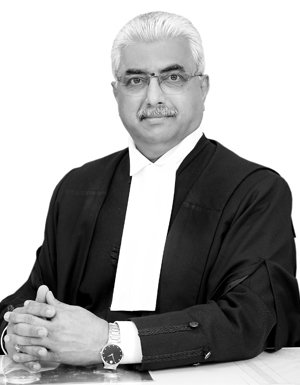
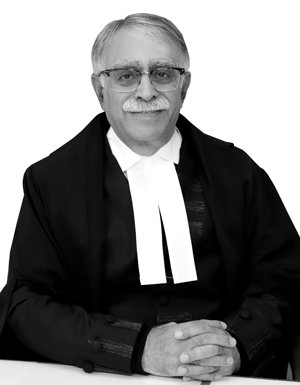
No Acts & Articles mentioned in this case
2024 INSC 330 REPORTABLE
IN THE SUPREME COURT OF INDIA
CIVIL APPELLATE JURISDICTION
CIVIL APPEAL NO………………..OF 2024
(Arising out of Special Leave Petition (C) No.242 of 2016)
JYOTI DEVI … APPELLANT(S)
VERSUS
SUKET HOSPITAL & ORS. … RESPONDENT(S)
J U D G M E N T
SANJAY KAROL, J.
Leave granted.
2.In ordinary circumstances, a procedure concerning appendicitis is
considered to be routine. It did not turn out to be so for Jyoti Devi
1
. She was
admitted to Suket Hospital, Sundernagar, Mandi, Himachal Pradesh on 28
th
June
2005 and had her appendicitis removed by Dr. Anil Chauhan, Senior Surgeon,
Suket Hospital. Post surgery, she was discharged on 30
th
June 2005. However,
her ordeal did not end there. She suffered continuous pains near the surgical site,
as such she was admitted again on 26
th
July 2005 but was discharged the next day
with the assurance that no further pain would be suffered by her. She was further
1 Hereafter, ‘claimant-appellant’
1| CA ______ OF 2024 @ SLP(C) 242 OF 2016
treated by one Dr. L.D. Vaidya of Mandav Hospital, Mandi, on the reference of
Dr. Anil Chauhan respondent no.2 herein. Yet again, there was no end to her
suffering. This process continued for a period of four years.
3.The claimant - appellant eventually landed up for treatment at the Post
Graduate Institute of Medical Science, Chandigarh. Upon investigation, it was
found that a 2.5 cm foreign body (needle) “is present below the anterior
abdominal wall in the preveside region just medial to previous abdominal scar
(Appendectomy)” for which a further surgery had to be performed for its removal.
4. Alleging negligence on the part of the respondent - Suket Hospital, a claim
was brought for the “huge pain and spent money on treatment” totalling to
Rs.19,80,000/-.
5.The District Consumer Disputes Redressal Forum, Mandi, H.P.
2
, while
adjudicating Complaint Case No.262 of 2011 vide award dated 18
th
December,
2013 under Section 12 of the Consumer Protection Act, 1986, concluded as
under:-
“15. In the case at hand, the complainant has suffered physical
pain for more than five years due to negligence of opposite parties no.
1 and 2. …we feel that compensation for Rs.5,00,000/- in lump sum is
just and proper to meet out the injury of the complainant. …Opposite
parties no. 3 and 4 have taken plea that they are only liable for bodily
injury as per the contract for death, injury, illness or disease of or any
person. In the present case the complainant was operated by opposite
party no.2 for appendicitis but after operation, the complainant
developed pain and pus started oozing out from stitches and she was
operated at PGI where needle was extracted by the doctor from her
abdomen. Therefore, the case of the complainant is covered under
injury and illness and opposite parties no.3 and 4 are liable to pay
compensation awarded against opposite parties no.1 and 2 being the
insurers”
2 For short, ‘District Forum’
2| CA ______ OF 2024 @ SLP(C) 242 OF 2016
6.On appeal preferred by the present respondents (First Appeal No.70 of
2014 dated 23
rd
September 2014) the H.P. State Consumer Disputes Redressal
Commission, Shimla
3
observed that:-
“…needle was not left at the site of surgery, at the Hospital of the
appellants, when the complainant was operated for removal of
appendicitis, yet from an overall reading of the pleadings and evidence
on record, it can be said that surgery conducted at the clinic of the
appellants, was the cause of pain, which the complainant had been
having at-least upto December, 2008, when the pus was drained out.”
7.The respondents herein were held liable to compensate the appellant for the
physical pain, mental agony, and expenses incurred by her, to the tune of
Rs.1,00,000/-, thereby partly allowing the respondent’s appeal.
8.The National Consumer Disputes Redressal Commission
4
, in the Revision
Petition 57 of 2015 arising out of the order of the State Commission observed that
the post-operative care provided by the respondents was casual and fell short of
the standard of medical care. They had failed to investigate the non-healing
surgical wound thereby constituting a deficiency in service. The NCDRC refused
to accept the argument that since the appellant had received care at other hospitals
as well it would be difficult to determine who was responsible for the needle in
the abdomen.
9.The egg-skull rule was applied to hold an individual liable for all
consequences of their act. The compensation awarded by the State Commission
was enhanced to Rs.2,00,000/-.
3 For short, ‘State Commission’
4 For brevity, ‘NCDRC’
3| CA ______ OF 2024 @ SLP(C) 242 OF 2016
10.Hence, the claimant-appellant prefers the present appeal, seeking
enhancement of compensation. We may state, for ample clarity, that, the present
dispute arose within the contours of the Consumer Protection Act, 1986, the
predecessor legislation to the current Consumer Protection Act, 2019.
11.The factum of negligence on the part of the respondent Hospital as well as
respondent No.2 has not been doubted, across fora. Although the State
Commission had differed with the District Forum on the presence of the needle,
the NCDRC, in para 5 of the impugned judgment and order, found the medical
record to testify to the presence of a needle in the abdomen and also found that
the respondent Hospital was found wanting in terms of post-operative care.
12. The primary ground alleged, in submitting that the finding of medical
negligence is unjustified, was that there has been a recorded gap of time where
the appellant did not suffer from any pain (1½ years). However, we notice the
NCDRC to have observed her period of suffering to be more than 5 years,
implying thereby that the gap in suffering aspect has not been accepted. No
material has been placed before us to take a different view therefrom. The
respondents are not the ones who have approached this Court. As such, we are
only required to examine the sufficiency of compensation as awarded by way
thereof. The same, though, cannot be appositely done without having appreciated
pronouncements of this Court on the scope and purpose of the Consumer
Protection Act; medical negligence; and compensation in such cases as also, the
rule of tort law known as the ‘eggshell skull’ rule.
4| CA ______ OF 2024 @ SLP(C) 242 OF 2016
12.1 Scope of the Consumer Protection Act
12.1.1 An examination of the decisions of this Court in C. Venkatachalam v.
Ajitkumar C. Shah and others
5
and J.J. Merchant (Dr) v. Shrinath Chaturvedi
6
and Common Cause v. Union of India
7
among a host of other pronouncements,
reveals the following in this regard:-
i.It is a benevolent, socially orientated legislation, the declared aim of which
is aimed at protecting the interests of consumers;
ii.Its goal is to provide inexpensive and prompt remedies for the grievances
of consumers against defective goods and deficient services;
iii. For the above-stated objective, keeping in view the accessibility of these
grievance redressal bodies to all, to all persons, quasi-judicial bodies have
been set up at the district, state, and national levels;
iv.These bodies have been formed to save the aggrieved consumer from the
hassle of filing a civil suit, i.e., provide for a prompt remedy in the nature
of award or where appropriate, compensation, after having duly complied
with the principles of natural justice;
12.2 The Law on Medical Negligence
12.2.1 Three factors required to prove medical negligence, as recently observed
by this Court in M.A Biviji v. Sunita & Ors.
8
, following the landmark
pronouncement in Jacob Matthew v. State of Punjab
9
, are :-
5 (2011) 12 SCC 707
6 (2002) 6 SCC 635
7 (1997) 10 SCC 729
8 (2024) 2 SCC 242
9 (2005) 6 SCC 1
5| CA ______ OF 2024 @ SLP(C) 242 OF 2016
“36. As can be culled out from above, the three essential ingredients in
determining an act of medical negligence are : (1.) a duty of care
extended to the complainant, (2.) breach of that duty of care, and (3.)
resulting damage, injury or harm caused to the complainant
attributable to the said breach of duty. However, a medical practitioner
will be held liable for negligence only in circumstances when their
conduct falls below the standards of a reasonably competent
practitioner.”
12.2.2 To hold a doctor liable, this Court in Dr. Mrs. Chanda Rani Akhouri v.
Dr. M.A. Methusethupati
10
observed: -
“…. a medical practitioner is not to be held liable simply because
things went wrong from mischance or misadventure or through an
error of judgment in choosing one reasonable course of treatment in
preference to another. In the practice of medicine, there could be
varying approaches of treatment. There could be a genuine difference
of opinion. However, while adopting a course of treatment, the duty
cast upon the medical practitioner is that he must ensure that the
medical protocol being followed by him is to the best of his skill and
with competence at his command. At the given time, medical
practitioner would be liable only where his conduct fell below that of
the standards of a reasonably competent practitioner in his field.”
(Emphasis supplied)
12.2.3 Observations in Harish Kumar Khurana v. Joginder Singh
11
are also
instructive. Bopanna J., writing for the Court held:
“…It is necessary that the hospital and the doctors are required to
exercise sufficient care in treating the patient in all circumstances.
However, in unfortunate cases, though death may occur and if it is
alleged to be due to medical negligence and a claim in that regard is
made, it is necessary that sufficient material or medical evidence
should be available before the adjudicating authority to arrive at a
conclusion.”
(emphasis supplied)
These observations, although made in the context of a patient having passed away
in the course of, or as a result of treatment, nonetheless are essential even in cases
where the claimant has suffered an injury.
10 2022 SCC OnLine SC 481
11 (2021) 10 SCC 291
6| CA ______ OF 2024 @ SLP(C) 242 OF 2016
12.3 Determination of the Quantum of Compensation
12.3.1 This Court has held that in determining compensation in cases of
medical negligence, a balance has to be struck between the demands of the person
claiming compensation, as also the interests of those being made liable to pay. It
was observed in Nizam's Institute of Medical Sciences v. Prasanth S.
Dhananka
12
-
“88. We must emphasise that the court has to strike a balance between
the inflated and unreasonable demands of a victim and the equally
untenable claim of the opposite party saying that nothing is payable.
Sympathy for the victim does not, and should not, come in the way of
making a correct assessment, but if a case is made out, the court must
not be chary of awarding adequate compensation. The “adequate
compensation” that we speak of, must to some extent, be a rule of
thumb measure, and as a balance has to be struck, it would be difficult
to satisfy all the parties concerned.
89. It must also be borne in mind that life has its pitfalls and is not
smooth sailing all along the way (as a claimant would have us believe)
as the hiccups that invariably come about cannot be visualised. Life it
is said is akin to a ride on a roller-coaster where a meteoric rise is
often followed by an equally spectacular fall, and the distance between
the two (as in this very case) is a minute or a yard.”
In the very same judgment, it was further observed, particularly in cases of the
person being injured:-
“90. At the same time we often find that a person injured in an
accident leaves his family in greater distress vis-à-vis a family in a
case of death. In the latter case, the initial shock gives way to a feeling
of resignation and acceptance, and in time, compels the family to
move on. The case of an injured and disabled person is, however,
more pitiable and the feeling of hurt, helplessness, despair and often
destitution enures every day. The support that is needed by a severely
handicapped person comes at an enormous price, physical, financial
and emotional, not only on the victim but even more so on his family
and attendants and the stress saps their energy and destroys their
equanimity.”
12 (2009) 6 SCC 1
7| CA ______ OF 2024 @ SLP(C) 242 OF 2016
12.3.2 It would also be instructive to refer to the concept of ‘just
compensation’. The idea of compensation is based on restitutio in integrum,
which means, make good the loss suffered, so far as money is able to do so, or, in
other words, take the receiver of such compensation, back to a position, as if the
loss/injury suffered by them hadn’t occurred. In Sarla Verma v. DTC
13
this Court
observed that compensation doesn’t acquire the quality of being just simply
because the Tribunal awarding it believes it to be so. For it to be so, it must be,
(i) adequate; (ii) fair; and (iii) equitable, in the facts and circumstances of each
case. This understanding was reiterated in Balram Prasad v. Kunal Saha and
Ors
14
, V. Krishnakumar v. State of Tamil Nadu & Ors,
15
and Nand Kishore
Prasad v. Mohib Hamidi and Ors
16
.
12.3.3 What qualifies as just compensation, as noticed above, has to be
considered in the facts of each case. In Balram Prasad (supra) it has been
observed that this court has been ‘skeptical about using a straightjacket
multiplier method for determining the quantum of compensation in medical
negligence claims’.
12.4 Eggshell Skull Rule
12.4.1 This rule (applied by the NCDRC) holds the injurer liable for damages
that exceed the amount that would normally be expected to occur. It is a common
law doctrine that makes a defendant liable for the plaintiff's unforeseeable and
13 (2009) 6 SCC 1
14 (2014) 1 SCC 384
15 (2015) 9 SCC 388
16 (2019) 6 SCC 512
8| CA ______ OF 2024 @ SLP(C) 242 OF 2016
uncommon reactions to the defendant's negligent or intentional tort. In simple
terms, a person who has an eggshell skull is one who would be more severely
impacted by an act, which an otherwise “normal person” would be able to
withstand. Hence the term eggshell to denote this as an eggshell is by its very
nature, brittle. It is otherwise termed as “taking the victim as one finds them” and,
therefore, a doer of an act would be liable for the otherwise more severe impact
that such an act may have on the victim.
12.4.2 This rule is well recognized and has often formed the basis of which
compensation has been awarded in countries such as the United States of
America. So much so, that a famous treatise records as follows “Extensive
research has failed to identify a single United States case disavowing the rule”
17
Its origins, if not by that name, have been traced back to 1891 in a decision of the
Washington State Supreme Court- Vasburg v. Putney
18
. In this case, arising out of
a common childhood altercation, Putney, a twelve-year-old child had kicked the
fourteen-year-old Vasburg, which aggravated a previous injury (of which Putney
was not aware), leading to his permanent incapacitation. Putney was held liable.
The Court opined “the wrongdoer is liable for all the injuries resulting directly
from the wrongful act, whether they could or could not have been foreseen by
him”.
17 Mark A. Geistfeld, Proximate Cause Untangled, 80 Md L. Rev. 420 (2021)
18 50 N.W 403 (Wis 1891)
9| CA ______ OF 2024 @ SLP(C) 242 OF 2016
12.4.3 The jurisprudence of the application of this rule, as has developed,
(needless to add, in countries other than India) has fit into four categories
19
- first,
when a latent condition of the plaintiff has been unearthed; second, when the
negligence on the part of the wrongdoer re-activates a plaintiff’s pre-existing
condition that had subsided due to treatment; third, wrongdoer’s actions
aggravate known, pre-existing conditions, that have not yet received medical
attention; and fourth, when the wrongdoer’s actions accelerate an inevitable
disability or loss of life due to a condition possessed by the plaintiff, even when
the eventuality would have occurred with time, in the absence of the wrongdoer’s
actions. As these categories and, the name of the rule itself suggest, the persons to
whose
20
cases this rule can be applied, are persons who have pre-existing
conditions.
21
Therefore, for this rule to be appropriately invoked and applied, the
person in whose case an adjudicatory authority applies must have a pre-existing
condition falling into either of the four categories described above.
12.4.4 It would be opportune to refer to a few judgments across jurisdictions
to better discern the application of this rule.
The King’s Bench in Dulieu v. While & Sons
22
while speaking in reference
to American cases cited at that Bar where the New York Court had refused to pay
compensation for ‘fright’ to a woman who while waiting for a tram, was nearly
19 Steve P. Calandrillo & Dustin E. Buelher, Eggshell Economics: A Revolutionary Approach to the Eggshell
Plaintiff Rule, 74 Ohio St. L.J 375 (2013)
20 Restatement (Third) of Torts: Liability For Physical and Emotional Harm, American Law Institute, 2010.
21 Geistfeld, 2021 (supra)
22 (1901) 2 KB 669
10| CA ______ OF 2024 @ SLP(C) 242 OF 2016
run-over by a horse-drawn cart, and as result of the same fainted, suffer a
miscarriage and subsequent illness; observed:
“It may be admitted that the plaintiff in this American case would not
have suffered exactly as she did, and probably not to the same extent
as she did, if she had not been pregnant at the time; and no doubt the
defendants’ horses could not anticipate that she was in this condition.
But what does that fact matter? If a man is negligently run over or
otherwise negligently injured in his body, it is no answer to the
sufferer’s claim for damages that he would have suffered less injury ,
or no injury at all, if he had not had an unusually thin skull or an
unusually weak heart.
Griffiths LJ, in White and Others v. Chief Constable of South Yorkshire
and Others observed in regards to this rule, as follows-
“…The law expects reasonable fortitude and robustness of its citizens
and will not impose liability for the exceptional frailty of certain
individuals. This is not to be confused with the "eggshell skull"
situation, where as a result of a breach of duty the damage inflicted
proves to be more serious than expected. It is a threshold test of
breach of duty; before a defendant will be held in breach of duty to a
bystander he must have exposed them to a situation in which it is
reasonably foreseeable that a person of reasonable robustness and
fortitude would be likely to suffer psychiatric injury…”
The Supreme Court of Canada, in an appeal arising out of the Court of
Appeal for British Colombia, Athey v. Leonati
23
observed that this case in its own
words, is one of “straightforward application of the thin skull rule.” The
application of the rule as made herein, underscores the existence of pre-existing
conditions. The relevant paragraphs are as follows:-
43 The findings of the trial judge indicate that it was necessary to
have both the pre-existing condition and the injuries from the
accidents to cause the disc herniation in this case. She made a positive
finding that the accidents contributed to the injury, but that the injuries
suffered in the two accidents were “not the sole cause” of the
23 [1996] 3 S.C.R. 458
11| CA ______ OF 2024 @ SLP(C) 242 OF 2016
herniation. She expressly found that “the herniation was not unrelated
to the accidents” and that the accidents “contributed to some degree”
to the subsequent herniation. She concluded that the injuries in the
accidents “played some causative role, albeit a minor one”. These
findings indicate that it was the combination of the pre-existing
condition and the injuries sustained in the accidents which caused the
herniation. Although the accidents played a lesser role than the pre-
existing problems, the accidents were nevertheless a necessary
ingredient in bringing about the herniation.
44 The trial judge’s conclusion on the evidence was that “[i]n my
view, the plaintiff has proven, on a balance of probabilities, that the
injuries suffered in the two earlier accidents contributed to some
degree to the subsequent disc herniation”. She assessed this
contribution at 25 percent. This falls outside the de minimis range and
is therefore a material contribution: Bonnington Castings, Ltd. v.
Wardlaw, supra. This finding of material contribution was sufficient
to render the defendant fully liable for the damages flowing from the
disc herniation.
45 The finding of material contribution was not unreasonable.
Although the plaintiff had experienced back problems before the
accidents, there was no evidence of herniation or insult to the disc and
no history of complaints of sciatica. When a plaintiff
has two accidents which both cause serious back injuries, and shortly
thereafter suffers a disc herniation during a mild exercise which he
frequently performed prior to the accidents, it seems reasonable to
infer a causal connection.
46 The trial judge found that the plaintiff’s condition was
improving when the herniation occurred, but this also means that the
plaintiff was still to some extent suffering from the back injuries from
the accidents. The inference of causal link was supported by medical
evidence and was reasonable.
47 This appeal involves a straightforward application of the thin
skull rule. The pre-existing disposition may have aggravated the
injuries, but the defendant must take the plaintiff as he finds him. If
the defendant’s negligence exacerbated the existing condition and
caused it to manifest in a disc herniation, then the defendant is a cause
of the disc herniation and is fully liable.
Let us now turn to, illustratively, the application of this rule in the USA.
Richard Posner J., speaking for the 7th Circuit Court of Appeals in James E.
Niehus and Denise Niehus v. Vince Liberio and Frank Vittorio
24
, noted as
hereinbelow:
24 973 F.2d 526 (7th Cir. 1992)
12| CA ______ OF 2024 @ SLP(C) 242 OF 2016
“Niehus was sufficiently drunk when his car was struck that he
mightn't have felt the pain of a broken cheekbone. But at least
according to the defendants' lawyer he had (though this seems
improbable) sobered up a lot by the time the altercation in the station
house began several hours later, yet still he said nothing about a pain
in his cheek until after the fight. The doctors testified as we said that
the break was consistent with a kick though it could of course have
been caused by Niehus's striking his head against the door of the car in
the accident. If the jury believed, as it had every right to do, that
Niehus was kicked in the left side of his face by the defendants, the
fact that the cheekbone might have been broken already would not
help the defendants. If you kick a person's freshly broken cheekbone
you are likely to aggravate the injury substantially, and the "eggshell
skull" or "thin skull" rule, would make the officers liable for the full
consequences of their kicks even if, had it not been for a preexisting
injury, the consequences would have been much less injurious. Oddly,
the leading "eggshell skull" case also involved a kick.”
We may also refer to another instance, from the same Court. In Lancaster
v. Norfolk and Western Ry. Co.
25
, this rule was applied thus:-
“All that really matters, moreover, is that Tynan's misconduct be
attributable to the railroad, as is easily done under a thoroughly
conventional interpretation of respondent superior. It was he (the jury
could have found) who pushed Lancaster over the edge. That
Lancaster may have been made especially susceptible to such
misconduct by earlier acts for which the railroad might or might not
be liable would be no defense. Under the "thin skull," or more
colorfully the "eggshell skull," rule, the railroad would be fully liable
for the consequences of Tynan's assault. See, e.g., Vosburg v. Putney,
80 Wis. 523, 50 N.W. 403 (1891); Stoleson v. United States, 708 F.2d
1217, 1221 (7th Cir. 1983).”)
XXXX
The fact that the railroad had weakened Lancaster by earlier
misconduct for which it could not be held liable would be irrelevant to
its liability for Tynan's assault and to the amount of damages it would
have to pay. The tortfeasor takes his victim as he finds him
(emphatically so if the victim's weakened condition is due to earlier,
albeit time-barred, torts of the same tortfeasor); that is the eggshell-
skull rule. The single act of Tynan made the railroad fully liable for all
the damages that Lancaster sought and the jury awarded.”
13.Let us now turn our attention back to the facts in presenti. Keeping in view
the afore-noted position of law in regard to the benevolent purpose of the
25 773 F.2d 807, 820 (7th Cir. 1985)
13| CA ______ OF 2024 @ SLP(C) 242 OF 2016
Consumer Protection Act, the aspects required to be established to allege medical
negligence, the determination of compensation in a case where a person is
injured, we find the manner in which compensation stood reduced by the State
Commission as also the NCDRC, vis-à-vis the District Forum to be based on
questionable reasoning.
14.The State Commission has recognized that the appellant herein had not
been treated “with the care expected at a medical clinic”; she had been suffering
from persistent pain right from 2005 until December, 2008; and that post-surgical
care was deficient which undoubtedly constitutes a deficiency in service and yet
found it appropriate to reduce the compensation to a mere Rs.1 lakh. This clearly
is not in line with the balance of interests required to be borne in mind while
determining compensation.
15.The NCDRC observed that the claimant-appellant’s treatment at the
respondent-Hospital was ‘casual’; that the excuse of having sought treatment at
other hospitals was not available to the respondents and that she had suffered pain
for more than 5 years apart from the case having been dragged on for more than a
decade, and yet lumpsum compensation was only Rs.2 lakhs.
16.How could such compensation be justified, after observations having been
made regarding the service rendered by the Hospital, being deficient, and the
continuous pain and suffering on the part of the claimant-appellant, is something
we fail to comprehend. Compensation by its very nature, has to be just. For
14| CA ______ OF 2024 @ SLP(C) 242 OF 2016
suffering, no part of which was the claimant-appellant’s own fault, she has been
awarded a sum which can, at best, be described as ‘paltry’.
17. In regard to the application of the Eggshell-Skull Rule, we may observe
that the impugned judgment is silent as to how this rule applies to the present
case. Nowhere is it mentioned, as to what criteria had been examined, and then,
upon analysis, found to be met by the claimant-appellant for it to be termed that
she had an eggshell skull, or for that matter, what sort of pre-existing condition
was she afflicted by, making her more susceptible to such a reaction brought on
because of surgery for appendicitis. All that has been stated is,
“9. Therefore, OP cannot take a plea that; patient took treatment from
few other hospitals which might have caused the retention of needle in
the abdominal wall. In this context we apply the “Egg Skull Rule” in
this case, wherein liability exists for damages stemming from
aggravation of prior injuries or conditions. It holds an individual liable
for all consequences resulting from their activities leading to an injury,
even if the victim suffers unusual damage due to pre-existing
vulnerability or medical condition”
If we take the rule as exposited by the NCDRC, even then it stands to reason that
the record ought to have been speaking of a pre-existing vulnerability or medical
condition, because of which the victim may have suffered ‘unusual damage’.
However, none of the orders - be it District, State Commission or the NCDRC
refer to any such condition.
18.Considering the discussion as aforesaid, we deem it fit to set aside the
Awards of the NCDRC as also the State Commission and restore the Award as
passed by the District Forum, meaning thereby that a sum of Rs.5 lakhs ought to
be paid expeditiously by the respondents to the appellant for being medically
15| CA ______ OF 2024 @ SLP(C) 242 OF 2016
negligent and providing services deficient in nature. The sum of Rs.5 lakhs
shall be accompanied by interest simple in nature @ 9% from the date of the
award passed by the District Forum. The same be paid within a period of four
weeks from the date of this judgment. Additionally, a cost of Rs.50,000/- be paid
in terms of the cost of litigation. The appeal is accordingly allowed.
…………….…….…..J.
(SANJAY KAROL)
………………..……..J.
(ARAVIND KUMAR)
New Delhi;
April 23, 2024.
16| CA ______ OF 2024 @ SLP(C) 242 OF 2016

 Login with google
Legal Notes
Add a Note....