
The present appeal in the Supreme Court arises out of an order passed by the learned Judge, Special Court at Mumbai.

No Acts & Articles mentioned in this case
REPORTABLE
IN THE SUPREME COURT OF INDIA
CIVIL APPELLATE JURISDICTION
CIVIL APPEAL NO.5176 OF 2009@ D-25207 OF 2008
Mrs. Jyoti Harshad Mehta and others …. Appellants
Versus
The Custodian and others ….Respondents
J U D G M E N T
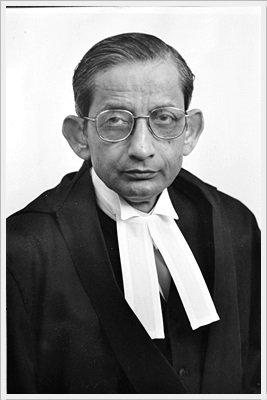
S.B. SINHA, J.
Interpretation and/or application of the provisions of the Special
Court (Trial of Offences Relating to Transactions in Securities) Act,
1992, (hereinafter, for the sake of brevity, referred to as ‘the Special Act’)
is involved herein.
It arises out of an order dated 25
th
July, 2008 passed by the learned
Judge, Special Court at Mumbai in Misc. Petition No.41 of 1999.
1
HISTORICAL BACKGROUND
The history as well as the purpose and object for which the Special
Act was enacted, in view of the several decisions rendered by this Court,
is now well-settled. The Reserve Bank of India in course of an
investigation conducted by it, had inter alia opined that Harshad Mehta
(since deceased), alongwith his other associates had diverted a huge
amount of public funds belonging to Public Sector Banks and Financial
Institutions for short term investments in the securities market.
An Inquiry Committee was thereafter constituted under the
Chairmanship of Shri Janakiraman. The said Committee in its report had
noticed a large number of gross malpractices and irregularities in
transactions of both Government and other securities, pursuant whereto
and in furtherance whereof the Special Act was enacted providing inter
alia for the constitution of a Special Court for trial of criminal offences,
as also civil disputes, arising therefrom during the period between 1
st
April, 1991 to 6
th
June, 1992, hereinafter referred to as the “window
period”.
Around this time, the family members of late Harshad Mehta had
purchased movable, immovable properties and shares. Out of these
2
properties, there were nine residential flats purchased, in a building called
“Madhuli”, in Worli, Mumbai. These flats were merged and redesigned
for joint living of the entire family and these properties are the subject
matter of this lis.
HISTORY OF THE PROCEEDINGS
In terms of the said Special Act, a Custodian was appointed. The
Custodian notified Harshad Mehta as also the appellants herein; pursuant
whereto all their properties stood attached. Some of the appellants had
filed applications for de-notifications. The same were, however, not
pressed and were later withdrawn. It has been claimed by the appellants
in an Affidavit dated 28.07.2009 that they had filed their denotification
applications registered as M.A. Nos. 50 to 55 of 2009, however they
withdrew the same again with a liberty to file afresh by an order dated
12.06.2009.
In the aforementioned premise a question came up before the
learned Judge, Special Court in regard to sale of movable and immovable
properties belonging to the notified persons. The learned Judge, Special
Court, on an application filed by the custodian inter alia directed sale of
flats purported to be belonging to the appellants.
3
The learned Judge, Special Court, by his judgment and order dated
17
th
October, 2003 directed sale of the said flats. The aforementioned
order came to be challenged before this Court by way of appeals
preferred under Section 10 of the Special Act. They were registered as
Civil Appeal Nos. 667-71 of 2004 and 672 to 681 of 2004. This Court by
its judgment and order dated 3
rd
January, 2006 allowed the said appeals
and remitted the matter back to the Special Court with some directions.
That decision of this Court has since been reported in Ashwin S. Mehta
and another v. Custodian and others, [ (2005) 2 SCC 385 ].
The matter was taken up thereafter by the learned Judge, Special
Court which passed the impugned judgment.
INVOLVEMENT OF CHARTERED ACCOUNTANTS
The findings of Chartered Accountants have a major role to play in
this case. We may notice that during pendency of the proceedings before
the Special Court M/s Vyas & Vyas, Chartered Accountant, was
appointed in respect of assets and liabilities of Harshad Metha on 16
th
October, 2003. They submitted a report upon auditing the Accounts of
4
Late Harshad Mehta for the financial year ending 31.03.1992 and for the
period ending 08.06.1992 on 17
th
January, 2006. The notified parties
have contested this, in an affidavit dated 28
th
July, 2008, by stating that
the Custodian had actually received the same on 30.11.2005.
After the order of this Court in Ashwin Mehta (supra) another
Chartered Accountant, M/s. Vinod K. Aggarwala & Co. was appointed
by the custodian for preparation of “Realistic Estimates of the Assets and
Liabilities”. The report of the said Chartered Accountant was based on
the Report of the three firms of Chartered Accountants appointed by the
court. This report was submitted on the 27.02.2006. The Realistic
Estimates of Assets and Liabilities of the Harshad Mehta Group as on
01.01.2007 was prepared by Vinod K. Aggarwala & Co. and was
submitted on 26
th
April, 2007.
We may also place on record that M/s Vyas & Vyas, Chartered
Accountant had categorically stated that the said books of accounts were
not complete. This can be seen through excerpts mentioned in their own
report,
5
“19.6 Due to the compelling nature of limitations
on our work and unreliable nature of the books of
accounts, we are unable to accept responsibility for
the accuracy and completeness of the
information/particulars provided to us nor do we
accept such responsibility.”
“…Therefore, we are unable to comment about the
true and fair state of affairs of HSM and M/s HSM
for the year ended 31
st
March, 1991, 31
st
March 1992
and for the period ended as on 8
th
June, 1992”.
IMPUGNED JUDGEMENT OF THE SPECIAL COURT
The Special Court in the impugned judgment noticed that it was
to decide the issues in accordance with the directions of this court in
Ashwin Mehta (supra), wherefor it quoted in extenso the conclusions
and directions issued. We shall proceed to deal with each of the eleven
directions that had been given by the this Court in Ashwin Mehta
(supra) while remitting the matter back to the learned Judge, Special
Court and how accordingly the Special Court went on to deal with
them.
Direction No. 1 of this Court in Ashwin Mehta (supra) was:-
“(i) The contention of the Appellants that they
being not involved in offences in transactions in
securities could not have been proceeded in terms
6
of the provisions of the Act cannot be accepted in
view of the fact that they have been notified in
terms thereof.”
The Special Court noted that this Court, as regards the first
direction, had itself recorded a finding against the appellants and
therefore nothing further was to be done by it in that regard.
Direction No. 2 of the court, which is most relevant for our
purposes reads as under:-
“(ii) The Appellants being notified persons all their
personal properties stood automatically attached
and any other income from such attached
properties would also stand attached. The question
as to whether the Appellants could have been
considered to be part of Harshad Mehta Group by
the learned Special Court need not be determined
by us as, at present advised, in view of the fact that
appropriate applications in this behalf are pending
consideration before the learned Special Court.
The question as regard intermingling of accounts
by the Appellants, herein with that of the Harshad
Mehta Group and/ or any other or further
contentions raised by the parties hereto before us
shall receive due consideration of the learned
Judge, Special Court afresh in the light of the
observations made hereinbefore.”
7
The learned Judge, Special Court, considered the said direction into
three parts.
The first part of the direction being that the appellants being
notified persons, all their personal properties stood automatically attached
and any other income from such attached properties would also therefore
get attached.
As regards this part the learned Judge, Special Court noted that this
was a finding recorded against the appellants and accordingly no orders
were necessary to be passed by it in that respect.
The second part of the said direction being that the question that
the appellants could have been considered to be part of Harshad Mehta
Group by the learned Special Court need not be determined by the
Supreme Court, in view of the fact that appropriate applications in this
behalf were pending consideration before the learned Special Court.
8
In regard to the said direction the learned Special Judge, Special
Court noted that the applications referred to in the said direction issued
by the Supreme Court were a reference to the applications for de-
notification filed by members of the Harshad Mehta Family. The court
thereafter having made reference to Sudhir S Mehta v. Custodian & Ors,
[(2008) 12 SCC 84] noted that there were no applications for de-
notifications pending before the Special Court, as all applications had
been withdrawn and therefore there was no further steps required to be
taken by the learned Judge, Special Court.
However in the alternative, again referring to Sudhir Mehta
(supra), the learned Judge, Special Court also noted that the contention
whether the appellants should be treated as a ‘group’ or not would not be
relevant unless they were able to show that some prejudice had been
caused to them thereby.
The third and the final part of the said direction dealt with the
question as regards intermingling of accounts by the Appellants, herein
with that of the Harshad Mehta Group which in the opinion of this Court
9
were required to be dealt with by the Special Court afresh in the light of
the observations made therein.
This part of the direction in the opinion of the learned Judge
Special Court was the main question, which was required to be
considered by him.
He went on to note the observations of this court in Sudhir Mehta
(supra) as regards the finding that the claim of the notified parties that
their assets exceeded their liabilities was not correct. In Sudhir Mehta
(supra) the court had accepted the submissions of the custodian that even
the individual liabilities of the notified parties far exceeded their assets.
The Special Court in the impugned judgment then went on to deal
with the contention that the properties in question had been purchased
before the statutory period or window period prescribed under the said act
being 01.04.1991 to 06.06.1992 and they were therefore not liable to be
attached.
10
It noted that the properties of the notified parties held by them on
the date of their notification got statutorily attached and became liable to
be sold for discharging the liability of the notified parties, therefore, the
previous contention does not stand.
It, thereafter, went on to deal with the argument that the properties
in question had no nexus with the illegal securities transactions and the
flats had been purchased by the notified parties at the relevant time by
taking interest bearing loan from M/s Harshad S Mehta. These loans had
been repaid either fully or substantially.
As regards this contention the Special Court again referred to
Sudhir Mehta (supra) to note that properties of the notified persons stood
attached irrespective of the fact whether those properties were bought by
using tainted funds or not. Therefore the nexus to the illegal security
transactions was irrelevant.
It also came to the conclusion that all the residential properties had
been funded by Harshad S Mehta and they could therefore be disposed of
accordingly. In this regard the Special Court relied on the report of the
auditors, M/s. Vyas and Vyas who had considered the flow of funds from
Harshad Mehta to various other notified parties. This was the fact that
11
the funds had specifically been transferred for purchase of the properties
just before the purchase. There was also a huge amount outstanding in
the accounts of the notified parties to Harshad Mehta on the 1
st
of April,
1990 and 1991.
The Special Court also noted that one of the flats in Madhuli, being
No. 34-A was owned by M/s Aatur Holding Pvt. Ltd. In regard to the
said company the Special Court found it necessary to pierce the corporate
veil. This was based on the fact that even though the paid up capital of
the said company was only Rs. 10,000/- and the highest salary paid by the
company was only a meager Rs. 4,000/- p.m., the company had entered
into trading security transactions running into crores of rupees. It
therefore opined that the real owner of the said company was none other
than Shri Harshad Mehta.
In conclusion it was opined that the business and dealings of
various individuals who held flats in Madhuli and the company M/s Aatur
Holding were nothing but fronts of Harshad Mehta and the money that
was invested for buying the flats was that of Harshad Mehta. Harshad
12
Mehta, therefore, had merely used the names of various individuals who
were related to him for buying the said flats.
Direction No. 3 of this Court in Ashwin Mehta (supra) reads as
under :-
“(iii) As regard the tax liabilities of the Appellants,
herein, we would request the learned Judge,
Special Court to consider the matter afresh in the
light of the observations made hereinbefore. The
learned Judge, Special Court, in this behalf, having
regard to the fact that several orders of Best
Judgment Assessment have been passed by the
Assessing Authority, may take into consideration
the ratio laid down in the decision of this Court in
Harshad Shantilal Mehta v. Custodian & Ors. 1998
(3) SCALE 556.”
As regards this direction the Special Court noted that the order had
already been made on applications which were filed by the decree holder
bank by it and the said matter was pending before this Court.
Direction No 4 of this Court reads as under:-
“(iv) The learned Special Court shall proceed to
pass appropriate orders as regard confirmation of
the auction sales in respect of commercial
properties.”
13
As regards this direction the Special Court noted that the necessary
orders had already been passed.
The next direction, being Direction No 5 reads:-
“(v) As regard, sale of residential properties, an
appropriate order may be passed by the learned
Judge, Special Court in the light of the
observations made hereinbefore.”
In respect of this direction the Special Court directed the custodian
to sell Flats No. 32 A, 32 B, 33, 33A, 33 B, 44 A, 44 B and 45 in
‘Madhuli’ by following the procedure laid down by the Special Court
itself for sale of the property belonging to the notified parties. It also
directed the custodian to seek directions, if necessary, from it in this
behalf.
Direction Nos. 6, 7 and 8 are as under:-
“(vi) We direct the Custodian to permit the
Appellants to have inspection of all the documents
in his power or possession in the premises of the
Special Court in the presence of an officer of the
court. Such documents must be placed for
inspection for one week continuously upon giving
due notice therefor to the Appellants jointly. As
the Appellants have been represented in all the
proceedings jointly, only one of them would be
14
nominated by them to have the inspection thereof.
The Appellants shall be entitled to take the help of
a Chartered or Cost Accountant and may make
notes therefrom for their use in the pending
proceeding.
(vii) The Appellants shall file their objections to
the said report, if any, within ten days thereafter.
The Custodian may also take assistance and/ or
further assistance from a Chartered Accountant of
his choice. A reply and/ or rejoinder thereto shall
be filed within one week from the date of the
receipt of the copy of the objection. The parties
shall file their respective documents within one
week thereafter. Such documents should be
supported by affidavits. Both the parties shall be
entitled to inspect such documents and filed their
responses thereto within one week thereafter. The
parties shall file the written submissions filed
before this Court together with all charts before the
learned Special Judge, Special Court within eight
weeks from date.
(viii) The learned Judge, Special Court shall allow
the parties to make brief oral submissions with
pointed reference to their written submissions.
Such hearing in the peculiar facts and
circumstances of this case should continue from
day to day. (ix) The learned Judge, Special Court
while hearing the matter in terms of this order shall
also consider as to whether the auction sale should
be confirmed or not. It will also be open to the
learned Judge, Special Court to pass an interim
order or orders, as it may think fit and proper, in
the event any occasion arises therefore.”
15
As regards these three directions the Special Court noted that the
Custodian had already complied with the said directions and allowed for
the necessary inspection. The Special Court further noted that there were
no complaints made before it that the said directions had not been
complied with.
Direction No 9 reads:-
“(ix) The learned Judge, Special Court while
hearing the matter in terms of this order shall also
consider as to whether the auction sale should be
confirmed or not. It will also be open to the
learned Judge, Special Court to pass an interim
order or orders, as it may think fit and proper, in
the event any occasion arises therefore.”
As regards this the Special Court noted that necessary orders had
already been passed.
Direction No 10 of the court in Ashwin Mehta (supra) was:-
“(x) We would, however, request the learned
Special Judge, Special Court to complete the
hearings of the matter, keeping in view of the fact
that auction sale in respect of the residential
premises is being consideration, as expeditiously
as possible and not later than twelve weeks from
the date of the receipt of the copy of this order.
Save and except for sufficient or cogent reasons,
the learned Judge shall not grant any adjournment
to either of the parties.”
16
As regards the said direction the Special Court noted after the said
matter had been taken up by them for hearing, the notified parties had
given their consent for initiating the process of sale of the flats. This
process was set in motion and at the request of the parties, both were
granted time to submit their pleadings and documents.
The last Direction of the Court, being No 11:-
“(xi) The learned Judge, Special Court shall take up
the matter relating to confirmation of the auction
sale in respect of the commercial properties
immediately and pass an appropriate order
thereupon within four weeks from the date of
receipt of copy of this order. If in the meanwhile
orders of assessment are passed by the Income Tax
Authorities, the Custodian shall be at liberty to
bring the same to the notice of the learned Special
Court which shall also be taken into consideration
by the learned Judge, Special Court.”
As regards this direction the Special Court noted that necessary
orders had already been passed.
SUBMISSIONS
17
Mr. I.H. Syed, learned counsel appearing on behalf of the
appellants contended :-
(i)That the learned Judge, Special Court misconstrued and
misread the directions issued by this Court in Ashwin
Mehta (supra).
(ii)That he failed to take into consideration that the properties
belonging to the appellants were not and could not have
been treated as the benami properties of Harshad Mehta.
(iii)In such an event the provisions of the Benami
Transactions (Prohibition) Act, 1988, should have been
invoked or in any event Sub-section (1) of Section 4 of the
Special Act which deals with transactions to defeat the
provisions of the Act was attracted. These provisions
provide for an opportunity of hearing to be given.
(iv)That Sub-section (1) of Section 4 of the Special Act
postulates that the notified persons must acquire property
in the name of another from the tainted money during the
window period and having regard to the findings of the
Auditors that Harshad Mehta had purported to have
18
advanced amounts by way of loans or otherwise to the
appellants herein much prior thereto, the impugned
judgment is wholly unsustainable.
(v)That the right to keep property being a Constitutional as
well as Human Right and furthermore the provisions of
the Special Act being penal in nature, they deserve a
strict construction.
(vi)No finding having been arrived at, that the properties in
question had any nexus with the tainted funds received
from the illegal security transactions, they should have
been released from attachment by the Custodian.
(vii)That the properties having not been acquired within the
‘window period’ i.e. during 1
st
April, 1991 to 6
th
June,
1992, the order of the learned Special Court for auction
sale thereof must be held to be wholly illegal.
(viii)The learned Judge, Special Court, committed a serious
illegality in so far as he relied upon the Janakiraman
Reports and other reports, which are wholly inadmissible
as evidence.
19
(ix)The appellants being notified persons are responsible for
discharging their own liabilities from their own assets and
not those of Harshad Mehta and/or any other person and
therefore it was not proper on the part of the learned
Judge, Special Court to club the appellants herein as part
of the Harshad Mehta Group.
(x)The learned Judge, Special Court seems to have
reproduced large amounts of the Custodians’ report in the
Judgment, this raises the question as to whether he took
into account the arguments of the appellants in the case.
Mr. Arvind Kumar Tewari, learned counsel for the custodian, on
the other hand, contended :-
(i)As the appellants were notified persons, Section 4(1) of
the Special Act has no application as all their properties
stood attached in terms of Section 3 of the Act and as such
they could have been appropriated for discharge of the
20
liabilities of Harshad Mehta and group under the scheme
of the latter provision.
(ii)Appellants having not filed any application for their de-
notification and the Custodian and/or the Special Court
having all along proceeded with the case against the
appellants and the late Harshad Metha as one group, it is
too late in the day to contend that they are not bound to
discharge the liability of Harshad Mehta and should
instead be treated individually.
(iii)In a case of this nature where Section 3 would apply and
not the sub-section (1) of Section 4; properties can be sold
in discharge of the liabilities of all the notified persons
irrespective of the fact whether they had been acquired
from the tainted money or acquired during the window
period or not.
(iv)The learned Judge, Special Court, having proceeded to
determine the issues raised before it by the parties on the
basis of the Audit Reports filed by M/s. Vyas & Vyas, the
impugned judgment is unassailable.
21
(v)Harshad Metha was not acting alone. There were various
corporate entities, firms etc. involved and the appellants
were in one way or the other involved actively in the said
companies and/or the firms. It was in that sense the
custodian proceeded on the basis that the appellants
should be clubbed together as a part of the same group.
(vi)All the appellants are notified persons. Proceedings
started against them in 1992. They were proceeded
against as the Harshad Mehta Group and not in their
individual capacity. Indisputably they had acted as a part
of this group, whatever might have been their individual
contribution in regard to the acts of omission and
commission towards defrauding the banks and the
financial institutions for the purpose of making investment
in the security transactions.
(vii)In the absence of any proof that they have no connection
with the said business they should be treated as belonging
to the said group.
22
(viii)That the flow of fund from one member to the other, as
reflected from their own books of accounts, clearly
establish that they are part of the same group and/or it is
the contribution of Harshad Mehta alone which enabled
the appellants to purchase the flats in their individual
names.
USE OF SECTION 4(1) OF SPECIAL ACT
As regards intermingling of accounts of the appellants with that of
the Harshad Mehta Group and/or any other or further contentions raised
by the parties, it was directed by this Court in Ashwin Mehta (supra) that
the same shall receive due consideration of the learned Judge, Special
Court afresh in the light of the observations made therein.
On a plain reading of sub-section (1) of Section 4 of the Special
Act it would appear that the same applies to the third parties and not any
notified party. It is only when a property has been purchased in the name
of a third party by a notified party from the tainted funds acquired by him
during the window period, that the provisions of sub-section (1) of
23
Section 4 would would apply. But in a case where the properties have
been purchased by the notified parties themselves as members of a group
in the name of one or the other, the rigours of sub-section (1) of Section 4
shall not apply. Section 3 of the Special Act, on the other hand,
postulates automatic statutory attachment of the properties of the notified
party. The acquisition of the properties whether prior to the window
period, during the window period or thereafter can be attached for the
discharge of liabilities.
Indisputably, a statute which seeks to take away a person’s right in
property deserves strict construction. However, it is also well settled that
the courts are required to give purposive construction to a statute to see
that the purpose and object thereof is fully attained. This Act is a Special
statute. It is a complete Code in itself. The purpose and object for which
it was created was to punish the persons who were involved in the acts of
criminal misconduct in respect of defrauding banks and financial
institutions. Its object was to see that the properties of those who were
involved shall be appropriated for discharge of liabilities not only of
24
banks and financial institutions but also other governmental agencies
including the Income-tax Department.
It is, however, not an expropriatory legislation as such. The Act
provides for sufficient safeguards in the matter of sale of properties by
auction or otherwise towards discharge of debts of the notified persons.
It provides for grant of full opportunity of hearing to the notified persons.
Notified persons have special knowledge of the facts relating to their
assets and liabilities and, therefore, can always show that they have been
notified wrongly or that their properties are not liable for sale either
because their liabilities can otherwise be discharged or the quantum of
liabilities projected by the Custodian is not correct.
In construing the statute of this nature the Court should not always
adhere to a literal meaning but would construe the same, keeping in view
the larger public interest. For the said purpose the Court may also take
recourse to the basic rules of interpretation, namely ut res magis valeat
quam pereat to see that a machinery must be so construed as to effectuate
the liability imposed by the charging section and to make the machinery
25
workable. [See Indian Handircrafts Emporium and others v. Union of
India and others, (2003) 7 SCC 589 ].
In Balram Kumawat v. Union of India and others, [ (2003) 7 SCC
628 ] this Court preferred a dictionary meaning of the word “ivory” in
preference to the technical meaning stating :-
“20. Contextual reading is a well-known
proposition of interpretation of statute. The clauses
of a statute should be construed with reference to
the context vis-à-vis the other provisions so as to
make a consistent enactment of the whole statute
relating to the subject-matter. The rule of “ex
visceribus actus” should be resorted to in a
situation of this nature.”
It was furthermore held :-
“23. Furthermore, even in relation to a penal
statute any narrow and pedantic, literal and lexical
construction may not always be given effect to.
The law would have to be interpreted having
regard to the subject-matter of the offence and the
object of the law it seeks to achieve. The purpose
of the law is not to allow the offender to sneak out
of the meshes of law. Criminal jurisprudence does
not say so.”
It was observed :-
26
“26. The courts will therefore reject that
construction which will defeat the plain intention
of the legislature even though there may be some
inexactitude in the language used. [See Salmon v.
Duncombe (AC at p. 634).] Reducing the
legislation futility shall be avoided and in a case
where the intention of the legislature cannot be
given effect to, the courts would accept the bolder
construction for the purpose of bringing about an
effective result. The courts, when rule of purposive
construction is gaining momentum, should be very
reluctant to hold that Parliament has achieved
nothing by the language it used when it is tolerably
plain what it seeks to achieve. [See BBC
Enterprises v. Hi-Tech Xtravision Ltd. (All ER at
pp. 122-23).]”
Yet again in relation to application of doctrine of strict
construction, it was noticed :-
“34. In State of Maharashtra v. Natwarlal
Damodardas Soni this Court was concerned with
search and seizure of gold under the Customs Act
and the Defence of India Rules. The Court was
dealing with smuggling of gold into India affecting
the public economy and financial stability of the
country and in that context the Court applied the
Mischief Rule. While interpreting the words
“acquires possession” or “keeping” in clause (b) of
Section 135(1) of the Customs Act, this Court
observed that they are not to be restricted to
“possession” or “keeping” acquired as an owner or
27
a purchaser of the goods, observing: (SCC p. 677,
para 22)
“Such a narrow construction — which has
been erroneously adopted by the High Court —
in our opinion, would defeat the object of these
provisions and undermine their efficacy as
instruments for suppression of the mischief
which the legislature had in view. Construed in
consonance with the scheme of the statute, the
purpose of these provisions and the context, the
expression ‘acquired possession’ is of very
wide amplitude and will certainly include the
acquisition of possession by a person in a
capacity other than as owner or purchaser….”
35. This Court while setting aside a judgment of
acquittal passed in favour of the respondents
therein on the basis of the interpretation of the
Customs Rules observed: (SCC p. 678, para
25)
“… These provisions have, therefore, to be
specially construed in a manner which will
suppress the mischief and advance the object
which the legislature had in view. The High
Court was in error in adopting too narrow a
construction which tends to stultify the law.
The second charge thus had been fully
established against the respondent.”
[See also P.K. Arjunan v. State of Kerala (2007) 9 SCC 516, para
11]
28
Mr. Syed, therefore, in our opinion is not correct in contending that
the advances made by Harshad Metha to the appellants herein for the
purpose of purchase of properties would amount to benami transactions
whereof sub-section (1) of Section 4 of the Special Act shall apply.
ISSUES REGARDING NOMENCLATUR E
In Ashwin Mehta (supra), this Court had specifically asked the ld.
Judge of the Special Court to decide on the issue of nomenclature of the
parties, namely whether to consider them as a whole group or as
individuals. The Special Court in the impugned judgment preferred to
rely on the judgment of this court in Sudhir Mehta (supra) on this issue;
wherein this Court observed:
45. This takes us to the aforementioned
paragraphs heavily relied upon by the learned
counsel in the judgment of Ashwin Mehta case. In
para 41, it was stated that it was open to the
appellants to show that even if they continued to
be notified, the Custodian was not right in
clubbing all the individual members of the family
as a single entity styled as the Harshad Mehta
Group. We do not find that there was any attempt
on the part of the appellants to disassociate
themselves from the Harshad Mehta Group. When
29
we see the judgment dated 17-8-2000 passed by
the Special Court, it is obvious that the learned
counsel arguing that matter had argued it on behalf
of the Harshad Mehta Group. It is for this
purpose that we have quoted the argument before
the learned Special Judge in extenso. We will only
quote a sentence which forms a part of the
argument:
“It was contended that on a proper and legal
assessment, the actual tax liability of the Harshad
Mehta Group would be marginal and a large
portion of the amounts would have to be refunded
by the Revenue. He contended that in case of the
Harshad Mehta Group, the demands made by the
Department are based on the best-judgment
assessments, which are highly exaggerated. He
contended that the assessment orders are ex parte
in nature. He contended that the Harshad Mehta
Group is contesting the demands before the
appellate authorities.”
(emphasis supplied)
It was, therefore, obvious that at that juncture,
when the question was as to whether the shares
should be sold or not, the move was objected to by
the appellants formulating themselves as the
Harshad Mehta Group. No such objection to
form and treat the relatives as a group was raised
before the Special Court in the year 2000 when the
question of sale of shares fell for consideration for
the first time. At any rate, unless it is shown as to
what prejudice would be caused by treating them
to be a group, this contention has no basis. We,
therefore, do not think that the argument in this
behalf has any basis.”
30
Criticism has also been made with regard to the application of the
doctrine of lifting the corporate veil which was not supposed to be made
applicable to the individual. The said doctrine was applied by the learned
Judge of the Special Court in the instant case in respect of the company
M/s. Aatur Holding Pvt. Ltd. The abovementioned company purchased a
flat, although its paid up capital was only Rs.10,000/- and the highest
salary paid to the employee by it was only Rs.4000/- per month. Despite
this the said company allegedly entered into security trading transactions
amounting to crores.
The appellants were members of an H.U.F. and were seen to be
working in tandem. Harshad Metha vis-à-vis the appellants was, thus, not
a third party.
ISSUE OF DENOTIFICATION
Appellants contend that they had withdrawn the denotification
applications in 2000 although the same had been filed in 1993. The delay
in disposal of the said applications is sought as a reason assigned in
support of the same. We fail to see any justification in the said stand.
Appellants contend that they wanted to file fresh applications. If that be
31
so the reason why the earlier applications were withdrawn had not been
properly and sufficiently explained. The reason assigned is hardly a
ground for withdrawal of the applications. We have been informed by the
appellants that fresh applications for denotifications have been filed and
the same have been withdrawn in the year 2009. The same issue may
have to be dealt with by the Special Court. We wonder, why it took nine
years to file these fresh applications.
We may notice that applications for denotification were filed by
Raseela Mehta and Rina Mehta which were rejected by the Special Court.
The order rejecting the same have been challenged before this Court by
way of Appeals which are numbered as Civil Appeal Nos. 2915 of 2008
and 2924 of 2008 and are pending.
NEXUS OF THE PROPERTIES WITH THE ILLEGAL
SECURITIES TRANSACTION
It is contended by the learned counsel for the appellants Mr Syed
that if any of the properties or assets of the notified parties have no nexus
with the illegal security transactions, the same can be released from
32
attachment or at least need not be sold. It has further been argued that no
evidence has been adduced that loans given by M/s Harshad S Mehta to
his family members or monies used by Shri Harshad Mehta for purchase
of his flat were acquired from the tainted funds. It is submitted by the
appellants that unless it can be shown that the properties in question were
acquired from the tainted funds they would be liable to be released from
attachment. It is argued that the fact that the properties had been
purchased much before the securities scam would go on to show that they
had no nexus with the funds diverted there from.
In our opinion the arguments advanced on behalf of the appellants
need to be rejected at the outset because a plain reading of the sections of
the Special Act would clearly point otherwise. In our opinion the
attachment of all the properties in terms of sub- section (3) of Section 3
of the Special Act is automatic. The attachment restricts sale of the
properties which have been acquired from illegal securities transaction.
The sub-section specifically mentions that on and from the date of the
notification, ‘any property, movable or immovable, or both’, belonging to
any person notified under the Act shall stand attached. The said sub-
section does not provide for any qualification that the properties which
33
are liable to be attached should relate to the illegal securities transactions
in respect of which the Act was enacted. Had the intention of the
Parliament been so, it would have clearly mentioned it. It is well settled
that when the meaning of the words used in an Act is plain and clear,
effect must be given thereto.
This is supported by the decision of this court in LS Synthetics Ltd.
v. Fairgrowth Financial Services Ltd. [ (2004) 11 SCC 465 ]. Therein the
appellants had taken a loan from the respondents, Fairgrowth who had
admittedly been notified under the Act. The respondent therein,
Fairgrowth thereafter filed an application before the Special Court
seeking attachment of the said funds due to them by LS Synthetics. It was
argued on behalf of the debtors, LS Synthetics, that the loans due to the
respondents had no nexus to the nature of securities transactions specified
under the Special Act and they were therefore not liable to be attached.
This Court while rejecting the said contention noted that having regard to
the provisions of the Act, it was not required that the properties in
question must have a nexus to the illegal securities transaction.
Accordingly all assets of the notified parties including the loans advanced
by them in the case at hand were found liable to be attached.
34
The Court however in LS Synthetics (supra) was not concerned
with the issue of whether the properties in question had been acquired
before the window period or not. The loans in that case had admittedly
been advanced within the window period and accordingly the only
question before the court was whether the loan would be liable to be
attached despite not having a nexus to the illegal security transactions.
This accordingly brings us to the next submissions as regards the
statutory window period.
STATUTORY WINDOW PERIOD
It was contended on behalf of the Appellants, that the properties in
question had been purchased much before the statutory window period
provided under the Special Act. It is argued that the jurisdiction of the
Special Court is strictly confined to the period from 01.04.1991 to
06.06.1992 and as such the Court would not have the power to investigate
and give any findings pertaining to any transaction entered into prior to
the statutory period. The appellants state that, the fact, no claims have
been received by the custodian from any bank pertaining to the pre-
35
statutory period, should be conclusive evidence that no monies were
siphoned off in that period as falsely alleged.
In our opinion the interpretation advanced by the appellants on the
provisions would be a clear misreading of the Act. We must in this regard
refer to the relevant provisions of the Act.
Provisions of Section 3(2) should not be read into Section 3(3).
Though Section 3 (3) is dependent on Section 3(2) for its operation, but
once Section 3(2) comes into operation, Section 3(3) becomes
independent of it and accordingly the qualifications of Section 3(2)
cannot be read into Section 3(3). We must place emphasis on a plain
reading of the said section. Had it been the intention of the legislature to
attach only those properties acquired within the statutory period, it would
have clearly said so. The statutory window period is only a relevant
criterion for application of Section 3(2) and therefore has no bearing on
the application of Section 3(3).
A plain reading of Section 3(3) would suggest that all properties of
the notified persons on the date of the said notification would
36
automatically stand attached irrespective of the fact as to whether they
had been acquired before, during or even after the statutory period. A
logical corollary of this would be that all income accruing or arising from
the said property even after the date of attachment would also
automatically stand attached.
However property acquired by a notified person after the
notification under the Special Act cannot be attached. That property does
not come within the purview of the Section 3(3). [See Tej Kumar
Balakrishna Ruja v. A K Menon, (1997) 9 SCC 123 para 6]
The cut off date for the attachment of the property accordingly is
the date of notification. All properties of the persons on the said date
automatically stand attached. The statutory window period is irrelevant
for the attachment of the property. It would have no bearing on the said
attachment.
It is true that to such an extent all properties would be liable to be
sold which are needed for redemption and not beyond the same. What
should be kept uppermost in the mind of the Court is to see that the
37
liabilities are discharged and not beyond the same. It is with that end in
view that the powers of the Special Court contained in Sections 9A and
11 must be construed.
It is an accepted fact that the reports of the Jankiraman Committee,
the Joint Parliamentary Committee and the Inter Disciplinary Group
(IDG) are admissible only for the purpose of tracing the legal history of
the Act alone. The contents of the report should not have been used by
the ld. Judge of the Special Court as evidence.
However, a lot of documents have been filed before us with regard
to Audited Reports. Vyas and Vyas had filed an Audited Report in 2003.
Copies whereof were supplied in 2005. Audited Report of Vyas and
Vyas related only to Harshad Mehta. A Report on the Assets and
Liabilities of the Appellants by M/s. Vinod K. Agarwala and Co. as on
November, 2007 has also been placed on record. It does not appear that
the Special Judge had considered this aspect of the matter in great detail.
The learned Judge, Special Court, should consider the aforementioned
two audit reports so as to arrive at a positive finding with regard to the
38
liabilities and assets possessed by them so as to enable to pass appropriate
orders.
The learned Judge, Special Court, in his judgment has mainly dealt
with the contentions raised by the custodian in terms of the written
submission filed on its behalf. The contentions of the appellants have
not been considered in the impugned judgment. It is furthermore
contended on behalf of the appellants, that out of the twenty six
paragraphs of the impugned judgment, 15 paragraphs are near verbatim
reproductions.
In our opinion this clearly shows the non-application of mind of the
learned Judge, Special Court. He was required to weigh the submissions
and counter-submissions of both the parties in his proper perspective and
then arrive at a well reasoned opinion, which doesn’t seem to be the case
before us. It is well settled that “Justice must not only be done, but also
must be seem to be done”.
The Audited Reports and the objections have been filed before us.
We direct the parties to file the same before the learned Judge, Special
39
Court, so as to enable him to consider the matter afresh strictly in the
light of the earlier judgment passed in Ashwin Mehtas (supra) as well as
the observations made herein.
For the reasons aforementioned, the impugned judgment is set
aside and the matter is remanded to the learned Judge, Special Court, for
consideration thereof afresh in the light of the observations of this Court
as expeditiously as possible and preferably within a period of six months
from the date of this judgment. The appeal is allowed with the
aforementioned observations. In the facts and circumstances of the case,
there shall be no order as to costs.
…….……………………J.
[ S.B. Sinha ]
…….……………………J.
[ Deepak Verma ]
New Delhi
August 07, 2009
40
41

 Login with google
Legal Notes
Add a Note....