
This appeal has been preferred by defendant No.3 against the judgment passed by the High Court of Karnataka declaring the defendants’ shares of possession in the suit schedule properties of ...

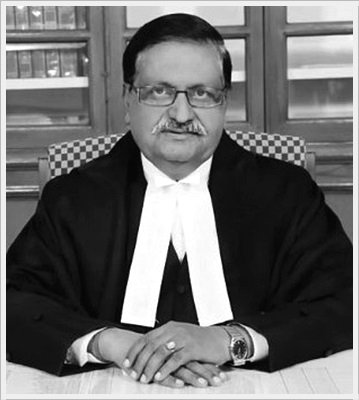
No Acts & Articles mentioned in this case
Page 1 REPORTABLE
IN THE SUPREME COURT OF INDIA
CIVIL APPELLATE JURISDICTION
CIVIL APPEAL NO. 1499 OF 2004
V.K. SURENDRA …. APPELLANT
VERSUS
V.K. THIMMAIAH & ORS. ….RESPONDENTS
J UD G M E N T
SUDHANSU JYOTI MUKHOPADHAYA, J.
This appeal has been preferred by defendant No.3
against the judgment dated 20th January, 2003 passed
by the High Court of Karnataka in R.F.A. No.319 of
1998. By the impugned judgment and decree the High
Court allowed the appeal, set aside the judgment and
decree of trial court and decreed the suit declaring
that defendant Nos.1,2,3 and 4 are entitled to 11/50
th
share each and the plaintiff, defendant Nos.5,6,7,8
and 9 are entitled to 1/50
th
share each in the suit
schedule properties.
2.The facts of the case are as follows:
The plaintiffrespondent No.4 filed a suit for
partition and separate possession of 1/10
th
share in
1
Page 2 the suit schedule properties by metes and bounds and
also sought for an enquiry under Order 20 Rule 12
C.P.C. to ascertain the mesne profits. She is the
second daughter of late Shri Kunnaiah whereas
defendant Nos.1,2,3 and 4, including the appellant
herein are the sons and defendant Nos.5,6,7 and 8 are
the daughters of late Shri Kunnaiah. Defendant No.9
is the son of the first daughter of late Shri
Kunnaiah.
3.Plaintiff claimed that the suit schedule
properties are selfacquired properties of late Shri
Kunnaiah and, therefore, she is entitled for 1/10
th
share in the suit schedule properties.
Defendant Nos.1, 2 and 4 filed a joint written
statement claiming 1/5
th
share in the suit schedule
properties, as according to them the suit schedule
properties are the ancestral joint family properties.
The appellantdefendant No.3 filed a separate written
statement claiming the right over total 32 acres 55
cents of lands. According to defendant No.3, the
suit schedule properties are the selfacquired
properties of their father, late Shri Kunnaiah who
bequeathed the same in his favour under a Will dated
2
Page 3 14
th
June, 1991. As per the Will he is entitled for a
total extent of 32 acres 55 cents of lands in respect
of which the plaintiff and other defendants have no
right whatsoever. The rest of the defendants did not
choose to file written statement.
4.The trial court framed the following issues:
“1.Whether the suit schedule properties are
the selfacquired properties of late Shri
Kunnaiah as contended by plaintiff or they
are joint family properties as contended by
defendants 1, 2 and 4 ?
2. Whether the plaintiff is entitled to1/10
th
share as contended by her or she is
entitled to 1/50
th
share as contended by
defendants 1, 2 and 4 ?
3. Whether the plaintiff is entitled to the
relief prayed for ?
4. Whether defendants 1, 2 and 4 are entitled
to the reliefs prayed for in the counter
claim ?
5. What decree or order ?”
On issue No.1 the trial court has held that the
suit schedule properties are the selfacquired
properties of late Shri Kunnaiah. On issue No.2 it
was held that the Will set up by defendant No.3 has
been proved and, therefore, the plaintiff was not
entitled for a share in the suit schedule properties.
Issue Nos.3 and 4 were accordingly answered in
negative.
3
Page 4 Two additional issues were also framed by the
trial court which are as follows:
“1.Whether 3
rd
defendant proves that late
Shri Kunnaiah executed a Will dated
14.6.1991 under which the properties
mentioned in para 9 of his written
statement have been bequeathed in his
favour ?
2.Whether the event of the court holding
that the properties were not the self
acquisitions of late Shri Kunnaiah the
properties in the possession of 3
rd
defendant could be allotted to him, as
prayed for by him in para 2 of the
additional written statement filed on
26.05.1997 ?”
The trial court answered additional issue No.1
in the affirmative and held that consequently
additional issue No.2 was not necessary to be
decided.
5.In appeal, the High Court considered the
following three questions:
“i)Whether the suit schedule properties
are the joint family properties of late
Shri Kunnaiah and if so what share is
to be allotted to each of the parties
in the suit ?
ii)Whether the defendant No.3 proves the
execution of the Will dated 14.06.1991
said to have been executed by late Shri
Kunnaiah ?
iii)In the event if the Will dated
14.06.1991 is proved to be valid in law
what is the effect of the said Will on
the suit schedule properties in the
event if the said properties are held
to be joint family properties ?”
4
Page 5 Taking into consideration the evidence on record
and the stand taken by the plaintiff and the
defendants, the High Court held that there was no
evidence on record to prove that the suit schedule
properties are selfacquired properties of late Shri
Kunnaiah and it further held that the suit schedule
properties are joint family properties of late Shri
Kunnaiah and his children.
6.So far as the Will (Ex.D17) relied on by
defendant No.3 the High Court held that late Shri
Kunnaiah who is the father of defendant Nos. 1 to 4
had no right whatsoever to bequeath the suit schedule
properties under a Will or partition without the
consent of all the coparceners. Therefore, Ex.D17
is not binding on the other coparcerners. In
determining the shares to be allotted to each of the
parties in the proceedings, the High Court held that
the sons, defendant Nos.1,2,3 and 4, and late Shri
Kunnaiah are entitled for 1/5
th
share of the suit
schedule properties. In so far as 1/5
th
share of late
Shri Kunnaiah¸ sons and daughters were entitled for
1/50
th
share. Regarding defendant No.9 who is the son
of the first daughter, the High Court held that since
5
Page 6 he is the only heir to succeed to the estate of first
daughter, he is also entitled for 1/50
th
share. The
appeal was allowed with the aforesaid observation and
suit was decreed by the High Court declaring that
defendant Nos.1,2,3 and 4 are entitled to 11/50
th
share each and the plaintiff, defendant Nos.5,6,7,8
and 9 are entitled to 1/50
th
share each.
7.According to the appellantdefendant No.3, when
late Shri Kunnaiah was a minor, his mother purchased
certain properties including suit schedule properties
by a sale deed dated 7
th
May, 1918Ex.D1, in the
joint name of herself (Ningamma mother) and son,
Kunnaiah. Later on Kunnaiah sold certain landed
properties on 16
th
July, 1942, properties situated at
Kaikere village on 19
th
March, 1953 and some other
properties on 4
th
November, 1963. These sale deeds
were not challenged by the plaintiff or the
defendants. Since, the children of Kunnaiah were
major, their names were got entered in the Revenue
records by him in the year 1975 with a view to give
those properties to the children. To sell some of the
properties, Kunnaiah got consent of his children as
6
Page 7 their names were appearing in the Revenue records
which were sold on 23
rd
July, 1976.
Further, according to the appellant, Kunnaiah,
wanted partition of the properties and effected
division by executing a Will on 20
th
January, 1984
distributing the properties to all the children. The
respondents were aware of such arrangement. However,
the said Will was cancelled by late Shri Kunnaiah on
7
th
January, 1991 with the knowledge of all the
children as Pranesh(defendant No.9), grandson through
daughter Tayamma was not given property.
Subsequently, a fresh Will was executed by late Shri
Kunnaiah on 14
th
June, 1991(Ex.D17) whereby the suit
schedule properties were settled in favour of his
children, Thimmaiah, B.K. Ramachandra, Ganesh, all
the daughters and Pranesh son of a predeceased
daughter. On 9
th
July, 1993, Kunnaiah died leaving
behind him his 9 children, i.e., 4 sons and 5
daughters. Under the WillEx.D17 dated 14
th
June,
1991, Kunnaih gave away all the properties owned by
him and the children of Kunnaiah came to the
possession of their respective portions given to each
of them under the Will.
7
Page 8 8.Learned counsel for the appellant submitted that
in absence of any plea taken by the plaintiff or most
of the defendants that the suit schedule properties
were ancestral, the High Court was not justified to
hold that the said properties are the joint family
properties. Even assuming the said properties as
joint family properties, it was open to the father to
divide the properties under the Will Ex.D17. The
respondents were aware of the execution of the Will
(Ex.D17) and also the earlier Will which was
cancelled but they kept quiet for a long time which
will amount to giving their consent to the father to
partition the properties, as the same is permissible
under the Hindu Law.
9.In order to consider whether the suit schedule
properties are joint family properties or self
acquired properties of late Shri Kunnaiah, it is
necessary to notice the documentary as well as the
oral evidence produced by the parties.
10.By the sale deed dated 7
th
May, 1918 (Ex.D1),
the lands in Sy.No.211 measuring 5 acres 28 cents;
Sy.No.208 measuring 19 acres 83 cents; Sy.No.209
measuring 4 acres 89 cents; Sy.No.209/A measuring 27
8
Page 9 cents; Sy.No.210 measuring 9 acres 28 cents and
Sy.No.205/2 measuring 5 acres 33 cents of Attur
Village, Virajapet Taluk, South Kodagu District were
purchased in the name of Kunnaiah(minor) along with
her mother late Smt. Ningamma. Kunnaiah was then
admittedly a minor and was the only son of late Shri
Thimmaiah. There is no evidence on record to show
that Kunnaiah who was minor as on the date of
purchase of the said lands, possessed of any
immovable property or properties yielding any income
so as to purchase the lands under Ex.D1. The
appellantdefendant No.3 has also failed to adduce
any evidence to show that late Smt. Ningamma, mother
of Kunnaiah had any income from movable or immovable
properties so as to purchase the above said
properties.
11.In his evidence, DW.1 deposed that their
grandfather Thimmaiah owned 1000 batti boomi and 24
acres, i.e, about 54 acres of land including a house
in Hoskote. Their grandmother Ningamma was only a
house wife and she did not own any property in her
name; out of the income derived from the lands
situated at Hoskote the suit schedule lands were
9
Page 10 purchased in the name of his father late Kunnaiah.
Aforesaid statement made by DW.1 in the examination
inchief was not questioned by any of the parties
during the crossexamination.
DW.1, in his statement further stated that out
of the income of lands aforesaid, the lands in Attur
were purchased in the year 1918. After the death of
Thimmaiah, Smt. Ningamma mother of Kunnaiah was
managing the affairs of the family as there was no
other male member living with her except Kunnaiah who
was minor.
12.It is true that late Kunnaiah had sold some
properties at Hoskote under the registered sale deed
dated 16
th
July, 1942 by Ex.D7. The reason for sale
of the said lands under Ex.D7 was mentioned, that is
to discharge the loan borrowed by him for the purpose
of purchasing the lands at Kaikere village and to
improve the lands. It is not the case of the
appellant that Kunnaiah had owned land in his own
name in Hoskote. The properties at Hoskote were
belonging to his grand father Thimmaiah. In this
background the High Court has rightly held that the
properties purchased by Kunnaiah at Kaikere village
10
Page 11 out of the money received by him from the sale of the
ancestral lands under Ex.D7, are the ancestral
properties.
Lands at Attur village measuring 1 acre 6 guntas
in Sy.No.208/3; 4 acres 77 cents in
Sy.No.210 were sold by late Kunnaiah under Ex.D3.
The recital in Ex.D3 discloses that the above lands
are the ancestral properties of late Kunnaiah. For
that reason before selling the said land under Ex.D
3, consent of all the sons of Kunnaiah was taken. The
consent certificate was produced and is marked as
Ex.D4. Through the aforesaid evidence the High Court
rightly came to the conclusion that the recitals in
Ex.D3 and consent certificate Ex.D4 are binding
on the persons who were parties in the said
documents and, therefore, when Kunnaiah himself
admitted in Ex.D3 that the lands sold under Ex.D3,
which were the lands purchased under Ex.D1, are the
ancestral properties, the High Court rightly held
that it was not open for defendant No.3 to say that
the said lands are selfacquired properties of late
Kunnaiah.
11
Page 12 13.Similarly, the land measuring 5 acres 33 cents
of Sy.No.205/2 was sold by Kunnaiah to a person under
Ex.D11 on 19
th
March, 1953. Kunnaiah had also sold
the lands measuring 3 acres in Sy.No.208/2 and 4
acres in Sy.No.208/1 of Attur village to Orange
Growers Cooperative Society under sale deed dated 4
th
November, 1963 Ex.D6. In these sale deeds though
the properties are described as selfacquired
properties, it is apparent that both the lands were
purchased under Ex.D1. The High Court has noticed
that Kunnaiah has also himself described the lands in
Attur village as ancestral properties purchased under
Ex.D1. Therefore, the sale deed dated 23
rd
July,
1976, Ex.D3 and the sale deed dated 4
th
November,
1963, Ex.D6 cannot be said to be selfacquired
properties of Kunnaiah merely because they have been
described as selfacquired properties in those
evidence.
14.We have noticed that though the appellant
examined himself as DW.4 he failed to produce either
documentary or oral evidence to show the lands at
items Nos.2,3 and 5, situated at Village Kaikere are
the selfacquired properties of Kunnaiah. In absence
12
Page 13 of any division in the family of Kunnaiah and his
sons, we hold that the family of Kunnaiah continued
to be the joint family. If a coparcener of a joint
family claims that properties are his selfacquired
properties, the burden is on him to prove that the
same are the selfacquired properties. In that
background the High Court has rightly held that
Kunnaiah had no right to change the character of the
joint family properties by transferring the same
either under a Will or a gift to any party without
the consent of the other coparceners.
15.In his deposition DW.1 stated that in the year
1976 when Kunnaiah was alive, the names of all his
sons were entered in the Jamabandhi in column No.6.
He further stated that since their names were in the
Jamabandhi their consent was asked for the purpose of
advancement of loan. DW.2, Krishna, a resident of
Hoskote deposed in his evidence that the suit
schedule properties are the ancestral properties of
Kunnaiah. DW.3, Raja, resident of Bilagunda in his
evidence has deposed that his father and Kunnaiah’s
father belong to the same family. He has further
stated that the father of Kunnaiah possessed of about
13
Page 14 30 acres of wet land and 24 acres of garden land in
Hoskote. He further stated that Kunnaiah had
purchased the lands in Kaikere village after the sale
of the lands at Hoskote to the grandfather of DW.2.
He has further stated that when the lands were
purchased under Ex.D1, Kunnaiah was a minor and his
grandmother purchased those properties as a guardian
of minor Kunnaiah. DW.4 stated that he, his father
and brothers are all the members of the joint family.
He also admitted that the consent letter given by him
along with his brothers under Ex.D4 was for the
purpose of sale of lands under Ex.D3. He further
admitted that the lands sold under Ex.D5 are the
lands purchased under Ex. D1 and these are the joint
family properties. In his evidence, defendant No.3
(DW.4) deposed that his father had sold about 25
acres of land and if the above said lands were not
sold he and his brothers were entitled for a share
in the said properties.
16.From the aforesaid statement, it is clear that
even defendant No.3 (DW.4) admits that the lands sold
under Ex.D5 are the joint family properties and if
14
Page 15 lands were not sold he and his brothers would have
been entitled for a share.
17.In the light of discussions as made above, we
hold that those suit schedule properties are joint
family properties of Kunnaiah along with 4 sons and
the coparceners have equal shares in the properties.
Accordingly, 4 sons and Kunnaiah are entitled to
1/5
th
share of the total properties.
So far as 1/5
th
share of Kunnaiah is concerned,
apart from 4 sons, i.e., defendant Nos. 1, 2, 3 and
4, the daughters of Kunnaiah are entitled to 1/50
th
share each whereas the sons, i.e., defendant Nos.1,
2, 3 and 4 are entitled to 11/50
th
share each,
inclusive of their respective shares. Defendant No.9
who is the son of the first daughter having succeeded
the estate of his mother, a coparcener is also
entitled to 1/50
th
share. In this background no
interference with the impugned judgment is called
for. In absence of any merit the appeal is
dismissed. The parties shall bear their respective
costs.
………..………………………………………..J.
(G.S. SINGHVI)
15
Page 16 ………………………………………………….J.
(SUDHANSU JYOTI MUKHOPADHAYA)
NEW DELHI,
APRIL 10, 2013.
16

 Login with google
Legal Notes
Add a Note....