
These criminal appeals stem from judgments delivered by the Rajasthan High Court, which convicted the appellants, Kanti Lal and Arvind Kumar, under Section 302 of the Indian Penal Code (IPC) ...
No Acts & Articles mentioned in this case
Reportable
IN THE SUPREME COURT OF INDIA
CRIMINAL APPELLATE JURISDICTION
CRIMINAL APPEAL NO. 1133 OF 2001
Kanti Lal ..... Appellant
Versus
State of Rajasthan ..... Respondent
WITH
CRIMINAL APPEAL NO. 1134 OF 2001
Arvind Kumar ..... Appellant
Versus
State of Rajasthan ..... Respondent
J U D G M E N T
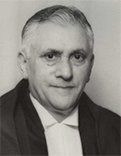
Lokeshwar Singh Panta , J.
1]Both these appeals arising out of a common judgment
and order dated 26.04.2001 passed by learned Single Judge of
the High Court of Judicature for Rajasthan at Jodhpur in
S. B. Criminal Appeal No. 125 of 1997 [Arvind Kumar Vs. State
of Rajasthan] and S. B. Criminal Misc. Petition No. 202 of
1997 [Arvind Kumar [DW-2] Vs. State of Rajasthan], were taken
up and heard together and shall stand disposed of by this
common judgment.
2]By the impugned order, the High Court while dismissing
the appeal of Arvind Kumar [A-1] and Kanti Lal [A-3] and
confirming their conviction and sentence under Sections
304B and 498A of the Indian Penal Code, 1860 [for short the
“IPC”] recorded by the learned Sessions Judge, Jalore, in
Sessions Case No. 25 of 1993, has set aside the conviction of
Sanwal Chand [A-2], Bhanwar Lal [A-4], Chetan Lal [A-5],
Popat Lal [A-6] and Smt. Bagtu [A-7] and acquitted them of
the charged offences. However, S. B. Criminal Misc. Petition
No. 202 of 1997 filed by Arvind Kumar Sengwa – Naib
Tehsildar [DW-2] under Section 482 of the Code of Criminal
Procedure, 1973 praying for expunging adverse observations
made by the learned Sessions Judge against him, Dr. Vasudev
[PW-11] and Shaitan Singh – Station House Officer [PW-12],
2
contained in paragraph 40 of the judgment, came to be
dismissed.
3]The incident, which led to the trial of the accused,
occurred on 07.08.1992 at about 9.00 a.m. at Village-Silason,
District-Pali. Parasmal [PW-5] – father of Smt. Laxmi lodged
written report [Ex.P-7] to Shaitan Singh [PW-12] – Station
House Officer, Police Station – Raniwada, District – Pali
alleging inter alia that about three years prior to the day of
incident, his daughter Smt. Laxmi aged about 22 years was
married to Arvind Kumar [A-1] - son of Sanwal Chand [A-2],
resident of Village Silason. He averred that as per the custom
of the area, he had given 20 tolas of gold and other valuable
articles to his daughter at the time of her marriage. He
alleged that after the marriage, his daughter had lived a happy
and peaceful life in her parents-in-law’s house for about one
year, but soon thereafter whenever his daughter used to come
to his house or whenever he paid visits to the house of her
parents-in-laws, his daughter had made repeated complaints
to him in regard to ill-treatment and harassment meted out to
her at the hands of the accused for not bringing sufficient
3
dowry. He alleged that about two years after her marriage
Smt. Laxmi became pregnant and as per the custom of the
area, she came to her parents’ house for delivery of the first
child and at that point of time his son-in-law (A-1) and his
son-in-law’s elder brother [A-3] had demanded loan amount of
Rs.50,000/- from him for starting some business, which
amount he had paid to them. Smt. Laxmi was blessed with a
male child. After the delivery of a child, Smt. Laxmi stayed in
his house for a period of about 3-4 months and thereafter she
along with her male child, went back to her parents-in-laws’
house.
4]The complainant further alleged that he had gone to the
house of the parents-in-laws of his daughter to find out their
welfare, but at that point of time the accused told him that the
loan amount of Rs. 50,000/- borrowed by A-1 and A-3 from
him will be treated as dowry amount. It was alleged that Smt.
Laxmi came to his house about two months prior to her death.
Bhanwar Lal (A-4), elder brother of A-1, came to his house
and asked him to send his daughter to her parents-in-laws’
house, but because of darkness in the evening, he declined to
4
send her with an infant child with A-4. He alleged that on the
same night at about 9:00 p.m. or 10:00 p.m. three accused,
namely A-3, A-4 and A-7, came to his house and banged the
door of his house. On hearing the repeated sound of banging
of the door, he and his wife Bhanvri [PW-6] immediately
opened the door of the house and saw A-3, A-4 and A-7
standing outside the house. They without any reason started
quarelling with him and his wife and told them that the money
advanced by him to A-1 and A-3 shall be treated as amount of
dowry. On hearing the shouting voices of A-3, A-4 and A-7 at
the house of the complainant, one Dayalal Tagir Chand
(PW-3), Narayan Chand (PW-7) and some more neighbours
gathered there and on their intervention A-3, A-4 and A-7 had
gone back to their house.
5]It was alleged that about 10 days prior to the date of
incident, complainant along with Mahender Singh his brother–
in-law and Pratap [PW-10], an acquaintance of the
complainant, went to the house of the parents-in-laws of his
daughter. He went inside the house to meet his daughter,
whereas Mahender Singh and PW–10 remained sitting
5
outside. His daughter had disclosed to him that all the
accused had maltreated and harassed her for not bringing
adequate dowry. He, in the presence of Mahender Singh and
PW–4, requested the accused persons that they unnecessarily
should not harass and maltreat his daughter but they paid no
heed to his request. It was also stated that in the early
morning of the day of incident, one Mishrimal Soni and two
Rajputs came to his house and revealed that Smt. Laxmi had
been admitted to Raniwada Hospital as she was suffering from
stomach pain. He along with his wife PW–6 went to the
hospital where they saw their daughter lying on the bed with
burn wounds on her body. He advised his wife to stay back by
the side of his daughter and himself went to his village for
taking the help of his brothers and relatives. He took his
brother Angraj and Jayantilal and some more people of the
village to the hospital, where they were informed that the
victim was being taken to Thonera for further treatment. His
wife had also gone with her daughter. After some time, a jeep
came there, carrying the dead body of Smt. Laxmi. He was
told that Smt. Laxmi had died on the way. On these premises,
6
he lodged a complaint [Ext. P7] before Shaitan Singh (PW-12)
Station House Officer, Police Station Raniwada at about 8:00
or 9:00 p.m. on the same day. On the basis of the complaint
(Ex. P7), First Information Report bearing Case No. 126/92
[Ex. P8] came to be registered at Police Station Raniwada
against the accused persons for offences punishable under
Sections 304B and 498A of IPC.
6]Dr. Vasudev (PW-11) Medical Officer posted at Raniwada
Hospital, on the request of the police, examined Smt. Laxmi at
about 5:45 a.m. on 07.08.1992 and noticed about 90% burn
wounds on her entire body starting from the top of the head
right upto her feet. He prepared injury report (Ext. P-11).
According to the doctor’s report, the wounds noticed on the
person of Smt. Laxmi appeared to be four hours old. He took
thumb impression of Smt. Laxmi on the injury report
(Ext. P-11).
7]PW Shaitan Singh, before the death of Smt. Laxmi, went
to Primary Health Centre, Raniwada, where she was admitted
in injured condition. He requested PW Dr. Vasudev about the
condition of Smt. Laxmi. Dr. Vasudev opined that injured
7
Smt. Laxmi was in a fit state of mind to make statement. PW
Shaitan Singh called Arvind Kumar Sengwa [DW-2] – Naib
Tehsildar to the hospital, who recorded dying declaration of
Smt. Laxmi [Ext.D/4] in the presence of Dr. Vasudev. On
receipt of the information about the admission of injured
Smt. Laxmi in hospital, Raniwada, Raghubir Singh [PW-13]
C.O., Bhinmal, rushed to the hospital and found Smt. Laxmi
dead on account of 90 per cent burn injuries. PW Shaitan
Singh prepared panchnama [Ext.P-2] under the instructions
and supervision of PW-13. PW-13 before handing over the
dead body to PW-5 – father of the deceased got her dead body
examined from the Medical Board. He inspected the spot of
the incident and prepared Site Map [Ext. P-12] in the presence
of Jalam Singh [PW-1], Shaitan Singh [PW-2] and Ook Singh
[PW-4]. On spot inspection, some burnt pieces of the bangles,
ash, match-box containing burnt and unburnt sticks, some
burnt pieces of the skin attached with clothes and one
‘bhabka’ [a kerosene burning lamp which is being used by a
goldsmith for placing joints in making of gold ornaments] were
collected from the spot. The Investigating Officer seized all
8
those articles and sealed them in a parcel which was
deposited with the In-charge of the Police Station. He
recorded the statements of the witnesses. He later on arrested
A-1, A-3 and A-6. PW-13 conducted the investigation partly
and thereafter as per the order of the D.I.G. Range, Jodhpur,
PW-13 on 23.09.1992 handed over the case file for further
investigation to Mahender Kumar Govil [PW-14] – Additional
Superintendent of Police, Bikaner. PW-14 recorded the
statements of the material witnesses. After the completion of
the investigation of the case, Station House Officer prepared
chargesheet against accused persons and filed the same in the
court of Judicial Magistrate under Sections 304B and 498A of
the IPC. The Judicial Magistrate committed the case to the
Sessions Judge for trial.
8]The accused pleaded not guilty to the charges and
claimed to be tried. The learned Sessions Judge, Jalore,
charged the accused for offences under Sections 304B and
498A of the IPC. The prosecution, in order to substantiate its
case, examined as many as 15 witnesses. The accused
persons in the statements recorded under Section 313 of the
9
Code of Criminal Procedure, 1973 [for short “Cr.P.C.”] denied
the incriminating evidence appearing against them. Smt.
Bagtu [A-7] pleaded that on the day of the incident she was ill.
The accused examined Doongarmal [DW-1] and Arvind Kumar
Sengwa [DW-2] – Naib Tehsildar, Raniwada, Yashpal [DW-3]
and Bhanwar Lal [A-4] in their defence.
9]On examination of the oral and documentary evidence
produced on record, the learned Sessions Judge by his order
dated 24.02.1997 found the accused guilty of the offences
under Sections 304B and 498A of the IPC and sentenced them
to suffer 10 years’ rigorous imprisonment for offence under
Section 304 B of the IPC and 3 years’ rigorous imprisonment
for an offence under Section 498 A of the IPC with a fine of Rs.
500/- each and in default of the payment of fine, each
accused has to undergo simple imprisonment for one month.
All the sentences were ordered to run concurrently. The
learned Sessions Judge in paragraph 40 of the judgment
directed higher officers of PW-11 Dr. Vasudev, PW-12 Shaitan
Singh – Station House Officer and DW-2 - Arvind Kumar
Sengwa – Naib Tehsildar to take disciplinary action against
10
them for not discharging their official duties properly and
diligently.
10]Feeling aggrieved thereby and dissatisfied with the order
of conviction, the accused filed S. B. Criminal Appeal No. 125
of 1997, whereas Arvind Kumar Sengwa [DW-2] – Naib
Tehsildar filed S. B. Criminal Misc. Petition No. 202 of 1997
praying for expunging of the adverse observations made in
paragraph 40 of the judgment.
11]The High Court dismissed the appeal of A-1 and A-3,
whereas the appeal of A-2, A-4, A-5, A-6 and A-7 was allowed
and their conviction and sentence imposed upon them by the
learned Sessions Judge, Jalore, has been set aside. The
Criminal Revision Petition filed by Arvind Kumar Sengwa [DW-
2] – Naib Tehsildar has been dismissed. The order of the High
Court reads as under:
“[1]The appeal filed by the accused appellants
no.1 Arvind kumar [Husband of the deceased] and
no. 3 Kantilal [Jeth of deceased] is dismissed, after
confirming the judgment and order dated
24.02.1997 passed by the learned Sessions Judge,
Jalore so far as they relate to them.
Since accused appellant no. 3 Kantilal [Jeth of
deceased] is on bail, he shall surrender himself
11
before the trial court immediately and in case he
does not surrender, the trial court shall take
immediate steps for arresting and sending him to
jail to serve out the remaining period of sentences.
[2]The appeal filed by the accused appellants
no.2 Sanwal Chand [Father-in-law of deceased],
no.4 Bhanwar Lal [Jeth of deceased], no. 5 Chetan
Lal [Jeth of the deceased], no. 6 Popat Lal [Devar of
the deceased] and no.7 Smt. Bagtu [Mother-in-law
of the deceased] is allowed and the judgment and
order dated 24.02.1997 passed by the learned
Sessions Judge, Jalore so far as they relate to them,
are set aside and they are acquitted of the charges
framed against them. Since they are on bail they
need not surrender and their bail bonds stand
discharged.
[3]The criminal misc. petition filed by the
petitioner Arvind Kumar Sengwa, DW-2 is also
dismissed.”
12]Now, A-1 and A-3 have filed these two sets of appeals
challenging the correctness and validity of the order of the
High Court.
13]Ms. Aishwarya Bhati, Advocate appearing on behalf of
A-1 and A-3, vehemently contended that the judgment of the
High Court confirming the order of conviction passed by the
trial court is erroneous in law. She contended that the High
Court and the trial court, both were not justified in rejecting
the dying declaration [Ext.-D/4] voluntarily made by the
12
deceased to DW-2, an Officer of the State Government, stating
clearly therein that on the intervening night of the incident
she attempted to lit the chimney with burning match-stick,
but in the darkness accidentally kerosene oil fell on the
ground of the room, by which her orna [dupatta] caught fire
and as a result of the accidental fire she received burn
injuries. She stated that the dying declaration [Ext.-D/4] was
made by the deceased to DW-2 in the presence of PW Dr.
Vasudev who certified that she was in a fit state of mind to
make the statement.
14]She next contended that the prosecution case is wholly
false and fabricated. According to the learned counsel, the
fact of recording of dying declaration by DW-2 has been
corroborated by PW-12 – the Station House Officer, who
deposed that at the time of recording of dying declaration of
Smt. Laxmi by DW-2, the complainant [PW-5] and his wife
[PW-6] both parents of the deceased were present and the
prosecution deliberately and intentionally concealed the
production of dying declaration from the Court and also
withheld the examination of DW-2 – the Naib Tehsildar as a
13
prosecution witness with clear intention to conceal true facts
of accidental burning of the deceased. She also contended
that the High Court has wrongly placed reliance on the
evidence of PWs 5, 6 and 8 who are all highly interested
witnesses being close relatives of the deceased. She next
contended that the judgment of the trial court as affirmed by
the High Court holding A-1 and A-3 guilty of the charged
offences are both based upon conjectures and surmises,
therefore, not sustainable. She lastly contended that the
prosecution has not led cogent and credible evidence against
A-3 [Jeth of the deceased] beyond reasonable doubt who has
nothing to do with the offence and therefore, he is entitled for
benefit of doubt.
15]Dr. Manish Singhvi, AAG appearing on behalf of the
State, has canvassed correctness of the views taken by the
courts below in the judgments. He submitted that the
approach of the High Court in re-appreciating the evidence led
by the prosecution cannot be found faulty. He then
contended that the evidence of the eye-witnesses PW-5
Parasmal [father of the deceased], PW-6 Bhanvri [mother of
14
the deceased] and PW-8 Mahender Kumar – Mama [Deceased’s
mother’s brother] is concise, cogent and satisfactory for
holding A-1 and A-3 guilty of the charged offences. He lastly
contended that the trial court and the High Court, both have
correctly appreciated and re-appreciated the entire evidence of
the material witnesses, and this Court shall not be obliged to
interfere with the concurrent findings of the facts arrived at by
the courts below.
16]In order to appreciate the rival contentions of the learned
counsel for the parties, we have independently scrutinized the
evidence led by the prosecution and examined the judgment of
the High Court.
17]The dying declaration [Ext.-D/4] allegedly made by the
deceased to DW-2 – Naib Tehsildar has been found to be an
unreliable document by the trial court and the said finding
has been affirmed by the High Court. We think it appropriate
to reproduce the true translation of the contents of the alleged
dying declaration [Ext.-D/4] which read as under:
“That on the night, there was darkness and
she took match-box to lit the chimney and when
she started to lit the chimney, kerosene oil fell on
15
the ground and it caught hold fire, by which her
orna caught fire and, thereafter, her husband tried
to save her and people of village gathered and
thereafter, she was taken to hospital.”
18]The dying declaration [Ext.-D/4] was stated to have been
thumb-marked by the deceased and duly signed by DW-2 and
A-3 and PW Dr. Vasudev. It is the evidence of DW-2 that
when he recorded the alleged statement of the deceased, her
mother PW-6 was present in the hospital, but she refused to
append her signature or thumb impression upon the
document. PW Dr. Vasudev has proved on record medical
report [Ext.- P/11] of the deceased and in his examination-in-
chief, he has not whispered a word in regard to recording of
the dying declaration [Ext.-D/4] by DW-2. In cross-
examination, Dr. Vasudev admitted that he could not
remember whether A-3 was present in the hospital when
DW-2 recorded the alleged dying declaration [Ext.-D/4]. He
categorically stated that dying declaration was not recorded by
DW-2, but the said document was prepared by his Reader. He
has shown his ignorance whether DW-2 took thumb-
16
impression of the deceased once or two times on the alleged
dying declaration.
19]PW Shaitan Singh – Station House Officer stated that
Medical Officer had given to him in writing that Smt. Laxmi
before her death was in a fit condition to make statement and
therefore, he called DW-2 for recording her statement. He
stated that he was not present in the room when DW-2
recorded the alleged dying declaration [Ext.-D/4] of the
deceased.
20]It is the evidence of DW-2 Arvind Kumar Sengwa that on
07.08.1992 one constable came to him with a letter of request
and disclosed that one woman, namely, Laxmi was admitted
in the hospital and her statement was to be recorded. He
rushed to the hospital and made enquiry from Dr. Vasudev
about the fit condition of Smt. Laxmi. Smt. Laxmi was found
in a fit state of mind to give statement which he correctly
recorded. He admitted that PW Bhanvri – mother of the
deceased was present in the room and she refused to put her
signature or thumb-impression on the statement of the
17
deceased. In cross-examination DW-2 admits the following
material facts:
“1]That before recording the statement of the
deceased Ex. D/4, Tehreer was given to him in
writing by the police and he took out the Tehreer
from the pocket of his coat and carbon copy of it,
was produced by him during the course of his
examination and the same is marked as Ex.D/5.
2]That at the time of recording statement of the
deceased Ex.D/4, PW-12 Shaitan Singh, SHO was
not there.
3]That it is correct to say that before recording
the statement of the deceased Ex.D/4, he did not
take certificate from the doctor on the point that
she was in a fit condition to give statement.
4]That before recording statement of the
deceased Ex.D/4, he asked the deceased how the
fire took place and apart from this, he did not ask
any question, but such type of formalities are not
mentioned in Ex.D/4.
5]That it is also correct to say that at the time of
recording statement Ex.D/4 of the deceased, he did
not oust her mother PW-6 Bhanvri and PW-11 Dr.
Vasudev.
6]That it is also correct to say that he did not
have any experience how dying declaration should
be recorded.
7]That it is also correct to say that there is no
endorsement on Ex.D/4 of the fact that statement
was read over to the deceased and she admitted it
to be correct one and, thereafter, her thumb-
18
impressions were taken and for non-observing these
formalities, he could not assign any reason.
8]That after recording statement of the deceased
Ex.D/4, he took signatures of her Jeth Kantilal,
accused appellant no. 3, who was sitting at that
time in the Chamber of the doctor.
9]That it is also correct to say that dying
declaration Ex.D/4 was not sealed on the spot and
it was given open to SHO, PW-2 Shaitan Singh.
10]That before recording the statement of the
deceased Ex.D/4, he did not ask the deceased how
incident took place and what she was doing.
11]That he took two thumb-impressions of
deceased and causes of taking two thumb-
impressions have been assigned in the statement,
but Ex.D/4 does not bear such reasons.”
21]It is well-settled that one of the important tests of the
credibility of the dying declaration is that the person, who
recorded it, must be satisfied that the deceased was in a fit
state of mind. For placing implicit reliance on dying
declaration, court must be satisfied that the deceased was in a
fit state of mind to narrate the correct facts of occurrence. If
the capacity of the maker of the statement to narrate the facts
is found to be impaired, such dying declaration should be
19
rejected, as it is highly unsafe to place reliance on it. The
dying declaration should be voluntary and should not be
prompted and physical as well as mental fitness of the maker
is to be proved by the prosecution.
22]In the present case, as noticed above DW-2 has not
taken any certificate from the doctor to prove that the
deceased was in a fit state of mind to give statement nor he
has recorded any endorsement to that effect on the alleged
dying declaration [Ext.-D/4]. Another factor which impairs
the credibility of the alleged dying declaration [Ext.- D/4] and
belies the statement of DW-2 was that, according to Dr.
Vasudev, dying declaration was recorded by the Reader of the
Tehsildar and not by DW-2. It is also proved on record that
DW-2 did not ask preliminary questions from the deceased
before the dying declaration allegedly made by her was
recorded and this fact also created doubt about the
correctness and truthfulness of the dying declaration. It is
also the evidence of DW-2 that after recording the alleged
statement of the deceased, he did not seal the dying
declaration and unsealed document was handed over to the
20
Station House Officer. DW-2 has not produced on record the
original copy of the ‘Tehreer’ submitted to him by a constable
requesting him to visit the hospital for recording the alleged
dying declaration of the deceased, and a carbon copy whereof
was produced by him during his cross-examination. A
categorical refusal of putting her signature or thumb-
impression on the alleged dying declaration [Ext.-D/4] by
PW-6 – Bhanvri [mother of the deceased] would further go to
prove that the alleged dying declaration was not at all
recorded by DW-2 in the room of the hospital where the
deceased was lying before she died. The above-stated facts
and circumstances would prove that the alleged dying
declaration, on which much reliance has been placed by the
defence, cannot be said to be an admissible and reliable
document. The fact that the alleged dying declaration [Ext.-
D/4] did not bear endorsement of DW-2 to the effect that it
was read over and explained to the deceased, also created a
doubt on its credibility and truthfulness. The trial court as
well as the High Court both have concurrently and, in our
considered view, have rightly rejected the genuineness and
21
credibility of the alleged dying declaration to prove the defence
version that the deceased made the said statement to DW-2
and she died because of accidental death. We agree with the
findings and reasoning of the courts below that the alleged
dying declaration [Ext.-D/4] suffers from a number of basic
infirmities and such dying declaration cannot be found
admissible and accepted as genuine document.
23]Ms. Aishwariya, learned counsel, has relied upon the
judgments of this Court in Gaffar Badshaha Pathan Vs. State
of Maharashtra [[2004] 10 SCC 589] to contend that it is one
thing for an accused to attack a dying declaration in a case
where the prosecution seeks to rely on a dying declaration
against an accused but it is altogether different where an
accused relies upon a dying declaration in support of the
defence of accidental death. In such case, the burden on the
accused is much lighter. In the present case, according to the
learned counsel, A-1 and A-3 have established beyond
reasonable doubt that the statement of the deceased was
recorded by DW-2 with bona fide intention and without
putting any pressure upon the deceased and therefore, the
22
document has to be accepted as admissible and reliable
document to indicate that the deceased died due to accidental
fire. We have gone through the above cited judgment. In that
case, this Court while dealing with the dying declaration
produced on record held as under:
“It is one thing for an accused to attack a dying
declaration in a case where the prosecution seeks to
rely on a dying declaration against an accused but
it is altogether different where an accused relies
upon a dying declaration in support of the defence
of accidental death. The burden on the accused is
much lighter. He has only to prove reasonable
probability. The High Court erred in holding that
the recording of the dying declaration and story
stated therein apparently appears to be false and
concocted. The fact whether the dying declaration
is false and concocted has to be established by the
prosecution. It is not for the accused to prove
conclusively that the dying declaration was correct
and the story therein was not concocted.”
24]In Ghurphekan and Others Vs. State of Uttar Pradesh
[[1972] 3 SCC 361], this Court while dealing with the case,
which entirely rested on dying declaration of the deceased
held as under:
“[i]A dying declaration recorded within a few
hours after the incident, when it bore the
endorsement of the doctor, that the victim was at
that time in “proper sense” to be able to give the
23
statement and where the evidence of the recording
magistrate showed no flaw in taking it down, there
is no reason to reject it.
[ii]Where the dying declaration had two
weaknesses, namely, it did not mention the name of
one of the witnesses present at the spot and it did
not account for the injuries on the persons of the
attacking party, it cannot be rejected on those
omissions only, if otherwise it could be shown to be
true in other respects, by other satisfactory
evidence.
[iii]Where the circumstantial evidence negatived
the alternative case set up by the defence and the
investigating officer’s evidence about the place of
incident, the medical officer’s evidence in support of
the prosecution about the manner of the occurrence
of the incident, and the explanation of some
witnesses for their presence at the spot, are
consistent with the dying statement and the
circumstantial evidence; the dying declaration
possess acceptability in spite of any weaknesses
pointed out by the defence.”
25]In Kans Raj Vs. State of Punjab and others [[2000] 5 SCC
207], this Court held that the statement of a person “as to any
of the circumstances which resulted in his death” must have
some close and proximate relation with the actual occurrence
and proximity would depend upon the circumstances of each
case for the purpose of admissibility of such statement as
24
dying declaration under Section 32 [1] of the Evidence Act,
1872.
26]In Kamalakar Nandram Bhavsar Vs. State of Maharashtra
[[2004] 10 SCC 192], this Court on scrutiny of the evidence on
record found that the victim of dowry death/bride burning
had suffered burn injuries to the extent of 94-95 % could not
have made dying declaration as stated by the doctor during
the cross-examination that a dying declaration was made by
the victim when she was in hospital. The alleged dying
declaration was admitted in evidence on behest of defence by
trial court supportive to the defence of the accused. On the
facts of the case, this Court observed that source of
production of dying declaration was neither mentioned in the
trial court’s judgment nor was there any evidence to prove the
said document. In these circumstances, this Court held that
the High Court had rightly rejected the said dying declaration.
27]In the present case, as noticed in the earlier part of the
judgment A-1 and A-3 have not proved on record the source of
production of the dying declaration by DW-2 who after
recording the statement of the deceased was duty bound to
25
hand over the alleged dying declaration under a sealed cover
to the prosecuting agency. In this case, the origin and source
of the alleged dying declaration produced by DW-2 at the time
of his examination as a defence witness is highly doubtful and
such document cannot be accepted as genuine and truthful
document in support of the defence of A-1 and A-3.
28]In State [Delhi Administration] Vs. Laxman Kumar and
Others and Indian Federation of Women Lawyers and Others
Vs. Smt. Shakuntala and Others [[1985] 4 SCC 476], this Court
while dealing a case of bride burning on the basis of dying
declaration, held as follow:
“A dying declaration enjoys almost a sacrosanct
status as a piece of evidence as it comes from the
mouth of a person who is about to die and at that
stage of life he is not likely to make a false
statement. Ordinarily, a document as valuable as a
dying declaration is supposed to be foolproof and is
to incorporate the particulars which it is supposed
to contain.”
Further, it is held that unless the dying declaration is in
question and answer form it is very difficult to know to what
extent the answers have been suggested by questions put.
What is necessary is that the exact statement made by the
26
deceased should be available to the court. It is also said that
if the doctor happened to be present at the time of recording of
the dying declaration and he had heard the statement made
by the deceased, he would ordinarily endorse that the
statement had been made to his hearing and had been
recorded in his presence. The endorsement as made is
indicative of the position that a statement had been recorded
and the same was being attested by the doctor.
29]In the present case, these basic principles are ignored by
DW-2 at the time of recording of the alleged dying declaration
of the deceased. As noticed above, the doctor has not made
any endorsement on the dying declaration to state that it was
recorded in his presence and attested by him. The mother of
the deceased refused to put her thumb-impression on the said
document. Thus, the judgment cited above cannot strength
the defence of A-1 and A-3 that dying declaration Ext. D/4
had been recorded by DW-2 by observing the principles laid
down in the abovesaid case.
30]The prosecution in support of the charge of dowry death
has produced and relied upon the testimony of PW-5 Parasmal
27
– father, PW-6 Bhanvri – mother and PW-8 Mahender Kumar –
‘Mama’ [mother’s brother] of the deceased. Before we proceed
to deal with and consider the evidence of the prosecution on
the question of dowry death, we may consider the ratio of the
law laid down in the cases relied upon before us.
31]In Pawan Kumar and Others Vs. State of Haryana [[1998]
3 SCC 309] this Court held that the ingredient necessary for
the application of Section 304 B are : [a]when the death of a
woman is caused by any burns or bodily injury, or [b] occurs
otherwise than under normal circumstances [c] and the
aforesaid two facts spring within 7 years of girl’s marriage
[d] and soon before her death, she was subjected to cruelty or
harassment by her husband or his relative, [e] this is in
connection with the demand of dowry.
32]In Hira Lal and Others Vs. State [Govt. of NCT], Delhi
[[2003] 8 SCC 80], this Court reiterated that the essential
ingredients to attract application under Section 304 B are
that: [i] the death of a woman should be caused by burns or
bodily injury or otherwise than under a normal circumstance
[ii] such a death should have occurred within seven years of
28
her marriage, [iii] she must have been subjected to cruelty or
harassment by her husband or any relative of her husband,
[iv] such cruelty or harassment should be for or in connection
with demand of dowry, and [v] such cruelty or harassment is
shown to have been meted out to the woman soon before her
death. Further it is said that the presumption under Section
113-B of Evidence Act, 1872 is a presumption of law. On
proof of the essential mentioned therein, it becomes obligatory
on the court to raise a presumption that the accused caused
the dowry death. The essentials required to be proved for
raising the said presumption are that [i] the question before
the court must be whether the accused has committed the
dowry death of the woman, [ii] the woman was subjected to
cruelty or harassment by her husband or his relatives, [iii]
such cruelty or harassment was for or in connection with any
demand for dowry, and [iv] such cruelty or harassment was
soon before her death.
33]Again, in the case of Kamesh Panjiyar alias Kamlesh
Panjiyar Vs. State of Bihar [[2005] 2 SCC 388], Ram Badan
Sharma Vs. State of Bihar with Surya Kant Sharma Vs. State of
29
Bihar [[2006] 10 SCC 115], Trimukh Maroti Kirkan Vs. State of
Maharashtra [[2006] 10 SCC 681], Kailash Vs. State of M.P.
[[2006] 12 SCC 667] and Appasaheb and Another Vs. State of
Maharashtra [[2007] 9 SCC 721], this Court reiterated and
reasserted the settled principles laid down in Hiralal’s case
[supra].
34]In the light of the above-settled proposition of law,
learned counsel for A-1 and A-3 urged that the prosecution
has miserably failed to prove that “soon before her death”, the
deceased was subjected to cruelty or harassment “for or in
connection with the demand of dowry”.
35]In order to appreciate this contention, we have made
independent scrutiny of the evidence led on record to find out
whether the trial court’s order of conviction of A-1 and A-3 as
confirmed by the High Court can be sustained or not. In
support of the charge of dowry death levelled against A-1 and
A-3, the prosecution has examined and relied upon the
testimony of PW-5 and PW-8. It is not in dispute that the
death of Smt. Laxmi was caused by burn injuries within seven
years of her marriage. The evidence of PW-5 proved that at
30
the time of marriage of Smt. Laxmi with A-1, he gave 20 tolas
of gold and other dowry articles to A-1, A-3 and other family
members. For about one year after marriage, his daughter
lived happy married life in her parents-in-law’s house.
Thereafter, whenever Smt. Laxmi used to go to the house of
her parents or whenever PW-5 had visited her in-law’s house
for inviting her to parent’s house, Smt. Laxmi used to
complain that A-1, A-3 and other family members had mal-
treated and harassed her for not bringing adequate dowry. He
brought Smt. Laxmi to his house when she was to deliver a
child and at that time A-1 and A-3 demanded Rs. 50,000/-
from him as loan for running their business. He paid
Rs. 50,000/- to them. Smt. Laxmi stayed at his house for
about 3-4 months when she was blessed with a son and after
some period Smt. Laxmi was sent to her parents-in-law’s
house.
36]It is the evidence of PW-5 that after about 10 days prior
to the fateful incident, he went to village Silason to take his
daughter, but A-1, A-3 and other family members [the
acquitted accused] had refused to send her unless their
31
demand of dowry was not fulfilled by him. A-1, A-3 and other
accused told him that Rs. 50,000/- borrowed as a loan should
be adjusted and treated as dowry money. He did not agree to
the proposal of the accused. On this count, the accused
started ill-treating and harassing his daughter. The evidence
of this witness finds complete corroboration from the evidence
of PW-6 and PW-8 on this count. It is further evidence of
PW-5 that about two months prior to the incident Smt. Laxmi
had visited his house, when A-4 came to his house to take
Smt. Laxmi back to their house but he did not allow her to go
with him because it was not advisable to send her with an
infant child in the late hours of the evening. Later on at about
9.00 p.m. or 10.00 p.m., three accused namely A-3, A-4, A-7
and one Shaitan Singh came to his house and banged the
door of his house and on hearing the sound of banging of the
door, he and his wife PW-6 opened the door. The abovesaid
persons started quarreling with him and impressed upon him
to adjust the amount of Rs.50,000/- as dowry money. This
incident took place in the presence of PW-3 Taga and PW-7
Narainchand.
32
37]PW-3 Taga deposed that about two months prior to the
death of Smt. Laxmi, he saw A-3, A-4 and A-7 alongwith one
Shaitan Singh coming out of the house of PW-5 at about
9.00 p.m. or 10.00 p.m. and at that point of time, they were
quarreling with PW-5 and his wife PW-6 over some money
transaction. PW-7 Narainchand though turned hostile to the
prosecution, yet he admitted that A-3, A-4 and A-7 had a
quarrel with PW-5 on some money matter. PW-6 Smt.
Bhanvri fully corroborates the testimony of PW-3 and PW-5
her husband on this point.
38]PW-8 Mahender Kumar deposed that on that day he
alongwith PW-5 and PW-10 Pratap Singh, visited the house of
the accused persons, they threatened PW-5 that if he would
make demand of returning a sum of Rs. 50,000/- paid by him
as loan to A-1 and A-3, he would face dire consequences. All
the accused said that an amount of Rs. 50,000/- shall be
adjusted against the demand of dowry money. Thus, relying
upon the evidence of PW-5 and PW-8, the trial court and the
High Court came to the conclusion that the prosecution has
proved beyond reasonable doubt that Smt. Laxmi was being
33
constantly harassed and tortured by A-1 and A-3 for the
demand of dowry and a sum of Rs.50,000/- paid to them as
loan amount was also adjusted by them as dowry money.
PW-5, PW-6 and PW-8 have been subjected to searching
cross-examination by the defence, but nothing tangible material
has been extracted from their evidence to create any shadow of
doubt that they are not reliable and truthful witnesses.
39]Having regard to the entire evidence discussed above and
having carefully and closely considered the judgments of the trial
court and the High Court, it appears that the view taken by both
the courts was reasonable and plausible. We find no infirmity or
perversity in the findings recorded by the learned Judges of the
High Court to interfere with the well-reasoned judgment.
40]No other point has been raised by the appellants. We, thus,
find no merit and substance in any of the submissions made on
behalf of the appellants.
41]In the result, for the above-stated reasons, there is no merit in
these appeals and these are, accordingly, dismissed. Both the
appellants are stated to be on bail. Their bail bonds are cancelled
and they are directed to surrender forthwith to serve out the
remaining sentence.
........................................J.
34
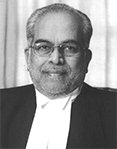
(Lokeshwar Singh Panta)
........................................J.
(B. Sudershan Reddy)
New Delhi,
April 17, 2009.
35

 Login with google
Legal Notes
Add a Note....