
If at all and to what extent the Government of the State of Bihar is vicariously liable for payment of arrears of salaries to the employees of the State owned corporations, public ...
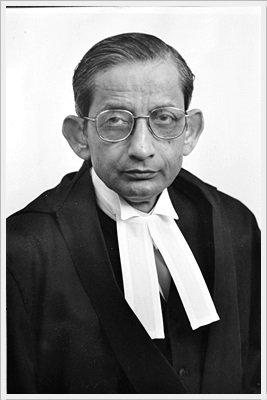
No Acts & Articles mentioned in this case
http://JUDIS.NIC.IN SUPREME COURT OF INDIA Page 1 of 20
CASE NO.:
Writ Petition (civil) 488 of 2002
PETITIONER:
KAPILA HINGORANI
RESPONDENT:
STATE OF BIHAR
DATE OF JUDGMENT: 09/05/2003
BENCH:
V.N. KHARE CJ & S.B. SINHA
JUDGMENT:
JUDGMENT
2003 Supp(1) SCR 175
The following Order of the Court was delivered:
If at all and to what extent the Government of the State of Bihar is
vicariously liable for payment of arrears of salaries to the employees of
the State owned corporations, public sector undertakings or the statutory
bodies is the core question involved in this writ petition.
It appears from the records that various Government companies/public sector
undertakings, details whereof are stated hereunder have not paid salaries
to their workmen and other employees for a long time resulting in death of
several persons and miseries brought to a large number of families as would
appear from the following:
Statement As of 12.3.2003
___________________________________________________________________________
__________
S. Name of Public No. of Date from
Nos. of Death
No. Undertaking Employee which salary of
Employees
is due
1. Bihar State Agro Industries 630 May-93
70 Development Corporation
2. Bihar State Medicine & 265 Aug-93
11 Chemical Development
Corporation
3. Bihar State Handloom & 429 In Headquarter from May 3
Handicraft Corpn. 1996 in Unit from 1993
4. Bihar State Small Scale 141 In Headquarter from
36 Industrial Development April 1995. In Unit from
Corporation April 1993
5. Bihar State Sugar Corpora- 9240 From January 2000 in 467
tion Headquarter. In
Unit from
April 1992
6. Bihar State Leather 471 From March 1993
13 Development Corpn.
6a. Bihar Finished Leathers
7. Bihar State Industrial 1551 In Headquarters from July
l25 Development Corporation 2001 in Unit from Feb.
1993
8. Bihar State Electronic 157 In Headquarter upto date,
5 Corporation In Unit from April
1998
9. Bihar State Vastraya 50 Nov.-96.
http://JUDIS.NIC.IN SUPREME COURT OF INDIA Page 2 of 20
Nil Corporation
10. Bihar State Film 8 Aug.-02
Nil Development & Financial
Corporation
11. Bihar State Fruit & 16 From Aug.-94
1 Vegetable Development
Corporation
12. Bihar State Seed 137 From May 1999
5 Development Corpn.
13. Bihar State Fishries 42 Before May 2000 due of .32
5 Development Corporation to 40 months
14. Bihar State Food & Civil 1716 Pending from till 40 325
Supplies Corpn. months
15. Bihar State Panchayati Raj 130 From March 1996
7 Financial Corpn.
16. Bihar State Construction 357 In Headquarter from 55
Corpn. January 1995. In Unit
from
January 1992
17. Bihar State Road Transport 5580 Headquarter + In sum units
205 Corporation from Nov. 1998
Balance in
from December 1993 Note:
18. Bihar State Khadi 75 Payment of Salaries 71 NA
Gramdhyog Board Staff in non-plan (uptodate)
due from April 94 Staff Salaries
19. Bihar Hill Area Lift 684
NA
Irrigation Corpn.
___________________________________________________________________________
__________________
A newspaper report as regard non-payment of salary for a long time
resulting in starvation highlighted the case of one Chandan Bhattacharya,
son of an employee of the Bihar State Agro-Industries Development
Corporation who tried to immolate himself. The incident was widely
reported, inter alia, in 'The Hindustan Times', Delhi Edition, on 19.9.2002
under the caption "Empty coffers drive staff to self-immolation bids". The
said Chandan Bhattacharya later on succumbed to the burn injuries suffered
by him.
In this writ petition, the writ petitioner, a public spirited citizen and a
Supreme Court lawyer, alleged that apart from plight of the employees of
the public sector undertakings or the statutory authorities, even the
teaching and non-teaching staff of Aided and Unaided Schools, Madrassas and
Colleges have been facing a similar fate. We, however, as at present
advised do not intend to deal with the same. According to the petitioner,
from a newspaper report it would appear that about 250 employees died due
to starvation or committed suicide owing to acute financial crisis
resulting from non-payment of remunerations to them for a long time. The
report further goes on to say that the leader of the opposition in the
Bihar Assembly had alleged that over 1000 employees died "due to lack of
salary for a period ranging from four months to 94 months".
In its counter affidavit, the State of Bihar does not deny about the
factual statement made in the said writ petition. Its stand, however, is
that salaries are being paid by the statutory authorities, the details
whereof are in the following terms:
_________________________________________________________________________
"In the following 26 undertakings, salary payments are upto date (as on
30.9.2002) and are continuing on a regular basis as per reports from the
Corporation:-
5. Bihar State Financial Corporation Ltd.
6. Bihar State Credit & Investment Corporation
7. Bihar State Agriculture Marketing Board
http://JUDIS.NIC.IN SUPREME COURT OF INDIA Page 3 of 20
8. Bihar State Forest Development Corporation
9. Bihar State Pollution Control Board
10. Bihar State Warehousing Corporation
11. Bihar State Tourism Development Corporation
12. Bihar State Text Book Corporation
13. Bihar State Minerals Development Corporation
14. Bihar State Housing Board
15. Bihar State Police Building Construction Corporation
16. Bihar State Bridge Construction Corporation
17. Bihar State Electricity Board
18. Bihar State Hydro-electric Power Corporation
19. Patna Industrial Area Development Authority
20. North Bihar Industrial Area Development Authority
21. Darbhanga Industrial Area Development Authority
22. Patna Regional Development Authority
23. Muzaffarpur Regional Development Authority
24. Darbhanga Regional Development Authority
25. Gaya Regional Development Authority
26. Bhagalpur Regional Development Authority
27. Bihar State Water & Sewerage Board
28. Bihar State Minorities Finance Corporation
29. Bihar State Export Corporation, and
30. Tenughat Vaduz Corporation."
___________________________________________________________________________
_____
As regards the Bihar State Road Transport Corporation, it is contended that
50% of salary was paid to the employees as directed by this Court in Civil
Appeal No. 7290 of 1994. The State contends that with a view to clear the
dues, the Corporation would require approximately a sum of Rs. 160.35
crores.
However, in relation to the 16 Undertakings, according to the State, the
financial implication would be as under:
___________________________________________________________________________
_____
s. No. Name of No. of Salary Approxi- Deaths
Cause Undertaking employees Due mate reported
of death Since Amount by corpn. as involved
reported
33 Bihar State 471+259 March 1993 Rs.62.45 Nil Not
Leather in Bihar Crores Applicable
Industries Finished
Development Leather
Corpn
34. Bihar State 265 Aug. 93. Rs.9.46 Nil -
do-
Pharmaceuticals crores
& Chemicals
Development
Corpn.
35. Bihar State 429 Hqrs-May Rs.18 23 5
from
Handloom 1996, Units crores illness,
Powerloom & 1993 Rest not
Handicrafts Dev. reported
Corpn.
36. Bihar State 141 HQ Apr. 94 Rs.18 Nil NA
Small Ind. Units April, crores
Corporation 93
37. Bihar State 9240 HQ Jan, 00 Rs.130 4
Illness
Sugar Corpn. Units April crores
92
http://JUDIS.NIC.IN SUPREME COURT OF INDIA Page 4 of 20
38. Bihar State Agro 630 May '93 Rs. 60.73 1 As in para
Ind. Dev. Corpn. crores 111 above
39. Bihar State 1551 HQ-July, 01 Rs.61.72 Nil NA
Industrial Units Feb., crores
Development 93
Corpn.
40. Bihar State
Electronics Dev.
157 HQ up Date Rs. 2.51 Nil -do-
Units April, crores Corpn. '98
41. Bihar State 50 Nov.,96 Rs.0.70 Nil
-do-Textile crore
Corporation
42. Bihar State Film 08 Aug.,02 Rs. 55,000 Nil
-do-Dev. & Fin. Per month
Corpn.
43. Bihar State 16 Aug., 94 Rs.1.8056 Nil
-do Fruits & Crores
Vegetable Dev. Corpn.
44. Bihar State 137 May, 99 Rs. 4.53 5
Inadequate Seeds Dev. crores
Medical
Trea
tment
Corpn.
45. Bihar State 42 32-40 months Rs. 1 crore Nil
NA Fisheries upto March,
Development 00 Update
Corpn. from
March,00
46. Bihar State Food 1716 Upto 40 Rs.16.56 Nil do
and Civil Months crores
Supplies Corporation
47. Bihar State 130 Mar'96 Rs.3.75 Nil
-do-Panchayati Raj crores
Finance Corporation
48. Bihar State 657 HQ Jan, 1995 Rs.37.50 Nil
-do-Construction Unit 'Jan, crores
Corpn. 1992
49. Bihar Hill Area 684 Being Being Nil
-do-Lift Irrigation Collected collected
Corpn.
___________________________________________________________________________
The State accepts that although the Managing Director of the Bihar State
Small Industries Corporation had initially reported that 14 of its
employees died in harness and 9 after retirement, but in the subsequent
report the Managing Director stated that there is no report regarding
suicide or death due to starvation of any of the employees of the
Corporation. It is averred:
"...The Managing Director of the Bihar Panchayati Raj Finance Corporation
had initially reported that 3 employees of the Corporation had died, but
had not given any details about the date and cause of their deaths. In his
subsequent report the Managing Director reported that there was no report
regarding the suicide or death due to starvation of any employee of the
corporation. The Managing Director of the Bihar State Sugar Corporation had
initially reported that 4 employees of the Corporation had died for want of
proper treatment. In this subsequent report the Managing Director has
reported that the employees' Union has submitted a list of 241 employees
who have died or become disabled. Similarly, the Company Secretary of the
Bihar State Seeds Corporation had initially reported that 4 employees of
the Corporation have died during the period when salary was not paid.
Subsequently, the Company Secretary has reported that 5 employees of the
http://JUDIS.NIC.IN SUPREME COURT OF INDIA Page 5 of 20
Corporation have died for want of proper treatment. However, in view of the
discrepancy in the two reports of these corporations, the concerned
Managing Directors have been asked to make a thorough investigation into
the causes of these deaths and to submit detailed reports in the matter.
I say that the employees Union of the Bihar Handloom, Powerloom and
Handicrafts Development Corporation has submitted to the Managing Director
of the Corporation a list of 7 employees and 2 wives of employees who have
died. The cause of death of 4 employees has not been specified, while 3
employees and 2 wives of employees are stated to have died due to financial
hardship. The Managing Director of the corporation has reported that no
case of suicide or starvation death by employees of their dependents have
been reported to the Corporation but the submissions of the employees union
is being verified. The Managing Director has been asked to make a thorough
investigation into the causes of these deaths and to submit a detailed
report in the matter."
The records of this case bear out that deaths had occurred owing to
starvation or malnutrition. The fact that the employees have not been paid
their salaries for a long time; in some cases for a decade or more; stands
admitted.
The Affidavit of the State of Bihar, purported to have been based on
reports of the Managing Director of same Undertaking does not inspire
confidence. The statements made therein are self-contradictory and
inconsistent. It smacks of lack of bona fide and is full of afterthoughts.
The stand of the State of Bihar on law is that having regard to the. fact
that most of the undertakings or companies are registered or incorporated
under the Indian Companies Act, 1956, the rights and liabilities of the
shareholders would be governed by the provisions of the said Act and the
liability of the said companies cannot be passed on to the State by taking
recourse to the doctrine of 'lifting the veil' or otherwise.
Keeping in view the complexity of the matter, this Court appointed Shri
P.S. Mishra, a senior counsel of this Court, as amicus curiae. Shri
Amarendra Sharan also assisted the court.
The learned amicus curiae has, inter alia, submitted that the independent
investigation revealed that the head offices of the Government companies
are situated in rented premises. It was contended that all shares are owned
by the State and in some of the cases only one share had been allotted in
the name of the nominee of the Government of the State of Bihar. The
allegations of the writ petitioner to the effect that there had been
starvation deaths and/or suicide by the employees of the public sector
undertakings are correct.
Mr. Shanti Bhushan, learned senior counsel appearing on behalf of the State
of Bihar, would submit that having regard to the magnitude of the problem,
it would be just and proper if liability is directed to be met to the
extent of 80 per cent by the Union of India and that the State Government
will bear the burden to the extent of 10 per cent thereof and the remaining
may be realised from the sale of properties belonging to the respective
companies. The learned counsel would submit that pursuant to or in
furtherance of a decision of the Full Bench of the Patna High Court in
C.W..I ( No.5015 of 1996, liquidation proceedings of the Government
companies have been initiated and they are pending before the Company Judge
of the Patna High Court'. Mr. Shanti Bhushan would urge that having regard
to the Well-settled principle of law that a company registered under the
Indian Companies Act is a juristic person, its rights and liabilities must
be determined in terms thereof and not de'hors the same. Strong reliance,
in this behalf, was placed on Steel Authority of India Ltd. and Ors. v.
National Union Waterfront Workers and Ors., [2001] 7 SCC 1 and Electronics
Corporation of India Ltd. and Ors. v.Secretary, Revenue Department, Govt.
of Andhra Pradesh and Ors., [1999] 4 SCC 458.
http://JUDIS.NIC.IN SUPREME COURT OF INDIA Page 6 of 20
Mr. Soli J. Sorabjee, the learned Attorney General appearing on behalf of
Union of India submitted that neither in law nor in equity the Union of
India can be fastened with any liability of the State. The learned counsel
would contend that this Court, with a view to do justice to the parties,
may direct that an official liquidator be appointed in respect of all the
companies and the learned company judge may further be directed to dispose
of the winding up applications as expeditiously as possible wherein having
regard to the provision contained in Section 598A of the Companies Act the
dues of employees will have primacy. Mr. Sorabjee would urge that the
learned Company Judge may also be directed to look into the Human Right
aspect of the matter.
Mr. Mishra, learned amicus curiae, would submit that there is no reason as
to why the burden of the State should be shifted to the Union of India and
having regard to the provisions of Articles 21 and 23 of the Constitution
of India, this Court is entitled to pierce the corporate veil of the
Government companies which are 'States' within the meaning of Article 12 of
the Constitution of India. According to Mr. Mishra, it is beyond any cavil
of doubt that the State for all intent and purport was the sole shareholder
of those companies and as such it cannot escape its liability having regard
to the fact that it had deep and pervasive control including financial
control over the affairs of the said companies. Mr. Mishra would urge that
as indisputably the corporations owned and controlled by the State of Bihar
are 'State' within the meaning of Article 12 of the Constitution of India,
neither they nor the State of Bihar can escape their liability from
enforcing the rights of the citizens of India under Articles 21 and 23 of
the Constitution of India.
Mr. Mishra would submit that the Full Bench of the Patna High Court has
referred to certain decisions of this Court which did not deal with an
issue of this nature nor it took notice of different facets of Article 21
of the Constitution of India which would include a right to food, shelter
and other basic amenities. Non-payment of lawful salary to the employees,
Mr. Mishra would submit, would fall within the definition of 'forced
labour' which is prohibited by Article 23 of the Constitution of India. In
support of his contentions, Mr. Mishra placed strong reliance on People's
Union for Democratic Rights and Ors. v. Union of India and Ors., [1982] 3
SCC 235, Board of Trustees of the Port of Bombay v. Dilip kumar
Raghvendranath Nadkarni and Ors., [1983] 1 SCC 124 and Olga Tellis and Ors.
v. Bombay Municipal Corporation and Ors., [1985] 3 SCC 545.
Ms. Hingorani, the petitioner appearing in person, would contend that the
State cannot escape its liability in the matter of payment of salaries to
its own employees; although ostensibly they are working in the companies
incorporated under the Indian Companies Act.
According to the petitioner starvation deaths and/or commission of suicide
by the employees of the State owned corporation being admitted, this Court
should issue interim directions for payment of salaries to the employees.
Ms. Hingorani would contend that the Government companies or corporations
will have to discharge their constitutional obligations in terms of Article
21 of the Constitution of India. In support of the said contention,
reliance has been placed on Andhra Pradesh State Road Transport Corporation
v. The Income Tax Officer and Anr., [1964] 7 SCR 17, Western Coalfield Ltd.
v. Special Area Development Authority, Korba and Anr., [1982] 2 SC'R I, Hem
Chand etc. v. The Delhi Cloth & General Mills Co. Ltd. and Anr. etc [1977]
3 SCC 483 and Som Prakash Rekhi v. Union of India and Anr., [1981] 2 SCR
111.
The case at hand poses a large number of complex questions such as:-
1. Whether in a case of this nature, the Court would take a sheer
legalistic approach in holding that the corporate veil would not be lifted
although its conscience stands satisfied that there has been violations of
http://JUDIS.NIC.IN SUPREME COURT OF INDIA Page 7 of 20
citizens' right to life and liberty as adumbrated under Article 21 of the
Constitution of India?;
2. Whether having regard to the admitted position that the Government
Companies or Corporations referred to hereinbefore are States within the
meaning of Article 12 of the ( onstitution of India, the State of Bihar
having deep and pervasive control over the affairs thereof can be held to
be liable to render all assistance to the said companies so as to fulfill
its own and/or the corporations' obligations to comply with the citizens '
right under Articles 21 and 23 of the Constitution of India?:
3. Whether the State of Bihar can escape its liability having regard
to the human rights problem involved in the matter?
4. Whether in a case of this nature the liability of the State of
Bihar, if any, can be shifted to the Union of India?
A Company incorporated under the Companies Act is a juristic person. A
company indisputably has a distinct and separate entity vis-a-vis its
shareholders.
This Court in Electronics Corporation of India Ltd. 's case (supra) opined:
"A clear distinction must be drawn between a company and its shareholder,
even through that shareholder may be only one and that the Central or a
State Government. In the eye of the law, a company registered under the
Companies Act is a distinct legal entity other than the legal entity or
entities that hold its shares."
Yet again, a Constitution Bench of this Court in Steel Authority of India's
case (supra) noticed the following decisions to hold that a company
incorporated under the Companies Act being a juristic person would be
governed by the Companies Act.:
In Ramana Dayaram Shetty v. International Airport of India (Ramana Dayaram
Shetty v. International Airport Authority of India, [1979] 3 SCC 489 :
[1979] 3 SCR 1014) a three-Judge Bench of this Court laid down that
corporations created by the Government for setting up and management of
public enterprises and carrying out public functions, act as
instrumentalities of the Government; they would be subject to the same
limitations in the field of constitutional and administrative laws as the
Government itself, though in the eye of the law they would be distinct and
independent legal entities. There, this Court was enforcing the mandate of
Article 14 of the Constitution against the respondent - a Central
Government corporation.
Managing Director, U.P. Warehousing Corpn. v. Vijay Narayan Vajpayee,
([1980] 3 SCC 459 : [1980] SCC (L&S) 453 : [1980] 2 SCR 773) dealt with a
case of dismissal of the respondent employee of the appellant Corporation
in violation of the principles of natural justice. There also the Court
held the Corporation to be an instru-mentality of the State and extended
protection of Articles 14 and 16 of the Constitution to the employee taking
the view that when the Government is bound to observe the equality clause
in the matter of employment the corporations set up and owned by the
Government are equally bound by the same discipline.
In Ajay Hasia v. Khalid Mujib Sehravardi, Ajay Hasia v. Khalid Mujib
Sehravardi. ([1981] I SCC 722 : [1981] SCC (L&S) 258 : [1981] 2 SCR 79) the
question decided by a Constitution Bench of this Court was : whether Jammu
and Kashmir Regional Engineering College, Srinagar, registered as a society
under the Jammu and Kashmir Registration of Societies Act, 1898, was
'State' within the meaning of Article 12 of the Constitution so as to be
amenable to writ jurisdiction of the High Court. Having examined the
memorandum of association and the Rules of the Society, the Court decided
that the control of the State and the Central Government was deep ,and
http://JUDIS.NIC.IN SUPREME COURT OF INDIA Page 8 of 20
pervasive and the Society was a mere projection of the State and the
Central Government and it was, therefore, an instrumentality or agency of
the State and the Central Government and as such an authonty-State within
the meaning of Article 12.
The principle laid down in the aforementioned cases that if the Government
acting through its officers was subject to certain constitutional
limitations, a fortiori the Government acting through the instrumentality
or agency of a corporation should equally be subject to the same
limitations, was approved by the Constitution Bench and it was pointed out
that otherwise it would lead to considerable erosion of the efficiency of
the fundamental rights, for in that event the Government would be enabled
to override the fundamental rights by adopting the stratagem of carrying
out its function through the instrumentality or agency of a corporation
while retaining control over it. That principle has been consistently
followed and reiterated in all subsequent cases - see Delhi Transport
Corpn. v. D.T.C Mr-door Congress, [1991] Supp 1 SCC 600 : [1991] SCC (L&S)
1213, Som Prakash Rekhi v. Union of India, [1981] 1 SCC 449 : [1981] SCC
(L&S) 200, Manmohan Singh Jaitla v. Commr., Union Territory of Chandigarh,
[1984] Supp SCC 540 : [1985] SCC (L&S) 269, P.K. Ramachandra lyer v. Union
of India, [1984] 2 SCC 141: [984] SCC (L&S) 214, A.L Kalra v. Project and
Equipment Corpn of India Ltd., [1984] 3 SCC 316 : [1984] SCC (L&S) 497 :
Central Inland Water Transport Corpn. Ltd. v. Brojo Nath Ganguly (Central
Inland Water Transport Corpn. Ltd. v. Brojo Nath Ganjuly [1986] 3 SCC 156
: [1986] SCC (L&S) 429 : (1986) 1 ATC 103, C.V Raman v. Bank of India, C.V.
Raman v. Bank of India, [1988] 3 SCC 105 : [1988] SCC (L&S) 687, Lucknow
Development Authority v. M.K. Gupta, [1994] 1 SCC 243, Star Enterprises v.
City and Industrial Development Corpn. of Maharashtra Ltd., [1990] 3 SCC
280, LIC of India v. Consumer Education & Research Centre, [1995] 5 SCC
482) and G.B. Mahajan v. Jalgaon Municipal Council, [1991] 3 SCC 91. We do
not propose to burden this judgment by adding to the list and referring to
each case separately.
We wish to clear the air that the principle, while discharging public
functions and duties the government companies/corporations/societies which
are instrumentalities or agencies of the Government must be subjected to
the same limitations in the field of public law -constitutional or
administrative law - as the Government itself, does not lead to the
inference that they become agents of the Centre/State Government for all
purposes so as to bind such Government for all their acts, liabilities and
obligations under various Central and/or State Acts or under private law.
(Emphasis supplied)
Thus, the law as stated therein is not of universal application. The ratio
of the said decisions must be applied having regard to the fact situation
obtaining therein See Bhavnagar University v. Palitana Sugar Mill (P) Ltd.
and Ors., [2003] 2 SCC 111 - (Para 59). It has its limitations in its
applications, as exceptions exist in several areas.
It is now well-settled that the corporate veil can in certain situations be
pierced or lifted. The principles behind the doctrine is a changing concept
and it is expanding its horizon as was held in the State of U.P. and Ors.
v. Renusagar Power Company and Ors., [1988] 4 SCC 59. The ratio of the said
decision clearly suggests that whenever a corporate entity is abused for an
unjust and inequitable purpose, the court would not hesitate to lift the
veil and look into the realities so as to identify the persons who are
guilty and liable therefor.
The proposition that a company although may have only one shareholder will
be distinct juristic person as adumbrated in Salomon v. Salomon and Co.,
(1897) AC 22, has time and again been visited the application of doctrine
of lifting the corporate veil in revenue and taxation matters. See Dal
Chand and Ors. v. Commissioner of Income Tax, Punjab, [1944] 12 ITR 458 and
Juggilal Kamlapat v. Commissioner of Income Tax, U.P., [1969] 1 SCR 988 =
http://JUDIS.NIC.IN SUPREME COURT OF INDIA Page 9 of 20
(1969) 73 ITR 702.
The corporate veil indisputably can be pierced when the corporate
personality is found to be opposed to justice, convenience and interest of
the revenue or workman or against public interest. See C.I.T. Madras v The
Meenakshi Mills Ltd and Ors., [1967] 1 SCR 934; Workmen Employed in Assn.
Rubber Industry Ltd., Bhavnagar v. Associated Rubber Industry Ltd.,
Bhavnagar and Anr. [1985] 4 SCC 11; New Horizons Ltd. and Anr. v Union of
India and Ors., [1995] 1 SCC 478; State of U.P. and Ors. v. Renusagar Power
Co. and Ors. , [1988] 4 SCC 59; Hussainbhai, Calicut v. The Hath
Factory Thezhilali Union, Kozhikode and Ors., [1978] 4 SCC 257 and
Secretary H.S.E.B. v. Suresh and Ors., [1999] 3 SCC 601.
The test that a public sector undertaking or Government company can be a
'State' within the meaning of Article 12 of the Constitution, only when it
discharges some sovereign functions, has been given a go-bye by this Court
in a recent decision in Pradeep Kumar Biswas v. Indian Institute of
Chemical Biology and Ors., [2002] 5 SCC 111. Disagreeing with the decision
of this Court in Sabhajit Tewary v. Union of India and Ors., [1975] I SCC
485, it was held that the premises whereupon the ratio of the said decision
was based was not correct and followed the precedents like Sukhdev Singh
and Ors. v. Bhagatram Sardar Singh Raghuvanshi and Anr., AIR (1975) SC 1331
and Ajay Hasia and Ors. v. Khalid Mujib Sehravardi and Ors [ 1981 ] 1 SCC
722. This Court further held that the decision in Chander Mohan Khanna v.
National Council of Educational Research and Training and Ors., [1991] 4
SCC 578 does not lay down the correct law.
We are not oblivious of the legal proposition as enunciated in Ramana
Dayaram Shetty and SAIL (supra) that even if a Government company is a
State within the meaning of Article 12 of the Constitution of India as an
agency or instrumentality of the State, there does not exist a relationship
of principal or an agent and only the action of the said authorities would
be State action.
The Government companies/public sector undertakings being 'State' would be
constitutionally liable to respect life and liberty of all persons in terms
of Article 21 of the Constitution of India. They, therefore, must do so in
cases of their own employees. The Government of the Stale of Bihar for all
intent and purport is the sole shareholder. Although in law, its liability
towards the debtors of the Company may be confined to the shares held by it
but having regard to the deep and pervasive control it exercises over the
Government companies; in the matter of enforcement of human rights and/ or
rights of the citizen of life and liberty, the State has also an additional
duty to see that the rights of employees of such corporations are not
infringed.
The right to exercise deep and pervasive control would in its turn make the
Government of Bihar liable to see that the life and liberty clause in
respect of the employees is fully safeguarded. The Government of the State
of Bihar, thus, had a constitutional obligation to protect life and liberty
of the employees of the Government owned companies/corporations who are the
citizens of India. It had an additional liability having regard to its
right of extensive supervision over the affairs of the company.
In relation to statutory authority, the State had also the requisite power
to issue necessary directions which were binding upon them, as for example,
Section 79(c) of Electricity (Supply) Act.
The State having regard to its right of supervision and/or deep and
pervasive control, cannot be permitted to say that it did not know the
actual state of affairs of the State Government undertakings and/or it was
kept in dark that the salaries of their employees had not been paid for
years leading to starvation death and/or commission of suicide by a large
number of employees. Concept of accountability arises out of the power
conferred on an authority.
http://JUDIS.NIC.IN SUPREME COURT OF INDIA Page 10 of 20
The State may not be liable in relation to the day to day functioning of
the Companies, but its liability would arise on its failure to perform the
constitutional duties and functions by the public sector undertakings, as
in relation thereto the State's constitutional obligations. The State acts
in a fiduciary capacity. The failure on the part of the State in a case of
this nature must also be viewed from the angle that the statutory
authorities have failed and/or neglected to enforce the social welfare
legislations enacted in this behalf e.g. Payment of Wages Act, Minimum
Wages Act etc. Such welfare activities as adumbrated in Part IV of the
Constitution of India indisputably would cast a duty upon the State being a
welfare State and its statutory authorities to do all things which they are
statutorily obligated to perform.
In 'The constitution, social rights and liberal political justification',
Frank I. Michelman published in International Journal of Constitutional
Law, Volume I, page 13, it is stated:
"Whatever else it may also be, a country's written constitutional bill of
rights is a high-ranking regulatory law, a "statute" fraught with direct
legal consequences. Granted, the constitution may not be "simply" that. No
doubt it may figure as something beyond positive law: 'a "mirror reflecting
the national soul'," perhaps; an expression of national ideals,
aspirations, and values expected, as such, to "preside and permeate the
processes of judicial interpretation and judicial discretion" throughout
the length and breadth of the national legal order. But had bills of rights
not also and always registered as direct, regulatory legislation - as laws
to be enforced like other laws - jurists and scholars the world over would
not have conducted their debates over the constitutionalization of social
rights in the terms that we have grown used to.
Constitutions, to be sure, are regulatory laws of a special kind, setting
terms and conditions for the making and execution of all other laws.
Typically, although not necessarily, some of the. terms and conditions are
cast in the form of a bill of rights; a list of certain interests of
persons, upon whom are conferred what are considered to be legal rights,
not just background moral claims, to have these interests at least
negatively respected, and maybe positively secured and redeemed, by the
state's legislature and other actions yet to come.'
The power of the State in the sphere of exercise of its constitutional
power including those contained in Article 298 of the Constitution of India
inheres in it a duty towards public, whose money is being invested Article
298 of the Constitution of India confers a prerogative upon the State to
carry on trade or business While so the State must fulfil its
constitutional obligations. It must oversee protection and preservation of
the rights as adumbrated in Articles 14, 19, 21 and 300-A of the
Constitution of India.
Even before India became independent, our leaders started thinking in terms
of eradication of poverty and discrimination as well as uplift of
downtrodden. At the time of framing of the Constitution, the Constitution
makers had before them the harrowing tales of starvation deaths and
particularly the infamous Bengal famine.
If it is considered to be the duty of the citizen to remind himself of the
aspirations of the Constitution makers, the State, in our opinion, cannot
be permitted to say that it has no such duty towards its own citizens
Clauses (a)(b) and (e) of Article 51-A of the Constitution of India read as
under:
"Art. 51 A. It shall be the duty of every citizen of India -
(a) to abide by the Constitution and respect its ideals and
institutions, the National Flag and the National Anthem;
http://JUDIS.NIC.IN SUPREME COURT OF INDIA Page 11 of 20
(b) to cherish and follow the noble ideals which inspire our national
struggle for freedom;
(e) to promote harmony and the spirit of common brotherhood amongst all the
people of India transcending religious; linguistic and regional or
sectional diversities; to renounce practices derogatory to the dignity of
women;"
In its attempt to interpret a statute in the light of the constitutional
scheme, this Court has time and again interpreted a statute particularly in
the light thereof. See A.I.I.M.S. Students Union v. A.l.l.M.S. and Ors.,
[2002] 1 SCC 428.
The Universal Declaration of Human Rights, 1948 enumerates at least 27
broad rights including the right to life, freedom from slavery and forced
labour. The Protection of Human Rights Act, 1993 defines Human Rights to
mean the rights relating to life, liberty, equality and dignity of the
individual guaranteed by the Constitution or embodied in International
Covenant on civil and political rights and International Covenant on
Economic, Social and Cultural Rights which were adopted by the General
Assembly of United Nations on 16.12.1966. The said Act was made by the
Parliament "having regard to the changing social realities and growing
concern in India and brought about issues relating to Human Rights with a
view to bring about greater accountability and transparency in enforcement
of laws of the nation."
Parts III and IV of the Constitution of India contain a large number of
rights which guarantee human rights, some of which are akin to the rights
enumerated in International Treaties and Chapters. Article 11 of
International Covenant in Economic, Social and Cultural Rights, 1966 reads
thus:
"1. The States Parties to the present Covenant recognize the right of
everyone to an adequate standard of living for himself and his family,
including adequate food, clothing and housing, and to the continuous
improvement of living conditions. The States Parties will take appropriate
steps to ensure the realization of this right, recognizing to this effect
the essential importance of international co-operation based on free
consent.
2. The States Parties to the present Covenant, recognizing the fundamental
right of everyone to be free from hunger, shall lake, individually and
through international co-operation, the measures, including specific
programmes, which are needed:
(a) To improve methods of production, conservation and distribution of food
by making full use of technical and scientific knowledge, by disseminating
knowledge of the principles of nutrition and by developing or reforming
agrarian systems in such a way as to achieve the most efficient development
and utilization of natural resources;"
This Court in Chameli Singh and Ors. v. State of U.P. and Anr . [1996] 2
SCC 549 referring to Article 11 of the International Covenant on Economic,
Social and Cultural Rights, 1966 held that the State parties recognize "the
right to everyone to an adequate standard of living for himself and for his
family including food, clothing, housing and to the continuous improvement
of living conditions". Indisputably, the State parties were to take
appropriate steps to ensure realization of this thought.
Justice Holmes expressed the following view in Missouri v Holland 252 US
416 (433):
"When we are dealing with words that also are a constituent act, like the
Constitution of the United States, we must realize that they have called
http://JUDIS.NIC.IN SUPREME COURT OF INDIA Page 12 of 20
into life a being the development of which could not have been foreseen
completely by the most gifted or its begetters. It was enough for them to
realize or to hope that they had created an organism, it has taken a
century and has cost their successors must sweat and blood to prove that
they created a nation. The case before us must be considered in the light
of our whole experience and not merely in that of what was said a hundred
years ago."
Justice Frankfurter elucidated the interpretive role in "Some Reflections
of the Reading of Statutes':
"There are varying shades of compulsion for judges behind different words,
differences that are due to the words themselves, their setting in a text,
their setting in history. In short, judges are not unfettered glossators.
They are under a special duty not to overemphasize the episodic aspects of
life and not to undervalue its organic processes -its continuities and
relationships."
In Jugdish Saran and Ors. v. Union of India, [1980] 2 SCC 768, it is
stated:
'Law, constitutional law, is not an omnipotent abstraction or distant
idealization but a principled, yet pragmatic, value-laden and result-
oriented, set of propositions applicable to and conditioned by a concrete
stage of social development of the nation and aspirational imperatives of
the people. India Today - that is the inarticulate major premise of our
constitutional law and life."
It is also well-settled that a statute should be interpreted in the light
of the International Treaties and Conventions. In Chairman, Railway Board
and Ors. v. Mrs. Chandrima Das and Ors, AIR (2000) SC 988 = [2000] 2 SCC
465 this Court stated the law thus:-
"24. The International Covenants and Declarations as adopted by the United
Nations have to be respected by all signatory States and the meaning given
to the above words in those Declarations and Covenants have to be such as
would help in effective implementation of those rights. The applicability
of the Universal Declaration of Human Rights and the principles thereof may
have to be read, if need be, into the domestic jurisprudence."
In 'Human Rights and Indian Values' Justice M. Rama Jois noticed the
Ancient Indian Texts in the following words:
SAMANI PRAPA SAHA VONNBHAGA SAMANE YOKTRAY SAHA WO YUNISM ARAH
NABHIMIVABHITE:
"All have equal rights in articles of food and water. The yoke of the
chariot of life is placed equally on the shoulders of all. All should live
together with harmony supporting one another like the spokes of a wheel of
the chariot connecting its rim and the hub. (Atharvanaveda- Samjnana
Sukta)".
Thus, the right to equality of all human beings has been declired in the
Vedas, which are regarded as inviolable. In order to emphasize the dignity
of the individual, it was said that all are brothers as all are the
children of God. No one is inferior or superior. Similarly the
Atharbvanaveda stressed that all have equal right over natural re-sources
and all were equally important like spokes in a wheel. Both the Rigveda and
Atharvanaveda declared that co-operation between individuals is necessary
for happiness and progress. It is also of utmost importance to note that
right to equality was made a part of "Dharma long before the State came to
be established.
It is equally interesting to refer to the contents of Articles I and 7 of
the Universal Declaration of Human Rights (1948), which read:
http://JUDIS.NIC.IN SUPREME COURT OF INDIA Page 13 of 20
"All human beings are born free and equal in dignity and rights. They are
endowed with reason and conscience and should act towards one another in a
spirit of brotherhood."
"All are equal before law and are entitled without any discrimination to
equal protection of the law. All are entitled to equal protection against
any discrimination in violation of this Declaration and against any
incitement to such discrimination".
This declaration is similar to the declaration of equality made in the
Rigveda.
After the establishment of the State, the obligation to protect the right
to equality was cast on the Rulers. It was made a part of the Rules of Raja
Dharma, the Constitutional Law.
YATHA SWARIN BHUTANI DHARA DHARYATE SAMAM TATHA SWARIN BHUTANI BIBHARTE
PARTHIVM VARTAM
"Just as the mother earth gives equal support to all the living beings, a
king should give support to all without any discrimination" (Manu IX 31).
This also meant that the kings were required to afford equal treatment to
all the citizens in the same manner in which a mother treats all her
children."
Prof. Upendra Baxi in his book entitled 'The Future of Human Rights'
stated:
"The processes of globalization, thriving upon the heavily critiqued
ideologies of developmentalism and its eventual demise, seek to reproduce
the soft state. That notion is, however, now reconstructed in several
important ways. The 'progressive state', at least in, and for, the South,
is now conceived not as a state in its internal relations with its own
people but in relation to the global community of foreign investors. A
progressive state is one that is a good host state for global capital. A
progressive state is one that protects global capital against political
instability and market failures. A progressive state is one that represents
accountability not so much directly to its peoples, but to the World Bank
and International Monetary Fund. A progressive state is one that instead of
promoting would visions of a just international order learns the virtues of
debt repayment on schedule. Finally, a progressive state is one that gleans
conceptions of good governance neither from the histories of struggles
against colonization and imperialism nor from its internal social and human
rights movements but from the global institutional gurus of globalization.
The construction of 'progress' is animated by a post-Fukuyama world in
which there is not Other to Capitalism, writ globally large. Of course, the
contradictions between democracy and capitalism are once again, recognized,
but these two are reconstructed, for example as follows :
War against hunger gets transformed in the 1998 Rome Declaration on the
Right to Food into the free market oriented state and international
management of food security system;
The struggle against homelessness and for shelter, in the 1998 United
Nations Social Summit at Istanbul, becomes a series of mandates for the
construction industries and urban developers;
'Sustainable development', becomes an instrument of policy for the
promotion and protection of corporate governance practices of
'greenwashing';
The UNDP inspired 'mainstreaming' of human rights 'mission' envisaging the
http://JUDIS.NIC.IN SUPREME COURT OF INDIA Page 14 of 20
raising of the billion dollars for the Global Sustainable Development
Facility has already been subscribed to by way of seed money by some of the
most egregious multinational enterprise corporate human rights offenders "
In the 12 Misconceptions About the Right to Food (FIAN) it is inter alia
stated:
"What does the Right to Food mean? Can the existence of this Right cause
laziness among people? The Right to Food is about respecting, protecting
and fulfilling access to food producing resources and work. Therefore, the
Right to Food doesn't make people lazy but busy, enabling them to feed
themselves.
Would the Right to Food be asking for too much from the government, and
advocating for big government? The Right to Food in the context of Human
Rights doesn't mean that the state is a super-entrepreneur determining and
carrying out economic activities according to its own wisdom. It means the
Right to Feed Oneself, which emphasizes dignity and self-reliance, very
different from command economics of big government.
Does the Right to Food require a moral revolution of society, allowing
human rights to become the foundation of interpersonal ethics? The Right to
Food does require a moral revolution. However, this moral revolution does
not concern interpersonal ethics, but the duty to operationalize the
state's obligations under Economic and Social Human Rights.
Is hunger a violation of Human Rights? Lack of access to tood can have many
reason. If the state fails to respect, protect or fulfill this access,
unless for lack of resources in a society, this must he termed a violation
of the human right to food. Very often, the obligations of states vis-a-vis
the vulnerable groups and persons are obvious and so is the availability of
resources in society.
Is the Right to Food about good governance? Good governance is negotiable,
Human Rights are not. The central concept for Human Rights is the concept
of "violation", referring to the suppression of vulnerable groups and
individuals, whereas the concepts of good governance all too often deal
with political theory and statistical indicators. If a country has the
resources, but people gel marginalized or continue in deprivation, this is
not bad government, but oppression, intentional or not. Is the Right to
Food realized if nobody is hungry anymore? Not necessarily. The Right to
Food not only means that hunger and malnutrition are eradicated, but that
future malnutrition can be eradicated by court action or other comparable
mechanisms holding the state accountable on its obligations under the Right
to Food."
In Kishen Pattnayak and Am: v. State of Orissa, [1989] Supp. 1 SCC 258, a
Division Bench of this Court while considering poverty and starvation
deaths in drought prone districts of Kalahandi and Koraput in the State of
Orissa having regard to the report of the District Judge of Kalahandi
noticed that Natural Calamities Committee had been constituted at the
districts level of Kalahandi and Koraput directed the Government of Orissa
to recommend at least five persons belonging to the recognized voluntary
organizations like Sarvodaya Gandhi Peace Foundation, Ramakrishna Mission,
Bharat Sewa Sangha and registered voluntary agencies as members of the said
Natural Calamities Committee. This Court monitored for a long time the
measures taken by the State for the purpose of mitigating hunger, poverty,
starvation deaths etc. of the people of Kalahandi and Koraput. It opined
that if such measures are taken, there can be no doubt that it will
alleviate to a great extent the miseries of the people of Kalahandi. It was
directed :
".........The Natural Calamities Committee shall also keep a watch
over the working of the social welfare measures which are being taken and
http://JUDIS.NIC.IN SUPREME COURT OF INDIA Page 15 of 20
may be taken in future. Shri Pattnayak also does not dispute that if such
measures are continued to be taken, it will be a great relief to the people
of Kalahandi and Koraput. We hope and trust that in view of the prompt
action that has been taken by the government, soon the miseries of the
people of these two districts will be over."
Yet again in M/s. Shantistar Builders v. Naryan Khimalal Totame and Ors.,
[1990] 1 SCC 520, this Court observed :-
"Basic needs of man have traditionally been accepted to be three -food,
clothing and shelter. The right to life is guaranteed in any civilized
society. That would take within its sweep the right to food, the right to
clothing, the right to decent environment and a reasonable accommodation to
live in...."
This Court upheld the right to shelter in P.G. Gupta v. Slate of Gujarat
and Ors., [1995] Supp. 2 SCC 182, Chameli Singh (supra) and Ahmedabad
Municipal Corporation v. Nawab Khan Gulab Khan and Ors., [1997] 11 SCC 121.
In Chameli Singh's case (supra), this Court held:
"In any organized society, right to live as a human being is not ensured by
meeting only the animal needs of man. It is secured only when he is assured
of all facilities to develop himself and is freed from restrictions which
inhibit his growth. All human rights are designed to achieve this object.
Right to live guaranteed in any civilized society implies the right to
food, water, decent environment, education, medical care and shelter. These
are basic human rights known to any civilized society.........."
It proceeded to held :
"Right to shelter when used as an essential requisite to the right to live
should be deemed to have been guaranteed as fundamental right. As is
enjoined in the Directive Principles, the State should be deemed to be
under an obligation to secure it for its citizens, of course subject to its
economic budgeting. In a democratic society as a member of the organized
civic community one should have permanent shelter so as to physically,
mentally and intellectually equip oneself to improve his excellence as a
useful citizen as enjoined in the Fundamental Duties and to be a useful
citizen and equal participant in democracy. The ultimate object of making a
man equipped with a right to dignity of person and equality of status is to
enable him to develop himself into a cultured being...."
The term 'life' used in Article 21 of the Constitution of India has a wide
and far reaching concept. It includes livelihood and so many other facets
thereof. 'Life', as observed by Field, J. In Munn v. IIIinois, (1877) 94 US
113 means something more than mere animal existence and the inhibition
against the deprivation of life extends to all those limits and faculties
by which life is enjoyed. See Board of Trustees of the Port of Bombay v.
Dilipkumar Raghavendranath Nadkarni and Ors., [1983] I SCC 124 and Olga
Tellis and Ors v. Bombay Municipal Corporation and Ors., [1985] 3 SCC 545.
In Nadkarni's case (supra), this Court was dealing with the right of a
workman.
Expansion of the right to life and personal liberty under Article 21 of the
Constitution has been made by implicating :
(i) Right to travel - Maneka Gandhi v. Union of India, AIR (1978) SC 597
and Satwant Singh v. A.P.O., New Delhi, AIR (1967) SC 1836.
(ii) Right to privacy - Kharak Singh v. State of U.P., AIR (1963) SC 1295;
Sharda v. Dharampal, JT (2003) 3 SC 399
http://JUDIS.NIC.IN SUPREME COURT OF INDIA Page 16 of 20
(iii) Right to speedy trial - Common Came a Registered Society v. Union of
India, AIR (1997) SC 1539.
(iv) Right to prisoners to interview - Prabha Dutt v. Union of India, AIR
(1982) SC 6.
(v) Right to a fair trial - Police Commissioner, Delhi v. Registrar, Delhi
High Court, AIR (1997) SC 95.
(vi) Right against torture and custodial violence - D.K. Basu v. State of
West Bengal, AIR (1997) SC 10
(vii) Right to free legal aid - State of Maharashtra v. M. P. Vashi, AIR
(1996) SC 1.
(viii)Right to primary education - Unnikrishnan v. State of A.P., [1993] 1
SCC 645 and T.M.A. Pai Foundation v. State of Karnataka, [2002] 8 SCC 481.
(ix) Right to health and medical care - CERC v. Union of India, AIR (1995)
SC 922 and State of Punjab v. M.S. Chawla, AIR (1997) SC 125
(x) Right to pollution-free environment - A.C. Mehta v. Union of India, AIR
(1987) SC 965.
(xi) Right to Safe drinking water - APPCB v. M. V. Naidu, AIR (1999) SC 822
(xii) Sexual harassment of working women - Visakha v. State of Rajasthan,
AIR (1997) SC 3011 and AEPC v. A.K. Chopra, [1999] 2 SCC 34.
(xiii)Right to a quality life - Hinch Lal Tiwari v. Kamala Den ,and Ors,
[2001] 6 SCC 496.
(xiv)Right to Family Pension - S.K. Maslan Bee v. General Manager South
Central Railway, [2003] 1 SCC 184
While dealing with the right of the workmen, again this Court in People 's
Union for Democratic Rights and Ors. v. Union of India and Ors., [1982] 3
SCC 235 and in State of Gujarat v. Hon'ble High Court of Gujarat. [1998] 7
SCC 392 held that constitutional provisions must be so interpreted so as to
advance its socio economic objectives. In no uncertain terms, this Court
held that exaction of labour and services against payment of less than the
minimum wages amounts to forced labour within the meaning of Article 23 of
the Constitution of India.
Explaining the rights of a citizen under Article 21 of the Constitution of
India, this Court in S.M.D. Kiran Pasha v. Government of Andhra Pradesh and
Ors., [1990] 1 SCC 328 observed that Article 226 of the Constitution of
India would be maintainable also when a right is threatened as contra
distinguished from the right when infringed. This Court held :
"In the language of Kelsen the right of an individual is either a mere
reflex right - the reflex of a legal obligation existing towards this
individual; or a private right in the technical sense the legal power
bestowed upon an individual to bring about by legal action the enforcement
of the fulfillment of an obligation existing towards him, that is, the
legal power. From the above analysis it is clear that in the instant case
the appellant's fundamental right to liberty is the reflex of a legal
obligation of the rest of the society, including the State, and it is the
appellant's legal power bestowed upon him to bring about by a legal action
the enforcement of the fulfillment of that obligation existing towards him.
Denial of the legal action would, therefore, amount to denial of his right
of enforcement of his right to liberty...."
It is also well-settled that interpretation of the Constitution of India or
http://JUDIS.NIC.IN SUPREME COURT OF INDIA Page 17 of 20
statutes would change from time to time. Being a living organ, it is
ongoing and with the passage of time, law must change. New rights may have
to be found out within the constitutional scheme. Horizons of
constitutional law are expanding. The necessity to take recourse to such
interpretative changes has recently found favour with the Division Bench of
this Court in The State of Maharashtra v. Dr. Praful B. Desai, JT (2003) 3
SC 382
"13. One needs to set out the approach which a court must adopt in deciding
such questions. It must be remembered that the first duty of the court is
to do justice. As has been held by this Court in the case of Sri Krishna
Gobe v. Stale of Maharashtra, [1973] 4 SCC 23 courts must endeavour to find
the truth. It has been held that there would be failure of justice not only
by an unjust conviction but also by acquittal of the guilty for unjustified
failure to produce available evidence. Of course the rights of the accused
have to be kept in mind and safeguarded, but they should not be over
emphasized to the extent of forgetting that the victims also have rights.
14. It must also be remembered that the Criminal Procedure Code is an
ongoing statute. The principles of interpreting an ongoing statute have
been very succinctly set out by the leading jurist Francis Bennion in his
commentaries titled "Statutory Interpretation', 2nd Edition page 617:
"It is presumed the Parliament intends the court to apply to an ongoing Act
a construction that continuously updates its wordings to allow for changes
since the Act was initially framed. While it remains law, it has to be
treated as always speaking. This means that in its application on any day,
the language of the Act though necessarily embedded in its own time, is
nevertheless to be construed in accordance with the need to treat it as a
current law.
In construing an ongoing Act, the interpreter is to presume that Parliament
intended the Act to be applied at any future time in such a way as to give
effect to the original intention. Accordingly, the interpreter is to make
allowances for any relevant charges that have occurred since the Act's
passing, in law, in social conditions, technology, the meaning of words and
other matters..
That today's construction involves the supposition that Parliament was
catering long ago for a state of affairs that did not then exist is no
argument against that construction. Parliament, in the wording of an
enactment, is expected to anticipate temporal developments. The drafter
will foresee the future and allow for it in the wording. An enactment of
former days is thus to be read today, in the light of dynamic processing
received over the years, with such modification of the current meaning of
its language as will now give effect to the original legislative intention.
The reality and effect of dynamic processing provides the gradual
adjustment It is constituted by judicial interpretation, year in and year
out It also comprises processing by executive officials."
15. At this stage the words of Justice Bhagwati. in the case of National
Textile Workers' Union v. P.R. Ramakrishnan, [1983] 1 SCR 922 at page 956,
need to be set out. They are:
"We cannot allow the dead hand of the past to stifle the growth of the
living present. Law cannot stand still: it must change with the changing
social concepts and values. If the bark that protects the tree fails to
grow and expand along with the tree, it will either choke the tree or if it
is a living tree, it will shed that bark and grow a new living bark for
itself. Similarly, if the law fails to respond to the needs of changing
society, then either it will stifle the growth of the society and choke its
progress or if the society is vigorous enough, it will cast away the law
which stands in the way of its growth. Law must therefore Constantly be on
the move adapting itself to the fast changing society and not lag behind."
http://JUDIS.NIC.IN SUPREME COURT OF INDIA Page 18 of 20
The liability of the shareholders or even a third party in a given case
would depend upon the nature of the situation and the extent of the statute
covering the same. Participation in the functioning of a company has led to
an independent liability by the secured creditors under the Comprehensive
Environment Response Compensation and Liability Act, if its involvement
with the management of the facility is sufficiently broad to support the
inference that it could affect hazardous waste disposal decisions although
it was not currently an owner or operation of the facility within the
meaning thereof in United States v. Fleet Factors Corp., 20 ELR 208 )2
(1990) 901 F 2d 1550. Thus a liability can be fastened both upon the owner
as also the operator of the company under certain situations.
The right to development in the developing countries is itself a human
right. The same has been made a part of WTO and GATT In 'The World Trade
Organisation, Law, Practice, and Policy (Oxford) be Matusushita Schoenbaum
and Mauroidis at page 389, it is stated :
"The United Nations has proclaimed the existence of a human right to
development. This right refers not only to economic growth but also to
human welfare, including health, education, employment, social security,
and a wide-range of other human needs. This human right to development is
vaguely defined as a so-called third-generation human right that cannot be
implemented in the same way as civil and political human rights. Rather, it
is the obligation of states and intergovernmental organizations to work
within the scope of their authority to combat poverty and misery in
disadvantaged countries.
[Emphasis supplied]
The matter may be considered from another angle. While the State expects
the industrial houses and multi-national companies to take such measures
which would provide a decent life to the persons living in the society in
general and to their employees in particular and in that premise it is too
much to ask the State to practice what it preaches? This gives rise to
another question. Can the State be so insensitive to the plight of its own
citizens in general and the employee of the public sector undertakings in
particular?
The court in a situation of this nature is obligated to issue necessary
directions to mitigate the extreme hardship of the employees involving
violation of human rights of the citizens of India at the hands of the
State of Bihar and the government companies and corporations fully owned or
controlled by it. A right to carry on business is subject to compliance of
constitutional obligations as also limitations provided for in the
Constitution.
Financial stringency may not be a ground for not issuing requisite
directions when a question of violation of fundamental right arises. This
Court has been highlighting this aspect in the matters concerning
fundamental rights and maintenance of ecology. See Rural Litigation and
Entitlement Kendra and Ors. v. State of Uttar Pradesh and Ors.. AIR (1987)
SC 359 = [1986] Supp. SCC 517, Ratlam Municipality v. Vardi Chand, [1980] 4
SCC 162 and B.L. Wadhera v. Union of India, AIR (1996) SC 2969. In All
India Imam Organization and Ors. v. Union of India and Ors., [1993] 3 SCC
584, this Court held:
"6.....Much was argued on behalf of the Union and the Wakf Boards that
their financial position was not such that they can meet the obligations of
paying the Imams as they are being paid in the State of Punjab. It was also
urged that the number of mosques is so large that it would entail heavy
expenditure which the Boards of different States would not be able to bear.
We do not find any correlation between the two. Financial difficulties of
the institution cannot be above fundamental right of a citizen. If the
Boards have been entrusted with the responsibility of supervising and
administering the Wakf then it is their duty to harness resources to pay
http://JUDIS.NIC.IN SUPREME COURT OF INDIA Page 19 of 20
those persons who perform the most important duty namely of leading
community prayer in a mosque the very purpose for which it is created."
[Emphasis supplied]
In State of H.P. v. H.P. State Recognised and Aided Schools Managing
Committees and Ors., [1995] 4 SCC 507, it was opined:
"16. The constitutional mandate to the State, as upheld by this Court in
Unni Krishnan case - to provide free education to the children up to the
age of fourteen - cannot be permitted to be circumvented on the ground of
lack of economic capacity or financial incapacity."
However, before we issue any direction, we may state that by no stretch of
imagination, the liability of the State of Bihar can be shifted to the
Union of India. Only because the Union of India allegedly is repository of
funds raised by it through Central excise and other levies and impost, the
same by itself would not mean that it is indirectly or vicariously liable
for the failings on the part of the State Public Sector Undertakings.
Either precedentially or jurisprudentially the Union of India cannot be
held liable and no such direction can be issued as has been submitted by
Mr. Shanti Bhushan.
The investments made by the State in the public sector undertakings in
pursuit of social justice is from public account. It is in this behalf
accountable to the public through the legislature. If the State or the
State agencies have failed to perform their duties, it cannot under the
wrap of financial stringency seek to shift its liability to the Union of
India or to the State of Jharkhand.
The matter might have been different, had such financial assistance was
required by the State due to a natural calamity or cause beyond its
control.
The State must thank itself for having placed itself in such a state of
affairs. If at an appropriate stage, having regard to its right of deep and
pervasive control over the Public Sector Undertakings it had properly
supervised the functioning of the Government Companies and take necessary
steps to refer the sick companies to B1FR in terms of the provisions of the
Sick Industrial Companies (Special Provisions) Act, 1985, the position
might have been different. It even failed to take any positive action even
after coming to know the starvation deaths and immense human sufferings.
The States of India are welfare States. They having regard to the
constitutional provisions adumbrated in the Constitution of India and in
particular Part IV thereof laying down the Directive Principles of the
State Policy and Part IVA laying down the Fundamental Duties are bound to
preserve the practice to maintain the human dignity.
We are of the opinion that the State, thus, has made itself liable to
mitigate the sufferings of the employees of the public sector undertakings
or the government companies.
While passing an interim order, however, it is our duty to take into
consideration the immediate hardship which may be faced by the State of
Bihar having regard to the alleged financial stringency.
We, however, hasten to add that we do not intend to lay down a law, as at
present advised, that the State is directly or vicariously liable to pay
salaries/remunerations of the employees of the public sector undertakings
or the Government companies in all situations. We, as explained
hereinbefore, only say that the State cannot escape its liability when a
human rights problem of such magnitude involving the starvation deaths
and/or suicide by the employees has taken place by reason of non-payment of
salary to the employees of Public Sector Undertaking for such a long time.
http://JUDIS.NIC.IN SUPREME COURT OF INDIA Page 20 of 20
We are not issuing any direction as against the State of Jharkhand as no
step had admittedly been taken by the Central Government in terms of
Section 65 of the Bihar Reorganisation Act and furthermore as only four
public sector undertakings have been transferred to the State of Jharkhand
in respect whereof the petitioner does not make any grievance.
In the peculiar facts and circumstance of this case in our opinon, interest
of justice shall be met, if the following interim directions are issued for
the present:
1. The High Court may strive to dispose of all liquidation proceedings in
respect of the Government companies owned and controlled by the State of
Bihar as expeditiously as possible. For the said purpose and/or purposes
ancillary to or incidental therewith, it may pass an interim order and/or
orders by way of sale and/or disposal of the properties belonging to such
public sector undertaking and/or Government companies or to take such
measure or measures as it may deem fit and proper.
2. For the aforementioned purposes a committee not consisting of more
than three members chaired by a retired High Court Judge or a sitting
District Judge may be appointed who may scrutinize the assets and
liabilities of the companies and submit a report to the High Court as
expeditiously as possible preferably within three months from the date of
constitution of the committee The terms and conditions for appointment of
the said Committee may be determined by the High Court. All expenses in
this hehalf shall be borne by the State of Bihar.
3. The High Court shall be entitled to issue requisite direction
directions to the said committee from time to time as and when it deems fit
and proper.
4. The State for the present shall deposit a sum of Rs 50 crores
before the High Court for disbursement of salaries to the employees of
corporations. The amount of Rs.50 crores be deposited in two instalments.
Haif of the amount shall be payable within one month and the balance amount
within a month thereafter. The High Court shall see to it that the sum so
deposited and/or otherwise received from any source including by way of
sale of assets of the Government Companies/Public Sector Undertakings be
paid proportionately to the concerned employee wherefor, the parties may
file their claims before it
5. The High Court, however, in its discretion may direct disbursement
of some funds to the needy employees, on ad hoc basis so as to enable them
to sustain themselves for the time being.
6. The rights of the workmen shall be considered in terms of Section
529-A of the Companies Act.
7. The Central Government is hereby directed to take .a decision as
regards division of assets and liabilities of the Government
companies/public sector undertakings in terms of the provisions of the
Bihar Reorganisation Act, 2000.
8. The State of Jharkhand is hereby impleaded as a respondent. Let
notice be issued to the newly added respondent.
This order shall be subject to any order that may be passed subsequently or
finally.
Let the matter be placed again after six months.

 Login with google
Legal Notes
Add a Note....