
As per case facts, the appellant lodged an FIR for murder and other IPC offences. After charge sheets were filed, a separate FIR was lodged under the Gangsters Act. The ...

2026 INSC 866 1
REPORTABLE
IN THE SUPREME COURT OF INDIA
CRIMINAL APPELLATE JURISDICTION
CRIMINAL APPEAL NO . ___ __OF 2026
(@ SPECIAL LEAVE PETITION (CRL.) NO. 2815/2026)
Keshvendra Singh …….Appellant(s)
Versus
Shankar Singh And Anr. ……. Respondent(s)
J U D G M E N T
K. V. Viswanathan, J.
1) Leave granted.
2) The present appeal calls in question the correctness of
the order dated 25.08.2025 in Criminal Revision No. 1669 of
2025 passed by the High Court of Judicature at Allahabad. By
the said order, the High Court, while setting aside the order of
the Sessions Court dated 03.03.2025, held as under: -
“17. …. The Sessions Trial No.0934 of 2023 (State of U.P.
vs.. Pancham Singh and others) which is running
concurrently before the Court of Sessions Judge, Lalitpur,
shall be kept in abeyance and the learned Special Judge
is directed to expedite the proceedings of Gangster
Sessions Trial No.01 of 2024 to satisfy the intent of
mandatory provisions contained in Section 12 of the
Gangsters Act.”
2
3) We must record, at the outset, that on 13.04.2026, while
staying the order of the High Court, we directed the Trial
Court to proceed with the trial and dispose of the same within
two months and report compliance. We have been informed
that the Sessions Court has concluded the trial in Session Trial
No. 934 of 2023 and convicted all the accused in the said case
under Section 302 of the Indian Penal Code, 1860 (for short
‘the IPC’) apart from other Sections. A Compliance Report has
also been received from the Additional District and Sessions
Judge, Lalitpur, to the said effect.
BRIEF FACTS: -
4) The appellant, who is the brother of the deceased (one
Raghvendra Singh) lodged an FIR on 30.09.2023 being No.
0342 of 2023 under Sections 147, 323, 504, 506, 302 and 427 of
the IPC at Police Station Talbehat, District - Lalitpur, Uttar
Pradesh against 9 (nine) accused persons including the first
respondent herein. The allegation was that Raghavendra
3
Singh was mercilessly assaulted and brutally beaten to death
by the accused persons with lathis, stones and metal rods.
5) After a detailed investigation, in October 2023, charge
sheets were filed against 7 (seven) accused persons in all
under Sections 147, 323, 504, 506, 302 and 427 of the IPC
before the learned Chief Judicial Magistrate, Lalitpur. On
27.11.2023, cognizance was taken and on 08.12.2023, the case
was committed to the Court of Additional District and Sessions
Judge, Lalitpur, who registered the case as Session Trial No.
0934 of 2023.
6) In the meantime, on 12.11.2023, in relation to the said
crime, a Report was prepared by the Station House Officer
(SHO) to the effect that the accused had committed the said
offence as part of a constituted gang. Accordingly, a Gang
Chart was prepared and forwarded to the higher authorities
on 14.11.2023 and 20.12.2023, respectively.
7) On 01.01.2024, pursuant to the Gang Chart, the SHO,
Talbehat, Lalitpur, lodged an FIR No. 0001 of 2024 under
4
Section 2(b)(i) of the Uttar Pradesh Gangsters and Anti-Social
Activities (Prevention) Act, 1986 (hereinafter referred to as
‘the Gangsters Act’) against the said accused persons. When
matters stood thus, on 20.02.2024, a learned Single Judge of
the High Court, while disposing the bail application of one of
the accused, directed to conclude the trial in Session Trial No.
934 of 2023 by proceeding with day-to-day hearing so that the
entire trial could be concluded within a period of one year.
8) On 18.01.2025, 7 (seven) accused persons filed an
application before the Additional District and Sessions Judge
Lalitpur, praying to keep the proceedings in Session Trial No.
934 of 2023 in abeyance on the ground that the very same
accused persons were also accused in the proceedings under
the Gangsters Act and the trial under the Gangsters Act should
have precedence over the trial of any other case against the
accused.
9) The Additional District and Sessions Judge, Lalitpur, by
order of 03.03.2025, dismissed the application. The learned
5
Sessions Judge relied on the judgment of this Court in
Dharmendra Kirthal vs. State of U.P. & Anr., (2013) 8 SCC 368
and observed that the legislature while enacting Section 12
did not intend to delay the trial proceedings for the cases
under the Gangsters Act and further considering the progress
that the trial has achieved for the offences under the IPC, held
that Section 12 of the Gangsters Act would have no application
and there was no justification for keeping the sessions trial in
abeyance. The operative order of the learned Sessions Judge
reads as under: -
“8. In the present case, after the committal from the Chief
Judicial Magistrate (CJM) Court, the case was registered as
a session trial on December 8, 2023. Subsequently, on
February 26, 2024, charges were framed under sections
147, 302/149, 323/149, 427, and 504 against the accused,
Pancham Singh, and six others. By January 8, 2025, the
prosecution had completed its evidence, and a statement
under section 313 of the Criminal Procedure Code (CrPC)
was scheduled to be recorded. The date for recording
statement under sec. 313 was fixed for January 17, 2025,
while the current application was submitted only on January
18, 2025.
9. According to the application 70 C, just the charge sheet
has been submitted in the gangster case, and the trial has
(sic.) yet to begin. As a result the trial for ST No. 934/2023 is
already over, while the trial for the gangster case has (sic.)
yet to begin. If this submissions of defence is accepted then
a large number of cases will be thus delayed and frustrated.
6
In present matter, there is no justification for preferring the
gangster case above the session trial case. Based on the
foregoing discussion, it is evident that provisions of Section
12 of the Gangster Act is not applicable in this case. As a
result, Application 70 C, having no legal force, is liable to be
rejected.”
10) Aggrieved by the said order, respondent No. 1 filed a
Criminal Revision before the High Court of Judicature at
Allahabad, contending that the intention of the legislature was
to provide precedence to cases under the Gangsters Act in
comparison to any other case against the same accused. The
High Court, accepting the contention, directed that Session
Trial No. 934 of 2023 shall be kept in abeyance and the learned
Special Judge was directed to expedite the proceedings of
Gangsters Session Trial No. 1 of 2024. It is this order, which is
in challenge before us at the behest of the de facto
complainant.
11) We have heard Mr. Aviral Kashyap, learned counsel for
the appellant, Mr. Ashish Pandey, learned counsel for the
respondent No. 1-accused and Mr. Arup Banerjee, learned
counsel for the State.
7
CONTENTIONS : -
12) Learned counsel for the de facto complainant contended
that the High Court has misinterpreted the provisions of
Section 12 of the Gangsters Act. According to the learned
counsel, all that Section 12 mandates is that only in the event
of clash of dates between the two cases, the case under the
Gangsters Act would get priority. It is further submitted on
behalf of the de facto complainant that at the time when the
application was filed for keeping Session Trial No. 934 of 2023
in abeyance, only chargesheet had been submitted under the
Gangsters Act and its trial was yet to begin whereas in Session
Trial No. 934 of 2023, prosecution had completed its evidence
and the statements under Section 313 of the Code of Criminal
Procedure, 1973 (for short ‘the Code’) of the accused were
scheduled to be recorded.
13) The learned counsel for the State has filed a counter
affidavit copiously referring to the judgment in Dharmendra
Kirthal (supra) and has concluded by stating as follows:
8
“13. …... The contention of the petitioner is that on the basis
of Section 12 of the aforesaid Act, the accused persons are
trying to put the finality of a Trial of a brutal murder case,
which is just round the corner, into some temporary
oblivion. It is very debatable as to whether Section 12 of the
Act can have any flexibility in the facts and circumstances of
the instant case. In this connection it is required to submit
one sentence spoken by Lord Denning that sometimes it is
necessary and essential to mitigate the rigors of law. This
sentence of The Master of Rolls still lingers on, in the Judicial
circuits because it has stood the test of time. That Section 12
of the Act is no more Res Integra but it is required to be
examined as to whether the trial of an alleged atrocious and
brutal day light murder will get mired / stalled because of
strict and rigid provision of Section 12 of The Act. Thus
submitted.”
14) Learned counsel for the accused defended the impugned
order.
QUESTION FOR CONSIDERATION: -
15) In this background, the question that arises for
consideration is whether the High Court was justified in
directing that Session Trial No. 934 of 2023, then pending in
the Court of Additional District and Sessions Judge/Special
Judge (U.P. Dacoity A.A.), Lalitpur, was to be kept in abeyance
and in further directing that the proceedings under the
Gangsters Act in the Session Trial No. 01/2024 be expedited,
9
in view of the mandatory provision of Section 12 of the
Gangsters Act?
ANALYSIS AND REASONING: -
OBJECT OF SECTION 12 - NOT TO FREEZE OTHER
PROCEEDINGS
16) Section 12 of the Gangsters Act reads as under:-
“Trial by Special Courts to have precedence.
S. 12. The trial under this Act of any offence by Special
Court shall have precedence over the trial of any other
case against the accused in any other court (not being a
Special Court) and shall be concluded in preference to the
trial of such other case and accordingly the trial of such
other case shall remain in abeyance.”
17) In Dharmendra Kirthal (supra), this Court, interpreting
Section 12 of the Gangsters Act, held as under:-
“32. ….. The provision clearly mandates that the trial under
this Act of any offence by the Special Court shall have
precedence and shall be concluded in preference to the
trial in such other courts to achieve the said purpose. The
legislature thought it appropriate to provide that the trial of
such other case shall remain in abeyance. It is apt to note
here that “any other case” against the accused in “any
other court” does not include the Special Court. The
emphasis is on speedy trial and not denial of it. The
legislature has incorporated such a provision so that an
accused does not face trial in two cases simultaneously
and a case before the Special Court does not linger owing
to clash of dates in trial. It is also worthy to note that the
Special Court has been conferred jurisdiction under sub-
section (1) of Section 8 of the Act to try any other offences
with which the accused may, under any other law for the
10
time being in force, have been charged and proceeded at
the same trial.
36. On a careful scrutiny of the provision, it is quite vivid
that the trial is not hampered as the trial in other courts is
to remain in abeyance by the legislative command. Thus,
the question of procrastination of trial does not arise. As the
trial under the Act would be in progress, the accused
would have the fullest opportunity to defend himself and
there cannot be denial of fair trial. Thus, in our considered
opinion, the aforesaid provision does not frustrate the
concept of fair and speedy trial which are the imperative
facets of Article 21 of the Constitution.”
(Emphasis supplied)
18) In Mobin Iftikhar Zaidi vs. State of U.P. and Others, 2011
SCC OnLine All 4160, a learned Single Judge, interpreting
Section 12 of the Gangsters Act, held as under:-
“6. A perusal of the aforesaid provision reveals the
legislative intent behind the said provision and its object
was that the trial under the Gangsters Act should be given
preference and the same should not get unduly delayed
because of pendency of other cases in other courts The
legislative intention was not that the proceedings of other
offences must be kept in abeyance till conclusion of trial
under the Gangsters Act. Its intent was that the dates fixed
in the other trials and in the case under the Gangsters Act
should not clash together, in order to ensure that the trial
under the Gangsters Act does not get unduly delayed or
hampered with and reaches to its logical conclusion at the
earliest. It can not be the intention of the legislature that if
a person is required in other cases in crimes of such
henious nature such as murder, dacoity, loot and rape etc,
the trial of those offences should not proceed further till
conclusion of trial under Gangsters Act. In view of the
above, it is clear that the legislative intent is that the trial
11
under the Gangsters Act need be given preference to other
trial.
7. Further more the statutory provision has to be
interpreted in manner which is in consonance with the
legislative intent and also harmonious to other
provisions of law. Section 309 Cr. P.C. provides that if
examination of witness has been started, the Session
trial has to be conducted on day to day basis. and the
said provision has to be read in conjunction with
Section 12 of the Act and if both the provisions are read
together, it will be very clear that the legislative intent
of section 12 of the Act is that trial under the Gangsters
Act, should not be hampered because of the dates fixed
in the other trials and the trial under the Gangsters Act
should be given preference. It cannot be the intention of
the legislature that pendency of trial under Gangsters Act
requires that other sessions trials should be stayed, which
would not only be against the legislature intent but against
public policy. Those cases which are pending against the
accused persons for other offences excepting under the
Gangsters Act, can be fixed and decided on those dates
where the proceedings under the Gangsters Act has not
been fixed. Further more it has to be seen that if the trial
under other offences are to be stayed till the conclusion of
the trial under the Gangsters Act, then it would mean that
no gangster can be convicted on account of his being a
gangster. It does not mean that the criminal activities,
which are the earlier offences of a gangster, should not be
tried expeditiously. Further more it is constitutional
mandate that the trials should be concluded expeditiously
and such interpretation that till Gangster trial is concluded
the trial of other offences should be stayed is not in
consonance with the constitutional mandate. Still again, it
is to be borne in mind that this Court as well as the Hon'ble
Apex Court has repeatedly held that the trial of criminal
cases should be decided expeditiously, and thus, the
12
interpretation that till pendency of trial under the
Gangsters Act, the trial of other criminal offences be
stayed, would be in the teeth of the well settled principle
of law so laid down by this court as well as the Hon'ble Apex
Court.” (Emphasis supplied)
19) In view of the above, it is crystal clear that the purpose
behind Section 12 was not to freeze the other proceedings
against the accused till proceedings under the Gangsters Act
were concluded. The purpose was only to indicate that in the
event of clash of dates, the proceedings under the Gangsters
Act were to get priority.
EXPEDITIOUS CONCLUSION OF TRIAL – MANDATE OF
SECTION 346 BNSS
20) Further, one cannot be oblivious of the mandate of
Section 346 of the Bharatiya Nagarik Suraksha Sanhita, 2023
(hereinafter referred to as ‘the BNSS’), which is a reincarnation
of Section 309 of the Code. Section 346 of the BNSS reads as
under:-
“346. Power to postpone or adjourn proceedings.-
(1) In every inquiry or trial the proceedings shall be
continued from day-to-day basis until all the witnesses in
attendance have been examined, unless the Court finds the
13
adjournment of the same beyond the following day to be
necessary for reasons to be recorded:
Provided that when the inquiry or trial relates to an offence
under section 64, section 65, section 66, section 67, section
68, section 70 or section 71 of the Bharatiya Nyaya Sanhita,
2023 the inquiry or trial shall be completed within a period
of two months from the date of filing of the chargesheet.
(2) If the Court, after taking cognizance of an offence, or
commencement of trial, finds it necessary or advisable to
postpone the commencement of, or adjourn, any inquiry or
trial, it may, from time to time, for reasons to be recorded,
postpone or adjourn the same on such terms as it thinks fit,
for such time as it considers reasonable, and may by a
warrant remand the accused if in custody:
Provided that no Court shall remand an accused person to
custody under this section for a term exceeding fifteen
days at a time:
Provided further that when witnesses are in attendance, no
adjournment or postponement shall be granted, without
examining them, except for special reasons to be recorded
in writing:
Provided also that no adjournment shall be granted for the
purpose only of enabling the accused person to show
cause against the sentence proposed to be imposed on
him:
Provided also that-
(a) no adjournment shall be granted at the request of a
party, except where the circumstances are beyond the
control of that party;
(b) where the circumstances are beyond the control of a
party, not more than two adjournments may be granted by
the Court after hearing the objections of the other party
and for the reasons to be recorded in writing;
(c) the fact that the advocate of a party is engaged in
another Court, shall not be a ground for adjournment;
(d) where a witness is present in Court but a party or his
advocate is not present or the party or his advocate though
14
present in Court, is not ready to examine or cross-examine
the witness, the Court may, if thinks fit, record the
statement of the witness and pass such orders as it thinks fit
dispensing with the examination-in-chief or cross-
examination of the witness, as the case may be.
Explanation 1.-If sufficient evidence has been obtained to
raise a suspicion that the accused may have committed an
offence, and it appears likely that further evidence may be
obtained by a remand, this is a reasonable cause for a
remand.
Explanation 2.-The terms on which an adjournment or
postponement may be granted include, in appropriate
cases, the payment of costs by the prosecution or the
accused.”
21) Section 309 of the Code reads as follows:-
“309. Power to postpone or adjourn proceedings.—(1)In
every inquiry or trial the proceedings shall be continued
from day-to-day until all the witnesses in attendance have
been examined, unless the Court finds the adjournment of
the same beyond the following day to be necessary for
reasons to be recorded.
Provided that when the inquiry or trial relates to an offence
under section 376, section 376A, section 376AB, , section
376B, section 376C, section 376D, section 376DA or section
DB of the Indian Penal Code (45 of 1860), the inquiry or trial
shall be completed within a period of two months from the
date of filing of the charge sheet.
(2) If the Court, after taking cognizance of an offence, or
commencement of trial, finds it necessary or advisable to
postpone the commencement of, or adjourn, any inquiry or
trial, it may, from time to time, for reasons to be recorded,
postpone or adjourn the same on such terms as it thinks fit,
for such time as it considers reasonable, and may by a
warrant remand the accused if in custody:
Provided that no Magistrate shall remand an accused
person to custody under this section for a term exceeding
fifteen days at a time:
15
Provided further that when witnesses are in attendance, no
adjournment or postponement shall be granted, without
examining them, except for special reasons to be recorded
in writing:
Provided also that no adjournment shall be granted for the
purpose only of enabling the accused person to show
cause against the sentence proposed to be imposed on
him.
Provided also that-
(a) no adjournment shall be granted at the request of a
party, except where the circumstances are beyond the
control of that party;
(b) the fact that the pleader of a party is engaged in another
Court, shall not be a ground for adjournment;
(c) where a witness is present in Court but a party or his
pleader is not present or the party or his pleader though
present in Court, is not ready to examine or cross-examine
the witness, the Court may, if thinks fit, record the
statement of the witness and pass such orders as it thinks fit
dispensing with the examination-in-chief or cross-
examination of the witness, as the case may be.
Explanation 1.—If sufficient evidence has been obtained to
raise a suspicion that the accused may have committed an
offence, and it appears likely that further evidence may be
obtained by a remand, this is a reasonable cause for a
remand.
Explanation 2.—The terms on which an adjournment or
postponement may be granted include, in appropriate
cases, the payment of costs by the prosecution or the
accused.”
22) Section 346 of the BNSS mandate s to continue
proceedings from day-to-day basis until all witnesses in
attendance are examined, unless the court finds the
16
adjournment of the same beyond the following day to be
necessary for reasons to be recorded. Moreover, stringent
conditions are imposed for adjournment of proceedings.
Harmoniously reading Section 12 of the Gangsters Act with
Section 346 of the BNSS (Section 309 of the Code), the
conclusion is irresistible that all that Section 12 of the
Gangsters Act contemplates is that, in the event of a clash of
dates, the proceedings under the Gangsters Act would be
given preference.
‘VICTIM’ HAS A RIGHT TO SPEEDY TRIAL TOO: -
23) There is one more significant aspect of the matter. Article
21 of the Constitution of India guarantees right to speedy trial.
This Court has held that right to speedy trial is not only the
prerogative of the accused but is also a valuable right of the
victim and any inordinate delay in the conclusion of the trial,
could have a deleterious effect on the society in general. If the
interpretation canvassed by the respondent-accused is
accepted, it will render Section 12 of the Gangsters Act ultra
vires Article 21 of the Constitution of India. It will also give a
17
handle to the accused to delay all other cases under the
pretext that the proceedings are pending under the Gangsters
Act. Tremendous injustice will result as with every day’s
delay, preservation of evidence will become a challenge.
Witnesses will be that much less forthcoming and even if they
are, with passage of time, human memory would have begun
to fade. This Court cannot countenance any such
interpretation which will make a mockery of the judicial
process.
24) In Rattiram and Others vs. State of M.P., (2012) 4 SCC
516, this Court held as under:-
“59. At this juncture, we would like to refer to two other
concepts, namely, speedy trial and treatment of a victim in
criminal jurisprudence based on the constitutional
paradigm and principle. The entitlement of the accused to
speedy trial has been repeatedly emphasised by this Court.
It has been recognised as an inherent and implicit aspect in
the spectrum of Article 21 of the Constitution. The whole
purpose of speedy trial is intended to avoid oppression
and prevent delay. It is a sacrosanct obligation of all
concerned with the justice dispensation system to see
that the administration of criminal justice becomes
effective, vibrant and meaningful. The concept of
speedy trial cannot be allowed to remain a mere
formality [see Hussainara Khatoon (1) v. State of Bihar
18
[(1980) 1 SCC 81, Moti Lal Saraf v. State of J&k (2006) 10
SCC 560 and Raj Deo Sharma v. State of Bihar (1998) 7
SCC 507].
60. While delineating on the facets of speedy trial, it
cannot be regarded as an exclusive right of the accused.
The right of a victim has been given recognition in Mangal
Singh v. Kishan Singh [(2009) 17 SCC 303 wherein it has
been observed thus: (SCC p. 307, para 14)
"14.... Any inordinate delay in conclusion of a
criminal trial undoubtedly has a highly deleterious
effect on the society generally, and particularly on
the two sides of the case. But it will be a grave
mistake to assume that delay in trial does not cause
acute suffering and anguish to the victim of the
offence. In many cases the victim may suffer even
more than the accused. There is, therefore, no
reason to give all the benefits on account of the delay
in trial to the accused and to completely deny all
justice to the victim of the offence.”
61. It is worth noting that the Constitution Bench in Iqbal
Singh Marwah v. Meenakshi Marwah [(2005) 4 SCC 370 :
(SCC p. 387, para 24) though in a different context, had
also observed that delay in the prosecution of a guilty
person comes to his advantage as witnesses become
reluctant to give evidence and the evidence gets lost.”
(Emphasis supplied)
APPLICATION TO FACTS AT HAND: -
25) Insofar as the present case is concerned, the learned trial
Judge, on 03.03.2025, while dismissing the application of the
accused, rightly observed that charges had been framed on
26.02.2024 and by 08.01.2025, the prosecution had completed
19
its evidence and statements under Section 313 of the accused
were scheduled to be recorded. It was at this stage, on
18.01.2025, that the accused have filed an application seeking
that the trial be kept in abeyance pending conclusion of trial
in the Gangsters Act. The learned trial Judge, on 03.03.2025,
had rightly noticed that when the application was rejected, the
trial under the Gangsters Act was yet to b egin since
chargesheet had just been submitted. There was no issue of
clash of dates warranting the application of Section 12 of the
Gangsters Act.
26) In our considered view, the High Court clearly erred in
reversing this order of the trial Judge. The High Court, in its
order of 25.08.2025, in spite of noticing the pronouncement of
this Court in Dharmendra Kirthal (supra) and in spite of
observing that it was never the intention of the legislature
when it enacted the Gangsters Act to stop the proceedings in
the case other than the Gangsters Act and that Section 12 was
intended only to provide a solution when there was a clash of
20
dates, still in the concluding paragraph recorded a totally
contradictory finding and directed the Session Trial No. 934 of
2023 to be kept in abeyance. The order of the High Court is
completely untenable.
CONCLUSION : -
27) For the reasons stated above, we have no hesitation in
setting aside the impugned order dated 25.08.2025 of the High
Court. As already indicated, pursuant to our interim order
dated 13.04.2026, Session Trial No. 934 of 2023 has already
concluded and the accused stand convicted.
28) The appeal is allowed in the above terms.
……….........................J.
[K. V. VISWANATHAN]
……….........................J.
[ARUN PALLI]
New Delhi;
August 17, 2026.
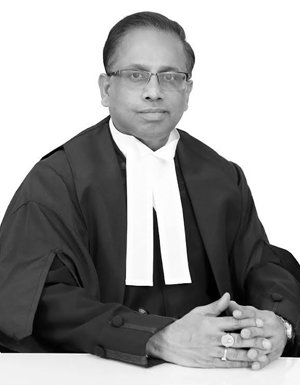
The Supreme Court of India recently delivered a crucial judgment clarifying the interpretation of Section 12 of the Gangsters Act concerning trial precedence, affirming the paramountcy of Speedy Trial Rights for both accused and victims. This significant ruling, authored by Justice K. V. Viswanathan, is now comprehensively documented and available for in-depth analysis on CaseOn.
The Supreme Court recently addressed a critical conflict between the expeditious conclusion of a murder trial and the provisions of the Uttar Pradesh Gangsters and Anti-Social Activities (Prevention) Act, 1986 (Gangsters Act). This case highlights the importance of timely justice and the proper interpretation of statutory provisions governing trial precedence.
The central question before the Supreme Court was:
The Court referred to several key legal provisions and precedents to resolve this issue:
The Supreme Court meticulously examined the facts and the High Court's reasoning, finding it flawed.
An FIR was lodged against Shankar Singh and others for the brutal murder of Raghvendra Singh (Session Trial No. 0934 of 2023). Charges were framed, and by January 2025, the prosecution had completed its evidence, with statements of the accused under Section 313 of the CrPC scheduled to be recorded. At this advanced stage, the accused filed an application to stay the murder trial, arguing that a separate case under the Gangsters Act (Gangsters Sessions Trial No. 01 of 2024), for which only a charge sheet had been filed, should take precedence under Section 12 of the Gangsters Act.
The Additional District and Sessions Judge, Lalitpur, rightly dismissed this application on March 3, 2025. The Sessions Judge noted that the murder trial was nearly complete, while the Gangsters Act trial had not even begun. Relying on Dharmendra Kirthal, the Judge concluded that Section 12 was not intended to delay trial proceedings for cases under the Gangsters Act and was not applicable in this scenario, as there was no "clash of dates" to warrant keeping the murder trial in abeyance.
Despite acknowledging the Dharmendra Kirthal precedent and the legislative intent behind Section 12 (to avoid stopping proceedings in other cases), the High Court, in its order dated August 25, 2025, contradictorily directed that the murder trial be kept in abeyance and the Gangsters Act trial expedited. The Supreme Court found this order "completely untenable."
For legal professionals seeking swift comprehension of such critical interpretations, CaseOn.in's 2-minute audio briefs provide an invaluable resource, breaking down complex rulings like this into concise, easily digestible summaries, perfect for analysis on the go.
The Supreme Court reinforced that the fundamental purpose of Section 12 is to manage simultaneous trials and prevent delays arising from conflicting court dates, not to indefinitely halt other significant criminal proceedings. It reiterated that:
In this specific instance, the murder trial was at an advanced stage (prosecution evidence concluded, S.313 statements pending), while the Gangsters Act trial had barely commenced (only a chargesheet filed). There was no actual clash of dates, making the High Court's directive to keep the murder trial in abeyance unjustified.
The Supreme Court allowed the appeal, setting aside the High Court's order dated August 25, 2025. It affirmed that the murder trial (Session Trial No. 0934 of 2023) should not have been kept in abeyance. The Court also noted that, pursuant to its interim order dated April 13, 2026, the Session Trial No. 0934 of 2023 had already concluded, and the accused stood convicted. This underscores the Supreme Court's commitment to ensuring justice is not unduly delayed.
This judgment offers crucial insights for legal practitioners and students alike:
All information provided in this article is for informational purposes only and does not constitute legal advice. For specific legal guidance, please consult with a qualified legal professional.

 Login with google
Legal Notes
Add a Note....