
As per case facts, the appellant held a Stage Carriage Permit for his vehicle on a route that overlapped a portion of the Kota-Sangod route. The State Road Transport Corporation ...
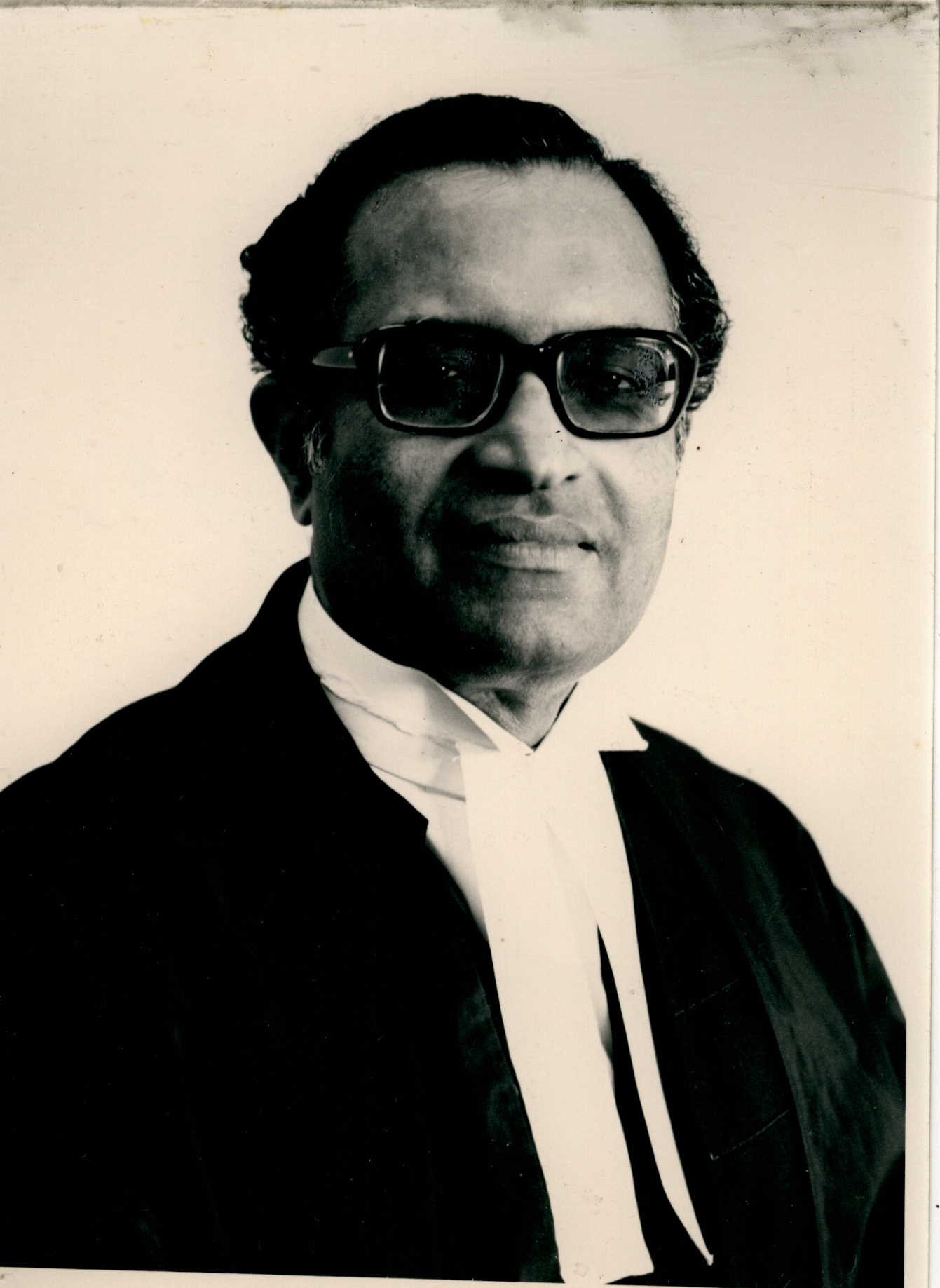
No Acts & Articles mentioned in this case
http://JUDIS.NIC.IN SUPREME COURT OF INDIA Page 1 of 10
PETITIONER:
KRISHAN KUMAR
Vs.
RESPONDENT:
STATE OF RAJASTHAN AND ORS.
DATE OF JUDGMENT09/08/1991
BENCH:
SINGH, K.N. (J)
BENCH:
SINGH, K.N. (J)
SAWANT, P.B.
CITATION:
1992 AIR 1789 1991 SCR (3) 500
1991 SCC (4) 258 JT 1991 (3) 470
1991 SCALE (2)352
ACT:
Motor Vehicles Act, 1939--Section 68C--Notification dated
11. 10. 1979 to make a notified route--Delay due to conduct
of affected parties by approaching the Government and the
High Court--Coming into force of the new Act (The Motor
Vehicles Act, 1988) w.e.f. 1.7.1989--Final notification
dated 29.8. 1990 u/s. 100(3) of the new Act--Whether notifi-
cation dated 11. 10. 1979 lapsed or whether within limita-
tion.
Motor Vehicles Act. 1988--Sections 100, 217(2)--Object
of--Pending scheme under Section 68C of the old Act (The
Motor Vehicles Act, 1939)--Final notification issued under
Section 100(3) of the new Act--Limitation--Computation.
Motor Vehicles Act, 1988--Sections 100, 217(2)--Harmoni-
ous construction--Reasons indicated.
Interpretation of Statutes--Harmonious
Construction--Motor Vehicles Act, 1988--Sections 100 and
217(2).
HEADNOTE:
The appellant held a Stage Carriage Permit for plying
his vehicle on the Kota-Khanpur route, which overlaps a
portion of the KotaSangod route. The State Road Transport
Corporation vide Notification dated 11.10.1979 proposed a
scheme under Section 68-C of the Motor Vehicles Act 1939 for
the exclusive operation of its vehicles on the Kota-Sangod
route.
The affected operators of the route, including the
appellant, filed their objections against the scheme before
the authority appointed by the State Government which ap-
proved the scheme.
Before the State Government could issue the final Noti-
fication under Section 68-D(3) of the old Act, the appellant
and other affected operators made representation to the
Minister for Transport for affording them a fresh opportuni-
ty of hearing.
501
Meanwhile, the Motor Vehicles Act 1988 was enforced with
effect from 1.7.1989 repealing the old Act.
The appellant, thereupon, filed a writ petition before
the High Court for restraining the State Government from
http://JUDIS.NIC.IN SUPREME COURT OF INDIA Page 2 of 10
issuing the final Notification on the ground that on the
enforcement of the new Act, the Notification dated
11.10.1979 issued under Section 68-C of the old Act had
lapsed on account of delay in finalisation of the same.
A similar writ petition had been filed earlier in re-
spect of Kishangarh-Sarwad route by one affected party, on
similar grounds. A learned Single Judge of the High Court
dismissed that writ petition holding that the draft scheme
under the old Act was saved by the new Act and the same
could legally be finalised under the provisions of the new
Act. When he filed a Letters Patent Appeal, the Division
Bench dismissed the Appeal as well as the various writ
petitions including that of the appellant by a common order,
against which the present appeal was made.
After the judgment of the High Court, the final notifi-
cation was published in the Official Gazette on 29.8.1990
u/s. 100(3) of the new Act.
The appellant, contended before the Court that since
there was undue delay of 11 years in issuing the final
Notification, the scheme as proposed under Section 68-C of
the old Act should be deemed to have lapsed and the State
Government had no authority or jurisdiction to finalise the
same or to issue Notification under Section 100(3) of the
new Act; that since the draft scheme dated 11.10.1979 was
not finalised under Section 100(3) of the new Act, the same
had lapsed after one year from the date of the notification
issued u/s. 68-C of the old Act; and that since period of
one year had already expired from the date of the publica-
tion of the scheme under Section 68-C of old Act, the scheme
automatically lapsed and the same could not be finally
published under Section 100 of the new Act.
Dismissing the appeal this Court,
HELD: 1.1. The object and purpose of Section 100(4) is
to avoid delay in finalising a scheme. The Parliament was
aware that under the old Act schemes were not finalised for
long years as a result of which public interest suffered,
therefore, it prescribed a time frame for the approval and
publication of schemes. Sub-section (4) prescribes a period
of limitation during which the State Government should hear
502
and consider the objections of the objectors and finalise
the scheme and publish the same in the Official Gazette and
on its failure to do so within that period, penal conse-
quences would ensue as a result of which the scheme itself
shall stand lapsed. [507H-508A, 507F-G]
1.2. The Legislative intent is clear that the schemes
proposed under Section 68-C of the old Act pending on the
date of the commencement of the new Act should not lapse
instead those schemes should be finalised in accordance with
the provisions of Section 100 of the new Act. The pending
schemes were therefore saved and the same were to be fina-
lised within one year as contemplated by Section 100(4) of
the new Act. [509C-D]
1.3. Section 217(2)(e) has been enacted to save the
schemes published under Section 68-C of the old Act which
were pending on the date of the commencement of the Act with
a further direction that the same shall be finalised in
accordance with Section 100 of the Act. [510C ]
1.4. If the period of one year from the date of the
publication of proposed scheme is applied to the pending
schemes under Section 68-C of the old Act, the purpose and
object of saving the old schemes under Clause (e) of Section
217(2) of the new Act would be frustrated. [509E-F]
2.1. While Section 217(2)(e) permits finalisation of a
scheme in accordance with Section 100 of the new Act, sub-
http://JUDIS.NIC.IN SUPREME COURT OF INDIA Page 3 of 10
section (4) of Section 100 lays down that a scheme if not
finalised within a period of one year shall be deemed to
have lapsed. If the period of one year as prescribed under
Section 100(4) is not computed from the date of publication
of the scheme under Section 68-C of the old Act and instead
the period of one year is computed from the date of com-
mencement of the Act, both the provisions could be given
full effect. [510F-H]
2.2. While in the case of a scheme under Section 68-C of
the old Act, pending on the date of enforcement of the new
Act, namely, 1.7.1989, the period of one year as prescribed
under Section 100(4) should be computed from the date of
commencement of the new Act. [511D-E]
2.3. The appellant was himself responsible for the delay
therefore he is not entitled to complain for the delay.
Delay would not automatically render the scheme illegal.
[500G]
2.4. Since under the old Act no time frame was pre-
scribed for finalising a scheme penal consequences could not
ensue. Under the old
503
Act a scheme proposed u/s. 68 could continue to remain in
force till it was quashed. [505G-H]
2.5. Since the scheme proposed on 11.10.1979 had not
been quashed by any Court, the same continued to be in force
on the date of commencement of the new Act. In the absence
of any provision in the old Act rendering the scheme inef-
fective on the ground of delay, the scheme proposed u/s.
68-C of the old Act could not lapse ipso facto. [505H-506A]
2.6. In the instant case stay order passed by the High
Court remained in force from May to 9th August, 1990. On the
exclusion of that period the final Notification issued by
the State Government under Section 100(3) of the new Act on
29.8.1990 was well within the prescribed period. [512C-D]
Yogeshwar Jaiswal etc. v. State Transport Appellate
Tribunal & Ors., AIR 1985 SC 516; Onkar Singh & Ors. v.
Regional Transport Authority, Agra & Ors., [1986] 3 SCC 259;
Devki Nandan v. State of Rajasthan & Ors., [1987] SUPPL. SCC
438 and Srichand v. Government of U.P., [1985] 4 SCC 169,
distinguished.
Santosh Kumar & Ors. v. Regional Transport Authority,
CMWP No. 21773/89, decided on 16th March, 1990, over-ruled.
3. Where there appears to be inconsistency in two sec-
tions of the same Act, the principle of harmonious construc-
tion should be followed in avoiding a head on clash. It
should not be lightly assumed that what the Parliament has
given with one hand, it took away with the other. The provi-
sions of one section of statute cannot be used to defeat
those of another unless it is impossible to reconcile the
same. The essence of harmonious construction is to give
effect to both the provisions.
Venkataramana Devaru v. State of Mysore, AIR 1958'SC 225
at p. 268.-Followed.
JUDGMENT:
CIVIL APPELLATE JURISDICTION: Civil Appeal No. 3 165 of
1991.
From the Judgment and Order dated 9.8.90 of the Rajas-
than High Court in W.P. No. 2009/90.
V.A. Bobde, and Mrs. Rani Chhabra for the Appellant.
504
Satish Kr. Jain and Mrs. Pratibha Jain for the Respondents.
The Judgment of the Court was delivered by
http://JUDIS.NIC.IN SUPREME COURT OF INDIA Page 4 of 10
SINGH, J. Special leave granted.
This appeal is directed against the judgment and order
of the High Court of Rajasthan dated 9.8. 1990 dismissing
the appellant's writ petition made under Article 226 of the
Constitution challenging the scheme for nationalisation of
the route in dispute.
The appellant holds a Stage Carriage Permit for plying
his vehicle on the Kota-Khanpur route, which overlaps a
portion of the KotaSangod route. The Rajasthan State Road
Transport Corporation, Jaipur issued a Notification on
11.10. 1979 proposing a scheme under Section 68-C of the
Motor Vehicles Act, 1939 (hereinafter referred to as the
'old Act') for the exclusive operation of the vehicles of
the State Road Transport Corporation on the Kota-Sangod
route. The existing operators as well as the affected opera-
tors of the route filed their objections before the hearing
authority appointed by the State Government of Rajasthan.
The hearing authority after considering those objections
approved the scheme under Section 68-D (2) of the old Act by
its order dated 30.11. 1984 and submitted the papers to the
State Government for the issue of Notification under Section
68--D (3). Before the State Government could issue Notifica-
tion under Section 68-1) (3) of the old Act, the appellant
and other affected operators made representation to the
Minister for Transport for affording them a fresh opportuni-
ty of hearing. As a result of which no final Notification
under Section 68-D (3) could be issued. Meanwhile, the Motor
Vehicles Act. 1988 (hereinafter referred to as the new Act)
was enforced with effect from 1.7. 1989 and the old Act was
repealed. The appellant thereupon filed a writ petition
before the High Court under Article 226 of the Constitution
for the issue of Mandamus restraining the State Government
from issuing the final Notification, mainly on the ground
that on the enforcement of the new Act, the Notification
dated 11. II). 1979 issued under Section 68-C of the old Act
had lapsed on account of delay in finalisation of the same.
A similar writ petition had been filed earlier in respect of
Kishangarh-Sarwad route by one Sardar Mohd. on similar
grounds. A learned single Judge of the High Court dismissed
that writ petition holding that the draft scheme under the
old Act was saved by the new Act and the same could legally
be finalised under the provisions of the new Act. Sardar
Mohd. filed a Letters Patent Appeal against the judgment of
the learned single Judge. A
505
Division Bench of the High Court disposed of the Letters
Patent Appeal of Sardar Mohd. as well as the various writ
petitions including that of the appellant by a common order
dated 9.8. 1990 impugned in the present appeal.
After the impugned judgment of the High Court, the State
Government approved the Scheme as proposed under 68-C of the
old Act. Final notification approving this Scheme was pub-
lished in the Official Gazette on 29.8.1990 u/s 100(3) of
the new Act, as a result of which the Kota-Sangod route has
become a notified route, consequently the appellant has no
right to ply his vehicle on the overlapping portion of that
route.
Learned counsel for the appellant urged that since there
was undue delay of 11 years in issuing the final Notifica-
tion, the scheme as proposed under Section 68-C of the old
Act should be deemed to have lapsed and the State Government
had no authority or jurisdiction to finalise the same or to
issue Notification under Section 100(3) of the new Act. He
placed reliance on a number of decisions of this Court in
support of his contention that unreasonable delay in fina-
http://JUDIS.NIC.IN SUPREME COURT OF INDIA Page 5 of 10
lising a scheme proposed under Section 68-C of the old Act
rendered the same illegal. He referred to the decisions of
this Court in Yogeshwar Jaiswal etc. v. State Transport
Appellate Tribunal & Ors., AIR 1985 SC 5 16; Onkar Singh &
Ors. v. Regional Transport Authority, Agra & Ors., [1986] 3
SCC 259; Devki Nandan v. State of Rajasthan & Ors., [1987]
Suppl. SCC 438 and Srichand v. Government of U.P., [1985] 4
SCC 169. No doubt in these decisions the Court quashed the
schemes proposed under Section 68-C of the old Act on the
ground of inordinate delay for which there was no valid
explanation. In the instant case, the proposed scheme had
been approved by the hearing authority under Section 68-D
(2) of the old Act in 1984 within five years of the proposal
of the scheme but when the matter was placed before the
State Government for issue of final Notification Under
Section 68-D (3) of the old Act, the appellant and other
affected operators approached the Minister for Transport and
stalled the issue of final Notification as a result of which
delay was caused. The appellant was himself responsible for
the delay therefore he is not entitled to complain of the
delay. Moreover this Court has not ruled in the aforesaid
decisions, or in any other decision that delay would auto-
matically render the scheme illegal. Since under the old Act
no time frame was prescribed for finalising a scheme penal
consequences could not ensue. Under the old Act a scheme
proposed u/s 68 could continue to remain in force till it
was quashed. Since the scheme proposed on 11.10.1979 had not
been
506
quashed by any Court, the same continued to be in force on
the date of commencement of the new Act. In the absence of
any provision in the old Act rendering the scheme ineffec-
tive on the ground of delay, the scheme proposed u/s 68-C
of the old Act could not lapse ipso facto. Moreover, now
the State Government has already issued final Notification
under Section 100(3) of the new Act on 29.8. 1990, as a
result of which the route has been notified. In this view
ratio of the aforesaid decisions of the Court are not
applicable to the instant case at this stage.
Learned counsel for the appellant urged that under
Section 100(4) of the new Act, if a draft scheme is not
finalised and the final notification is not issued within
one year from the date of the publication of the proposed
scheme, the same would lapse. Since in the instant case the
draft scheme dated 11.10.1979 was not finalised under Sec-
tion 100(3) of the new Act the same had lapsed after one
year from the date of the notification issued u/s 68-C of
the old Act. In order to appreciate this contention it is
necessary to consider the relevant provisions of the new
Act. Chapter VI of the new Act contains special provisions
relating to State Transport Undertakings. Section 99 confers
power on the State Government to propose a scheme for oper-
ating the vehicles of the State Transport Undertakings to
the exclusion of other persons. The proposed scheme is
published in the Gazette. Section 100 which provides for
filing of the objections before the State Government and the
issue of final notification, is as under:
"100. Objection to the proposal--
(1) on the publication of any proposal regard-
ing a scheme in the Official Gazette and in
not less than one newspaper in the regional
language circulating in the area or route
which is to be covered by such proposal any
person may, within thirty days from the date
of its publication in the Official Gazette,
http://JUDIS.NIC.IN SUPREME COURT OF INDIA Page 6 of 10
file objections to it before the State Govern-
ment.
(2) The State Government may, after consider-
ing the objections and after giving an oppor-
tunity to the objector or his representatives
and the representatives of the State Transport
Undertaking to be heard in the matter, if they
so desire, approve or modify such proposal.
(3) The scheme relating to the proposal as
approved or
507
modified under sub-section (2) shall be pub-
lished in the Official Gazette by the State
Government making such scheme and in not less
than one newspaper in the regional language
circulating in the area or route covered by
such scheme and the same shall thereupon
become final on the date of its publication in
the Official Gazette and shall be called the
approved scheme and the area or route to which
it relates shall be called the notified area
or notified route:
Provided that no such scheme which relates to
any interState route shall be deemed to be an
approved scheme unless it has the previous
approval of the Central Government.
(4) Notwithstanding anything contained in this
section, where a scheme is not published as an
approved scheme under sub-section (3) in the
Official Gazette within a period of one year
from the date of publication of the proposal
regarding the scheme in the Official Gazette
under sub-section (1), the proposal shall be
deemed to have lapsed.
Section 100 provides for filing of objections before the
State Government within 30 days from the date of the publi-
cation of the proposed scheme in the Official Gazette. Under
sub-section (2) the State Government may approve or modify
the proposed scheme after considering the objections and
hearing the objectors. Under sub-section (3) the State
Government is required to publish the approved scheme in the
Official Gazette and also in one newspaper. On the publica-
tion of the approved scheme in the Official Gazette, the
area or route to which it relates shall be called the noti-
fied area or notified route. Sub-section (4) lays down that
if a scheme is not published as an approved scheme in the
Gazette within one year from the date of publication of the
proposed scheme in the Official Gazette, the proposed scheme
shall be deemed to have lapsed. Sub-section (4) in our
opinion prescribes a period of limitation during which the
State Government should hear and consider the objections of
the objectors and finalise the scheme and publish the same
in the Official Gazette and on its failure to do so with in
that period, penal consequences would ensue as a result of
which the scheme itself shall stand lapsed. The object and
purpose of Section 100(4) is to avoid delay in finalising a
scheme. The Parliament was aware that under the old Act
schemes were not
508
finalised for long years as a result of which public inter-
est suffered, therefore, it prescribed a time frame for the
approval and publication of schemes.
The provisions of Section 100 are applicable to the
schemes proposed under the new Act. The question is whether
it would apply to a scheme proposed under Section 68-C of
http://JUDIS.NIC.IN SUPREME COURT OF INDIA Page 7 of 10
the old Act. The Legislature was conscious that a number of
schemes proposed under the old Act were pending approval on
the date of the commencement of the Act, it therefore made a
provision for saving those schemes by enacting Section 2 17
of the Act, which is as under:
"217. Repeal and savings--(1) The Motor Vehi-
cles Act, 1939 (4 of 1939) and any law corre-
sponding to that Act in force in any State
immediately before the commencement of this
Act in that State (hereinafter in this Section
referred to as the repealed enactments) are
hereby repealed.
(2) Notwithstanding the repeal by
sub-section (1) of the repealed enactments--
(a) any notification, rule, regula-
tion, order or notice issued, or any appoint-
ment or declaration made or exemption granted,
or any confiscation made, or any penalty or
fine imposed, any forfeiture cancellation or
any other thing done, or any other action
taken under the repealed enactments, and in
force immediately before such commencement
shall, so far as it is not inconsistent with
the provisions of this Act, be deemed to have
been issued, made, granted, done or taken
under the corresponding provision of this Act;
......................................
.....................................
(e) any scheme made under section 68-C of the
Motor Vehicles Act, 1939 (4 of 1939) or under
the corresponding law, if any, in force in any
State and pending immediately before the
commencement of this Act shall be disposed of
in accordance with the provisions of section
100 of this Act;
(f) the permits issued under sub-section (I-A)
of section 68-F of the Motor Vehicles Act,
1939 (4 of 1939), or under
509
the corresponding provisions, if any, in force
in any State immediately before the commence-
ment of this Act shall continue to remain in
force until the approved scheme under Chapter
VI of this Act is published.
...................................
Under sub-section (1) the old Act has been repealed but
under subsection (2) inspite of repeal the Parliament has
made provisions for saving the schemes proposed under Sec-
tion 68-C of the old Act. Clause (e) of Section 217 (2) of
the new Act provides that notwithstanding the repeal of the
old Act a scheme proposed under Section 68-C of the old Act,
if pending immediately before the commencement of the Act
shall be finalised in accordance with the provisions of
Section 100 of the new Act. The Legislative intent is clear
that the. schemes proposed under Section 68-C. of the old
Act pending on the date of the commencement of the new Act
should not lapse instead those schemes should be finalised
in accordance with the provisions of Section 100 of the new
Act. The pending schemes were therefore saved and the same
were to be finalised within one year as contemplated by
Section 100 (4) of the new Act. Section 100 (4) lays down
that if the proposed scheme is not finalised within one year
from the date of its publication in the Official Gazette, it
shall be deemed to have lapsed but that applies to a scheme
proposed under the new Act and not to a scheme proposed
http://JUDIS.NIC.IN SUPREME COURT OF INDIA Page 8 of 10
under Section 68-C of the old Act. If the period of one year
from the date of the publication of the proposed scheme is
applied to the pending schemes under Section 68-C of the old
Act, the purpose and object of saving the old schemes under
Clause (e) of Section 2 17 (2) of the new Act would be
frustrated.
Learned counsel for the appellant urged that since Section
17(2)(e) provides for the finalisation of a pending scheme
published under the old Act in accordance with the provi-
sions of Section 100 of the new Act, the period of limita-
tion of one year prescribed under sub-section (4) of that
section would also apply. He further urged that since period
of one year had already expired from the date of the publi-
cation of the scheme under Section 68-C of old Act, the
scheme automatically lapsed and the same could not be final-
ly published under Section 100 of the Act.
If the appellant's contention is accepted the schemes
published under Section 68-C of the old Act would lapse
after the expiry of the period of one year from the date of
the publication of the scheme in
510
the Official Gazette in accordance with the provisions of
the old Act. On the other hand we find that Section 2
17(2)(e) permits finalisation of a scheme published under
Section 68-C of the old Act if the same was pending on the
date of the commencement of the new Act. The old Act did.
not provide any period of limitation consequently a number
of schemes published under Section 68-C of the old Act were
pending on the date of commencement of the new Act although
a period of one year had already expired. If the Parliament
intended to apply the limitation of period of one year to
the pending schemes published under Section 68-C of the old
Act, the new Act could have made provisions to that effect.
On the contrary Section 217(2)(e) has been enacted to save
the schemes published under Section 68-C of the old Act
which were pending on the date of the commencement of the
Act with a further direction that the same shall be fina-
lised in accordance with Section 100 of the Act. Sub-section
(4) of Section 100 provides that where a scheme is not
published as approved under sub-section (3) within period of
one year from the date of publication of the proposal in the
Official Gazette under sub-section (1), the proposal shall
be deemed to have lapsed. A scheme published under Section
68-C of the old Act pending on the date of commencement of
the Act could not be a scheme proposed under sub-section (1)
of Section 100, therefore, the rigour of period of one year
as applicable to a scheme proposed under sub-section (1) of
Section 100 could not apply to a scheme under Section 68-C
pending on the date of commencement of the Act. It was not
meant that a scheme u/s 68-C of the old Act pending on the
date of commencement of the new Act may be approved or
finalised with leisure without any time limit.
There appears to be some apparent conflict between
Section 100(4) and Section 217(2)(e) of the Act. While
Section 217(2)(e) permits finalisation of a scheme in ac-
cordance with Section 100 of the new Act sub-section (4) of
Section 100 lays down that a scheme if not finalised within
a period of one year shall be deemed to have lapsed. If the
appellant's contention is accepted then Section 217(2)(e)
will become nugatory and no scheme published under Section
68-C of the old Act could be finalised under the new Act. On
the other hand if the period of one year as prescribed under
Section 100(4) is not computed from the date of publication
of the scheme under Section 68-C of the old Act and instead
the period of one year is computed from the date of com-
http://JUDIS.NIC.IN SUPREME COURT OF INDIA Page 9 of 10
mencement of the Act both the provisions could be given full
effect.
It is settled principle of interpretation that where there
appears
511
to be inconsistency in two sections of the same Act, the
principle of harmonious construction should be followed in
avoiding a head on clash. It should not be lightly assumed
that what the Parliament has given with one hand, it took
away with the other. The provisions of one section of stat-
ute cannot be used to defeat those of another unless it is
impossible to reconcile the same. In Venkataramana Devaru v.
State of Mysore, AIR 1958 SC 225 at p. 268, this Court
observed:
"The rule of construction is well-settled that
when there are in an enactment two provisions
which cannot be reconciled with each other,
they should be so interpreted that, if possi-
ble, effect should be given to both. This is
what. is known as the rule of harmonious
construction."
The essence of harmonious construction is to give effect to
both the provisions. Bearing these principles in mind it is
legitimate. to hold that Section 100(4) prescribed period of
limitation of one year in respect the scheme proposed under
the provisions of the new Act, while in they case of a
scheme under Section 68-C of the old Act, pending on the
date of enforcement of the new Act, namely, 1.7. 1989, the
period one year as prescribed under Section 100(4) should be
computed from the date of commencement of the new Act. This
interpretation would give full effect to both the
Sections--Section 100(4) and Section 2 17(2)(e) of the new
Act.
Learned counsel for the appellant placed reliance on a
Division Bench decision of the Allahabad High Court in
Santosh Kumar & Ors. v. Regional Transport Authority, CMWP
No. 2 1773/89, decided on 16th March, 1990. In that case a
Division Bench of Allahabad High Court held that a draft
scheme under Section 68-C of the old Act published in 1986
shall be deemed to have lapsed on the date of the enforce-
ment of the new Act in view of the absolute prohibition
contained in Section 100(43 of the new Act against the
continuance of any scheme after one year. We have gone
through the judgment of the Division Bench carefully but in
our opinion the view taken by the High Court of Allahabad is
unsustainable in law. The learned Judges constituting the
Bench failed to notice the legislative intendment under
Section 217(4)(e) of the new Act which kept alive the scheme
published under Section 68-C of the old Act for the purposes
of being finalised under the new Act. We are therefore
clearly of the opinion that the view taken by the Allahabad
High Court is incorrect.
In the instant ease, the appellant had filed a writ petition
in May,
512
1990 and obtained an interim order from the High Court
restraining the State Government from publishing the final
Notification under Section 100(3) of the new Act. The State
Government published the final notification under Section
100(3) of the new Act on 29.8. 1990 after the dismissal of
the writ petition by the Division Bench of the High Court.
The period of one year with regard to the pending scheme
expired on 1.7.1990 but since the appellant had obtained
stay order from the High Court, the State Government could
not publish final notification. Explanation to Section
http://JUDIS.NIC.IN SUPREME COURT OF INDIA Page 10 of 10
100(4) of the new Act lays down that in computing the period
of one year any period during which the publication of the
approved scheme under Section 100 is held up on account of
any stay or order of any court, shall be excluded. On the
application of the Explanation the period during which the
appellant had obtained stay order against the State Govern-
ment is liable to be excluded in computing the period of one
year. Admittedly in the instant case stay order passed by
the High Court remained in force from May to 9th August,
1990. On the exclusion of that period the final notification
issued by the State Government under Section 100(3) of the
new Act on 29.8.1990 was well within the prescribed period.
In view of the above discussion, we are of the opinion
that the High Court rightly dismissed the appellant's writ
petition. The appeal fails and is accordingly dismissed with
costs.
V.P.R. Appeal
dismissed.
513

 Login with google
Legal Notes
Add a Note....