
As per case facts, petitioners underwent secondary grade teachers training in institutes that had recognition but were later de-recognized. After taking their public examination, their results were withheld, and no ...

No Acts & Articles mentioned in this case
http://JUDIS.NIC.IN SUPREME COURT OF INDIA Page 1 of 7
PETITIONER:
L. MUTHUKUMAR AND ANOTHER
Vs.
RESPONDENT:
THE STATE OF TAMIL NADU AND OTHERS
DATE OF JUDGMENT: 28/09/2000
BENCH:
M. Jagannadha Rao & Shivaraj V. Patil
JUDGMENT:
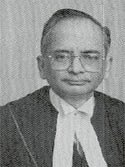
Shivaraj V. Patil,J.
L...I...T.......T.......T.......T.......T.......T.......T..J
Since these petitions raise common questions based on
similar set of facts they are being disposed of by this
common judgment.
The petitioners filed their respective writ petitions
against the respondents praying for the publication of their
results and to issue diploma in teachers training,
contending that on successful completion of the higher
secondary they underwent secondary grade teachers training
in different training institutes between the period 1989 to
1991; they had taken public examination in May, 1992 but
their results were not published and certificates were not
awarded. The institutes in which they had undergone
training course had recognition but the same was withdrawn
subsequently. The learned single Judge dismissed the writ
petitions following the judgment of the Division Bench of
the High Court in P.M. Joseph vs. The State of Tamil Nadu
and others (Writ Petition No. 9494 of 1992). Writ appeals
filed against the order of learned single Judge were also
dismissed affirming the view taken by the learned single
Judge stating that the petitioners were only entitled to get
the results declared and were not entitled to get mark
sheets or diplomas/certificates as the institutes in which
they had undergone training were de- recognized. Hence
these petitions are brought before us in this Court.
The learned counsel for the petitioners urged: -
1. The petitioners having undergone the training course
in the institutions, which had recognition on the date of
public examination, could not be deprived of their right to
obtain mark sheets and diplomas/certificates merely on the
ground that those institutes were de-recognized by virtue of
a decision rendered by the High Court subsequent to the
public examination.
2. The treatment of the respondents was unfair and
discriminatory in the case of the petitioners inasmuch as to
few others similarly placed the respondents have given
diplomas/certificates although with an endorsement that they
have undergone training in unrecognized institutes.
The learned counsel for the respondents made submissions
supporting the orders impugned in these petitions.
http://JUDIS.NIC.IN SUPREME COURT OF INDIA Page 2 of 7
In order to appreciate the rival contentions we consider
it useful to refer to the decision in P.M. Joseph's case
(supra). In the said judgment the Division Bench of the
High Court in para 11 has stated thus: -
"11. We have no doubt that orders or recognition were
granted only on extraneous considerations as alleged by the
petitioner. We have already referred to the express
allegation in paragraph 20 of the petitioner's affidavit
that a few officials working in the Secretariat and the
Director of School Education issued the orders of
recognition as dictated by the Hon'ble Minister for
Education. We doubt, the Minister is not a party to this
writ petition and we may not be able to investigate the said
allegation as against him. But, the Secretary to Government
is representing the State as first respondent and the
Director of School education is the second respondent. They
have not chosen to deny the said allegations in their
counter affidavits. The facts referred to by us above as
called out from Annexures V and VI filed by the Government
at our instance, clearly show that the orders of recognition
were passed only on a specific direction from a person in
the higher echelons at the ministerial level. Otherwise,
the officials, who are before us, would not have been bold
enough to pass such orders in utter violation of the
provisions of G.O.Ms. Nos.535 and 536 dated 17.5.1989 as
well as the rules which were in force prior to the passing
of the said G.O.s. Thus, the Government, to say the least,
played havoc in the matter of Teacher Training Education and
ruined the same. The direct impact would necessarily be on
the Secondary Grade Education, as the holders of the Diploma
in Teachers Training Education are the persons who are to
handle the classes I to VIII in Secondary Grade Schools.
The Government has not only failed to do its duty but is
guilty of gross abuse of powers."
As is evident from the paragraph 14 of the same judgment
that a contention similar to the contention No. 1, urged
before us in this case, was raised but it was negatived.
The position as to whether the candidates like the
petitioners were entitled for the issue of a diploma or
certificate was abundantly made clear in paragraph 22 of the
said judgment, which reads: -
"22. It may be said that only some of the institutions
listed in Annexure V and VI are bogus institutions and the
remaining are genuine. But it has been established now that
none of the institutions excepting Annai Sathya Teacher
Training Institute for Women has fulfilled the requirements
of the rules. Hence, we are constrained to quash all the
orders of recognition passed by the Government and setout in
Annexure V and VI excepting G.O.No.(2B) 6, Education (VI)
dated 8-1-1992 in favour of Annai Sathya Teacher Training
Institute (W), Periya Kumitti, South Arcot District shown in
item No. 115 in Annexure V. If any of the institutions has
since fulfilled the requirements of the rules, it is open to
them to satisfy the authorities to that effect and seek
orders of recognition. If the students of the institutions
where recognition has been quashed, have already written the
examinations, the results thereof shall be published by the
respondents. But, the publication will not confer any right
whatever on the institutions or their students to get any
consequential relief or benefit such as issue of diploma or
certificate of this writ petition, and of an sitting singly
http://JUDIS.NIC.IN SUPREME COURT OF INDIA Page 3 of 7
dismissed W.M.P. 13729 of 1992 filed by the petitioner for
injunction restraining the publication of results of the
examinations held in May, July and August, 1992. The
petitioner filed W.A. No. 1209 of 1992 against the said
order and the First Bench of this Court passed an order on
23.9.1992 in C.M.P. Nos. 12839 and 12840 of 1992
restraining the respondents from issuing certificates to the
candidates who wrote the examinations until further orders
while permitting them to declare the results of the
examinations. In the circumstances, we direct the students
of the institutions, the recognition of which has now been
quashed, by this order, are not entitled to get certificates
or diplomas from the respondents."
(Emphasis supplied)
This Court in St. John's Teachers Training Institute
(for women), Madurai and others vs. State of Tamil Nadu and
others dealing with conditions for recognition of minority
teachers training institutes laid down under Tamil Nadu
Minority Schools (Recognition and Payment of Grant) Rules,
1977, in para 9 has stated thus: -
"9. The High Court rightly emphasised the need for
maintaining very high standards of Education, Sports,
administration and maintenance of the Teachers Training
Institutes. These Institutions are established with the
avowed object of training teachers and educationists who
have to shoulder the responsibility of moulding the nation.
This Court in N.M. Nageshwaramma v. State of Andhra
Pradesh & Anr. [1986] Supp SCC 166 observed as under: -
"The Teachers Training Institutes are meant to teach
children of impressionable age and we cannot let loose on
the innocent and unwary children, teachers who have not
received proper and adequate training. True they will be
required to pass the examination but that may not be enough.
Training for a certain minimum period in a properly
organized and equipped Training Institute is probably
essential before a teacher may be duly launched."
Jagannatha Shetty, J. speaking for this Court in Andhra
Kesari Educational Society v. Director of School Education
& Ors. J.T. (1988) 4 S.C. 431 observed as under:
"Though teaching is the last choice in the job market,
the role of teacher is central to all processes of formal
education. The teacher alone could bring out the skills and
intellectual capabilities of students. He is the 'engine'
of the educational system. He is a principal instrument in
awakening the child to cultural values. He needs to be
endowed and energised with needed potential to deliver
enlightened service expected of him. His quality should be
such as would inspire and motivate into action the
benefitter. He must keep himself abreast of ever changing
conditions. He is not to perform in a wooden and
unimaginative way. He must eliminate fissiparous tendencies
and attitudes and infuse nobler and national ideas in
younger minds. His involvement in national integration is
more important, indeed indispensable. It is, therefore,
needless to state that teachers should be subjected to
rigorous training with rigid scrutiny of efficiency. It has
greater relevance to the needs of the day. The ill trained
or sub- standard teachers would be detrimental to our
educational system; if not a punishment on our children.
http://JUDIS.NIC.IN SUPREME COURT OF INDIA Page 4 of 7
The Government and the University must, therefore, take care
to see that inadequacy in the training of teachers is not
compounded by any extraneous consideration."
In State of Maharashtra v. Vikas. Sahebrao Roundale &
Ors.,.J.T (1992) 5 S.C. 175, K. Ramaswamy, J. speaking
for this Court observed as under: -
"The teacher plays pivotal role in moulding the career,
character and moral fibres and aptitude for educational
excellence in impressive young children. The formal
education needs proper equipment by the teachers to meet the
challenges of the day to impart lessons with latest technics
to the students on secular, scientific and rational outlook.
A well-equipped teacher could bring the needed skills and
intellectual capabilities of the students in their pursuits.
The teacher is adorned as Gurudevobhava, next after parents,
as he is a Principal instrument to awakening the child to
the cultural ethos, intellectual excellence and discipline.
The teachers, therefore, must keep abreast ever changing
technics, the needs of the society and to cope up with the
psychological approach to the aptitudes of the children to
perform that pivotal role. In short teachers need to be
endowed and energised with needed potential to serve the
needs of the society. The qualitative training in the
training colleges or schools would inspire and motivate them
into action to the benefit of the students. For equipping
such trainee students in a school or a college all
facilities and equipments are absolutely necessary and
institutions bereft thereof have no place to exist nor
entitled to recognition. In that behalf compliance of the
statutory requirement is insisted upon. Slackening the
standard and judicial fiat to control the mode of education
and examining system are detrimental to the efficient
management of the education."
As can be seen from paragraph 16 in the said case also
learned senior counsel representing the parties pleaded that
the results of the students, who had already taken the
examinations, be directed to be declared and if successful,
certificates be awarded to them. Not accepting the said
argument this Court in para 19 has held thus: -
"19. We see no ground to differ with the view taken by
the High Court. This court in N.M. Nageshramma's case
(supra) has held that training in a properly organised and
equipped training institute is essential before a candidate
becomes qualified to receive teachers training certificate.
Simply passing the examination is not enough. The future
teachers of the country must pass through the institutions
which have maintained standards of excellence at all
levels."
Thus looking to the decision of the Division Bench of
the High Court in P.M. Joseph's case and the decision of
this Court in St. John's Teachers Training Institute's case
abovementioned, it is clear that even the candidates who had
written the examination at the time when their institutes
had recognition, were not entitled for diplomas/certificates
consequent upon de- recognition of their institutions
subsequently and that such candidates were only entitled for
publication of the results of the examination taken and
nothing more.
http://JUDIS.NIC.IN SUPREME COURT OF INDIA Page 5 of 7
The learned single Judge in these cases of the
petitioners, consistent with the legal position covered by
the decisions aforementioned was right in taking the view
that the petitioners were entitled only for the declaration
of the results of the examination and on account of
subsequent de-recognition of the institutes in which they
underwent training courses were not entitled for issuance of
mark sheets or diplomas. The Division Bench of the High
Court had no good reason to disturb the orders passed by the
learned single Judge.
The learned counsel for the petitioners relied on a
decision of the same learned single Judge of the High court
in the case of Jhansi Rani and others vs. The Secretary,
The Director of Government Examinations, Chennai and others
. In our view this decision does not help the petitioners.
That was a case in which petitioners sought a writ of
mandamus directing the respondents to issue duplicate
certificate of the teacher training examination, which was
held before 1989 contending that certificates issued to them
earlier, were lost. This judgment was delivered by the
learned single Judge on 17th November, 1997. S.S.
Subramani,J. the same learned Judge in the case of D.
Balamurugan and others vs. The State of Tamil Nadu and
others delivered judgment on 19th January, 1998 following
the case of P.M. Joseph (supra) rejecting the prayer of the
petitioners to issue mark sheet and diploma.
Yet in the case of The Director of School Education vs.
A. Dennis Lilly Burk Mary and others a Division Bench of
the same High Court has held thus: -
"It is not necessary for us to go through the history of
the Teacher Training Institutes in the State of Tamil Nadu,
except to say that they found their Waterloo when a public
interest litigation was commenced in respect of such Teacher
Training Institutes in the State and the Division Bench had
occasion to go through the entire history of the Teacher
Training Institutes in the State. Therefore, so far as the
students of the 5th respondent institute is concerned, the
question had been well and squarely decided once for all by
the Division Bench. The judgment of the Division Bench has
been acclaimed by the Apex Court and was affirmed. There is
no room for extending any sympathy in favour of such
institutes or the students, who are said to have been
trained in such institutes. In fact, this particular
school, viz., the 5th respondent - school had disobeyed
every order of the school authorities even at the time of
the grant of temporary recognition. Temporary recognition
was in fact granted only for admitting 40 students.
Admittedly the school entertained more than 200 students in
the class only to benefit themselves. Any amount of
criticism and comments by this Court only seem to fall on
deaf ears. The petitioners can only get at the hands of the
Court, direction to the respondents to publish the results
and nothing more. In other words, as observed by the
Division Bench, it is made clear that the students are not
entitled to get any certificates or diplomas from the
appellants."
(Emphasis supplied)
We may add here that, in relation to teachers training
http://JUDIS.NIC.IN SUPREME COURT OF INDIA Page 6 of 7
course, mere passing of public examination is not enough.
It must be coupled with proper training in a recognized
institute in order to get meaningful and purposeful results.
Hence the first contention urged by the learned counsel
for the petitioners, in our view, is untenable and
consequently it is rejected.
As regards second contention we asked the learned
counsel for the petitioners as to what is the use or
advantage of getting the diploma/certificate, which will
contain an endorsement that a candidate has studied in an
unrecognized institute. He submitted that might be the
candidates will get employment in some private schools. In
the counter affidavit filed by the respondents reference is
made to the case of P.M. Joseph and the case of St. John's
Teacher Training Institute and it is stated that in view of
the said judgments petitioners cannot seek direction to get
mark sheet or diploma/certificate. Further the petitioners
were bound by the Division Bench judgment of the High Court
delivered on 27.4.1993 (P.M. Joseph's case) as the
institutions in which the petitioners underwent training
courses were de-recognized and that such candidates were
only entitled to get their results of the examination
published and were not entitled for issuance of either mark
sheets or diplomas/ certificates. The petitioners could not
approach the High Court again for the same relief after a
period of six years. Paragraph 5 of the counter affidavit
reads:-
"It is therefore submitted that in view of the facts and
circumstances stated above the petitioners are not entitled
to have the indulgence of this Hon'ble Court for an order
enabling them to get mark sheet and the diploma with an
endorsement that the petitioners studied in an unrecognized
institution. It is further submitted that the said
certificate with such endorsement will not serve any purpose
to the petitioners but on the other hand the issuance of
such certificate will give room for manipulations as there
are thousands of students whose results had been declared
but they were not provided with Diploma certificate or mark
sheet as per the judgment of the Division Bench of the
Hon'ble High Court of Madras. It is respectfully submitted
that the release of mark sheets and diplomas with an
endorsement that the petitioners studied in an unrecognized
institution will also go against the verdict of the Supreme
Court. It will also be against the basic principles that
the training should be had only in fully equipped
institutions which have been duly recognized. It is likely
that the candidates may attempt to misuse such certificates.
The petitioners have no legal claim at all even for such
certificates i.e. certificates with endorsements."
Having regard to the specific stand of the respondents
and in the light of the Division Bench judgment of the High
Court in the case of the P.M. Joseph which was affirmed by
this Court in Civil Appeal Nos. 2914-16 of 1993 decided on
June 15, 1993 (St. John's Teachers Training Institute case)
aforementioned no mark sheet or diploma/certificate can be
issued. Further two special leave petitions filed against
the same judgment of the High Court (SLP No. 10110/93 and
9421/93) were also dismissed by this Court on 4.10.1993 and
19.7.1993 respectively. It is not expected that the
respondents would issue diplomas/certificates with the
http://JUDIS.NIC.IN SUPREME COURT OF INDIA Page 7 of 7
endorsement to other candidates. Assuming that in few cases
such mistakes are committed in issuing diplomas/certificates
with the endorsement that the Teacher Training Institute in
which a student studied is not recognized by the Director of
School Education, Government of Tamil Nadu, such mistakes
cannot be allowed to be repeated or perpetuated in the light
of the judicial pronouncements referred to above, which have
become final. Added to this, the institutes where the
Petitioners underwent training which were de-recognized by
virtue of judgment in P.M. Joseph's case were covered by
the said judgment. Hence the Petitioners cannot escape but
are bound by the said judgment. Their seeking writ of
mandamus for issuance of mark sheets and/or
diplomas/certificates contrary to the said judgment, that
too after a period of six years, could not be granted by the
High Court and rightly so in our opinion. We are of the
considered opinion that before teachers are allowed to teach
innocent children, they must receive appropriate and
adequate training in a recognized training institute
satisfying the prescribed norms, otherwise standard of
education and career of children will be jeopardized. In
most civilized and advanced countries, job of a teacher in
primary school is considered important and crucial one
because moulding of young minds begins in primary schools.
Allowing ill-trained teachers coming out of derecognised or
unrecognized institutes or licensing them to teach the
children of impressionable age, contrary to the norms
prescribed, will be detrimental to the interest of the
nation itself in the sense that in the process of building a
great nation, teachers and educational institutions also
play vital role. In cases like these, interest of
individuals cannot be placed above or preferred to larger
public interest. Thus considering all relevant aspects,
Petitioners' prayers cannot be granted. Hence we do not
find any substance in the second contention urged by the
learned counsel for the petitioners.
In the light of what is stated above, we do not find any
merit in these petitions. Hence these are dismissed but
without costs.

Legal Notes
Add a Note....