
As per the case facts, the appellants, who are directors of a pharmaceutical company, were involved in a case where a lower court had issued an order of process against ...

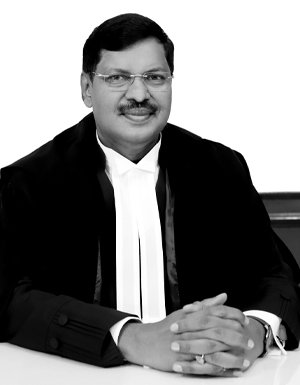
No Acts & Articles mentioned in this case
REPORTABLE
IN THE SUPREME COURT OF INDIA
CRIMINAL APPELLATE JURISDICTION
CRIMINAL APPEAL NO. 1757 OF 2022
[Arising out of SLP (Crl.) No. 8882 of 2015]
LALANKUMAR SINGH & ORS. …APPELLANT (S)
VERSUS
STATE OF MAHARASHTRA …RESPONDENT(S)
J U D G M E N T
B.R. GAVAI, J.
1.Leave granted.
2.This appeal arises out of the judgment and order dated
25
th
June 2015 passed by the learned Single Judge of the
High Court of Judicature of Bombay, at Aurangabad, in
Criminal Writ Petition No.288 of 2015, thereby dismissing
the said criminal writ petition filed by the appellants herein
and upholding the order of issuance of process dated 30
th
March 2009 passed by the learned Chief Judicial
1
Magistrate, Beed (hereinafter referred to as “the learned
CJM”) and the order passed by the learned Sessions Judge,
Beed dated 25
th
November 2014 dismissing the Criminal
Revision being Criminal Revision Petition No.115 of 2013
filed by the appellants thereagainst.
3.The facts, in brief, giving rise to the present appeal are
as under:
3.1The Appellants are the Directors of M/s Cachet
Pharmaceuticals Private Ltd. (hereinafter referred to as
“CPPL”). CPPL was granted permission to manufacture
‘Hemfer Syrup’ which falls under Schedule C & C(1) to the
Drugs & Cosmetics Rules, 1945 (hereinafter referred to as
“the said Rules”).
3.2On 30
th
August 2006, Sh. N. A. Yadav, the then Drugs
Inspector, Food and Drugs Administration, Beed,
Maharashtra, visited the premises of M/s. Priya Agencies at
Beed and purchased ‘Hemfer Syrup’, from which he had
drawn samples of the drug. On 31
st
August 2006, he sent
one such sample to the Government Analyst, Maharashtra
2
State Drug Control Laboratory Mumbai so as to have the
drug tested. On 26
th
February 2007, he received a test
report dated 13
th
February 2007 from the Government
Analyst stating that the sample was not of standard quality
as the content of Cyanocobalamin was less than the
permissible limit, i.e., 39% of the label amount. On the
same day, the manufacturer of the drug, i.e., CPPL, was
informed by a registered post about the test report.
3.3On 29
th
March 2007, Sh. Vijay Jain, Deputy Manager,
QA of CPPL requested the Drug Inspector to send the
samples again for analysis. Pursuant to an application filed
by M/s Alkem Laboratories, the distributor of CPPL, the
learned CJM, Beed sent the samples of ‘Hemfer Syrup’ for
reanalysis on 24
th
April 2007. On 10
th
July 2007, the
Learned CJM, Beed received the test report from the Central
Drug Laboratory, Calcutta stating therein that the sample
was not of standard quality as it did not conform to the
accepted limits of Cyanocobalamin content.
3
3.4Vide letter dated 21
st
August 2008, the Drug Inspector
called upon CPPL to furnish the particulars of Directors,
Articles of Association, Memorandum of Association, copies
of License to manufacture and sell drugs, particulars of
technical persons, and all such information as was needed
to be provided under the Drugs & Cosmetics Act, 1940
(hereinafter referred to as “the said Act”). In reply to this
letter, CPPL informed the Drug Inspector that the report
dated 10
th
July 2007 was signed by “InCharge Director”
and not the Director of Central Drugs Laboratory and thus
requested him to send a proper report signed by the
Director of the Central Drugs Laboratory.
3.5Vide letter dated 12
th
January 2009, the Drug
Inspector again called upon CPPL to furnish particulars that
were previously sought. Vide letter dated 12
th
February
2009, CPPL provided the information and documents
requested by the Drug Inspector and it was categorically
stated therein that the ‘Hemfer Syrup’ was manufactured
under the supervision and technical guidance of Sh. Ashok
4
Kumar, the FDA approved manufacturing chemist for liquid
orals.
3.6Mr. Ashok Kumar (Accused No. 9) wrote an individual
letter dated 13
th
February 2009 to the Drug Inspector
stating therein that the said batch of ‘Hemfer Syrup’ was
manufactured under his supervision and that the drug
complied with the requisite standards. Similarly, Mr.
Naresh Roy (Accused No. 10) also wrote a letter dated 13
th
February 2009 to the Drug Inspector stating therein that
the said batch of the ‘Hemfer Syrup’ was tested under his
supervision and from the test results it appeared that the
drug complied with the requisite standards.
3.7Pursuant to the orders to take legal action against the
manufacturer of the drug by the Joint Commissioner (H.Q.)
and Controlling Authority, Food & Drug Administration,
Mumbai, the Complaint bearing RCC No. 233 of 2009 came
to be filed before the Ld. Chief Judicial Magistrate, Beed
under Section 18(a)(i) read with Sections 16 and 34 of the
said Act and punishable under Section 27(d) of the said Act.
In the said complaint, the present Appellants being
5
Directors of the Company were arrayed as Accused Nos. 5 to
8.
3.8The learned CJM, Beed issued Summons to all the
accused, including the Appellants herein vide Order dated
30
th
March 2009. The Appellants filed a Criminal Revision
Petition against the summoning order before the learned
Sessions Judge, Beed on the ground that there are no
specific averments in terms of Section 34 of the said Act as
to the role played by the Directors and thus sought for the
Summoning Order to be quashed. However, the learned
Sessions Judge, Beed rejected the said Criminal Revision
Petition noting that there is a specific averment in the
complaint that the appellants are concerned with the
manufacture, distribution and sale of ‘Hemfer Drug’.
3.9The Appellants preferred a Criminal Writ Petition
before the Bombay High Court assailing the order passed by
the learned Sessions Judge. The High Court, vide the
impugned judgment, dismissed the said Criminal Writ
Petition on the ground that all the Directors were
6
conducting the business of CPPL and thus, they were
involved in the manufacturing process.
3.10 Hence, the present appeal.
4.We have heard Shri C.U. Singh and Shri Anupam Lal
Das, learned Senior Counsels appearing on behalf of the
appellants and Shri Siddharath Dharmadhikari, learned
counsel appearing on behalf of the respondentState of
Maharashtra.
5.Shri C.U. Singh and Shri Anupam Lal Das, learned
Senior Counsels submit that Section 34 of the said Act
specifically provides that only such person who, at the time
of the commission of the offence, was incharge of, and was
responsible to the company for the conduct of the business
of the company, as well as the company shall be deemed to
be guilty of the offence and shall be liable to be proceeded
against and punished accordingly.
6.Shri C.U. Singh, learned Senior Counsel, further
submits that Rule 76 of the said Rules prescribes a Form of
licence to manufacture drugs specified in Schedule C and
7
C(1), excluding those specified in Part XB and Schedule X,
or drugs specified in Schedule C, C(1) and X and the
conditions for the grant of such licence. He further submits
that, before a license in Form 28 or Form 28B is granted,
certain conditions are required to be complied with by the
applicant. He submits that under subrule (1) of Rule 76 of
the said Rules, the manufacture is required to be conducted
under the active direction and personal supervision of
competent technical staff consisting at least of one person
who is a wholetime employee and who possesses the
requisite qualification as prescribed under the said Rules.
He further submits that under subrule (4) of Rule 76 of the
said Rules, an applicant is required to provide and maintain
adequate staff, premises and laboratory equipment for
carrying out such tests of the strength, quality and purity of
the substances as may be required to be carried out by him
under the provisions of Part X of the said Rules. He further
states that under subrule (4A) of Rule 76 of the said Rules,
the head of the testing unit is required to possess a degree
in Medicine or Science or Pharmacy or Pharmaceutical
8
Chemistry of a University recognised for the said purpose.
He is also required to have experience in the testing of
drugs, which in the opinion of the licensing authority is
considered adequate. He submits that Form 28 is a license
to manufacture for sale or distribution of drugs in
accordance with Rule 76 of the said Rules. Learned Senior
Counsel submits that in Form 28, the names of the
approved competent technical staff are required to be given.
He further submits that condition No.3 of the Conditions of
Licence requires that if there is any change in the
competent technical staff, the same shall be forthwith
reported to the licensing authority.
7.Learned Senior Counsel submits that Schedule M to
the said Rules provides for good manufacturing practice and
requirements of premises, plant and equipment for
pharmaceutical products. Learned Senior Counsel submits
that clause 6.1 of Part I of Schedule M specifically provides
that the manufacture shall be conducted under the direct
supervision of competent technical staff with prescribed
qualifications and practical experience in the relevant
9
dosage form and/or active pharmaceutical products. It is
further the submission of the learned Senior Counsel that
as per clause 6.2 thereof, the head of the Quality Control
Laboratory is required to be independent of the
manufacturing unit. It also requires that the testing shall
be conducted under the direct supervision of competent
technical staff, who shall be whole time employees of the
licensee.
8.Shri Singh further submits that in the licence which is
duly signed by the designated licensing authority, the
names of the approved competent technical staff are already
given. It is further submitted that in the reply dated 13
th
February 2009 to the Drug Inspector, Food & Drug
Administration, M.S. Beed, Mr. Naresh Roy, Assistant
Manager Q.A. (Accused No.10) had stated that the raw
material was analysed in the Quality Control Department by
Mr. Aftab, Chemist under his supervision. It is further
informed that the finished product of the said batch of the
drug was analysed by Mr. M.K. Sharma under his
supervision. Mr. Naresh Roy (Accused No.10) further
10
informed that he was approved by the Rajasthan FDA as a
competent person.
9.Learned Senior Counsel submits that similarly, Mr.
Ashok Kumar, Assistant Manager, Production (Accused
No.9) had also informed the Drug Inspector by
communication dated 13
th
February 2009 that he was
approved by the Rajasthan FDA. The goods were released
after the final approval from Quality Control. He further
states that the manufacturing record of the said batch was
prepared by him and it bears his signature.
10.Shri Singh further submits that merely mentioning
that the present appellants, being the Directors of the
accused company, were responsible to the company for the
conduct of the business of the company would not be
sufficient to initiate proceedings against them. It is
submitted that, unless and until there is a specific averment
as to what was the role in the conduct of the business of the
company, a person cannot be proceeded against solely on
the ground that he was a director of the company. He relies
11
on various judgments of this Court in support of this
proposition.
11.Shri C.U. Singh further submits that there is no formal
order of issuance of the process passed by the learned CJM.
It is submitted that, while issuing process, a duty is cast
upon the Magistrate to arrive at a subjective satisfaction
that there is sufficient ground to proceed. He submits that
there is no such order which would reflect the application of
mind by the learned CJM and on this ground also, the
impugned order is liable to be set aside.
12.Shri Siddharath Dharmadhikari, learned counsel, on
the contrary, submits that perusal of the complaint, and
specifically paragraphs 3 and 25 thereof would reveal that
there is sufficient compliance of requirement of Section 34
of the said Act. He submits that the complaint has to be
read as a whole and cannot be read in a piecemeal manner.
Learned counsel relies on the judgment of this Court in the
case of U.P. Pollution Control Board vs. Mohan Meakins
Ltd. and others
1
in support of the proposition that there is
1 (2000) 3 SCC 745
12
no legal requirement for the trial Court to pass a detailed
order while issuing process. He also relies on the judgment
of this Court in the case of Dinesh B. Patel and others vs.
State of Gujarat and another
2
to buttress his submission
that the averments made in the complaint are sufficient to
proceed against the present appellants.
13.In the case of State of Haryana vs. Brij Lal Mittal
and others
3
, this Court observed thus:
“8. Nonetheless, we find that the
impugned judgment of the High Court has
got to be upheld for an altogether different
reason. Admittedly, the three respondents
were being prosecuted as directors of the
manufacturers with the aid of Section 34(1)
of the Act which reads as under:
“34. Offences by companies.—(1)
Where an offence under this Act has been
committed by a company, every person
who at the time the offence was
committed, was in charge of, and was
responsible to the company for the
conduct of the business of the company,
as well as the company shall be deemed
to be guilty of the offence and shall be
liable to be proceeded against and
punished accordingly:
Provided that nothing contained in
this subsection shall render any such
2 (2010) 11 SCC 125
3 (1998) 5 SCC 343
13
person liable to any punishment
provided in this Act if he proves that
the offence was committed without his
knowledge or that he exercised all due
diligence to prevent the commission of
such offence.”
It is thus seen that the vicarious liability of
a person for being prosecuted for an offence
committed under the Act by a company
arises if at the material time he was in
charge of and was also responsible to the
company for the conduct of its business.
Simply because a person is a director of the
company it does not necessarily mean that
he fulfils both the above requirements so as
to make him liable. Conversely, without
being a director a person can be in charge of
and responsible to the company for the
conduct of its business. From the complaint
in question we, however, find that except a
bald statement that the respondents were
directors of the manufacturers, there is no
other allegation to indicate, even prima
facie, that they were in charge of the
company and also responsible to the
company for the conduct of its business.”
14.It could thus be seen that this Court had held that
simply because a person is a director of the company, it
does not necessarily mean that he fulfils the twin
requirements of Section 34(1) of the said Act so as to make
him liable. It has been held that a person cannot be made
liable unless, at the material time, he was incharge of and
14
was also responsible to the company for the conduct of its
business.
15.In the case of S.M.S. Pharmaceuticals Ltd. vs. Neeta
Bhalla and another
4
, this Court was considering the
question as to whether it was sufficient to make the person
liable for being a director of a company under Section 141 of
the Negotiable Instruments Act, 1881. This Court
considered the definition of the word “director” as defined in
Section 2(13) of the Companies Act, 1956. This Court
observed thus:
“8. ……. There is nothing which suggests
that simply by being a director in a
company, one is supposed to discharge
particular functions on behalf of a
company. It happens that a person may
be a director in a company but he may
not know anything about the daytoday
functioning of the company. As a director
he may be attending meetings of the
Board of Directors of the company where
usually they decide policy matters and
guide the course of business of a
company. It may be that a Board of
Directors may appoint subcommittees
consisting of one or two directors out of
the Board of the company who may be
made responsible for the daytoday
functions of the company. These are
4 (2005) 8 SCC 89
15
matters which form part of resolutions of
the Board of Directors of a company.
Nothing is oral. What emerges from this
is that the role of a director in a company
is a question of fact depending on the
peculiar facts in each case. There is no
universal rule that a director of a
company is in charge of its everyday
affairs. We have discussed about the
position of a director in a company in
order to illustrate the point that there is
no magic as such in a particular word, be
it director, manager or secretary. It all
depends upon the respective roles
assigned to the officers in a company.
…..”
16.It was held that merely because a person is a director
of a company, it is not necessary that he is aware about the
daytoday functioning of the company. This Court held that
there is no universal rule that a director of a company is in
charge of its everyday affairs. It was, therefore, necessary,
to aver as to how the director of the company was in charge
of daytoday affairs of the company or responsible to the
affairs of the company. This Court, however, clarified that
the position of a managing director or a joint managing
director in a company may be different. This Court further
held that these persons, as the designation of their office
16
suggests, are in charge of a company and are responsible
for the conduct of the business of the company. To escape
liability, they will have to prove that when the offence was
committed, they had no knowledge of the offence or that
they exercised all due diligence to prevent the commission of
the offence.
17.In the case of Pooja Ravinder Devidasani vs. State
of Maharashtra and another
5
this Court observed thus:
“17. …… Every person connected with
the Company will not fall into the ambit
of the provision. Time and again, it has
been asserted by this Court that only
those persons who were in charge of and
responsible for the conduct of the
business of the Company at the time of
commission of an offence will be liable for
criminal action. A Director, who was not
in charge of and was not responsible for
the conduct of the business of the
Company at the relevant time, will not be
liable for an offence under Section 141 of
the NI Act. In National Small Industries
Corpn. [National Small Industries Corpn.
Ltd. v. Harmeet Singh Paintal, (2010) 3
SCC 330 : (2010) 1 SCC (Civ) 677 : (2010)
2 SCC (Cri) 1113] this Court observed:
(SCC p. 336, paras 1314)
5 (2014) 16 SCC 1
17
“13. Section 141 is a penal provision
creating vicarious liability, and which,
as per settled law, must be strictly
construed. It is therefore, not sufficient
to make a bald cursory statement in a
complaint that the Director (arrayed as
an accused) is in charge of and
responsible to the company for the
conduct of the business of the
company without anything more as to
the role of the Director. But the
complaint should spell out as to how
and in what manner Respondent 1 was
in charge of or was responsible to the
accused Company for the conduct of
its business. This is in consonance
with strict interpretation of penal
statutes, especially, where such
statutes create vicarious liability.
14. A company may have a number
of Directors and to make any or all the
Directors as accused in a complaint
merely on the basis of a statement that
they are in charge of and responsible
for the conduct of the business of the
company without anything more is not
a sufficient or adequate fulfilment of
the requirements under Section 141.”
(emphasis in original)
18. In Girdhari Lal Gupta v. D.H.
Mehta [Girdhari Lal Gupta v. D.H. Mehta,
(1971) 3 SCC 189 : 1971 SCC (Cri) 279 :
AIR 1971 SC 2162] , this Court observed
that a person “in charge of a business”
means that the person should be in
18
overall control of the daytoday business
of the Company.
19. A Director of a company is liable to
be convicted for an offence committed by
the company if he/she was in charge of
and was responsible to the company for
the conduct of its business or if it is
proved that the offence was committed
with the consent or connivance of, or was
attributable to any negligence on the part
of the Director concerned (see State of
Karnataka v. Pratap Chand [State of
Karnataka v. Pratap Chand, (1981) 2 SCC
335 : 1981 SCC (Cri) 453] ).
20. In other words, the law laid down by
this Court is that for making a Director of
a company liable for the offences
committed by the company under Section
141 of the NI Act, there must be specific
averments against the Director showing
as to how and in what manner the
Director was responsible for the conduct of
the business of the company.
21. In Sabitha Ramamurthy v. R.B.S.
Channabasavaradhya [Sabitha
Ramamurthy v. R.B.S.
Channabasavaradhya, (2006) 10 SCC
581 : (2007) 1 SCC (Cri) 621] , it was held
by this Court that: (SCC pp. 58485, para
7)
“7. … it is not necessary for the
complainant to specifically reproduce
the wordings of the section but what is
19
required is a clear statement of fact so
as to enable the court to arrive at a
prima facie opinion that the accused is
vicariously liable. Section 141 raises a
legal fiction. By reason of the said
provision, a person although is not
personally liable for commission of such
an offence would be vicariously liable
therefor. Such vicarious liability can be
inferred so far as a company registered
or incorporated under the Companies
Act, 1956 is concerned only if the
requisite statements, which are
required to be averred in the complaint
petition, are made so as to make the
accused therein vicariously liable for
the offence committed by the company.”
(emphasis supplied)
By verbatim reproducing the words of the
section without a clear statement of fact
supported by proper evidence, so as to
make the accused vicariously liable, is a
ground for quashing proceedings initiated
against such person under Section 141 of
the NI Act.”
18.It could thus clearly be seen that this Court has held
that merely reproducing the words of the section without a
clear statement of fact as to how and in what manner a
director of the company was responsible for the conduct of
20
the business of the company, would not ipso facto make the
director vicariously liable.
19.A similar view has previously been taken by this Court
in the case of K.K. Ahuja vs. V.K. Vora and another
6
.
20.In the case of State of NCT of Delhi through
Prosecuting Officer, Insecticides, Government of NCT,
Delhi vs. Rajiv Khurana
7
, this Court reiterated the
position thus:
“17. The ratio of all these cases is that
the complainant is required to state in
the complaint how a Director who is
sought to be made an accused, was in
charge of the business of the company or
responsible for the conduct of the
company's business. Every Director need
not be and is not in charge of the
business of the company. If that is the
position with regard to a Director, it is
needless to emphasise that in the case of
nonDirector officers, it is all the more
necessary to state what were his duties
and responsibilities in the conduct of
business of the company and how and in
what manner he is responsible or liable.”
6 (2009) 10 SCC 48
7 (2010) 11 SCC 469
21
21.Recently, in the case of Ashoke Mal Bafna vs. Upper
India Steel Manufacturing and Engineering Company
Limited
8
, this Court observed thus:
“9. To fasten vicarious liability under
Section 141 of the Act on a person, the
law is well settled by this Court in a
catena of cases that the complainant
should specifically show as to how and in
what manner the accused was
responsible. Simply because a person is a
Director of a defaulter Company, does not
make him liable under the Act. Time and
again, it has been asserted by this Court
that only the person who was at the helm
of affairs of the Company and in charge of
and responsible for the conduct of the
business at the time of commission of an
offence will be liable for criminal action.
(See Pooja Ravinder Devidasani v. State of
Maharashtra [Pooja Ravinder
Devidasani v. State of Maharashtra,
(2014) 16 SCC 1 : (2015) 3 SCC (Civ)
384 : (2015) 3 SCC (Cri) 378 : AIR 2015
SC 675] .)
10. In other words, the law laid down by
this Court is that for making a Director of
a Company liable for the offences
committed by the Company under
Section 141 of the Act, there must be
specific averments against the Director
showing as to how and in what manner
8 (2018) 14 SCC 202
22
the Director was responsible for the
conduct of the business of the Company.”
22.In the light of these observations, let us examine the
averments made in the complaint insofar as the present
appellants are concerned:
“3. That, Accused no. 5 to 8 are the
Directors of the M/s Cachet
Pharmaceuticals Pvt. Ltd. village Thana
Baddi, Tehsil Nalagarh dist. Solan (H.P.)
Pin code 173205 head office 415,
Shahanahar, Worli, Mumbai 400018,
and looking after day to day activities of
the company.
That, Accused no. 4 is the Pvt. Ltd.
Company and is doing the business of
manufacturing, buying, selling, importing
and exporting of and/or dealers in
Pharmaceuticals, Cosmetics, Beauty aids,
Oils, Chemicals, Food products and
provisions, Veterinary and Surgical
Equipments, Medicinal preparations
including Spirit.
That, Accused no. 4 has mfg. unit at no.
(1) Village Thana Baddi, Tehsil Nalagarh
Dist. Solan (H.P.) Pin code 173205 and
no. (2) at C582, Ricco Ind. Area Bhiwadi,
Dist. Alwar, Rajasthan.
That, Accused no.4 are holding drug mgf.
License No. MNB/05/267 in form 25 and
licence no. MB/05/268 in form 28
granted on 17.3.2006 valid upto
16.3.2011.
23
*********
25. That, on 12.2.2009, the complainant
visited and inspected the premises of M/s
Cachet Pharmaceuticals Pvt. Ltd. village
Thana Baddi, Tehsil Nalagarh Dist. Solan
(H.P.) Pin code 173205 that is accused
no.4. At the time of inspection, Shri Ajay
Prakash Gupta Vice President Technical,
accused no. 9 and 10 were present.
During enquiry, it was revealed that
Accused no. 4 to 10 manufactured
"Hemfer syrup Mfg. Lic. No.
MB/05/268/B. No. HMS/6015 CMfg.
Date May2006 which has been declared
to be NOT OF STANDARD QUALITY at
the premises of M/s Cachet
Pharmaceuticals Pvt. Ltd. village Thana
Baddi, Tehsil Nalagarh Dist. Solan (H.P.)
Pin code 173205 that is accused no.4
under licence No. MB/05/268 and sold
the above said drugs to M/s Priya
Agencies Behind Dr. Vaidya Hospital
Jalna Road, Beed, Dist. Beed through
M/s Alkem Laboratories Ltd. situated at
reality warehousing Pvt. Ltd., Gut
No.2323/1 property no. 115, Pune Nagar
road, At. Post Wagholi, Tai. Haveli, Dist.
Pune 412207.”
23.It can thus be seen that there are no specific
averments insofar as the present appellants are concerned.
It is further to be noted that the present appellants are
24
neither the managing director nor the wholetime directors
of the accused company.
24.It is further to be noted that, in accordance with the
provisions of Rule 76 of the said Rules read with Form 28,
the Accused Nos. 9 and 10 have specifically been approved
by the licensing authority in Form 28. Accused No.9 was
approved as a person under whose active direction and
personal supervision the manufacture would be conducted
as required under subrule (1) of Rule 76 of the said Rules.
Similarly, Accused No.10, who was approved as a head of
the testing unit, was to be incharge for carrying out the test
of the strength, quality and purity of the substances as may
be required under the provisions of Part X of the said Rules.
We are therefore of the considered view that the complaint
is totally lacking the requirement of Section 34 of the said
Act.
25.The impugned orders are liable to be quashed and set
aside on another ground also.
25
26.Perusal of the order passed by the learned Single
Judge of the High Court would itself reveal that the learned
CJM has not even cared to pass a formal order of issuance
of process. It will be relevant to refer to the following part of
the judgment and order of the learned Single Judge of the
High Court:
“….Though, it is true that on the certified
copy produced by the petitioners there is
no such formal order but copy of
Roznama (daily notings of the proceeding)
shows that such order was made on 30
32009. The Roznama dated 3032009
reads as follows :
(i) Complaint filed by Vilas Vishwanath
Dusane.
(ii) Copy of list of documents containing
44 document.
Order was made on Exhibit 1 (of issue
process). Take entry in register of
criminal cases and issue summons
against accused. List the matter for
appearance of accused on 1862009.
This record is sufficient to infer that the
order of issue process was made and
after that summons were issued against
accused to ask them to appear in the
Court.”
26
27.It could thus clearly be seen that the learned Single
Judge of the High Court held that though there was no
formal order of issuance of process, the record was
sufficient to infer that the order of issue process was made.
28.The order of issuance of process is not an empty
formality. The Magistrate is required to apply his mind as
to whether sufficient ground for proceeding exists in the
case or not. The formation of such an opinion is required to
be stated in the order itself. The order is liable to be set
aside if no reasons are given therein while coming to the
conclusion that there is a prima facie case against the
accused. No doubt, that the order need not contain detailed
reasons. A reference in this respect could be made to the
judgment of this Court in the case of Sunil Bharti Mittal
vs. Central Bureau of Investigation
9
, which reads thus:
“51. On the other hand, Section 204 of
the Code deals with the issue of process,
if in the opinion of the Magistrate taking
cognizance of an offence, there is
sufficient ground for proceeding. This
section relates to commencement of a
criminal proceeding. If the Magistrate
9 (2015) 4 SCC 609
27
taking cognizance of a case (it may be the
Magistrate receiving the complaint or to
whom it has been transferred under
Section 192), upon a consideration of the
materials before him (i.e. the complaint,
examination of the complainant and his
witnesses, if present, or report of inquiry,
if any), thinks that there is a prima facie
case for proceeding in respect of an
offence, he shall issue process against the
accused.
52. A wide discretion has been given as
to grant or refusal of process and it must
be judicially exercised. A person ought
not to be dragged into court merely
because a complaint has been filed. If a
prima facie case has been made out, the
Magistrate ought to issue process and it
cannot be refused merely because he
thinks that it is unlikely to result in a
conviction.
53. However, the words “sufficient
ground for proceeding” appearing in
Section 204 are of immense importance.
It is these words which amply suggest
that an opinion is to be formed only after
due application of mind that there is
sufficient basis for proceeding against the
said accused and formation of such an
opinion is to be stated in the order itself.
The order is liable to be set aside if no
reason is given therein while coming to
the conclusion that there is prima facie
case against the accused, though the
order need not contain detailed reasons.
28
A fortiori, the order would be bad in law if
the reason given turns out to be ex facie
incorrect.”
29.A similar view has been taken by this Court in the case
of Ashoke Mal Bafna (supra).
30.In the present case, leaving aside there being no
reasons in support of the order of the issuance of process,
as a matter of fact, it is clear from the order of the learned
Single Judge of the High Court, that there was no such
order passed at all. The learned Single Judge of the High
Court, based on the record, has presumed that there was an
order of issuance of process. We find that such an approach
is unsustainable in law. The appeal therefore deserves to be
allowed.
31.In the result, the appeal is allowed. The impugned
order of issuance of process dated 30
th
March 2009 passed
by the learned Chief Judicial Magistrate, Beed and the order
passed by the learned Sessions Judge, Beed dated 25
th
November 2014 dismissing the Criminal Revision being
Criminal Revision Petition No.115 of 2013 are quashed and
29
set aside. The complaint against the present appellants is
dismissed. Needless to state that the complaint shall
proceed against rest of the accused in accordance with law.
..............................J.
[B.R. GAVAI]
.............................J.
[ C.T. RAVIKUMAR]
NEW DELHI;
OCTOBER 11, 2022
30

 Login with google
Legal Notes
Add a Note....