
No Acts & Articles mentioned in this case
AFR
Court No. - 40
Case :- WRIT - C No. - 20273 of 2021
Petitioner :- Lalit Chaudhary And 10 Others
Respondent :- Union Of India And 6 Others
Counsel for Petitioner :- Ashish Kumar Srivastava
Counsel for Respondent :- A.S.G.I.,Abhinav
Gaur,C.S.C.,Vibhu Rai,Vivek Kumar Rai
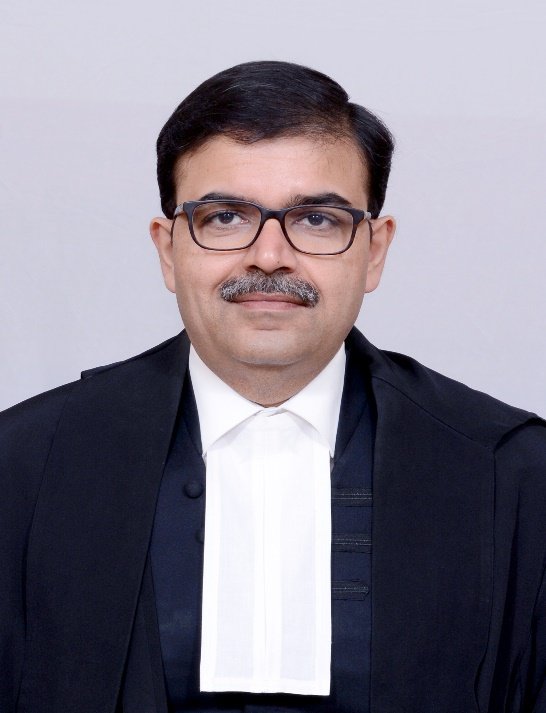
Hon'ble Ashwani Kumar Mishra,J.
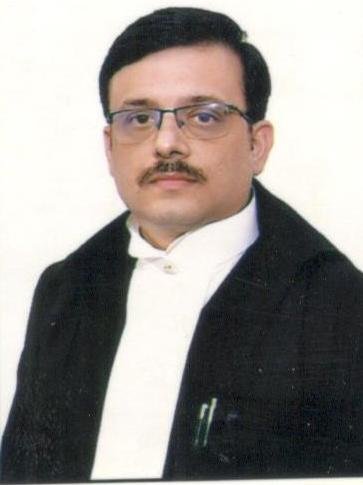
Hon'ble Vikram D. Chauhan,J.
(Per Hon. Vikram D. Chauhan, J.)
1.The present writ petition has been filed by the petitioners for
declaring the Combined Pre-Ayush Test 2017 (CPAT) for admission
in BAMS course for the Session 2017–18 as unconstitutional, illegal
and void ab initio. The petitioners further challenge the letter
dated 26.04.2017 issued by the Government of India and the
communication dated 31.05.2016 issued by the respondent No. 2–
Central Council of Indian Medicine and other reliefs.
2.The brief facts in the present case is to the effect that the
admissions in the Bachelor of Medicine and Surgery – B.A.M.S is
regulated by Indian Medicine Central Council (Minimum Standards
of Education in Indian Medicine) Regulations, 1986, as amended
from time to time. The present controversy arises out of the
admission in Bachelor of Medicine and Surgery – B.A.M.S for the
Session 2017–18. The petitioners in the present writ petition are
the students of 2017–18 batch who have taken admission in
Shaheed Narendra Kumar Ayurvedic Medical College and R.K.M.S.
Charitable Hospital, Pisawa Road, Chandaus, District Aligarh.
3.The above-mentioned regulations were amended in the year
(2)
2012 by means of notification dated 25.04.2012. The aforesaid
notification dated 25.04.2012 did not provide for any Common
Entrance Test for admissions in Bachelor of Medicine and Surgery –
B.A.M.S in various institutions run in the State. It is the case of the
petitioners that the regulations provide for direct admission in the
Bachelor of Medicine and Surgery – B.A.M.S course to those
candidates who fulfilled the admission qualification as prescribed in
the above-mentioned regulations as amended by notification dated
25.04.2012.
4.The respondent institution for the academic session 2015–16
admitted students directly as per the above-mentioned regulations
as amended by notification dated 25.04.2012. It is further
submitted by the counsel for the petitioners that the State
Government nor the University raised any objection to the said
admissions.
5.By means of letter dated 31.05.2016, the Central Council of
Indian Medicine, New Delhi communicated to the Health
Secretaries of Government of Various States including the State of
Uttar Pradesh and decision was taken at the meeting held on
09.05.2016 at the Ministry of Ayush providing that the admission
to the above-mentioned course should be made in the country
through National Eligibility Entrance Test (NEET) from Session
2017–18. It was also directed that the admissions to the above-
mentioned course through any other means will not be admissible
in any case from the Year 2016–17 and a direction was issued to
the State Government to take responsibility to implement the
aforesaid decision.
6.On 26.04.2017, the Ministry of Ayush communicated its
decision to all the State Authorities that in case due to some
difficulties the States are unable to adopt NEET merit list for
(3)
AYUSH-UG admission for the academic year 2017–18 then the
States may admit students in the colleges and institutions through
Common Entrance Test (CET) of the concerned State Government.
7.Further, by means of notification dated 07.11.2016, the
above-mentioned regulations were again amended by means of
Indian Medicine Central Council (Minimum Standards of Education
in Indian Medicine) Amendment Regulations, 2016. The above-
mentioned Regulations of 2016 provided for admission
qualification. However, the aforesaid Regulations of 2016 also did
not provide any mandate for holding of Common Entrance Test in
respect of the course in question.
8.It is further submitted by the learned counsel for the
petitioners that the State Government thereafter on 4.09.2017
issued direction nominating Lucknow University, Lucknow to
conduct Combined Pre Ayush Test 2017 for selection of candidates
for the Session 2017–18 in the BAMS Course. It is submitted by
the learned counsel for the petitioners that the above-mentioned
letter dated 04.09.2017 has been issued by the Secretary without
any statutory authority or power. It is further submitted by the
learned counsel for the petitioners that neither the regulation nor
any rules have been framed for holding the selections through the
Combined Pre Ayush Test.
9.It is submitted that all the colleges in the State of Uttar
Pradesh were required to proceed for admissions in Bachelor of
Medicine and Surgery – B.A.M.S only from students who have
qualified the above-mentioned Combined Pre-Ayush Test. The
respondent no 7-College was provided with 5 candidates from the
above-mentioned Combined Pre-Ayush Test while the College had
sanctioned strength of 60 Candidates.
(4)
10.It is submitted by the leaned counsel for the petitioners that
thereafter the respondent No. 7 issued an advertisement dated
28.11.2017 in the daily newspaper inviting applications for direct
admission to the Bachelor of Medicine and Surgery–B.A.M.S from
students who have passed Intermediate examination. The
petitioners in pursuance to the above-mentioned advertisement
applied for admission in Bachelor of Medicine and Surgery –
B.A.M.S Course and was admitted by the institution – respondent
no 7 in the course on 29.11.2017.
11.It is further submitted that after being admitted by
respondent No. 7 in the Bachelor of Medicine and Surgery –
B.A.M.S for the Session 2017–18 and after completing one year of
studies in the aforesaid institution when the petitioners submitted
their online form for annual examination in the month of July
2019, they were debarred by the respondent University.
12.On 07.12.2018, the respondent No. 2 amended the above-
mentioned regulations by means of Indian Medicine Central
Council (Minimum Standard of Education in Indian Medicine)
Amendment Regulation, 2018 and by means of Regulation 2 (d)(i),
it was provided that there shall be a uniform entrance examination
for all medical institutions at the undergraduate level namely the
National Eligibility Entrance Test (NEET) for admission to
undergraduate courses in each academic year and shall be
conducted by an authority designated by the Central Government.
It is submitted that for the first time in the year 2018 by means of
notification dated 07.12.2018, the regulations above-mentioned
were amended and the uniform entrance examination for the
course in question was prescribed by the aforesaid regulations.
13.In July 2019 when the University held the examination in
respect of the course in question, the petitioners were not allowed
(5)
to appear in the first year examination of the said course and the
respondent University illegally cancelled the candidature of the
petitioners in the aforesaid course. On further enquiry it was
revealed that the respondent institution being aggrieved by non-
acceptance of the students by the University who have taken
admission directly with the institution had preferred Writ Petition
No. 23634 of 2019 and the aforesaid writ petition was finally
decided by means of Judgement dated 22.07.2019. It is submitted
by the learned counsel for the petitioners that the aforesaid
judgement dated 22.07.2019 however does not take into
consideration the legality and power of the State Government to
hold a common entrance test in respect of the course in question
as the same was never challenged in the aforesaid writ petition
and in this manner, the aforesaid judgement would not have any
effect on the issues raised by the petitioners by means of the
present writ petition.
14.The challenge to the Combined Pre Ayush Test 2017 on
behalf of the petitioners is that the Indian Medicine Central Council
(Minimum Standard of Education in Indian Medicine) Regulations,
do not provide for a Common Entrance Test in respect of the
course in question and that the aforesaid regulations were
amended by notification dated 07.12.2018 whereby a uniform
entrance examination was introduced for the first time for all
medical institution at the undergraduate level. The submission of
the learned counsel for the petitioners is that for the Academic
Year 2017–18 there was no provision in the regulation for
conducting the common entrance test/uniform entrance
examination for the course in question. It is submitted that the
State Government has not been granted any power under the
Indian Medicine Central Council Act, 1970 or under the regulations
to impose any condition with regard to common entrance
test/uniform entrance examination in respect of the course in
(6)
question and as such the Combined Pre Ayush Test 2017
conducted by the respondent no 3 – State of Uttar Pradesh is
without authority of law.
15.It is further submitted by the learned counsel for the
petitioners that the institution in question has 60 sanctioned seats
in the BAMS Course and out of the result of the above-mentioned
common entrance test conducted by the respondent No. 3 only
five candidates were allotted to the respondent No. 7 – institution.
The remaining seat of the aforesaid institution remained vacant
and as such there exist no illegality in filling up the vacant seats
directly by the respondent No. 7–institution on the basis of an
advertisement published in the newspaper. It is also urged on
behalf of the petitioners that the respondent University was not
justified in cancelling the candidature of the petitioners on the
ground that the petitioners have not passed the Combined Pre
Ayush Test 2017. According to the learned counsel for the
petitioners, the admission of the petitioners was legal and valid in
accordance with the Indian Medicine Central Council Act, 1970
and the Regulations framed thereunder.
16.On behalf of the respondents, it is submitted that the
Combined Pre Ayush Test 2017 was conducted by the State
Government on the basis of the directions issued by the Central
Council of Indian Medicine and Ministry of Ayush. It is also
submitted that on 09.05.2016 the Ministry of Ayush in order to
bring meritorious students to the Indian System of Medicine by
making admission in Ayurveda, Unani and Siddha Courses in the
country directed for holding of National Eligibility Entrance Test
from the Session 2017–18. It was further directed by the Ministry
of Ayush by means of communication dated 26.04.2017 that the
admission to the course in question for the Academic Year 2017-18
may be held by the respective State Governments by means of a
(7)
common entrance test as per the existing rules and policies of the
State Government. It is urged on behalf of the respondents that
the above-mentioned decision to hold common entrance test in
respect of the course in question was on account of the directives
of Hon'ble Supreme Court in Writ Petition (C) No. 261 of 2016 and
connected matters. It is further submitted by the learned counsel
for the respondent that the common entrance test in respect of the
course in question is in furtherance of the order of the Hon'ble
Supreme Court and as such no interference is warranted in the
present writ petition.
17.The controversy in the present writ petition arises out of the
admissions to Bachelor of Medicine and Surgery–B.A.M.S for the
Session 2017–18 made directly by respondent No. 7-Institution.
By order dated 31.05.2016, the Central Council of Indian Medicine,
New Delhi communicated to the Health Secretaries of Government
of various States including the State of Uttar Pradesh its decision
which was taken at the meeting held on 09.05.2016 at the Ministry
of Ayush providing that the admission to the above-mentioned
course should be made in the country through National Eligibility
Entrance Test from Session 2017–18. It was also directed that the
admissions to the above-mentioned course through any other
means will not be admissible in any case from the Year 2016–17
and a direction was issued to the State Government to take
responsibility to implement the aforesaid decision.
18.Further, on 26.04.2017 the Ministry of Ayush communicated
its decision to all the State authorities that in case due to some
difficulties the States are unable to adopt NEET merit list for
AYUSH-UG admission for the academic year 2017–18 then the
States may admit students in the colleges and institutions through
Common Entrance Test of the concerned State Government as per
the existing rules and policies of the concerned State and Union
(8)
Territories.
19.The aforesaid order dated 31.05.2016 and 26.04.2017 was
issued by the respondent authorities on the basis of the directives
issued by the Hon'ble Supreme Court in Writ Petition (C) No. 261
of 2016 (Sankalp Charitable Trust and another Vs Union of India).
The order dated 28.04.2016 directed while recording the
submissions of the respondents that the NEET would be held in
respect of medical admissions. The aforesaid directions of the
Hon'ble Supreme Court was further considered in the meeting at
the Ministry of Ayush held on 09.05.2016 whereby it was decided
that in order to bring meritorious students to the Indian System of
Medicine by Making Admission in Ayurveda, Unani and Siddha
courses admission in the country will be through National Eligibility
cum Entrance Test (NEET) only from Session 2017–18 onwards.
20.In pursuance to the above-mentioned directions of the
Ministry of Ayush and the Central Council of Indian Medicine, the
State Government had conducted Combined Pre Ayush Test 2017
for admissions to the Bachelor of Medicine and Surgery – B.A.M.S
for the Session 2017–18.
21.The submission of the learned counsel for the petitioners is
that the Indian Medicine Central Council Act, 1970 and the
Regulations framed thereunder do not provide for Common
Entrance Test in respect of the course of Bachelor of Medicine and
Surgery–B.A.M.S for the Session 2017–18 and the regulations
were amended subsequently by means of notification dated
07.12.2018 providing for uniform entrance examination for all
medical institutions at the undergraduate level and the aforesaid
notification dated 07.12.2018 would not be applicable in respect of
the admissions to be conducted for the Session 2017–18 and as
such the State Government had no authority under the law to
(9)
conduct Combined Pre Ayush Test 2017.
22.The Combined Pre Ayush Test 2017 was conducted by the
State Government on the basis of the direction dated 31.05.2016
issued by the Central Council for Indian Medicine and order dated
26.04.2017 by the Ministry of Ayush, Government of India. The
aforesaid orders dated 31.05.2016 and 26.04.2017 was issued in
furtherance of the direction of the Hon'ble Supreme Court in Writ
Petition (C) No. 261 of 2016 (Sankalp Charitable Trust and another
Vs Union of India). Once the Supreme Court has directed for
holding of Common Entrance Test in respect of admission to the
medical courses and in furtherance thereof the Central Council of
Indian Medicine and Ministry of Ayush has further taken a decision
to hold Common Entrance Test in respect of BAMS Course, the said
decision of the respondent authorities is relatable to the direction
issued by the Hon'ble Supreme Court in the above-mentioned writ
petition.
23.It is further to be noted that Article 144 of the Constitution of
India obliges all authorities, civil and judicial in the territory of
India to act in aid of the Supreme Court and as such all the
authorities are bound by the directions of the Supreme Court and
have to act in aid and furtherance of the directions of the Supreme
Court. The might of the State must stand behind the court’s order
for survival of the rule of law in the country. The common entrance
examination in respect of the course in question was conducted on
the basis of a policy decision taken by the respondent authorities
in furtherance of the directions of the Hon'ble Apex Court in the
above-mentioned writ petition and as such the State Government
had the authority under law to act in aid of the directions of the
Supreme Court as contained in the policy decision communicated
by order dated 31.05.2016 and 26.04.2017. The holding of the
combined entrance examination in respect of medical courses on
(10)
the basis of the direction of the Hon'ble Supreme Court is in order
to bring meritorious students to the medical education.
24.Further, Section 22 of the Indian Medicine Central Council
Act, 1970 empowers the Central Council to prescribe the Minimum
standards of education in Indian medicine and the aforesaid
provision deals with the minimum standard of education in Indian
Medicine which in effect covers the power to direct for conduct of
Common Entrance Examination.
25.In view of the judgment of the Constitution Bench in Preeti
Srivastava (Dr) v. State of M.P., (1999) 7 SCC 120, it is no
longer possible to argue that norms for admission come into the
picture only after admissions are made and have no connection
with “standards of education”. On the contrary, regulation of
admissions has a direct impact on the maintenance of standards of
education and in exercise of its power to prescribe and maintain
standards of education, Central Council of Indian Medicine has the
right as well as an obligation to regulate admissions.
26.The Hon’ble Apex Court in the case of Dr Preeti Sriastava
(supra) held as under:-
“36. It would not be correct to say that the norms for admission have no
connection with the standard of education, or that the rules for admission
are covered only by Entry 25 of List III. Norms of admission can have a
direct impact on the standards of education. Of course, there can be rules
for admission which are consistent with or do not affect adversely the
standards of education prescribed by the Union in exercise of powers
under Entry 66 of List I. For example, a State may, for admission to the
postgraduate medical courses, lay down qualifications in addition to
those prescribed under Entry 66 of List I. This would be consistent with
promoting higher standards for admission to the higher educational
courses. But any lowering of the norms laid down can and does have an
adverse effect on the standards of education in the institutes of higher
education. Standards of education in an institution or college depend on
various factors. Some of these are:
(1) the calibre of the teaching staff;
(2) a proper syllabus designed to achieve a high level of education in the
given span of time;
(11)
(3) the student-teacher ratio;
(4) the ratio between the students and the hospital beds available to each
student;
(5) the calibre of the students admitted to the institution;
(6) equipment and laboratory facilities, or hospital facilities for training
in the case of medical colleges;
(7) adequate accommodation for the college and the attached hospital;
and
(8) the standard of examinations held including the manner in which the
papers are set and examined and the clinical performance is judged.
37. While considering the standards of education in any college or
institution, the calibre of students who are admitted to that institution or
college cannot be ignored. If the students are of a high calibre, training
programmes can be suitably moulded so that they can receive the
maximum benefit out of a high level of teaching. If the calibre of the
students is poor or they are unable to follow the instructions being
imparted, the standard of teaching necessarily has to be lowered to make
them understand the course which they have undertaken; and it may not
be possible to reach the levels of education and training which can be
attained with a bright group. Education involves a continuous interaction
between the teachers and the students. The pace of teaching, the level to
which teaching can rise and the benefit which the students ultimately
receive, depend as much on the calibre of the students as on the caliber
of the teachers….”
27.Thus, in view of the law laid down by the Constitution Bench
in Dr Preeti Srivastava case (supra) it must be held that the
power to regulate the standards of education in Indian Medicine
prescribed by the Council is vested in Central Council under the
Indian Medical Council Act, 1970. The corresponding duty to
conduct common entrance examination for filling up BAMS seats,
on merits, must also vest in it.
28.The Indian Medicine Central Council (Minimum Standard of
Education in Indian Medicine) Regulations at the relevant time did
not provide any specific direction for holding of admissions in the
course in question in a particular manner and in fact the
regulations only prescribed the admission qualifications for
eligibility/admission in Bachelor of Ayurveda education and as such
the directions issued by the Central Council and the Ministry of
(12)
Ayush were in no manner contrary to the Indian Medicine Central
Council Act, 1970 and the Regulations framed thereunder. Where
the regulations are silent in respect of the mode and manner of
admissions in the course in question and the directions are issued
by the Central Council and the Ministry of Ayush for admissions in
the course in question through a Common Entrance Examination,
the same cannot be said to be contrary to law. The field not being
occupied by the Indian Medicine Central Council Act, 1970 and the
Regulations framed thereunder and as such it is open for the
respondent authorities to direct for holding of Common Entrance
Test in respect of the admissions to the course in question
specifically in view of the directions of the Hon'ble Apex Court and
the powers vested in the Central Council and the Government.
29.The legislative competence of Parliament and the legislatures
of the States to make laws under Article 246 is regulated by the
VIIth Schedule to the Constitution. In the VIIth Schedule as
originally in force, Entry 11 of List II gave to the State an exclusive
power to legislate on
“education including universities, subject to the provisions of
Entries 63, 64, 65 and 66 of List I and Entry 25 of List III”.
Entry 11 of List II was deleted and Entry 25 of List III was
amended with effect from 3-1-1976 as a result of the Constitution
42nd Amendment Act of 1976. The present Entry 25 in the
Concurrent List is as follows:
“25. Education, including technical education, medical
education and universities, subject to the provisions of Entries 63,
64, 65 and 66 of List I; vocational and technical training of labour.”
Entry 25 is subject, inter alia, to Entry 66 of List I. Entry 66
of List I is as follows:
“66. Coordination and determination of standards in
institutions for higher education or research and scientific and
technical institutions.”
(13)
30.Both the Union as well as the States have the power to
legislate on education including medical education, subject, inter
alia, to Entry 66 of List I which deals with laying down standards in
institutions for higher education or research and scientific and
technical institutions as also coordination of such standards. The
State cannot, while controlling education in the State, impinge on
standards in institutions for higher education as this is exclusively
within the purview of the Union Government. Therefore, while
prescribing the criteria for admission to the institutions for higher
education including higher medical education, the State cannot
adversely affect the standards laid down by the Union of India
under Entry 66 of List I. The States are required to act in
accordance with the standards for admission set by the Union and
its agencies.
31.The executive power of the Union Government under Article
73 extends to the matters in respect to which the Parliament has
power to make laws. While the executive cannot act against the
provisions of law, it does not follow that in order to enable the
executive to function relating to a particular subject there must be
a law already in existence authorising such action. The functions of
the executive are not confined to the execution of laws made by
the legislature already in existence. Article 73 indicate that the
power of the executive of the Union are coextensive with the
legislature power of the Union. In the present case, the directions
for holding of Common Entrance Test is relatable to Entry 66 of List
I and in furtherance of the order of the Hon'ble Apex Court as
detailed hereinabove. It is to be seen that the Indian Medicine
Central Council Act and the Regulations framed thereunder at the
relevant point of time were silent in respect of the mode/manner
of admissions to be made in the BAMS Course and as such, the
directions issued by the Government of India and the Central
(14)
Council is consistent with the Entry 66 List I of the Constitution of
India. Once the Government of India, Ministry of Ayush has laid
down the standard for higher education in the course in question
by fixing Common Entrance Test in respect of admission to the
course in question, it was incumbent upon the State Government
to have followed the aforesaid direction and to have conducted the
common entrance test for BAMS course for the Session 2017–18
and the aforesaid action of the State Government cannot be
faulted on the ground that there is no provision in law,
empowering the State Government to hold the common entrance
test.
32.The course in question is undoubtedly a professional course.
The institutions, therefore cannot be permitted to admit students
through a process which is not fair and transparent and which does
not promote merit and excellence in such courses. To curb the
malpractices, the Supreme Court in the case of Modern Dental
College and Research Centre Versus State of Madhya
Pradesh, (2016) 7 SCC 353 has emphasised the need for
common entrance test to be held for admission in professional
courses. In the present case, the institution in question has
adopted dual approach while some students have been admitted
by means of the common entrance examination and the unfilled
vacancies in the institution for the course in question, have been
filled up by direct admission by the respondent no.7–Institution.
Institution was aware that admission was to be from NEET
students only. If sufficient students were not available, it could
have raised a grievance but direct admission, in face of direction
by the competent body in light of Supreme Court direction was not
permissible. Learned counsel for the petitioners has not been able
to show the source of power which permits the respondent
institution to directly take admissions in the course in question
specifically when the institution already received student from the
(15)
common entrance examination. The advertisement issued by the
respondent institution for taking direct admissions in the institution
does not prescribe the procedure adopted by the respondent
institution to take admissions in the institution. Further, the
petitioners have no fundamental right to take admissions in the
professional courses of higher education and any admission in
respect of the professional courses can only be through common
entrance test in view of the judgement of the Apex Court and the
decision of Ministry of Ayush. The respondent institution could not
be permitted to take admissions directly in professional courses
specifically when Central Council and the Government of India has
only permitted admission to the course in question through a
common entrance examination. The non-availability of eligible
candidates for admission in the course in question cannot be a
reason to permit direct admissions by the respondent no 7 –
Institution which will amount to lowering the minimum standard of
education prescribed by the respondent Nos. 1 and 2. The
petitioners had the opportunity to appear in the common entrance
examination conducted by the State of Uttar Pradesh in respect of
the course in question at the relevant time. However, the
petitioners did not appear in the common entrance examination
and thereafter as a backdoor entry have secured the admission to
the respondent No. 7 – Institution in the professional course which
is unfair and illegal.
33.It is further to be noted that earlier the respondent No. 7 –
Institution had filed Writ Petition No. 23634 of 2019 (Shaheed
Narendra Kumar Ayurvedic Medical College and R.K.M.S.
Charitable Hospital Vs. State of Uttar Pradesh and 6 others) for
regularisation of the admissions in the BAMS Course of students
who have secured admission directly in the institution without
participating in the common entrance examination. The aforesaid
writ petition was finally disposed of by means of judgement dated
(16)
22.07.2019 and it was specifically held that the institution has not
only compromised with the merit but also the future of the
students at stake. The aforesaid judgement further directed that
the students who have been granted illegal admission in the BAMS
course by the respondent–Institution are at liberty to approach
before the appropriate forum to seek compensation from the
institution.
34.In this reference relevant extract of the order passed by this
Court in earlier Writ Petition No. 23634 of 2019 filed by respondent
No.7- Institution is extracted hereinbelow :-
“In the facts and circumstances of the case, reference of the case of some
Institution of State of Kerala is relevant to mention. Some medical
Institution had given admissions to the students against the rule and
regulations in the State of Kerala, however, the admissions were
cancelled and such order was also upheld by the Hon'ble Supreme Court
also. The State of Kerala promulgated ordinance in order to protect those
students. However, the Hon'ble Supreme Court declared the said
ordinance to be ultra vires by the judgment passed in the matter of
Medical Council of India vs. State of Kerala reported in (2018) SCC
Online SC 1467 in which the Supreme Court held that fairness of
process of admission and merit cannot be compromised.
The Supreme Court has also directed to refund the fee received from the
students and also held the students to be entitled for compensation also
in the matter of Riya George vs. Kannaur Medical College reported in
2019 SCC Online SC 252.
The petitioner - Institution has not only compromised with the merit but
also put the future of students at stake. Petitioner's college is not entitled
for any sympathy or equity.
In view of the above discussions, the writ petition sans merit.
However, the students who have been granted illegal admissions in the
BAMS course by the petitioner - Institution are at liberty to approach
before the appropriate forum to seek compensation from the petitioner -
Institution, if so adviced.
The writ petition is, disposed of, accordingly.”
35.Learned counsel for the petitioners has further placed
reliance on the judgment of the Apex Court in Union of India Vs.
Federation of Self-Financed Ayurvedic Colleges, Punjab and
others, reported in (2020) 12 SCC 115, to establish that the
Apex Court has permitted the candidates who have not appeared
(17)
in the common entrance test to be continued in the course in
question in ayurvedic undergraduate course. In this respect, it is to
be seen that the aforesaid judgment was passed by the Apex
Court as a one time exercise in the peculiar circumstances of the
aforesaid case and the Apex court has further directed that the
aforesaid order shall not be treated as a precedent. The reliance
on the aforesaid judgment of the Apex Court is of no use in the
present case as the aforesaid order was passed by the Apex Court
in exercise of its power under Article 142 of the Constitution of
India, considering the special facts and circumstances arising out
of the case and since there being no right of the petitioners to
have direct admission in the course in question by-passing
common entrance test and as such no orders can be passed in
favour of the petitioners.
36.It is further to be seen that the present writ petition pertains
to the challenge to the BAMS Course for the Session 2017-18 and
as per the case of the petitioners, in July, 2019 they were debarred
by the University from filling the annual examination form online.
Thereafter the respondent No. 7- Institution filed Writ Petition No.
23634 of 2019 challenging the aforesaid action of the respondent
authorities and the aforesaid writ petition was disposed of by order
dated 22.07.2019. The present writ petitioners who are the
students in respect of the course in question however, at that point
of time, did not prefer any writ petition before this Court
challenging the action of the respondent authorities. However,
when the writ petition of respondent no. 7-Institution was disposed
of by order dated 22.07.2019, the petitioners have preferred the
present writ petition in August, 2021. The aforesaid delay on
behalf of the petitioners specifically after the order dated
22.07.2019 is of significance as the institution's writ was already
disposed of with a specific finding that the institution has not only
compromised with the merit but the also put the future of the
(18)
petitioners at stake and as such, the present writ petition is a
belated exercise which is not permissible in exercise of the
extraordinary jurisdiction under Article 226 of the Constitution of
India.
37.In view of the aforesaid, the petitioners are not candidates
who have secured admission in the BAMS Course for the Session
2017–18 in accordance with the established procedure and in
accordance with the directions of the Supreme Court, through
Common Entrance Test and as such are not valid
candidates/students and as such no right accrues in favour of the
petitioners for admission in the course in question.
38.In the result, the writ petition lacks merit and is dismissed.
Order Date :- 29.11.2021
VMA/D. Tamang
(Vikram D. Chauhan, J.) (Ashwani Kumar Mishra, J.)

 Login with google
Legal Notes
Add a Note....