
As per case facts, the appellant and Respondent No. 1 contested the Madhya Pradesh Vidhan Sabha elections in 1985, where Respondent No. 1 was declared elected. The appellant then challenged ...
No Acts & Articles mentioned in this case
http://JUDIS.NIC.IN SUPREME COURT OF INDIA Page 1 of 12
PETITIONER:
LAXMI NARAYAN NAYAK
Vs.
RESPONDENT:
RAMRATAN CHATURVEDI AND ORS.
DATE OF JUDGMENT22/12/1989
BENCH:
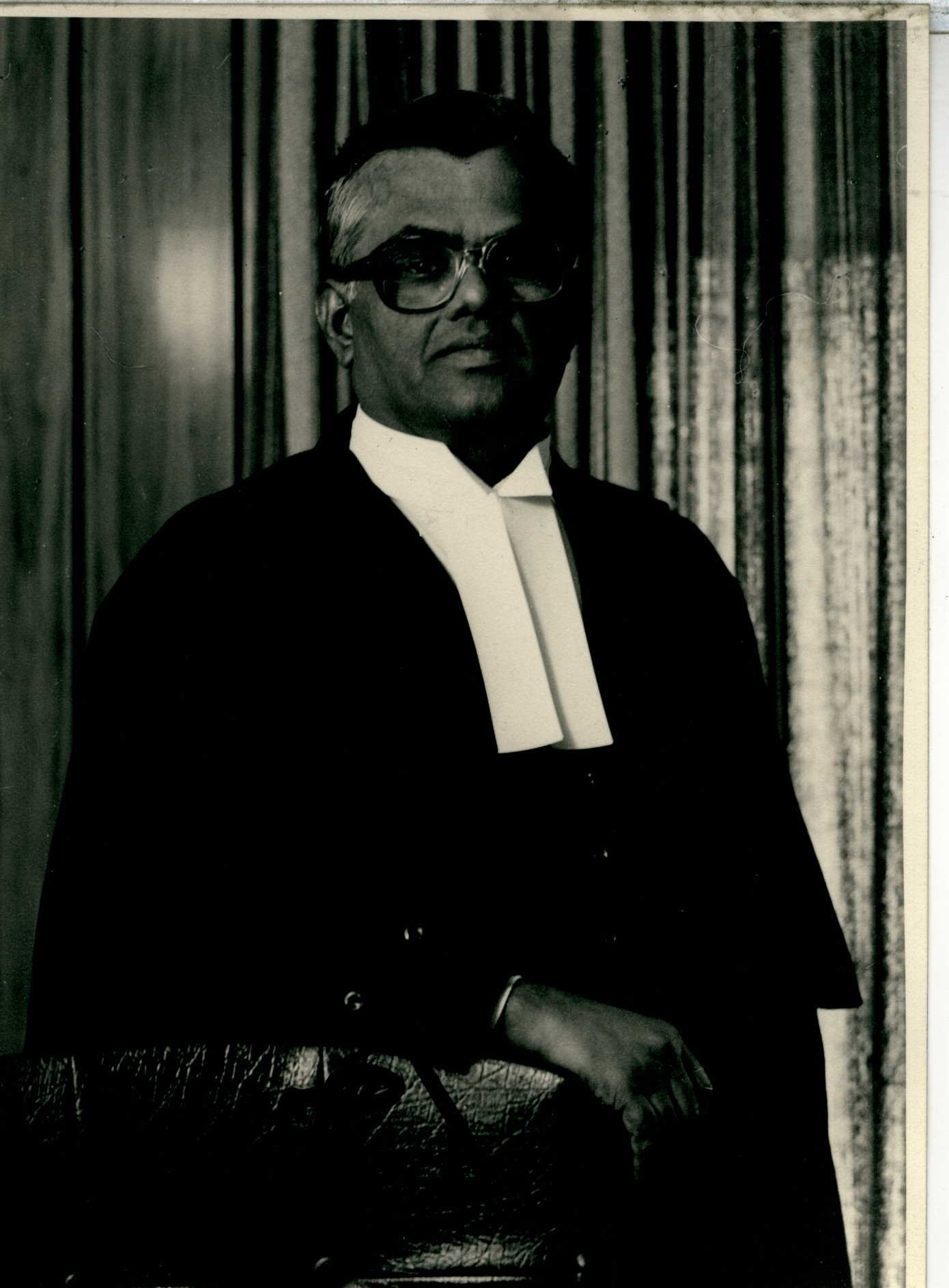
PANDIAN, S.R. (J)
BENCH:
PANDIAN, S.R. (J)
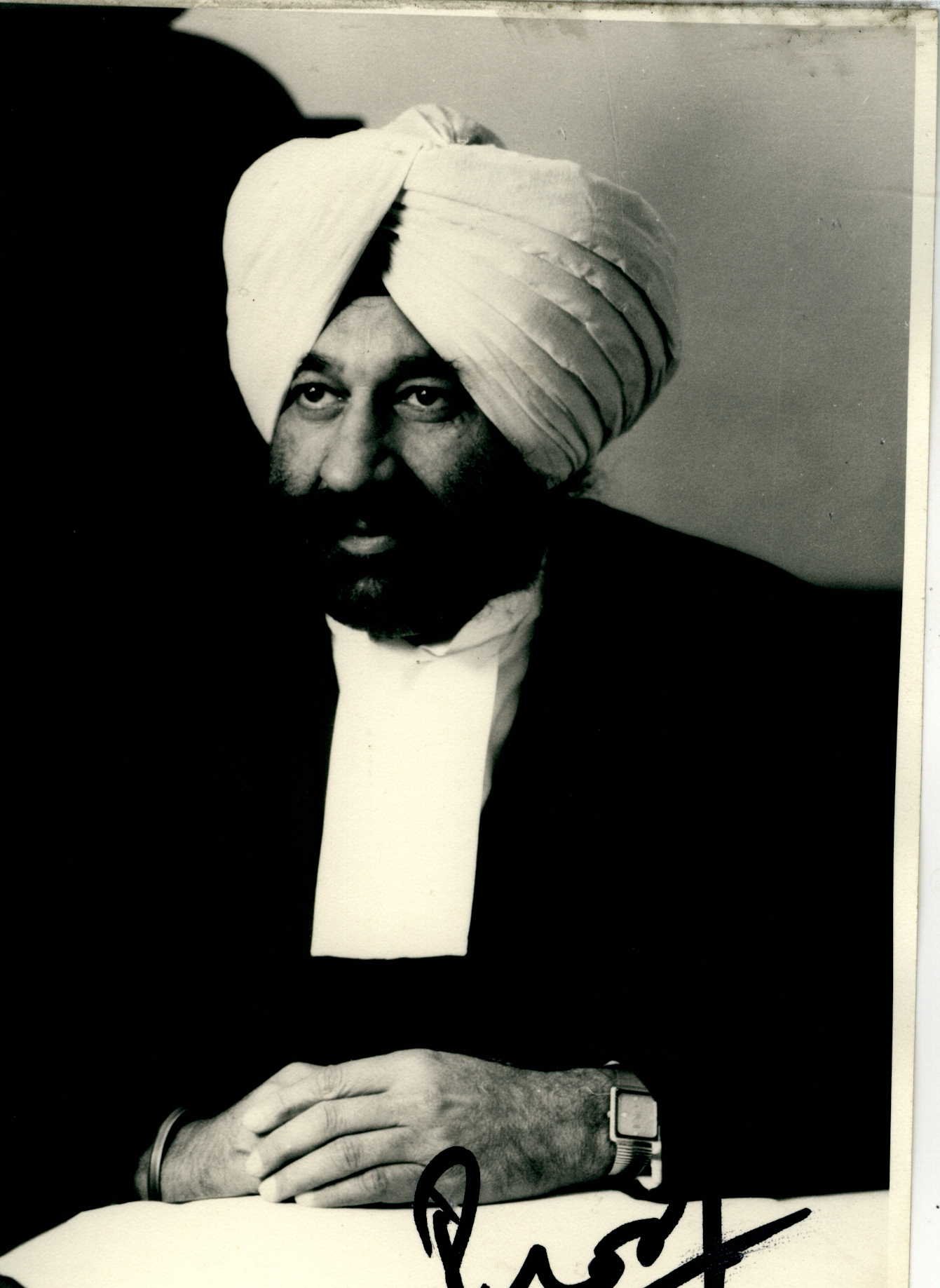
KULDIP SINGH (J)
CITATION:
1991 AIR 2001 1989 SCR Supl. (2) 581
1990 SCC (2) 173 JT 1989 Supl. 438
1989 SCALE (2)1439
ACT:
The Representation of Peoples Act, 1951: Sections
123(2), (3) and (3A)--Corrupt Practice--Bribery--Proof
of--Element of 'bargaining'--Necessity for.
HEADNOTE:
Elections to the Madhya Pradesh Vidhan Sabha were held
in the months of February/March 1985. The appellant and
Respondent No. 1 were the contesting candidates from Niwadi
Legislative Assembly constituency No. 34. Respondent No. 1
having secured majority of votes, was declared elected on
6.3.1985 to the Madhya Pradesh Vidhan Sabha. The appellant
challenged the election of the respondent No. 1 in the High
Court of Madhya Pradesh Jabalpur alleging that the first
respondent was guilty of adopting corrupt practices within
the meaning of sub-sections (2), (3) and (3A) of Section 123
of the Representation of Peoples Act, 1951. Respondent No. 1
denied the allegations made in the election petition. The
High Court dismissed the Election Petition holding that the
appellant had not substantiated all the charges levered by
him against respondent No. 1. Hence this appeal by the
appellant. Before this Court the appellant pressed only
issues 3, 4 and 5 and gave up the rest.
Dismissing the appeal, this Court,
HELD: An election petition where corrupt practices are
imputed must be regarding as proceedings of a quasi-criminal
nature wherein strict proof is necessary. Since, a charge of
corrupt practice, the consequence of which is not only to
render the election of the returned candidate void, but in
some cases to impose on him a disqualification it must be
proved on appraisal of the evidence adduced by both the
parties particularly by the election petitioner who assails
the election of a returned candidate. [591B-C]
The element of bargaining is completely absent in the
present case. Needless to say that it is necessary for the
purpose of proving the corrupt practice of bribery to estab-
lish that there was an element of bargaining. [592C]
582
Dhartipakar Madan Lal Agarwal v. Rajiv Gandhi, [1987] Supp.
SCC 93; Kona Prabhakara Rao v. M. Seshagiri Rao & Anr.,
[1982] 1 SCC 442; Manphul Singh v. Surinder Singh, [1974] 1
http://JUDIS.NIC.IN SUPREME COURT OF INDIA Page 2 of 12
SCR 52; Jamuna Prasad Mukheriya & Ors. v. Lachi Ram & Ors.,
[1955] 1 SCR 608; Rahim Khan v. Khurshid Ahmed & Ors.,
[1974] 2 SCC 660; Ram Sharan Yadav v. Thakur Muneshwar Nath
Singh & Ors., [1984] 4 SCC 649; Rahim Khan v. Khurshid Ahmed
JUDGMENT:
& Ors., [1977] 1 SCR 490; Lakshmi Raman Acharya v. Chandan
Singh & Ors., [1977] 2 SCR 412 and Ramji Prasad Singh v. Ram
Bilas Jha & Ors., [1977] 1 SCC 260; Mohan Singh v. Bhanwar
Lal & Ors., [1964] 5 SCR 12; Harjit Singh Mann v. S. Umraon
Singh & Ors., [1980] 1 SCC 713; lqbal Singh v. S. Gurdas
Singh & Ors., [1976] 1 SCR 884; Lalroukung v. Haokholal
Thangam & Anr., ELR Vol 41 Page 35, referred to.
&
CIVIL APPELLATE JURISDICTION: Civil Appeal No. 4359
(NCE) of 1986.
From the Judgment and Order dated 30th Sept. 1986 of the
Madhya Pradesh High Court in Election Petition No. 43 of
1985.
R.B. Mehrotra for the Appellant.
S.S. Khanduja for the Respondents.
The Judgment of the Court was delivered by
S. RATNAVEL PANDIAN, J. The appellant was one of the 11
contestants from Niwadi Legislative Assembly Constituency
No. 34 of Madhya Pradesh Vidhan Sabha. The election was held
in the months of February/March 1985, the polling date of
which was on 2.3.1985. The appellant was a nominee of the
Janta Party. The first respondent was sponsored by the
Congress Party. As the first respondent had secured majority
of votes i.e. by a margin of 5,000 votes over and above his
next rival candidate, namely the appellant herein the first
respondent was duly declared on 6.3.1985 as successfully
elected.
The appellant presented an election petition in the High
Court Madhya Pradesh at Jabalpur, calling in question' the
election of the first respondent alleging that the first
respondent was guilty of adopting corrupt practices within
the meaning of sub-sections (2), (3) and (3A) of Section 123
of the Representation of People's Act, 1951 (hereinafter
referred to as the 'Act'). It is hardly necessary to stress
583
that the pleadings were traversed and denied by the first
respondent in his statement. The High Court dismissed the
election petition and hence by this appeal under Section
116A of the Act, the appellant challenges the correctness of
the decision of the High Court. Of the several issues framed
upon the pleadings of the parties only issues 3, 4 and 5 are
pressed before us as the main grounds in support of the
appeal and the rest are given up. Hence for the purpose of
the present appeal, we have to examine and deal with these
three relevant issues alone as set out by the High Court.
These issues are:
"(3) Whether the nomination paper of Shri Pratap Singh, son
of Mitilal, the respondent No. 11 had been improperly re-
jected? If so, whether the election is liable to be set-
aside under Section 100(1)(c) of the R.P. Act, 1951?
(4) Whether the respondent No. 1 held a meeting at Niwadi on
28.2.1985 and told the electors that he would present silver
shield to the electors of the polling booth recording maxi-
mum number of votes in his favour? If so, whether respondent
No. 1 is guilty of corrupt practices under Section 123(1) of
the Act?
(5) Whether Shri Shital Prasad Sharma, S.D.O. (Revenue) and
http://JUDIS.NIC.IN SUPREME COURT OF INDIA Page 3 of 12
Shri Dubey, S.D.O. police accompanied with respondent No.- 1
at various places between 9.2.1985 and 2-3-1985 and asked
the electors to vote for him? Whether Shri Sharma distribut-
ed money in village Teharka and asked voters to vote for
respondent No. 17 If so, effect.
The High court which has dealt with on the various
aspects of the matter has held that the appellant has not
substantiated all the charges levelled by him against the
first respondent challenging the declaration of the first
respondent as having been duly elected.
Normally, this Court in an appeal as the one on hand
does not interfere on a finding of facts of this type unless
there are prima facie good grounds to show that the High
Court has gravely erred resulting in serious prejudice to
the appellant. We, therefore shall now examine whether there
are any compelling reasons justifying our interference with
the findings of the High Court.
This Court in a catena of decisions has laid down the
principles as to the nature of pleadings in election cases,
the sum and substance of which being:
584
(1) The pleadings of the election petitioner in his petition
should be absolutely precise and clear containing all neces-
sary details and particulars as required by law vide Dharti-
pakar Madan Lal Agarwal v. Rajiv Gandhi, [1987] (Supp.) SCC
93 and Kona Prabhakara Rao v. M. Seshagiri Rao & Anr.,
[1982] 1 SCC 442.
(2) The allegations in the election petition should not be
vague, general in nature or lack of materials or frivolous
or vexatious because the Court is empowered at any stage of
the proceedings to strike down or delete pleadings which are
suffering from such vices as not raising any triable issue
vide Manphul Singh v. Surinder Singh, [1974] 1 SCR 52; Kona
Prabhakara Rao v. M. Seshagiri Rao & Anr., [1982] 1 SCC 442
and Dhartipakar Madan Lal Agarwal v. Rajiv Gandhi, [1987]
(Supp.) SCC 93.
(3) The evidence adduced in support of the pleadings should
be of such nature leading to an irresistible conclusion or
unimpeachable result that the allegations made, have been
committed rendering the election void under Section 100 vide
Jumuna Prasad Mukhariya & Others v. Lachhi Ram & Others,
[1955] 1 SCR 608 and Rahim Khan v. Khurshid Ahmed and Oth-
ers, [1974] 2 SCC 660.
(5) The evidence produced before the Court in support of the
pleadings must be clear, cogent, satisfactory, credible and
positive and also should stand the test of strict and scru-
pulous scrutiny vide Ram Sharan Yadav v. Thakur Muneshwar
Nath Singh and Others, [1984] 4 SCC 649.
(5) It is unsafe in an election case to accept oral evidence
at its face value without looking for assurances for some
surer circumstances or unimpeachable documents vide Rahim
Khan v. Khurshid Ahmed & Ors., [1975] 1 SCR 643; M. Narayana
Rao v. G. Venkata Reddy & Others, [1977] 1 SCR 490; Lakshmi
Raman Acharya v. Chandan Singh & Ors., [1977] 2 SCR 412 and
Ramji Prasad Singh v. Ram BilasJha and Others, [1977] 1 SCC
260.
6. The onus of proof of the allegations made in the election
petition is undoubtedly on the person who assails an elec-
tion which has been concluded vide Rahim Khan v. Khurshid
Ahmed and Others, [1975] 1 SCR 643; Mohan Singh v. Bhanwar-
lal & Others, [1964] 5 SCR 12 and Ramji Prasad Singh v. Ram
Bilas Jha and Others, [1977] 1 SCC 260.
585
In the light of the above principles, we shall now
examine the pleadings and the evidence adduced to establish
http://JUDIS.NIC.IN SUPREME COURT OF INDIA Page 4 of 12
the allegations in the election petition.
Reverting to the case, the first question that arises
for consideration in relation to issue No. (3) is whether
the nomination papers of the 11th respondent, Pratap Singh
has been improperly rejected rendering the election of the
returned candidate (first respondent) as void.
The 11th respondent (Pratap Singh) filed his nomination
paper for contesting the election from this Niwadi constitu-
ency and delivered the same to the Returning Officer by his
proposer as contemplated under Section 33(1) of the Act. He
also made a request to the Returning Officer to send some
authorised person thereby enabling him to make and subscribe
the oath as he was-
seriously iII and could not present himself either before
the Returning Officer or any other authorised officer for
making or subscribing the oath of affirmation as required
under Article 173(a) of the Constitution of India. The
Returning Officer did not comply with the request of Pratap
Singh and rejected his nomination on 7.2.85. According to
the petitioner, this rejection is improper and as such the
election is liable to be set aside as per Section 100(1)(c)
of the Act.
The plea of the appellant that the nomination paper has
been improperly rejected, is countered by the respondent No.
1 in his written statement denying the plea of the appellant
that he was seriously ill and stating that under Article 173
of the Constitution, it is only for the Election Commission
to authorise some person enabling the candidate to make and
subscribe the oath according to the form set out for the
purpose in the Third Schedule; that the Returning Officer
has no authority to send any Officer to any ailing candidate
enabling him to subscribe the oath and that the respondent
No. 11 neither approached the Election Commission nor made
any such request to the Returning Officer.
It is seen from the additional document No. 9 that the
11th respondent sent the letter of request to the Returning
Officer to appoint some authorised officer at Newadi so that
he could subscribe his oath and along with that letter he
had enclosed a medical certificate given by PW-2. The cer-
tificate is issued by PW-2 (Block Medical Officer PHC,
Newadi) certifying that respondent No. 11 was under his
treatment as an OPD patient from 6.2.83 for bronchitis for
which the
586
patient was advised rest atleast for three days. In his
evidence, PW-2 has stated that he could not say about the
condition of the patient without reference to the certifi-
cate or the OPD register and he might have 'advised the 11th
respondent to take rest as he usually advised the patients.
In the cross-examination, he has deposed that the 11th
respondent had no other ailment and that he was moving in
the town. On consideration of the oral and documentary
evidence, the High Court rejected the plea of the appellant
holding bronchitis is not a disease which would incapacitate
a person from moving about and under those circumstances,
there was no justification, whatsoever, for Pratap Singh not
taking oath as required under Article 173 of the Constitu-
tion.
On carefully going through the material on record, we
also agree with the view taken by the High Court that the
11th respondent was not suffering from any serious ailment
which disabled him to take the oath before the Returning
Officer. It is not the case of the appellant that the Re-
turning Officer had any enmity against the 11th respondent
or was favourably disposed towards the first respondent.
http://JUDIS.NIC.IN SUPREME COURT OF INDIA Page 5 of 12
It is apposite to refer to the decision in Harjit Singh
Mann v. S. Umraon Singh and Others, [1980] 1 SCC 713 in
which this Court while dealing with the mandatory require-
ment of taking oath as contemplated under Article 173(a) has
observed thus:
"It is not in controversy that it was obliga-
tory under clause (a) of Article 173 of the
Constitution for the appellant to make and
subscribe, before a person authorised in that
behalf by the Election Commission, an oath or
affirmation according to the form set out for
the purpose in the Third Schedule, and that he
cannot be qualified to be chosen to fill a
seat in the legislature of a State without
doing so. The importance of that requirement
of the Constitution has been reiterated in
sub:section (2) of Section 36 of the Act for
ground (a) thereof provides that the Returning
Officer shall reject a nomination paper on the
ground that on the date fixed for the scrutiny
of nominations the candidate, was inter-alia,
not qualified to be chosen to fill the seat in
the Legislative Assembly under Article 173 of
the Constitution. The requirement for the
making and subscribing the oath or affirmation
was, therefore, clearly mandatory."
As the 11th respondent has not taken the oath, before the
person
587
authorised in that behalf by the Election Commission for no
valid reason, we are in full agreement with the conclusion
arrived at by the High Court that the plea of the appellant
that the nomination paper of Pratap Singh has been improper-
ly rejected, is devoid of any merit.
The next contention is that the election of the returned
candidate (first respondent) is to be declared void as the
said election was tainted with corrupt practices within the
mischief of Section 100(1)(b) of the Act. What are corrupt
practices are enumerated and defined in. Section 123 of the
Act.
The pleading on this aspect in the election petition reads
thus:
"The respondent No. 1 had organised a rally
and a procession on 28.2.1985 at Niwadi. That
procession evitimately culminated into a
public meeting. Shri Ramratan Chaturvedi,
Respondent No. 1 made a speech in that public
meeting and told the electors that he will
present a silver shield to the electors of
that polling booth which would record the
maximum number of votes in his favour. Several
electors from Niwadi Legislative Constituency
were present in that meeting. The respondent
No. 1 thus promised a gratification to the
electors to vote for him. As the promise was
given by the respondent No. 1 himself, he is
guilty of corrupt practice under Section
123(1) of the R.P. Act, 1951 and his election
is liable to be set aside under Section
100(1)(b) of the R.P. Act, 1951."
The first respondent though admitted in his written
statement that there was a procession, has denied of having
addressed any public meeting on 28.2.85 promising any grati-
fication in the form of a silver shield to the electors of
the polling booth where a maximum number of votes would be
http://JUDIS.NIC.IN SUPREME COURT OF INDIA Page 6 of 12
cast in his favour. The appellant in support of his plead-
ings besides examining himself as PW-1 examined three more
witnesses. PW-14, PW-17 and PW-18. The first respondent
examined himself with another as RWs 1 and 3 respectively.
The evidence of PW- 1 is chat he was informed by PW- 16
that the first respondent in a public meeting at Niwadi,
organised in connection with the election, promised that he
would present a silver shield to the electors of the polling
booth which would record a highest number of votes in his
favour. It is to be noted that the appellant who examined
himself on 29.10.85 on which date itself the cross-examina-
tion was
588
over, further examined himself on 8.4.86 i.e. after six
months of the first examination and then deposed about this
alleged promise. Indisputably, this evidence is in the
nature of hear-say. PW-16 claims to have attended the meet-
ing and 'heard the first respondent making the speech prom-
ising the voters that the particular booth where he would
secure a highest number of votes would be awarded with a
silver shield by him. His further evidence is that those who
attended the meeting, generally talked amongst themselves
that those who would vote for Congress party would get that
shield. This witness in his crossexamination states that he
did not ask anyone as to who would get the shield and where
it would be kept and that he did not inform anyone else
except the appellant. He has further deposed the first
respondent did not say that the shield would be awarded to
the workers. He admits that his brother Nathuram Ahirwar was
a Janta Party leader and Member of the Legislative Assembly.
Needless to say that the appellant herein was a nominee of
the Janta Party. PW-16 nowhere in his evidence has mentioned
the date of the alleged meeting. PW- 17 falls in line with
PW-16 and states that he too attended the meeting in which
the first respondent made the promise of gratification of
awarding silver shield. The evidence of PW-17 that the first
respondent promised that the shield would be given only to
the person who would procure a large number of votes in his
favour is diametrically opposite to the evidence of PW-16
that the promise of presentation of shield was not for the
workers who would procure more votes but only to the partic-
ular booth where he would secure highest number of votes.
PW17 belongs to the same caste to which PW- 16 belongs. PW-
18 who was a sarpanch of Murara village has stated that the
first respondent announced in the public meeting that he
would award a shield to the polling stating where he would
secure highest number of votes. Admittedly, he was in the
Socialist Party and that he could not say as to what was
meant by silver shield nor he was told by anyone about it.
Not even a suggestion was made to the first respondent (RW-
1) during the cross-examination that he made such a promise
in the public meeting. PW-3, who was the Superintendent of
Pre-matric Harijan Hostel, Niwadi has testified to the fact
that there was no rally started from harijan ashram. He has
also stoutly denied the suggestion that on 28.2.1985 there
was a meeting within the precincts of Harijan Ashram in
which the first respondent promised the award of silver
shield. According to him, no such meeting was ever held. The
High Court on analysis of the above oral evidence, after
observing that the evidence adduced by the appellant is
'sketchy and insufficient to prove the corrupt practice'
concluded. "that the charge of corrupt practice under Sec-
tion 123(1)(A) of the Act is not proved."
589
The learned counsel appearing on behalf of the appellant
http://JUDIS.NIC.IN SUPREME COURT OF INDIA Page 7 of 12
herein assails the conclusion of the High Court contending
that the High Court has not approached and evaluated the
evidence on PWs 1, 16 to 18 in the proper perspective and
this observations that the evidence is 'sketchy and insuffi-
cient to prove the corrupt practices' is unjustifiable and
bereft of sound reasoning, which submissions are opposed by
the counsel for the first respondent.
Before adverting to the contesting contentions of the
parties, we shall examine the legal position with regard to
the nature of the proceedings and the quality of evidence
required in proof of allegations of corrupt practices.
'Bribery' which is one of the corrupt practices enumer-
ated under Section 123 of the Act is defined in sub-section
(1) of that Section. For the purpose of this case, we re-
produce the relevant part of that Section as the allegations
contained in the election petition that the promise of
gratification was a silver shield to the voters in general
of a particular booth where the appellant would secure the
highest number of votes in his favour:
(1) 'Bribery', that is to say--
(A) any gift, offer or promise by a candidate
or his agent or by any other person with the
consent of a candidate or his election agent
of any gratification, to any person whomsoev-
er, with the object directly or indirectly of
inducing--
(b) an elector to vote or refrain from voting
at an election, or as a reward to--
(ii) an elector for having voted or refrained
from voting.
The word 'gratification' is not defined in the Act, but
the Explanation to sub-section (1) of Section 123 furnishes
an indication as to what amounts to gratification in the
view of the Parliament. In Mohan Singh v. Bhanwarlal &
Others, [1964] 5 SCR 12 the Constitution Bench of this Court
after making a reference to this Explanation observed as
follows:
590
"The Explanation extends the expression
'gratification' to include all forms of enter-
tainment and all forms of employment for
reward but not payment of bona fide expendi-
ture incurred at or for the purpose of elec-
tion if duly entered in the account of elec-
tion expenses. Gratification in its ordinary
connotation means satisfaction. In the context
in which the expression is used and its delim-
itation by the Explanation, it must mean
something valuable which is calculated to
satisfy a person's aim, object or desire,
whether or not that thing is estimable in
terms of money; but a mere offer to help in
securing employment to a person with a named
or unnamed employer would not amount to such
gratification."
In lqbal Singh v. S. Gurdas Singh & Ors., [1976] 1 SCR
884 Alagiriswa J. speaking for the Bench taking aid of
Sections 161, 17 I(B) and 17 i(E) of the Indian Penal Code
stated thus:
"It would be noticed that the Explanation to
Section 123(1) of the Representation of the
People Act and the Explanation to Section 161
of the Indian Penal Code relating to gratifi-
cation are similar. In addition, the Represen-
tation of the People Act refers to all forms
http://JUDIS.NIC.IN SUPREME COURT OF INDIA Page 8 of 12
of entertainment and all forms of employment
for reward. The employment for reward is
covered by illustration (a) to S. 161 of the
Indian Penal Code. The words "all forms of
entertainment" in the Explanation to Section
123(1) of the Representation of the People Act
apparently refer to offence of treating found
in S. 171--E of the Indian Penal Code. When
Parliament enacted the provision regarding
bribery in the Representation of the People
Act, it should have had before it the compara-
ble provision in the Penal Code. It is to be
noticed that the giving of any gratification
with the object of inducing the receiver or
any other person to vote is an offence while
acceptance of gratification by a person either
for himself or for any other person or for
inducing any other person to vote is an of-
fence. In other words giving is an offence if
paid to the voter or such giving induces
another person to vote. It is not giving a
gratification in order that he may induce
another person to vote that is an offence
whereas receipt of a gratification in order to
induce another person to vote is an offence."
591
According to Section 123(1)(A)(b)(ii) of the Act, any
gift, offer or promise by a candidate or his agent or by any
other person with the consent of a candidate or his election
agent of any gratification, to any person whomsoever, with
the object, directly or indirectly of inducing an elector to
vote or refrain from voting at an election is a corrupt
practice. See Harjit Singh Mann v.S. Umrao Singh and Others,
[1980] 2 SCR 501.
It is an accepted principle that an election petition
where corrupt practices are imputed must be regarded as
proceedings of a quasi-criminal nature wherein strict proof
is necessary. Since, a charge of corrupt practices, the
consequence of which is not only to render the election of
the returned candidate void, but in some cases to impose him
a disqualification must be proved on appraisal of the evi-
dence adduced by both the parties particularly by the elec-
tion petitioner who assails the election of a returned
candidate. This principle has been reiterated and approved
in a series of decisions. See Manphul Singh v. Surinder
Singh, [1974] 1 SCR 52; Rahim Khan v. Khurshid Ahmed, [1974]
2 SCC 660; M. Narayana Rao v. G. Venkata Reddy & Others,
[1977] 1 SCR 490; Ram Sharan Yadav v. Thankur Muneshwar Nath
Singh & Others, [1984] 4 SCC 649; Ramji Prasad Singh v. Ram
Bilas Jha & Others, [1977] 1 SCC 260 and Lalroukung v.
Haokholal Thangjom & Anr., ELR Vol 41 Page 35.
As pointed out in M. Narayana Rao v. G. Venkata Reddy,
[1977] 1 SCR 490; this Court ordinarily and generally does
not, as it ought not to, interfere with the findings of fact
recorded by the High Court unless there are compelling
reasons for the same, especially findings recorded on appre-
ciation of oral evidence. Bearing in mind the above proposi-
tion of law, we shall scrutinise the evidence available on
record and find out whether the conclusions arrived at by
the High Court suffers from any infirmity warranting inter-
ference of the said conclusions.
As we have pointed out in the earlier paragraph of the
judgment, PW 1 (appellant) only after a period of 6 months
of his first examination in the Court came forward with this
allegation that the first respondent made a promise of
http://JUDIS.NIC.IN SUPREME COURT OF INDIA Page 9 of 12
gratification. Indisputably his evidence is in the nature of
hear-say. PW 16 whose brother was a Janata Party leader and
an M.L.A. does not mention even the date of the meeting in
which the first respondent is said to have made the promise.
The evidence of PW 16 and PW 17 is inconsistent and contra-
dictory as we have pointed out supra. There is no consistent
evidence as to the
592
nature of the statement said to have been made by the first
respondent. Whilst PW 16 and PW 18 state that the first
respondent promised the award of the silver shield to the
particular polling booth where he would secure the highest
number of votes, PW 17 states that the promise was only to
the person who would procure a large number of votes. There-
fore, in view of this inconsistent, unsatisfactory and vague
evidence, no conclusion could be arrived at that the first
respondent made the promise to any particular person or
persons who would secure the highest number of votes in his
favour. There is absolutely no evidence that the first
respondent made any promise of gratification to any elector
or electors who would vote in his favour. Similarly there is
no evidence that voters were influenced by the alleged
promise of gratification or the first respondent obtained
any promise from the voters in return as a condition for the
shield alleged to have been presented. Thus the element of
'bargaining' is completely absent in the present case.
Needless to say that it is necessary for the purpose of
proving the corrupt practice of bribery to establish that
there was an element of 'bargaining'. See Harjit Singh Mann
v. S. Umrao Singh and Others, [1980] 2 SCR 501. In this
connection, reference can be made to a decision of this
Court in lqbal Singh v. Gurdas Singh & Ors., [1976] 1 SCR
884. In that case the election of the returned candidate was
challenged by the appellant therein on various grounds, one
of which being that the returned candidate or his agent held
out an inducement to get gun licences issued for people who
would vote for the returned candidate. The Court rejected
the plea on the ground that there was no evidence regarding
bargaining of votes by promise of gun licences and there was
no evidence of obtaining promise of votes from the voters in
return.
For the reasons above-mentioned, we come to the conclu-
sion that the appellant has not discharged the onus of proof
cast upon him by adducing cogent, reliable and satisfactory
evidence, but on the other hand he has miserably failed to
establish the charge of corruption.
Now, we shall pass on to the last contention.
The charge under issue No. (5) is that Shri Shital
Prasad Sharma, Sub-Divisional Officer (Revenue) and Shri
Dubey, Sub Divisional Officer, (Police), accompanied the
first respondent to various places between 9.2.1985 and 2.3.
1985 and requested the electors to vote in favour of the
first respondent and that Shri Sharma distributed money in
the village-Teharka and asked the voters to vote in favour
of the first respondent.
593
It is found from the judgment of the High Court that
this issue was earlier declared vague and it was thereafter
the first part of the issue which was re-cast as per the
particulars substituted in the amended pleadings in para-
graph 6(a) of the election petition. These allegations
relate to the charge of obtaining or procuring the assist-
ance of the Government servants in service for the further-
ance of the prospects of the election of the first respond-
ent failing within the mischief of Section 123(7) of the
http://JUDIS.NIC.IN SUPREME COURT OF INDIA Page 10 of 12
Act. These allegations are stoutly opposed by the first
respondent inter-alia contending that "these pleadings are
in violation of the provisions contained in Section 83(b) of
the Act as no details of the date and place of commission of
each such practice have been mentioned and in absence there-
of, it is not possible for this respondent to effectively
rebute such vague allegations", and the allegations that
Shri Sharma distributed money to the voters are also too
vague to be rebutted properly as the names of the voters to
whom money is said to have been paid and also lack of par-
ticulars with regard to the date, time and the amount of
money allegedly distributed.
In support of the above allegations, the appellant
examined himself and six other witnesses of PWs 1, 11, 12,
14, 15, 16 and 18. Barring this oral evidence, there is
absolutely no contemporaneous documentary evidence. Though
the appellant filed the application in August 1985 under
Section 86(5) of the Act praying for amendment of his elec-
tion petition, he has not testified to the amended pleadings
in his examination held on 9.10.1985, but tendered evidence
only on 8.4.1986 that is after six months of his earlier
examination. He has deposed that on 24.2.85 he saw the first
respondent and Dubey, SDO (Police) going together in a jeep
towards Orchha and that PW 11, Nathu Ram Naik told him that
Dubey had asked him to vote in favour of the first respond-
ent. He continued his evidence stating that he saw Dubey
walking along with the first respondent in a rally organised
by the Congress party and headed by the first respondent,
that PWs 12 and 13 informed him on 28.2.1985 at Niwadi that
when these two witnesses refused to vote for the first
respondent at his request, the first respondent asked Dubey
to persuade them to vote for him, that thereupon Dubey asked
PWs 12 and 13 to vote for the first respondent lest they
would not be permitted to sit in a temple-presumably in the
village. He further deposed that on 24.2.1985 when he visit-
ed Prithvipur, he saw rally headed by the first respondent
accompanied by Dubey and Sharma. Later on, Shri Chaturbhuj
Naik informed that both Dubey and Sharma took the resigna-
tions of Naik and others from Janata Party. According to PW
11, the SDO (police) by name Dvivedi
594
asked him as well PWs 14 and 15 to work for the first re-
spondent and also threatened them that they would be falsely
implicated in criminal cases if they failed to do so and
that in consequence of it he and PW 15 resigned from the
Janata Party and joined Congress party though they subse-
quently worked for the Janata Party candidate. When this
witness was confronted whether he had any documentary evi-
dence in support of his version, he stated that his joining
the Congress Party appeared in the local newspaper but he
was not having a copy of the same. The evidence of PW 14 is
that the SDO (police), Chaturvedi and SDO (Civil) whose name
he does not know, were leading the rally and those two were
sitting on the dias of a public meeting organised by the
Congress Party and that both them threatened him and PW 11
to work for the first respondent. PW 15 also speaks to the
fact that SDO (Police), Chaturvedi called him as well PW 11
and some others and threatened all of them to resign from
the Janata Party and work for the Congress and that when
they refused to do so, they were all threatened by these two
government officials, stating that they would be falsely
implicated in criminal cases and that they out of fear
resigned from the Janata Party and worked for the Congress
Party.
Be it noted, whilst the name of the SDO (police) is
http://JUDIS.NIC.IN SUPREME COURT OF INDIA Page 11 of 12
mentioned by PW-1 as 'Dubey' as mentioned in the amended
pleading as well in issue No. (5), PWs 14 and 15 mention the
name of the said Police Officer as 'Chaturvedi'. PW-11 gives
the name of the Officer as 'Dvivedi'. The police officer, RW
6 swears his name as 'Dvivedi'. Therefore, it follows that
the insertion of the name as 'Dubey' in the amended pleading
is incorrect. Thus, we find material and irreconcilable
contradictions not only amongst the evidence of PWs but also
between the pleading and the evidence even in respect of the
name of the SDO (police) which create a legitimate suspicion
as to whether Dubey was in any way concerned with the elec-
tion. PW-12 does not mention the name of the police officer
who threatened him to vote for the Congress as well the date
of the meeting. It is evidence of PW 16 that Sharma, SDO
(Civil) asked all those persons attending the meeting in
favour of the first respondent so that they could get the
silver shield. PW-18 who admits to have been a member of the
Socialist Party has given the evidence falling in line with
that of PW- 16.
On consideration of the evidence of the above witnesses,
the High Court has held "In view of this statement of the
election petitioner, it must be held that there is no one
like Shri Dubey, SDO (police) and, therefore, there would be
no question of respondent No. 1 procuring assistance of Shri
Dubey. The distinction between Shri
595
Dubey and Shri Dvivedi is rather well-known and even the
election petitioner is aware of it. Under the circumstances,
there is no justification why proper plea in that behalf was
not taken". If we have to accept the evidence of PW- 1 that
the SDO (police) Dubey assisted the first respondent, then
the evidence of the other witnesses giving a different name
either as 'Chaturvedi' or 'Dvivedi' has to be rejected. On
the contrary, if the evidence of the other witnesses is to
be accepted then their evidence does not support the issue
No. (5) that one Dubey assisted the first respondent in his
election. The learned counsel appearing for the appellant
pleaded that no importance should be attached to the varia-
tion regarding the name of the SDO (police) as the fact
remains that SDO (police) had assisted the first respondent
and procured votes in his favour. We are unable to see any
force in this submission. Next coming to the allegations
made against Sharma, SDO (Civil), PW 1 does not allege
anything against him and as such on the basis of the evi-
dence of PW 1, it cannot be said by any stretch of imagina-
tion that Sharma had assisted and procured votes in favour
of the first respondent within the mischief of Section
123(7) of the Act. The evidence of the other witnesses
relating to the alleged participation of Sharma in the
election does not inspire confidence. No acceptable evidence
is available that Sharma distributed money.
In opposition to the evidence, let in on the side of the
appellant, RW 6 (SDO police by name Dvivedi) has deposed
that he was assigned duty at Dabra on 24.2.1985 in connec-
tion with the visit of the Prime Minister and that he was
not in the Headquarters on that date and the distance be-
tween Niwadi and Dabra is about 80 kms. RW 4(SDO (Civil)
Sharma) has denied all the allegations made against him by
the appellant. Much argument was advanced on the basis of
Exh. P-6, a photograph showing that in a meeting addressed
by Chaturvedi this witness was also present, but RW 4 ex-
plains that it was not a meeting of the Congress Party but
was a public meeting held to facilitate first respondent on
his return from foreign trip. RW 1 in his evidence totally
denied all the allegations covered by issue No. (5).
http://JUDIS.NIC.IN SUPREME COURT OF INDIA Page 12 of 12
On a scrupulous examination of the evidence of the
witnesses examined on the side of the appellant, we arrive
at an irresistible conclusion that the appellant has misera-
bly failed to establish the allegations of corrupt practices
within the mischief of Section 123(7) of the Act relating to
issue No. (5). Even assuming that RWs 4 and 6 had accompa-
nied the rally, as pointed out by the High Court, no ines-
capable inference can be drawn that these two officials were
assisting the first respondent in procuring votes and proba-
bly they might have ac-
596
companied the rally for maintaining the law and order.
Further, when the learned Judge of the High Court, who
has very carefully marshalled the evidence, has not found it
possible to candidly accept the evidence of these witnesses
for the reasons assigned in the judgment, we find no reason
to take a contrary view. Moreover, we too after a close
scrutiny of the evidence and the pleadings especially relat-
ing to issue No. (5), are in agreement with the views of the
High Court and are fully satisfied that the appellant has
miserably failed in substantiating his charges covered by
issue No. 3 to 5 which are alone pressed before us as indi-
cated in the earlier part of this judgment and the judgment
under appeal does not suffer from any legal infirmity re-
sulting in serious prejudice to the appellant.
In the result, the judgment of the High Court is upheld
and the appeal is dismissed with costs.
Y. Lal Appeal dis-
missed.
?
597
The landmark Supreme Court judgment in *Laxmi Narayan Nayak v. Ramratan Chaturvedi and Ors.*, delivered on December 22, 1989, stands as a crucial precedent in **Election Law** concerning allegations of **Corrupt Practices in India**. This case, available for detailed analysis on CaseOn, scrutinizes the stringent evidential standards required to challenge election outcomes based on statutory violations.
The central question before the Supreme Court was whether the election of Respondent No. 1, Ramratan Chaturvedi, to the Madhya Pradesh Vidhan Sabha should be declared void due to alleged corrupt practices. The appellant, Laxmi Narayan Nayak, raised three primary contentions:
The case was adjudicated primarily under The Representation of Peoples Act, 1951, alongside fundamental principles of evidence and constitutional law:
Beyond specific statutes, the Court emphasized that election petitions alleging corrupt practices are quasi-criminal in nature, demanding 'strict proof'. Pleadings must be precise, detailed, and free from vagueness. Oral evidence, especially in such sensitive cases, must be cogent, credible, and corroborated by 'surer circumstances or unimpeachable documents'. The onus of proof rests squarely on the petitioner challenging the election.
The appellant argued that Shri Pratap Singh's nomination was improperly rejected because he was too ill (bronchitis) to take the mandatory oath. However, the High Court, a decision upheld by the Supreme Court, found that the medical evidence was insufficient. The doctor (PW-2) admitted in cross-examination that bronchitis was not incapacitating, and Singh was seen moving around. The Court affirmed that taking the oath as per Article 173(a) is a mandatory constitutional requirement, and Singh's failure to do so, without compelling justification, rendered his nomination properly rejected. There was no evidence that the Returning Officer acted with malice or prejudice.
The appellant claimed that Respondent No. 1 promised a 'silver shield' to the polling booth that secured the highest number of votes. The Supreme Court meticulously examined the evidence from the appellant's witnesses (PW-1, PW-16, PW-17, PW-18). It found their testimonies to be inconsistent, vague, and largely hearsay. For instance, witnesses differed on whether the shield was promised to a specific booth or to individual workers. Crucially, the Court reiterated, citing precedents like *Harjit Singh Mann v. S. Umraon Singh and Others*, that proving bribery necessitates establishing an 'element of bargaining'. The evidence presented failed to demonstrate any exchange or quid pro quo between the candidate and the voters, or that voters were induced by such a promise. Consequently, this charge was not proven.
The appellant alleged that SDO (Revenue) Shri Shital Prasad Sharma and SDO (Police) Shri Dubey accompanied Respondent No. 1, solicited votes, and distributed money. The Court highlighted that the initial pleadings were vague, lacking specific details like dates, places, and amounts. Furthermore, the witnesses' accounts were riddled with contradictions, particularly regarding the identity of the SDO (Police), referred to as 'Dubey', 'Chaturvedi', and 'Dvivedi' by different witnesses. Respondent No. 1 presented evidence from the actual SDOs (RW-4 and RW-6), who denied involvement and provided alibis for their whereabouts. The Court noted that the mere presence of officials at a rally could be for maintaining law and order, not necessarily for assisting the candidate. The High Court's finding that the appellant failed to prove these charges was upheld, underscoring the necessity of concrete, unambiguous evidence.
CaseOn.in 2-minute audio briefs assist legal professionals in analyzing these specific rulings, providing quick and comprehensive insights into complex judgments like this one, saving valuable research time.
The Supreme Court, affirming the High Court's decision, dismissed the appeal. It concluded that the appellant had miserably failed to discharge the heavy burden of proof required to substantiate the allegations of corrupt practices. The evidence adduced was found to be 'sketchy, insufficient, inconsistent, and vague', lacking the strict proof necessary in election petitions of a quasi-criminal nature. The mandatory constitutional requirements for nomination were not met by Pratap Singh, the bribery charge lacked the essential element of 'bargaining', and the allegations of government assistance were unsubstantiated by credible evidence.
This judgment serves as a foundational text for anyone dealing with election petitions in India. For lawyers, it underscores the critical importance of:
For law students, this case offers a practical illustration of how statutory provisions, constitutional principles, and rules of evidence intersect in a high-stakes legal battle. It highlights the judiciary's commitment to upholding the integrity of the electoral process by demanding robust proof before overturning election results. The principles laid down here regarding the nature of election disputes and the standard of proof remain highly relevant today.
All information provided in this article is for informational and educational purposes only and does not constitute legal advice. For specific legal queries or advice, please consult with a qualified legal professional.

 Login with google
Legal Notes
Add a Note....