
Leave granted. Plaintiff in a suit for declaration of title and possession is before us aggrieved by and dissatisfied with the judgment and order dated passed the High Court of Judicature ...
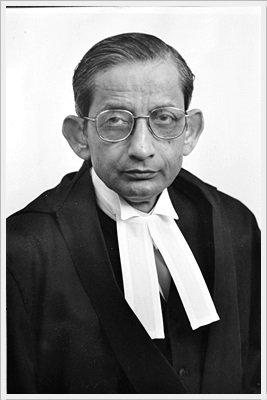

No Acts & Articles mentioned in this case
REPORTABLE
IN THE SUPREME COURT OF INDIA
CIVIL APPELLATE JURISDICTION
CIVIL APPEAL NO. 7316 OF 2008
(Arising out of SLP (C) No.14217 of 2004)
Mahesh Yadav & Anr. … Appellants
Versus
Rajeshwar Singh & Ors. … Respondents
J U D G M E N T
S.B. Sinha, J.
1.Leave granted.
2.Plaintiff in a suit for declaration of title and possession is before us
aggrieved by and dissatisfied with the judgment and order dated 4.3.2004
passed the High Court of Judicature at Patna in Civil Revision No.497 of
2003 whereby and whereunder an order dated 20.2.2003 passed by Munsif
Biharshrif, Nalanda in Miscellaneous Case No.19 of 1998 setting aside an
ex parte decree, was reversed.
3.Plaintiff filed the aforementioned suit as Secretary of Magadh Raj
Jarsandh Akhara, Rajgir. In the said suit six defendants were impleaded as
parties. It was, inter alia, contended that although the plaintiff had been in
uninterrupted possession of Plot No.5180, the defendants attempted to take
forcible possession of land measuring 9 decimals.
In the said suit, the defendants filed a joint written statement. During
the pendecy of the said suit, however, the defendants No.2 and 5 entered
into compromise with the plaintiff. A compromise petition filed by the
parties thereto was accepted. Indisputably, talks for compromise were
going on by and between the plaintiff and defendant Nos.1 and 6; however,
no compromise petition was filed in that behalf. Although witnesses
examined on behalf of the plaintiff were cross-examined on behalf of
defendant Nos.1 and 6, they did not adduce any evidence.
2
The learned Munsif, Biharsharif decreed the suit, stating :
“After contest this suit is decreed in favour of the
plaintiff partly on the basis of the compromise
petition and partly after contest. If the defendants
have effected any possession over the disputed
land during pendency of the present suit, the
plaintiff will have full right to effect eviction of
the defendants with the assistance of the court on
payment of proper cost. No order regarding any
cost is being given in the suit.”
4.Appellants herein, having come to know of the said ex parte decree
passed against them, filed an application in terms of Order IX Rule 13 of the
Code of Civil Procedure. They examined a large number of witnesses in
support of their case.
5.We may notice that plaintiff’s evidence was closed on 18.5.1995.
The learned Judge thereafter was transferred. The learned District Judge
transferred the said case by an administrative order dated 20.2.1997. There
is nothing on record to show that the counsel appearing on behalf of the
other defendants were the advocate of the appellants herein also. By reason
of an order dated 20.2.2003, the learned Judge while considering the case of
the appellants that they were kept in dark about the development of the case
due to connivance of the respondents herein as they had been informed that
3
the compromise had been entered into by some of the parties and the
Presiding Officer has been transferred, noticed :
“Four witnesses have been examined on behalf of
the applicant and all of them supported the facts
mentioned in the miscellaneous application.
Witness No.2 Chinta Devi is herself opposite party
No.2 and has clearly stated in examination in chief
that she is prepared to contest the suit and
therefore, the suit should be revived, on behalf of
the opposite party one witness was examined in
support of the rejoinder. Witness No.1 is himself
opposite party No.1. In the examination in chief
he has stated that the applicant has filed the
miscellaneous application with the intention of
causing harassment to him because the applicant
had information about the suit. Therefore, the
application should be dismissed.”
It was directed :
“After hearing both parties and after perusal of
records, I find that the applicant has furnished
satisfactory reasons to show that he had no
information about developments in Suit No.67/90
and his application for revival is fit to be accepted
but will cost.
Therefore the miscellaneous application is
accepted subject to cost of Rs.200/- under Order 9
Rule 13. And the ex parte decree in original suit
No.67/90 is rescinded.”
6.A revision application was filed thereagainst.
4
The High Court passed the impugned judgment only on the premise
that as all the defendants had filed a joint written statement, there was no
occasion for the court to set aside the ex parte decree stating that if a fraud
had been practised upon the court, an appropriate proceeding should have
been initiated therefor. It was held :
“If the contention of the defendants 1 and 6 is to
the effect that the decree was obtained by fraud
and collusion, then this matter need be pleaded by
facts and circumstances so as to take a declaration
under Section 44 of the Evidence Act, 1872. This
step was not taken. Suffice it to say that if there
be a fraud it is a criminal act and there is no
limitation if such action is to be taken by a party to
the suit.
Thus, at present the order dated 20 February, 2003
in Miscellaneous Case No.19 of 1998: Mahesh
Yadav & Ors. V. Rajeshwar Singh & Ors.
Permitting setting aside an ex parte decree under
Order 9 Rule 13 of the Code of Civil Procedure is
set aside.”
7.Mr. Goutam Prasad, learned counsel appearing on behalf of the
appellant, would submit that the High Court failed to take into consideration
that only because a joint written statement was filed, the same was binding
upon the appellants although some of them had been won over by the
plaintiff.
5
8.Mr. H.L. Agrawal, learned senior counsel appearing on behalf of the
respondents, however, supported the judgment.
9.Order IX Rule 13 of the Code of Civil Procedure reads as under :
“13. Setting aside decree ex parte against
defendants.—In any case in which a decree is
passed ex parte against a defendant, he may apply
to the Court by which the decree was passed for an
order to set it aside; and if he satisfies the Court
that the summons was not duly served, or that he
was prevented by any sufficient cause from
appearing when the suit was called on for hearing,
the Court shall make an order setting aside the
decree as against him upon such terms as to costs,
payment into Court or otherwise as it thinks fit,
and shall appoint a day for proceeding with the
suit:
Provided that where the decree is of such a nature
that it cannot be set aside as against such
defendant only it may be set aside as against all or
any of the other defendants also:
Provided further that no Court shall set aside a
decree passed ex parte merely on the ground that
there has been an irregularity in the service of
summons, if it is satisfied that the defendant had
notice of the date of hearing and had sufficient
time to appear and answer the plaintiffs claim.
Explanation.--Where there has been an appeal
against a decree passed ex parte under this rule,
and the appeal has been disposed of on any ground
other than the ground that the appellant has
withdrawn the appeal, no application shall lie
under this rule for setting aside the ex parte
decree.”
6
10.Indisputably, two of the defendants had entered into compromise with
the plaintiff. They have accepted the title of the plaintiff.
The contents of the written statement filed by the appellants had not
been noticed by the High Court. The High Court furthermore failed to
consider that according to the appellants herein, talks of compromise started
by and between the defendant Nos. 1 and 6 and the plaintiff. They cross-
examined the witnesses of the plaintiff but did not adduce any evidence. It
was on the aforementioned premise alone, the plaintiff was found to be in
possession of the suit land and a decree was passed.
11.There is nothing on record to show that the appellants herein were
being represented by the same learned advocate. If they were represented
by different advocates, it is not known as to whether the order of transfer of
the case was brought to the notice of the learned advocate for the appellants.
The High Court, in our opinion, therefore may not be correct in holding that
only because a joint written statement was filed, an application for ex parte
decree was not maintainable. In fact, the same was held to be maintainable
by the learned Civil Judge by an order dated 26.7.2000.
7
12.The proviso appended to Order IX Rule 13 of the Code of Civil
Procedure postulates that when an ex parte decree has been passed against
some of the defendants and it is necessary to set aside the entire decree, the
Court is not powerless to do so. If an application for setting aside the ex
parte decree was maintainable at the instance of the appellants, we fail to
understand as to why a separate suit was required to be filed. When an ex
parte decree is passed, the defendant may have more than one remedies. He
may file a suit contending that the decree was obtained fraudulently. He
may file an application under Order IX Rule 13 of the Code of Civil
Procedure for setting aside the ex parte decree. He may prefer an appeal
from the ex parte judgment and decree. In a given case, he may also file a
review application.
13.In Bhanu Kumar Jain v. Archana Kumar & Anr. [(2005) 1 SCC 787] ,
this Court held :
“26. When an ex parte decree is passed, the
defendant (apart from filing a review petition and
a suit for setting aside the ex parte decree on the
ground of fraud) has two clear options, one, to file
an appeal and another to file an application for
setting aside the order in terms of Order 9 Rule 13
of the Code. He can take recourse to both the
proceedings simultaneously but in the event the
appeal is dismissed as a result whereof the ex parte
decree passed by the trial court merges with the
order passed by the appellate court, having regard
8
to Explanation appended to Order 9 Rule 13 of the
Code a petition under Order 9 Rule 13 would not
be maintainable. However, Explanation I
appended to the said provision does not suggest
that the converse is also true.”
It was, however, observed :
“28. It is true that although there may not be a
statutory bar to avail two remedies simultaneously
and an appeal as also an application for setting
aside the ex parte decree can be filed; one after the
other; on the ground of public policy the right of
appeal conferred upon a suitor under a provision
of statute cannot be taken away if the same is not
in derogation or contrary to any other statutory
provisions.”
14.The judgment of the High Court, therefore, in our opinion is not
sustainable.
While, however, saying so, we must express our dissatisfaction in the
manner in which the learned Civil Judge has passed the order impugned
before the High Court. The said order is an unreasoned one. The evidence
adduced on behalf of the appellants were not analysed for arriving at a
finding as to whether a case for setting aside an ex parte decree has been
made out by the appellants or not. The matter had not been considered as is
required in terms of Order IX Rule 13 of the Code of Civil Procedure. An
9
order setting aside the ex parte decree being a judicial order should have
been supported by reasons. The learned Judge could not have allowed the
said application without following the legal principles on the basis whereof
such an order could be passed.
We, therefore, in exercise of our jurisdiction under Article 142 of the
Constitution of India, while setting aside the order passed by the High Court
also set aside the order passed by the learned Civil Judge. The Civil Judge
should consider the matter afresh on merit and pass a reasoned order.
15.Appeal is allowed with the aforementioned directions. However, in
the facts of and circumstances of this case, parties shall bear their own costs.
..………………………J.
[S.B. Sinha]
..………………………J.
[Cyriac Joseph]
New Delhi;
December 16, 2008
10

 Login with google
Legal Notes
Add a Note....