
As per case facts, the appellant was convicted under Section 364A of the Indian Penal Code for kidnapping for ransom and sentenced to life imprisonment by the trial court, a ...
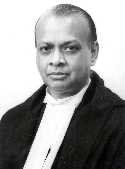
No Acts & Articles mentioned in this case
http://JUDIS.NIC.IN SUPREME COURT OF INDIA Page 1 of 4
CASE NO.:
Appeal (crl.) 1343 of 2002
PETITIONER:
Malleshi
RESPONDENT:
State of Karnataka
DATE OF JUDGMENT: 15/09/2004
BENCH:
ARIJIT PASAYAT & PRAKASH PRABHAKAR NAOLEKAR
JUDGMENT:
J U D G M E N T
ARIJIT PASAYAT, J.
Appellant was convicted for offence punishable under Section 364
A of the Indian Penal Code, 1860 (in short the 'IPC'), and sentenced to
life imprisonment by the learned First Additional Sessions Judge,
Chitradurga (hereinafter referred to as the 'trial court'). In appeal
Karnataka High Court by the impugned judgment confirmed the conviction
and sentence. It is to be noticed that four persons faced trial.
Appellant-accused for the sake of convenience is described as A-1 and
the co-accused as A2 to A4. They were acquitted by the trial court.
Accusations which led to the trial of the accused persons are as
follows:
Vijayabhasker, (PW 2) was a student of S.J.M. College, situated
on Holalkere Road in Chitradurga, he was studying I year B.Sc., and was
staying at Challakere in his Uncle's house. He used to come to
Chitradurga to attend the college daily by bus. Jagadish (PW 3) was a
classmate of PW 2 and resident of Challakere, both of them usually come
together to Chitradurga from Challakere. On 25.11.1997 Vijayabhaskar,
(PW 2), Jagadish (PW 3) and their friend Raghavendra,(PW 4) finished
their practical classes and came out of the college at about 2-45 p.m.
At that time, a person called PW 2 by taking his name, he turned and
saw that person was wearing white shirt and pant. PW 2 went to him and
was told by that person that he knew his father Hanumantha Rao, as he
used to come to their village Chintarlapalli in Anantapur District, for
Tamarind business. He enquired with PW 2 about the fees and other
expenses stating that he wanted to admit his son. PW.2 told him that
about Rs.2,000/- will be the expenses in the college. A Trax Jeep was
parked nearby. The said person took PW 2 towards the Trax jeep
informing him that his son is there. PW 2 went there, he was asked to
sit in the jeep. Three other persons also came and sat in the jeep. The
person who took him to the jeep also sat by his side, there were two
drivers in the jeep, they closed the doors of the jeep and it was
driven towards Challakere on N.H. 4. They treated PW 2 well till they
crossed Challakere gate. Thereafter he was threatened not to raise any
voice, otherwise he will be murdered. After they crossed Challakere,
they enquired from him about the phone number stating that they will
ask his father to pay Rs.4,00,000/- to them for his release. PW 2 told
them that such huge amount cannot be arranged and hardly they may get
about Rs.50,000/- by raising loan from others. They told him that
their Boss wanted at least Rs.2,00,000/-. On the way, they allowed him
to meet the call of nature however some of them accompanied him. He
was given water to drink. They stopped the vehicle near a village and
the accused persons got down for buying cigarettes. The drivers in the
http://JUDIS.NIC.IN SUPREME COURT OF INDIA Page 2 of 4
jeep asked him to run away, and accordingly PW.2 ran away, he came to
know that the place was Byrapur village. He went and informed the
villagers and got them near the jeep, they surrounded the said jeep,
caught hold the accused persons, informed to the police, Molakalmurnu.
They were all taken to the police station along with the said jeep.
Later on PW 2 gave complaint as per Ex.P.2, which was registered.
Subsequently, the case was transferred to Chitradurga Rural Police and
then the charge sheet came to be filed. According to prosecution
accused No. 1 Malleshi was the person who was in white shirt and pant,
who abducted PW.2 from the college and accused No.2 to 4 were the other
three persons who were in the jeep during the course of the incident.
Trial court analysed the evidence of PW 2 who was the main
witness and whose abduction was alleged. PWs. 3 and 4 were also stated
to have witnessed a part of the occurrence i.e. A 1 calling the victim
PW-2 and their going together towards the vehicle. Though PW 4 resiles
from the statement made during investigation, his evidence corroborated
that of PWs. 2 and 3 to the extent that he had seen PW 2 going in the
company of somebody towards the trax jeep. PWs. 6 and 11 were the
drivers of the vehicle. They resiled from their statements recorded
during investigation. Trial court took into account the evidence of PWs
2 and 3 and the fact that the vehicle and the accused persons were
confined by the villagers and they were arrested from the spot found
the accused /appellant guilty while acquitting A-2 to A-4 as the
evidence was not found sufficient to convict them.
In appeal the High Court found that the analysis of factual
position as done by the trial court did not suffer from any infirmity.
It also analysed the evidence in detail and affirmed the view of the
trial court. The appeal was accordingly dismissed.
In support of the appeal learned counsel for the appellant
submitted that the evidence of PW 2, the alleged victim was not
sufficient to hold the appellant guilty. PW 2 had no earlier
acquaintance with the accused \026 appellant. Since there was no test
identification parade, it was not proper on the part of the trial court
to hold the accused guilty. The alleged demand of ransom has not been
established. In any event, no demand has been conveyed to any person
for a ransom and therefore Section 364 A has no application.
In response learned counsel for the State of Karnataka
supported the judgments of the trial court and the High Court and
submitted that the evidence has been analysed carefully by both the
trial court and the High Court and no infirmity has surfaced. It was
further submitted that keeping in view the clear language of Section
364 A it is evident that the accused has been rightly convicted under
Section 364 A of the IPC.
Section 364 A deals with 'Kidnapping for ransom etc.' This
Section reads as follows:
"Whoever kidnaps or abducts any person or keeps a
person in detention after such kidnapping or
abduction and threatens to cause death or hurt to
such person, or by his conduct gives rise to a
reasonable apprehension that such person may be put
to death or hurt, or causes hurt or death to such
person in order to compel the Government or
(any foreign State or international inter-governmental
organization or any other person) to do or abstain
from doing any act or to pay a ransom, shall be
punishable with death, or imprisonment for life, and
shall also be liable to fine."
http://JUDIS.NIC.IN SUPREME COURT OF INDIA Page 3 of 4
The Section refers to both "Kidnapping" and "Abduction". Section
359 defines Kidnapping. As per the said provision there are two types
of kidnapping i.e. (1) kidnapping from India; and (2) kidnapping from
lawful guardianship.
Abduction is defined in Section 362. The provision envisages two
types of abduction i.e. (1) by force or by compulsion; and/or (2)
inducement by deceitful means. The object of such compulsion or
inducement must be the going of the victim from any place. The case at
hand falls in the second category.
To "Induce" means "to lead into". Deceit according to its plain
dictionary meaning signifies anything intended to mislead another. It
is a matter of intention and even if promise held out by the accused
was fulfilled by him, the question is: whether he was acting in a
bonafide manner?
The offence of abduction is a continuing offence. This Section
was amended in 1992 by Act XLII of 1993 with effect from 22.5.1993 and
it was subsequently amended in 1995 by Act XXIV of 1995 with effect
from 26.5.1995. The Section provides punishment for kidnapping,
abduction or detaining for ransom.
To attract the provisions of Section 364 A what is required to be
proved is (1) that the accused kidnapped or abducted the person; and
(2) kept him under detention after such kidnapping and abduction; and
(3) that the kidnapping or abduction was for ransom. Strong reliance
was placed on a decision of the Delhi High Court in Netra Pal v. The
State (NCT of Delhi) (2001 Crl. L.J. 1669) to contend that since the
ransom demand was not conveyed to the father of PW 2, the intention to
demand was not fulfilled.
To pay a ransom as per Black's Law Dictionary means "to pay price
or demand for ransom". The word "demand" means "to claim as one's
due;" "to require"; "to ask relief"; "to summon"; "to call in Court";
"An imperative request preferred by one person to another requiring the
latter to do or yield something or to abstain from some act;" An asking
with authority, claiming." The definition as pointed out above would
show that the demand has to be communicated. It is an imperative
request or a claim made.
Netra Pal's case (supra) was one where a child was kidnapped.
The court found as a fact that since the victim was a child, demand for
ransom could not have been made to him and only the demand to pay the
ransom could have been made to his guardians. In that factual
background it was held that the offence was not under Section 364 A but
was under Section 362 of the IPC. Accordingly conviction of the
accused was altered to offences relatable to Sections 363 and 365 of
the IPC.
In the instant case as the factual position found by the trial
court and the High Court goes to show, the object of abduction was for
ransom. This was clearly conveyed to the victim PW-2. He was even
conveyed the amount to be paid. It cannot be laid down as a strait-
jacket formula that the demand for payments has to be made to a person
who ultimately pays. By way of illustration it can be said that a
rich business man is abducted. He is told that for his release his
family members have to pay a certain amount of money; but money
actually belongs to the person abducted. The payment for release is
made by the persons to whom the demand is made. The demand originally
is made to the person abducted or kidnapped. After making the demand to
the kidnapped or abducted person merely because the demand could not be
conveyed to some other person, as the accused is arrested in the
meantime, does not take away the offence out of the purview of Section
364 A. It has to be seen in such a case as to what was the object
http://JUDIS.NIC.IN SUPREME COURT OF INDIA Page 4 of 4
of kidnapping or abduction. The essence of abduction as noted above is
causing to stay in isolation and demand for ransom. The demand in the
present case has already been made by conveying it to the victim. In
Netra Pal's case (supra) the High Court noted that there was no demand
to pay. The factual position in that case as noted above is that the
victim was a child to whom no demand could have been made. In that
background the High Court took the view that Section 364 A has no
application as no demand has been communicated. The position factually
is different here. Ultimately the question to be decided is "what was
the intention? Was it demand of ransom"? There can be no definite
manner in which demand is to be made. Who pays the ransom is not the
determinative fact, as discussed supra.
Above being the position, there is no infirmity in the judgment
of the courts below to warrant any interference.
Appeal is dismissed.

 Login with google
Legal Notes
Add a Note....