
The case was a challenge of the sentence given by the Allahabad High Court in which the two accused Sher Bahadur and Jagdish were acquitted and rest of the four ...
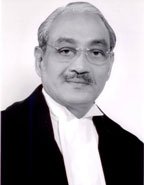

No Acts & Articles mentioned in this case
REPORTABLE
IN THE SUPREME COURT OF INDIA
CRIMINAL APPELLATE JURISDICTION
CRIMINAL APPEAL NO.77 OF 2007
Mano Dutt & Anr. … Appellants
Versus
State of U.P. … Respondent
J U D G M E N T
Swatanter Kumar, J.
1.The present appeal is directed against the judgment and order
dated 21
st
March, 2006 of the High Court of Judicature at
Allahabad, Lucknow Bench, which had partially accepted the
appeal by acquitting the accused persons of the offence under
Section 323 read with Section 34 of the Indian Penal Code, 1860
(hereafter, ‘IPC’), but affirmed the imposition of life imprisonment
for the offence under Section 302 read with Section 34, IPC as
awarded by the learned trial court vide its judgment dated 6
th
January, 1982. The trial court had found the four accused Ram
Dutt (now dead), Thakur Prasad, Mano Dutt and Ram Narain guilty
of an offence under Section 302, read with Section 34, IPC and also
offence under Section 323, read with Section 34, IPC and had
awarded them life imprisonment for the first offence and a fine of
Rs.1,000/- for the second, in default of which, to undergo rigorous
imprisonment for three months.
2.This is a case where the incident, on 22
nd
October, 1977,
which resulted in the death of Siya Ram, is admitted between the
parties. The primary question that falls for determination is, as to
which of the parties was the aggressor, besides determining the
merits of the contentions raised on behalf of the appellant. Before
noticing the prosecution version, we may notice that in the present
case, six accused were charged and tried for an offence under
Sections 302 and 323, both read with Section 34 IPC. Learned trial
court, vide its judgment dated 6
th
January, 1982 had acquitted
accused Sher Bahadur and Jagdish, while it convicted Ram Dutt,
Thakur Prasad, Mano Dutt and Ram Narain for both the afore-
2
stated offences. During the pendency of the appeal before the High
Court, Ram Dutt died and the Court convicted the other accused
vide its judgment under appeal.
3.Thakur Prasad had filed a separate appeal challenging the
said judgment of the High Court, being SLP (Crl.) No.3929 of 2006
titled Thakur Prasad v. State of U.P. which came to be dismissed by
order of this Court dated 18
th
August, 2006. In other words, the
conviction of the accused Thakur Prasad under Section 302 read
with Section 34 IPC attained finality. However, vide the same order,
this Court granted leave to appeal in the case of Mano Dutt and
Ram Narain. This is how the present appeal has come up for final
hearing before us.
4.The case of the prosecution is that Mano Dutt, Ram Narain
and Jagdish are real brothers while Ram Dutt and Thakur Prasad
are their cousins. On 22
nd
October, 1977 during day time, Siya
Ram was doing earth filling in front of his sariya (a place of
tethering cattle). The four accused, namely, Ram Dutt, Thakur
Prasad, Ram Narain and Mano Dutt out of the six named accused
had come there and asked Siya Ram not to do earth filling. Siya
3
Ram told them that it was his land and he would not stop the work
of land filling. Thereupon, Siya Ram called certain villagers. The
matter was discussed with the villagers, all of whom said that the
land was that of Siya Ram and he could carry on with land filling on
his own land. After deciding this, the villagers went away and Siya
Ram resumed the filling of the earth. Accused Ram Dutt, Thakur
Prasad, Mano Dutt, Ram Narain, Jagdish and Sher Bahadur, armed
with lathis, came there and chased Siya Ram. They said that they
would finish Siya Ram. Siya Ram was able to run for a short
distance away, whereafter all the accused surrounded him in front
of the house of one Fateh Mohmad. Accused Ram Dutt, Thakur
Prasad, Mano Dutt and Ram Narain started beating Siya Ram with
their lathis. The father of Siya Ram, Nankoo and brother Salik Ram
rushed towards Siya Ram to rescue him. Accused Sher Bahadur
and Jagdish intercepted them in front of one Chiddan’s door and
beat them with their lathis. Siya Ram fell down after getting the
lathi blows. Siya Ram raised alarm, but still these accused persons
continued to beat him and in the meanwhile, Smt. Sangam Devi,
Bhurey and Pradhan came there. The Pradhan snatched the lathis
of the four accused, who then fled away from the scene. Siya Ram
4
sustained serious injuries. Nankoo and Salik Ram also sustained
injuries. Pradhan and the other villagers took the injured to the
Police Station.
5.The incident was narrated in the form of a report of
occurrence, by the deceased Siya Ram, who was in an injured state
at that time. The same was transcribed by Panna Lal Pandey, PW3
and submitted to the Police Station, where a First Information
Report (hereafter, ‘FIR’) Exhibit Ka7 was prepared.
6.On this statement, the officer present at the police station had
registered a case under Section 308, IPC and the investigation was
taken over by C.R. Malviya. During investigation, C.R. Malviya
recorded the statements of a number of witnesses as well as sent
Siya Ram to the hospital. Siya Ram succumbed to his injuries on
24
th
October, 1977 at about 8.00 a.m. in the District Hospital,
Faizabad. Upon his death, the offence was converted to one under
Section 302, IPC. The Investigating Officer visited the spot,
recovered blood-stained earth, Ex. Ka-8 and prepared the site plan,
Ext. Ka-9 and examined various witnesses. After completion of the
investigation, the charge sheet was filed before the court of
5
competent jurisdiction. The trial Court vide its order dated 30
th
July, 1980 charged the accused with offences under Sections 147,
304/149 and 323/149. However, subsequently, the charge was
amended and all the accused were charged with offences under
Sections 302/149-147 and 323/149, IPC. The accused pleaded
not guilty and faced trial before the Court of Sessions. As already
noticed, out of the six accused, four were convicted by the trial
court. One accused, namely Ram Dutt, died during pendency of the
appeal before the High Court and all the other accused were
acquitted of the offences under Section 323/34 IPC, but convicted
for offences under Section 302/34 IPC. For the reasons afore-
recorded in the present appeal, we are only concerned with the two
accused, namely Mano Dutt, and Ram Narain.
7.The prosecution had examined Smt. Sangam Devi, PW-1 (wife
of the deceased), Salik Ram, PW-2 (injured witness). Panna Lal
Pandey, PW-3 (scribe of Siya Ram’s statement) and two doctors, Dr.
S.N. Rai (P.W.-4) and Dr. Surya Bhan Singh (P.W. 5), besides
examining the formal witnesses.
6
8.Dr. Surya Bhan Singh, PW-5 had examined Salik Ram when
he was brought to the hospital on the evening of 22
nd
October, 1977
at about 4.30 p.m. He had noticed lacerated bone-deep wound, 3
cm x 0.5 cm, on the frontal region of the scalp, from which blood
was oozing. The doctor described the injuries on the body of the
deceased as follows:-
“(1)Lacerated wound mark 3 cm x 0.5 cm on
the left side of head on the parietal
region.
(2)Bruise 9 cm x 1.5 cm in the left scapula
region.
(3)Bruise 12 cm x 1.5 cm in the right
scapula region of scalp.
(4)Bruise 9 cm x 2 cm in the right scapular
region of scalp.
(5)Bruise 19 cm x 2 cm in the right
scapular region of scalp.”
9.This very doctor had examined Salik Ram, son of Nankoo and
had noticed as many as five injuries on his body. He had also
examined Nankoo and noticed four injuries on his person. The
7
injuries on the bodies of Nankoo and Salik Ram both were found to
be simple injuries and were caused with blunt object like lathi,
while Siya Ram was transferred to the specialist for obtaining expert
opinions on his injuries and for his treatment.
10.After the death of Siya Ram on 24
th
October, 1977, the post-
mortem on the body of the deceased was performed by Dr. S.N. Rai,
PW-4, who noticed four ante-mortem injuries as follows:-
“(1)Lacerated wound 2.5 cm x ¾ cm x bone
deep, on Rt. side head, 6.5 cm above the
eyebrow of right eye.
(2)Lacerated wound 2.5 cm x 1 cm x bone
deep injures 1-2 cm on the left side of the
head.
(3)Contusion 6 cm x 4 cm in the right side
of the face involving whole orbital area.
(4)Diffused, swelling on the Rt. Side of head
parietal region.”
11.Upon internal examination of the body of the deceased, he also
found the following internal injuries:-
“1.Comminuted fracture in the area of 11.5
cm x 10 cm on the right Parietal Region
of the skull.
8
2.Comminuted fracture in the area of 6.5
cm x 6.5 cm in the frontal Bone was
found.
3.Comminuted fracture in the area of 10
cm x 4 cm on the left side of temporo
parietal Region was found.
4.Large quantity of blood was accumulated
on the right side of head between skin
and bone.”
12.The doctor stated that, in his opinion, the cause of death was
a shock due to ante-mortem injuries and loss of blood. He
specifically stated that all the injuries are possible by blows of
lathis. In his cross-examination, he clearly stated that these
injuries are ordinarily sufficient to cause death.
13.It needs to be noticed that one of the appellants, namely Ram
Dutt, had also allegedly lodged a report against the deceased Siya
Ram, injured Nankoo, and two other sons of Nankoo, i.e., Salik
Ram and Ram Dhiraj. After registering the FIR, the Investigating
Officer in his report had also stated that the accused Ram Dutt had
sustained some injuries on his person.
9
14.The conviction of the accused and the impugned judgment
have been challenged inter alia, but primarily, on the following
grounds:-
i)The prosecution did not examine the material witnesses like
the investigating officer as well as other witnesses who, as
per the case of the prosecution, were actually present at the
time of occurrence of the incident.
ii)According to the prosecution, PW-1 and PW-2 both are eye-
witnesses but they are the widow and brother of the
deceased, and therefore, are interested witnesses and their
statement cannot be relied upon by the Court.
iii)The accused persons themselves had lodged a counter
report against the deceased, PW-2 and other relations of the
deceased, alleging attack/aggression. This was not a
counter blast but a true and correct happening of events as
reported by the accused, against the complainants, in
which the accused Ram Dutt had suffered injuries. For
these reasons, the accused should be entitled to the benefit
of doubt and consequently, to an order of acquittal.
10
iv)Even if the entire prosecution story is assumed to be
correct, even then it does not constitute an offence under
Section 302, IPC. In the facts and circumstances of the
case, at the worst, the accused could be held guilty of an
offence punishable under Section 304, Part-I, IPC.
v)The deceased had only three injuries, therefore, on the one
hand, the story that six accused had assaulted him with
lathis even when he was lying on the ground is not
physically possible and on the other hand, the prosecution
has failed to explain the injuries suffered by Ram Dutt,
accused. Thus, it creates a specific doubt in the story of the
prosecution.
vi)Lastly, it is contended that the dismissal of the other
Special Leave Petition filed by Thakur Prasad does not have
any bearing on the fate of the present appeal, inasmuch as
the Court is vested with wide powers in terms of Section 38,
IPC, to deal with the case of the present appellants on
distinct and different footing. Even if Thakur Prasad’s
conviction for an offence under Section 302 read with
11
Section 34 IPC has attained finality, the appellants may still
be acquitted.
15.We have already noticed that the incident in question is
admitted. According to the accused, the fight was started by the
deceased and his relations and they had exercised their right of
private self-defence, to protect themselves. To the contrary,
according to the witnesses of the prosecution as well as according
to the version given by the deceased, the accused were aggressive
and had attacked the deceased and his family members after
deliberately planning to assault and kill them. It is not a case
where the circumstances, even remotely, can be construed to have
satisfied the ingredients of self-defence. We may examine few of the
circumstances in this case. From the record, it appears that Ram
Dutt had lodged a complaint of the incident that took place on 22
nd
October, 1977 at about 12.00 p.m. According to this report the
accused in that complaint (i.e., the deceased and his family
members) had been putting earth on Ram Dutt’s sariya, which he
had forbade. There was verbal altercation between the parties and
then the accused in that complaint (i.e., the deceased herein)
12
started assaulting him with lathis and it was only by raising an
alarm that the people of the village came to the place of occurrence
and his life was saved. According to this complaint, he had suffered
injuries on his head.
16.Firstly, this complaint had not been proved by Ram Dutt
during the trial. Accordingly, the concurrent view taken by the
courts below, that this document cannot be relied in evidence,
cannot be faulted with. Furthermore, Ram Dutt did not examine a
single witness in his defence to prove that he was attacked by the
deceased and his family members or that they were putting earth at
the door of Ram Dutt’s sariya. No doubt, Ram Dutt was subjected
to medical examination by the Medical Officer vide Ex.Kha 1. It
was noticed that he had suffered lacerated wounds on the central
and other regions of skull, and had complained of pain in left leg.
This would show that Ram Dutt had suffered some injuries but
where and how these injuries were suffered, was for him to
establish, particularly when he had taken a specific stand that the
deceased and his family members were at fault and were aggressive.
He claims that they had caused serious injuries to his person and
13
this incident happened in the presence of the villagers. It is a
settled canon of evidence jurisprudence that one who alleges a fact
must prove the same. It is also his case that the prosecution has
not explained the injuries on his person and, therefore, the
argument impressed upon the Court is that the attack with lathis
was in exercise of self-defence and the failure of the prosecution to
explain injuries on the person of Ram Dutt is a circumstance which
creates a serious doubt in the story of the prosecution. We are not
impressed with this contention primarily for the above reasons and
also because of the fact that if the police was not investigating into
the complaint, Ram Dutt was not helpless or remediless in law. He
could have filed an application before the concerned Magistrate in
accordance with the provisions of Code of Criminal Procedure, 1973
(Cr.P.C.) for directing the police to investigate and even to summon
the accused in that complaint. But none of the accused, including
Ram Dutt, took any of the steps available to them in law. When a
person claims exercise of private self-defence, the onus lies on him
to show that there were circumstances and occasions for exercising
such a right. In other words, these basic facts must be established
by the accused. Just because one circumstance exists amongst the
14
various factors, which appears to favour the person claiming right
of self-defence, does not mean that he gets the right to cause the
death of the other person. Even the right of self-defence has to be
exercised directly in proportion to the extent of aggression.
17.As per the medical report, the injuries on the body of Ram
Dutt were found to be ‘simple in nature’. On the other hand, we
have a complete version of the prosecution, duly supported by
witnesses, out of which PW1 and PW2 are eye-witnesses to the
occurrence. The bone of contention between the parties was the
statement of the deceased, that he was filling the earth over some
land, which he claimed to be his land; according to the accused, the
earth-filling was carried out in front of the door of Ram Dutt.
According to both the parties, the villagers came to the spot. Out of
the two versions, the one put forward by the prosecution and the
other in the defence of the accused, the version of the prosecution,
as has been disclosed by the eye-witnesses, is trustworthy, reliable
and entirely plausible in the facts and circumstances of the case.
The mere fact that the Investigating Officer has not been produced,
or that there is no specific explanation on record as to how Ram
15
Dutt suffered these injuries, would not vitiate the trial or the case of
the prosecution in its entirety. These claims of the accused would
have been relevant considerations, provided the accused had been
able to establish the other facts alleged by them. It is not always
mandatory for the prosecution to examine the Investigating Officer,
provided it can establish its case beyond reasonable doubt even in
his absence. The present case certainly falls in the latter class.
Where the accused lead no defence, they cannot take benefit of the
fact that the prosecution did not examine any independent
witnesses. The accused would be deemed to have been aware of the
consequences in law when they gave a statement admitting the
occurrence but attributing aggression and default to the deceased
and his family members.
18.Accused Thakur Prasad is also stated to own a sariya and was
also allegedly using his lathi in self-defence, as according to their
story, four persons with the deceased and his family members had
attacked them. Strangely, Thakur Prasad suffered no injury. These
are the circumstances which, examined cumulatively, would
provide support to the case of prosecution.
16
19.Another contention raised on behalf of the accused/appellants
is that only family members of the deceased were examined as
witnesses and they being interested witnesses cannot be relied
upon. Furthermore, the prosecution did not examine any
independent witnesses and, therefore, the prosecution has failed to
establish its case beyond reasonable doubt. This argument is again
without much substance. Firstly, there is no bar in law in
examining family members, or any other person, as witnesses.
More often than not, in such cases involving family members of
both sides, it is a member of the family or a friend who comes to
rescue the injured. Those alone are the people who take the risk of
sustaining injuries by jumping into such a quarrel and trying to
defuse the crisis. Besides, when the statement of witnesses, who
are relatives, or are parties known to the affected party, is credible,
reliable, trustworthy, admissible in accordance with the law and
corroborated by other witnesses or documentary evidence of the
prosecution, there would hardly be any reason for the Court to
reject such evidence merely on the ground that the witness was
family member or interested witness or person known to the
affected party. There can be cases where it would be but inevitable
17
to examine such witnesses, because, as the events occurred, they
were the natural or the only eye witness available to give the
complete version of the incident. In this regard, we may refer to the
judgments of this Court, in the case of Namdeo v. State of
Maharashtra, [(2007) 14 SCC 150]. This Court drew a clear
distinction between a chance witness and a natural witness. Both
these witnesses have to be relied upon subject to their evidence
being trustworthy and admissible in accordance with the law. This
Court, in the said judgment, held as under:
“28. From the aforesaid discussion, it is
clear that Indian legal system does not insist
on plurality of witnesses. Neither the
legislature (Section 134 of the Evidence Act,
1872) nor the judiciary mandates that there
must be particular number of witnesses to
record an order of conviction against the
accused. Our legal system has always laid
emphasis on value, weight and quality of
evidence rather than on quantity, multiplicity
or plurality of witnesses. It is, therefore, open
to a competent court to fully and completely
rely on a solitary witness and record
conviction. Conversely, it may acquit the
accused in spite of testimony of several
witnesses if it is not satisfied about the quality
of evidence. The bald contention that no
conviction can be recorded in case of a solitary
eyewitness, therefore, has no force and must
be negatived.
18
29. It was then contended that the only
eyewitness, PW 6 Sopan was none other than
the son of the deceased. He was, therefore,
“highly interested” witness and his deposition
should, therefore, be discarded as it has not
been corroborated in material particulars by
other witnesses. We are unable to uphold the
contention. In our judgment, a witness who is
a relative of the deceased or victim of a crime
cannot be characterised as “interested”. The
term “interested” postulates that the witness
has some direct or indirect “interest” in having
the accused somehow or the other convicted
due to animus or for some other oblique
motive.”
20.It will be useful to make a reference of another judgment of
this Court, in the case of Satbir Singh & Ors. v. State of Uttar
Pradesh, [(2009) 13 SCC 790], where this Court held as under:
“26. It is now a well-settled principle of law
that only because the witnesses are not
independent ones may not by itself be a
ground to discard the prosecution case. If the
prosecution case has been supported by the
witnesses and no cogent reason has been
shown to discredit their statements, a
judgment of conviction can certainly be based
thereupon. Furthermore, as noticed
hereinbefore, at least Dhum Singh (PW 7) is an
independent witness. He had no animus
against the accused. False implication of the
accused at his hand had not been suggested,
far less established.”
19
21.Again in a very recent judgment in the case of Balraje @
Trimbak v. State of Maharashtra [(2010) 6 SCC 673], this Court
stated that when the eye-witnesses are stated to be interested and
inimically disposed towards the accused, it has to be noted that it
would not be proper to conclude that they would shield the real
culprit and rope in innocent persons. The truth or otherwise of the
evidence has to be weighed pragmatically. The Court would be
required to analyse the evidence of related witnesses and those
witnesses who are inimically disposed towards the accused. But if
after careful analysis and scrutiny of their evidence, the version
given by the witnesses appears to be clear, cogent and credible,
there is no reason to discard the same.
22.As per PW5, Dr. Surya Bhan Singh, he had examined Salik
Ram Yadav as well as Nankoo on 22
nd
October, 1977 itself and
noticed as many as five injuries on Salik Ram and four injuries
upon the person of Nankoo. He stated that the deceased was the
son of Nankoo, while Salik Ram was his brother. These injuries
were suffered by them from a blunt object. Salik Ram was
20
examined as PW2 and his statement is cogent, coherent, reliable
and fully supports the case of the prosecution. However, the other
injured witness, Nankoo, was not examined.
23.In our view, non-examination of Nankoo, to which the accused
raised the objection, would not materially affect the case of the
prosecution. Normally, an injured witness would enjoy greater
credibility because he is the sufferer himself and thus, there will be
no occasion for such a person to state an incorrect version of the
occurrence, or to involve anybody falsely and in the bargain, protect
the real culprit. We need not discuss more elaborately the
weightage that should be attached by the Court to the testimony of
an injured witness. In fact, this aspect of criminal jurisprudence is
no more res integra, as has been consistently stated by this Court
in uniform language. We may merely refer to the case of Abdul
Sayeed v. State of Madhya Pradesh [(2010) 10 SCC 259], where this
Court held as under:
“28. The question of the weight to be
attached to the evidence of a witness that was
himself injured in the course of the occurrence
has been extensively discussed by this Court.
Where a witness to the occurrence has himself
been injured in the incident, the testimony of
21
such a witness is generally considered to be
very reliable, as he is a witness that comes
with a built-in guarantee of his presence at the
scene of the crime and is unlikely to spare his
actual assailant(s) in order to falsely implicate
someone. “Convincing evidence is required to
discredit an injured witness.” [Vide Ramlagan
Singh v. State of Bihar, Malkhan Singh v. State
of U.P., Machhi Singh v. State of Punjab,
Appabhai v. State of Gujarat, Bonkya v. State
of Maharashtra, Bhag Singh, Mohar v. State of
U.P. (SCC p. 606b-c), Dinesh Kumar v. State of
Rajasthan, Vishnu v. State of Rajasthan,
Annareddy Sambasiva Reddy v. State of A.P.
and Balraje v. State of Maharashtra.]
29. While deciding this issue, a similar
view was taken in Jarnail Singh v. State of
Punjab, where this Court reiterated the special
evidentiary status accorded to the testimony of
an injured accused and relying on its earlier
judgments held as under: (SCC pp. 726-27,
paras 28-29)
“28. Darshan Singh (PW 4) was an
injured witness. He had been examined
by the doctor. His testimony could not be
brushed aside lightly. He had given full
details of the incident as he was present
at the time when the assailants reached
the tubewell. In Shivalingappa
Kallayanappa v. State of Karnataka this
Court has held that the deposition of the
injured witness should be relied upon
unless there are strong grounds for
rejection of his evidence on the basis of
major contradictions and discrepancies,
for the reason that his presence on the
scene stands established in case it is
22
proved that he suffered the injury during
the said incident.
29. In State of U.P. v. Kishan Chand a
similar view has been reiterated observing
that the testimony of a stamped witness
has its own relevance and efficacy. The
fact that the witness sustained injuries at
the time and place of occurrence, lends
support to his testimony that he was
present during the occurrence. In case
the injured witness is subjected to
lengthy cross-examination and nothing
can be elicited to discard his testimony, it
should be relied upon (vide Krishan v.
State of Haryana). Thus, we are of the
considered opinion that evidence of
Darshan Singh (PW 4) has rightly been
relied upon by the courts below.”
30. The law on the point can be summarised
to the effect that the testimony of the injured
witness is accorded a special status in law.
This is as a consequence of the fact that the
injury to the witness is an inbuilt guarantee of
his presence at the scene of the crime and
because the witness will not want to let his
actual assailant go unpunished merely to
falsely implicate a third party for the
commission of the offence. Thus, the
deposition of the injured witness should be
relied upon unless there are strong grounds
for rejection of his evidence on the basis of
major contradictions and discrepancies
therein.”
24.To the similar effect is the judgment of this Court in the case
of Balraje @ Trimbak (supra).
23
25.Another argument with regard to appreciation of evidence is
that the material witness having not been examined and the entire
prosecution story being based upon the statements of PW1 and
PW2, who are the interested witnesses, the entire prosecution
evidence suffers from a patent infirmity in law.
26.Again, we are not impressed by this contention, primarily for
the reasons afore-recorded. Furthermore, it may also be noticed
that non-examination of any independent witness, in the facts of
the present case, is not fatal to the case of the prosecution. The
Court can convict an accused on the statement of a sole witness,
even if he was a relative of the deceased and thus, an interested
party. The condition precedent to such an order is that the
statement of such witness should satisfy the legal parameters
stated by this Court in a catena of judgments. Once those
parameters are satisfied and the statement of the witness is
trustworthy, cogent and corroborated by other evidence produced
by the prosecution, oral or documentary, then the Court would not
fall in error of law in relying upon the statements of such witness.
It is only when the Courts find that the single eye-witness is a
24
wholly unreliable witness that his testimony is discarded in toto and
no amount of corroboration can cure its defect. Reference in this
regard can be made to the judgment of this Court, in the case of
Anil Phukan v State of Assam [(1993) 3 SCC 282].
27.Now we may examine as to the place and manner in which the
incident occurred. It is a very important aspect of this case that the
FIR itself was lodged by the deceased along with PW3 Panna Lal
Pandey who transcribed the same at the police station itself. The
deceased was seriously injured, but was fully aware of what he was
doing and he had no reason to falsely implicate any person. His
father and brother had also been injured in the occurrence. It is
specifically recorded in the statement of these witnesses that when
the appellant Mano Dutt and other accused came for the second
time, to the place where the deceased was filling the earth at the
sariya, they gave a lalkar ‘Maro sale ko’ and then assaulted him
with lathis. When he tried to run away, he fell to the ground near
the house of one Fateh Mohd. The blood-stained earth was
collected from the front of Fateh Mohd. doors by the Investigating
Officer vide Ext. Ka-8. Thereafter, the villagers had come and taken
25
the lathis away from the accused persons. The deceased was taken
to the police station and then to the hospital, where he died on 24
th
October, 1977. It is evident that all the accused persons had come
prepared, mentally and physically, to assault the deceased and in
furtherance to their common intention, had even given a lalkar to
kill the deceased. This incident was witnessed by natural witnesses
Nankoo and PW2 Salik Ram, as well as PW1 Smt. Sangam Devi.
Nankoo and Yadav even intervened and tried to protect their
son/brother, but in the process, they also received number of
injuries, as is clear from the medical evidence produced on record.
During the course of argument, the learned counsel for the
appellant tried to take advantage of the fact that the deceased ought
to have suffered a number of injuries, if six people had, at the same
time, attacked him with lathis, but he had actually received only
three injuries. Thus, the story of the prosecution was improbable.
28.We have no hesitation in rejecting this argument, primarily for
the reason that, as per the medical report and statement of PW5 Dr.
Surya Bhan Singh, the deceased had suffered a number of injuries
and not only three. The collection of the bloodstained earth itself is
26
a relevant piece of evidence and provides the link in the commission
and the place of crime. In the case of Kartar Singh v. State of
Punjab [AIR 1961 SC 1787] this Court took the following view:
“13. It follows therefore that the finding of
the courts below that the appellant's party
formed an unlawful assembly and that the
appellant is constructively liable of the offences
under ss. 302 and 307 IPC, in view of Section
149, is correct.
14. The second contention that in a free
fight each is liable for an individual act cannot
be accepted in view of the decision of this
Court in Gore Lal v. State of U.P. This Court
said in that case:
“In any event, on the finding of the
court of first instance and of the High
Court that both the parties had
prepared themselves for a free fight and
had armed themselves for that purpose,
the question as to who attacks and who
defends is wholly immaterial,”
and confirmed the conviction under Section
307 read with Section 149 IPC It may,
however, be noted that it does not appear to
have been urged in that case that each
appellant could be convicted for the individual
act committed by him. When it is held that the
appellant's party was prepared for a fight and
to have had no right of private defence, it must
follow that their intention to fight and cause
injuries to the other party amounted to their
27
having a common object to commit an offence
and, therefore, constituted them into an
unlawful assembly. The injuries they caused to
the other party are caused in furtherance of
their common object. There is then no good
reason why they be not held liable,
constructively, for the acts of the other persons
of the unlawful assembly, in circumstances
which makes s. 149 IPC, applicable to them.
15. Even if the finding that there were more
than five persons in the appellant's party be
wrong, we are of opinion that the facts found
that the appellant and his companions who
were convicted had gone from the village
armed and determined to fight, amply justified
the conclusion that they had the common
intention to attack the other party and to
cause such injuries which may result in death.
Darshan had two incised wounds and one
punctured wound. Nand Lal had two incised
wounds and one punctured wound and two
abrasions. The mere fact that Kartar Singh
was not connected with the dispute about the
plot of land is not sufficient to hold that he
could not have formed a common intention
with the others, when he went with them
armed. The conviction under ss. 302 and 307
read with s. 149, can be converted into one
under ss. 302 and 307 read with s. 34 IPC
16. We, therefore, see no force in this
appeal and accordingly dismiss it.”
29.The question, raised before this Court for its consideration, is
with respect to the effect of non-explanation of injuries sustained by
28
the accused persons. In this regard, this Court has taken a
consistent view that the normal rule is that whenever the accused
sustains injury in the same occurrence in which the complainant
suffered the injury, the prosecution should explain the injury upon
the accused. But, it is not a rule without exception that if the
prosecution fails to give explanation, the prosecution case must fail.
Before the non-explanation of the injuries on the person of the
accused, by the prosecution witnesses, may be held to affect the
prosecution case, the Court has to be satisfied of the existence of
two conditions:
(i)that the injuries on the person of the accused were also of a
serious nature; and
(ii)that such injuries must have been caused at the time of the
occurrence in question.
30.Where the evidence is clear, cogent and creditworthy; and
where the court can distinguish the truth from falsehood, the mere
fact that the injuries on the person of the accused are not explained
by the prosecution cannot, by itself, be a sole basis to reject the
testimony of the prosecution witnesses and consequently, the whole
case of the prosecution. Reference in this regard can be made to
29
Rajender Singh & Ors. v. State of Bihar, [(2000) 4 SCC 298], Ram
Sunder Yadav & Ors. v. State of Bihar, [(1998) 7 SCC 365, and
Vijayee Singh v. Stateo of U.P. [(1990) 3 SCC 190].
31.PW4 had clearly noticed that injury on the person of the
deceased, Salik Ram Yadav and Nankoo were all caused by a blunt
weapon. He had specifically observed that the injuries were
sufficient, in the ordinary course of time, to cause death and had,
in fact, resulted in the death of the deceased.
32.The High Court and the trial court have recorded reasons for
returning the concurrent finding of guilt. The learned counsel for
the appellant strenuously argued that one of the accused, namely
Ram Dutt, who is now dead, had in his statement under Section
313 Cr.P.C., stated that the land in between the house of the
parties was his and that despite his protest, Salik Ram, Siya Ram,
Ram Dhiraj and Nankoo were putting earth on that land when he
again objected, all of them ran after him, rounded him up at the
door of Fateh Mohd. and started beating him. Thakur Prasad,
cousin of Ram Dutt, came and in response, wielded the lathi in his
defence. To similar effect is the statement of Thakur Prasad. In
30
view of this stand, the other accused cannot be said to have been
involved in the commission of the crime. This argument is a self-
serving submission. All the accused are related to each other.
Once the plea of self-defence is disbelieved, then a statement of a
co-accused under Section 313 CrPC cannot be of any advantage to
the co-accused, as the prosecution has been able to establish its
case beyond any reasonable doubt. In the present case, in the
chain of events, nowhere does the plea of self-defence as sought to
be raised by the appellant-accused or other accused, fit in. The
defence has miserably failed to prove any fact or any need for
resorting to commission of the offence in self-defence. To begin
with, the police had charged this accused for an offence under
Section 302 read with Section 149 and 323 of the IPC. However,
two of the accused were acquitted by the trial court and the
remaining were convicted of an offence under the said Sections
302/34 and 323/34, IPC. The High Court acquitted all the accused
of offence under Section 302/34 IPC and unfortunately, Ram Dutt
died during the pendency of that appeal. Because the alleged
number of accused had become less than five, nature of the
offences were changed from offence under Section 149 to Section
31
34, IPC. In face of the acquittal of the two accused, which was not
assailed by the State, it must be taken that they were not present.
Then remain three accused, Thakur Dass and the present
appellants. Thus, in the circumstances of the case, the possibility
of presence of all other persons in the appellants’ party cannot be
excluded. It is also not quite possible that the accused have
deposed incorrectly before the Court in regard to the number of
persons and their participation. Even where there are less than
five persons who are accused, but the facts and the evidence of the
case is convincing as in the present case, where the accused had
returned to the place of occurrence with complete preparedness and
after giving lalkar had attacked the deceased there, they have to be
held liable for commission of the crime (Refer : Kartar Singh vs.
State of Punjab, AIR 1961 SC 1787). The learned counsel for the
respondent-State also relied upon the judgment in the Yunis @
Kariya v. State of M.P. [(2003) 1 SCC 425] to contend that an overt
act on the part of one of the accused is immaterial when his
presence, as part of the unlawful assembly, is established. This
case was for an offence under Section 302/149 IPC and, therefore,
would not squarely apply to the present case as it has been held by
32
the Court that the accused was not constituting an unlawful
assembly of five or more persons. However, it cannot be ignored
that the extent of participation, even in a case of common intention
covered under Section 34 IPC would not depend on the extent of
overt act. If all the accused have committed the offence with
common intention and inflicted injuries upon the deceased in a
pre-planned manner, the provisions of Section 34 would be
applicable to all.
33.The learned counsel had also relied upon the judgment of this
Court in Marimuthu & Ors. v. State of Tamil Nadu [(2008) 3 SCC
205] to contend that this was a fight at the spur of the moment and
the conviction of the appellants could be converted into that under
Section 304, Part I of the IPC. This judgment is distinguishable on
facts and has no application to the present case. It was not a
dispute which arose at the spur of the moment as the evidence
clearly shows that the accused had gone again to the site in
question with a common intention and with the preparedness to
assault and even kill the deceased. Even the site plan, Ex.Ka9
clearly shows that all these places, i.e. the land on which the
33
deceased was putting the earth, the house of Fateh Mohd., the
house of the accused and that of the deceased were all nearby.
This is even fully corroborated by the oral evidence. Thus, on the
basis of the documentary and ocular evidence, we are fully satisfied
that the prosecution has been able to prove its case beyond
reasonable doubt and has brought home the guilt of the accused
under Section 302 read with Section 34, IPC.
34.Having come to the above finding, we do not consider it
necessary to dwell on the question as to what is the effect in law of
dismissal of Thakur Prasad’s Special Leave Petition by this Court,
vide Order dated 18
th
August, 2006.
35.What shall be the correct interpretation of Section 34 with
reference to Section 38 IPC, in view of the facts of the present case,
or even otherwise, is left undecided.
36.For the reasons afore-recorded, this appeal is dismissed.
……………………………J.
(A.K. Patnaik)
34
……………………………J.
(Swatanter Kumar)
New Delhi,
February 29, 2012
35

 Login with google
Legal Notes
Add a Note....