
The appellant has preferred the appeal, being aggrieved by the order passed by the order of Allahabad High Court that allowed the Writ Petition filed by the respondent, quashing the ...

No Acts & Articles mentioned in this case
Reportable
IN THE SUPREME COURT OF INDIA
CIVIL APPELLATE JURISDICTION
Civil Appeal No. 973 of 2007
Manohar Lal (D) by Lrs. ….Appellants
Versus
Ugrasen (D) by Lrs. & Ors. ...Respondents
With
Civil Appeal No. 974 of 2007
Ghaziabad Development Authority ….Appellant
Versus
Ugrasen (D) by Lrs. & Ors. ...Respondents
J U D G M E N T
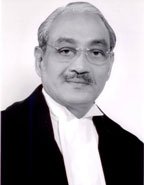
Dr. B. S. CHAUHAN, J.
1.Both these appeals have been preferred by the appellants
being aggrieved of the judgment and order of the Allahabad High
Court dated 22
nd
July, 2003 passed in C.M.W.P. No.6644 of 1989 by
which the High Court has allowed the Writ Petition filed by
respondent No.1-Ugrasen quashing the allotment of land made in
favour of appellant-Manohar Lal and further directed to make the
allotment of land in favour of the said respondent-Ugrasen.
2.In these appeals, three substantial questions of law for
consideration of this Court are involved, they are, namely:
(a)As to whether the State Government – a Revisional Authority
under the Statute, could take upon itself the task of a lower
statutory authority?;
(b)Whether the order passed or action taken by a statutory
authority in contravention of the interim order of the Court is
enforceable?; and
(c)Whether Court can grant relief which had not been asked
for?
3.Facts and circumstances giving rise to these appeals are that
lands owned and possessed by predecessor-in-interest of private
appellant Manohar Lal and respondent Ugrasen were acquired under
the provisions of the Land Acquisition Act, 1894 (hereinafter referred
to as the ‘Act’). Notification under Section 4 of the Act was issued on
2
13.08.1962 covering about 32 acres of land in the Revenue Estates
of Kaila Pargana Loni Dist. Meerut (now Ghaziabad). Declaration
under Section 6 of the Act in respect of the said land was made on
24.05.1965 along with Notification under Section 17(1) invoking the
urgency clause. Possession of the land except one acre was taken
on 13.07.1965 and award under Section 11 of the Act was made on
11.05.1970.
The Government of Uttar Pradesh had framed Land Policy
dated 30/31.07.1963 to the effect that where a big chunk of land
belonging to one person is acquired for planned development, except
the land covered by roads, he shall be entitled to the extent of 40% of
his total acquired land in a residential area after development in lieu
of compensation. The High-Powered Committee dealing with the
issue laid down that applications for that purpose be filed within a
period of one month from the date of taking the possession of the
land which was subsequently changed to within one month from the
date of completion of acquisition proceedings.
4.Both the private parties, i.e. Manohar Lal and Ugrasen
claimed that they had made applications to claim the
3
benefit under the said policy within time. Shri Ugrasen
claimed that he had submitted the application on
31.12.1966 but no action was taken on the said
application. Therefore, he filed another application on
7.9.1971. Manohar Lal-appellant claimed to have filed
application for the said purpose on 22.6.1969 and was
allotted land bearing plot Nos. 5, 7 to 16 and 25 to 33 in
Sector 3N vide order dated 27.12.1979 as per the
direction of the Chief Minister of Uttar Pradesh. Shri
Ugrasen filed Writ Petition No. 1932 of 1980 before
Allahabad High Court challenging the said order dated
27.12.1979. Subsequently, vide order dated 7.3.1980,
the land allotted to Manohar Lal was changed to Plot Nos.
25 to 33. At the time of consideration of application of
Ugrasen by the State Government, the Ghaziabad
Development Authority (hereinafter called GDA) vide
letter dated 18.3.1980 pointed out that submission of
application by Shri Ugrasen was surrounded by
suspicious circumstances as it was the last entry made on
31.12.1966 and signature of the receiving clerk had been
4
made by a person who joined service only in 1979. In the
meanwhile, Shri Manohar Lal filed Writ Petition No. 4159
of 1980 and the High Court restrained the authorities from
making allotment to anyone else from the land allotted to
him as per letter dated 7.3.1980.
5.In spite of the said interim order in force, the State
Government vide order dated 12.12.1980 directed GDA
to make the allotment of land in favour of Shri Ugrasen
and thus, in compliance of the same, GDA issued letter of
allotment dated 22.12.1980 in his favour. Shri Ugrasen
submitted letter dated 1.1.1981 to GDA to give an
alternative land as the land covered by Plot Nos. 5 to 16
had been subject matter of the interim order of the High
Court in a writ petition filed by Shri Manohar Lal.
6.Shri Ugrasen withdrew his Writ Petition No.1932 of
1980 on 6.3.1981 and deposited the compensation
amount, i.e. Rs.32,010.60 on 3.3.1981. GDA allotted the
land to Shri Ugrasen in Plot Nos. 36, 38, 39, 44, 46 and
47 vide order dated 02.01.1985, though it was also the
5
land in dispute i.e. covered by the interim order passed by
the High Court. Shri Ugrasen refused to take those plots
as is evident from letter dated 7.1.1985 as certain
encroachment had been made upon the said lands.
GDA, vide letter dated 27.3.1989, allotted Plot Nos. 5, 7
to 16 to Shri Manohar Lal. Thus, being aggrieved, Shri
Ugrasen filed Writ Petition No. 6644 of 1989 before the
High Court for quashing of the said allotment in favour of
Shri Manohar Lal.
7.Parties exchanged the affidavits and after hearing the
parties and considering the material on record, the High
Court allowed the said Writ Petition vide judgment and
order dated 22
nd
July, 2003. Hence, these appeals.
8.Shri P.S. Patwalia, learned Senior counsel appearing
for the appellant-Manohar Lal and Shri Vijay Hansaria,
learned Senior counsel appearing for GDA have
contended that Shri Ugrasen had never filed application
for allotment in time. There had been manipulation in
6
registration of the said application and it has been
surrounded with suspicious circumstances. The
application of Shri Ugrasen had been considered directly
by the State Government-the revisional authority, though
the State Government could not take the task of GDA
upon itself. Land of Shri Ugrasen had been acquired for
roads, thus, as per the Land Policy he was not entitled for
any benefit of the same. Shri Ugrasen in his writ petition
had asked only for quashing the allotment in favour of
Manohar Lal and there was no prayer that the said land
be allotted to him. Therefore, while issuing a direction for
making the allotment in favour of Ugrasen, the High Court
has exceeded its jurisdiction. Thus, appeals deserve to
be allowed.
9.On the other hand, Shri Debal Banerji, learned Senior
counsel appearing for the respondent-Ugrasen and Shri
Pramod Swarup, learned Senior counsel appearing for
the State of U.P. have vehemently opposed the appeals
contending that once a decision has been taken as per
7
the entitlement of the respondent-Ugrasen and the High
Court has examined each and every fact, question of re-
appreciation of evidence etc. is not permissible in
exercise of the discretionary jurisdiction by this Court.
Manohar Lal had also been allotted the land by the Chief
Minister and not by GDA, thus no fault can be found with
allotment in favour of Shri Ugrasen. Appeals lack merit
and are liable to be dismissed.
10. We have considered the rival submissions made
by learned counsel for the parties and perused the
records.
11.In Rakesh Ranjan Verma & Ors. Vs. State of Bihar & Ors.,
AIR 1992 SC 1348, the question arose as to whether the State
Government, in exercise of its statutory powers could issue any
direction to the Electricity Board in respect of appointment of its
officers and employees. After examining the statutory provisions, the
Court came to the conclusion that the State Government could only
take the policy decisions as how the Board will carry out its functions
8
under the Act. So far as the directions issued in respect of
appointment of its officers was concerned, it fell within the exclusive
domain of the Board and the State Government had no competence
to issue any such direction. The said judgment has been approved
and followed by this Court in U.P. State Electricity Board Vs. Ram
Autar and Anr. (1996) 8 SCC 506.
12.In Bangalore Development Authority and Ors. Vs. R.
Hanumaiah and Ors. (2005) 12 SCC 508, this Court held that the
power of the Government under Section 65 of the Bangalore
Development Authority Act, 1976 was not unrestricted and the
directions which could be issued were those which were to carry out
the objective of the Act and not those which are contrary to the Act
and further held that the directions issued by the Chief Minister to
release the lands were destructive of the purposes of the Act and the
purposes for which the BDA was created.
13.In Bangalore Medical Trust Vs. B.S. Muddappa & Ors. AIR
1991 SC 1902, this Court considered the provisions of a similar Act,
namely, Bangalore Development Authority Act, 1976 containing a
9
similar provision and held that Government was competent only to
give such directions to the authority as were in its opinion necessary
or expedient and for carrying out the purposes of the Act. The
Government could not have issued any other direction for the reason
that Government had not been conferred upon unfettered powers in
this regard. The object of the direction must be only to carry out the
object of the Act and only such directions as were reasonably
necessary or expedient for carrying out the object of the enactment
were contemplated under the Act. Any other direction not covered by
such powers was illegal.
14.In Poonam Verma & Ors. Vs. Delhi Development Authority,
AIR 2008 SC 870, a similar view has been re-iterated by this Court
dealing with the provisions of Delhi Development Authority Act, 1957.
In the said case, the Central Government had issued a direction to
make allotment of flat out of turn. The Court held as under:
“......Section 41 of the Act, only envisages that the
respondent would carry out such directions that may be
issued by the Central Government from time to time for
the efficient administration of the Act. The same does not
take within its fold an order which can be passed by the
Central Government in the matter of allotment of flats by
the Authority. Section 41 speaks about policy decision.
Any direction issued must have a nexus with the efficient
1
administration of the Act. It has nothing to do with carrying
out of the plans of the authority in respect of a particular
scheme……….Evidently, the Central Government had no
say in the matter either on its own or under the Act. In
terms of the brochure, Section 41 of the Act does not
clothe any jurisdiction upon the Central Government to
issue such a direction.”
15.In State of U.P. Vs. Neeraj Awasthi and Ors. (2006) 1 SCC
667, this Court held as follows in context of Government directions:
“36. Such a decision on the part of the State Government
must be taken in terms of the constitutional scheme, i.e.,
upon compliance of the requirement of Article 162 read
with Article 166 of the Constitution of India. In the instant
case, the directions were purported to have been issued
by an officer of the State. Such directions were not shown
to have been issued pursuant to any decision taken by a
competent authority in terms of the Rules of Executive
Business of the State framed under Article 166 of the
Constitution of India.”
16.In The Purtabpore Co., Ltd. Vs. Cane Commissioner of
Bihar and Ors. AIR 1970 SC 1896, this Court has observed :
“The power exercisable by the Cane Commissioner under
Clause 6(1) is a statutory power. He alone could have
exercised that power. While exercising that power he
cannot abdicate his responsibility in favour of anyone -
not even in favour of the State Government or the Chief
Minister. It was not proper for the Chief Minister to have
interfered with the functions of the Cane Commissioner.
In this case what has happened is that the power of the
Cane Commissioner has been exercised by the Chief
1
Minister, an authority not recognised by Clause (6) read
with Clause (11) but the responsibility for making those
orders was asked to be taken by the Cane Commissioner.
The executive officers entrusted with statutory
discretions may in some cases be obliged to take into
account considerations of public policy and in some
context the policy of a Minister or the Government as a
whole when it is a relevant factor in weighing the policy
but this will not absolve them from their duty to exercise
their personal judgment in individual cases unless explicit
statutory provision has been made for them to be given
binding instructions by a superior.”
17.In Chandrika Jha Vs. State of Bihar and Ors. AIR 1984 SC
322, this Court while dealing with the provisions of Bihar and Orissa
Co-operative Societies Act, 1935, held as under:
“The action of the then Chief Minister cannot also be
supported by the terms of Section 65A of the Act which
essentially confers revisional power on the State
Government. There was no proceeding pending before
the Registrar in relation to any of the matters specified in
Section 65A of the Act nor had the Registrar passed any
order in respect thereto. In the absence of any such
proceeding or such order, there was no occasion for the
State Government to invoke its powers under Section 65A
of the Act. In our opinion, the State Government cannot
for itself exercise the statutory functions of the Registrar
under the Act or the Rules.”
18.In Anirudhsinhji Karansinghji Jadeja & Anr. Vs. State of
Gujarat AIR 1995 SC 2390, it was observed :
1
“This is a case of power conferred upon one authority
being really exercised by another. If a statutory
authority has been vested with jurisdiction, he has to
exercise it according to its own discretion. If the
discretion is exercised under the direction or in
compliance with some higher authority's instruction, then
it will be a case of failure to exercise discretion
altogether.” (Emphasis added)
19.In K.K. Bhalla Vs. State of M.P. & Ors. AIR 2006 SC 898, this
Court has de-lineated the functions of the State Government and the
Development Authority, observing that :
“59. Both the State and the JDA have been assigned
specific functions under the statute. The JDA was
constituted for a specific purpose. It could not take action
contrary to the scheme framed by it nor take any action
which could defeat such purpose. The State could not
have interfered with the day-to-day functioning of a
statutory authority. Section 72 of the 1973 Act authorizes
the State to exercise superintendence and control over
the acts and proceedings of the officers appointed under
Section 3 and the authorities constituted under the Act but
thereby the State cannot usurp the jurisdiction of the
Board itself. The Act does not contemplate any
independent function by the State except as specifically
provided therein…. the State in exercise of its executive
power could not have directed that lands meant for use
for commercial purposes may be used for industrial
purposes….. the power of the State Government to issue
direction to the officers appended under Section 3 and the
authorities constituted under the Act is confined only to
matters of policy and not any other. Such matters of
policy yet again must be in relation to discharge of duties
by the officers of the authority and not in derogation
1
thereof…. The direction of the Chief Minister being
de'hors the provisions of the Act is void and of no effect.”
20. In Indore Municipality Vs. Niyamatulla (Dead through L.Rs.)
AIR 1971 SC 97, this Court considered a case of dismissal of an
employee by an authority other than the authority competent to pass
such an order i.e. the Municipal Commissioner, the order was held to
be without jurisdiction and thus could be termed to have been passed
under the relevant Act. This Court held that “to such a case the
Statute under which action was purported to be taken could afford no
protection”.
21. In Tarlochan Dev Sharma Vs. State of Punjab
& Ors. (2001) 6 SCC 260, this Court, after placing
reliance upon a large number of its earlier judgments,
observed as under:
“In the system of Indian democratic governance as
contemplated by the Constitution, senior officers
occupying key positions such as Secretaries are not
supposed to mortgage their own discretion, volition
and decision-making authority and be prepared to
give way or being pushed back or pressed ahead at
the behest of politicians for carrying out commands
having no sanctity in law. The Conduct Rules of Central
Government Services command the civil servants to
1
maintain at all times absolute integrity and devotion to
duty and do nothing which is unbecoming of a
government servant. No government servant shall in the
performance of his official duties, or in the exercise of
power conferred on him, act otherwise than in his best
judgment except when he is acting under the direction of
his official superior.” (Emphasis added)
22.Therefore, the law on the question can be summarised to the
effect that no higher authority in the hierarchy or an appellate or
revisional authority can exercise the power of the statutory authority
nor the superior authority can mortgage its wisdom and direct the
statutory authority to act in a particular manner. If the appellate or
revisional Authority takes upon itself the task of the statutory authority
and passes an order, it remains unenforceable for the reason that it
cannot be termed to be an order passed under the Act.
23.In Mulraj Vs. Murti Raghunathji Maharaj, AIR 1967 SC 1386,
this Court considered the effect of action taken subsequent to
passing of an interim order in its disobedience and held that any
action taken in disobedience of the order passed by the Court would
be illegal. Subsequent action would be a nullity.
1
24.In Surjit Singh Vs. Harbans Singh, AIR 1996 SC 135, this
Court while dealing with the similar issue held as under:
“In defiance of the restraint order, the
alienation/assignment was made. If we were to let it go as
such, it would defeat the ends of justice and the prevalent
public policy. When the Court intends a particular state of
affairs to exist while it is in seisin of a lis, that state of
affairs is not only required to be maintained, but it is
presumed to exist till the Court orders otherwise. The
Court, in these circumstances has the duty, as also the
right, to treat the alienation/assignment as having not
taken place at all for its purposes.”
25.In All Bengal Excise Licensees Association Vs.
Raghabendra Singh & Ors, AIR 2007 SC 1386, this court held as
under:
“A party to the litigation cannot be allowed to take an
unfair advantage by committing breach of an interim order
and escape the consequences thereof..... the wrong
perpetrated by the respondents in utter disregard of the
order of the High Court should not be permitted to hold
good.”
26.In Delhi Development Authority Vs. Skipper Construction
Co. (P) Ltd. & Anr. AIR 1996 SC 2005, this court after making
reference to many of the earlier judgments held:
“On principle that those who defy a prohibition ought not
to be able to claim that the fruits of their defiance are
1
good, and not tainted by the illegality that produced
them.”
27.In Gurunath Manohar Pavaskar Vs. Nagesh Siddappa
Navalgund, AIR 2008 SC 901, this Court while dealing with the
similar issues held that even a Court in exercise of its inherent
jurisdiction under Section 151 of the Code of Civil Procedure, 1908, in
the event of coming to the conclusion that a breach to an order of
restraint had taken place, may bring back the parties to the same
position as if the order of injunction has not been violated.
28.In view of the above, it is evident that any order passed by any
authority in spite of the knowledge of the interim order of the court is
of no consequence as it remains a nullity.
29.In Messrs. Trojan & Co. Vs. RM.N.N. Nagappa Chettiar AIR
1953 SC 235, this Court considered the issue as to whether relief not
asked for by a party could be granted and that too without having
proper pleadings. The Court held as under:
“It is well settled that the decision of a case cannot
be based on grounds outside the pleadings of the parties
and it is the case pleaded that has to be found. Without
an amendment of the plaint, the Court was not entitled to
1
grant the relief not asked for and no prayer was ever
made to amend the plaint so as to incorporate in it an
alternative case.”
30.A similar view has been re-iterated by this Court in Krishna
Priya Ganguly etc.etc. Vs. University of Lucknow & Ors. etc. AIR
1984 SC 186; and Om Prakash & Ors. Vs. Ram Kumar & Ors., AIR
1991 SC 409, observing that a party cannot be granted a relief which
is not claimed.
31.Dealing with the same issue, this Court in Bharat Amratlal
Kothari Vs. Dosukhan Samadkhan Sindhi & Ors., AIR 2010 SC
475 held:
“Though the Court has very wide discretion in
granting relief, the court, however, cannot, ignoring and
keeping aside the norms and principles governing grant of
relief, grant a relief not even prayed for by the petitioner.”
32.In Fertilizer Corporation of India Ltd. & Anr. Vs. Sarat
Chandra Rath & Ors., AIR 1996 SC 2744, this Court held that “the
High Court ought not to have granted reliefs to the respondents
which they had not even prayed for.”
1
33. In view of the above, law on the issue can be
summarised that the Court cannot grant a relief which has
not been specifically prayed by the parties.
34. The instant case requires to be examined in the
light of the aforesaid certain legal propositions.
Section 41 of the U.P. Urban Planning and
Development Act, 1973 reads as under:
“41. Control by State Government-(1) The
Authority, the Chairman or the Vice-Chairman
shall carry out such directions as may be
issued to it from time to time by the State
Government for the efficient administration of
this Act.
(2)……………...........................
(3)The State Government may, at any time, either on
its own motion or on application made to it in this
behalf, call for the records of any case disposed of
or order passed by the authority or Chairman for the
purpose of satisfying itself as to the legality or
propriety of any order passed or direction issued
and may pass such order or issue such direction in
relation thereto as it may think fit:
Provided that the State Government shall not
pass an order prejudicial to any person
without affording such person a reasonable
opportunity of being heard.
(4)………………………………..”
1
35. Clause (1) thereof empowers the State
Government to issue general directions which are
necessary to properly enforce the provisions of the Act.
Clause (3) thereof make it crystal clear that the State
Government is a revisional authority. Therefore, the
scheme of the Act makes it clear that if a person is
aggrieved by an order of the authority, he can prefer an
appeal before the Appellate Authority i.e. Divisional
Commissioner and the person aggrieved of that order
may file Revision Application before the State
Government. However, the State Government cannot
pass an order without giving opportunity of hearing to the
person, who may be adversely affected.
36. In the instant case, it is the revisional authority
which has issued direction to GDA to make allotment in
favour of both the parties. Orders had been passed
without hearing the other party. The authority, i.e. GDA
did not have the opportunity to examine the case of either
2
of the said parties. The High Court erred in holding that
Clause (1) of Section 41 empowers the State Government
to deal with the application of an individual. The State
Government can take only policy decisions as to how the
statutory provisions would be enforced but cannot deal
with an individual application. Revisional authority can
exercise its jurisdiction provided there is an order passed
by the lower authority under the Act as it can examine
only legality or propriety of the order passed or direction
issued by the authority therein.
37. In view thereof, we are of the considered opinion
that there was no occasion for the State Government to
entertain the applications of the said parties for allotment
of land directly and issue directions to GDA for allotment
of land in their favour.
38. Admittedly, the interim order passed by the High
Court in favour of Shri Manohar Lal in Writ Petition No.
4159 of 1980 was in force and it restrained the Authorities
2
to make allotment of the land in dispute in favour of
anyone else. Indisputably, the State Government as well
as the GDA remained fully alive of the factum of
subsistence of the said interim order as is evident from
the correspondence between them. In view of the law
referred to hereinabove, order passed by the State
Government in contravention of the interim order, remains
unenforceable and inexecutable.
More so, in the writ petition filed by Shri Ugrasen relief
sought was limited only to quash the allotment made in
favour of Shri Manohar Lal. No relief was sought for
making the allotment in favour of the writ petitioner/Shri
Ugrasen. However, the High Court vide impugned
judgment and order has issued direction to make the
allotment in his favour. Thus, we are of the view that
issuance of such a direction was not permissible in law.
Even otherwise as Shri Ugrasen’s land had been
acquired for roads, he could not make application for
taking benefit of the Land Policy, particularly, when the
2
Land Policy was not declared to be invalid or violative of
equality clause enshrined in Article 14 of the Constitution.
39. The High Court failed to consider objections
raised on behalf of GDA in its letter dated 19.4.1980 to
the State Government pointing out as follows:
(a)Application of Ugrasen is entered on 31.12.1966 as the last
entry in Postal Receipt register.
(b)Entry is at Sl. 15498.
(c)Entry is in different ink.
(d)True copy of application now submitted bears the date
13.12.1966.
(e)There is no signature on the cyclostyled copy.
(f)Application was made in 1971 and was rejected in 1977 by
Shri Watal. Decision not challenged. Ugrasen kept quiet till
1980.
(g)Clerk Mr. Jai Prakash was not working before 1979.
40. It is settled legal proposition that burden lies on the
person, who alleges/avers/pleads for existence of a fact.
2
Sh. Ugrasen was95 under an obligation to establish the
fact of submission of the application in time. Entry in
respect of his application has been made in Postal
Receipt Register. As said application was sent by post,
Sh. Ugrasen could explain as to whether the application
was sent by Registered Post/Ordinary Post or under
Postal Certificate and as to whether he could produce the
receipt, if any, for the same. In such a fact-situation, the
application filed by Shri Ugrasen could not have been
entertained at all, even if he was entitled for the benefit of
the Land Policy.
41. The High Court committed an error observing
that if the State Government had allowed the application
filed by Ugrasen it was implicit that delay, if any, in
making the claim stood95 condoned. Such an observation
is not in consonance with law for the reason that if there is
a delay in filing application, the question would arise as to
whether the authority has a right to condone the delay.
Even if, the delay can be condoned, the authority had to
2
examine as to whether there was sufficient cause
preventing the applicant to approach the authority in time.
But, once the delay has been considered without
application of mind, in a fact-situation like in the instant
case, the question of deemed condonation would not
arise. More so, the High Court could not examine the
question of fact as to whether the application was made
within time or not, particularly, in view of the fact that the
authority had been making the allotment though
application had not been made at all in time and it was
only manipulation of the record of the authority with the
collusion of its staff.
42. In fact, such exercise by the State amounts to
colourable exercise of power. In State of Punjab & Anr.
Vs. Gurdial Singh & Ors. AIR 1980 SC 319, this Court
dealing with such an issue observed as under:
“Legal malice is gibberish unless juristic clarity
keeps it separate from the popular concept of
personal vice. Pithily put, bad faith which
invalidates the exercise of power - sometimes
called colourable exercise or fraud on power
and oftentimes overlaps motives, passions
2
and satisfaction - is the attainment of ends
beyond the sanctioned purposes of power by
simulation or pretension of gaining a
legitimate goal. If the use of the power is for
the fulfilment of a legitimate object the
actuation or catalysation by malice is not
legicidal. The action is bad where the true
object is to reach an end different from the
one for which the power is entrusted, goaded
by extraneous considerations, good or bad,
but irrelevant to the entrustment. When the
custodian of power is influenced in its exercise
by considerations outside those for promotion
of which the power is vested the court calls it
a colourable exercise and is undeceived by
illusion.”
43. The State Government, being the revisional authority,
could not entertain directly the applications by the said
applicants, namely, Sh.Ugrasen and Sh. Manohar Lal.
The action of the State Government smacks of
arbitrariness and is nothing but abuse of power as the
State Government deprived GDA to exercise its power
under the Act, and deprived the aggrieved party to file
appeal against the order of allotment. Thus, orders
passed by the State Government stood vitiated. More so,
it was a clear cut case of colourable exercise of power.
2
44. So far as the case of allotment in favour of Manohar
Lal is concerned in more than one respect, it is by no
means better than the case of Ugrasen as the initial
allotment had been made by GDA in his favour
consequent to the directions of the Chief Minister of Uttar
Pradesh who had no competence to deal with the
subject under the Statute and he has already been put in
possession of a part of allotted land in commercial area,
contrary to the Land Policy.
45. There are claims and counter claims regarding
the dates of Section 6 declaration; taking of possession of
land; and of making Awards so far as the land of
Manohar Lal is concerned. As per the affidavit filed by
the Vice-Chairman, GDA, Section 6 declaration was
made on 24.5.1965 invoking the urgency clause under
section 17(1); possession was taken on 13.7.1965; and
Award was made on 11.5.1970. Manohar Lal preferred
writ petition no.4159/1980 before the Allahabad High
Court stating that Section 6 declaration in respect of his
2
land was made on 30.1.1969, possession was taken on
29.5.1969 and Award was made on 11.6.1971. None of
the parties considered it proper to place the authentic
documents before the Court so that the real facts be
determined. In such a fact situation, we are not in a
position to decide as to whether Manohar Lal’s application
was filed in time as he had claimed in the said writ petition
that he filed the First Application on 22.6.1969. However,
one thing is clearly evident from the affidavit filed by Vice
Chairman, GDA that the land allotted to both of these
parties has been part of commercial area and not of
residential area. In view thereof, any allotment made in
favour of Manohar Lal so far, had been illegal as the
application could not have been entertained by the Chief
Minister and further appellant could not get allotment in
commercial area. The Land Policy provided only for
allotment of land in residential area.
46. The fact of illegal allotment of land in commercial
area has been brought to the notice of the Court first time
2
vide affidavit of the Vice-Chairman, GDA dated
27.5.2010. Thus, it is crystal clear that such facts had not
been brought on record before the High Court by GDA at
any stage in any of the writ petitions nor it had been
pointed out to the State Government when applications of
both these parties had been entertained directly by the
Chief Minister and the State Government. Only
explanation furnished by the Vice-Chairman, GDA, in his
affidavit is that due to inadvertence it escaped the notice
of GDA that the plots had been categorized as
commercial in the Master Plan and could not be allotted in
favour of any applicant. Even today, the said plots
continue to be in commercial area and not in residential
area.
47. The present appellants had also not disclosed
that land allotted to them falls in commercial area. When
a person approaches a Court of Equity in exercise of its
extraordinary jurisdiction under Article 226/227 of the
Constitution, he should approach the Court not only with
2
clean hands but also with clean mind, clean heart and
clean objective. “Equally, the judicial process should
never become an instrument of appreciation or abuse or
a means in the process of the Court to subvert justice.”
Who seeks equity must do equity. The legal maxim
“Jure naturaw aequum est neminum cum alterius
detrimento et injuria fieri locupletiorem”, means that it is a
law of nature that one should not be enriched by the loss
or injury to another. (vide The Ramjas Foundation &
Ors. Vs. Union of India & Ors. AIR 1993 SC 852; K.P.
Srinivas Vs. R.M. Premchand & ors. (1994) 6 SCC 620
and Nooruddin Vs. (Dr.) K.L. Anand (1995) 1 SCC
242).
48. Similarly, in Ramniklal N. Bhutta & Anr. Vs.
State of Maharashtra & Ors. AIR 1997 SC 1236, this
Court observed as under:-
“The power under Article 226 is
discretionary. It will be exercised only in
furtherance of interest of justice and not
merely on the making out of a legal
point…..the interest of justice and the
public interest coalesce. They are very
often one and the same. ….. The Courts
3
have to weigh the public interest vis-à-
vis the private interest while
exercising….any of their discretionary
powers (Emphasis added).
49. In M/s Tilokchand Motichand & Ors. Vs. H.B.
Munshi & Anr. AIR 1970 SC 898; State of Haryana Vs.
Karnal Distillery, AIR 1977 SC 781; and Sabia Khan &
Ors. Vs. State of U.P. & Ors. AIR 1999 SC 2284, this
Court held that filing totally misconceived petition
amounts to abuse of the process of the Court. Such a
litigant is not required to be dealt with lightly, as petition
containing misleading and inaccurate statement, if filed, to
achieve an ulterior purpose amounts to abuse of the
process of the Court. A litigant is bound to make “full
and true disclosure of facts.”
50. In Abdul Rahman Vs. Prasony Bai & Anr. AIR
2003 SC 718; S.J.S. Business Enterprises (P) Ltd. Vs.
State of Bihar & Ors. (2004) 7 SCC 166; and Oswal
Fats & Oils Ltd. Vs. Addl. Commissioner (Admn),
Bareily Division, Bareily & Ors. JT 2010 (3) SC 510,
3
this Court held that whenever the Court comes to the
conclusion that the process of the Court is being abused,
the Court would be justified in refusing to proceed further
and refuse relief to the party. This rule has been evolved
out of need of the Courts to deter a litigant from abusing
the process of the Court by deceiving it.
51. In view of the above, we are of the considered
opinion that Shri Manohar Lal did not approach the Court
with disclosure of true facts, and particularly, that he had
been allotted the land in the commercial area by GDA on
the instruction of the Chief Minister of Uttar Pradesh.
52. It is a fit case for ordering enquiry or initiating
proceedings for committing criminal contempt of the Court
as the parties succeeded in misleading the Court by not
disclosing the true facts. However, we are not inclined to
waste court’s time further in these cases. Our experience
has been that the so-called administration is not likely to
wake-up from its deep slumber and is never interested to
redeem the limping society from such hapless situations.
3
We further apprehend that our pious hope that
administration may muster the courage one day to initiate
disciplinary/criminal proceedings against such
applicants/erring officers/employees of the authority, may
not come true. However, we leave the course open for
the State Government and GDA to take decision in regard
to these issues and as to whether GDA wants to recover
the possession of the land already allotted to these
applicants in commercial area contrary to the Land Policy
or value thereof adjusting the amount of compensation
deposited by them, if any.
53. In view of the above, Civil Appeal No. 974 of
2007 filed by GDA is allowed. The Judgment and order of
the High Court dated 22.7.2003 passed in Writ Petition
No. 6644 of 1989 is hereby set aside. Civil Appeal No.
973 of 2007 filed by Manohar Lal is dismissed. No costs.
……………………………..J.
(Dr. B.S. CHAUHAN)
3
…………………………………..J.
(SWATANTER KUMAR)
New Delhi,
June 3, 2010
3

 Login with google
Legal Notes
Add a Note....