
As per case facts, petitioners, dependents of deceased teachers, applied for compassionate appointment before the 2006 Rules came into effect. Due to a government ban and subsequent delays, their names ...
IN THE HIGH COURT OF JUDICATURE AT PATNA
Civil Writ Jurisdiction Case No.3070 of 2025
======================================================
Sujit Kumar Chaudhary Son of Late Ramdeo Chaudhary, Resident of Village-
Pahar Chak, P.S. Muffasil, District Begusarai, at present posted as Prakhand
Teacher at Utkramit Middle School, Hardiya, District Begusarai.
... ... Petitioner/s
Versus
1.The State of Bihar.
2.The Additional Chief Secretary, Education Department, Government of
Bihar, Patna.
3.The Director, Primary Education, Government of Bihar, Patna.
4.The District Education Officer, Begusarai.
5.The District Programme Officer (Establishment), Begusarai.
6.The District Magistrate cum Chairman, District Compassionate Appointment
Committee, Begusarai.
... ... Respondent/s
======================================================
with
Civil Writ Jurisdiction Case No. 3076 of 2025
======================================================
Pankaj Kumar Son of Late Ram Chandra Sharma Resident of Village-
Bazidpur, P.S - Barh, District - Patna, at Present Posted as Nagar Teacher at
Arya Sanskritik Middle School, Malsalami, District-Patna.
... ... Petitioner/s
Versus
1.The State of Bihar
2.The Additional Chief Secretary, Education Department, Government of
Bihar, Patna.
3.The Director Primary Education, Government of Bihar, Patna.
4.The District Education Officer, Patna.
5.The District Programme Officer (Establishment), Patna.
6.The District Magistrate Cum Chairman, Patna.
... ... Respondent/s
======================================================
with
Civil Writ Jurisdiction Case No. 5504 of 2025
======================================================
Manoj Kumar Son of Late Ram Naresh Singh, Resident of village- Bagdov,
P.S. Nayagaon, District- Begusarai.
... ... Petitioner/s
Versus
Patna High Court CWJC No.3070 of 2025 dt.03-08-2026
2/29
1.The State of Bihar
2.The Additional Chief Secretary, Education Department, Government of
Bihar, Patna.
3.The Director Primary Education, Government of Bihar, Patna.
4.The District Education Officer, Begusarai.
5.The District Programme Officer (Establishment), Begusarai.
6.The District Magistrate cum Chairman, District Compassionate Appointment
Committee, Begusarai.
... ... Respondent/s
======================================================
Appearance :
(In Civil Writ Jurisdiction Case No. 3070 of 2025)
For the Petitioner/s: Mr. Shailesh Kumar Sharma, Advocate
For the Respondent/s: Mr. Sheo Shankar Prasad, SC-08
Mr. Sanjay Kumar, AC to SC-08
(In Civil Writ Jurisdiction Case No. 3076 of 2025)
For the Petitioner/s: Mr. Shailesh Kumar Sharma, Advocate
For the Respondent/s: Mr. Kinkar Kumar, SC-09
Ms. Vagisha Pragya Vacaknavi, Advocate
Ms. Sushmita Sharma, Advocate
(In Civil Writ Jurisdiction Case No. 5504 of 2025)
For the Petitioner/s: Mr. Shailesh Kumar Sharma, Advocate
For the Respondent/s: Ms. Kumari Amrita, GP-03
Mr. Rajesh Kumar, AC to GP-03
======================================================
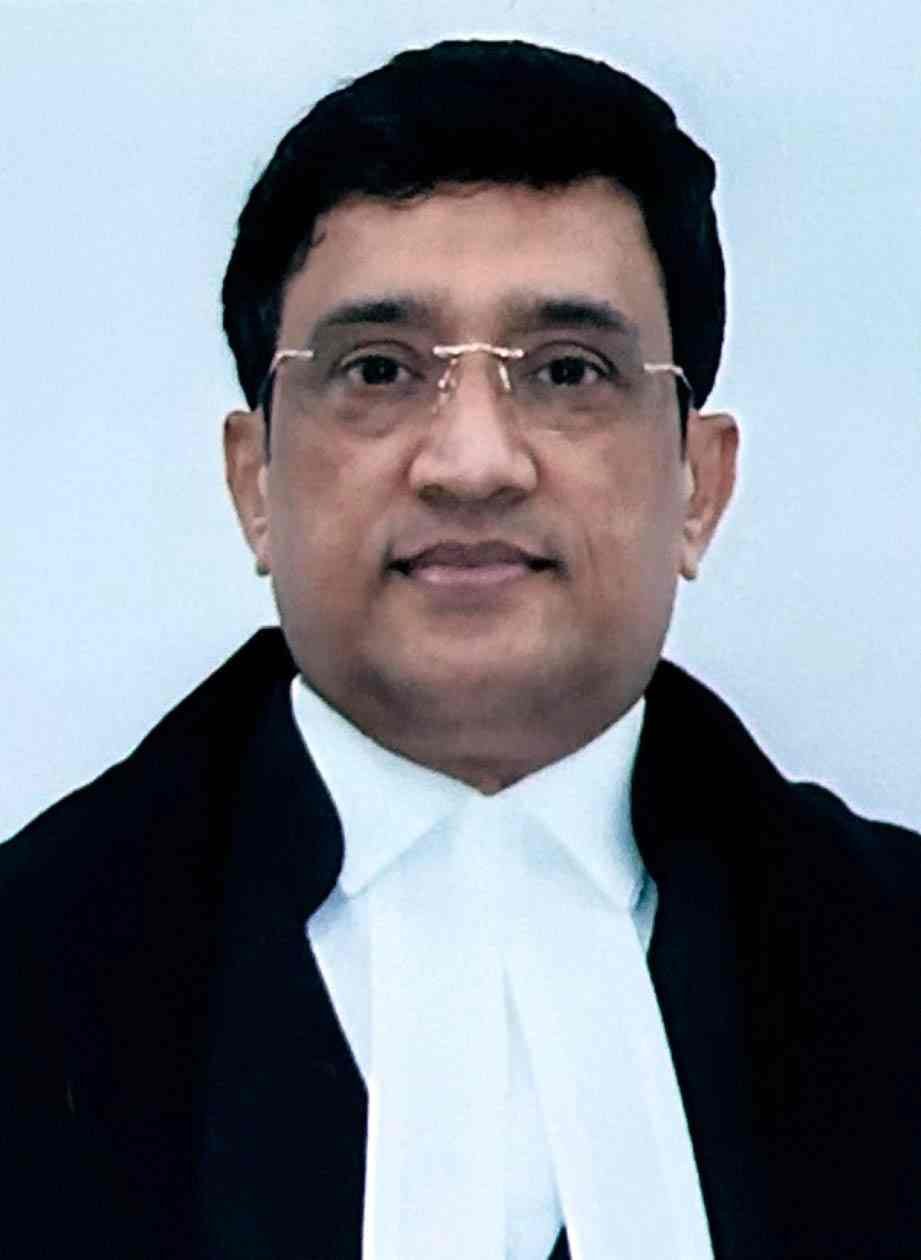
CORAM: HONOURABLE MR. JUSTICE HARISH KUMAR
ORAL JUDGMENT
Date : 03-08-2026
This Court has heard Mr. Shailesh Kumar Sharma,
learned Advocate for the petitioners in all the three cases
whereas, the State is represented through Mr. Kinkar Kumar,
learned Standing Counsel No. 09, Ms. Kumari Amrita, learned
Government Pleader No. 03 as also junior counsels representing
in the matter.
2. The facts of the cases are not in dispute that they
are wards/dependents of the deceased teachers, who died prior
to coming into force of the 2006, Rules for appointment of
Patna High Court CWJC No.3070 of 2025 dt.03-08-2026
3/29
teachers, i.e. The Bihar Primary Teachers (Appointment and
Service Condition) Rules, 2006 (hereinafter referred to as,
“Rules, 2006”).
3. The petitioners in all the three cases have made
their applications for appointment on compassionate ground
prior to coming into force of Rules, 2006; but by one reason or
other, inter alia owing to ban imposed by the Government in
Human Resources Department vide Departmental Letter No.
2039 dated 17.11.2003 and Letter No. 626 dated 16.04.2005,
their appointments were not considered and subsequently, their
names were recommended for appointment on Class III post by
the District Compassionate Committee after 01.07.2006.
4. Consequently, the petitioners were duly appointed
as Prakhand/Nagar Teacher on fixed pay. The petitioners in
pursuant to their appointment letters joined on their respective
post. However, on being dissatisfied with the action of the State
Government in extending appointment to the post of
Prakhand/Nagar Teacher on fixed pay, contrary to their
recommendation made by the District Compassionate
Appointment Committee, the petitioners preferred writ petitions.
5. It would be worth noting here that in case of CWJC
No. 3070 of 2025, the petitioner had filed CWJC No. 13821 of
Patna High Court CWJC No.3070 of 2025 dt.03-08-2026
4/29
2010, which was disposed off with a direction to the District
Magistrate, Begusarai to take necessary decision and
communicate the outcome of such decision, whereupon, the
matter was again placed before the District Compassionate
Committee, who vide Memo No. 955 dated 06.07.2015
reiterated his earlier decision to appoint the petitioner on Class
III post, which was to be executed by the Education
Department.
6. Notwithstanding the aforesaid fact, when no action
was taken, the petitioner in CWJC No. 3070 of 2025 filed
another writ petition bearing CWJC No. 9882 of 2019, which
came to be disposed off with a direction to the District
Programme Officer, Begusarai, to consider the case of the
petitioner in the light of the order of the co-ordinate Bench of
this Court in CWJC No. 8963 of 2018 (Chandra Shekhar Azad
& Ors. Vs. The State of Bihar & Ors.). The petitioner also
preferred MJC No. 2511 of 2019 and while the same was
pending consideration, in the meanwhile, the District
Programme Officer (Establishment), Begusarai, has come up
with an order contained in Memo No. 1908 dated 11.07.2019,
rejecting the claim of the petitioner.
7. Similarly in CWJC No. 3076 of 2025, on being
Patna High Court CWJC No.3070 of 2025 dt.03-08-2026
5/29
aggrieved with the action of the respondents preferred CWJC
No. 6146 of 2009, which also came to be disposed off with a
direction that in pursuant of a recommendation made in his
favour by the District Compassionate Appointment Committee,
his appointment be made strictly in accordance with the
Government instruction dated 17.10.2008. However, the order
of the learned Single Judge came to be set-aside by the Division
Bench in Letters Patent Appeal, which order was also
questioned before the Hon’ble Apex Court in Civil Appeal
arising out of SLP (C) No. 34174-34175 of 2013, which was
finally disposed off vide order dated 03.04.2017, analogously
with the case of Mukesh & Anr. Vs. State of Bihar & Ors.,
(2017) 5 SCC 383, granting liberty to approach the State
Government for suitable reliefs, in terms with the order passed
in SLP (C) No. 29655 of 2010 (Rajiv Ranvijay Kumar & Ors.
Vs. State of Bihar and Ors.).
8. So far the petitioner in CWJC No. 5504 of 2015 is
concerned, the petitioner on being aggrieved, has preferred
CWJC No. 24351 of 2018, which was finally heard and
disposed off directing the District Programme Officer,
(Establishment), Begusarai, to consider the case of the petitioner
vide order dated 01.05.2019. However, the District Education
Patna High Court CWJC No.3070 of 2025 dt.03-08-2026
6/29
Officer/District Programme Officer never passed any order in
compliance of the order of the Hon’ble Court.
9. Adverting to the aforesaid facts, Mr. Sharma,
learned Advocate for the petitioners submitted that the large
number of persons identical to the present writ petitioners had
approached this Court and finally the matter reached to the
Hon’ble Apex Court in Civil Appeal No. 4776-4777 of 2017
Mukesh (supra), which was finally heard and disposed off with
an observation that the persons, whose names were
recommended prior to 01.07.2006 are entitled to appointment on
Class III and Class IV post or will be entitled for continuation of
teacher on a regular pay scale and with respect to those, in their
favour recommendations have been made after 01.07.2006, they
have been extended liberty to approach the State Government
for suitable relief in terms of the order passed in SLP (C) No.
29655 of 2010.
10. The State Government in the aforesaid
background, after proper deliberation issued its decision to
make appointment as per the recommendation of the District
Compassionate Appointment Committee on Class III and Class
IV posts, in all the cases where government servant died prior to
01.07.2006 and they were party before the Hon’ble Supreme
Patna High Court CWJC No.3070 of 2025 dt.03-08-2026
7/29
Court in the case of Mukesh (supra) and others analogous cases.
The aforesaid decision has been taken in the light of the Memo
No. 38 dated 12.01.2018 issued by the Special Secretary,
Education Department, Government of Bihar.
11. It is further contended that, in the meanwhile, the
State of Bihar aggrieved with the order passed in CWJC No.
6282 of 2009 by a learned Single Judge preferred LPA No. 1472
of 2015 (The State of Bihar & Ors Vs. Rhituraj Saraubh),
which was dismissed by the Division Bench of this Court vide
judgment/order dated 18.04.2018 and observed that the State
Government to act on the recommendation of the District
Compassionate Committee, insofar as, it concerns the
petitioners of the case, in view of the Memo No. 38 dated
12.01.2018 issued by the State Government and its Education
Department. The respondents in compliance with the order
passed by the Division Bench appointed the writ petitioners of
the concerned cases to their respective regular post of teachers
in the regular pay scale.
12. Learned Advocate for the petitioners further
submitted that with respect to some of the other similarly
situated persons, who were though appointed to the post of
Assistant Teachers under the regular pay scale vide Memo No.
Patna High Court CWJC No.3070 of 2025 dt.03-08-2026
8/29
120 dated 01.02.2018 by the order of the District Education
Officer, Madhepura; such order was subsequently recalled vide
Memo No. 167 dated 07.02.2018. The said order was challenged
by the employees concerned in CWJC No. 8963 of 2018
Chandra Shekhar Azad (supra), where the learned Court
considering the order passed in the case of Rhituraj Saraubh
(supra) vide judgment dated 11.05.2018 has directed the
respondents to consider the representation of the petitioners
strictly taking into consideration the decision of the Hon’ble
Apex Court, especially, in view of the direction passed by the
Hon’ble Apex Court in the case of Mukesh (supra).
13. Learned Advocate for the petitioners further
referred various decisions passed by learned co-ordinate Bench
of this Court as well as the Division Bench in support of their
claim and contended with all his vehemence that their cases are
also fully covered with the decisions passed by the learned
Division Bench of this Court in the of Rhituraj Saraubh (supra)
and Chandra Shekhar Azad (supra).
14. Non consideration of the case of the petitioners
and/or rejection of their claim for their appointment to the
regular post of Class III, despite the admitted fact that in their
cases, the deceased employees died prior to 01.07.2006, much
Patna High Court CWJC No.3070 of 2025 dt.03-08-2026
9/29
before coming into force of Rules, 2006, the action of the
respondents is wholly arbitrary, illegal and in violation of
Articles 14 and 16 of the Constitution of India.
15. Referring to the letter contained in Memo No. 38
dated 12.01.2018, it is submitted that the respondents have
clarified the position that in case the death of the deceased
employee took place prior to 01.07.2006 and recommendations
have been made by the District Compassionate Appointment
Committee for appointment to the post of Class III post in
regular pay scale, they ought to be appointed on the
recommended post and not on the fixed honorarium/pay. In the
case of Rhituraj Saraubh (supra), the learned Division Bench
has rightly observed that once the advisory under Memo No. 38
dated 12.01.2018 has been issued by the State Government, it
binds the authorities of the State for ensuring its compliance.
16. Any subsequent order modifying the earlier letter
contained in Memo No. 38 dated 12.01.2018 or withdrawing the
same with retrospective date is per se illegal and a move to
undone the action taken by the State and its authorities, in
compliance of the order of this Court and on nullity. Hence, the
order rejecting the claim of the petitioners, under Memo no. 336
dated 07.03.2019, is wholly illegal and unsustainable in the eyes
Patna High Court CWJC No.3070 of 2025 dt.03-08-2026
10/29
of law and fit to be set-aside.
17. Per contra, learned Advocates for the State
unanimously submitted that the Hon’ble Supreme Court in the
case of Mukesh (supra) held that only those applicants, whose
cases were recommended for appointment on compassionate
ground prior to 01.07.2006 would be entitled for appointment
on the regular post in regular pay scale, and other applicants
who were appointed after 01.07.2006 will not be entitled for
relief of regular pay scale. Though liberty was extended to the
persons who were appointed after 01.07.2006 to approach the
State Government, and in some of the cases, despite the
admitted position that they were appointed after 01.07.2006,
were extended the benefit of regular pay scale, but the same is
in the humble submission of the learned Advocate for the State
is contrary to the mandate of Mukesh (supra). Besides, it is
further argued that if any illegality has been committed, the
same cannot be perpetuated. Right to Equality cannot be
claimed by the petitioners to commit another illegality, as the
Right to Equality has a positive concept.
18. The case of the petitioners are not identical to
those of Chandra Shekhar Azad (supra), as in their cases, they
were duly appointed against the regular post in the regular pay
Patna High Court CWJC No.3070 of 2025 dt.03-08-2026
11/29
scale, but subsequently such orders were withdrawn and they
have been brought under the cadre of Prakhand/Nagar Teacher
on fixed pay. In such circumstances, the Court directed in the
matter not to interfere in their recommendation for appointment
to the post of Assistant Teacher in regular pay scale. In the light
of the aforesaid decision, the State under compelling
circumstances, took a decision to extend the benefit of regular
pay scale.
19. It is further argued that after coming into force of
Rules, 2006, no appointment could be possible against a regular
vacant post of Assistant Teacher, which is a dying cadre. The
appointments of the petitioners were only possible to the post of
Prakhand/Nagar Teacher in the light of Rule 10 of the Rules,
2006; which have been done in the case of the petitioners. The
claim of the petitioners are said to be unjustified and contrary to
the mandate of the Hon’ble Apex Court in the case of Mukesh
(supra).
20. This Court has carefully heard the learned
Advocates for the respective parties and also meticulously
perused the decisions referred hereinabove. The facts are not in
dispute and it do not require any further deliberation. The only
question for consideration before this Court as has arisen as to
Patna High Court CWJC No.3070 of 2025 dt.03-08-2026
12/29
whether the claim of the petitioners are similar to those of the
said identically situated persons. In their cases, admittedly the
recommendation for their appointment against the regular post
in regular pay scale was made after 01.07.2006. Summingly,
they were allowed appointment against a contractual post in
fixed pay scale, but on challenge, they ultimately succeeded,
and in their cases, the State authorities have accepted their
recommendations and allowed their appointment to the regular
post in the regular pay scale.
21. It is trite law that the persons have no legal right
to seek appointment on compassionate grounds, as these
appointments are not a source of recruitment and they are made
to provide succor to a family of employee who died in harness.
However, the same is possible if any rules or any scheme is
formulated in this regard. It is not in dispute that in the case at
hand, the claim of the appointment of the petitioners is to be
considered in the light of the Rules, 2006; which categorically
provides appointment on the post of Prakhand Teachers,
Panchayat Teachers and Nagar Panchayat Teachers etc., on a
fixed pay in case of death of the employee, who died in harness.
22. The claim of the petitioners are mainly based on
the premise that once the deceased employee died prior to
Patna High Court CWJC No.3070 of 2025 dt.03-08-2026
13/29
01.07.2006, their cases ought to be considered, in the light of
the rules applicable with respect to compassionate appointment
at the time of death of the employees and not the date on which
recommendation is made. The recommendation for appointment
on compassionate grounds is a fortuitous act and thus, in no
circumstances, it governs the fate of the petitioners. Moreover,
in the case of the petitioners, even when the recommendations
were made for appointment against the regular post in regular
pay scale, the same has not been accepted by the State and its
authorities.
23. The dispute involved in the present cases as raised
in various cases, including in the case of Rajiv Ranvijay Kumar
(supra) and Viswanath Pandey Vs. The State of Bihar, CWJC
No. 7218 of 2007. However, when the matter has later on
reached to the Hon’ble Supreme Court in the case of Mukesh
(supra), the Hon’ble Court has given a quietus to such dispute
by holding as follows:-
“3. By the impugned judgment,
a Division Bench of the High Court
correctly held that the appellants have no
legal right to seek appointment on
compassionate grounds. Compassionate
appointments are not a source of
recruitment and they are made to provide
succour to the family of an employee who
dies in harness. In the State of Bihar
compassionate appointments are
Patna High Court CWJC No.3070 of 2025 dt.03-08-2026
14/29
governed by instructions issued by the
Government. Some of the appellants were
recommended for appointment to Class
III posts on a regular basis by the District
Compassionate Committee. However,
they were appointed as Prakhand
Teachers/Panchayat Shikshaks/Nagar
Shikshaks, etc. on a fixed pay. The
appellants could not have been appointed
on a fixed pay and they are entitled for
appointment to either on Class III or
Class IV posts on regular basis or
payment of regular pay scale in the posts
of as Prakhand Teachers/Panchayat
Shikshaks/Nagar Shikshaks, etc. in which
they are working at present. Some of the
appellants who were recommended for
appointment to Class III posts but were
appointed as Prakhand
Teachers/Panchayat Shikshaks/Nagar
Shikshaks, etc. on fixed pay are similarly
situated to Vishwanath Pandey and they
are entitled to be appointed on a regular
pay scale.
4. The other appellants who
were appointed after 1-7-2006 are not
entitled to the relief granted to those who
were recommended for appointment to
Class III or Class IV posts prior to that
date. A Full Bench of the Patna High
Court in State of Bihar
v. Rajeev Ran
Vijay Kumar [State of Bihar v. Rajeev
Ran Vijay Kumar, held that the
dependants of the deceased government
employees do not have a legal right to be
appointed in government posts. Their
appointments on compassionate grounds
shall be in accordance with the Bihar
Panchayat Primary Teachers
(Appointment and Service Conditions)
Rules, 2006 (hereinafter referred to as
“the Rules”) which came into force w.e.f.
Patna High Court CWJC No.3070 of 2025 dt.03-08-2026
15/29
1-7-2006. Rule 10 of the said Rules
provides for employment on
compassionate grounds to the dependants
of teaching/non-teaching employees
against available vacancies of Panchayat
Teachers/Block Teachers/Prakhand
Teachers, etc. Such appointments can be
made only on a fixed pay by the
committee constituted under the Rules.
5. The appellants who have not
been recommended for appointment to
Class III or Class IV posts prior to 1-7-
2006 are not covered by Vishwanath
Pandey case . On the other hand, they are
squarely covered by the judgment of the
Full Bench of the Patna High Court. They
are not similarly situated to those who
were recommended for appointment to
Class III posts prior to 1-7-2006. The
appellants, who were appointed after 1-7-
2006, the date on which the Rules came
into force, are not entitled to claim
appointment on regular pay scales. It is
relevant to note that the judgment of the
Full Bench of the High Court of Patna
was challenged before this Court. The
said SLP was withdrawn with liberty
granted to the petitioners therein to
approach the Government for suitable
relief.”
24. On plain reading of the aforesaid decision, it is
imperative that it has left no room for any confusion that in
cases where the recommendations was made prior to
01.07.2006, would entitle the applicant to a Class III or Class IV
post on regular basis or for continuance as teacher in a regular
scale but, at the same time, the Hon’ble Supreme Court has
Patna High Court CWJC No.3070 of 2025 dt.03-08-2026
16/29
extended liberty to those persons, in whose cases their
recommendations were made after 01.07.2006 to approach the
State Government for suitable relief in terms of the order passed
by the Hon’ble Supreme Court on the S.L.P. preferred by the
writ petitioner Rajiv Ranvijay Kumar (supra). It is only such
observation of the Hon’ble Supreme Court which gave birth to
the advisory issued by the State Government in the Department
of Education under Memo No. 38 dated 12.01.2018.
25. The aforenoted Memo No. 38 dated 12.01.2018
was subjected to consideration by the learned Division Bench of
this Court in the case of Rhituraj Saraubh (supra), in LPA No.
1472 of 2015, where the Court in no uncertain terms held that
such resolution is loud and clear and concludes that in case the
death of a Government teacher has taken place prior to
01.07.2006 and recommendation has been made by a competent
District Compassionate Committee for appointment of his
dependent against a regular post in a regular pay scale under the
Government, then that recommendation has to be acted upon
and the appointment has to be provided against a regular Class
III or Class IV or against the post of a teacher against a regular
pay scale. It would be worth benefiting to quote the relevant
paragraphs which would, in the opinion of this Court, would
Patna High Court CWJC No.3070 of 2025 dt.03-08-2026
17/29
certainly guide to reach a fair and final conclusion in the matter.
“A cursory glance to the
advisory issued by the Education
Department at paragraph 1, would leave
no room for any confusion that a
conscious decision has been taken by the
State Government in consideration of the
cases of present kind in which deaths of
teaching/non-teaching employees had
taken place prior to 1.7.2006 to resolve
that in case the District Compassionate
Committee makes a recommendation in
case of a Government teacher deceased
prior to 1.7.2006 for appointment of his
dependents on Class III or Class IV or for
appointment against the post of a teacher
then the appointment of the dependant
has to be made in terms of the
recommendation of the District
Compassionate Committee against a
regular post and against a regular pay
scale. The resolution is loud and clear
and concludes that in case the death of a
Government teacher has taken place
prior to 1.7.2006 and recommendation
has been made by a competent District
Compassionate Committee for
appointment of his dependent against a
regular post and against a regular pay
scale under the Government, then that
recommendation has to be acted upon
and the appointment has to be provided
against a regular Class III or Class IV or
against the post of a teacher against a
regular pay scale.
In our opinion, this resolution
puts at rest all speculations and all
disputes and in fact renders this appeal
infructuous for once the Education
Department itself has acted on the liberty
of the Supreme Court to clarify the issue,
Patna High Court CWJC No.3070 of 2025 dt.03-08-2026
18/29
this contest is rendered academic.
Another interesting aspect of the matter
which we need to record is, the affidavit
of the Principal Secretary of the
Education Department filed on 11.4.2018.
Now even though he admits to issuance of
the notification dated 12.1.2018 in the
light of the order passed by the Supreme
Court in the case of Mukesh (supra) and
even though he admits to revisit the issue
of compassionate appointment in the light
of the direction issued in C.W.J.C.No.
560/2015 but yet he does not shoulder the
responsibility of taking this case to its
logical conclusion in the light of his own
clarification dated 12.1.2018 qua the
recommendation of the District
Compassionate Committee, Patna.
For the reasons so discussed,
we are certainly not persuaded with the
argument of Mr. Anjani Kumar, learned
AAG-4, to interfere with the opinion
expressed by the learned Single Judge
rather the advisory bearing memo no. 38
dated 12.1.2018 of the State Government
in its Education Department binds them
to act on the recommendation of the
District Compassionate Committee,
Patna dated 30.10.2006 in so far as it
concerns these petitioners and we would
remind the Principal Secretary, Education
Department of the time stipulated in the
order of the learned Single Judge which
continues to binds him for ensuring its
compliance and for taking the matter to
its logical conclusion.
In result, the Letters Patent
Appeal is dismissed with no order as to
costs.”
emphasis supplied
26. Identical issue has also come up for consideration
Patna High Court CWJC No.3070 of 2025 dt.03-08-2026
19/29
before another Division Bench of this Court in Chandra
Shekhar Azad (supra), on a reference made by a Bench of this
Court, when it expressed its difficulty in accepting the
contention of learned Senior Counsel for the petitioner that once
the post of Assistant Teacher in regular cadre is dying cadre, in
view of the judgment of the Hon’ble Supreme Court in the case
of State of Bihar & Ors. versus Bihar Secondary Teachers
Struggle Committee, Munger & Ors. (2019) 18 SCC 301, it
cannot be enhanced by allowing the persons to be appointed
against such post of Assistant Teacher, and thus finding it
difficult to accept the judgment rendered by the different Bench,
referred the matter to a larger Bench to consider the following
issues, which are extracted hereinbelow:-
“17. It appears that in view of the
judgment of the Hon'ble Supreme Court
in the case of Bihar Secondary Teachers
Struggle Committee (supra), the learned
Writ Court expressed its difficulty in
accepting the contention of learned
Senior Counsel for the petitioners that the
addition to the dying cadre is permissible.
The learned Writ Court took a view that
the strength of the cadre which is dying
cannot be enhanced and since the earlier
decision was rendered by this Court
relying upon the judgment of the Hon'ble
Division Bench, in view of the
pronouncement of the Hon'ble Apex
Court now, the cadre of Assistant Teacher
is a dying cadre, therefore, the basis of
Patna High Court CWJC No.3070 of 2025 dt.03-08-2026
20/29
the order of this Court requires
reconsideration. The learned Writ Court
therefore, expressed its desire to refer the
matter to a larger Bench to consider the
following issues:—
1. “Whether the post of Assistant
Teacher is a Dying Cadre after
2006?
2. Whether the Court can induct any
teacher in Dying Cadre after
2006?
3. Whether the petitioners, who were
regularized pursuant to the
judgment of the Division Bench on
declaration of law by the Apex
Court, can claim that the judgment
inter-party is binding and
therefore, they have right to
continue on regular post of
Assistant Teacher on
compassionate ground
notwithstanding the post of
Assistant Teacher is a Dying
Cadre?
4. Whether the compassionate
appointment against any Dying
Cadre is permissible?
5. Whether the judgment of the Apex
Court in the case of State of Bihar
v. Bihar Secondary Teachers
Struggle Committee (Supra) is
settler on the point that the cadre
of Assistant Teacher is a Dying
Cadre and applies to the case of
the present petitioners.
6. In addition thereto, the larger
Bench has to consider the
judgment of the Apex Court which
Patna High Court CWJC No.3070 of 2025 dt.03-08-2026
21/29
was the basis for taking decision
dated 19.07.2019 by the
respondents, as contained in
Annexure-16 to the writ petition.”
27. The learned Division Bench while answering the
questions referred hereinabove primarily held that after coming
into force of Rules for Appointment of Teachers 2006, the cadre
of Assistant Teacher is a dying cadre. However, with respect to
the second question, it is observed that if the equity, justice and
conscience requires a constitutional Court to direct the State
Government to induct one as a teacher in dying cadre, it may be
done, and there cannot be made any bar on the exercise of
constitutional power of the Court in issuing such direction in the
given facts and circumstances of the case. The issue number
four which is important for the present lis; the learned Division
Bench has answered that in terms of mandate of the judgment of
the Hon’ble Supreme Court in the case of Mukesh (supra),
appointment on compassionate ground in the dying cadre of
Assistant Teacher was permissible only in the cases where
recommendation for appointment was made by the committee
prior to 01.07.2006. But in view of the liberty granted to take a
decision in respect of those, whose cases had been
recommended after 01.07.2006, if the State Government took a
decision vide Memo No. 38 dated 12.01.2018 to appoint those
Patna High Court CWJC No.3070 of 2025 dt.03-08-2026
22/29
persons, who were wards of the Government Teachers, and they
died prior to 01.07.2006, and by virtue of such decisions, those
persons have already been appointed, there is nothing on the
record to show that it was a result of a wrong understanding of
the judgment of the Hon’ble Supreme Court.
28. The learned Division Bench further while
negating the stand of the State that the cadre of the Assistant
Teacher is a dying cadre and, as such, no further appointment
could be made on such posts categorically answered that such
argument is not available with the State Government and would
not apply to the facts of the present case. Once such plea of
dying cadre was raised in the case of the Bihar Secondary
Teacher Struggle Committee & Ors. (supra) by way of a
submission only to contest the pay of equal pay for equal work
for Niyojit Shikshak. Finally, while answering the question
number six with respect to application of departmental Letter
No. 336 dated 07.03.2019, as well as Letter contained in Memo
No. 944 dated 19.07.2019, the Court held as follow:-
“33. A bare reading of
Annexure ‘16’ would show that the same
has been issued in the light of the
judgment of the Hon'ble Supreme Court
in the case of Mukesh (supra). It is true
that in the case of Mukesh (supra) the
Hon'ble Supreme Court held that only
those applicants whose cases were
Patna High Court CWJC No.3070 of 2025 dt.03-08-2026
23/29
recommended for appointment on
compassionate ground prior to
01.02.2006 would be entitled for
appointment on the regular post in
regular pay-scale and the other
appellants who were appointed after
01.07.2006 will not be entitled for relief
of regular pay-scale but at the same time
liberty was granted to those appellants to
approach the State Government for
suitable relief in terms of the order passed
in S.L.P. (c) No. 29655 of 2010 as noticed
above. In S.L.P. (C) No. 29655 of 2010
which arises out of the judgment of the
Hon'ble Full Bench of this Court in the
case of Rajeev Ran Vijay Kumar (supra).
In the case of Rajeev Ranvijay Kumar
(supra) the State Government took a plea
that if the appellants withdraw the
appeal, the State would be considering
their cases keeping in view the facts and
circumstance of the each case. In view of
that statement of the State, Rajeev Ran
Vijay Kumar and others, who were the
petitioners/appellants, withdrew the
Special Leave Petition with liberty to
move the authorities concerned.
Thereafter, the State respondents
considered their cases and appointed
them as Assistant Teacher in the cadre.
Therefore, the whole reading of the
judgment of the Hon'ble Apex Court in
the case of Mukesh (supra) would show
that by granting liberty these petitioners
were also placed in the same position as
Rajeev Ran Vijay Kumar (supra) and it
was open for the Government to consider
their cases. Under these circumstances, if
the State Government considered their
cases and granted them the benefit of
compassionate appointment as Assistant
Teacher and upon reconsideration once
Patna High Court CWJC No.3070 of 2025 dt.03-08-2026
24/29
again pursuant to the judgment of this
Court in C.W.J.C. No. 8963 of 2018 if the
petitioners have been recommended for
appointment as Assistant Teachers in the
cadre, by taking a plea that it was result
of misunderstanding and an exercise in
violation of the judgment of the Hon'ble
Apex Court as contained in Annexure ‘16’
to the writ application, the petitioners
cannot be ousted from the cadre.
29. A bare meticulous reading of the above referred
decision in the case of Chandra Shekhar Azad (supra), it is
imperative that the learned Division Bench in sum and
substance categorically held that since it was open for the
Government to consider their cases in the light of the liberty
extended by the Supreme Court in the case of Mukesh (supra),
as well as Rajiv Ranvijay Kumar (supra), and under these
circumstances, if the State Government considered their cases
and granted them the benefit of compassionate appointment as
Assistant Teacher, now they cannot be allowed to take a plea
that it was a result of misunderstanding and exercise in violation
of the judgment of the Hon’ble Apex Court.
30. This Court has also come across various other
decisions, including the decisions rendered in the case of
Rhituraj Saraubh (supra), Chandra Shekhar Azad (supra), the
copies of which have been brought on record. In consequence
thereof, the petitioners of those cases have been appointed
Patna High Court CWJC No.3070 of 2025 dt.03-08-2026
25/29
against the regular post in regular pay scale.
31. The Court time and again has cautioned the State
and its authorities while reiterating the settled principle that
equals must be treated equally, and if persons similarly placed
are treated differently without any rational, it would amount to
violation of Article 14 of the Constitution of India. If two sets of
employees stand on the same footing, in terms of the date of the
death of the deceased employees, the date of their
recommendation and their eligibility and applicability under
statutory rules, besides the identical liberty extended by the
highest Court of the land, the State cannot in the opinion of this
Court, extend a benefit to one group and deny it to the another
group without demonstrating a valid distinction. Equality does
not allow selective or partial implementation of policy or the
advisory taken by the State, as has been done while issuing
Memo No. 38 dated 12.01.2018, extending liberty to those in
their cases, the recommendations have been made even after
01.07.2006, and thus it has rightly been held by the learned
Division Bench in the case of Rhituraj Saraubh (supra) that
such letter binds the State authorities for ensuring its
compliance and for taking the matter to its logical conclusion, in
the light of the principle discussed in the rulings.
Patna High Court CWJC No.3070 of 2025 dt.03-08-2026
26/29
32. The State being a model employer is expected to
show fairness in action. In Balram Gupta Vs. Union of India &
Anr., AIR 1987 SC 2354, the Apex Court has observed that as a
model employer, the Government must conduct itself with high
probity and candour with its employees. It would be worth
benefiting and opposite at this stage to reproduce paragraph no.
65 of the decision, while the Court emphasizing the role of State
as a model employer in case of Bhupendra Nath Hazarika &
Anr. Vs. State of Assam & Ors., (2013) 2 SCC 516, has
observed as follows:-
“65. We have stated the role of
the State as a model employer with the
fond hope that in future a deliberate
disregard is not taken recourse to and
deviancy of such magnitude is not adopted
to frustrate the claims of the employees. It
should always be borne in mind that
legitimate aspirations of the employees
are not guillotined and a situation is not
created where hopes end in despair. Hope
for everyone is gloriously precious and a
model employer should not convert it to
be deceitful and treacherous by playing a
game of chess with their seniority. A sense
of calm sensibility and concerned
sincerity should be reflected in every step.
An atmosphere of trust has to prevail and
when the employees are absolutely sure
that their trust shall not be betrayed and
they shall be treated with dignified
fairness then only the concept of good
governance can be concretised. We say no
more.”
Patna High Court CWJC No.3070 of 2025 dt.03-08-2026
27/29
33. In State of Haryana & Ors. Vs. Piara Singh &
Ors., (1992) 4 SCC 118, the Hon’ble Supreme Court has
significantly ruled that the main concern of the Court in such
matter is to ensure with the rule of law and to see that the State
and the executive act fairly and give a fair deal to its employees
consistent with the requirements of Article 14 and 16 of the
Constitution of India.
34. In the light of the aforesaid deliberation and
discussion, this Court has no hesitation to hold that the decision
dated 07.03.2019 contained in Letter No. 336 and any other
consequential letter debarring the cases of identically situated
persons, with those of the petitioners, who have been appointed
against regular post in regular pay, irrespective of their
recommendation have been made after 01.07.2006, by
exercising the liberty granted to the State in Mukesh (supra), the
same is wholly arbitrary, illegal and discriminatory besides such
action does not withstand the test of Article 14 of the
Constitution of India. The authorities must not forget that
recommendation by the District Compassionate Committee is an
administrative and fortuitous act. Hence, there may be various
reasons depending upon the facts of each and cases, which may
lead to delay in making recommendation and for which, the
Patna High Court CWJC No.3070 of 2025 dt.03-08-2026
28/29
wards and dependent of the deceased employee cannot be
penalized. It is in this premise, the State was extended the power
to do justice, with those persons.
35. In view of the reasons disclosed hereinabove, this
Court is of the opinion that the cases of the petitioners are also
identical to those of Chandra Shekhar Azad (supra) and
Rhituraj Saraubh (supra), in whose favor, pursuant to the order
of this Court, the State Government and its authorities have
taken a decision to extend the benefit of regular pay scale and,
as such, the petitioners are also entitled to get similar treatment
with those of the petitioners of the said case.
36. Accordingly, this Court directs the Additional
Chief Secretary, Education Department, Government of Bihar,
Patna, as well as the Director, Primary Education, Government
of Bihar to consider their cases afresh by treating at par with
those of the cases of Rhituraj Saraubh (supra), Chandra
Shekhar Azad (supra), and extend all the consequential benefits,
including the regular pay scale, as has been given to them,
preferably within a period of three months from the date of
receipt/production of a copy of this order.
37. The impugned orders by which the claim of the
petitioners have been negated on the ground of dissimilarity are
Patna High Court CWJC No.3070 of 2025 dt.03-08-2026
29/29
hereby set aside.
38. All these writ petitions stand allowed.
39. The parties shall bear their own cost.
shivank/sumit-
(Harish Kumar, J)
AFR/NAFR NAFR
CAV DATE NA
Uploading Date 04.08.2026
Transmission Date NA
In a significant ruling that sets a precedent for cases concerning compassionate appointment in Bihar, the Patna High Court, on August 3, 2026, delivered a comprehensive judgment in Civil Writ Jurisdiction Case No. 3070 of 2025, alongside two analogous cases (CWJC No. 3076 of 2025 and CWJC No. 5504 of 2025). This ruling, which has been closely watched by legal professionals, provides clarity on the entitlements of dependents of deceased teachers seeking appointment on a regular pay scale for teachers, particularly when the death occurred before the implementation of the 2006 Rules. The detailed analysis of these rulings is readily available on CaseOn, offering practitioners crucial insights.
The core of these petitions revolves around individuals, namely Sujit Kumar Chaudhary, Pankaj Kumar, and Manoj Kumar, who are dependents of teachers who passed away prior to July 1, 2006. This date is critical as it marks the enforcement of The Bihar Primary Teachers (Appointment and Service Condition) Rules, 2006 (hereafter referred to as "Rules, 2006"). Despite their applications for compassionate appointments being made before these new rules, their appointments faced delays, partly due to government-imposed bans in 2003 and 2005. Eventually, District Compassionate Appointment Committees recommended these petitioners for Class III posts, implying appointment on a regular pay scale. However, the State government later appointed them as Prakhand/Nagar Teachers on a fixed pay under the new 2006 Rules. Dissatisfied with this, the petitioners sought redress from the High Court, arguing for appointments commensurate with the earlier recommendations and the rules prevalent at the time of their relatives' demise.
The central issue before the Patna High Court was whether the petitioners, whose deceased relatives died before July 1, 2006, and who were recommended for appointment to Class III posts by the District Compassionate Appointment Committee, were entitled to be appointed on a regular pay scale, despite their actual appointments as Prakhand/Nagar Teachers on a fixed pay after the 2006 Rules came into effect.
The Court carefully considered several key legal provisions and judicial pronouncements:
CaseOn.in's 2-minute audio briefs provide quick, digestible summaries that greatly assist legal professionals in analyzing these specific rulings and their intricate applications.
The Patna High Court meticulously analyzed the arguments from both sides. It acknowledged that while compassionate appointments are not a source of recruitment but a measure of succor, they must be governed by established rules and schemes. The crucial distinction in these cases was the date of the deceased employee's death—before July 1, 2006.
The Court emphasized that the State's own advisory (Memo No. 38) was clear: if a teacher died before the 2006 Rules and the committee recommended a Class III post on a regular pay scale, that recommendation must be honored. The Court found the State's subsequent actions, which denied regular pay scales or attempted to retract earlier decisions, to be "wholly arbitrary, illegal, and unsustainable."
Furthermore, the Court rejected the State's attempt to use the "dying cadre" argument for Assistant Teachers to deny regular appointments. It noted that the State itself had, in other similar cases (like Rhituraj Saraubh and Chandra Shekhar Azad), granted regular appointments based on the liberty extended by the Supreme Court in Mukesh (supra). The Court held that "equals must be treated equally," and selectively applying benefits without a valid distinction would violate Articles 14 and 16 of the Constitution of India.
The Court pointed out that delays in making recommendations by the District Compassionate Committee are often administrative and fortuitous; dependents should not be penalized for such delays when the eligibility criteria (death prior to 01.07.2006) were met. The State, as a model employer, was expected to demonstrate fairness and candor.
Based on its comprehensive analysis, the Patna High Court concluded that the petitioners in the present cases are identically situated to those in Chandra Shekhar Azad (supra) and Rhituraj Saraubh (supra). Consequently, the Court found the impugned orders that negated the petitioners' claims on grounds of dissimilarity to be incorrect and set them aside.
The Court directed the Additional Chief Secretary, Education Department, and the Director, Primary Education, Government of Bihar, to reconsider the petitioners' cases afresh. They are mandated to treat these cases at par with those of Rhituraj Saraubh and Chandra Shekhar Azad, extending all consequential benefits, including appointment on a regular pay scale. This must be done preferably within three months from the receipt of the order.
All three writ petitions were thus allowed, with the parties bearing their own costs.
This judgment is a crucial read for legal professionals and law students for several reasons:
All information provided in this article is for informational purposes only and does not constitute legal advice. While efforts have been made to ensure accuracy, readers should consult with a qualified legal professional for advice pertaining to their specific circumstances.

 Login with google
Legal Notes
Add a Note....