
As per case facts, deceased Noor Bano married one of the accused and five years later, she contacted her father stating she was being assaulted. She subsequently suffered burn injuries ...
1 / 23
2026:CGHC:21284
The date when
the judgment is
reserved
The date when
the judgment is
pronounced
The date when the
judgment is uploaded on
the website
Operative Full
10.04.2026 07.05.2026 -- 07.05.2026
AFR
HIGH COURT OF CHHATTISGARH AT BILASPUR
CRA No. 963 of 2014
1.Mohammad Yusuf Quraishi, S/o Mohd. Rajjab Quraishi
(Died and appeal abated as per Hon'ble Court Order Dated
08-04-2025.
2.Smt. Gulshana Quraishi W/o Mohammad Yusuf Quraishi,
Aged About 51 Years, R/o Mastan Para, Sukma, P.S.
Sukma, Civil District Sukma and Revenue District Sukma
C.G..
3.Mohammad Anwar Quraishi S/o Mohammad Yusuf Quraishi,
Aged About 34 Years, R/o Mastan Para, Sukma, P.S.
Sukma, Civil District Sukma And Revenue District Sukma
C.G.
4.Mohammad Sarwar Quraishi S/o Mohammad Sarwar
Quraishi, Aged About 32 Years R/o Mastan Para, Sukma,
P.S. Sukma, Civil District Sukma And Revenue District
Sukma C.G.
... Appellants
2 / 23
versus
State of Chhattisgarh Through Police Station Sukma, Civil
District Sukma, Revenue District Sukma C.G.
...Respondent
For Appellant :Mr. Manoj Paranjape, Sr. Advocate with Mr.
Aditya Dhar Diwan, Advocate.
For
Respondent/State
:Mr. Siddhant Tiwari, Panel Lawyer.
(Hon’ble Smt. Justice Rajani Dubey)
(C A V Judgment)
1.This Criminal appeal is directed against the judgment of
conviction and order of sentenced dated 19.09.2014 passed
in Session Trial No. 111/2008 whereby the learned
Additional Sessions Judge (FTC), South Bastar Dantewara
(C.G.) has convicted the appellants under Section 304-B
(2) of IPC and sentenced them to undergo R.I. for 07 years.
2.Prosecution story, in brief, is that the marriage of deceased
Noor Bano was solemnized with accused Anwar Qureshi
about five years prior to the incident dated 14.04.2008.
Soon after the marriage, the accused persons started
demanding dowry, on account of which the deceased
remained at her parental home for a considerable period,
where she also gave birth to a male child. On the occasion
3 / 23
of the marriage of her younger sister, the accused persons
were invited, and after attending the ceremony, they took
the deceased with them to their house at Sukma on
10.04.2008. On 14.04.2008, the deceased telephonically
informed her father that she was being assaulted by the
accused persons, whereupon her parents and relatives went
to Sukma and, after counselling the accused, were returning
to Chhindgarh when they received information that the
deceased had sustained burn injuries and had been
admitted to the hospital. The deceased was initially taken to
Sukma Hospital, where intimation was given to the police,
and considering her critical condition, she was referred to
District Hospital, Jagdalpur. Her dying declaration (Ex.P-3)
was recorded on 15.04.2008 by the Executive Magistrate
(PW-2) at Maharani Hospital, Jagdalpur, where she
succumbed to her injuries on the same day. Merg intimation
was registered, inquest proceedings (Ex.P-4) were
conducted, and the dead body was sent for postmortem
examination which was conduced vide Ex.P-1. During
investigation, statements of the witnesses Abdul Tahir
Quraishi and Saleem Quraishi, brother-in-law and brother of
deceased were recorded wherein it was revealed that the
deceased was subjected to cruelty and harassment on
account of dowry demand. Consequently, offence under
4 / 23
Sections 304-B, 201 read with Section 34 of the IPC was
registered against the accused persons.
3.After due investigation, charge sheet was filed against the
accused for the offence under Section 304-B, 201, 34 of IPC
before the Judicial Magistrate First Class, Sukma, from
where the case was committed to the Court of Sessions and
thereafter transferred to the learned Trial Court for trial. After
filing of the charge sheet, the trial Court framed the charge
against accused/appellants under Section 304-B (2) of IPC.
4.So as to hold the accused/appellant guilty, the prosecution
has examined as many as 12 witnesses. 06 defence
witnesses were examined by the accused/appellants in their
defence. Statements of the accused/appellants were also
recorded under Section 313 of the Cr.P.C. in which they
denied the charges levelled against them and pleaded
innocence and false implication in the case.
5.After hearing counsel for the parties, the learned trial Court
has convicted and sentenced the accused/appellants as
mentioned above in para 1 of this judgment. Hence this
appeal.
6.Mr. Manoj Paranjape, learned counsel for the appellants
submits that Learned counsel for the appellants submits that
5 / 23
the charge framed against the appellants under Section
304-B of the IPC is wholly misconceived as it has not come
in the evidence on record, and has resulted in serious
prejudice to the appellants. It is contended that the learned
Trial Court has failed to appreciate that demand of dowry is
a sine qua non for constituting an offence under Section
304-B IPC, however, in the present case, there is not even
an iota of evidence to establish that the deceased was
subjected to cruelty or harassment in connection with any
demand of dowry soon before her death.
7.Learned counsel further submits that the prosecution
witnesses, who have attempted to introduce allegations of
dowry demand, have admitted during their cross-
examination that such allegations are being made for the
first time before the trial Court and were never stated either
in the written report or in their statements recorded under
Section 161 CrPC. This material omission renders their
testimony unreliable and unworthy of credence. It is also
contended that once the essential ingredient required to
establish an offence under Section 304-B IPC is absent, the
appellants are entitled to acquittal, particularly when no
alternative charge has been framed against them. It is
further submitted that as per the prosecution case itself, the
door of the room was found locked from inside, which
6 / 23
clearly rules out the involvement of the appellants in the
alleged offence. Learned counsel further argues that PW-5
has specifically stated that an earlier dying declaration had
already been recorded by the Tahsildar at Sukma, but the
same has been deliberately withheld by the prosecution,
which creates serious doubt about the fairness of the
investigation and suggests that the best evidence has been
suppressed to falsely implicate the appellants.
8.It is further submitted that the learned Trial Court has erred
in not properly appreciating the dying declaration (Ex. P-3)
of the deceased, which clearly indicates that the quarrel
took place on account of an issue relating to her son. There
is not even a whisper in the entire dying declaration that the
deceased was subjected to cruelty on account of dowry
demand. Even PW-2, the Tahsildar who recorded the dying
declaration, has categorically admitted in paragraph 10 of
his deposition that the deceased did not make any
statement regarding demand of dowry. The prosecution has
failed to establish that the deceased was subjected to
cruelty or harassment in connection with dowry demand
soon before her death. In this regard, reliance is placed
upon the judgment of the Hon’ble Supreme Court in Sunil
Bajaj v. State of Madhya Pradesh ((2001) 9 SCC 417),
wherein it has been held that in absence of any specific
7 / 23
material indicating demand of dowry, conviction under
Section 304-B IPC cannot be sustained merely on vague
and general allegations.
9.It is contended that the doctor who allegedly certified that
the deceased was in a fit state of mind to give the dying
declaration has neither been cited as a prosecution witness
nor examined before the Trial Court. In absence of such
crucial evidence, it cannot be said that the deceased was in
a fit mental and physical condition at the time of making the
statement. In this regard, reliance is placed upon the
judgment of the this High Court in Vinay Kumar Pandey vs.
State of Chhattisgarh and connected matters [CRA
No.1306/2022, Neutral Citation No.2025:CGHC:21002],
wherein it has been held that non-examination of the doctor
certifying the fitness of the deceased renders the dying
declaration unreliable and liable to be discarded.
10.It is also contended that the circumstances under which the
dying declaration was recorded create serious doubt about
its voluntariness and truthfulness. It is submitted that
presence or influence of relatives of the deceased at the
time of recording of the dying declaration raises the
possibility of tutoring or prompting. In this regard, reliance is
placed upon the judgment of the Hon’ble Supreme Court in
8 / 23
Phulel Singh v. State of Haryana reported in (2023) 10
SCC 268, wherein it has been held that where there exists a
reasonable suspicion of tutoring or influence, the dying
declaration cannot be safely relied upon.
11.Learned counsel further submits that the law relating to
dying declaration is well-settled that though it can form the
sole basis of conviction, it must be wholly reliable, voluntary
and inspire full confidence of the Court. Where the dying
declaration suffers from infirmities, inconsistencies or
suspicion, it would be unsafe to base conviction solely on
such evidence. Reliance is placed upon the decision of the
Hon’ble Supreme Court in Varikuppal Srinivas v. State of
Andhra Pradesh reported in (2009) 3 SCC 415, wherein
the principles governing appreciation of dying declaration
have been comprehensively laid down. It is further
contended that the prosecution has relied upon oral dying
declaration, which is inherently a weak piece of evidence
and such oral dying declaration, in absence of corroboration
and when surrounded by suspicious circumstances, cannot
form the basis of conviction. In this regard, reliance is
placed upon the decision of this High Court in Manish Soni
& Ors. vs. State of Chhattisgarh and connected matter
[CRA No.821/2014 and 1161/2014, Neutral Citation
No.2025:CGHC:21002],
9 / 23
12.Learned State Counsel submits that the impugned judgment
of conviction and order of sentence passed by the learned
Trial Court is well-reasoned, based on proper appreciation
of evidence on record, and does not suffer from any illegality
or perversity warranting interference by this Court. It is
contended that the prosecution has successfully established
the guilt of the accused/appellants beyond reasonable
doubt. It is further submitted that the death of the deceased
was admittedly unnatural, having occurred due to burn
injuries within seven years of her marriage, thereby
attracting the presumption under Section 113-B of the Indian
Evidence Act. The evidence on record clearly demonstrates
that the deceased was subjected to cruelty and harassment
by the accused persons. Merely because the dying
declaration does not contain elaborate details of dowry
demand, the same does not dilute the prosecution case,
particularly when the surrounding circumstances and
testimonies of prosecution witnesses establish that the
deceased was subjected to ill-treatment in her matrimonial
home.
13.Learned State counsel also submits that the evidence of
witnesses cannot be discarded merely on account of minor
discrepancies or improvements, as such variations are
natural and do not go to the root of the prosecution case.
10 / 23
The consistent version of the witnesses establishes that the
deceased was subjected to cruelty by the accused persons.
It is argued that the learned Trial Court has rightly
appreciated the evidence in its proper perspective and has
recorded a finding of guilt based on cogent and credible
material. So, the appeal being without any merit is liable to
be dismissed.
14.Heard learned counsel for the parties and perused the
material available on record.
15.It is clear from the record of the learned trial Court that the
learned trial Court framed charges under Section 304-B (2)
of IPC against the accused/appellants and after appreciation
of oral and documentary evidence, the learned trial Court
convicted the appellants accordingly.
16.It is an admitted position in the case that the marriage of
deceased Noorbano was solemnized with
accused/appellant Anwar Quraishi prior to 5 years of the
incident and deceased Noorbano committed suicide on
14.04.2008 within seven year of her marriage.
17.It is evident from the record that the learned Trial Court
heavily relied upon the dying declaration (Ex.P-3) of the
deceased, however, perusal of the same goes to show that
11 / 23
the deceased alleged that she does not know who had set
her on fire from behind. Even, the dying declaration did not
mention the harassment or torture on account of dowry.
18.O.P. Dhawai (PW-2) is the Tahsildar who received letter
(Ex.P-2) on 15.04.2008 for recording dying declaration of
the deceased. He has stated that he had recorded dying
declaration of the deceased and admitted his signature on
‘A to A’ and ‘B to B’ part thereof & identified the signature of
Doctor and thumb impression of the deceased on ‘C to C’
part. This witness, in para 10 of his cross-examination, has
admitted that the certificate issued by the doctor is
mentioned below the last question. He did not ask the
doctor present at the spot about the percentage of burns
sustained by the deceased; and he only asked whether the
deceased was in a condition to give a statement or not, and
the doctor informed him that the deceased was in a
condition to give a statement. He also admitted that the
deceased did not say anything regarding dowry harassment.
19.The prosecution did not examine Dr. Sandeep Singh who
endorsed and certified that the deceased was in a fit state of
mind to given her statement.
20.While dealing with the issue where certifying doctor was not
examined by the prosecution and render the dying
12 / 23
declaration unreliable, this High Court referring the decision
of Hon’ble Apex in Gopal Singh (supra), in the matter of
Vinay Kumar (supra), held in para 21 to 23 as under :-
“(21) In that view of the matter, since the doctor
i.e. Dr. Jagrani Lakra, who has certified the
deceased the deceased to be in fit state of mind
at the time of recording of dying declaration
(Ex.P/32), has neither been cited as a witness
nor brought to the witness-box to be examined
before the learned trial Court and neither
Executive Magistrate, namely, Prerna Singh (PW-
14), who has recorded the dying declaration
(Ex.P/32), has recorded her satisfaction either
the in dying declaration or in her statement
before the Court that the deceased was in fit
mental and physical condition to give statement
at the time of recording of the dying declaration
( Ex .P/32) therefore, it is not established on
record that the deceased was in fit state of mind
to give statement at the time of recording of dying
declaration ( Ex .P/32) . Moreover, though the
deceased remained alive till 16.07.2017, i.e.
around 02 months after the incident, but no
additional dying declaration in presence of any
doctor has been recorded. As such, there is no
evidence brought on record to hold that the
deceased was in fit state of mind at the time of
recording of dying declaration ( Ex .P/32) and, in
absence of which, dying declaration ( Ex .P/32)
cannot be relied upon, as the same is not true
13 / 23
and voluntary. Consequently, the learned trial
Court has committed grave legal error in relying
upon the dying declaration ( Ex .P/32) to convict
the appellants herein for the offences in question.
It is held accordingly.
(22) Furthermore, the deceased in her dying
declaration ( Ex .P/32) has stated that in
connection with demand of dowry, her saas, pati,
sasur and jethani, caused her burn injuries.
Neither the exact name alongwith other
particulars like father's/husband's name or
address etc. of the accused/appellants have
been mentioned or spelled out by the deceased
in the dying declaration ( Ex .P/32).
(23) The Supreme Court in the matter of Gopal
Singh (supra) has clearly held with reference to
Section 32 of the Indian Evidence Act, 1872 that
a dying declaration which does not contain
complete names and addresses of the persons
charged with the offence, even though may help
to establish their identity, is not of such a nature
on which conviction can be based and it cannot
be accepted without corroboration and observed
in Para-07 & 08 as under:
"7. We have already referred to the fact
that the learned Sessions Judge was
not prepared to accept the evidence of
Umraodas, P.W. 1 and Chhotulal, P.W.
7, that deceased Modsingh had named
the appellants as assailants when they
14 / 23
met him in the morning at 8.00 a.m. on
the roadside. Detailed reasons have
been given by the learned Sessions
Judge why he considered their
evidence unsatisfactory. The High
Court, however, in one sentence
expressed its opinion that the evidence
of these two witnesses, amongst
others, corroborated the dying
declaration in respect of the identity of
the appellants without giving any
reasons why it differed on the point
from the learned Sessions Judge. It is
obvious that the High Court was so well
satisfied by the written dying declaration
as establishing the identity of the
appellants that it ignored to consider the
evidence of Umraodas, PW 1 and
Chhotulal, PW 7 independently to see
how far they were reliable. In an appeal
against acquittal we think the High
Court ought to have expressed itself
more fully why it considered that the
learned Sessions Judges' conclusion
was unreasonable. In our opinion that
conclusion is unexceptionable.
8. But even if we assume that the High
Court was right in concluding that the
dying declaration established the
identity of the appellants, it was
certainly not of that of Bombay. In this
15 / 23
case, it must be first remembered that
though the names of the appellants'
fathers were known to Modsingh and
others who accompanied him to the
Police Station, their fathers' names and
present residence have not been
mentioned. It is rather unusual for
Police Officers not to enquire and
record in the first information the full
name and address of the persons
complained against........" character as
would warrant its acceptance without
corroboration. It is settled law that a
court is entitled to convict on the sole
basis of a dying declaration if it is such
that in the circumstances of the case it
can be regarded as truthful. On the
other hand if on account of an infirmity,
it cannot be held to be entirely reliable,
corroboration would be required. See:
Kushal Rao v. State of Bombay, AIR
1958 SC 22. In this case, it must be first
remembered that though the names of
the appellants' fathers were known to
Modsingh and others who accompanied
him to the Police Station, their fathers'
names and present residence have not
been mentioned. It is rather unusual for
Police Officers not to enquire and
record in the first information the full
name and address of the persons
complained against........"
16 / 23
21.Further, while dealing with the issue where dying declaration
termed to be a weak piece of evidence in absence of
corroboration and surrounded by suspicious circumstances,
this Court in the matter of Manish Soni (supra) held in para
24 as under :-
“24.It is well-settled law that oral dying
declaration is a weak kind of evidence. In the
matter of Darshan Devi v. State of Punjab
reported in 1995 Supp (4) SCC 126, with regard
to oral dying declaration, their Lordships of the
Supreme Court have held that an oral dying
declaration can form basis of evidence in a given
case, but such a dying declaration has to be
trustworthy and free from every blemish and
inspire confidence.”
22.In the present case also, the deceased in her dying
declaration (Ex.P-3) had only stated that someone set her
on fire from behind, and when a question was asked to the
deceased that who set her on fire?, the deceased answered
that she does not know, as such, the name of any of the
appellants was not uttered by the deceased in her dying
declaration.
23.Thus, in the light of judicial pronouncement of Hon’ble Apex
Court in Gopal Singh (supra), the dying declaration which
evidently does not contain name and address of the
17 / 23
appellants, is fatal to the case of the prosecution. Even
otherwise, the deceased did not mention/utter any demand
of dowry or any torture regarding demand of dowry and the
deceased only stated that the dispute took place concerning
her son. Furthermore, the Doctor who endorsed/certified the
deceased to be in fit state of mind to give statement has
neither been cited as witness nor brought to the witness box
to be examined before the learned Trial Court, which also
castes serious doubt with regard to credibility and reliability
of the dying declaration.
24.The next question which arises for consideration by this
Court whether the deceased was subjected to cruelty for
demand of dowry soon before her death or not.
25.Gulam Waris (PW-5), father of the deceased, has stated
that all the accused/appellants tortured and harassed his
deceased daughter for bringing less dowry and due to this,
he had given Rs.10,000/-, Rs.15,000/-, and Rs.25,000/- total
Rs.50,000/- to appellant Yusuf (A-1), however, in para 15 of
his cross-examination, he admitted that he had disclosed in
his police statement (Ex.D-1) that he had paid Rs.10,000/-,
15,000/- and Rs.25,000/- total Ra.50,000/- to appellant
Yusuf Quraishi but if the said statement is not recorded in
his police statement, he cannot tell the reason thereof. He
18 / 23
has also admitted that before the incident, he did not
complain about the demand of dowry or torture of his
daughter by the accused persons.
26.Saleem Quraishi (PW-6) is the brother of deceased. He has
also stated the same story as has been stated by Gulam
Waris (PW-5), father of the deceased. However, in cross-
examination, he has admitted that he did not tell the police
in his police statement (Ex.D-2) regarding the demand of
money by the accused persons, and for the first time, he is
deposing the aforesaid factum before the Court.
27.Abdul Tahir Quraishi (PW-7) is the brother-in-law (Jija) of the
deceased. He has also stated the same story as has been
stated by father of the deceased (PW-5) and brother of the
deceased (PW-6) that father of deceased gave Rs.10,000/-
and Rs.15,000/- on two different occasions and that all the
accused persons harassed and tortured the deceased. In
cross-examination, he has stated that what has been stated
by him before police, the same do not find in his police
statement (Ex.D-3).
28.Shanu Quraishi (PW-10) has also stated that her father
(PW-5) had given Rs.10,000/-, Rs.15,000/- and Rs.25,000/-
to the accused/appellants on three different occasions as
the accused/appellants were harassing her deceased sister
19 / 23
for demand of dowry. She has also stated after giving
money, the accused/appellants kept the deceased well and
thereafter started harassing her for car. In cross-
examination, this witness has admitted that she did not
mention in her police statement the name of the accused
person who demanded Rs.10,000/-, Rs.15,000/- and
Rs.25,000/-. Further, this witness has stated that she had
disclosed in her police statement that the in-laws (accused)
of her deceased sister had demanded money, but if the said
statement is not recorded in her police statement, she
cannot tell the reason thereof.
29.The Hon’ble Supreme Court in Sunil Bajaj (supra), has held
that under Section 304-B of the IPC relating to dowry death,
the provision being a deeming one with severe punishment
requires strict scrutiny of evidence by the Court. The
prosecution must establish essential ingredients, particularly
that the deceased was subjected to cruelty or harassment
“soon before her death” and that such conduct was in
connection with demand for dowry. In the present case,
these key ingredients were not proved. Consequently, the
accused husband cannot be held guilty under Section 304-B
IPC and observed in para 5 as under :-
20 / 23
“5.We have given our attention and
consideration to the submissions made by the
learned counsel for the parties. Normally this
Court will be slow and reluctant, as it ought to be,
to upset the order of conviction of the trial court as
confirmed by the High Court appreciating the
evidence placed on record. But in cases where
both the courts concurrently recorded a finding
that the accused was guilty of an offence in the
absence of evidence satisfying the necessary
ingredients of an offence, in other words, when no
offence was made out, it becomes necessary to
disturb such an order of conviction and sentence
to meet the demand of justice. In order to convict
an accused for an offence under Section 304-B
IPC, the following essentials must be satisfied:
(1)the death of a woman must have been caused
by burns or bodily injury or otherwise than under
normal circumstances;
(2)such death must have occurred within 7 years
of her marriage;
(3)soon before her death, the woman must have
been subjected to cruelty or harassment by her
husband or by relatives of her husband;
(4)such cruelty or harassment must be for or in
connection of demand of dowry.”
30.In the light of above judicial pronouncement, in the present
case, it is evident that the dying declaration (Ex.P-3) of the
deceased without examination of doctor who
21 / 23
endorsed/certified the deceased to be in a fit state of mind,
is not admissible in evidence. That apart, in the dying
declaration (Ex.P-3) of the deceased, the factum of
harassment on account of bringing less dowry or dowry is
not mentioned and there is also no mention of name of any
of the accused person that who set the deceased on fire.
Furthermore, evidence of father of deceased (PW-5),
brother of deceased (PW-6), brother-in-law of deceased
(PW-7) and sister of deceased (PW-10) reveals material
contradictions and significant omissions in their testimonies.
While all these witnesses have alleged demand of dowry
and payment of amounts, they have admitted in cross-
examination that such material facts were either not stated
in their police statements or do not find place therein and
the brother of deceased (PW-6) has admitted that he was
deposing the demand of dowry and payment made by his
father for the first time before the Court. There is also no
prior complaint made regarding alleged harassment or
dowry demand. These improvements and inconsistencies
create serious doubt about the credibility of their version and
suggest afterthoughts. Thus, the essential ingredients for
constituting an offence under Section 304-B of IPC has not
been proved and the prosecution has only proved that the
deceased died otherwise than under normal circumstances
22 / 23
within 07 years of her marriage but it has failed to prove that
soon before her death she was subjected to any cruelty or
harassment in connection with demand of dowry. Evidence
led by the prosecution does not fulfill the pre-requisite to
invoke presumption under Section 304-B IPC or Section
113-B of the Indian Evidence Act. As such, the prosecution
has utterly failed to prove all the ingredients required to hold
the appellants guilty under Section 304-B of IPC.
31.On the basis of aforesaid analysis of the evidence, I am of
the view that the finding of the learned trial Court convicting
the present appellants under Section 304-B(2) of IPC is not
based on proper appreciation of evidence and not
sustainable and they deserve to be acquitted of the charge
leveled against them.
32.In the result, the appeal succeeds and is, accordingly,
allowed. The impugned judgment is hereby set aside and
the appellants are acquitted of the charge under Section
304-B (2) of IPC.
33.The appellants are on bail. Keeping in view the provisions of
Section 437-A Cr.P.C. (481 of the B.N.S.S.), the appellants
are directed to forthwith furnish a personal bond in terms of
Form No.45 prescribed in the Code of Criminal Procedure of
sum of Rs.25,000/- each with one surety in the like amount
23 / 23
before the Court concerned which shall be effective for a
period of six months along with an undertaking that in the
event of filing of Special Leave Petition against the instant
judgment or for grant of leave, the aforesaid appellants on
receipt of notice thereof shall appear before the Hon’ble
Supreme Court.
34.The trial Court record along with a copy of this judgment be
sent back immediately to the trial Court concerned for
compliance and necessary action.
Sd/-
(Rajani Dubey)
Judge
pekde

 Login with google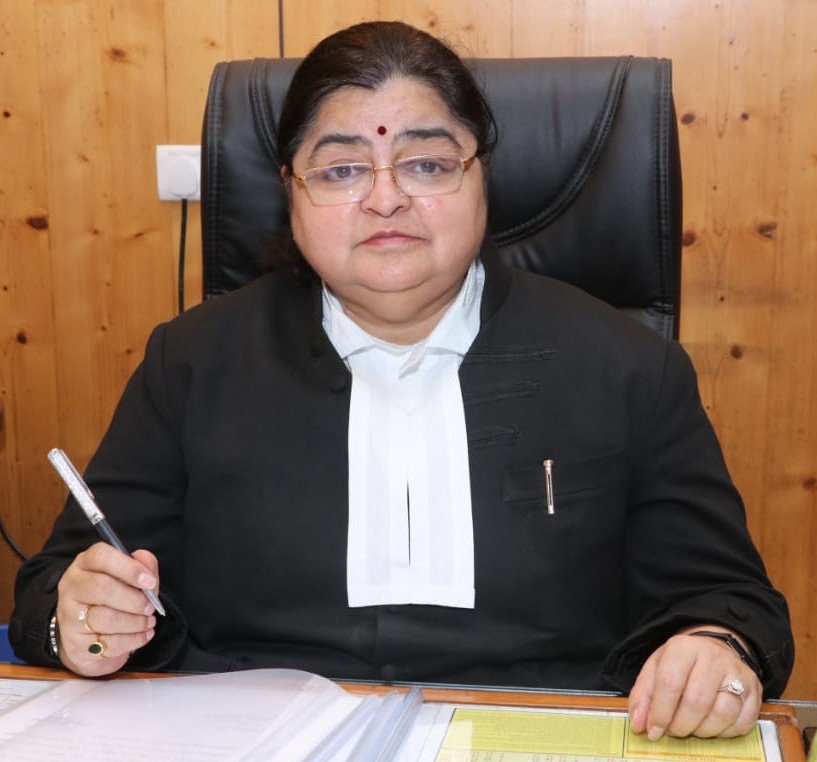
Legal Notes
Add a Note....