
This appeal arises out of the judgment and order dated 29.01.2007 passed by the High Court of Andhra Pradesh at Hyderabad whereby the learned Single Judge partly allowed the appeal filed by ...

No Acts & Articles mentioned in this case
REPORTABLE
IN THE SUPREME COURT OF INDIA
CRIMINAL APPELLATE JURISDICTION
CRIMINAL APPEAL No. 937 OF 2009
(Arising out of SLP (Crl.) No. 3209 of 2008)
Mohammed Ishaq ..…Appellant
Versus
S. Kazam Pasha & Anr. .….Respondents
With
WRIT PETITION (CRL.) No. 13 OF 2008
JUDGMENT
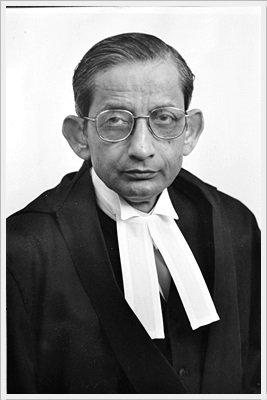
Dr. Mukundakam Sharma, J.
SLP (Crl.) No. 3209/2008
1.Delay condoned.
2.Leave granted.
3.This appeal arises out of the judgment and order dated 29.01.2007 passed
by the High Court of Andhra Pradesh at Hyderabad whereby the learned
Single Judge partly allowed the appeal filed by the respondent herein by
setting aside his conviction for the offence under Sections 148, 392 and
Page 1 of 17
452 of the Indian Penal Code (for short ‘IPC’) and convicted him under
Sections 147 and 451 IPC.
4.Factual matrix of the case is as follows:
Mohd. Ishaq – PW-1 (the appellant herein) is a resident of House No.
23-2-10, Khaja-Ka-Chilla, Moghalpura, Hyderabad which is a sarfakhas
property. His father, Mohd. Maqbool was working as watchman of Khaja-
Ka-Chilla. He resided in the said house as per the agreement with sarfakhas.
After his death, his son (PW-1) continued to live in the said house with his
family members. PW-7 and Anjuna Fathima are the sisters of PW-1. PW-2
and PW-9 are daughters of PW-7. PW-8 is daughter of his another sister.
PW-10 is the younger sister of PW-8. PW-13 is wife of PW-1. They were
all residing together in the above-mentioned house. The said house
comprises of six rooms, out of which three rooms fell to the share of PW-1,
two rooms fell to the share of his sister – Ahmedi Begum (PW-7) and one
room fell to the share of his another sister – Anjum Fatima. One Latif
Khader Saheb had established Latifaia Arabic College by the side of house
of the appellant herein. Respondent herein (A-1) is the son-in-law of said
Latif Khader Saheb. Respondent (A-1) was working as Librarian in the said
college. A-2 to A-5 are employees of the said college whereas A-6 and A-7
are friends of respondent (A-1).
Page 2 of 17
5.It has been stated that A-1 to A-7 demanded that the appellant would
vacate the above-mentioned house. They tried to evict the appellant
forcibly from the house but locality of the people intervened and made
their efforts futile. However, on 10.06.1990 at 7.00 AM, Ayesha Khan
(PW-2) while taking water from a tap which was near the gate of Khaja-
Ka-Chilla saw A-1 to A-7 entering the premises. She went and informed
her mother Ahmedi Begum (PW-7). The appellant (PW-1) and PW-7
closed the doors of the house so as to prevent the entry of A-1 to A-7 and
their associates. However, A-1 to 7 broke open the doors of the house
and gained entry into the house. When they attempted to lift the
household articles, the appellant and his sister’s husband Mohd. Qasim
went through another door of the house to the police station to inform the
highhanded acts of the accused. When PWs 7, 9, 10 and 13 prevented A-
1 and his associates from removing the household articles, they were
beaten up by the accused. By the time appellant returned from the police
station, A-1 and his associates loaded household articles in a lorry
bearing No. ABT 6596 and emptied the house. The efforts made by PW-
1 to prevent A-1 to A-7 and their associates from removing the household
articles did not yield any fruitful result. He along with the injured
woman folk i.e. PWs 7,9,10 and 13 went to the police station and
Page 3 of 17
presented a report. One M.A. Hafiz Khan (PW-17), Inspector of Police,
Mogalpura Police Station received the report and registered a case
bearing Crime No. 69 of 1990 under Sections 147, 452 and 392 of IPC
and sent the injured i.e. PWs 7,9,10 and 13 to the hospital. He inspected
the scene and found no house articles in the house bearing No. 23-2-10,
Khaja-Ka-Chilla, Mogalpura. Dr. Swarna Lata Singh (PW-5) medically
examined Ahmedi Begum (PW-7), Asma Begum (PW-9), Wjeed Shareef
(PW-10) and Naseem Begum (PW-13) and issued wound certificates in
respect of them.
6.PW-1, (the appellant herein) having come to know that his articles were
hidden at house No. 18-7-312/1/C/25, Talabkatta, Amannagar filed a
petition under Section 94 of Criminal Procedure Code (for short the
‘Cr.P.C.’) in the Court of Chief Metropolitan Magistrate-cum-First Addl.
Magistrate, Hyderabad for issuance of search warrant. The learned Chief
Metropolitan Magistrate issued the search warrant whereupon C.
Ravindra Nath (PW-14), Inspector of Police, CCS Hyderabad searched
the house adjacent to the house bearing No. 18-7-312/1/C/25, Talabkatta,
Amannagar and seized the household articles belonging to the appellant
party which were produced before the court. The learned Chief
Metropolitan Magistrate released the articles to PW-1 for interim custody
Page 4 of 17
pending disposal of the case. T. Bhojraj Yadav (PW-15), Inspector of
Police, CCS Hyderabad took up investigation from PW-17. He examined
PW-1 to PW-13 and recorded their statements under Section 161 Cr.P.C.
7.After completing the investigation, M.Madhav Reddy (PW-16), Inspector
of Police, filed the charge sheet before the XXI Metropolitan Magistrate,
Hyderabad. The Metropolitan Magistrate took the charge sheet on file
and committed the case to the Metropolitan Sessions Division,
Hyderabad. The Metropolitan Sessions Judge, Hyderabad took up the
case and assigned the same to the Additional Metropolitan Sessions
Judge, Hyderabad who framed charges under Sections 148, 452/149,
324/149 and 397/149 IPC in respect of all the accused persons i.e. A-1 to
A-7. The accused pleaded not guilty and claimed to be tried. To bring
home the guilt of the accused for the offences as aforesaid, the
prosecution examined 17 witnesses and proved 26 documents and exhibit
28 material objects.
8.The trial court, on appreciation of the evidence brought on record and on
hearing the prosecution and the accused, found A-1 guilty for the
offences under Sections 148, 452 and 392 IPC and convicted and
sentenced him to suffer rigorous imprisonment for six months and pay a
fine of Rs. 500/- in default, to suffer simple imprisonment for two months
Page 5 of 17
for the offence under Section 148 IPC; rigorous imprisonment for two
years and a fine of Rs. 500/- in default to suffer simple imprisonment for
two months for the offence under Section 452 IPC; rigorous
imprisonment for five years and a fine of Rs. 5,000/- in default to suffer
simple imprisonment for six months for the offence under Section 392
IPC. All the sentences were directed to run concurrently. However, the
trial court found A-2 to A-7 not guilty for the offences punishable under
Sections 148, 452, 392 read with Section 149 IPC and acquitted them
accordingly.
9.Aggrieved by the said judgment and order of the trial court, A-1
preferred an appeal in the Andhra Pradesh High Court contending that
since six of the named accused i.e. A-2 to A-7 were acquitted, it was not
proper and legal to convict him on the same set of evidence. The High
Court partly allowed the appeal filed by A-1 and set aside the conviction
of A-1 for the offences under Sections 148, 392 and 452 IPC and
acquitted him of the same. However, the High Court convicted A-1 for
the offences under Sections 147 and 451 IPC and sentenced him to suffer
rigorous imprisonment for a period of six months and pay a fine of Rs.
1000/- in default to suffer simple imprisonment for three months for the
offence under Section 147 IPC and rigorous imprisonment for a period of
Page 6 of 17
six months and pay a fine of Rs. 1000/- in default to suffer simple
imprisonment for three months for the offence under Section 451 IPC.
10.Aggrieved by the said decision of the High Court, the PW-1 (Mohd.
Ishaq) though not a party before the High Court, has preferred the present
SLP as the State of Andhra Pradesh chose not to file an appeal against the
judgment and order of the High Court.
11.The short question for consideration before us is whether the High Court
was justified in acquitting the respondent from the offences punishable
under Sections 148, 452 and 392 of IPC.
12.A scrutiny of the evidence on record shows that it has come out in
evidence of PW-7 and PW-9 that A-1 beat PW-9 with a knife on her left
forearm and PW-9 sustained a bleeding injury and the said part of
evidence is supported by the wound certificate of PW-9. Further, with
regards to the gathering outside the house of PW-1 is concerned, the
evidence of PW-11 and 12 corroborates the evidence of PW-7, PW-9,
PW-10 and PW-13. That being the position, there cannot be any doubt of
the fact that it was an unlawful assembly, which was armed with deadly
weapons, within the meaning of Section 141 and 148 IPC and the said
unlawful assembly was acting at the instance of A-1.
Page 7 of 17
13.It has been contended by the respondent that PW-1 was not in possession
of the house and in a separate civil proceeding (OS 3369/90) PW-1 has
admitted that he was dispossessed by one Abdul Rawoof Khan on
20.05.1990. However, the plaint was subsequently amended as per the
order of civil court and the date of 20.06.1990 has been mentioned at the
place of 20.05.1990. In this regard, the testimonies of PW-2, PW-7, PW-
9, PW-10 and PW-13 clearly establish that PW-1 was in possession of
the said house on the date of offence and all his belongings were forcibly
taken away in the lorry at the instance of A-1.
14.Another contention which has been advanced by the respondent that PW-
1 was not present at the scene of offence. However, even if we aside the
testimony of PW-1 in this regard, the testimonies of PW-2, PW-7, PW-9,
PW-10 and PW-13 which have been corroborated by the evidence of
PW-11 and 12 clearly establish that a mob of 60-70 person with a
common object of using criminal force and to take away and remove the
house-hold belongings of PW-1 from the said house entered the house of
PW-1. The said evidence further establishes that the gathering of mob
outside the house of PW-1 was an unlawful assembly, which was armed
with deadly weapons. The same would clearly fall within the ambit of
Section 141 and 148 IPC.
Page 8 of 17
15.It has been further established beyond reasonable doubt that A-1 along
with some others entered into the house of PW-1 and committed robbery.
So, the case of A-1 would clearly fall within the ambit of Section 392
IPC.
16.It is further proved beyond reasonable doubt that A-1 has committed
house trespass by putting PW-1 and other inmates of the house in fear to
hurt and thus, committed an offence under Section 452 IPC.
17.Accordingly, A-1 is liable to be convicted under Sections 148, 392 and
452 IPC, which we hereby do and order. Consequently we restore the
order of sentence passed by the trial court. The accused shall surrender
immediately to serve out the remaining part of the sentence and the
police is directed to take him into custody if he does not surrender within
a period of fifteen days from today. Appeal is allowed accordingly.
Writ Petition (Cri.) 13/2008
18.This writ petition has been preferred under Article 32 of the Constitution
by the petitioner (Mohammed Ishaq) who is the appellant in above-
mentioned SLP (Cri.) 3209/2008. This writ originates from the same set
Page 9 of 17
of factual matrix as discussed in the aforesaid appeal except some
additional facts which we propose to discuss herein below.
19.The petitioner has sought to invoke writ of certiorari to quash the order of
Government of Andhra Pradesh dated 24.04.2007 and writ of mandamus
directing the Union of India and the State of Andhra Pradesh to take steps
for the implementation of order of sentence passed by the Andhra
Pradesh High Court against A-1. Since the order of commutation is
based on consideration of irrelevant materials and non-consideration of
relevant materials the same is liable to be set aside.
20.Mr. Amarendra Sharan, Additional Solicitor General, has strenuously
contended that the petition is not maintainable as the PW-1 cannot
directly come to the Supreme Court. He has vehemently argued that at
the time of granting remission, all relevant materials including medical
report of A-1 have been taken into account by the government.
Accordingly, the writ petition deserves to be dismissed.
21.On the preliminary issue of maintainability of present writ petition, it is
well settled position of law that simply because a remedy exists in the
form of Article 226 of the Constitution for filing a writ in the concerned
High Court, it does not prevent or place any bar on an aggrieved person
Page 10 of 17
to directly approach the Supreme Court under Article 32 of the
Constitution. It is true that the court has imposed a self-restraint in its
own wisdom on the exercise of jurisdiction under Article 32 where the
party invoking the jurisdiction has an effective, adequate alternative
remedy in the form of Article 226 of the Constitution. However, this rule
which requires the exhaustion of alternative remedies is a rule of
convenience and discretion rather than a rule of law. At any rate it does
not oust the jurisdiction of this Court to exercise its writ jurisdiction
under Article 32 of the Constitution. We therefore, reject the preliminary
objection raised and proceed to examine the contentions raised in the
Writ Petition on merits.
22.It would be useful to mention here that after the judgment and order
dated 29.01.2007 of the High Court, the A-1 surrendered before the court
of 1
st
Additional Metropolitan Sessions Judge at Hydrabad on
16.04.2007. However, the Government of Andhra Pradesh commuted six
month rigorous imprisonment given to A-1 into fine of Rs. 5000 and
released A-1 immediately after one week of his surrender on 24.04.2007.
It is the case of the petitioner that he came to know about the said
development only when some local newspaper reported the same on
06.12.2007 and 07.12.2007.
Page 11 of 17
23.Coming to the factual position of the case with regard to the
commutation, we have noticed that various materials were taken into
consideration when the request for commutation of six month RI into fine
was made by the A-1. A-1 submitted his representation to the
Government through Director General & Inspector General of Prison &
Correctional Services, Hyderabad stating that he is a qualified Islamic
Scholar preaching religious and communal harmony all over the country
and has been suffering from multiple medical ailments. The said DG
forwarded the representation to the State Government for necessary
action. The State Government then called for reports from the
Commissioner of Police, Hyderabad; the Collector, Hyderabad and the
Regional Inspector of Probation, Hyderabad. Since the reports of these
three above-mentioned functionaries formed the basis of impugned order,
it is relevant to take note of some interesting features of these documents.
24.The Commissioner of Police, Hyderabad in his report noted that A-1 was
suffering from a number of ailments. He further opined that PW1 is not
involved in any other case other than the present one. He further stated in
his report that he is a known Islamic scholar and preaches communal
harmony and has been cooperating with the police on several occasions
for maintenance of peace in the city and that he does not have any
Page 12 of 17
political connections and that there is no risk to law and order situation if
his sentence is commuted. The Collector, Hyderabad in his report noted
that A-1 has a traditional family background and he was reportedly an
active participant in the peace committee meetings and other programme
relating to fostering of communal harmony and peace in locality. He
further stated that there was no other criminal cases pending against him
and no anticipated apprehension or unrest from any quarter is likely to
arise so far as the request of commutation is concerned. The District
Probationary Officer, Hyderabad in his report stated that no untoward
incidents are expected to take place on the release of A-1 and accordingly
recommended for commutation of sentence. On the basis of these reports,
the Government of Andhra Pradesh commuted the sentence of A-1 under
Section 433(c) Cr.P.C.
25.It is well settled that the exercise or non-exercise of pardon power by the
President or Governor, as the case may be, is not immune from judicial
review. Limited judicial review is available in certain cases. This Court
has succinctly discussed the issue in the case of Epuru Sudhakar &
Anr. v. Government of Andhra Pradesh & Others, (2006) 8 SCC 161
that the consideration of religion, cast or political loyalty of a convicted
Page 13 of 17
person for the purpose of commutation of his sentence are held to be
prohibited grounds. It observed as follows in relevant paras:
“34. The position, therefore, is undeniable that judicial review
of the order of the President or the Governor under Article 72 or
Article 161, as the case may be, is available and their orders can
be impugned on the following grounds:
(a) that the order has been passed without application of
mind;
(b) that the order is mala fide;
(c) that the order has been passed on extraneous or
wholly irrelevant considerations;
(d) that relevant materials have been kept out of
consideration;
(e) that the order suffers from arbitrariness.
66. Granting of pardon is in no sense an overturning of a
judgment of conviction, but rather it is an executive action that
mitigates or sets aside the punishment for a crime. It eliminates
the effect of conviction without addressing the defendant’s guilt
or innocence. The controlling factor in determining whether the
exercise of prerogative power is subject to judicial review is not
its source but its subject-matter. It can no longer be said that
prerogative power is ipso facto immune from judicial review.
An undue and unjustified exercise of this power is to be
deplored. Considerations of religion, caste or political loyalty
are irrelevant and fraught with discrimination. These are
prohibited grounds. The Rule of Law is the basis for evaluation
of all decisions. The supreme quality of the Rule of Law is
fairness and legal certainty. The principle of legality occupies a
central plan in the Rule of Law. Every prerogative has to be
subject to the Rule of Law. That rule cannot be compromised
on the grounds of political expediency. To go by such
considerations would be subversive of the fundamental
principles of the Rule of Law and it would amount to setting a
dangerous precedent. The Rule of Law principle comprises a
requirement of “Government according to law”. The ethos of
“Government according to law” requires the prerogative to be
exercised in a manner which is consistent with the basic
Page 14 of 17
principle of fairness and certainty. Therefore, the power of
executive clemency is not only for the benefit of the convict,
but while exercising such a power the President or the
Governor, as the case may be, has to keep in mind the effect of
his decision on the family of the victims, the society as a whole
and the precedent it sets for the future.”
26.There is no denial of the fact that while making request for commutation
of sentence, A-1 has not made any reference to the effect that he was in
fact absconding for about 4 months before his surrender. He was fugitive
to law for four months. The records clearly show that the High Court
gave its decision on 29.01.2007, but A-1 surrendered before the Court of
Additional Metropolitan Sessions Judge only on 16.04.2007. None of the
reports mentioned herein above took into consideration this vital aspect
of the case that, even after imposition of sentence by the High Court, A-1
showed utter disregard to the rule of law by evading the arrest.
Interestingly, A-1 is stated to have been drawing his salary during the
aforesaid period when he was absconding which unmistakably shows his
callous attitude towards rule of law. The executive clemency may not be
extended to a law disobeying citizen who did not surrender before the
trial court as mandated by the law. This vital aspect has been completely
ignored by the Andhra Pradesh government who without any application
of mind accepted the reports submitted by different functionaries in
undue haste and finished the entire exercise within a week from the date
Page 15 of 17
of request of commutation by A-1. In fact, the order of commutation is
just reiteration of the identical reports submitted by different government
authorities without any independent scrutiny. It has been stated that A-1
is suffering from multiple medical ailments, but neither his petition for
commutation nor any report nor the order of commutation provides any
details with regard to what kind of medical ailment he is suffering from.
We are of the view that by simply making vague and bald statements,
without having even an iota of indication with regards to the actual
disease or ailment is not sufficient to justify the order of commutation.
The order of commutation on the basis of these statements without
ascertaining its genuineness/veracity shows that the impugned order was
passed without any application of mind.
27.We may add here that the appropriate Government must not as a matter
of routine, indulge in exercise of such powers at its sweet will, pleasure
and whim or fancy. The powers conferred upon the appropriate
Government under Section 433 Cr.P.C., must be exercised in accordance
with rules and established principles i. e. reasonably and rationally,
keeping in view the reasons germane and relevant for the purpose of law
under which the conviction and sentence has been imposed. While
exercising such power, relevant facts necessitating the commutation, and
Page 16 of 17
the interest of the society and public interest must be reflected and well
established. The exercise of any power vested by the statute in a public
authority is to be always viewed as in trust, coupled with a duty to
exercise the same in the larger public and social interest.
28.In view of the aforesaid discussion, we find that the order of the Andhra
Pradesh government is untenable in law. It is also to be indicated that in
view of the order passed by this Court convicting the appellant under
Sections 148, 382 and 452 IPC and restoration of the order of sentence
passed by the Trial Court, the impugned order passed by the State
Government is also liable to be struck down on the ground of changed
situation and circumstances. The writ petition is allowed to the aforesaid
extent.
..………………………..J.
[S.B. Sinha]
.....………………………J.
[Dr. Mukundakam Sharma]
New Delhi,
May 6, 2009
Page 17 of 17

 Login with google
Legal Notes
Add a Note....