
The new National Curriculum Framework (NCF) by the NCERT (National Council of Educational Research and Training), which included a study of religion as part of the primary school curriculum led ...
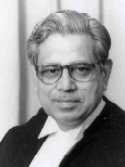
No Acts & Articles mentioned in this case
http://JUDIS.NIC.IN SUPREME COURT OF INDIA Page 1 of 13
CASE NO.:
Writ Petition (civil) 98 of 2002
PETITIONER:
Ms. Aruna Roy and Ors.
Vs.
RESPONDENT:
Union of India and Ors
DATE OF JUDGMENT: 12/09/2002BENCH:
D.M. DHARMADHIKARI
JUDGMENT:
J U D G M E N T
D.M. DHARMADHIKARI, J.
I have carefully gone through the erudite and well considered
opinion of learned Brother M.B. Shah J. I am in respectful agreement
with his conclusion but I would like to add my own reasons. I am in
agreement with the view that education of religions can be imparted
even in 'educational institutions' fully maintained out of State funds.
But the education on religion which can be allowed to be imparted in
'educational institutions fully maintained out of State funds' as
mentioned in Clause (1) of Article 28 of the Constitution has to be
education of a nature different from religious education or religious
instructions which can be imparted in educational institutions
maintained by minorities or those 'established under any endowment
or trust' as referred in Clause (2) of Article 28. I have, therefore, found
it necessary to give my own opinion on the important issues raised on
behalf of the petitioners questioning introduction of religious education
in educational institutions fully maintained out of State funds.
According to them, it runs counter to the concept of 'secularism' which
should guide the activities of the State in the field of education.
Secularism is the basic structure of the Constitution. Clause (1)
of Article 28 prohibits imparting of 'religious instructions' in educational
institutions fully maintained out of State funds. The case of D.A.V.
College Vs. State of Punjab [1971 (2) SCC 269] has been noted.
The words "religious instructions" have been held as not prohibiting
education of religions dissociated from "tenets, the rituals,
observances, ceremonies and modes of worship of a particular sect or
denomination". The academic study of the teaching and the philosophy
of any great Saint such as Kabir, Gurunanak and Mahabir was held to
be not prohibited by Article 28 (1) of the Constitution.
A distinction, thus, has been made between imparting "religious
instructions" that is teaching of rituals, observances, customs and
traditions and other non-essential observances or modes of worship in
religions and teaching of philosophies of religions with more emphasis
on study of essential moral and spiritual thoughts contained in various
religions. There is a very thin dividing line between imparting of
'religious instructions' and 'study of religions.' Special care has to be
taken of avoiding possibility of imparting 'religious instructions' in the
name of 'religious education' or 'Study of Religions'.
The English word 'religion' does not fully convey the Indian
concept of religion. Hindus believe in Vedas. The word 'Dharma' has a
very wide meaning. One meaning of it is the 'moral values or ethics'
on which the life is naturally regulated. Dharma or righteousness is
elemental and fundamental in all nations, periods and times. For
example truth, love, compassion are human virtues. This is what
Hindu call Sanatan Dharma meaning religion which is immutable,
http://JUDIS.NIC.IN SUPREME COURT OF INDIA Page 2 of 13
constant, living, permanent and ever in existence. Religion, in
wide sense, therefore, is those fundamental principles which sustain
life and without which the life will not survive. Rig Veda describes
Dharma as Athodharmani Dharayan. In this concept of religion or
Dharma, different faiths, sects and schools of thoughts merely are
different ways of knowing truth which is one. The various sects or
religious groups are understood as Panth or Sampradaya. In
Western world particularly in Britain, religious education has been
understood as nearly identical with the religious instructions. India
which is wedded to a secular philosophy by its constitution; 'Religious
education' to distinguish it from 'religious instructions' can mean
approaching the many religions of the world with an attitude of
understanding and trying to convey that attitude to children. This
distinction between 'religious instructions' and 'religious education' has
to be maintained while introducing a curriculum of religious education
and implementing it. This would require a constant vigil on the part of
those imparting religious education from primary stage to the higher
level otherwise there is a potent danger of religious education being
perverted by educational authorities whosoever may be in power by
imparting in the name of 'religious education,' 'religious instructions'
in which they have faith and belief. Modern philosopher and
educationists particularly those who belong to the schools of thought
which encourage free thinking and an independence of choice to be
given to the children in the matter of inculcating human values and
philosophy based on their individual liking or inclination, are very
sceptical about imparting religious instructions or religious education
by traditional methods. They see that in teaching religions, there is a
possibility of indoctrination or brain-washing of the children and thus,
curbing their inquisitiveness and free thinking in the name of religion.
Indoctrination of children in a particular faith or belief has to be
avoided. J. Krishnamurti, a modern renowned philosopher of India in
his book 'Education and the Significance of Life' has sounded a note
of caution in introducing religious education. His caveat, in his words,
is as under :
"What we call religion is merely organised belief, with its
dogmas, rituals, mysteries and superstitious. Each religion has
its own sacred book, its mediator, its priests and its ways of
threatening and holding people. Most of us have been
conditioned to all this, which is considered religious education;
but this conditioning sets man against man, it creates
antagonism, not only among the believers, but also against
those of other beliefs. Though all religions assert that they
worship God and say that we must love one another, they instil
fear through their doctrines of reward and punishment, and
through their competitive dogmas they perpetuate suspicion
and antagonism.
Dogmas, mysteries and rituals are not conducive to a spiritual
life. Religious education in the true sense is to encourage the
child to understand his own relationship to people, to things
and to nature. There is no existence without relationship; and
without self-knowledge, all relationship, with the one and with
the many, brings conflict and sorrow. Of course, to explain this
fully to a child is impossible; but if the educator and the parents
deeply grasp the full significance of relationship, then by their
attitude, conduct and speech they will surely be able to convey
to the child, without too many words and explanations, the
meaning of a spiritual life.
Religious education, therefore, even if permitted to be imparted
should consist of "understanding the child as he is without imposing
upon him an ideal of what we think he should be". Howsoever highly
educated, one may be but without deep integration of thought and
feeling, his life is incomplete, contradictory and torn with many fears;
http://JUDIS.NIC.IN SUPREME COURT OF INDIA Page 3 of 13
and as long as education does not cultivate an integrated outlook on
life, it has very little significance.
"True religion is not a set of beliefs and rituals, hopes and fears;
and if we can allow the child to grow up without these hindering
influences, then perhaps, as he matures, he will begin to inquire into
the nature of reality. That is why, in educating a child, deep insight
and understanding are necessary".
True religious education is to help the child to be intelligently
aware, to discern for himself the temporary and the real, and to have
a disinterested approach to life; and would it not have more meaning
to begin each day at home or at school with a serious thought, or with
a reading that has depth and significance, rather than mumble some
oft-repeated words or phrases. . To educate the student rightly is
to help him to understand the total process of himself; for it is only
that there is integration of the mind and heart in everyday action that
there can be intelligence and inward transformation.
An educator is not merely a giver of information; he is one who
points the way to wisdom, to truth. Truth is far more important than
the teacher. The search for truth is religion, and truth is of no country,
of no creed, it is not to be found in any temple, church or mosque.
Without a search for truth, society soon decays. [Source : 'Education
and the Significance of Life' by J. Krishnamurti]
A great philosopher, social reformer and religious man of our
times, Vinoba Bhave who studied all the religions of India and some of
other countries has suggested a balanced approach in the matter of
imparting religious education in pluralistic society wedded to
secularism. He finds the best co-ordinating formula on study of
religions in 'Vedas'. He quotes the following lines of Rig Vedas
'Ekam Sat Vipra Bahuda Vadanti'. Truth everywhere is same; the
devotees worship it in different forms. The other meaning of this
Sanskrit couplet is "the thought of truth everywhere is the same; we
have understood only a part of it, others have understood the other
part of it". Therefore, according to him, different religious thoughts
can be assimilated and synthesised for creating religious harmony. In
the world, different thoughts on relationship of man with God and
nature are to be found in various religions like Hindus, Buddhists,
Parsies, Jains, Yahudies, Islams, Cristians and many others. These
different thoughts influenced crores of people who are following them.
The common factor of all these thoughts should be understood as the
ultimate truth. If we delve deep into these various thoughts we get
this knowledge. These words should inspire the educationists and the
people of India in creating a real secular society in which 'religion' in
its wider sense is imbibed and a heart felt respect develops in people
of one religious faith towards people of another religious faith.
The lives of Indian people have been enriched by integration of
various religions and that is the strength of this nation. Whatever kind
of people came to India either for shelter or as aggressors, India has
tried to accept the best part of their religions. As a result, composite
culture gradually developed in India and enriched the lives of Indians.
This happened in India because of capacity of Indians to assimilate
thoughts of different religions. This process should continue for
betterment of multi-religious society which is India.
In a pluralistic society like India which accepts secularism as
the basic ideology to govern its secular activities, education can
include study based on the 'religious pluralism'. 'Religious pluralism' is
opposed to exclusivism and encourages inclusivism.
Exclusivism in religion has been explained to mean - the view
that one particular tradition alone teaches the truth and constitutes
http://JUDIS.NIC.IN SUPREME COURT OF INDIA Page 4 of 13
the way to salvation or liberation. The Christians believe in the words
attributed to Jesus in the 'Gospel of John', "No one can come to the
Father, but by me". They also believe as early as the third century that
dogma of extra ecclesiam nulla salus ('outside the church, no
salvation).
Muslims similarly believe that there is only one God and His one
messenger 'the Prophet'. Jews cherish their ethnically exclusive
identity as God's chosen people.
Hindus revere Vedas as eternal and absolute and Buddhists have
often seen Gautama's teachings as the Dharma that alone can liberate
human beings from illusion and misery.
The above kind of perception has led to inclusivist theologies
and religious philosophies that their own tradition presents the final
truth and other traditions are seen as approaches to that final truth.
The comprehensive approach to religion which should be
inculcated in a society comprising people of different religions and
faiths is described as inclusivism. In explicit pluralism, the view
accepted is that the great world faiths embodied different
perceptions and conceptions of and correspondingly different
responses to, the Real or Ultimate and that within each of them
independently the transformation of human existence from self-
centeredness to reality-centeredness is taking place.
Education in India which is to be governed by secular ethos
contained in its Constitution and where 'religious instructions' in
institutions of the State are forbidden by Article 28(1), the 'religious
education' which can be permitted, would be education based on
'religious pluralism'. The experiment is delicate and difficult but if
undertaken sincerely and in good faith for creating peace and harmony
in the society is not to be thwarted on the ground that it is against the
concept of 'secularism' as narrowly understood to mean neutrality of
State towards all religions and bereft of positive approach towards all
religions.
Such religious education permitting 'religious pluralism'
having emphasis on inclusivism in religious education instead of
allowing exclusivism can be demonstrated by giving instances.
There can be found instances of religious vision capable of either
inclusivist or pluralist development within each of the word religion
although they may not constitute a central thing.
For instances, in the New Testament, it is written that Logos,
which became incarnate as Jesus Christ, was "the light that lightens
every man".
In the Hindu Bhagavadgita the Lord says, "However men may
approach me, even so do I accept them; for, on all sides, whatever
path they may choose is mine". And in the Mahayana stream of
Buddhism, the bodhisattva gives himself 'for the salvation of all
beings". In the Quran, a following declaration is found :-
To God belong the East
And the West: whithersoever
Ye turn, there is the Presence [or Face]
Of God. For God is all pervading,
All knowing.
And the Muslim Sufi poet Rumi wrote this of the different
religious traditions : "The lamps are different but the light is the same:
http://JUDIS.NIC.IN SUPREME COURT OF INDIA Page 5 of 13
it comes from beyond".
The study of religious pluralism can be articulated in generally
acceptable way and such attempt has to be made particularly in India
which time and again has suffered due to religious conflicts and
communal disharmony. What is needed in the education is that the
children of this country should acknowledge the vast range and
complexity of differences apparent in the phenomenology of religion
while at the same time they should understand the major streams of
religious experience and thought as embodying different awarenesses
of the one ultimate reality. A wider acceptance of a pluralist view of
the religious life of humanity must involve developments in the self-
understanding of each tradition, a modification of their claims to
unique superiority in the interests of a more universal conception of
the presence of the Real to the human spirit. [See : Comparative
Study of Religion contained in the Encyclopedia of Religion
under the heading "Religious Pluralism" p.331-333]
The purpose of making a survey of various thoughts and
philosophy of different religions and the views of different
philosophers, educationists and thinkers is only to show that the
majority of them do not advocate ban on religious education to
children from school to college stage. What has been emphasised is
that the religious education imparted to children should be one to
make them aware of various thoughts and philosophies in religions
without indoctrinating them and without curbing their free thinking,
right to make choices for conducting their own life and deciding upon
their course of action according to their individual inclinations. For an
all round development of a child, all educationists feel that mere
imparting of information to students to sharpen their intellect is not
enough. Inner qualities of head and heart as also capacity to regulate
their own life and their relation with society should also be imparted to
them for their own and general good of the society as also for
achieving the highest goal of life. The attainment of constitutional
ideals is possible only if side by side with sharpening intellect, moral
character of children, is also developed to make them good citizens.
How best this religious pluralism to accord with 'secular thought'
of the country can be achieved by properly selecting the material for
inclusion in the text books for children of different ages and different
stages in the education, is a matter which has to be left to the
academicians and educationists. Their involvement with all dignitaries
and with other experts in related fields is necessary. This exercise has
to be undertaken by the Government for which any direction from the
court is neither required and nor can the court assume such power to
encroach on the field of preparation of an educational policy by the
State.
The scrutiny of the text books to find out whether they conform
to the secular thought of the country is also to be undertaken by the
experts, academicians and educationists. The members of NCERT
should be open to any such dialogue with the academicians and
educationists. On the basis of general consensus, suitable curriculum,
which accords with secularism as understood in wide and benevolent
sense, has to be evolved.
The expression 'religious instructions' used in Article 28 (1) has a
restricted meaning. It conveys that teaching of customs, ways of
worships, practices or rituals cannot be allowed in educational
institutions wholly maintained out of States funds. But Article 28 (1)
cannot be read as prohibiting study of different religions existing in
India and outside India. If that prohibition is read with the words
"religious instructions", study of philosophy which is necessarily based
on study of religions would be impermissible. That would amount to
denying children a right to understand their own religion and religions
http://JUDIS.NIC.IN SUPREME COURT OF INDIA Page 6 of 13
of others, with whom they are living in India and with whom they may
like to live and interact. Study of religions, therefore, is not prohibited
by the Constitution and the constitutional provisions should not be
read so, otherwise the chances of spiritual growth of human-being,
which is considered to be the highest goal of human existence, would
be totally frustrated. Any interpretation of Article 28(1), which
negates the fundamental right of a child or a person to get education
of different religions of the country and outside the country and of his
own religion would be destructive of his fundamental right of receiving
information, deriving knowledge and conducting his life on the basis
of philosophy of his liking.
The debates in the Constituent Assembly when Article 28 of the
Constitution was being considered are illuminating and helpful in
understanding the expression 'religious instruction' used in the said
Article. See the following part of the debates :-
Pandit Lakshmi Kanta Maitra : May I put the Hon'ble Member one
question? There is, for instance, an educational institution wholly
managed by the Government, like the Sanskrit College, Calcutta.
There the Vedas are taught, Smrithis are taught, the Gita is taught,
the Upanishads are taught. Similary in several parts of Bengal there
are Sanskrit Institutions where instructions in these subjects are
given. You provide in article 22(1) that no religious instruction can be
given by an institution wholly maintained out of State funds. These are
absolutely maintained by State funds. My point is, would it be
interpreted that the teaching of Vedas, or Smrithis, or Shastras or
Upanishads comes within the meaning of a religious instruction? In
that case all these institutions will have to be closed down.
The Hon'ble Dr. B. R. Ambedkar : Well, I do not know exactly the
character of the institutions to which my Friend Mr. Maitra has made
reference and it is, therefore, quite difficult for me.
Pandit Lakshmi Kanta Maitra : Take for instance the teaching of
Gita, Upanishads, the Vedas and things like that in Government
Sanskrit Colleges and schools.
The Hon'ble Dr. B. R. Ambedkar : My own view is this, that
religious instruction is to be distinguished from research or
study. Those are quite different things. Religious instruction means
this. For instance, so far as the Islam religion is concerned, it means
that you believe in one God, that you believe that Pagambar the
Prophet is the last Prophet and so on, in other words, what we call
"dogma". A dogma is quite different from study.
Mr. Vice-President : May I interpose for one minute? As Inspector of
Colleges for the Calcutta University, I used to inspect the Sanskrit
College, where as Pandit Maitra is aware, students have to study not
only the University course but books outside it in Sanskrit literature
and in fact Sanskrit sacred books, but this was never regarded as
religious instruction; it was regarded as a course in culture.
Pandit Lakshmi Kanta Maitra : My point is, this. It is not a question
of research. It is a mere instruction in religion or religious branches of
study.
I ask whether lecturing on Gita and Upanishads would be considered
as giving religious instruction? Expounding Upanishads is not a matter
of research.
Mr. Vice-President : It is a question of teaching students and I know
at least one instance where there was a Muslim student in the Sanskrit
College.
http://JUDIS.NIC.IN SUPREME COURT OF INDIA Page 7 of 13
Shri H.V. Kamath : On a point of clarification, does my friend Dr.
Ambedkar contend that in schools run by a community exclusively for
pupils of that community only, religious education should not be
compulsory?
The Hon'ble Dr. B. R. Ambedkar : It is left to them. It is left to the
community to make it compulsory or not. All that we do is to lay
down that that community will not have the right to make it
compulsory for children of communities which do not belong to
the community which runs the school.
Prof. Shibban Lal Saksena : The way in which you have explained
the word "religious instruction" should find a place in the
Constitution.
The Hon'ble Dr. B. R. Ambedkar : I think the courts will decide
when the matter comes up before them.
The above relevant part of the constitutional debates and the
concluding remark of Dr.B. R. Ambedkar give an indication of the
minds of the framers of the Constitution. They had seen the distinction
between "religious instruction" as mentioned in Clauses (1),(2) & (3)
of Article 28 and "study of religions" or "religious education" as a
philosophical study.
Constitution is a permanent document framed by the people
through their chosen and learned representatives for regulating their
social and political life in free India. The Constitution has been
accepted by the people to govern them for all times to come. The
basic structure of the Constitution is unchangeable and only such
amendments to the Constitution are allowed which do not affect its
basic structure and rob it of its essential character. The Constitution
was framed by its makers keeping in view the situations and
conditions prevailing at a time of its making; but being a permanent
document, it has been conceived in a manner so as to apply to
situations and conditions which might arise in future. The words and
expressions used in the Constitution, in that sense, have no fixed
meaning and must receive interpretation based on experience of the
people in the course of working of the Constitution.
The immortal words of the Chief Justice Holmes, should guide
us in interpreting words and expressions used in our Constitution. He
said, "spirit of law is not logic but it has been experience". His words
apply with greater force to constitutional law.
The word "secularism" used in the preamble of the Constitution
is reflected in provisions contained in Articles 25 to 30 and Part IVA
added to the Constitution containing Article 51A prescribing
fundamental duties of the citizens. It has to be understood on the
basis of more than 50 years experience of the working of the
Constitution. The complete neutrality towards religion and apathy for
all kinds of religious teachings in institutions of the State have not
helped in removing mutual misunderstanding and intolerance inter se
between sections of people of different religions, faiths and beliefs.
'Secularism', therefore, is susceptible to a positive meaning that is
developing understanding and respect towards different religions. The
essence of secularism is non-discrimination of people by the State on
the basis of religious differences. 'Secularism' can be practised by
adopting a complete neutral approach towards religions or by a
positive approach by making one section of religious people to
understand and respect religion and faith of another section of people.
Based on such mutual understanding and respect for each other's
religious faith, mutual distrust and intolerance can gradually be
eliminated.
http://JUDIS.NIC.IN SUPREME COURT OF INDIA Page 8 of 13
Study of religions, therefore, in school education cannot be held
to be an attempt against the secular philosophy of the Constitution.
The real meaning of secularism in the language of Gandhi is
Sarva-Dharma-Samabhav meaning equal treatment and respect
for all religions, but we have misunderstood the meaning of
secularism as Sarva-Dharma-Sam-Abhav meaning negation of all
religions. The result of this has been that we do not allow our
students even touch of our religious books. Gandhiji in his lifetime has
been trying to create religious and communal harmony and laid down
his life in doing so. His ardent follower Vinoba Bhave after
independence has not only learnt all the languages and made in-depth
study of all the religions of India but covered length and breadth of
India on foot to unite the hearts of Indian people by spreading his
message of non-violence and love. Based on his in-depth study of all
religious books of India, he published, in his life time, their essence in
the form of different books. He has very strongly recommended that
the essence of various religions, which he published in book forms like
Quran Saar, KhistaDharma-Saar, BhagwatDharma-Saar,
Manushasanam etc., should be introduced to the students through
text books because these religious books have been tested since
thousands of years and proved to be useful for the development of
man and human society. In a society wedded to secularism, 'study of
religions' would strengthen the concept of secularism in its true spirit.
In the name of secularism, we should not keep ourselves aloof from
such great treasures of knowledge which have been left behind by
sages, saints and seers. How can we develop cultured human-beings
of moral character without teaching them from childhood the
fundamental human and spiritual values. (See Vinoba Sahitya,
Vol.17, pg.44-49 and 67).
Article 28(1), therefore, does not prohibit introduction of study
of religions in the State educational institutions including those wholly
or partly aided by the States. As a matter of fact, study of religions
has been considered necessary for the unity and integrity of India.
Indian society is composed of people of various religions and faiths.
They are expected not only to live together and tolerate each other,
but to live a harmonious life in peace and love. Before and after
partition in India, religious conflicts and communal disturbances have
impeded the growth of this nation and its attempt towards progress.
After National Education Policy of 1986, a shift by the impugned
National Educational Policy 2002 towards teaching of religions in the
schools to educate children to understand common factors in all
religions, is not a non-secular step. Even before the government
decided to make a shift in the educational policy in that direction,
eminent educationalists, thinkers, philosophers and academicians have
expressed thoughts that for all round development of child, study of
religions should start in rudimentary form from school education and
should continue up to the higher education. It has been emphasised
that education should not be for the purposes of making a child merely
literate and intelligent. The real education is one in which a child
gradually realises that he is made up not only of body and mind but
also some inner elemental qualities. Some thoughts of Gandhi on
religious education were read before us on behalf of the Petitioners to
point out that Gandhi was sceptical on introduction of religion in
education. His writings, if read in proper context, on the contrary,
contain strong recommendations that common and basic tenets of
religions be imparted to the children. In 1908 in an article in Hind
Swaraj on "Religious Education", Gandhi expressed his thoughts
thus :-
"The question of religious education is very difficult. Yet we cannot do
without it. India will never be godless. Rank atheism cannot flourish
in this land. The task is indeed difficult. My head begins to turn as I
http://JUDIS.NIC.IN SUPREME COURT OF INDIA Page 9 of 13
think of religious education. Our religious teachers are hypocritical
and selfish; they will have to be approached. The Mullas, the Dasturs
and the Brahmins hold the key in their hands, but if they will not have
the good sense, the energy that we have derived from English
education will have to be devoted to religious education. This is not
very difficult. Only the fringe of the ocean has been polluted, and it is
those who are within the fringe who alone need cleansing. We who
come under this category can even cleanse ourselves, because my
remarks do not apply to the millions. In order to restore India to its
pristine condition, we have to return to it. (Hind Swaraj (1908),
p.107I.
To me religion means Truth and Ahimsa or rather Truth alone, because
Truth includes Ahimsa, Ahimsa being the necessary and indispensable
means for its discovery. Therefore anything that promotes the
practice of these virtues is a means for imparting religious education
and the best way to do this, in my opinion, is for the teachers
rigorously to practise these virtues in their own person. Their very
association with the boys, whether on the playground or in the class
room, will then give the pupils a fine training in these fundamental
virtues.
So much for instruction in the universal essentials of religion.
A curriculum of religious instruction should include a study of
the tenets of faiths other than one's own. For this purpose the
students should be trained to cultivate the habit of
understanding and appreciating the doctrines of various great
religions of the world in a spirit of reverence and broad-minded
tolerance. This if properly done would help to give them a spiritual
assurance and a better appreciation of their own religion. There is one
rule, however, which should always be kept in mind while studying all
great religions, and that is that one should study them only through
the writings of known votaries of the respective religions. For
instance, if one wants to study the Bhagavata one should do so not
through a translation of it made by a hostile critic but one prepared by
a lover of the Bhagavata. Similarly to study the Bible one should
study it through the commentaries of devoted Christians. This study
of other religions besides one's own will give one a grasp of the rock-
bottom unity of all religions and afford a glimpse also of that universal
and absolute truth which lies beyond the 'dust of creeds and faiths'.
Let no one even for a moment entertain the fear that a reverent study
of other religions is likely to weaken or shake one's faith in one's own.
The Hindu system of philosophy regards all religions as containing the
elements of truth in them and enjoins an attitude of respect and
reverence towards them all. This of course presupposes regard for
one's own religion. Study and appreciation of other religions need not
cause a weakening of that regard; it should mean extension of that
regard to other religions.
In this respect religion stands on the same footing as culture. Just as
preservation of one's own culture does not mean contempt for that of
others, but requires assimilation of the best that there may be in all
the other cultures, even so should be the case with religion. (Young
India, 6-12-'28)."
Democracy cannot survive and Constitution cannot work unless
Indian citizens are not only learned and intelligent, but they are also of
moral character and imbibe the inherent virtues of human-being such
as truth, love and compassion. Thinkers and philosophers strongly
recommend introduction of teaching of religions in education. There
may be some difference of opinion between them as to at what stage
of education it should be introduced. Whether it should be introduced
right from the primary stage, may be a subject of debate and it is not
for the Courts but for the educationalists and academicians, to assist
http://JUDIS.NIC.IN SUPREME COURT OF INDIA Page 10 of 13
the Government in formulating a sound Educational Policy for primary
education. India is mostly composed of people, who are followers of
one or the other religions or faiths. A very small section comprises of
those who are non-believers. They be described as purely humanists
and rationalists. Bertrand Russell in The School Curriculum Before
Fourteen, speaking on the teaching history to the school children,
advocates imparting knowledge of impact of thinkers and philosophers.
He said : "I should not keep silence, but I should not hold up military
conquerors to admiration. The true conquerors, in my teaching of
history, should be those who did something to dispel the darkness
within and without Buddha and Socrates, Archimedes, Galileo and
Newton, and all the men who have helped to give us mastery over
ourselves or over nature. And so I should build up the conception of
lordly splendid destiny for the human race, to which we are false when
we revert to wars and other atavistic follies, and true only when we
put into the world something that adds to our human dominion. (See
Bertrand Russell on "Education" at p. 172).
Bertrand Russell, who was a sceptic and free thinker opined
against indoctrinating children by religious teaching. He is, however,
not of the opinion that children should be kept away from the
knowledge of religion. He has noted a caution that sometimes
teaching of history and religion in the schools which are run and
maintained by religious sects may indoctrinate children to mould them
to their thought and belief and that would certainly be harmful.
Because sometimes certain views on these subjects are imparted so as
to magnify one country or one religion and denigrate and degrade the
other religions. Bertrand Russell is equally critical of the secular
teachings that is negative approach to religions. (See Bertrand
Russell "Principles of Social Reconstruction" pp. 105-106).
Pt. Jawaharlal Nehru Ex.p.m, Dr. S. Radhakrishnan and Dr. Zakir
Hussain, Ex-Presidents of India were also strongly of the view that in
the march of human philosophy only science and spirituality will be
the two greatest primary forces which will keep human-beings in best
state of existence. The opinion of Dr. S. Radhakrishnan on education is
thus :-
"The end of education, as envisaged by Radhakrishnan, is self-
knowledge. Though man is a composite of body, mind and
spirit, he has to live by what is the highest in him, which is the
spirit and the latter 'should not degenerate into intellect and/or
will'. It is the spirit which is the source of all achievement,
creativity, freedom and discipline." (See : The Social and
Political Thought of Dr. S. Radhakrishnan by Clarissa
Rodrigues, p. 121).
The greatest secular personality of this country, ex Prime
Minister Jawaharlal Nehru has expressed following thoughts :-
"All education must have a definite social outlook and must train our
youth for the kind of society we wish to have. Politicians may strive
for political and economic changes in order to bring that society into
existence, but the real basis of that society must be laid in the
teaching of our schools and colleges. The real change will have to
come in the minds of men, though that change can and will be helped
greatly by external changes in the environment. The two processes go
together and should help each other."
"The process of education, therefore, must help to build men and
women suited to the age and the task they have to perform. It should
presumably deal with certain basic factors in the development of boys
and girls to give them strength of character and the right outlook on
life. I do not mean by this that they should be conditioned only in one
particular way, but rather that they should develop, apart from the
http://JUDIS.NIC.IN SUPREME COURT OF INDIA Page 11 of 13
essentials of character, a trained receptive and tolerant mind which is
capable of considering problems in their entirety and trying to arrive at
solutions. They should in effect develop into integrated human beings.
Integration means not only a process within themselves, which of
course is highly important, but also a measure of integration with the
environment." (See : Nehru on Social Issues by S.P. & J.C.
Aggarwal)
Swami Ranganathananda of Ramakrishna Mission, in the book
"Eternal Values for a Changing Society, Vol. 3: Education for
Human Excellence", has identified six objectives, which should be
achieved by education. The following objectives which have been
culled fully accord with the constitutional philosophy:-
1. The training of our children to an appreciation of our nation's
cultural heritage and to equip them with the desire and the
capacity to enhance the same and leave to posterity a richer
legacy.
2. The training of our children in talents and capacities by which they
become productive units of society and the source of its economic
strength.
3. The equipment of our children with the qualities of courage and
vision to protect our newly won national freedom, to preserve its
democratic structure, function, and liberties, and to carry the same
to ever wider fields and ever higher levels.
4. The training of our children in virtues and graces that will make
them emotionally stable individuals and enable them to live in
peace, harmony, and co-operation with their fellow citizens.
5. The training of our children in virtues and graces that will make
them international in their outlook and sympathies, and enable
them to live in peace, harmony, and co-operation with the
emerging world community.
6. The training of our children to an awareness of the spiritual and
trans-social dimension of the human personality and to a
converging life-endeavour in the realization of this fact in and
through life and action.
7. It is only thus that our education will become a fit discipline to help
to continue the march of the Indian tradition from an impressive
past to a glorious future."
As pointed out by learned counsel on behalf of petitioners, if
there are certain offending portions in the curriculum, which are not
historically correct or has a tendency to misrepresent, suppress or
project a wrong information, they can be removed. The learned
Solicitor General on behalf of the Union of India and the counsel
appearing for NCERT have very candidly stated that if those portions
are identified, there would be no objection to the Government to
consider their deletion from the curriculum. It has been emphatically
stated that the object of introducing 'study of religions' in the
education from primary stage is to ensure all round development of a
child and with the object that he grows as citizen with respect for
constitutional values.
As has been stated by us above, while dealing with the first
point, that a National Policy of school education having effect and
implications upon children of whole of India should be prepared after
careful and thoughtful deliberations. Learned Solicitor General stated
that NCERT before finalising the curriculum has not only held
symposiums, conferences, talks and debates, but also elicited opinions
not only of members of NCERT, but also ex-officio members of CABE.
http://JUDIS.NIC.IN SUPREME COURT OF INDIA Page 12 of 13
It is stated that although a formal meeting of the members of CABE
could not be called for seeking their advice, but each one of them
individually was sent a copy of curriculum to elicit their views for and
against it. It is after long deliberations, discussions and exchange of
views that the curriculum has been finalised. It is submitted that any
restraint puts on introduction of curriculum could harm the interest of
the students, who have already started their academic session and a
very large quantity of text books and literatures prepared by NCERT in
conformity with the National Curriculum of 2002, would go waste. It
is, therefore, stated that this Court should vacate interim order
restraining introduction of National Curriculum on certain subjects as
mentioned in the Order of this Court dated 1st March, 2002. We have
looked into the Constitution and functions of CABE, copy of which has
been provided to us. The Constitution and functions of NCERT are also
given to us for perusal. From the language employed therein, we find
that the functions of the two Bodies are not so clearly delineated as to
put them in water tight compartments. In evolving a National Policy
on Education and based thereon a curriculum, in accordance with
long standing practice, it was desirable to consult CABE although for
non-consultation the National Policy and the Curriculum cannot be set
aside by the court. In a constitutional democracy, Parliament is
supreme and policies have to be framed and approved by the
Parliament. Parliament had constituted CABE and NCERT and if CABE
has any objection to the National Curriculum nothing prevented it from
expressing its opinion accordingly. It is ultimately for the Parliament to
take a decision on the National Education Policy one way or the other.
It is not the province of the Court to decide on the good or bad points
of an Educational Policy. The Court's limited jurisdiction to intervene
in implementation of a policy is only if it is found to be against any
statute or the Constitution. We have not found anything in the
Educational Policy or the Curriculum which is against the Constitution.
We have found no ground to grant any relief as prayed for by the
Petitioners. We would, however, direct the Union of India to consider
the matter of filling the vacancies in the membership of CABE
and convening a meeting of CABE for seeking opinion on the policy
and the curriculum.
All bodies created by executive power of the State, are
answerable to Parliament which is the supreme legislative body with
all powers in suggesting and formulating a National Education Policy. It
is open to Parliament to fill nominations to CABE, re-constitute it or do
away with it. The court can have no jurisdiction in that subject. This
court can enforce constitutional provisions and laws framed by the
Parliament. It cannot, however, compel that a particular practice or
tradition followed in framing and implementing the policy, must be
adhered to. The court has to keep in mind the above limitations on its
jurisdiction and power. It is true that if a policy framed in the field of
education or other fields runs counter to the constitutional provisions
or the philosophy behind those provisions, this court must, as part of
its constitutional duty, interdict such policy.
For the reasons given above, we do not find that the National
Education Policy 2002 runs counter to the concept of secularism.
Before parting with this case, we record our appreciation for the
efforts and industry put on the subject by the parties and their
counsel. Their joint efforts are commendable and we recognise their
sincerity and best intentions in seeking judicial intervention for
safeguarding the interest of children, their parents and through them
the nation as a whole. We have, however, found no ground to grant
any directions as prayed for in these petitions. The petitions are,
therefore, disposed of with the observations made above. We make no
http://JUDIS.NIC.IN SUPREME COURT OF INDIA Page 13 of 13
orders as to costs.

 Login with google
Legal Notes
Add a Note....