
As per case facts, the Petitioner, a contractor for Northern Railways, alleged significant losses due to delays by the Respondents. A dispute arose regarding the execution of a contract. The ...
HIGH COURT OF JAMMU & KASHMIR AND LADAKH
AT JAMMU
AA No.5/2018
Reserved on: 06.02.2026
Pronounced on: 13.02.2026
Uploaded on: 13.02.2026
M/s H.P.Singh & Co.
....Petitioner(s)
Through:- Mr. Amit Gupta, Sr. Advocate with
M/s Sumit Moza, Abhay Tandon &
Pratyush Sharma, Advocates
Versus
1. Union of India
Through Chief Engineer,
Construction Northern Railways, Kashmir Gate,
Delhi.
2. General Manager, Constructions
Northern Railways Baroda House, New Delhi.
3. Deputy Chief Engineer
Northern Railway, Construction,
Northern Railways, Pathankot
4. Chief Administrative Officer
Construction Northern Railway,
Head Quarter Kashmir Gate, New Delhi.
...Respondent(s)
Through: Mr. Harshwardhan Gupta, CGSC
Coram: HON’BLE MR. JUSTICE SANJEEV KUMAR , JUDGE
JUDGMENT
1. This is a petition under Section 11 of the Jammu & Kashmir
Arbitration and Conciliation Act, 1997 [“the Act”] for
appointment of an independent arbitral tribunal/arbitrator to
settle and adjudicate upon the disputes arising out of a contract
AA No.5/2018 2
entered into between the parties, in terms of agreement No.26-
A/c/Dy.CE/C/PTK dated 15.07.2009. In terms of an order of
allotment dated 14.08.2007 issued by respondent No.3, acting
for and on behalf of the President of India, work of loading,
leading, unloading and stacking of railway material from Delhi,
Uttar Pradesh, Haryana, Punjab, Uttranchal. Jammu & Kashmir
and Rajasthan was allotted to the petitioner for a period of six
months for an amount of Rs.1,41,28,309.75. The date of
completion of the work was initially 13.02.2008 but the same
was subsequently extended upto 30.09.2009.
2. It is alleged that the railways did not provide any work order so
as to enable the petitioner to execute the contract in time despite
the fact that acceptance letter was issued to the petitioner in the
year 2007. It is submitted that the work could be started by the
petitioner only in the month of August, 2008 and, accordingly,
the contract period was further extended. The contract was
formalized by execution of a formal agreement between the
parties on 15.07.2009. It is further alleged that, though, the
contract was allotted for a period of only six months, it came to
be extended for more than ten years. The petitioner claims that
he could execute only 50% of the work, as a result, suffered
huge losses. It is, thus, case of the petitioner that due to acts of
omission and commission committed by the respondents from
time to time, he was not allowed to execute the contract in
AA No.5/2018 3
terms of the agreement executed and was even forced to renew
his performance guarantee, which was to the tune of
Rs.2,14,960/- and TRD of Rs. 7,06,500/-. It is submitted that
apart from the performance guarantee, the security deposit of
the petitioner to the tune of rupees five percent of the contract
value amounting approximately to Rs.4,91,456/- was illegally
retained by the respondents during the currency of the contract.
3. Without going much into the allegations made by the petitioner
in the petition, suffice it to say that a serious dispute between
the parties, arising out of the contract, arose between the parties.
In these circumstances, the petitioner claims that he approached
the respondents for appointment of an arbitrator in terms of
Clause 64(1) of the General Conditions of Contract vide letter
dated 04.09.2017. The respondents refused to refer the dispute
to the arbitrator in terms of the arbitration clause aforesaid on
the ground that the petitioner was not entitled to invoke the
arbitration clause after having signed the “Supplementary
Agreement” and “No Claim Certificate” vide communication
dated 27.11.2017.
4. Faced with the refusal on the part of the respondents to refer the
dispute to arbitration in terms of Clause 64(1) of the General
Conditions of Contract, the petitioner filed the instant petition
seeking intervention of the Lord Chief Justice or his nominee to
appoint an independent Arbitral Tribunal/Arbitrator to
AA No.5/2018 4
adjudicate and determine the disputes that had arisen between
the parties.
5. The petition is contested by the respondents. In the written
objections filed on behalf of the respondents, it is inter alia
contended by the respondents that the arbitration clause is not
invokable for the reason that the petitioner has, in lieu of full
and final settlement, signed a supplementary agreement along
with the final bill and has received all the due payments. It is
submitted that in view of the submission of „No Claim
Certificate‟ dated 15.06.2017 by the petitioner, no arbitrator, in
terms of the arbitration clause, could be appointed as no arbitral
dispute has arisen between the parties.
6. Having heard learned counsel for the parties and perused the
material on record, following question arises for determination
in this case:
“Whether the petitioner after having issued “No
Claim Certificate” duly singed by him and
execution of supplementary agreement dated
19.04.2017 can invoke arbitration clause i.e.
Clause 64(1)(i) of General Conditions of Contract,
1999 and seek appointment of arbitrator to
adjudicate the disputes arising out of the contract
entered into between the parties?
7. Before proceeding further to analyze the rival contentions of the
parties, it would be appropriate to set out arbitration Clause i.e.
AA No.5/2018 5
Clause 64(1)(i) of the General Conditions of Contract, which is
set out below:
“64(1)(i) Demand for Arbitration--- In the event of any
dispute or difference between the parties hereto as to the
construction or operation of this contract, or the respective
rights and liabilities of the parties on any matter in
question, dispute or difference on any account or as to the
withholding by the Railway of any certificate to which the
contractor may claim to be entitled to, or if the Railway
fails to make a decision within 120 days, then and in any
such case, but except in any of the „excepted matters‟
referred to n clause-63 of these conditions, the contractor,
after 120 days but within 180 days of his presenting his
final claim on disputed matters, shall demand in writing
that the dispute or difference be referred to arbitration.”
8. From a reading of the arbitration clause reproduced above, a
dispute or difference between the parties as to construction or
operation of the contract, or the respective rights and liabilities
of the parties on any matter in question, dispute or difference on
any account except in respect of “excepted matters” referred to
in Clause-63 of the General Conditions of Contract, is referable
to arbitration as provided in the arbitration clause. „Excepted
matters” mentioned in the arbitration clause in respect of which
the parties cannot seek arbitration are referable to clause 63,
which reads thus:
“63. Matters finally determined by he Railway.--- All
dispues and differences of any kind whatsoever arising out
of or in connection with the contract, whether during he
progress of the work or after its completion and whether
AA No.5/2018 6
befoe or after the determination of the contract shall be
referred by the contractor to the Railway and the railway
shall within 120 days after receipt of the Contractor‟s
representation make and notify decisions on all matters
referred to by the contractors in writing provided that
mattes for which provision has been made in clauses 8(a),
22(5), 39, 43, 45(a), 55, 55-A(5), 57, 57A, 61(1), 61(2) and
62(1)(b) of General Conditions of Contract or in any clause
of the Special Conditions of the Contract shall be deemed
as „excepted matters‟ and decisions of the Railway
authority, thereon shall be final and binding on the
contractor provided further that „excepted matters‟ shall
sand specifically excluded from the purview of the
arbitration clause and not be referred to arbitration.”
9. From a reading of Clause 63, it clearly transpires that the
matters for which provision has been made in Clauses 8(a),
22(5), 39, 43, 45(a), 55, 55-A(5), 57, 57A, 61(1), 61(2) and
62(1)(b) of General Conditions of Contract are deemed
“excepted matters” and taken specifically out of the purview of
the arbitration clause.
10. In the instant case, we are concerned with the matters for which
provision has been made in Clause 43(2), which, for facility of
reference is reproduced hereunder:-
“(2) Signing of “No Claim” Certificate.--- The Contractor
shall not be entitled to make any claim whatsoever against
the Railway under or by virtue of or arising out of this
contract, nor shall the Railway entertain or consider any
such claim, if made by the Contractor, after he shall have
signed a “no Claim” Certificate in favour of the Railway in
such form as shall be required by the Railway after he
works are finally measured up. The Contractor shall be
AA No.5/2018 7
debarred from disputing the correctness of the item covered
by “No Claim” Certificate or demanding a clearance to
arbitration in respect thereof.”
11. In view of the clear stipulation made in different clauses of the
General Conditions of Contract, which are backed by the
agreement executed between the parties in respect of the work
in question, it is beyond pale of any discussion that where
contractor has signed a „No Claim‟ Certificate in favour of the
Railways after the works are finally measured up, the contactor
shall be debarred from disputing the correctness of the items
covered by „No Claim Certificate‟ or demanding reference to
the arbitration in respect thereof.
12. The singing of „no claim certificate‟ by the contractor in lieu of
full and final settlement of his claim envisaged under Clause
43(2) of the General Conditions of Contract, is therefore, an
excepted item in terms of Clause 63 and, therefore, not
referable to arbitration under Clause 63 read with Clause
64(1)(i) of the General Conditions of Contract.
13. The petitioner has not disputed the execution of supplementary
agreement dated 19.04.2017 nor has he disputed the „No Claim
Certificate‟ signed and issued by him dated 15.06.2017. It is
also not seriously disputed by Mr. Amit Gupta, learned senior
counsel appearing for the petitioner that execution of „no claim
certificate‟ after having received the payment offered by the
AA No.5/2018 8
respondents is excepted matter and prima facie not arbitrable.
His contention, however, is that the supplementary agreement
as also „no claim certificate‟ was signed by the petitioner under
financial duress and, therefore, involuntary in nature.
14. Mr. Amit Gupta, however, raised a legal argument to come out
of the disability to seek reference to arbitration and submits that
the issue as to whether or not „no claim certificate‟ was signed
by the petitioner under financial duress is a question of fact,
which needs to be left to be determined by the arbitrator. He
would argue that once the Court is convinced with regard to the
existence of arbitration agreement, other issues, more
particularly the issues of facts, should be left to be determined
by the arbitrator.
15. Per contra, Mr. Harshwardhan Gupta, learned counsel
appearing for the respondents, would argue that in the instant
case, there is prima facie material on record to show that „no
claim certificate‟ was issued by the petitioner voluntarily and
under no duress and, therefore, an excepted matter. He would,
therefore, argue that arbitration clause in respect of the excepted
matter cannot be invoked nor arbitrator could be appointed to
arbitrate disputes which are rendered non-existent by signing
„no claim certificate‟.
AA No.5/2018 9
16. We have given thoughtful consideration to this aspect of the
matter as well. Supplementary agreement between the parties,
which is duly signed by the petitioner and the respondents, was
executed on 19.04.2017 in which the parties agreed that in
consideration of the payment already made, under the
agreement, the Principal Agreement would stand finally
discharged and all the terms and conditions including
arbitration clause rescinded. By virtue of the supplementary
agreement not only the parties agreed to supersede and rescind
the principle agreement but they also agreed to rescind all terms
and conditions thereof including arbitration clause. This was
followed by a „No Claim Certificate‟ issued on 15.06.2017. In
lieu of release of earnest money and security deposit and
issuance of completion certificate by the respondents and
receipt of final payment of the contract in question, the
petitioner executed an unconditional and unequivocal „No
Claim Certificate‟ for the said work.
17. We could not find any material or communication issued by the
petitioner between 19.04.2017 to 15.06.2017 ruing the
execution of supplementary agreement and discharge of the
Principal Agreement including terms and conditions thereof
including the arbitration clause. Rather, the petitioner with his
eyes wide open acknowledged the receipt of final payment of
the work and signed „No Claim Certificate” unconditionally and
AA No.5/2018 10
unequivocally. It is only after the petitioner got all the payments
under the contract including his earnest money and security
deposit etc, he raised the dispute by way of its communication
dated 22.06.2017. However, as per reply affidavit submitted by
the respondents, it was only on 04.09.2017 when the petitioner
sent a communication to the respondents for appointment of
arbitrator, which was duly replied by the respondents vide
communication dated 27.11.2017.
18. Be that as it may, the petitioner has not placed on record any
substantial evidence or material to demonstrate that signing of
„supplementary affidavit‟ and „no claim certificate‟ by the
petitioner was under financial duress or coercion by the
respondents. On the contrary, the respondents have, by placing
on record supplementary agreement dated 19.04.2017 and no
claim certificate dated 15.06.2017, have clearly proved that the
petitioner received the full and final payment under the contract
voluntary and executed the supplementary agreement
superseding the Principal Agreement along with terms and
conditions thereof including arbitration clause. They have also
successfully demonstrated that on receipt of full and final
payment under the Contract and in lieu of release of earnest
money and security deposit, the petitioner also executed „No
Claim Certificate” in terms of Clause 43(2) of the General
Conditions of Contract.
AA No.5/2018 11
19. That being the clear position emerging from the material on
record, it is difficult to believe and accept the contention of the
learned senior counsel appearing for the petitioner that the issue
as to whether or not the supplementary agreement and no claim
certificate were executed by the petitioner under financial
duress are disputed questions of fact required to be referred to
arbitration for determination.
20. Both sides have relied on respective case law to substantiate
their contentions. However, it would be suffice to say that these
proceedings have arisen under the J&K Arbitration and
Conciliation Act, 1997, which did not contain provision like
Subsection 6A, which was inserted in Section 11 of the
Arbitration and Conciliation act, 1996 (“Central Act”) by an
amendment Act of 2015. Section 6A, which was added by
amendment reads thus:
“11(6A) The Supreme Court or, as the case may be, the
High Court, while considering any application under sub-
section (4) or sub-section (5) or sub-section (6), shall,
notwithstanding any judgment, decree or order of any
Court, confine to the examination of the existence of an
arbitration agreement.”
21. This amendment made in Section 11 was omitted by an
Amendment Act of 2019 but Section 3 of the Amendment Act,
2019, insofar as it pertains to the omission has not yet been
AA No.5/2018 12
brought into force. The position in respect of the Central Act is,
therefore, that Section 6A continues to exist in the statute.
22. In that view of the matter, the position of Section 11 of the J&K
Arbitration and Conciliation Act, 1997 in respect of question of
law raised in this petition is the same as was obtaining before
23.10.2015 when Section 6A came to be inserted in section 11
of the Central Act and the legal position on the point is
elaborately discussed and laid down by the Supreme Court in
the case of Mayavti Trading Pvt. Ltd. v. Pradyuat Deb
Burman, (2019) 8 SCC 714. The Supreme Court took note of
the position of law as it was existing prior to the insertion of
Section 6A to Section 11 by the Amendment Act, 2015 and
referred with advantage paragraph Nos. 20 and 21 of the
judgment rendered in United India Insurance Company
Limited v. Antique Art Exports Private Limited, (2019) 5
SCC 362. Paragraph Nos. 20 and 21 of the judgment (supra) are
set out herein below:-
“20. The submission of the learned counsel for the respondent
that after insertion of sub-section (6-A) to Section 11 of the
Amendment Act, 2015 the jurisdiction of this Court is denuded
and the limited mandate of the Court is to examine the factum of
existence of an arbitration and relied on the judgment in Duro
Felguera, S.A. v. Gangavaram Port Ltd. [(2017) 9 SCC 729 :
(2017) 4 SCC (Civ) 764] The exposition in this decision is a
general observation about the effect of the amended provisions
which came to be examined under reference to six arbitrable
agreements (five agreements for works and one corporate
guarantee) and each agreement contains a provision for
arbitration and there was serious dispute between the parties in
reference to constitution of Arbitral Tribunal whether there has
to be Arbitral Tribunal pertaining to each agreement. In the facts
AA No.5/2018 13
and circumstances, this Court took note of sub-section (6-A)
introduced by the Amendment Act, 2015 to Section 11 of the Act
and in that context observed that the preliminary disputes are to
be examined by the arbitrator and are not for the Court to be
examined within the limited scope available for appointment of
arbitrator under Section 11(6) of the Act. Suffice it to say that
appointment of an arbitrator is a judicial power and is not a
mere administrative function leaving some degree of judicial
intervention; when it comes to the question to examine the
existence of a prima facie arbitration agreement, it is always
necessary to ensure that the dispute resolution process does not
become unnecessarily protracted.
21. In the instant case, prima facie no dispute subsisted after the
discharge voucher being signed by the respondent without any
demur or protest and claim being finally settled with accord and
satisfaction and after 11 weeks of the settlement of claim a letter
was sent on 27-7-2016 for the first time raising a voice in the
form of protest that the discharge voucher was signed under
undue influence and coercion with no supportive prima facie
evidence being placed on record in absence thereof, it must
follow that the claim had been settled with accord and
satisfaction leaving no arbitral dispute subsisting under the
agreement to be referred to the arbitrator for adjudication.”
23. The Supreme Court also held that the jurisdiction of the Chief
Justice or his nominee considering an application under Section
11(6) need not be confined merely to the examination of
existence of an arbitration agreement but could also extend
getting into certain preliminary questions such as stale claims,
accord and satisfaction having been reached etc etc. Hon‟ble
Supreme Court placed reliance on the judgment of SBP & Co
v. Patel Engineering Ltd. and another, (2005) 8 SCC 618 and
ONGC Mangalore Petrochemicals Limited v. ANS
Constructions Limited and another, (2018) 3 SCC 373.
Paragraph No. 31 of the ONGC Manglore Petrochemicals
Ltd (supra) is relevant for our purpose and is set out below:-
“31. Admittedly, no-dues certificate was submitted by the
contractee company on 21-9-2012 and on their request
AA No.5/2018 14
completion certificate was issued by the appellant
contractor. The contractee, after a gap of one month, that
is, on 24-10-2012, withdrew the no-dues certificate on the
grounds of coercion and duress and the claim for losses
incurred during execution of the contract site was made
vide letter dated 12-1- 2013, i.e. after a gap of 3 ½ (three-
and-a-half) months whereas the final bill was settled on 10-
10-2012. When the contractee accepted the final payment
in full and final satisfaction of all its claims, there is no
point in raising the claim for losses incurred during the
execution of the contract at a belated stage which creates
an iota of doubt as to why such claim was not settled at the
time of submitting final bills that too in the absence of
exercising duress or coercion on the contractee by the
appellant contractor. In our considered view, the plea
raised by the contractee company is bereft of any details
and particulars, and cannot be anything but a bald
assertion. In the circumstances, there was full and final
settlement of the claim and there was really accord and
satisfaction and in our view no arbitrable dispute existed so
as to exercise power under Section 11 of the Act. The High
Court was not, therefore, justified in exercising power
under Section 11 of the Act.”
24. Aforesaid discussion on the law leaves no manner of doubt that
law prior to 2015 Amendment, whereby Subsection 6A was
inserted to the Central Act was clear and unequivocal. The
Court exercising its jurisdiction under Section 11(6A) was not
denuded of its power to go into whether accord and satisfaction
had taken place. This legal position was, however, legislatively
overruled by insertion of Subsection 6A to Section 11 by way
of Amendment Act, 2015. Since no amendment ever took place
in the J&K Arbitration and Conciliation Act, 1997, as such, the
law laid down prior to 2015 Amendment to the Central Act
would be the law governing the instant case. As is clarified by
the Supreme Court in the case of National Insurance Co. Ltd.
AA No.5/2018 15
v. Boghara Polyfab Pvt. Ltd., (2009) 1 SCC 26, the scope of
intervention by the Court exercising jurisdiction under Section
11 of the Act is classified in three categories---
1. First category contains the issues which the Chief
Justice/ his designate will have to decide and these issues
are:-
a) Whether the party making the application has
approached the appropriate High Court?
b) Whether there is an arbitration agreement and
whether the party who has applied under Section
11 of the Act, is a party to such an agreement?
2. The second category of issues which the Chief
Justice/his designate may choose to decide are:
a) Whether the claim is a dead (long barred) claim or
a live claim?
b) Whether the parties have concluded the
contract/transaction by recording satisfaction of
their mutual rights and obligations or by receiving
the final payment without objection?
(Underlined by me)
3. Third category of issues which the Chief
Justice/his designate should leave exclusively to the
arbitral tribunal:
a) Whether a claim falls within the arbitration clause
(as for example, a matter which is reserved for
final decision of a departmental authority and
excepted or excluded from arbitration)?
b) Merits of any claim involved in the arbitration.
25. The instant case clearly falls in Clause (b) of second category of
issues and, therefore, it lies in the discretion of the Chief
Justice/his designate to either decide it himself or refer it to the
AA No.5/2018 16
arbitrator for adjudication. Obviously, in a case where the issue
with regard to recording of satisfaction of the mutual rights and
obligation by the parties is a disputed question of fact requiring
evidence for determination, it would be advisable to leave such
matter to be determined by the arbitral tribunal. However,
where there is no dispute with regard to the signing of/
acknowledgment of the discharge certificate/no claim certificate
and it is clearly demonstrable that such discharge voucher/no
claim certificate was signed by the party without any demur or
protest, the Chief Justice/his designate would not refer the
parties to arbitration when such matter is specifically excluded
from the purview of arbitration.
26. From voluntary singing of supplementary agreement
superseding the Principal Agreement including arbitration
clause contained therein and subsequent signing of „No Claim
Certificate‟ without any demur or protest, it is abundantly clear
that the dispute has been settled with accord and satisfaction
leaving no arbitral dispute subsisting under the agreement to be
referred to arbitrator for adjudication.
27. The petitioner, having executed the supplementary agreement to
which we have referred hereinabove at more than one places
and subsequently having issued „No Claim Certificate‟ without
any demur or protest, cannot be permitted to turn around and
AA No.5/2018 17
raise the dispute that, too, after he has derived all the benefits
under the supplementary agreement and the „no claim
certificate‟. Permitting the petitioner to raise the dispute with
regard to execution of these documents under financial duress
or otherwise would be allowing the petitioner to approbate and
reprobate. By executing these documents and, in lieu thereof,
the petitioner not only received the final payment in respect of
the work in question but also got the earnest money and security
deposit released in his favour. He raised the dispute with the
respondents only after receiving the benefits under the
supplementary agreement and the certificate of „no claim‟
executed by him.
28. The judgments cited by Mr. Amit Gupta, learned senior counsel
holding that while appointing arbitrator under section 11(6) of
the Act, the power and jurisdiction of the Chief Justice/his
designate is limited only to the determining of existence of
arbitration clause and all other questions should be left to be
determined by the arbitrator only elucidate the exposition of law
by the Supreme Court after insertion of Subsection 6A to
Section 11 of the Arbitration and Conciliation Act, 1996 by
2015 Amendment Act.
29. I have stated it earlier and is reiterated here that provisions
similar to Subsection 6A of Section 11 of the Central Act did
AA No.5/2018 18
not exist in the J&K Arbitration and Conciliation Act, 1997
(now repealed) and, therefore, the law, as it was laid down by
the Supreme Court, prior to 2015 Amendment, would govern
the case on hand.
30. For the going reasons, I find this petition under section 11(6) of
the J&K Arbitration and Conciliation Act, 1997 not
maintainable and the same is, accordingly, dismissed.
(Sanjeev Kumar)
Judge
JAMMU
13.02.2026
Vinod, Secy Whether the order is speaking : Yes
Whether the order is reportable: Yes

 Login with google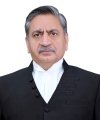
Legal Notes
Add a Note....