
As per case facts, an interim order by an arbitral tribunal was challenged in an appeal before a City Civil Judge under Section 37(2)(b) of the Arbitration and Conciliation Act, ...
http://JUDIS.NIC.IN SUPREME COURT OF INDIA Page 1 of 6
CASE NO.:
Appeal (civil) 3620 of 2002
PETITIONER:
M/S. I.T.I. LTD.
Vs.
RESPONDENT:
M/NSE.TSWIOERMKENLSTDP.UBLIC COMMUNICATIONS
DATE OF JUDGMENT: 20/05/2002
BENCH:
N. Santosh Hegde
JUDGMENT:
SANTOSH HEGDE, J.
Leave granted.
This appeal is filed directly to this Court against the
judgment and order of the 10th Addlitional City Civil Judge,
Bangalore made in Misc. Appeal No.6 of 2002 dated 18th
April, 2002.
The appeal before City Civil Judge was against an
interim order made by the arbitral tribunal and that appeal was
filed under Section 37(2)(b) of the Arbitration and Conciliation
Act, 1996 (the 'Act'). The learned Civil Judge dismissed the
said appeal.
The principal question that arises for our consideration is
whether a revision petition under Section 115 of the Civil
Procedure Code (the 'Code') lies to the High Court as against
an order made by a civil court in an appeal preferred under
Section 37 of the Act. If so, whether on the facts and
circumstances of this case, such a remedy by way of revision is
an alternate and efficacious remedy or not.
Mr. K. Parasaran, learned senior counsel appearing for
the appellants submitted that the right of second appeal is
specifically taken away under Section 37(2) of the Act.
Therefore, by implication it should be held that even a revision
is not maintainable under Section 115 of the Act. He pointed
out that under Section 5 of the Act, there is a bar against
judicial intervention by any judicial authority unless the same is
specifically provided under Part I of the Act. It is his contention
that since a revision is not specifically provided for and the
Code not being made applicable to proceedings arising under
the Act, a revision to the High Court does not lie. Therefore, he
contends that the appellant's only remedy is to approach this
Court by way of this appeal. He sought to take support from a
decision of the Privy Council in the case of R.M.A.R.A.
Adaikappa Chettiar & Anr. vs. R.Chandrasekhara Thevar (AIR
1948 PC 12) and two decisions of this Court in the case of
Shankar Ramchandra Abhyankar vs. Krishnaji Dattatreya Bapat
http://JUDIS.NIC.IN SUPREME COURT OF INDIA Page 2 of 6
(1969 (2) SCC 74) and M/s. Central Coal Fields Ltd. & Anr. vs.
M/s.Jaiswal Coal Co. & Ors. (1980 Supp. SCC 471).
Mr. P.Chidambaram, learned counsel appearing for the
respondent in reply contended that under Section 37 of the Act
an appeal is provided to a civil court as defined under Section
2(e) of the Act. He pointed out that though there is no specific
reference as to the application of the Code to the proceedings
arising under Section 37, there is no express exclusion of the
Code either. Therefore, in the absence of any such express
exclusion, the appeal being provided to a civil court, the Code
should apply to the proceedings before the civil court. He also
argues that this question of availability of an alternate remedy
by way of revision to the High Court is no more res integra
because the same is concluded by a recent order of this Court
though rendered at SLP stage in the case of Nirma Ltd. v. M/s.
Lurgi Lentjes Energietechnik GMBH & Anr. made in SLP
No.22106 of 2001 dated 14.1.2002.
Mr. K.Parasaran's reliance on the case of Adaikappa
Chettiar (supra) is misplaced because the judgment does not
support the case of the appellant, what was held by the Privy
Council in that case was when an appeal lies under Section 96
of the Code of Civil Procedure the High Court cannot entertain
an application for revision under Section 115 of the Code
because the High Court has no jurisdiction to entertain a
revision where an appeal lies. In the said case, the Privy
Council overruling an earlier Full Bench judgment of the
Madras High Court held that an appeal against an order made
by the civil court under the Madras Agriculturists' Relief Act,
1938 is maintainable, therefore, the High Court could not have
entertained a revision under Section 115 of the Act which
finding, in our opinion, does not help the appellant in the
present case. Mr. Parasaran has also relied on a judgment of this
Court in Shankar Ramchandra Abhyankar (supra) wherein this
Court held that a revision in effect is in the nature of an appeal.
Mr. Parasaran relying on this judgment argued that if revision is
in effect an appeal then the Act having prohibited a second
appeal, any proceeding which is in the nature of an appeal will
also be barred. We think this observation of this Court in the
case of Abhyankar (supra) also does not apply to the facts of the
present appeal before us. In the case of Abhyankar, this Court
noticed that the trial court had granted a decree for possession
of certain rooms in the petition scheduled premises which order
of eviction was confirmed by the appellate court on the ground
of equity. Against the said judgment of the appellate court, the
aggrieved party had preferred a revision petition before the
High Court which came to be dismissed by a Single Judge.
Having suffered an adverse order in the revision the aggrieved
party then filed a writ petition under Articles 226 and 227 of the
Constitution of India challenging the very same appellate order
which was confirmed in revision. On those facts, this Court
held that a writ petition ought not to have been entertained by
the High Court when the party had already chosen the remedy
of filing a revision before the High Court under Section 115 of
the Code. In these circumstances, this Court held that if there
are two modes for invoking jurisdiction of the High Court and
one of those modes having been chosen and exhausted, it would
not be proper for the High Court to entertain another proceeding
in respect of the same impugned order under Articles 226 and
227. It is while discussing the propriety of entertaining a writ
petition this Court had held that the aggrieved party had already
exhausted a remedy by way of revision which is in the nature of
an appeal. We do not think the observations made by this Court
in the case of Abhyankar (supra) can be usefully applied to the
http://JUDIS.NIC.IN SUPREME COURT OF INDIA Page 3 of 6
facts of this case.
The question still remains as to whether when a second
appeal is statutorily barred under the Act and when the Code is
not specifically made applicable, can it be said that a right of
revision before the High Court would still be available to an
aggrieved party ? As pointed out by Mr. Chidambaram, this
Court in the case of Nirma Ltd. (supra) while dismissing an
SLP by a reasoned judgment has held : "In our opinion, an
efficacious alternate remedy is available to the petitioner by
way of filing a revision in the High Court under Section 115 of
the Code of Civil Procedure. Merely because a second appeal
against an appellate order is barred by the provisions of sub-
section (3) of Section 37, the remedy of revision does not cease
to be available to the petitioner, for the City Civil Court
deciding an appeal under sub-section (2) of Section 37 remains
a court subordinate to the High Court within the meaning of
Section 115 of the C.P.C."
But Mr. Parasaran contended that the said order is based
on an earlier reported judgment of this Court in the case of
Shyam Sunder Agarwal & Co. vs. Union of India (1996 (2)
SCC 132). According to Mr. Parasaran, the Court in the case of
Nirma Ltd. (supra) has erroneously founded its conclusion on
the said judgment in Shyam Sunder Agarwal's case. Learned
counsel argued that the case of Shyam Sunder Agarwal (supra)
arose under the Arbitration Act, 1940 which Act had made the
provisions of the Code specifically applicable to proceedings
arising under the said Act in the civil court whereas in the
present Act such provision making the Code applicable is not
found. Therefore, there is a substantial difference in law
between the cases of Shyam Sunder Agarwal (supra) and Nirma
Ltd. (supra). Therefore, the order of this Court in Nirma Ltd.
(supra) is not a good law, hence, requires reconsideration.
We do not agree with this submission of the learned
counsel. It is true in the present Act application of the Code is
not specifically provided for but what is to be noted is : Is there
an express prohibition against the application of the Code to a
proceeding arising out of the Act before a civil court ? We find
no such specific exclusion of the Code in the present Act. When
there is no express exclusion, we cannot by inference hold that
the Code is not applicable.
It has been held by this Court in more than one case that
the jurisdiction of the civil court to which a right to decide a lis
between the parties has been conferred can only be taken by a
statute in specific terms and such exclusion of right cannot be
easily inferred because there is always a strong presumption
that the civil courts have the jurisdiction to decide all questions
of civil nature, therefore, if at all there has to be an inference
the same should be in favour of the jurisdiction of the court
rather than the exclusion of such jurisdiction and there being no
such exclusion of the Code in specific terms except to the
extent stated in Section 37(2), we cannot draw an inference that
merely because the Act has not provided the CPC to be
applicable, by inference it should be held that the Code is
inapplicable. This general principle apart, this issue is now
settled by the judgment of a 3-Judge Bench of this Court in the
case of Bhatia International vs. Bulk Trading S.A. & Anr. in
C.A.No.6527/2001 decided on 13.3.2002 wherein while
dealing with a similar argument arising out of the present Act,
this Court held : "While examining a particular provision of a
statute to find out whether the jurisdiction of a Court is ousted
or not, the principle of universal application is that ordinarily
http://JUDIS.NIC.IN SUPREME COURT OF INDIA Page 4 of 6
the jurisdiction may not be ousted unless the very statutory
provision explicitly indicates or even by inferential conclusion
the Court arrives at the same when such a conclusion is the only
conclusion."
In the said view of the matter, we are in respectful
agreement with the view expressed by this Court in the case of
Nirma Ltd. (supra) and reject the argument of Mr. Parasaran on
this question.
We also do not find much force in the argument of
learned counsel for the appellant based on Section 5 of the Act.
It is to be noted that it is under this Part, namely, Part I of the
Act that Section 37(1) of the Act is found, which provides for
an appeal to a civil court. The term 'Court' referred to in the
said provision is defined under Section 2(e) of the Act. From
the said definition, it is clear that the appeal is not to any
designated person but to a civil court. In such a situation, the
proceedings before such court will have to be controlled by the
provisions of the Code, therefore, the remedy by way of a
revision under Section 115 of the Code will not amount to a
judicial intervention not provided for by Part I of the Act. To
put it in other words, when the Act under Section 37 provided
for an appeal to the civil court and the application of Code not
having been expressly barred, the revisional jurisdiction of the
High Court gets attracted. If that be so, the bar under Section 5
will not be attracted because conferment of appellate power on
the civil court in Part I of the Act attracts the provisions of the
Code also.
Mr. Parasaran then contended that since it is an accepted
fact that this Court also has the jurisdiction to entertain an
appeal, this appeal should not be rejected on the sole ground
that there is a remedy available by way of a revision before the
High Court. In support of this contention, he relied on the
judgment of this Court in the case of Ram Shankar (supra)
wherein it is noticed that this Court had entertained an appeal
directly against a judgment and decree of a trial court bypassing
the High Court. It is true that the power of this Court to
entertain an appeal directly is not taken away merely because
another remedy is available but then the question is, should this
Court encourage litigants to indulge in hop, skip and jump to
reach this Court either for the reason that the remedy from this
Court would be quick or more efficacious ? The answer, in our
opinion, should be no. The judgment of this Court in M/s.
Central Coal Fields (supra) does not, in any way, take a contra
view from what is expressed by us hereinabove. In that case,
because of the peculiar fact-situation, this Court entertained an
appeal without the party first appreciating the High Court but
then it should be noticed that this Court did not entertain the
appeal to decide the same itself, it did so to refer the matter to
arbitration proceedings and when an award made by the learned
arbitrator was acceptable to all parties then the same was made
a rule of this Court. Such is not the situation in the present case.
Therefore, we do not think the appellant can take much support
from the above case of this Court.
Learned counsel for the appellant next contended that
assuming that the remedy of revision is available even then the
same is not an efficacious alternate remedy because this appeal
involves a very sensitive issue pertaining to the security of the
country and which, according to the appellant, requires extreme
urgency in deciding the same and the said requirement will not
be possible if the appellant has to approach the High Court. We
are not impressed with this argument addressed on behalf of the
http://JUDIS.NIC.IN SUPREME COURT OF INDIA Page 5 of 6
appellant because we notice from the record that the arbitration
proceedings have started as far back as in the year 2001 and the
parties instead of getting the arbitration concluded, have been
litigating on interim applications till date. If indeed urgency
was there then the party which feels the necessity of quick
disposal would have concentrated more on completing the
arbitral proceedings rather than spending its time in court
inviting orders of the High Court on interlocutory applications.
Therefore, we are of the opinion that there is no such urgency
which requires us to treat this case differently. In regard to the
sensitivity of the matter and the national security involved, we
do not think that these factors will, in any manner, be
compromised by approaching the High Court; more so in the
background of the fact that the parties had already approached
the High Court nearly three times without raising any objection
as to its jurisdiction or in view of its apprehension as to the
security of the State. If the facts involving such sensitive matter
could be handled by the High Court three times earlier, we
think the appellant can very well trust the High Court to protect
such interest of the country in future proceedings also.
Therefore, this argument of sensitivity or urgency, in our
opinion, will not improve the appellant's case so as to make an
exception or permit the appellant to take a short-cut to this
Court. Therefore, the above argument of the appellant should
also be rejected.
For the aforesaid reasons, while holding that this Court in
an appropriate case would entertain an appeal directly against
the judgment in first appeal, we hold that the High Court also
has the jurisdiction to entertain a revision petition, therefore, in
the facts and circumstances of this case, we direct the appellant
to first approach the High Court. For the said reasons, this
appeal fails and the same is hereby dismissed. We, however,
make it clear that should the appellant present a revision
petition within 30 days from today, the same will be entertained
by the High Court without going into the question of limitation,
if any.
J.
May 20, 2002. (N.Santosh Hegde)
http://JUDIS.NIC.IN SUPREME COURT OF INDIA Page 6 of 6
1
1

 Login with google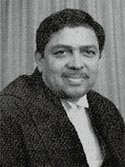
Legal Notes
Add a Note....