
As per case facts, Indian Oil Corporation Limited (IOCL) held a lease for a plot of land that expired in 1997. After the Maharashtra Rent Control Act, 1999, came into ...
Megha 30_cra_92_2025_fc.odt
IN THE HIGH COURT OF JUDICATURE AT BOMBAY
CIVIL APPELLATE JURISDICTION
CIVIL REVISION APPLICATION NO.92 OF 2025
M/s. Indian Oil Corporation Limited ...Applicant
V/s.
Mrs. Perviz Khushroo Patel and Ors. ...Respondents
________________
Mr. Chirag Mody with Mr. Sunil Gangan, Mr. Swapnil Shikhare and Mr.
Manav Chetwani i/b. M/s. RMG Law Associates for the Applicant.
Mr. Arif Bookwala, Senior Advocate with Ms. Mahek Bookwala, Mr.
Umang Mehta and Ms. Trisha George i/b. M/s. Avyaan Legal for the
Respondents.
________________
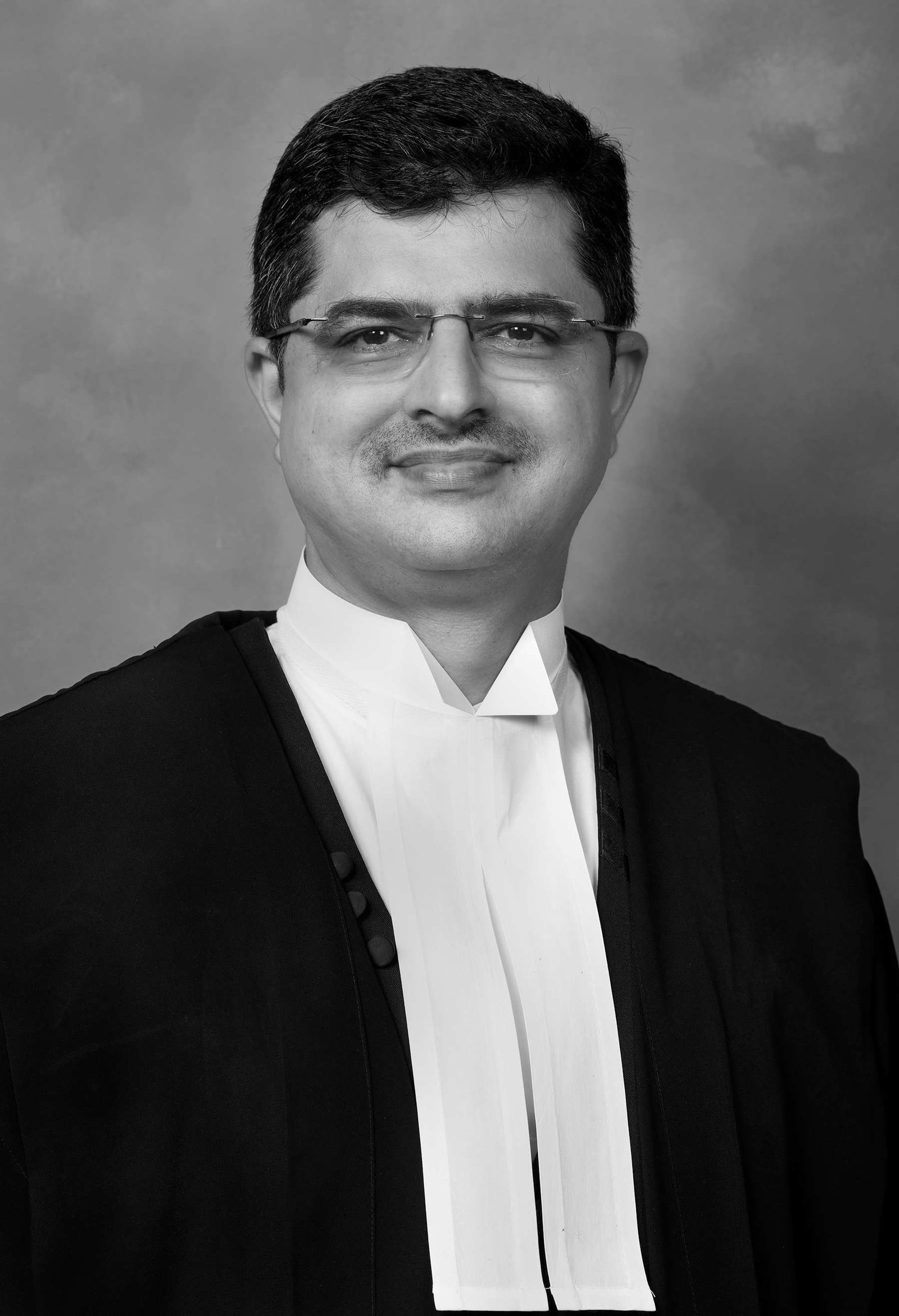
CORAM: SANDEEP V. MARNE, J.
Judgment reserved on: 02 APRIL 2026.
Judgment pronounced on: 17 APRIL 2026.
JUDGMENT:
1) The Applicant- Indian Oil Corporation Limited (IOCL), a public
sector company, has invoked revisionary jurisdiction of this Court under
Section 115 of the Code of Civil Procedure, 1908 (the Code) questioning
the correctness of the judgment and order dated 4 January 2025 passed
by the Appellate Bench of the Small Causes Court dismissing (P) Appeal
No.67 of 2017 and confirming the judgment and order dated 4 January
Page No. 1 of 27
17 April 2026 2026:BHC-AS:18017
Megha 30_cra_92_2025_fc.odt
2017 passed by the Small Causes Court in T.E. & R. Suit No.69/76 of
2003. The Trial Court has decreed the Suit filed by the Plaintiffs under
Section 41 of the Presidency Small Cause Courts Act, 1882 and has
directed the Applicant-IOCL to vacate and handover the peaceful
possession of the suit premises to the Plaintiffs with further directions
for conduct of enquiry into mesne profits. Since the eviction decree is
concurrently upheld by the Appellate Court, the Applicant-IOCL has
filed the present Revision Application.
2)A Plot of land bearing Survey No.305, Hissa No.1, C.S. No.307,
Hissa No.1 admeasuring 2100 sq. yards situated on Mumbai-Agra Road,
Kurla, Mumbai-400 070 are the ‘suit premises’. The suit premises were
owned by Dr. Manek Billimoria, who executed Indenture of Lease dated
18 May 1968 with the Applicant-IOCL granting lease in respect of the
suit premises for tenure of 20 years. According to the IOCL, it had the
first option /right to purchase the suit premises under Clause III(e) of
the Indenture. Dr. Manek Billimoria passed away on 19 June 1975. His
wife, Smt. Sheroo Manek Billimoria executed Deed of Rectification with
IOCL on 4 October 1977 extending the period of lease upto 30 years
from 13 October 1967 to 12 October 1997. Plaintiffs claim that Smt.
Sheroo Billimoria executed a Will on 18 November 1997. She passed
away on 26 May 1999. According to IOCL, Plaintiffs claim ownership in
the suit premises on the strength of the Will executed by Smt. Sheroo
Billimoria. After enactment of Maharashtra Rent Control Act, 1999 (the
MRC Act), which does not apply to open lands, Plaintiffs terminated the
tenancy vide notice dated 27 November 2002. Plaintiffs filed T.E. & R.
Suit No.69/76 of 2003 against IOCL in the Court of Small Causes at
Page No. 2 of 27
17 April 2026
Megha 30_cra_92_2025_fc.odt
Bombay seeking recovery of possession of the suit premises as well as
for mesne profits from the date of termination of tenancy. The Plaint
was verified by Mr. Mukesh Shashikant Parekh as constituted attorney
of the three original Plaintiffs who is also the director of M/s. Papeyon
Builmate Traders Pvt. Ltd. (Papeyon).
3)IOCL appeared in the Suit and filed written statement in
September 2003 disputing the ownership of the Plaintiffs in respect of
suit premises. Later, the written statement was amended contending
inter alia that the original Plaintiffs had not secured probate in respect
of the Will of Smt. Sheroo Billimoria. Based on the pleadings, the Trial
Court framed issues. On behalf of the Plaintiffs Mr. Mukesh Parekh filed
affidavit of evidence in capacity as constituted attorney of the three
original Plaintiffs. The IOCL examined witness in support of its defence.
The IOCL filed application in April-2006 seeking stay of the Suit on the
ground of non-securing of probate in respect of the Will of Smt. Sheroo
Billimoria as well as on the ground of Suit being filed by constituted
attorney. IOCL’s application was dismissed by the Small Causes Court
on 23 January 2007. The Revision preferred by the IOCL before the
Appellate Bench was dismissed on 11 August 2010. The IOCL filed Civil
Revision Application No.1005 of 2010 in this Court challenging orders
of Small Causes Court dated 23 January 2007 and of Appellate Bench
dated 11 August 2010. Vide order dated 9 December 2010 this Court
disposed of the Civil Revision Application granting liberty to the
Applicant-IOCL to file appropriate proceedings questioning
maintainability of the Suit.
Page No. 3 of 27
17 April 2026
Megha 30_cra_92_2025_fc.odt
4)On 29 July 2011, conveyance was executed by the three original
Plaintiffs in favour of Papeyon assigning the suit premises. Accordingly,
Papeyon filed application for its impleadment as the fourth Plaintiff,
which was allowed by the Trial Court on 3 December 2012. This is how
Papeyon was added as Plaintiff No.4 to the Suit. The IOCL filed
additional written statement in July 2013. On 20 March 2014, the Trial
Court framed additional issues relating to maintainability of the Suit for
want of probate and about existence of landlord-tenant relationship.
Plaintiff No.4 led evidence of its witnesses- Shashikant Vasant Jadhav
(P.W.2) and Mandar S. Sakpal (P.W.3).
5)After considering the pleadings, documentary and oral evidence,
the Small Causes Court proceeded to decree the Suit vide judgment and
order dated 4 January 2017 holding that the IOCL lost protection of
MRC Act. It held that tenancy of IOCL has been validly terminated. That
the Suit was maintainable despite want of probate of Will of late Smt.
Sheroo Billimoria and there existed landlord-tenant relationship
between the parties. The Small Causes Court accordingly directed the
Defendant-IOCL to vacate the possession of the suit premises and
handover the same to the Plaintiffs within a period of three months
with liberty to the Plaintiffs to file application for enquiry into mesne
profits.
6)The Applicant-IOCL has filed (P) Appeal No.67 of 2017 before the
Appellate Bench of the Small Causes Court challenging the decree
dated 4 January 2017. By order dated 14 December 2021, the Appellate
Bench stayed execution of the decree subject to the IOCL depositing
Page No. 4 of 27
17 April 2026
Megha 30_cra_92_2025_fc.odt
interim compensation @ Rs.1,00,000/- per month from the date of
decree and during pendency of the Appeal. By judgment and order
dated 4 January 2025, the Appellate Bench has proceeded to dismiss the
Appeal preferred by the IOCL.
7)Aggrieved by the orders passed by the Trial and the Appellate
Courts, the Applicant-IOCL has filed the present Revision Application.
By order dated 3 March 2025, this Court continued the ad-interim stay
granted by the Appellate Court and the said interim arrangement
continues to operate during pendency of the Revision Application.
8)Mr. Mody, the learned counsel appearing for the Applicant-IOCL
submits that the Trial and the Appellate Courts have grossly erred in
decreeing Plaintiffs’ Suit for eviction. Though the Suit was initially filed
by the Plaintiff Nos.1 to 3, premised on their claim of title based on
Sheroo Billimoria’s Will dated 18 November 1997, they did not secure
probate in respect of the Will. He relies on provisions of Section 213 of
the Indian Succession Act, 1925 (the Succession Act) in support of his
contention that Plaintiff Nos.1 to 3 did not have any authority in law to
file a Suit in absence of securing a probate in respect of the Will. He
submits that the provisions of Section 213 of the Succession Act clearly
forbids the legatees and executors from exercising any rights in respect
of the properties allegedly bequeathed by the Will in absence of a
probate. He relies on judgment of the Apex Court in Mrs. Hema Nolini
Judah V/s. Mrs. Isolyne Sarojbashini Bose
1
.
1AIR 1962 SC 1471
Page No. 5 of 27
17 April 2026
Megha 30_cra_92_2025_fc.odt
9)Mr. Mody further submits that the Suit was also not maintainable
on the count of absence of a valid notice of termination of tenancy.
That original Plaintiff Nos.1 to 3 did not have any authority to issue
notice of termination of tenancy in absence of a probate. That
ultimately it got proved in the evidence that termination notice was
never issued by Plaintiff Nos.1 to 3. Mr. Mody relies upon order passed
by this Court on 9 December 2010 in Civil Revision Application No.1005
of 2010 in support of his contention that the issue of maintainability of
the Suit was required to be answered by the Trial Court. He submits that
the Trial Court has completely skirted the issue of maintainability of
the Suit in absence of probate issued in favour of the Plaintiff Nos.1 to
3. He submits that even the Appellate Court has failed to decide the said
issue. According to Mr. Mody, non-decision of the issue relating to
maintainability of the Suit in the light of provisions of Section 213 of
the Succession Act goes to the root of the matter and renders the
decision of the Trial and the Appellate Courts patently perverse and
illegal.
10)Mr. Mody submits that even if the Plaintiffs may institute Suit in
absence of probate, the probate must be secured at least before the
decree is passed. That in the present case till passing of decree, the
probate was not secured. In support of his contention that the Suit
cannot be decreed in absence of probate, Mr. Mody relies on following
judgments:
i) Jamshedji Dubash V/s. Meharbai Rustomji Dubash and
Ors.
2
22003(3)M.P.L.J.
Page No. 6 of 27
17 April 2026
Megha 30_cra_92_2025_fc.odt
ii) Kumar Chandra Kishore Roy V/s. Prasanna Kumari Dasi
and Sarat Kumari Dasi
3
iii) S.M.K.R. Meyappa Chetty V/s. S.N. Supramanian Chetty
4
iv) Raichand Dhanji V/s. Jivraj Bhavanji and Ors.
5
v) Ramcharan V/s. Mt, Dharohar
6
vi) Ajit Kumar Hazra & Ors. V/s. Rathindra Nath Roy
7
vii) Clarence Pais & Ors. V/s. Union of India
8
11)Mr. Mody further submits that the Suit was also not maintainable
on account of the same being instituted by power of attorney holder
and not by original Plaintiff Nos.1 to 3. That Plaintiff No.4 claims to
have executed Agreement for Sale in respect of the suit premises and in
absence of any title to the property, instituted the Suit by verifying the
plaint. That even the evidence was led by him and not by the original
Plaintiffs. He submits that the power of attorney holder cannot lead
evidence on behalf of a party to the Suit. In support of his contention,
he relies upon judgments of the Apex Court in Janki Vashdeo Bhojwani
and Another V/s. Indusind Bank Ltd. and Others
9
and A.C. Narayanan
V/s. State of Maharashtra and Another
10
. He submits that the entire Suit
was thus driven by Plaintiff No.4, who acquired title in respect of the
suit premises much later in the year 2011. That the Suit was thus clearly
not maintainable and ought to have been dismissed by the Trial and the
Appellate Courts. That the Trial and the Appellate Courts have
erroneously answered the issue of existence of landlord-tenant
relationship. That since tenancy is not validly terminated, the Suit
31910 SCC OnLine PC 23
4AIR 1916 PC 202
5AIR 1932 BOM 13
6AIR 1954 PAT 175
71979 SCC OnLine Cal 154
8(2001) 4 SCC 325
9(2005) 2 SCC 217
10(2014) 11 SCC 790
Page No. 7 of 27
17 April 2026
Megha 30_cra_92_2025_fc.odt
ought to have been dismissed. He accordingly prays for setting aside the
impugned orders passed by the Trial and the Appellate Courts.
12) Mr. Bookwala the learned Senior Advocate appearing for the
Respondents /Plaintiffs opposes the Revision Application. He submits
that the Plaint is not based on the Will of late Shiroo Billimoria but is
based on capacity of the original Plaintiffs as landlords. That the Plaint
does not refer to late Shiroo Billimori’s Will in any manner. On the
contrary, it specifically made reference to offering of rent by the
Defendant-IOCL to the Plaintiffs. That the act of offering rent creates
landlord-tenant relationship. That even on 12 June 2017, the Applicant-
IOCL accepted the Respondents as landlords/owners of the suit
premises by filing Suit bearing No.487 of 2017 and in paragraph 2 of the
Plaint, they averred that the Defendant Nos.2 to 4 therein are the
original owners of the suit premises. That since Applicant-IOCL has
paid rent to Plaintiff No.1 it has admitted the existence of landlord-
tenant relationship. He relies on judgment of this Court in Kashinath
Ramchandra Kolwankar his legal heirs A. Hemant Kashinath Kolwankar
and Others V/s. Sunanda and Others
11
in support of his contention that
payment of rent clearly establishes landlord-tenant relationship.
13)Without prejudice to the contention that the Suit was never
based on Shiroo’s Will, Mr. Bookwala submits that the legatee under the
Will have every right to file a Suit in absence of a probate. He relies on
judgment of the Apex Court in FGP Limited V/s. Saleh Hooseini Doctor
and Another
12
. That the Trial and the Appellate Courts have
concurrently held the termination of tenancy/lease to be valid. That the
112024 SCC OnLine Bom 2962
12(2009) 10 SCC 223
Page No. 8 of 27
17 April 2026
Megha 30_cra_92_2025_fc.odt
provisions of the MRC Act do not apply to the tenanted property both
on account of the same being open land and the IOCL being out of
purview of the MRC Act. He relies on judgment of this Court in Metal
Box India Ltd. Mumbai V/s. S.F. Engineer, Mumbai
13
in support of his
contention that the Applicant no longer enjoys protection from rent
escalation and eviction. That therefore the IOCL has no right to remain
in possession of the suit premises. He takes me through the written
statement to demonstrate that the Defendant-IOCL questioned the title
of the Plaintiffs in respect of the suit premises thereby incurring
disqualification under Section 116 of the Indian Evidence Act, 1872.
That the Applicant-IOCL is unnecessarily holding onto the possession
of the suit premises despite non-availability of any protection of Rent
Control Legislation. He therefore prays for dismissal of the Revision
Application so as to ensure that the Plaintiffs enjoy the suit premises,
which are in unauthorised occupation of the IOCL for the last 23 long
years of pendency of litigation.
14)Rival contentions urged on behalf of the parties now fall for my
consideration.
15) The Applicant-IOCL secured lease in respect of the suit premises
vide Indenture of Lease dated 18 May 1968. It operates a retail fuel
outlet /petrol pump at the suit premises, which are located in Kurla area
at Mumbai. Though the tenure of lease was initially for 20 years, after
death of original owner-Dr. Manek Billimoria, his wife executed Deed of
Rectification with IOCL on 4 October 1977 extending the period of lease
upto 30 years from 13 October 1967 to 12 October 1997. It is an
132025(2) Mh.L.J. 66
Page No. 9 of 27
17 April 2026
Megha 30_cra_92_2025_fc.odt
admitted position that beyond 12 October 1997, tenure of lease has not
been extended. However, it appears that the Suit was not filed by the
IOCL for its ejectment immediately after 12 October 1997 on account of
applicability of provisions of the Bombay Rents, Hotel and Lodging
House Rates Control Act, 1947, (the Bombay Rent Act), which did not
exclude IOCL from its purview and also applied to open piece of land.
The Bombay Rent Act was replaced by the MRC Act w.e.f. 31 March
2000. The MRC Act brought about two important changes in the area of
extension of rent control protection. The MRC Act no longer applies to
various entities enumerated in Section 3 thereof. It does not apply to
public sector undertakings as well as companies having paid up share
capital of Rs.1 crore or more. Therefore, provisions of the MRC Act do
not apply to the Applicant -IOCL. Further the provisions of the MRC Act
also do not apply to tenancies created in respect of open lands. Since
Indenture of Lease dated 18 May 1968 was in respect of the open piece
of land, provisions of the MRC Act do not apply to the premises in
question. Thus, in law IOCL does not have right to remain in possession
of the suit premises after 12 October 1997.
16) After advent of the MRC Act from 31 March 2000, Notice dated 27
November 2002 was sent by three original Plaintiffs terminating the
tenancy under the provisions of Section 106 of the Transfer of Property
Act, 1882. Since the Applicant-IOCL failed to vacate possession of the
premises, T.E. & R. Suit No.69/76 of 2003 was instituted by the three
original Plaintiffs. The Applicant-IOCL questions maintainability of the
Suit on three broad grounds viz., (i) that the Suit was actually filed by
Plaintiff No.4, who had no title in respect of the premises (ii) that there
Page No. 10 of 27
17 April 2026
Megha 30_cra_92_2025_fc.odt
was no valid termination of tenancy since notice was not issued by the
three original Plaintiffs, and (iii) that the original Plaintiffs did not have
authority in law either to file Suit or issue termination notice on
account of non-securing of probate under Section 213 of the Succession
Act.
17)The Applicant-IOCL relies on order passed by this Court on 9
December 2010 in Civil Revision Application No.1005 of 2010 in
support of its contention that its objection to maintainability of the
Suit were required to be decided by the Trial Court. Accordingly, at the
behest of the Applicant-IOCL, the Trial Court framed the issue of
maintainability of the Suit as under:
3(a). Whether the suit as filed is maintainable for want of probate of
the will of Late Sheroo Manek Billimoria?
18)It is Applicant-IOCL’s case before me that the issue of
maintainability of the Suit has not been decided by the Trial Court.
However, it is seen that the Trial Court has answered the Issue No.3(a)
by holding in paragraphs 14, 20, 22 and 23 as under:
14. Heard both the advocates. Advocate for the defendants has
submitted that for want of probate of the Will suit is not
maintainable. At the same time, there was no relationship of
landlord and tenant in between plaintiffs and defendant, hence, this
Court has no jurisdiction to try and entertain the suit. On the
contrary, advocate for the plaintiffs has submitted that even the Will
is not proved by the plaintiffs, but the same Will was referred in the
cross examination of P.W.1 Mukesh. As per Section 211 of Indian
Succession Act, in absence of probate suit is maintainable. At the
same time, the defendants have issued the rent in favour of plaintiff
No.1, hence this Court is having jurisdiction to try and decide the
suit.
Page No. 11 of 27
17 April 2026
Megha 30_cra_92_2025_fc.odt
Xxx
20. Considering all the above guidelines, there is need of evaluation
of oral and documentary evidence. Document Exh.G collectively
indicates payment in the name of S.M. Billimoria and Mrs. Patel in
between period 2002 to 2004. The payment was made by defendant
company Indian Oil Corporation to plaintiff No.1 Mrs. Patel and
deceased S.M.Billimoria. D.W.1 Krishanji has admitted the said fact
in his cross examination. The document Exh.F is duly served on the
defendant. The cheque dated 13/1/2003 was returned to the
defendants along with letter Exh.J. The public documents which are
filed on record indicate suit property was owned by the person
Manek Billimoria. It is also crystal clear from record that Sheroo is
the wife of Manek. The agreement dated 25/11/1996 was executed in
between Sheroo Manek Billimoria and plaintiff No.4 M/s. Papeyon
Builmate Traders Private Limited. Evidence of D.W.1 Krishanji
indicates that the said fact was known to the defendants. Therefore,
considering all the above circumstances, authorities about the Power
of Attorney cited by the plaintiffs are well applicable.
xxx
22. Section 211 and 213 of Indian Succession Act deals with vesting
of property. Vesting takes place as a result of probate. On the
executors accepting his office, the property vest on him and the
executor derives his title from the Will and became representative of
deceased even without obtaining the probate. In the case of
A.C.Narayanan Vs. State of Maharashtra (cited above), it is held that
functions under general Power of Attorney cannot be delegated to
any other person without the specific clause permitting the same in
the Power of Attorney. The general Power of Attorney itself can be
cancelled and be given to another person. In the abovesaid judgment
the guidelines given in the case of Janki Vashdeo Vs. Indusind Bank
Ltd. (cited above) are also considered.
23. The Power of Attorney is mainly assailed by the defendants due
to existence of earlier Power of Attorney and notary rules. But
considering the abovesaid guidelines given in the case of
A.C.Narayanan Vs. State of Maharashtra when one Power of Attorney
can be cancelled and be given to another person. Only because suit
filed by plaintiff is signed by earlier Power of Attorney and later on
P.W.1 Mukesh has given the evidence is no ground to discard the oral
and documentary evidence given by the plaintiff. Therefore,
considering all the above circumstances and the evidence on record,
I answer issue No.3 in the negative and issue No.3(a) in the
affirmative.
Page No. 12 of 27
17 April 2026
Megha 30_cra_92_2025_fc.odt
19)It therefore, cannot be contended that the Trial Court has failed
to decide the issue of maintainability of the Suit. The Appellate Court
has also gone into the issue of maintainability of the Suit for want of
probate in respect of the Will of late Shiroo Billimoria and has held the
suit to be maintainable. Therefore, IOCL’s criticism of Trial and
Appellate Courts’ orders in this regard does not appear to be justified.
20)In my view, all the three objections sought to be raised by the
Applicant-IOCL about the maintainability of the Suit are completely
baseless. The first objection is about failure to procure probate in
respect of the Will of late Shiroo Billimoria and reliance is placed on
provisions of Section 213 of the Succession Act. Section 213 has now
been deleted w.e.f. 20 December 2025. However, at the time when the
Suit was filed and decided, Section 213 existed in the statute and has
provided thus:
Section 213. Right as executor or legatee when established
(1) No right as executor or legatee can be established in any Court of
Justice, unless a Court of competent jurisdiction in India has granted
probate of the Will under which the right is claimed, or has granted
letters of administration with the Will or with a copy of an
authenticated copy of the Will annexed.
(2) This section shall not apply in the case of wills made by
Muhammadans or Indian Christians, and shall only apply--
(i) in the case of Wills made by any Hindu, Buddhist, Sikh or Jaina
where such wills are of the classes specified in clauses (a) and (b) of
section 57; and
(ii) in the case of Wills made by any Parsi dying, after the
commencement of the Indian Succession (Amendment) Act, 1962 (16
of 1962), where such Wills are made within the local limits of the
ordinary original civil jurisdiction of the High Courts at Calcutta,
Madras and Bombay, and where such Wills are made outside those
Page No. 13 of 27
17 April 2026
Megha 30_cra_92_2025_fc.odt
limits, insofar as they relate to immovable property situated within
those limits.
21)In my view, there is nothing in Section 213, which prohibits a
legal heir of a deceased owner of the property from instituting a Suit for
recovery of possession thereof from the occupiers. Section 213 of the
Succession Act prohibits a legatee or executor from establishing any
right in relation to bequeathed property in any court of justice. Thus, it
is impermissible to seek declaration of title in respect of the property
/right unless probate in respect of the Will is obtained. Section 213 may
not always come in the way of a legatee filing suit for possession from a
tenant. All would depend on the frame of the suit. If the Plaintiff bases
the Plaint on his/her capacity as the legatee or executor under the Will,
securing of probate might have been necessary for securing the decree.
However when the suit is not based on the Will nor the Plaintiff seeks to
establish any right under the Will, provisions of Section 213 would have
no application. By filing a Suit for recovery of possession from the
tenant /lessee the landlord (who may be the legatee under the Will)
may not always attempt to establish any right under the Will in the
Court. In fact, it is not necessary for a landlord to prove title in respect
of the property to a tenant. The landlord-tenant relationship does not
depend on claim of ownership. Mere factum of payment of rent can also
establish landlord-tenant relationship. Reliance by Mr. Bookwala on
judgment of this Court in Kashinath Ramchandra Kolwankar (supra) in
this regard is apposite. This Court has taken into consideration
definition of the term ‘landlord’ appearing in Section 5(3) of the
Bombay Rent Act and has held in paragraphs 21 to 23 as under:
21 The term landlord has been defined under the provisions of section
Page No. 14 of 27
17 April 2026
Megha 30_cra_92_2025_fc.odt
5(3) of the Bombay Rent Act as under:
“5. Definitions.
(3) ''landlord" means any person who is for the time being,
receiving, or entitled to receive, rent in respect of any premises
whether on his own account or on account, or on behalf, or for
the benefit of any other person or as a trustee, guardian, or
receiver for any other person or who would so receive the rent or
be entitled to receive the rent if the premises were let to a
tenant; and includes any person not being a tenant who from
time to time derives title under a landlord; and further includes
in respect of his sub-tenant, a tenant who has sub-let any
premises, [and also includes in respect of a licensee deemed to
be a tenant by section 15A, licensor who has given such license,
and in respect of the State Government, or as the case may be,
the Government allottee referred to in sub-clause (b) of clause
(1A), deemed to be a tenant by section 15B, the person who was
entitled to receive the rent if the premises were let to a tenant
immediately before the coming into force of the Bombay Rents,
Hotel and Lodging House Rates Control, Bombay Requisition
and Bombay Government Premises (Eviction) (Amendment) Act,
1996.”
22 Thus any person who receives or is entitled to receive rent in
respect of premises either for himself or on behalf of any other
person becomes a landlord. Therefore, to establish status as
landlord it is not necessary for Respondents/Plaintiffs to set up a
case of title or ownership. The learned Judge of the Small Causes
Court has erred in not appreciating this established position of
law and has unnecessarily conducted an enquiry into
Respondents/Plaintiffs’ title in respect of the suit premises.
23 In the present case there is no dispute to the position that the
initial induction of Applicant/Defendant in the suit premises is
in his capacity as tenant of Shri Ramakant B. Desai. This is not
the case where Applicant/ Defendant was originally a member of
the Society and that the Society issued any allotment letter to
him. The possession of the suit premises was admittedly handed
over to him by Shri Ramakant B. Desai. Thus, the
Applicant/Defendant’s entry in the suit premises is directly
connected with relationship with Shri Ramakant B. Desai. There
is no dispute to the position that right since 1995
Applicant/Defendant paid rent to Shri Ramakant B. Desai and
this position continued till the year 1988. Thus, there was no
dispute about existence of relationship between Shri Ramakant
B. Desai and Applicant/Defendant as landlord and tenant. …
(emphasis added)
Page No. 15 of 27
17 April 2026
Megha 30_cra_92_2025_fc.odt
22)Thus all that is required to be proved in a suit for recovery of
possession of leased/tenanted premises is establishment of the
landlord-tenant or lessor-lessee relationship. An inquiry into the
ownership of the leased property is not really necessary in such a suit.
The present suit is filed by the Plaintiffs for recovery of possession of
the suit property from their lessee, the tenure of whose lease has
expired. It was unnecessary for the original Plaintiffs to base their suit
on the Will. It would be necessary to consider the frame of the suit to
find out whether the Plaintiffs attempted to establish any right based
on the Will. Perusal of the Plaint would indicate that the Suit is not filed
on the basis of the Will. Plaintiffs pleaded in paragraph 1 of the Plaint
as under:
1. The Plaintiffs state that they are the joint owners of a piece and
parcel of plot of land bearing part of Survey No.305, Hissa No.1, C.S.
No.307, Hissa No.1, admeasuring approximately 2100 square yards,
situated at Kurla on Bombay Agra Road, Kurla, Mumbai 400 070
(hereinafter referred to as “ the suit premises”).
23)In the entire Plaint, there is no reference to the Will. It therefore
cannot be contended by any stretch of imagination that the Suit is filed
for establishment of any right based on the Will. On the other hand, the
Suit is filed based on landlord-tenant relationship, which is clear from
the following averments in paragraphs 3 and 6 of the Plaint, which read
thus:
3. ...The Defendants, therefore, on expiry of the lease period
became he monthly tenants of the Plaintiffs and or their
predecessors-in-title in respect of the suit premises. The Plaintiffs
crave leave to refer to and rely upon the said indenture of lease and
Deed of rectification when produced.
Page No. 16 of 27
17 April 2026
Megha 30_cra_92_2025_fc.odt
6. The Plaintiffs state that due to efflux of time the period of lease
agreement came to an end on 12
th
October 1997 and from 13
th
October, 1997 the Defendants became monthly tenant of the
Plaintiff in respect of the suit premises.
24)The fact that the Suit was filed based on landlord-tenant
relationship is further clear from repeated pleadings in the Plaint about
the Defendant offering rent to the Plaintiffs. In paragraph 5 of the
Plaint, it was pleaded thus:
5. The Plaintiffs further states that despite the said letter dated 27
th
November 2002 Exhibit A hereto, the Defendants continued to send
to the Plaintiffs their cheques towards the rental amount contrary
to the said letter dated 27
th
November 2002 which were returned to
the Defendants by the Plaintiffs Advocate reiterated the contents of
the earlier letter dated 27 November 2002 and further along with
the above referred letters returned to the Defendants the cheques
so sent by the Defendants. The Plaintiffs crave leave to refer to and
rely upon the said letters when produced.
25)In addition to pleadings, there are several letters available on
record, which indicates offering of rent by the Applicant-IOCL to the
Plaintiffs. At pages 150 to 157 of the compilation filed by the Applicant,
there are letters by the Applicant addressed to Mrs. S.M. Billimoria and
Mrs. Patel offering rent from December 2002 to June 2024. Mrs. Patel is
Perviz Khushroo Patel, Plaintiff No.1. Thus payment/offering to pay
rent to one of the Plaintiffs is admitted by the Applicant-IOCL and it is
now estopped from questioning the title of the Plaintiffs or their right
to sue.
26) Additionally, Mr. Bookwala has also brought on record that the
Applicant-IOCL has filed the Suit bearing No.487 of 2017 and in
Page No. 17 of 27
17 April 2026
Megha 30_cra_92_2025_fc.odt
paragraph 2 of the Plaint in that suit, the Applicant has accepted
ownership of Plaintiff Nos.1 to 3 in respect of the suit premises.
27) Mr. Mody has relied on several judgments in support of his
contention about maintainability of the suit and permissibility to pass
final decree in absence of probate. In Mrs. Hema Nolini Judah (supra)
the case before the Apex Court involved establishment of claim to the
property on behalf of the legatee by a third person. The Apex Court held
that provisions of Section 213 of the Succession Act would apply even
when the claim is made by a person not claiming as a legatee. The Apex
Court has held that whoever wishes to establish right under the Will,
whether it is a legatee, executor or someone else, probate is a
mandatory requirement. The Apex Court has held in paragraph 7 of the
judgment as under:
7. ... As soon as the appellant wants to prove that, Section 213 will
immediately stand in her way for no right as an executor or a
legatee can be proved unless probate or letters of administration of
the will under which such right is claimed have been obtained. The
words of Section 213 are not restricted only to those cases where
the claim is made by a person directly claiming as legatee. The
section does not say that no person can claim as a legatee or as an
executor unless he obtains prabate or letters of administration of
the will under which be claims. What it says is that no right as an
executor or legateee can be established in any Court of Justice,
unless probate or letters of administration have been obtained of
the will under which the right is claimed, and therefore it is
immaterial who wishes to establish the right as a legatee or an
executor. Whosoever wishes to establish that right, whether it be a
legatee or an executor himself or somebody else who might find it
necessary in order to establish his right to establish the right of
some legatee or executor from whom he might derived title, he
cannot do so unless the will under which the right as a legatee or
executor is claimed has resulted in the grant of a probate or letters
of administration. Therefore, as soon as the appellant wanted to
establish that Mrs. Mitter was the legatee of Dr. Miss Mitter and
was therefore entitled to the whole house she could only do so if
the will of Dr. Miss Mitter in favour of Mrs. Mitter had resulted in
Page No. 18 of 27
17 April 2026
Megha 30_cra_92_2025_fc.odt
the grant of probate or letters of administration. Admittedly that
did not happen and therefore Section 213(1) would be a bar to the
appellant showing that her mother was the full owner of the
property by virtue of the will made in her favour by Dr. Miss Mitter.
The difference between a right claimed as a legatee under a will and
a right which might arise otherwise is clear in this very case. The
right under the will which was claimed was that Mrs. Mitter became
the owner of the entire house. Of course without the will Mrs.
Mitter was an equal heir with her daughters of the property left by
Dr. Mitter, as the latter would be taken to have died intestate, and
would thus be entitled to one-fourth. It will be seen from the
judgment of the High Court that it has held that the appellant is
entitled to the one-fourth share to which Mrs. Mitter was entitled
as an heir, to Dr. Miss Mitter and granted the plaintiff-respondent a
declaration with respect to only half the house. Therefore, the High
Court was right in holding that Section 213 would bar the appellant
from establishing the right of her mother as a legatee from Dr. Miss
Mitter as no probate or letters of administration had been obtained
of the alleged will of Dr. Miss Mitter in favour of Mrs. Mitter. The
contention of the appellant on this head must therefore fail.
28)The issue before the Apex Court in Mrs. Hema Nolini Judah was
thus entirely different and the judgment cannot be read in support of a
proposition that for maintaining a suit against third parties, in which
establishment of right under the Will is not necessary, probate would
still be mandatory.
29) Mr. Mody has relied upon judgment of Madhya Pradesh High
Court in Jamshedji Dubash (supra) in support of his contention that
though the Suit is not barred in absence of a probate, but probate must
be produced before passing of the decree. The judgment is however
distinguishable as the Suit was instituted in that case seeking
declaration of title in land based on Will by the legatee against the legal
heirs of the testator. The Suit was thus filed for the purpose of
establishing right of the legatee based on the Will. In the present case,
the Suit was not filed for the purpose of establishing right based on the
Page No. 19 of 27
17 April 2026
Megha 30_cra_92_2025_fc.odt
Will and the same was filed by landlord for eviction of tenant, who had
lost protection from eviction and rent escalation.
30)Mr. Mody’s reliance on judgment of Privy Council in Kumar
Chandra Kishore Roy (supra) again does not assist the case of the
Applicant. In case before the Privy Council, the Suit was filed by
daughters of the testator against their adopted brother for recovery of
arrears of maintenance allegedly due to them under their father’s Will.
Thus, the Plaintiffs sought to establish their right in the property based
on the Will and provisions of Section 213 of the Succession Act got
attracted. The judgment therefore is clearly distinguishable. The
judgment of S.M.K.R. Meyappa Chetty (supra) of Privy Council involved
issue of establishment of title in the property based on Will and in the
context of that position, the Privy Council held that the words “capable
of instituting a suit” used in the ordinance in question would mean
capable of instituting a suit in which a decree might be obtained.
31) The judgment of this Court in Raichand Dhanji (supra) again
holds that grant of probate of a Will is not a condition precedent to
institute a Suit claiming right as an executor or legatee under a Will.
However, Plaintiff is not entitled to decree unless a probate is granted
to him before passing of the decree. The case again involved
establishment of right to the property bequeathed under the Will and
hence clearly distinguishable.
32) In Ramcharan (supra), the issue before the Patna High Court was
about computation of period of limitation from the date of the Will or
Page No. 20 of 27
17 April 2026
Megha 30_cra_92_2025_fc.odt
from the date of grant of probate. The judgment therefore has no
application to the facts of the case.
33)The judgment of Calcutta High Court in Ajit Kumar Hazra (supra)
cannot be read in support of an absolute proposition that in every case,
where suit is instituted by legal heir of landlord, obtaining of probate is
a mandatory requirement before passing of a decree. The Calcutta High
Court has decided only limited issue of permissibility of substitution of
legal heirs of the Plaintiff without the need of procurement of probate
and application of provisions of Section 213 of the Succession Act only
for passing of decree.
34) Lastly, Mr. Mody relied upon judgment of the Apex Court in
Clarence Pais (supra) wherein the Apex Court has held that the bar
imposed under Section 213 of the Succession Act is only in respect of
the establishment of right as executor or legatee and not in respect of
establishment of right in any other capacity. The judgment, far from
assisting the case of the Applicant-IOCL, actually militates against it.
Therefore for establishment of right in capacity as landlord in a suit
filed against the tenant, Section 213 of the Succession Act would have
no application.
35) On the other hand, reliance of Mr. Bookwala on judgment of the
Supreme Court in FGP Limited (supra) appears to be apposite, in which
it is held in paragraph 37 as under:
37. It has been urged by the learned counsel for the appellant that in
the Suit which has been filed by the respondents they have not
asserted that they are filing it as co-owners but they have claimed
Page No. 21 of 27
17 April 2026
Megha 30_cra_92_2025_fc.odt
that they are filing it as executors/executrix. So they cannot now
meet the challenge of maintainability of the Suit on the ground that
it was filed by the respondents as co- owners. It is not possible to
accept the aforesaid contention in the facts of this case. This Court
is of the opinion that if the status of the respondents as co-owners
of the property transpires clearly from the admitted facts of the
case, they cannot be denuded of the said status at the instance of
some objections by the tenants. Normally, a tenant’s right to
question the title of a landlord is very limited in view of rule of law
which is codified in Section 116 of the Indian Evidence Act.
(emphasis added)
Thus, in FGP Limited the Apex Court has authoritatively ruled that once
tenant admits co-ownership of property by the landlord, he cannot seek
to raise objection to ownership based on provisions of Section 213 of
the Succession Act. Therefore, the objections sought to be raised on
behalf of the Applicant-IOCL to maintainability of the Suit as well as to
the validity of the termination of notice is clearly misplaced and
deserves to be outrightly rejected.
36)So far as objection about Suit being instituted by Power of
Attorney is concerned, the same deserves outright rejection. Mere
verification of the Suit by the constituted attorney does not mean that
the Suit is filed by such attorney. Even though Plaintiff No.4 may have
secured some right in the premises on the strength of Agreement for
Sale, it still was not the owner till conveyance was ultimately executed
on 29 July 2011. Therefore Plaintiff No.4 was a mere power of attorney
holder of original Plaintiffs in the year 2003. It had authority to sign
and verify the Plaint. It therefore, cannot be contended that the Suit
was instituted by Plaintiff No.4 in its personal capacity.
Page No. 22 of 27
17 April 2026
Megha 30_cra_92_2025_fc.odt
37)So far as the issue of termination notice is concerned, Mr. Mody
has strenuously relied on answer to question 54 in the cross-
examination of Mr. Mukesh Parekh, in which he deposed that he had
given instructions for issuance of termination notice dated 27
November 2003. In my view, mere issuance of instruction of power of
attorney holder would not mean that notice was issued on its own
behalf. Perusal of the notice would indicate that the same was issued on
behalf of three original Plaintiffs. The notice nowhere stated that the
same was issued on behalf of the power of attorney holder. Therefore,
contention of the Applicant-IOCL that notice was issued and the Suit
was filed by power of attorney holder is completely baseless.
38) It is also sought to be contended on behalf of the Applicant that
the power of attorney holder did not have authority to lead evidence
and reliance in this regard is placed on judgments of the Apex Court in
Janki Vashdeo Bhojwani and A.C. Narayanan (supra). The principles
governing permissibility by constituted attorney to lead evidence on
behalf of his principal is well settled. In Janki Vashdeo Bhojwani the
Apex Court has held as under:
17. On the question of power of attorney, the High Courts have
divergent views. In the case of Shambhu Dutt Shastri Vs. State of
Rajasthan, 1986 2WLL 713 it was held that a general power of
attorney holder can appear, plead and act on behalf of the party but
he cannot become a witness on behalf of the party. He can only
appear in his own capacity. No one can delegate the power to
appear in witness box on behalf of himself. To appear in a witness
box is altogether a different act. A general power of attorney holder
cannot be allowed to appear as a witness on behalf of the plaintiff
in the capacity of the plaintiff.
18. The aforesaid judgment was quoted with the approval in the
case of Ram Prasad Vs. Hari Narain & Ors. AIR 1998 Raj. 185. It was
held that the word "acts" used in Rule 2 of Order III of the CPC does
Page No. 23 of 27
17 April 2026
Megha 30_cra_92_2025_fc.odt
not include the act of power of attorney holder to appear as a
witness on behalf of a party. Power of attorney holder of a party can
appear only as a witness in his personal capacity and whatever
knowledge he has about the case he can state on oath but be cannot
appear as a witness on behalf of the party in the capacity of that
party. If the plaintiff is unable to appear in the court, a commission
for recording his evidence may be issued under the relevant
provisions of the CPC.
(emphasis added)
39)Thus, a constituted attorney is not totally prohibited from being
examined as witness. To the extent of his personal knowledge, he can
depose before the Court. In the present case, the Plaintiff No. 4 was
involved in issuance of termination notice and has accordingly deposed
to the extent of his own personal knowledge. The Courts have relied on
judgment in A.C. Narayanan (supra) in which the Apex Court has held
in paragraph 26 as under:-
26) As noticed hereinabove, though Janki Vashdeo Bhojwani (supra),
relates to powers of Power of Attorney holder under CPC but it was
concluded therein that a plaint by a Power of Attorney holder on
behalf of the original plaintiff is maintainable provided he has
personal knowledge of the transaction in question. In a way, it is an
exception to a well settled position that criminal law can be put in
motion by anyone [vide Vishwa Mitter (supra)] and under the
Statute, one stranger to transaction in question, namely, legal heir
etc., can also carry forward the pending criminal complaint or
initiate the criminal action if the original complainant dies [Vide
Ashwin Nanubhai Vyas vs. State of Maharashtra (1967) 1 SCR 807].
Keeping in mind various situations like inability as a result of
sickness, old age or death or staying abroad of the payee or holder in
due course to appear and depose before the Court in order to prove
the complaint, it is permissible for the Power of Attorney holder or
for the legal representative(s) to file a complaint and/or continue
with the pending criminal complaint for and on behalf of payee or
holder in due course. However, it is expected that such power of
attorney holder or legal representative(s) should have knowledge
about the transaction in question so as to able to bring on record
the truth of the grievance/offence, otherwise, no criminal justice
could be achieved in case payee or holder in due course, is unable to
sign, appear or depose as complainant due to above quoted reasons.
Keeping these aspects in mind, in MMTC (supra), this Court had
Page No. 24 of 27
17 April 2026
Megha 30_cra_92_2025_fc.odt
taken the view that if complaint is filed for and on behalf of payee or
holder in due course, that is good enough compliance with Section
142 of N.I. Act.
40)Mr. Mody sought to distinguish the above judgment by
contending that the same is rendered in the context of criminal
complaint. However, the fact remains that filing of Suit by a power of
attorney holder even under civil law is not prohibited so long as the
attorney has the necessary power. In the present case, constituted
attorney had personal knowledge of issuance of notice of termination of
the tenancy. The Applicant-IOCL has not disputed the factum of receipt
of termination notice. In that sense nothing was required to be proved
by the Plaintiffs. Nonetheless, their constituted attorney, who had
personal knowledge of issuance of notice, led evidence in that regard. It
therefore, cannot be contended that evidence led by power of attorney
holder was required to be ignored altogether. In my view therefore,
objections to maintainability of the Suit have rightly been repelled by
the Trial and the Appellate Courts.
41) In the present case, it is not really necessary to go into the issue
of permissibility to institute Suit or pass a decree in absence of probate
in the light of the provisions of Section 213 of the Succession Act. The
Suit is not filed for establishment of any right under the Will. The Plaint
does not even make reference to the Will. The Suit is filed by landlords
by describing the Applicant-IOCL as monthly tenant, who had lost
protection from eviction and rent escalation after coming into effect of
the MRC Act. The Applicant-IOCL itself has offered rent to one of the
Plaintiffs thereby establishing landlord-tenant relationship. It
therefore, cannot be concluded that the Suit is filed for establishment of
Page No. 25 of 27
17 April 2026
Megha 30_cra_92_2025_fc.odt
any right under the Will. In the light of the peculiar facts of the present
case, provisions of Section 213 of the Succession Act would have no
application to the facts of the present case.
42) So far as the merits of the case are concerned, no submissions are
canvassed before me to point out an element of perversity or
jurisdictional error on the issue of validity of termination notice. As
observed above, the IOCL’s right to occupy the suit premises has expired
on 12 October 1997. It no longer enjoys protection from rent escalation
and eviction under the MRC Act. The tenancy has been validly
terminated. In Metal Box India Ltd. (supra) this Court has held in
paragraph 24 as under:
24) The conspectus of the above discussion is that the Defendant-
Company is that an entity covered by the provisions of Section 3(1)(b)
of the M.R.C. Act no longer enjoys protection from rent escalation and
eviction. Maharashtra Rent Control Act is a special legislation enacted
with the objective of offering protection from rent escalation and
eviction only to selected person and entities. There is conscious
legislative exclusion of entities like Defendant-Company from
applicability of protection from rent escalation and eviction. Since
Defendant-Company did not enjoy protection under the M.R.C. Act, its
monthly tenancy became terminable by issuance of notice under
Section 106 of the Transfer of Property Act. The tenancy of Defendant
has rightly been terminated by the Plaintiff. Upon termination of its
tenancy, the Defendant had no right to remain in possession of the suit
premises. The Small Causes Court has rightly ordered eviction of the
Defendant and there is no error on the part of the Appellate Bench in
upholding the eviction decree. Infact, the Trial and Appellate Courts
have rightly recorded findings about impermissibility to regain lost rent
control protection on account of subsequent reduction of paid-up share
capital below Rs.1 crore, which law is subsequently expounded by this
Court in Depe Global Shipping Agencies Pvt. Ltd. Versus. Mather and
Platt (India) Ltd.(2024 SCC OnLine Bom 3189). The findings recorded by
the Trial and the Appellate Courts are in consonance with the law
enunciated by this Court in Depe Global Shipping.
Page No. 26 of 27
17 April 2026
Megha 30_cra_92_2025_fc.odt
43)In that view of the matter, no error can be traced in the
concurrent findings recorded by the Trial and the Appellate Courts
while directing eviction of the Applicant. In my view, therefore, no case
is made out for interference in the impugned orders passed by the Trial
and the Appellate Courts.
44)Civil Revision Application is devoid of merits and it is accordingly
dismissed with no orders as to costs.
[SANDEEP V. MARNE, J.]
45)After the judgment is pronounced, Mr. Mody, the learned
counsel appearing for the Applicant prays for continuation of stay
for a period of 8 weeks. The request is opposed by Ms. Bookwala, the
learned counsel appearing for the Respondents. Considering the
nature of findings recorded in the judgment, I am not inclined to
continue the stay any further. The request for continuation of stay is
rejected.
[SANDEEP V. MARNE, J.]
Page No. 27 of 27
17 April 2026
Legal professionals using CaseOn.in can quickly grasp the nuances of such rulings through our 2-minute audio briefs, enabling efficient case analysis and strategic planning.

Legal Notes
Add a Note....