
This appeal is directed against the judgment of the High Court of Maharashtra, where the appellant, M/S P. Manohar Reddy & Bros, entered into a contract with Maharashtra Krishna Valley ...
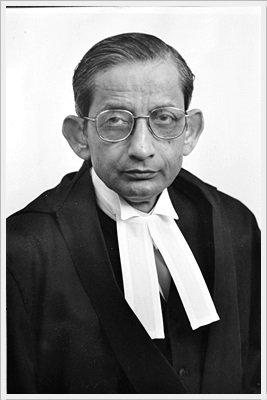

No Acts & Articles mentioned in this case
REPORTABLE
IN THE SUPREME COURT OF INDIA
CIVIL APPELLATE JURISDICTION
CIVIL APPEAL NOS. 7408-7409 OF 2008
(Arising out of SLP (C) Nos. 4968-4969 of 2005)
M/S P. MANOHAR REDDY & BROS. … APPELLANT
Versus
MAHARASHTRA KRISHNA VALLEY DEV.
CORP. & ORS. … RESPONDENTS
J U D G M E N T
S.B. Sinha, J.
1.Leave granted.
2.Respondent herein invited tenders for the work of excavation in canal
K.M. No. 126, Kukadi Left Bank Canal, Shrigonda in the District of
Ahmednagar at an estimated costs of Rs.23,26,424/- pursuant whereto
appellant herein submitted its offer for a sum of Rs.21,10,233/-. The said
offer being the lowest was accepted.
3.The parties hereto thereafter entered into a contact on 9.2.1988;
clauses 37, 54 and 55 whereof read as under:
“37.After completion of work and prior to that
payment, the contractor shall furnish to the
Executive Engineer, a release of claims against the
Government arising out of the contract, other than
claims specifically identified, evaluated and
expected from the operation of the release by the
contractor.”
54.Settlement of Dispute (For works costing
less than Rs. 50 lakhs).
If the contractor considers any work demanded of
him to be outside the requirements of the contract,
or considers any drawings, record or ruling of the
Executive Engineer, KIP Dn. No. VII, Shrigonda
on any matter in connection with or arising out of
the contract or the carrying out of work to be
outside the terms of contract and hence
unacceptable he shall promptly ask the Executive
Engineer, in writing, for written instructions or
decision. Thereupon the Executive Engineer, shall
give his written instructions or decision within a
period of 30 days of such request.
Upon receipt of the written instructions or
decision the contractor shall promptly proceed
without delay to comply with such instructions or
decision.
If the Executive Engineer fails to give his decision
in writing within a period of 30 days after being
requested, or if the contractor is dissatisfied with
the instructions or decision of the Executive
Engineer, the contractor may within 30 days after
receiving the instructions or decision appeal to
upward authority who shall afford an opportunity
to the contractor to be heard and to offer evidence
in support of his appeal.
2
If the contractor is dissatisfied with this decision,
the contractor within a period of thirty days from
receipt of the decision shall indicate his intention
to refer the dispute to Arbitration as per clause 55
failing which the said decision shall be final and
conclusive.
55.Arbitration (For works costing less than Rs.
50 lakhs)
All the disputes or differences in respect of which
the decision has not been final and conclusive as
per clause 54 above shall be referred for
arbitration to a sole arbitrator appointed as
follows.
Within 30 days of receipt of notice from the
contractor or his intention to refer the dispute to
arbitration the Chief Engineer (SP Irrigation
Department), Pune shall send to the contractor a
list of three officers of the rank of Superintending
Engineers or higher, who have not been connected
with the work under this contract. The contractor
shall within 15 days of receipt of this list select
and communicate to the Chief Engineer, the name
of one officer from the list who shall then be
appointed as the Sole Arbitrator. In case
contractor fails to communicate this selection of
name within the stipulated period, the Chief
Engineer shall without delay select one officer
from the list and appoint him as the sole arbitrator.
If the Chief Engineer fails to send such a list
within 30 days as stipulated the contract shall send
a similar list to the Chief Engineer within 15 days.
The Chief Engineer shall then select one officer
from the list and appoint him as the Sole
Arbitrator within 15 days. If the Chief Engineers
fails to do so, the contractor shall communicate to
the Chief Engineer the name of one officer from
the list who shall then be the sole Arbitrator.
3
The Arbitrator shall be conducted in accordance
with the provision of the Indian Arbitration Act,
1940 or any statutory modification thereof. The
Arbitration shall determine the amount of costs to
be awarded to either parties.
Performance under the contract shall continue
during the arbitration proceedings and payments
due to the contractor shall not be withheld unless
they are subject matter of the arbitration
proceedings.
All awards shall be in writing and in case of award
amounting to Rs. One lakh and above, such
awards shall state the reasons for the amount
awarded. Neither party is entitled to bring a claim
to arbitrator if the arbitrator has not been
appointed before the expiration of 30 days after
defects liability period.”
4.A work order was issued on the same day. The said contract was to be
completed by 8.1.1989, i.e. within a period of about 11 months.
Appellant failed to complete the work within the stipulated time. He
applied for extension which was granted first upto 09.07.1989 and thereafter
upto 30.09.1990. Within the said period the work was completed. The
measurements of the work undertaken by the appellant were recorded on
26.11.1990. Final bill prepared and paid by the respondent was accepted by
the appellant without any demur.
4
5.Inter alia, on the premise that appellant was asked to do extra items of
work, it raised its claims by a letter dated 27.2.1991, which was rejected.
Details of the purported extra work done by appellant, however, were
not mentioned in the said letter dated 27.2.1991. It submitted another claim
giving details thereof by a letter dated 10.6.1991.
6.Appellant by a letter dated 26.9.1991 purporting to invoke clause 54
of the General Conditions of Contract,issued notice to the Executive
Engineer of respondent, stating:
“Whereas a number of claims were referred to you
from time to time and in respect of many of them
you have failed to give the decision. And whereas
the work under contract was kept in progress by us
in good faith and with a belief that on completion
of the work you will reconsider our total case and
settle our accounts with all the claims.
And whereas the work has been duly
completed by us, we are now in a petition (sic) of
finally work out in full the sum of money due and
payable to us by the department including all the
claims.
Now therefore, we hereby call upon you and
give you notice finally under clause 54 of the
General conditions of contract with a request to
settle our accounts and give your decisions in
respect of our following claims and disputes
within a period of thirty days from the date of
receipt of this notice by reconsidering your earlier
5
decision in respect of claim on which you had
indicated your decision earlier.”
He specified 16 claims thereunder.
7.Respondent rejected the said claim by its letter dated 5.10.1991
alleging that the stipulated period therefor expired in May, 1991. The
Executive Engineer of the respondent by his letter dated 29.10.1991 opined
that the matter cannot be considered for arbitration, stating:
“Please refer your letter under reference which
was received by this office in the 1
st
week of
October 1991. The claims raised were already
denied by this Office vide letter No. 448 dtd.
29.4.91. As you have referred the matter under the
provisions of clause 54 of the L.C.B. No. 18 for
87, 88, The decisions of this office are again sent
herewith. It is further clarified that the matter is
brought for arbitration process after expiry of 30
days from end of defect liability period. The work
was completed in November-90 and the defect
liability period of six months is over in May 1991,
hence the matter cannot be considered for
arbitration.”
However, its earlier decision of rejecting the claim was repeated.
8.Treating the same to be an order rejecting his claim, appellant herein
preferred an appeal thereagainst before the Superintending Engineer in
6
terms of its letter dated 26.11.1991; pursuant whereto a meeting was held
between the representatives of the parties; the minutes whereof read as
under:
“Since the contractors have not submitted their
claims under clause 54 of the General conditions
of the contract along with documentary evidences
within the stipulated period i.e. before the expiry
of 30 days after defect liability period and as per
clause 55 which states ‘Neither party is entitled to
bring a claim to arbitrator if the arbitrator has not
been appointed before the expiration of 30 days
after defect liability period.’
Defect liability period of this contract
expired on 31
st
May 1991 and the stipulated period
of 30 days expired on 30
th
June 1991.
Hence the contractor’s appeal for arbitration
is hereby rejected”
9.A copy of the said minutes of the meeting was sent by the
Superintending Engineer along with his letter dated 30.12.1991.
A notice, on the premise that disputes and differences arose between
the parties within the meaning of clause 55 of the General Conditions of
Contract, was served upon the Chief Engineer asking him to furnish the
names of its three officers for appointment of sole arbitrator within 30 days
from the receipt thereof. The said request was rejected by the Chief
Engineer in terms of his letter dated 26.2.1992, stating:
7
“ You have given notice under clause 54 on
26/11/91 to refer the dispute to arbitration. Thus
the notice under clause 54 is given after the expiry
of 30 days of defect liability period.
Thus you have not submitted the claims
within the stipulated time and followed the
procedure as per the clause 54 of general condition
for settlement of dispute. This has already been
informed to you by the Superintending Engineer
Kukadi canal circle, Pune-6 under his letter no.
KCC/PB-1/KM 126/Claims/4129 dt. 30/12/91.
Hence the question of appointing arbitrator
by this office does not arise.”
10.Appellant thereafter sent a list of arbitrators on 9.3.1992 followed by
a notice through a lawyer.
Indisputably, the said request for referring the disputes to an
arbitrator was rejected by respondent.
11.Appellant filed an application under Section 8 of the Arbitration Act,
1940 (for short, “the Act”) in the Court of Civil Judge (Senior Division),
Ahmednagar at Ahmednagar for appointment of Arbitrator.
By reason of a judgment and order dated 9.12.1997, the Civil Judge
Senior Division, Ahmednagar opining that the said application having been
filed within the period as specified in Article 137 of the Limitation Act,
1963 and the cause of action therefor having arisen on 29.10.1991 on which
8
date the appellant’s claim was rejected, appointed one Shri V.M. Bedse, a
retired Chief Engineer as Arbitrator with regard to the additional and extra
works allegedly carried out by appellant.
The learned judge held:
“The petitioner along with Exh. 19 has produced
various documents and correspondence ensued
with the respondents. It is crystal clear from this
correspondence that the petitioner had demanded
release of claim on 27/2/91 under clause No. 37 of
the contract agreement. This claim letter was
received by the respondents and further query in
respect of proof of claim was called for by the
respondents by their letter dated 29/4/91.
Accordingly, the proof was submitted by letter
dated 10/6/91 and details of claim were given on
26/9/91. The petitioner also apprised about
‘settlement of dispute’ as contemplated in clause
No. 54 of the contract agreement. Therefore
practically there is compliance by the petitioner as
contemplated under clause No. 54 of the contract
agreement. The record also reveals that the
respondents on 5/10/91 i.e. after lapse of three
months replied the notice of petitioner dated
10/6/91 and first time it was agitated that the
petitioner has not taken steps under clause No. 55
under defect liability and before expiration of 30
days. The clause No. 19(a) of the contract
agreement is in respect of material and
workmanship and it defines the defect liability in
respect of workmanship and materials and so also
the defect liability period is to be counted from the
certified date of completion certificate. Under
clause No. 26 of the contract agreement, it is the
respondents who are required to issue such
certificate to the petitioner. The notices were
issued by the petitioner under clause Nos. 54 and
9
55 of the contract but it appears from the record
that the respondents did not take any steps to
choose their arbitrator. On the contrary, on 9/3/92
the list of three officers was demanded and out of
them sole arbitrator was chosen but the
respondents have not replied the same. In this
manner, the petitioner and respondents could not
concur for appointment of arbitrator and the
petitioner had therefore no alternative but to resort
to provisions of Section 8 of the Arbitration Act.
The correspondence produced on record in support
of claim under Section 8 of the Arbitration Act by
the petitioner is sufficient to come to the
conclusion that there was dispute between
petitioner and the respondents in respect of
additional work and no such steps have been taken
by the respondents as provided under the
Contract.”
12.A Civil Revision Application No. 201 of 1998 was preferred
thereagainst by the respondent before the High Court, which by reason of
the impugned judgment and order dated 13.4.2004 has been allowed. A
Review Petition filed by appellant thereagainst has been dismissed.
13.Mr. Sundaravaradan, learned Senior Counsel appearing on behalf of
appellant raised the following contentions in support of the appeal.
i.The High Court committed a serious error of law in passing the
impugned judgment insofar as it failed to take into
10
consideration that limitation for raising a claim as envisaged
under clause 54 is not applicable in the instant case.
ii.In view of the fact that the claim was rejected only on
26.2.1992 by the appellate authority, the period of 30 days
should be counted therefrom.
iii.While exercising its jurisdiction under Section 8 of the Act, the
court was concerned only with the question as to whether there
was a triable issue.
iv.Once a triable issue is found to have been raised, which was
required to be referred to the arbitration, the merit of the claim
cannot be gone into.
14.Ms. Aprajita Singh, learned counsel appearing on behalf of the
respondent, on the other hand, would urge:
i.Clause 54 of the General Conditions of the Contract must be
invoked by the contractor during the tenure thereof and not
after completion of the contract and acceptance of the final bill.
ii.The final bill having been accepted without any demur, the
contract came to an end, wherewith the arbitration agreement
which was a part thereof also perished.
11
iii.Appellant having not sought for extension of time in terms of
sub-Section (4) of Section 37 of the Act and in any event no
sufficient cause having been made out therefor, even no
extension of time could be granted.
15.Indisputably, the parties are governed by the Act.
‘Arbitration Agreement’ has been defined in Section 2(a) of the Act
to mean a written agreement to submit present or future differences to
arbitration, whether an arbitrator is named therein or not.
An arbitration is a private dispute resolution mechanism agreed upon
by the parties. The arbitration agreement is contained in a commercial
document; it must be interpreted having regard to the language used in it. A
bare perusal of clauses 37, 54 and 55 of the General Conditions of Contract
clearly shows that the arbitration agreement entered into by and between the
parties is not of wide amplitude. In a case where arbitration clause is of
wide amplitude, the same may cover also the claims arising during the
tenure of contract or thereafter, provided the arbitration clause subsists.
16.Clause 37 imposes an obligation upon the contractor to furnish to the
Executive Engineer a release of claims against the Government arising out
of the contract other than the claims specifically identified, evaluated and
12
expected from the operation of the release by the Contractor only after
completion of the work and prior to payment thereof.
There is nothing on record to show that any claim in relation to extra
or additional work had been raised by the contractor prior to 27.2.1991
although final measurement had been recorded on 26.11.1990 and the bill
has been paid in full and final satisfaction on 4.12.1990. Clauses 54 and 55
of the arbitration agreement must be read together.
17.Indisputably, the contract has been entered into for works costing less
than Rs. 50 lakhs and, thus, clause 54 would be attracted in the instant case.
In terms of the said provision, the contractor has to raise a demand with the
Executive Engineer if any work is demanded from him, which he considers
to be outside the requirements of the contract. The word ‘consider’ is of
some significance, it means “to think over; to regard as or deem to be.” (See
Advanced Law Lexicon,3
rd
Edition, 2005).
18.If a work has to be carried out outside the terms of the contract and is
unacceptable, he is required to promptly approach the Executive Engineer in
writing for obtaining his written instruction or decision in that behalf. The
Executive Engineer is obligated to give his written instructions or decision
within a period of 30 days of making such request. Once such instruction or
decision is received, the contractor is required to comply therewith. Only in
13
a case where the Executive Engineer fails and/or neglects to give a decision
or issue instruction, the contractor may within a period of 30 days thereafter
prefer an appeal to the appellate authority. The appellate authority is
required to provide an opportunity of hearing to the contractor. It is only
when the contractor is dissatisfied with the decision of the appellate
authority, he may indicate his intention to refer the dispute to Arbitration in
terms of clause 55 within a period of 30 days from the date of receipt of the
said decision, failing which, the same would be final.
19.The arbitration clause, thus, could be invoked only in a case where
the decision has not become final and conclusive as per clause 54.
20.A plain reading of the aforementioned provisions clearly shows that
clause 54 does not envisage raising of a claim in respect of extra or
additional work after the completion of contract.
21.The jurisdiction of the civil court under Section 8 of the Act or under
Section 20 thereof can be invoked if the disputes and differences arising
between the parties was the one to which the arbitration agreement applied.
22.The contractual clause provides for a limitation for the purpose of
raising a claim having regard to the provisions of Section 28 of the Indian
Contract Act. It is no doubt true that the period of limitation as prescribed
14
under Article 137 of the Limitation Act would be applicable, but it is well
settled that a clause providing for limitation so as to enable a party to lodge
his claim with the other side is not invalid.
In The Vulcan Insurance Co. Ltd. vs. Maharaj Singh and anr. reported
in AIR 1976 SC 287, the arbitration clause read as under:
“18. If any difference arises as to the amount of
any loss or damage such difference shall
independently of all other questions be referred to
the decision of an Arbitrator, to be appointed in
writing by the parties in difference, or, if they
cannot agree upon a single Arbitrator to the
decision of two disinterested persons as
Arbitrators.... … ….. ……. ….. ……. …… ….
And it is hereby expressly stipulated and declared
that it shall be a condition precedent to any right
of action or suit upon this policy that the award by
such arbitrator, arbitrators or Umpire of the
amount of the loss or damage if disputed shall be
first obtained.
19. In no case whatever shall the company be
liable for any loss or damage after the expiration
of twelve months from the happening of the loss
or damage unless the claim is the subject of
pending action or arbitration.”
Referring to the well known decision of Scott vs. Avery, (1856) 25 LJ
Ex 308 = 5 HLC 811, and noticing different views expressed by different
courts, it was held:
15
“22. The two lines of cases clearly bear out the
two distinct situations in law. A clause like the one
in Scott v. Avery bars any action or suit if
commenced for determination of a dispute covered
by the arbitration clause. But if on the other hand a
dispute cropped up at the very outset which cannot
be referred to arbitration as being not covered by
the clause, then the Scott v. Avery clause is
rendered inoperative and cannot be pleaded as a
bar to the maintainability of the legal action or suit
for determination of the dispute which was outside
the arbitration clause.”
Whether such a clause comes within the purview of the arbitration
clause, vis-à-vis Article 137 of the Limitation Act, it was held:
“…It has been repeatedly held that such a clause is
not hit by Section 28 of the Contract Act and is
valid; vide-The Baroda Spinning and Weaving Co.
Ltd. v. The Satyar narayan Marine and Fire
Insurance Co. Ltd. ILR 38 Bom 344 : AIR 1914
Bom 225 (2); Dawood Tar Mahomed Bros. v.
Queensland Insurance Co. Ltd. AIR 1949 Cal 390
and The Ruby General Insurance Co. Ltd. v. The
Bharat Bank Ltd. AIR 1950 (East) Punj 352.
Clause 19 has not prescribed a period of 12
months for the filing of an application under
Section 20 of the Act. There was no limitation
prescribed for the filing of such an application
under the Indian limitation Act, 1908 or the
limitation Act, 1963. Article 181 of the former did
not govern such an application. The period of
three years prescribed in Article 137 of the Act of
1963 may be applicable to an application under
Section 20.”
16
Whether the difference which arose between the parties was the one
to which the arbitration clause applied and whether the application under
Section 20 of the Act could be dismissed, this Court opined:
“24. But in this case on a careful consideration of
the matter we have come to the definite conclusion
that the difference which arose between the parties
on the company's repudiation of the claim made by
respondent No. 1 was not one to which the
arbitration clause applied and hence the arbitration
agreement could not be filed and no arbitrator
could be appointed under Section 20 of the Act.
Respondent No. 1 was ill-advised to commence an
action under Section 20 instead of instituting a suit
within three months of the date of repudiation to
establish the company's liability.”
(See also A.B.C. Laminart Pvt. Ltd. vs. A.P. Agencies, Salem [AIR
1989 SC 1239)
23.It is not a case where an application under Section 8 could not be
filed within a period of 3 years. It is a case where a determination was
necessary as regards invocation of the disputes settlement processes. For
resolution of the dispute, a claim must be made in terms of the provisions of
the contract for the purpose of giving effect to the arbitration clause; the
application thereof being limited in nature.
17
24.Mr. Sundaravaradan has taken us through a large number of decisions
to contend that the purported ‘accord and satisfaction’ on the part of the
contractor might not itself be a sufficient ground to reject a prayer for
making a reference under the Arbitration Act.
Such a question came up for consideration before this Court in
Damodar Valley Corporation vs. K.K. Kar [(1974) 1 SCC 141], wherein this
Court noticing the decision of Heyman v. Darwins Ltd. (1942) 1 All ER
337, stated the law thus:
“Again, an admittedly binding contract containing
a general arbitration clause may stipulate that in
certain events the contract shall come to an end. If
a question arises whether the contract has for any
such reason come to an end I can see no reason
why the arbitrator should not decide that question.
It is clear, too, that the parties to a contract may
agree to bring it to an end to all intents and
purposes and to treat it as if it had never existed.
In such a case, if there be an arbitration clause in
the contract, it perishes with the contract. If the
parties substitute a new contract for the contract
which they have abrogated the arbitration clause in
the abrogated contract cannot be invoked for the
determination of questions under the new
agreement. All this is more or less elementary.”
It was furthermore held:
18
“Similarly the question whether there has been a
settlement of all the claims arising in connection
with the contract also postulates the existence of
the contract. The principle laid down by Sarkar. J.,
in Kishorilal Gupta Bros's case [1960] 1 S.C.R.
493 that accord and satisfaction does not put an
end to the arbitration clause was not dissented to
by the majority. On the other hand proposition (6)
seems to lend weight to the views of Sarkar, J. In
these circumstances, the question whether the
termination was valid or not and whether damages
are recoverable for such wrongful termination
does not affect the arbitration clause, or the right
of the respondent to invoke it for appointment of
an arbitrator.”
{See also S.C. Konda Reddy vs. Union of India & anr. [AIR 1982
KARNATAKA 50)}
25.We are, however, in this case faced with a different situation. The
contention of respondent is not that there has been a breach of contract and
the contract still subsists. Its contention is that in terms of the contract the
claim for extra work or additional work should have been raised during the
tenure of the contract itself and not after it came to an end and payment
received in full and final satisfaction.
26.An arbitration clause, as is well known, is a part of the contract. It
being a collateral term need not, in all situations, perish with coming to an
19
end of the contract. It may survive. This concept of separability of the
arbitration clause is now widely accepted. In line with this thinking, the
UNCITRAL Model Law on International Commercial Arbitration
incorporates the doctrine of separability in Article 16(1). The Indian law -
The Arbitration and Conciliation Act, 1996, which is based on the
UNCITRAL Model Law, also explicitly adopts this approach in Article 16
(1)(b), which reads as under:-
“16. Competence of arbitral tribunal to rule on its
jurisdictional. - (1) The arbitral tribunal may rule
on its own jurisdiction, including ruling on any
objections with respect to the existence or validity
of the arbitration agreement, and for that purpose,
-
(a) An arbitration clause which forms part of a
contract shall be treated as an agreement
independent of the other terms of the contract;
and
(b) A decision by the arbitral tribunal that the
contract is null and void shall not entail ipso jure
the invalidity of the arbitration clause.”
(Emphasis supplied).
Modern laws on arbitration confirm the concept. The United States
Supreme Court in the recent judgment in Buckeye Check Cashing, Inc. v.
Cardegna (546 US 460) acknowledged that the separability rule permits a
court “to enforce an arbitration agreement in a contract that the arbitrator
20
later finds to be void.” The Court, referring to its earlier judgments in Prima
Paint Corp. v. Flood & Conklin Mfg. Co., (388 U. S. 395), and Southland
Corp. v. Keating, (465 U. S. 1), inter alia, held :-
“Prima Paint and Southland answer the question
presented here by establishing three propositions.
First, as a matter of substantive federal arbitration
law, an arbitration provision is severable from the
remainder of the contract.”
But this must be distinguished from the situation where the claim
itself was to be raised during the subsistence of a contract so as to invoke
the arbitration agreement would not apply.
M/s Bharat Heavy Electricals Limited, Ranipur vs. M/s Amar Nath
Bhan Prakash (1982) 1 SCC 625, whereupon reliance has been placed by
Mr. Sundaravaradan is not applicable as it was held therein that the
question whether there was discharge of the contract by accord and
satisfaction or not, is itself arbitrable.
The said question need not detain us having been considered by this
Court in Bharat Coking Coal Ltd. vs. Annapurna Construction [(2003) 8
SCC 154] holding:
21
“14. The question is as to whether the claim of the
contractor is de hors the rules or not was a matter
which fell for consideration before the arbitrator.
He was bound to consider the same. The
jurisdiction of the arbitrator in such a matter must
be held to be confined to the four-corners of the
contract. He could not have ignored an important
clause in the agreement; although it may be open
to the arbitrator to arrive at a finding on the
materials on records that the claimant’s claim for
additional work was otherwise justified.”
27.In Chairman and MD, NTPC Ltd. vs. Reshmi Constructions, Builders
& Contractors [(2004) 2 SCC 663], this Court held:
“18. Normally, an accord and satisfaction by itself
would not affect the arbitration clause but if the
dispute is that the contract itself does not subsist,
the question of invoking the arbitration clause may
not arise. But in the event it be held that the
contract survives, recourse to the arbitration clause
may be taken. [See Union of India v. Kishorilal
Gupta (AIR 1959 SC 1362) and Naihati Jute Mills
Ltd. v. Khyaliram Jagannath (AIR 1968 SC 522).”
It was furthermore opined
“28.Further, necessitas non habet legem is an
age-old maxim which means necessity knows no
law. A person may sometimes have to succumb to
the pressure of the other party to the bargain who
is in a stronger position.
29. We may, however, hasten to add that such a
case has to be made out and proved before the
Arbitrator for obtaining an award.
22
30. At this stage, the Court, however, will only
be concerned with the question whether trial
issues have been raised which are required to be
determined by the Arbitrators.”
28.We, however, as noticed hereinbefore, are concerned with a different
fact situation. As arbitration clause could not be invoked having regard to
the limited application of clauses 37, 54 and 55 of the General Conditions of
the Contract, we are of the opinion that the trial court was not correct in
directing appointment of an arbitrator.
29.We may notice that in Wild Life Institute of India, Dehradun vs.
Vijay Kumar Garg [(1997) 10 SCC 528], a Division Bench of this Court
held as under:
“It is also necessary to refer to the arbitration
clause under the contract which clearly provides
that if the contractor does not make any demand
for arbitration in respect of any claim in writing
within 90 days of receiving the intimation from the
appellants that the bill is ready for payment, the
claim of the contractor will be deemed to have
been waived and absolutely barred and the
appellants shall be discharged and released of all
liabilities under the contract in respect of these
claims. The liability, therefore, of the appellants
cease if no claim of the contractor is received
within 90 days of receipt by the contractor of an
intimation that the bill is ready for payment. This
clause operates to discharge the liability of the
appellants on expiry of 90 days as set out therein
and is not merely a clause providing a period of
23
limitation. In the present case, the contractor has
not made any claim within 90 days of even receipt
of the amount under the final bill. The dispute has
been raised for the first time by the contractor 10
months after the receipt of the amount under the
final bill.”
30.The High Court has relied upon a decision of this Court in M/s K.
Ramaiah and Company Vs. Chairman & Managing Director, National
Thermal Power Corpn. [1994 Supp. (3) SCC 126]. We need not deal
therewith in details as the effect thereof has been considered by us in Bharat
Coking Coal Ltd. vs. Annapurna Construction (supra).
31.It is also not a case where sub-section (4) of Section 37 of the Act
could be invoked. Appellant did not invoke Section 37(4) of the Act. No
reason has been assigned as to why the said discretion of the court should be
invoked particularly when the claim has been raised only after completion
of the work.
32.For the reasons aforementioned, we, albeit for different reasons,
affirm the judgment of the High Court. The appeals are, accordingly,
dismissed. In the facts and circumstances of the case there shall be no order
as to costs.
24
We may clarify that nothing stated herein shall affect the merit of the
appellant’s claim to invoke the jurisdiction before any other forum for
enforcing the same.
……………….…..………….J.
[S.B. Sinha]
..………………..……………J.
[Cyriac Joseph]
New Delhi;
December 18, 2008
25

 Login with google
Legal Notes
Add a Note....