
As per the case facts, a landlord initiated an eviction proceeding in 1974 to recover possession of a shop room under the Delhi Rent Control Act. This appeal is a ...
No Acts & Articles mentioned in this case
1
REPORTABLE
IN THE SUPREME COURT OF INDIA
CIVIL APPELLATE JURISDICTION
CIVIL APPEAL NO. 1609 OF 2022
(Arising out of Special Leave Petition (C) No. 6516/2019)
M/S PURI INVESTMENTS ....APPELLANT(S)
VERSUS
M/S YOUNG FRIENDS
AND CO. & ORS. ....RESPONDENT(S)
J U D G M E N T
Leave granted.
2. The appellant, as the landlord, is the original applicant in
an eviction proceeding instituted under Section 14 of the Delhi
Rent Control Act, 1958 (hereinafter referred to as “the Act”)
seeking recovery of possession of a shop room located at
Connaught Place in the central part of Delh i. The eviction
proceeding was instituted in the year 1974. We shall henceforth
refer to the shop room as “subject-premises”. In that proceeding
instituted before the Rent Controller, Delhi, altogether three
2
individuals and three firms were originally impl eaded as
respondents. In this appeal, however, only three respondents
have been impleaded, being the firm-Young Friends & Co. and
two individuals – Ashu Mohan Gupta and Shashi Gupta. They
have been described as contesting respondents. On that count,
however, no controversy has been raised before us. The
appellant admittedly is the landlord of the subject-premises.
This was rented out to the then proprietor (since deceased) of the
first respondent in the year 1936. The appellant became the
landlord thereof on having purchased the subject-premises from
its erstwhile owner in the year 1958. The main ground on which
eviction was asked for was sub-letting without consent of the
landlord.
3. The respondents run a retail outlet from the subject -
premises and at the material point of time, the respondents were
operating from there a chemist shop. The substance of
allegations of the landlord was that the respondents had sub-let
certain portions of the premises to three medical practitioners,
(including one dentist) and two other firms. They were included
as respondent nos. 2, 3, 4, 5 and 6 in the eviction application.
3
By an order passed on 5
th June, 1997, the Additional Rent
Controller, Delhi dismissed the petition holding that the
appellant had failed to show that there was any sub -letting,
assignment or parting with possession of the tenanted premises
in favour of persons/entities who were included in the array of
respondents. So far as respondent no.5 (Young Friends & Co.) is
concerned, finding was that it was an entity of the respondent
tenant only. As regards the sixth respondent in the eviction
petition, the Rent Controller held that no sub -letting,
assignment or parting with possession of any portion of the
subject-premises. Respondent no. 6 was found to be occupying a
public verandah outside the tenanted premises. The appellant’s
plea for eviction was founded on certain other grounds as well,
but those grounds also could not be established before the Rent
Controller. It was held by the said forum that the respondent
nos. 2 to 4 were not in exclusive possession of the subject-
premises.
4. The Appellate Tribunal, however, reversed the decision of
the authority of the first instance, and passed an order of
eviction on the ground of sub-letting. The Tribunal tested the
4
appellant’s case on the basis of allegations pertaining to sub-
letting to the three medical practitioners. The Tribunal accepted
the appellant’s stand that the facts of the case disclosed sub-
letting of the subject-premises in favour of respondent nos. 2
(Dr. Pradip Jayna), 3 (Dr. S. S. Pant) and 4 (Shri K. N. Mehta).
We find from the judgment under appeal that the landlord had
pressed the petition on account of respondent nos. 2, 3 and 4
having been inducted as sub-tenants without the consent in
writing by the landlord.
5. The respondents, thus, invoked the provisions of Article
227 of the Constitution of India before the Delhi High Court
assailing the order of the Tribunal. The respondent s were
successful in that proceedings. The High Court, in the judgment
delivered on 14
th November, 2018 allowed the application under
Article 227 of the Constitution of India, inter alia, holding:-
“51. The prime conclusion of ARCT that the user of the
space by R-2 to R-4 during the period they were in their
respective clinic renders it they being in “exclusive
possession” is not supported by any evidence, it being a
conclusion based on surmises. As observed earlier, in
the proceedings before the ARC, the landlord resting its
case primarily on the evidence of its managing partner
(AW-3) had failed to adduce such material, as could
show a third party being in possession to the exclusion
5
of the tenant. On the contrary, the evidence of the
landlord, as indeed of the tenant, unmistakably show
that the tenant has always been in full control and
possession-physical and legal-of the tenanted premises.
The presence of others was temporary, for a few hours
of the day when the tenant would also be present, and
clearly for permissive use, it having come to an end,
such persons having left the premises on their own
when called upon to do so by the tenant.
52. The view taken by the ARCT, clearly, was erroneous,
it being based on conclusions which are contrary to the
evidence that was adduced, and by drawing inferences
which were not permissible in law, the appellate power
having been improperly exercised for substituting one
subjective satisfaction with another without there being
a justifiable reason to do so.
53. Consequently, the petition is allowed. The impugned
judgment dated 29.08.2007 of the Additional Rent
Control Tribunal is set aside. The judgment dated
05.06.1997 of the Additional Rent Controller stands
restored and revived. In the result, the eviction case of
the respondent stands dismissed.”
6. This judgment of the High Court is under appeal before
us. Main argument of Mr. Dhruv Mehta, learned senior counsel
appearing with Mr. Jeevesh Nagrath, learned counsel appearing
for the appellant has been that sub-letting had been proved
before the final fact-finding forum (at the appellate stage) and
the appellate forum had returned findings on facts. In such
circumstances, the High Court in its supervisory jurisdiction
ought not to have had upset the order of the Appellate Tribunal.
6
7. The legal point, which has been argued before us, is as to
whether the act of the respondents in inducting the three
medical practitioners constituted sub-letting or not. This point,
no doubt, has to be determined on the basis of evidence adduced
before the fact-finding forum. The dispute involved in this appeal
does not give rise to any complex legal question. Thus, in
exercise of our jurisdiction under Article 136 of the Constitution
of India, scope of our interference would be limited to the issue
as to whether the decision of the High Court in upsetting the
order of eviction passed by the Appellate Tribunal suffered from
any element of perversity or not. It has been urged before us on
behalf of the appellant that the High Court ought not to have
interfered in the matter as the order of the Appellate Tribunal
was based on appreciation of evidence and bore no taint of
perversity which would have warranted interference under
Article 227 of the Constitution of India. Several authorities have
been relied upon before us by the learned counsel appearing for
the parties. These authorities mainly deal with the nature and
scope of occupation in a rented property of persons not being
tenant but inducted by the latter which would attract the
7
mischief of sub-letting. These authorities relate to specific
instances of induction of persons by the tenant based on the
facts of each case. The appellant has cited the cases of:-
(i) Flora Elias Nahoum & Ors. v. Idrish Ali Laskar
[(2018) 2 SCC 485]
(ii) Celina Coelho Pereira (Ms) & Ors. v. Ulhas
Mahabaleshwar Kholkar & Ors. [(2010) 1 SCC 217]
(iii) Bharat Sales Ltd. v. Life Insurance Corporation of
India [(1998) 3 SCC 1]
(iv) Smt. Rajbir Kaur & Anr. v. S Chokesiri & Co. [(1989)
1 SCC 19]
(v) Chimajirao Kanhojirao Shirke & Anr. v. Oriental
Fire & General Insurance Co. Ltd. [(2000) 6 SCC
622].
Mr. Rana Mukherjee, learned senior counsel for the
respondents, on the other hand, ha s cited the following
authorities including the case of Flora Elias Nahoum (supra).
These cases are:-
(i) Dipak Banerjee v. Lilabati Chakraborty [(1987) 4 SCC
161]
(ii) Jagan Nath v. Chander Bhan & Ors. [(1988) 3 SCC
57]
(iii) Shalimar Tar Products Ltd. v. H. C. Sharma & Ors.
[(1988) 1 SCC 70]
8
(iv) Ram Murti Devi v. Pushpa Devi & Ors. [(2017) 15
SCC 230].
In our view, the guiding principles which emerge from these
authorities on the question which we are addressing in this
judgment can be adopted from the following three decisions:-
(i) Ram Murti Devi (supra)
(ii) Flora Elias Nahoum (supra)
(iii) Bharat Sales Ltd. (supra)
8. In the case of Ram Murti Devi (supra), it has been held:-
“21.1. In a suit by the landlord for eviction of the tenant
on the ground of sub-letting the landlord has to prove
by leading evidence that:
(a) A third party was found to be in exclusive possession
of the whole or part of rented property.
(b) Parting of possession thereof was for monetary
consideration.
21.2. The onus to prove sub-letting is on the landlord
and if he has established parting of possession in favour
of a third party either wholly or partly, the onus would
shift to the tenant to explain.”
In the case of Flora Elias Nahoum (supra) the question of
burden to establish sub-letting has been discussed and it has
been observed:-
9
“36. In our view, since the respondent had admitted the
presence of Joynal Mullick in the suit shop, the burden
was on him to prove its nature and the capacity in
which he used to sit in the suit shop.”
In that case, plea of sub-letting was made on the allegation
of inducting one Joynal Mullick in a shop room by the tenant.
9. On the question of onus to establish receipt of monetary
consideration by the tenant from the person whose induction
gives rise to cause of action based on sub-letting, it has been
held in the case of Bharat Sales Ltd. (supra):-
“4. Sub-tenancy or sub-letting comes into existence
when the tenant gives up possession of the tenanted
accommodation, wholly or in part, and puts another
person in exclusive possession thereof. This
arrangement comes about obviously under a mutual
agreement or understanding between the tenant and the
person to whom the possession is so delivered. In this
process, the landlord is kept out of the scene. Rather,
the scene is enacted behind the back of the landlord,
concealing the overt acts and transferring possession
clandestinely to a person who is an utter stranger to the
landlord, in the sense that the landlord had not let out
the premises to that person nor had he allowed or
consented to his entering into possession over the
demised property. It is the actual, physical and
exclusive possession of that person, instead of the
tenant, which ultimately reveals to the landlord that the
tenant to whom the property was let out has put some
other person into possession of that property. In such a
situation, it would be difficult for the landlord to prove,
by direct evidence, the contract or agreement or
understanding between the tenant and the sub-tenant.
It would also be difficult for the landlord to prove, by
10
direct evidence, that the person to whom the property
had been sub-let had paid monetary consideration to
the tenant. Payment of rent, undoubtedly, is an
essential element of lease or sub-lease. It may be paid in
cash or in kind or may have been paid or promised to
the paid. It may have been paid in lump-sum in advance
covering the period for which the premises is let out or
sub-let or it may have been paid or promised to be paid
periodically. Since payment of rent or monetary
consideration may have been made secretly, the law
does not require such payment to be proved by
affirmative evidence and the court is permitted to draw
its own inference upon the facts of the case proved at
the trial, including the delivery of exclusive possession
to infer that the premises were sub-let.”
10. In the case before us, occupation of a portion of the
subject-premises by the three doctors stands admitted. What
has been argued by the learned counsel for the appellant is that
once the Tribunal had arrived at a finding on fact based on the
principles of law, which have been enunciated by this Court, and
reflected in the aforesaid passages quoted from the three
authorities, the interference by the High Court under Article 227
of the Constitution of India was unwarranted. To persuade us to
sustain the High Court’s order, learned counsel appearing for
the respondents has emphasized that full control over the
premises was never ceded to the medical practitioners and the
entry and exit to the premises in question remained under
11
exclusive control of the respondent(s)-tenant. This is the main
defence of the tenant. We have considered the submissions of
the respective counsel and also gone through the decisions of
the fact-finding fora and also that of the High Court. At this
stage, we cannot revisit the factual aspects of the dispute. Nor
can we re-appreciate evidence to assess the quality thereof,
which has been considered by the two fact-finding fora. The view
of the forum of first instance was reversed by the Appellate
Tribunal. The High Court was conscious of the restrictive nature
of jurisdiction under Article 227 of the Constitution of India. In
the judgment under appeal, it has been recorded that it could
not subject the decision of the appellate forum in a manner
which would project as if it was sitting in appeal. It proceeded,
on such observation being made, to opine that it was the duty of
the supervisory Court to interdict if it was found that findings of
the appellate forum were perverse. Three situations were spelt
out in the judgment under appeal as to when a finding on facts
or questions of law would be perverse. These are:-
(i) Erroneous on account of non-consideration of
material evidence, or
12
(ii) Being conclusions which are contrary to the
evidence, or
(iii) Based on inferences that are impermissible in
law.
11. We are in agreement with the High Court’s enunciation of
the principles of law on scope of interference by the supervisory
Court on decisions of the fact-finding forum. But having gone
through the decisions of the two stages of fact-finding by the
statutory fora, we are of the view that there was overstepping of
this boundary by the sup ervisory Court. In its exercise of
scrutinizing the evidence to find out if any of the three aforesaid
conditions were breached, there was re-appreciation of evidence
itself by the supervisory Court.
12. In our opinion, the High Court in exercise of its
jurisdiction under Article 227 of the Constitution of India in the
judgment under appeal had gone deep into the factual arena to
disagree with the final fact-finding forum. There is no dispute
that the three medical practitioners were in occupation of part of
the premises in question. The onus, under such circumstances,
was on the respondents to establish the degree of control they
were maintaining over the said premises for repelling the plea of
13
sub-letting or assignment or parting with possession. From the
passage of the judgment of this Court in the case of Bharat
Sales Ltd. (supra) above, it transpires that it was also the
respondents’ obligation to demonstrate that there was no
monetary consideration on the basis of which the medical
practitioners were allowed to operate from the subject premises.
Though, it was a chemist shop, evidence reveals that the portion
of the premises of which the three medical practitioners were in
occupation consisted of individual cabins and had separate
telephone connections. These are the factors, on the basis of
which, the Appellate Tribunal came to its conclusion against the
respondents. The Appellate Forum found:-
“26. I may observe that the job of a doctor is basically to
provide consultancy. He is not to sell any goods. He is
only to examine the patients and prescribe treatment
and charge his fee. For doing so aforesaid, he only
requires a place where he can sit, the client can come,
the doctor may have privacy and is able to write a
prescription to the client and, if required, to examine
him either on a dental chair in the case of a Dentists or
a bed in case of other patients and nothing else. All
these facilities were being made available to the doctors
who came to the suit premises and that also in exclusive
portion, i.e., Mezzanine floor without any interference
even by the tenant. Merely because the doctors had to
come at fixed hours would not make their occupation
merely that of a licensee and not of a sub-tenant,
because now it is a matter of common sense and
14
common knowledge that many buildings have a
common central door where a lock is put by a guard
who opens the same in the morning and closes the same
in the evening while everyone occupying a portion of the
building uses his own portion as and when they are
required to come as also it is being done in the case of a
lawyer. The lawyer also comes only in the office hours
and in the day is not expected to remain in his chamber.
However, in the case of a lawyer, he is required to
maintain a library and records and might be using his
library. But in the case of a doctor, he is not required to
keep any lock because what he is required to do is to
come, sit, provide consultancy and go. Thus, for the
period for which he is in his clinic, he has exclusive
possession thereof. It does not matter that before
starting his practice and closing the same, the premises
is not even locked by him. It is nobody’s case that till
such time, the doctors were permitted to run their
practice in the polyclinic, they were asked to go back
even during the hours fixed for opening the clinic.
Merely because the first Respondent being a chemist
was also being benefitted in selling his medicines will
not permit a tenant to allow number of doctors to sit
and run their own consultancy including the Dentist
who otherwise may not have anything to do with the
sale of medicine and is required to fix teeth which are
prepared elsewhere and not by the first Respondent or
by cleaning the teeth which is the major service
provided by the Dentist. Moreover, permitting a Dentist
to have his own chair in a clinic where visiting hours are
limited, would not make the doctor only a licencee.
27. At this juncture, I may observe that user of the
property by licencees are those cases where family
members, a wife, or a son have been permitted to use a
portion of the suit property along with the tenant who
happens to be either the father or the husband or a near
relative which is not the case here.
28. As a matter of fact, the arrangement which was
being followed between the tenant and the doctor,
15
namely Respondent nos. 2 to 4, makes it explicit that
that user of the suit premises that too of Mezzanine floor
was exclusive for the time they were permitted to run
their practice and must have been under a secret
arrangement between the tenant and the doctors to
which the landlord cannot have access and he can only
infer that some kind of consideration must have passed
by the sub-tenant in favour of the tenant which must be
the only reason as to why the first Respondent
permitted user of portion of suit property to Respondent
nos. 2 to 4 on regular intervals and also permitted them
to put their names outside the polyclinic including the
timings of their coming. The tenant even allowed them
to have their own telephones installed in the suit
premises so as to facilitate the clients to have the
consultancy at a time convenient to the doctor and the
patient without any interference of the tenant in this
regard. Such kind of arrangement cannot be termed as
mere licence and must be treated as exclusive
possession though for a short period and would
certainly furnish a ground for eviction under Section
14(1)(b) of the Delhi Rent Control Act. Accordingly, the
Trial Court has not appreciated this fine distinction of
law and, therefore, the findings returned by the Trial
Court suffer from material irregularity and calls for
interference by this appellate court.”
13. There was no perversity in the order of the Appellate
Tribunal on the basis of which the High Court could have
interfered. In our view, the High Court tested the legality of the
order of the Tribunal through the lens of an appellate body and
not as a supervisory Court in adjudicating the application under
Article 227 of the Constitution of India. This is impermissible.
16
The finding of the High Court that the appellate forum’s decision
was perverse and the manner in which such finding was arrived
at was itself perverse.
14. For these reasons, we set aside the judgment of the High
Court and restore the Appellate Tribunal’s findings.
15. On conclusion of the dictation of this judgment, which
was pronounced in open Court, Mr. Rana Mukherjee, learned
senior counsel prayed for some time to enable the respondents
to vacate the premises in question. We are also apprised that the
respondents had paid occupation charges at the rate of rupees
thirty thousand per month from 15.05.2009 till 14.11.2018. It is
an admitted position, as confirmed by the learned counsel for
the appellant as well as the respondents, that subsequent to
that date payment of occupation charges at the rate of rupees
thirty thousand per month has been stopped. It has been stated
by Mr. Mukherjee that the respondents were remitting rupees
ninety per month thereafter, being the original rent, but the
appellant had refused to receive the same.
17
16. We accordingly direct that the appellant would be entitled
to occupation charges rupees thirty thousand per month from
14.11.2018 till the subject-premises are vacated by the
respondents, and the respondents must vacate the premises
within a period of 53 weeks from date. A sum of rupees one lac
shall be remitted to the appellant within one month from date
and rupees twelve lacs within six months from date. So far as
the occupation charges for the period of 53 weeks from today is
concerned, by which period the respondents shall vacate the
premises, the respondents shall remit to the bank account of the
appellant the said sum of rupees thirty thousand per month by
the last date of each month and if any further sum is found due
on computation made in the ma nner indicted above, such
additional sum shall also be remitted within the aforesaid period
of six months.
17. The period permitting the respondents to continue in
occupation shall remain unconditional for a month from today,
by which time the respondents shall give an undertaking that
they would vacate the premises in question on or before
28.02.2023 and shall handover the peaceful and vacant
18
possession to the appellant also by that date, i.e., on or before
28.02.2023. Such undertaking shall be in the form of an
affidavit. This undertaking shall be filed in this Court within a
period of one month from date. The respondents or any one of
them shall not create any third-party rights qua the premises in
question in the meantime.
18. The appeal stands allowed in the above terms.
19. There shall be no order as to costs.
………………………………. , J
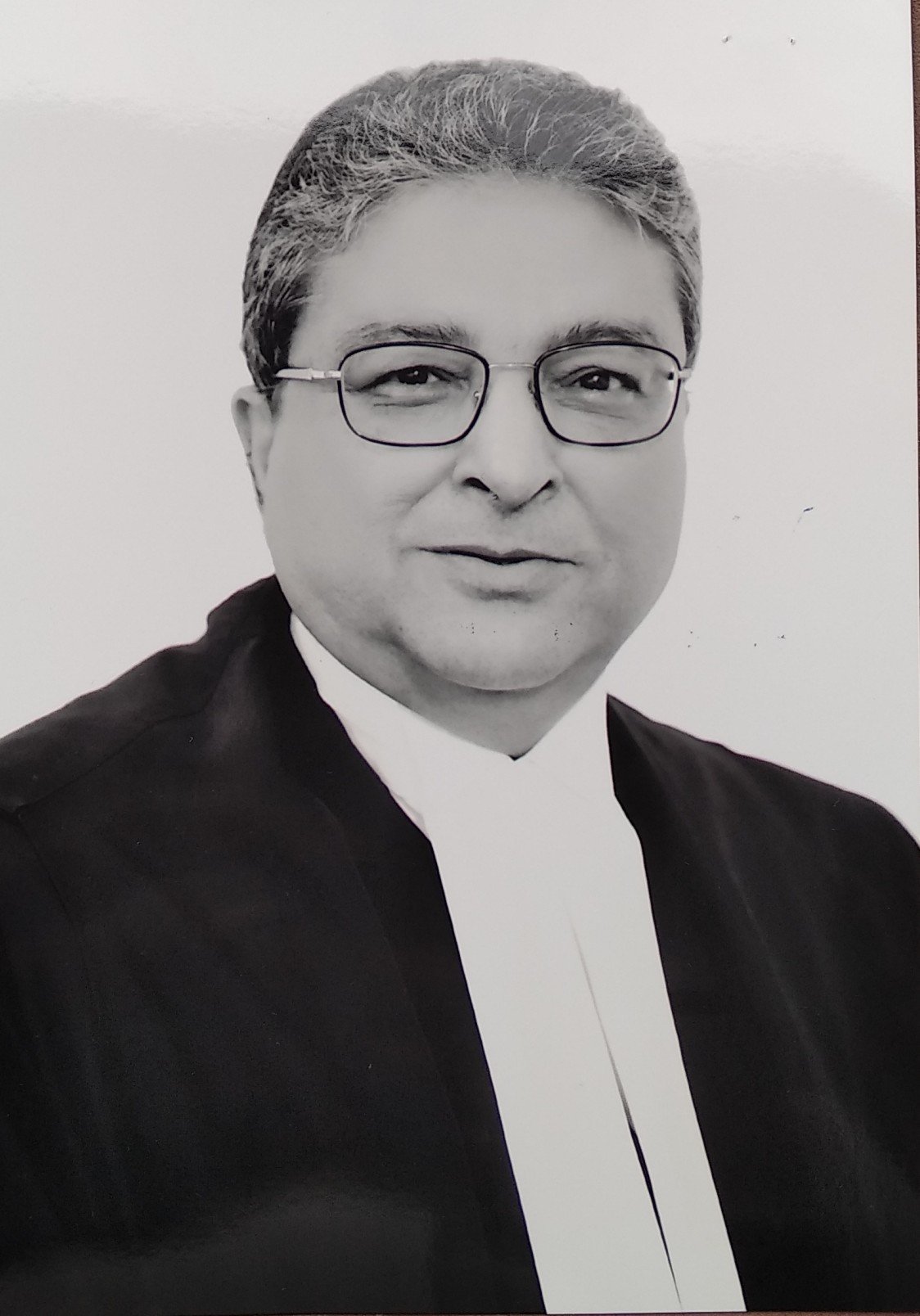
(VINEET SARAN)
………………………………. , J
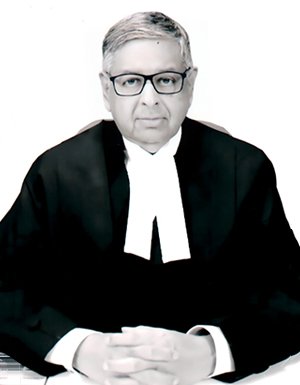
(ANIRUDDHA BOSE)
NEW DELHI;
23
rd
February, 2022

Legal Notes
Add a Note....