
The appeals arise from a common judgment and order dated 28.03.2011 of the High Court of Karnataka concerning the validity of the 2003 Repeal Act and the delegation of permit-granting ...
2025 INSC 152 CA@SLP(Civil) No.27833-27834 of 2011 etc. etc.
Page 1 of 46
REPORTABLE
IN THE SUPREME COURT OF INDIA
CIVIL APPELLATE JURISDICTION
CIVIL APPEAL NOS.002181-002182 OF 2025
@ SLP(CIVIL) NOS.27833-27834 OF 2011
M/S S.R.S. TRAVELS
BY ITS PROPRIETOR
K.T. RAJASHEKAR …APPELLANT(S)
VERSUS
THE KARNATAKA STATE
ROAD TRANSPORT
CORPORATION
WORKERS & ORS. …RESPONDENT(S)
WITH
CIVIL APPEAL NOS………………………OF 2025
@SLP(CIVIL) NOS.25787-25956 OF 2012
WITH
CIVIL APPEAL NOS………………………OF 2025
@SLP(CIVIL) NOS.32499-32525 OF 2011
J U D G M E N T
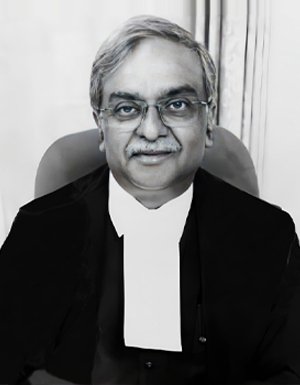
VIKRAM NATH, J.
1. Delay, if any, is condoned.
2. Leave granted.
CA@SLP(Civil) No.27833-27834 of 2011 etc. etc.
Page 2 of 46
3. These appeals arise out of the common
judgment and order dated 28.03.2011 of the High
Court of Karnataka in W.A. No. 5466 of 2004 and
connected matters. In view of the multiple appeals
that have been filed, there is a need to clarify the
array of parties in the respective SLPs:
I. SLP (C) Nos. 27833-27834 of 2011: Filed by
private bus operators.
II. SLP (C) Nos. 32499-525 of 2011: Filed by the
Karnataka State Road Transport Authority (STA).
III. SLP (C) Nos. 25787-956 of 2012: Filed by the
Karnataka State Road Transport Corporation
(KSRTC), a corporation constituted under the
Road Transport Corporations Act, 1950
1.
For clarity of reference in this judgment:
• The Private Bus Operators and the Karnataka
State Road Transport Authority will be referred
to collectively as “the Appellants.”
1
The 1950 Act
CA@SLP(Civil) No.27833-27834 of 2011 etc. etc.
Page 3 of 46
• The Karnataka State Road Transport
Corporation will be referred to as “ the
Respondent Corporation” or “KSRTC.”
4. The facts leading to the present appeals are as
follows:
4.1. Enactment of the 1976 Act (Karnataka
Contract Carriages (Acquisition) Act, 1976
2
)-
The 1976 Act was enacted with the objective of
acquiring privately operated contract carriages
to curb their alleged detrimental operation in
the State and to bring them under public
control. Under the 1976 Act, once these
contract carriages were acquired, all
corresponding permits as well as certificates of
registration stood vested in the State
Government. Subsequently, the State
Government transferred these vehicles and
permits to State-owned Road Transport
Corporations, notably including the KSRTC.
2
The KCCA Act
CA@SLP(Civil) No.27833-27834 of 2011 etc. etc.
Page 4 of 46
4.2. The Act was challenged but upheld by this
Court in State of Karnataka v. Ranganatha
Reddy
3
and later reaffirmed in Vijayakumar
Sharma v. State of Karnataka
4
. In these
decisions, the Supreme Court recognized that
the 1976 Act’s purpose was to further the
Directive Principles of State Policy under Article
39(b) and (c) of the Constitution and did not
infringe any fundamental rights or
constitutional principles.
4.3. MV Act Enactment: In 1988, the Motor
Vehicles Act, 1988
5 was enacted by the
Parliament. This Act contains several provisions
relevant to the present matter: Section 2(7)
defines “Contract carriage” and Section 2(40)
defines “Stage Carriage.” Moreover, Section 68
deals with transport authorities; in particular,
Section 68(2) provides for the composition of the
State Transport Authority
6 and the Regional
Transport Authority
7, mandating that each
3
AIR 1978 SC 215
4
AIR 1990 SC 2072
5
MV Act
6
STA
7
RTA
CA@SLP(Civil) No.27833-27834 of 2011 etc. etc.
Page 5 of 46
include a Chairman with judicial experience
along with other members—up to four for the
STA and up to two for the RTA. Section 68(3)(b)
empowers the STA to perform the duties of the
RTA, and Section 68(5) enables both
authorities, under rules made pursuant to
Section 96, to delegate their powers and
functions to any other authority or person
subject to prescribed restrictions.
4.4. On 1 July 1989, the Karnataka Motor Vehicle
Rules, 1989
8 were enacted. Under Rules 55 and
56 of these Rules, the RTA and STA were
empowered to delegate their powers to their
secretaries, including the authority to grant
contract carriage permits. Furthermore, on 27
February 1990, the constitutionality of the
KCCA Act was challenged on the ground of
repugnancy. In Vijay Kumar Sharma v. State
of Karnataka
9
, this Hon'ble Court upheld the
constitutionality of the KCCA Act, holding that
8
KMV Rules
9
(1990) 2 SCC 562
CA@SLP(Civil) No.27833-27834 of 2011 etc. etc.
Page 6 of 46
there is no inconsistency or repugnancy
between the KCCA Act and the MV Act.
4.5. In the subsequent decades, transport policy in
Karnataka underwent shifts due to rising
demand for public transport services, rapid
urbanization, and the perceived inability of
government-run corporations alone to meet
commuter needs. Over time, committees such
as the Tax Reforms Commission observed that
strict limitations on private contract carriages
had contributed to an artificial scarcity of public
transport options. It was noted that in many
rural and semi-urban areas, a shortage of
KSRTC-run buses compelled travellers to rely
on private goods vehicles, tractors, or other sub-
optimal modes of travel, raising concerns of
safety and inconvenience.
4.6. Enactment of the 2003 Repeal Act
(Karnataka Act No. 9 of 2003) - Responding to
these developments, the State Legislature
passed the Karnataka Motor Vehicles Taxation
and Certain Other Law (Amendment) Act,
CA@SLP(Civil) No.27833-27834 of 2011 etc. etc.
Page 7 of 46
2003
10. Among other amendments (notably to
taxation laws), Section 3 of the 2003 Repeal Act
repealed the 1976 KCCA Act. According to the
Statement of Objects and Reasons appended to
the 2003 Act, the legislative intent was to
liberalize public transport, encourage private
operators, and address “woeful shortages” in
passenger services. The Legislature believed
that removing the KCCA Act’s prohibitions
would enable better competition, expanded
services, and ultimately greater passenger
comfort.
4.7. Challenge Before the High Court of
Karnataka- After 2003, private bus operators
began applying for contract carriage permits
under the more liberal regime. In some
instances, Secretaries of the STA or RTAs
granted these permits, relying on purported
delegations under Rule 56. Meanwhile, KSRTC
and its employees’ federation filed various writ
petitions challenging (a) the validity of the 2003
Repeal Act and (b) the power of the Secretaries
10
The 2003 Repeal Act or Karnataka Act No.9 of 2003
CA@SLP(Civil) No.27833-27834 of 2011 etc. etc.
Page 8 of 46
to grant permits. They argued that the 1976 Act,
having been upheld by the Supreme Court,
could not be repealed without fresh Presidential
assent, and contended that awarding permit-
granting power which was quasi judicial to a
single officer ought to remain vested only in
multi-member bodies.
4.8. In a judgment and order dated 17 November
2004 in W.P. No. 40339/2004 and related
matters, the Single Judge of the High Court held
that Rules 55 and 56 of the KMV Rules are null
and void as ultra vires the MV Act, and that the
delegation of the power to is sue contract
carriage and stage carriage permits, as well as
to perform the functions of the STA/RTA, to the
Secretary is not permissible. On 16 December
2004, the Learned Single Judge of the High
Court ruled that the repeal of the KCCA Act by
Act No. 9/2003 is unconstitutional. Citing the
decisions in Ranganatha Reddy (Supra) and
Vijayakumar Sharma (Supra), the Judge
observed that the State Government lacks the
authority to repeal an Act that has received the
CA@SLP(Civil) No.27833-27834 of 2011 etc. etc.
Page 9 of 46
President’s assent. Since the KCCA Act falls
under Entry 42 of the Concurrent List in the
Seventh Schedule of the Constitution, Act No.
9/2003 was required to be sent for the
President’s assent. It further noted that, by
repealing the KCCA, the objective of the State
Transport Undertaking could not be achieved,
and that the issue could have been resolved by
granting additional permits to the State
Transport Corporation.
4.9. Reference to Division Bench- Ultimately,
appeals (W.A. Nos. 5466/2004, 60/2005, and
connected matters) were placed before a
Division Bench. The Division Bench
consolidated multiple challenges to the 2003
Repeal Act, as well as the dispute about whether
the Secretary, STA could lawfully grant permits.
4.10. Vide order dated 28.03.2011, the Division
Bench of the High Court gave the following
findings with respect to the main issues in these
matters:
CA@SLP(Civil) No.27833-27834 of 2011 etc. etc.
Page 10 of 46
• Constitutional Validity of the 2003 Repeal
Act- The Division Bench upheld the
constitutionality of repealing the 1976 Act. It
reasoned that the Legislature had plenary
power to repeal a statute if it fell within its
legislative domain. The bench also noted that
since the 1976 Act had been validly enacted
under Entry 42 of List III (Concurrent List), the
State Government was equally competent to
repeal it, without requiring a fresh reference to
the President for assent. The Court disagreed
with the contention that repealing an Act
previously upheld by the Supreme Court
amounted to “overruling” the Supreme Court.
Once the 1976 Act had been constitutionally
affirmed, the Legislature’s power to modify or
repeal it remained unimpaired, subject only to
not violating fundamental or constitutional
rights.
• Delegation of Permit-Granting Power to the
Secretary- The Division Bench, however,
rejected the argument that the STA (or RTA)
could delegate contract carriage permit
CA@SLP(Civil) No.27833-27834 of 2011 etc. etc.
Page 11 of 46
issuance to the Secretary. It held that permit-
granting under Chapter V is a quasi-judicial
function requiring collective adjudication or at
least decision-making by the statutory
authority itself. The High Court thus
invalidated the relevant portion of the KMV
Rules (Rule 56) or, more precisely, the manner
in which the STA had invoked it. The Division
Bench concluded that the “Secretary alone”
approach improperly bypassed the multi-
member scheme envisaged by the MV Act.
4.11. Aggrieved by the Division Bench’s order dated
28.03.2011, the private bus operators and the
Karnataka STA; and the KSRTC, filed Special
Leave Petitions before this Court, leading to the
present appeals with the following main
contentions:
• SLP (C) Nos. 27833-27834 of 2011: Filed by
private bus operators, challenging the High
Court’s ruling that prohibits delegation of
permit-granting powers to the Secretary,
STA/RTA. These appellants accept the High
CA@SLP(Civil) No.27833-27834 of 2011 etc. etc.
Page 12 of 46
Court’s decision upholding the validity of the
2003 Repeal Act.
• SLP (C) Nos. 32499-525 of 2011: Filed by the
Karnataka State Road Transport Authority
(STA), similarly challenging the portion of the
judgment that disallows delegation to the
Secretary. STA supports the validity of the
2003 Repeal Act.
• SLP (C) Nos. 25787-956 of 2012: Filed by the
Karnataka State Road Transport Corporation
(KSRTC), primarily disputing the High Court’s
conclusion that repealing the 1976 Act is
constitutional. It wants the 2003 Repeal Act
declared invalid but concurs with the High
Court that the Secretary, STA/RTA, cannot
grant or renew permits under delegated power.
5. Before we delve into the specific controversies
arising in these appeals, it would be instructive to
first set out the relevant legal provisions that govern
the issues at hand. A clear understanding of these
CA@SLP(Civil) No.27833-27834 of 2011 etc. etc.
Page 13 of 46
enactments is vital to appreciate the two principal
questions that fall for our consideration.
I. Karnataka Contract Carriages (Acquisition) Act,
1976
Purpose and Scope- Enacted with the objective of
acquiring privately operated contract carriages that
were perceived to be functioning contrary to public
interest. Once acquired, the vehicles, permits, and
certificates of registration vested in the State
Government, which, in turn, transferred them to
state-owned road transport corporations such as
KSRTC.
Judicial Endorsement- The 1976 Act was upheld
by this Court in State of Karnataka v.
Ranganatha Reddy
11 and later reaffirmed in
Vijayakumar Sharma v. State of Karnataka
12.
These decisions recognized that the statutory
objective, furthering the Directive Principles under
Article 39(b) and (c) of the Constitution, did not
violate any fundamental or constitutional rights.
11
AIR 1978 SC 215
12
(AIR) 1990 SC 2072
CA@SLP(Civil) No.27833-27834 of 2011 etc. etc.
Page 14 of 46
Subsequent Development - By virtue of Section 3
of the Karnataka Motor Vehicles Taxation and
Certain Other Law (Amendment) Act, 2003
(Karnataka Act No. 9 of 2003), the 1976 Act stood
repealed, which is one of the core issues challenged
in these proceedings.
II. Karnataka Motor Vehicles Taxation and
(Amendment) Act, 2003
Statement of Objects and Reasons - The
Legislature observed a shortage of passenger
transport services, especially in rural and semi-
urban areas, and took the view that permitting
private operators in the contract carriage sector
would help meet rising demand. Section 3 of this
enactment repealed the 1976 Act, thereby
removing existing curbs on private contract
carriage operation and paving the way for a more
liberalized regulatory regime.
Legislative Competence- Enacted under the same
legislative field (Entry 42, List III of the Seventh
Schedule to the Constitution) that empowered the
original 1976 Act. The Division Bench of the High
CA@SLP(Civil) No.27833-27834 of 2011 etc. etc.
Page 15 of 46
Court held that there was no requirement of fresh
Presidential assent for the repeal, and it affirmed
that the State Legislature was competent to affect
such a repeal.
III. Motor Vehicles Act, 1988
Chapter V: Control of Transport Vehicles
Section 66: No owner can use or permit the use of
a transport vehicle without a valid permit.
Section 68(3): Enumerates the powers and
functions of the STA and RTA, including the grant
of various permits.
Section 68(5): Permits the STA or RTA, “if
authorised by the Rules made under Section 96,”
to delegate any of its powers or functions to any
other authority or person, subject to prescribed
conditions.
Chapter VI: Special Provisions Relating to State
Transport Undertakings (for completeness)- While
primarily not at issue in these appeals, Chapter VI
establishes procedures for formulating schemes
granting exclusive rights to State Transport
Undertakings. This chapter was relevant in the
CA@SLP(Civil) No.27833-27834 of 2011 etc. etc.
Page 16 of 46
earlier era when nationalization of routes was
prevalent; however, the main focus here is on
whether the 1976 Act’s approach (acquiring
contract carriages) could be rescinded by the 2003
repeal.
IV. Karnataka Motor Vehicles Rules, 1989
Rule 54: Governs the manner in which the STA
and the RTA conduct their business, including
guidelines for meetings, quorums, and decision-
making.
Rule 56: Delegation of Powers by the STA- Rule
56(1)(d): Allows the STA to delegate its power to
grant “a permit other than a stage carriage permit”
to the Chairman, the Secretary, or an officer not
below the rank of Regional Transport Officer. The
High Court construed this provision to mean that,
while the Rules contemplated delegation, the
question remained whether such delegation
extended to quasi-judicial functions (like granting
contract carriage permits) or was confined to purely
administrative powers.
CA@SLP(Civil) No.27833-27834 of 2011 etc. etc.
Page 17 of 46
6. In light of the foregoing factual matrix and the
contentions urged before us, the following principal
issues arise for determination:
I.Validity of the 2003 Repeal Act : Whether the
2003 Repeal Act repealing the KCCA Act is
constitutionally valid, particularly given that the
1976 Act had earlier been upheld by this Court.
II.Delegation of Power to Grant Permits: Whether,
under Section 68(5) of the MV Act, read with Rule
56 of the KMV Rules, the STA and RTAs can
lawfully delegate the power to grant contract
carriage permits (and related permits) to the
Secretary, or whether such power must remain
with the multi-member authorities due to its quasi-
judicial character.
7. The learned Senior Counsel for the Appellants,
Mr. Devadatt Kamat and Ms.Kiran Suri advanced the
following main submissions:
7.1. Express Provision in the MV Act and KMV
Rules: The Appellants rely on Section 68(5) of
the MV Act, which provides that the STA and
any RTA, if authorised under rules made
CA@SLP(Civil) No.27833-27834 of 2011 etc. etc.
Page 18 of 46
pursuant to Section 96 of the MV Act, may
delegate their powers and functions subject to
prescribed restrictions. They further highlight
Rule 56(1)(d) of the KMV Rules, which expressly
permits the STA to delegate its power to grant a
permit other than a stage carriage permit to the
Chairman, Secretary, or any officer not below
the rank of a Regional Transport Officer. This
statutory scheme clearly distinguishes between
stage carriage permits (non-delegable) and other
permits (delegable).
7.2. Consistency with Legislative Intent: The
Appellants contend that the MV Act was
designed to confer broad administrative
discretion on the STA and RTAs. They argued
that the power to delegate, as provided in
Section 68(5) of the MV Act, was meant to
ensure administrative efficiency in routine
matters like the issuance of contract carriage
permits. They maintained that the legislative
intent was not to require that every decision be
taken by a full, multi-member board but rather
to facilitate expeditious processing of permit
CA@SLP(Civil) No.27833-27834 of 2011 etc. etc.
Page 19 of 46
applications in cases that do not involve the
complex considerations inherent in stage
carriage permits.
7.3. Practical Necessity and Administrative
Efficiency: The Appellants argued that in
practice, the STA is inundated with diverse
functions and that delegating routine permit
issuance to the Secretary, a high-ranking officer
with substantial expertise in transport matters,
ensures timely and efficient service. They
further contended that such delegation is a
common administrative practice not only in
Karnataka but also in several other States,
where similar delegation mechanisms have been
effectively implemented.
7.4. Reconciliation of Divergent Judicial
Approaches: The Appellants noted that the
High Court, in its earlier judgments, appeared
to split the issue. In one instance, the learned
Single Judge held that the grant of permits is
quasi-judicial and cannot be delegated, while in
another, it recognized that delegation is
CA@SLP(Civil) No.27833-27834 of 2011 etc. etc.
Page 20 of 46
permissible if rules are framed under Section 96
of the MV Act. The Appellants argued that the
latter view reflects the true statutory scheme.
They submitted that by incorporating
amendments to the KMV Rules (notably, the
inclusion of Section 96), the State has
unambiguously affirmed its intention to
delegate routine functions, such as the issuance
of contract carriage permits, to the Secretary.
7.5. Delegation Does Not Subvert Judicial
Oversight: It is submitted that even if the power
to grant permits were quasi -judicial, such
functions can be delegated provided the
enabling statute expressly permits it. The
Appellants have relied on the recent decision in
Newtech Promoters & Developers Private
Limited v. State of Uttar Pradesh &
Others
13, to support the view that quasi-judicial
functions may be delegated when done so in
accordance with statutory provisions. The
Appellants stress that the delegation in this
instance is limited to contract carriage, special,
13
(2021) 18 SCC 1
CA@SLP(Civil) No.27833-27834 of 2011 etc. etc.
Page 21 of 46
tourist, and temporary permits, matters that are
routine and do not necessitate the full weight of
collective adjudication. This is entirely
consistent with the legislative scheme of the MV
Act and the KMV Rules.
7.6. Operational Practicalities and the Necessity
of Delegation: The Appellants submit that
requiring the entire STA or RTA to sit on routine
permit applications would be impractical and
could lead to delays in service delivery. They
argue that the Secretary, being a competent and
experienced officer, is fully capable of exercising
the delegated power without compromising the
statutory framework. Such delegation is vital for
the smooth functioning of the transpo rt
regulatory system.
8. The learned Senior Counsel for the Respondent
Corporation, Col. Balasubramanian, has advanced
the following arguments on behalf of the KSRTC:
8.1. On the Invalidity of Section 3 of the 2003 Act
(Repeal of the 1976 Act): KSRTC contends that
the KCCA Act was in force for 27 years during
CA@SLP(Civil) No.27833-27834 of 2011 etc. etc.
Page 22 of 46
which no contract carriage permits were issued
by the STA or RTA, and that alternative
transport services adequately served the public
interest. They argue that the 1976 Act, enacted
under Entry 42 and with Presidential assent,
created exclusive rights for KSRTC, and its
repeal was a deliberate statutory measure that
should not be overturned.
8.2. Incompatibility of the 2003 Act with
Constitutional Requirements: The learned
Senior Counsel contends that the 2003 Act
repeals the 1976 Act by invoking Entry 57 of List
II (taxation on vehicles), which deals with a
matter entirely distinct from acquisition. Since
the parent 1976 Act was enacted under Entry
42 and with Presidential assent, its repeal or
amendment should likewise be affected under
the same constitutional basis. The State
Legislature’s attempt to repeal it indirectly via a
taxation measure violates the constitutional
scheme and is thereby ultra vires.
8.3. Undermining of Judicial Precedents and
Public Policy: The Respondent Corporation
CA@SLP(Civil) No.27833-27834 of 2011 etc. etc.
Page 23 of 46
argues that the Division Bench erred by
ignoring the constitutional provisions under
which the 1976 Act was enacted. Repealing the
1976 Act not only nullifies the binding decisions
of this Court in State of Karnataka v.
Ranganatha Reddy (Supra) and Vijayakumar
Sharma v. State of Karnataka but also
frustrates the statutory purpose of curbing the
misuse of contract carriage permits. Moreover,
the repeal undermines the public interest by
removing a crucial mechanism that ensured
that private operators did not convert contract
carriage permits into an avenue for operating
stage carriages, thus protecting both the
KSRTC’s statutory monopoly and the traveling
public.
8.4. Financial and Operational Impact on KSRTC:
It is further submitted that, pursuant to the
1976 Act, KSRTC had acquired approximately
200 contract carriage buses, compensated the
private owners, and absorbed their employees—
thereby creating a statutory right and a long-
established operational framework. The abrupt
CA@SLP(Civil) No.27833-27834 of 2011 etc. etc.
Page 24 of 46
repeal imposed an undue financial and
operational burden on KSRTC, jeopardizing its
economic viability and contravening the very
objectives for which the 1976 Act was enacted.
8.5. On the Non-Delegability of the Power to Issue
Permits: The Respondent Corporation concurs
with the High Court’s holding that the power to
grant Contract Carriage Permits is a quasi-
judicial function, expressly vested in the STA or
the RTA as composite bodies. The relevant
provisions of the MV Act, particularly Sections
68, 69, and 74, together with Rule 56 of the
KMV Rules clearly indicate that the power to
issue such permits is intended to be exercised
by a multi-member body and not by a single
officer.
8.6. Inadmissibility of Delegation to a Single
Officer: It is submitted that delegation of the
permit-granting power to the Secretary (or any
prescribed officer) is contrary to the statutory
scheme. Such a delegation would effectively
replace the collective decision-making process
CA@SLP(Civil) No.27833-27834 of 2011 etc. etc.
Page 25 of 46
with the unilateral discretion of a single official,
thereby defeating the purpose of the quasi-
judicial function entrusted to the STA/RTA. The
learned Senior Counsel emphasizes that the
legislative mandate, as enshrined in Section
68(2) of the MV Act, requires that the STA be
comprised of a Chairman (with judicial or
appellate experience) and not more than three
other members. No provision in the enabling Act
permits the vesting of such critical power in a
sole officer.
8.7. Excessive Delegation and Its Consequences:
It is further asserted that the amended Rules,
particularly the amendments made on
18.07.2005 under the rule -making power
invoked under Section 96 of the MV Act, have
excessively delegated the power to the
Secretary, amounting to a de facto rewriting of
Sections 68 and 96 of the MV Act. Such
excessive delegation is not only inconsistent
with the statutory structure but also
impermissible under the General Clauses Act,
1897, which mandates that the exercise of rule-
CA@SLP(Civil) No.27833-27834 of 2011 etc. etc.
Page 26 of 46
making power must be strictly confined to the
framework provided by the parent Act.
8.8. Legislative Intent and Judicial Oversight:
The Respondent Corporation further contends
that the legislative intent was unambiguously
to vest the power of granting Contract Carriage
Permits in a body of high-ranking officials,
whose collective judgment is essential to ensure
transparency and prevent arbitrary decisions.
The delegation of this power to the Secretary, an
officer whose duties and responsibilities are
otherwise circumscribed, is therefore contrary
to both the letter and the spirit of the MV Act
and the KMV Rules.
8.9. Post-Judgment Developments (Ancillary
Submissions): Subsequent to the repeal of the
1976 Act, there has been a resurgence of misuse
wherein private operators, under the guise of
Contract Carriage Permits, have operated their
vehicles as stage carriages. This misuse has led
to seizures, penalties, and significant financial
losses to the State and KSRTC.
CA@SLP(Civil) No.27833-27834 of 2011 etc. etc.
Page 27 of 46
8.10. State Policy Shifts and Recent
Developments: It is further submitted that
recent policy measures, such as the
nationalization of routes (as per the Gazette
Notification dated 07.03.2019) and the
introduction of schemes like the “Shakthi
Scheme” providing free bus services to women,
further underscore the necessity for a robust,
state-controlled transport framework. These
developments accentuate the adverse impact
of repealing the 1976 Act and the detrimental
effect of delegating quasi-judicial powers to a
single officer on the efficiency and
accountability of the state transport system.
9. We shall now be dealing with each of the issues
that arise before us.
ISSUE I- VALIDITY OF THE 2003 REPEAL ACT
10. It is a well-settled principle that the power to
repeal a law is coextensive with the power to enact it.
In this context, the KCCA Act was enacted under
Entry 42 of the Seventh Schedule of the Constitution,
CA@SLP(Civil) No.27833-27834 of 2011 etc. etc.
Page 28 of 46
and it received the assent of the President of India.
The KCCA Act was designed to bring privately
operated contract carriages under state control in
order to serve the public interest and to implement
the Directive Principles of State Policy, notably under
Article 39(b) and (c). However, over the ensuing
decades, the transport landscape in Karnataka
underwent significant changes —urbanization
intensified, public transport demand grew, and it
became increasingly evident that the restrictive
regime established by the KCCA Act was contributing
to an artificial scarcity of public transport services,
particularly in rural and semi-urban areas.
11. In response to these evolving circumstances,
the Legislature exercised its plenary power by
enacting the Karnataka Motor Vehicles Taxation and
Certain Other Law (Amendment) Act, 2003
(hereinafter, the 2003 Repeal Act), which repealed the
KCCA Act. The repeal was not an arbitrary act of
legislative whim but was backed by a clear statement
of objects and reasons that identified the deficiencies
in the existing regulatory framework and the
necessity to liberalize the transport sector. The
CA@SLP(Civil) No.27833-27834 of 2011 etc. etc.
Page 29 of 46
intention was to dismantle the statutory monopoly
that the KCCA Act had created for the KSRTC and to
open the door for private operators to address the
burgeoning public transport needs.
12. The Preamble to 2003 Repeal Act reads as
follows:
“An Act further to amend the Karnataka
Motor Vehicles Taxation Act, 1957 and to
repeal the Karnataka Contract Carriages
(Acquisition) Act, 1976.
Whereas it is expedient further to amend
the Karnataka Motor Vehicles Taxation
Act, 1957 (Karnataka Act 35 of 1957) and
to repeal the Karnataka Contract
Carriages (Acquisition) Act,1976
(Karnataka Act 21 of 1976) for the
purposes hereinafter appearing;”
Moreover, the Statement of Objects and Reasons of
this act reads as follows:
“STATEMENT OF OBJECTS AND
REASONS
(As appended to at the time of
Introduction)
It is considered necessary to amend the
Karnataka Motor Vehicles Taxation Act,
1957 (Karnataka Act 35 of 1957) and to
repeal the Karnataka Contract Carriages
(Acquisition) Act, 1976 (Karnataka Act 21
of 1976) to give effect to the proposals
CA@SLP(Civil) No.27833-27834 of 2011 etc. etc.
Page 30 of 46
made in the Budget Speech and matters
connected therewith.”
13. The contention advanced by the Respondent
Corporation (KSRTC) that repealing the KCCA Act is
unconstitutional because it effectively overrules the
decisions of the Supreme Court in Ranganatha
Reddy (Supra) and Vijayakumar Sharma (Supra)
fails to recognize the dynamic nature of legislative
policy. Those Supreme Court decisions merely
affirmed the constitutional validity of the KCCA Act
at the time of its enactment; they do not bind the
Legislature from modifying or repealing a statute
when subsequent developments warrant a change in
policy. Moreover, the argument that the repeal
should have required fresh presidential assent is
misplaced. A repeal statute does not recreate the
legal framework anew but rather extinguishes the
earlier Act’s operative provisions; it is not subject to
the same procedural requirements as an original
enactment when it comes to the need for fresh assent,
provided that the repeal falls within the legislative
competence of the State.
CA@SLP(Civil) No.27833-27834 of 2011 etc. etc.
Page 31 of 46
14. Furthermore, the 2003 Repeal Act is rooted in
the practical realities of modern transport policy.
Contemporary challenges, such as increasing
demand for public transport services, congestion in
urban areas, and the need for efficient service
delivery, necessitated a more flexible regulatory
regime. The legislative history and the Statement of
Objects and Reasons attached to the 2003 Repeal Act
make it clear that the Legislature intended to remedy
the inefficiencies of the past by introducing
competition into the transport sector. The repeal of
the KCCA Act was thus a deliberate policy decision
aimed at fostering a more dynamic and responsive
transport framework rather than an attempt to
nullify well-established judicial pronouncements.
15. Additionally, it has been held on various
instances by this Court that a Legislature may,
subject to constitutional limitations, repeal any law it
has enacted. In Ramakrishna v. Janpad Sabha
14
, it
has been emphatically held that if the Legislature has
the power to enact a law on a particular subject, it
equally possesses the power to repeal that law. The
14
AIR 1962 SC 1073
CA@SLP(Civil) No.27833-27834 of 2011 etc. etc.
Page 32 of 46
relevant paras of this judgement have been
reproduced hereunder:
“13. It must however be observed that
merely because the legislature is
empowered under this entry to constitute
local authorities and vest them with
powers and jurisdiction it would not follow
that these local bodies could be vested
with authority to levy any and every tax for
the purpose of raising revenue for the
purposes of local administration. They
could be validly authorised to raise only
those taxes which the province could raise
under and by virtue of the relevant entries
in the Provincial Legislative List. This is on
the principle that the province could not
authorise local bodies created by it to
impose taxes which it itself could not
directly levy for the purposes of the
Provincial Government. Now comes the
question whether the Provincial Legislature
was competent, by legislation, to
discontinue the levy of the tax by effecting
a repeal of the taxing provision contained
in the Local Self Government Act of 1920.
There is no doubt that the general principle
is that the power of a legislative body to
repeal a law is co extensive with its power
to enact such law, as would be seen from
the following passage in the judgment by
Lord Watson in Attorney-General for
Ontario v. Attorney-General for the
Dominion [(1896) AC 348 at p. 366] :
“Neither the Parliament of Canada nor the
Provincial Legislatures have authority to
CA@SLP(Civil) No.27833-27834 of 2011 etc. etc.
Page 33 of 46
repeal statutes which they could not
directly enact.”
But obviously it application in particular
instances would be controlled by express
constitutional provision modifying the
same. We have such a provision in the case
on hand in Section 143(2) of the
Government of India Act, 1935. In the
context the relevant words of the sub-
section could only mean “may continue to
be levied if so desired by the Provincial
Legislature” which is indicated by or is
implicit in the use of the expression “may”
in the clause “may be continued until
provision to the contrary is made by the
Federal Legislature”. This would therefore
posit a limited legislative power in the
province to indicate or express a desire to
continue or not to continue the levy. If in the
exercise of this limited power the province
desires to discontinue the tax and effects a
repeal of the relevant statute the repeal
would be effective. Of course in the
absence of legislation indicating a desire to
discontinue the tax, the effect of the
provision of the Constitution would be to
enable the continuance of the power to levy
the tax but this does not alter the fact that
the provision by its implication confers a
limited legislative power to desire or not to
desire the continuance of the levy subject
to the overriding power of the Central
Legislature to put an end to its continuance
and it is on the basis of the existence of this
limited legislative power that the right of
the Provincial Legislature to repeal the
taxation provision under the Act of 1920
could be rested. Suppose for instance, a
CA@SLP(Civil) No.27833-27834 of 2011 etc. etc.
Page 34 of 46
Provincial Legislature desires the
continuance of the tax but considers the
rate too high and wishes it to be reduced
and passes an enactment for that purpose,
it cannot be that the legislation is
incompetent and that the State
Government must permit the l ocal
authority to levy tax at the same rate as
prevailed on 1-4-1937, if the latter desired
the continuance of the tax. If such a
legislation were enacted to achieve a
reduction of the rate of the duty, “its
legislative competence must obviously be
traceable to the power contained in the
words” may continue to be levied in
Section 143(2) of the Government of India
Act. If we are right so far it would follow
that in the exercise of this limited
legislative power the Provincial Legislature
would also have a right to legislate for the
continuance of the tax provided, if of
course, the other conditions of Section
143(2) are satisfied viz. (1) that the tax was
one which was lawfully levied by a local
authority for the purposes of a local area at
the commencement of Part III of the
Government of India Act, (2) that the
identity of the body that collects the tax,
the area for whose benefit the tax is to be
utilised and the purposes for which the
utilisation is to take place continue to be
the same, and (3) the rate of the tax is not
enhanced nor its incidence in any manner
altered, so that it continues to be same tax.
If as we have held earlier there is a limited
legislative power in the province to enact a
law with reference to the tax levy so as to
continue it, the validity of the Act of 1949
CA@SLP(Civil) No.27833-27834 of 2011 etc. etc.
Page 35 of 46
which manifested the legislative intent
to continue the tax without any break the
legal continuity being established by the
retrospective operation of the provision,
has to be upheld.”
16. The KCCA Act was enacted under Entry 42
(Acquisition and requisition of property), and its
repeal by the 2003 Repeal Act was effected under
Entry 57 of List II, which deals with taxation—a
subject area where the State has independent
legislative competence. The repeal does not alter or
contradict the judicial interpretation of the KCCA Act;
rather, it reflects a conscious legislative choice to
adapt to new economic and social conditions.
17. In view of these considerations, the rationale
underlying the 2003 Repeal Act is sound and
consistent with the principles of legislative power.
The arguments advanced by the Respondent
Corporation, that the repeal would amount to an
impermissible overruling of prior Supreme Court
decisions, that it violates the requirement of
presidential assent, or that it is otherwise beyond the
legislative competence of the State, are untenable.
The legislative intent, as clearly articulated in the
CA@SLP(Civil) No.27833-27834 of 2011 etc. etc.
Page 36 of 46
2003 Repeal Act, was to improve public transport
services and to rectify the shortcomings of the earlier
regulatory regime. Accordingly, we hold that Section
3 of the Karnataka Motor Vehicles Taxation and
Certain Other Law (Amendment) Act, 2003, which
repeals the KCCA Act, is constitutional. The KSRTC
challenging the repeal on these grounds have failed
to establish any defect in the exercise of the
Legislature’s power.
18. In view of the foregoing analysis, we concur with
the view taken by the Division Bench of the High
Court on this issue. We hold that Section 3 of the
Karnataka Motor Vehicles Taxation and Certain
Other Law (Amendment) Act, 2003, which repeals the
KCCA Act, is constitutional, and the State Legislature
has rightly exercised its power to repeal the Act.
ISSUE II- DELEGATION OF POWER TO GRANT
PERMITS
19. The next issue before us is whether the STA has
the power to delegate its functions, specifically, the
issuance of contract carriage, special, tourist, and
CA@SLP(Civil) No.27833-27834 of 2011 etc. etc.
Page 37 of 46
temporary permits, to its Secretary. In this regard,
the statutory framework provides clear guidance.
20. Section 68(5) of the Motor Vehicles Act, 1988
states:
"The State Transport Authority and any
Regional Transport Authority, if authorised
in this behalf by rules made under Section
96, may delegate such of its powers and
functions to such authority or person
subject to such restrictions, limitations and
conditions as may be prescribed by the
said rules."
This provision unambiguously confers upon the STA
and RTA the power to delegate its functions provided
that rules are framed under Section 96 of the Act. In
the present context, the delegation in question
concerns the grant of permits that are not stage
carriage permits. This is further clarified in Rule
56(1)(d) of the KMV Rules, which reads as follows:
"56. DELEGATION OF POWERS BY STATE
TRANSPORT AUTHORITY:
1. The State Transport Authority may, by a
general or special resolution recorded in its
proceedings, delegates:-
(d) its power to grant a permit other than a
stage carriage permit on an application
made to the Chairman or Secretary or any
officer of the Motor Vehicles Department
CA@SLP(Civil) No.27833-27834 of 2011 etc. etc.
Page 38 of 46
not below the rank of a Regional Transport
Officer with reference to the notification
issued under sub-section (2) of Section 69."
21. The language of Rule 56(1)(d) explicitly
differentiates between the grant of stage carriage
permits, which involve complex and inherently quasi-
judicial considerations, and other types of permits
that are essentially administrative in nature. The fact
that only the grant of stage carriage permits is
excluded from delegation underscores the
Legislature’s intention: routine and time-sensitive
permits such as contract carriage, special, tourist,
and temporary permits can be efficiently processed
through delegation to a competent officer like the
Secretary, thereby ensuring that administrative
functions are not unduly delayed by the need for a
full board’s involvement.
22. The Respondents argue that permit-granting is
a quasi-judicial function that must be exercised
solely by the composite body of the STA or RTA, as
such functions require deliberation by multiple high-
ranking officials, ensuring that decisions are made
with due consideration and dissenting opinions. They
contend that delegating this power to a single officer
CA@SLP(Civil) No.27833-27834 of 2011 etc. etc.
Page 39 of 46
would undermine the judicial character of the
decision-making process. However, this argument
does not withstand if we have a closer analysis of the
statutory provisions.
23. Firstly, even if one accepts that the grant of
permits has a quasi-judicial element, it is an
established principle of administrative law that
quasi-judicial functions may be delegated if the
enabling statute expressly provides for such
delegation. Here, Section 68(5) of the MV Act, coupled
with the specific language of Rule 56(1)(d) of the KMV
Rules makes it clear that the Legislature intended for
the STA to delegate certain routine permit functions.
The exclusion of stage carriage permits from this
delegation does not imply that all permit functions
are inherently non-delegable; rather, it reflects a
calibrated approach that distinguishes between
complex adjudicatory functions and routine
administrative tasks.
24. Secondly, from a practical standpoint, the STA
is entrusted with a wide range of responsibilities
under the Motor Vehicles Act, and its workload
CA@SLP(Civil) No.27833-27834 of 2011 etc. etc.
Page 40 of 46
necessitates delegation to ensure timely service
delivery. The Secretary, being a high-ranking officer
with substantial expertise in transport
administration, is well equipped to handle routine
permit applications. The delegation mechanism is not
a blank check for arbitrary decision-making; it
operates within the boundaries and conditions
prescribed by the enabling rules framed under
Section 96 of the MV Act. This ensures that, while
administrative efficiency is achieved, there remains
adequate oversight and accountability through the
broader STA framework.
25. Moreover, the High Court’s reasoning in this
regard appears to have conflated the inherent quasi-
judicial nature of certain decisions with the broader
statutory power of delegation. The High Court held
that because permit-granting is quasi-judicial, it
cannot be delegated to a single officer. However, this
view fails to recognize that delegation does not
remove judicial oversight from the process. Instead,
it merely streamlines routine functions that do not
require the full deliberative process of the STA. In
Newtech Promoters & Developers (P) Ltd. v. State
CA@SLP(Civil) No.27833-27834 of 2011 etc. etc.
Page 41 of 46
of U.P.
15
, this Court has affirmed that even quasi-
judicial functions may be delegated if the statute
provides for it and if appropriate safeguards are in
place. The relevant paras of this judgement are
reproduced hereunder:
“114. It is a well-established principle of
interpretation of law that the court should
read the section in literal sense and cannot
rewrite it to suit its convenience; nor does
any canon of construction permit the court
to read the section in such a manner as to
render it to some extent otiose. Section 81
of the Act positively empowers the
Authority to delegate such of its powers
and functions to any member by a general
or a special order with an exception to
make regulations under Section 85 of the
Act. As a consequence, except the power to
make regulations under Section 85 of the
Act, other powers and functions of the
Authority, by a general or special order, if
delegated to a Single Member of the
Authority is indeed within the fold of
Section 81 of the Act.
115. The further submission made by the
learned counsel for the promoters that
Section 81 of the Act empowers even
delegation to any officer of the Authority or
any other person, it is true that the
Authority, by general or special order, can
delegate any of its powers and functions to
15
(2021) 18 SCC 1
CA@SLP(Civil) No.27833-27834 of 2011 etc. etc.
Page 42 of 46
be exercised by any member or officer of
the Authority or any other person but we
are not examining the delegation of power
to any third party. To be more specific, this
Court is examining the limited question as
to whether the power under Section 81 of
the Act can be delegated by the Authority
to any of its member to decide the
complaint under Section 31 of the Act.
What has been urged by the learned
counsel for the promoters is hypothetical
which does not arise in the facts of the
case. If the delegation is made at any point
of time which is in contravention to the
scheme of the Act or is not going to serve
the purpose and object with which power
to delegate has been mandated under
Section 81 of the Act, it is always open for
judicial review.
116. The further submission made by the
learned counsel for the appellants that
Section 81 of the Act permits the Authority
to delegate such powers and functions to
any member of the Authority which are
mainly administrative or clerical, and
cannot possibly encompass any of the core
functions which are to be discharged by
the Authority, the judicial functions are
non-delegable, as these are the core
functions of the Authority. The submission
may not hold good for the reason that the
power to be exercised by the Authority in
deciding complaints under Section 31 of
the Act is quasi-judicial in nature which is
delegable provided there is a provision in
the statute. As already observed, Section
81 of the Act empowers the Authority to
CA@SLP(Civil) No.27833-27834 of 2011 etc. etc.
Page 43 of 46
delegate its power and functions to any of
its members, by general or special order.”
26. Lastly, the practical impact of not allowing
delegation would be to overload the STA with routine
functions, potentially causing undue delays and
inefficiencies in the permit-issuance process. Such
delays could disrupt the balance of public transport
service delivery, which the Legislature clearly sought
to improve by liberalizing the regime for non-stage
carriage permits. In this light, the delegation of
routine permit-granting powers is not only legally
permissible but is also necessary to meet the
practical demands of an evolving transport sector.
27. In view of the above analysis, we conclude that
the power of the STA to delegate the issuance of
contract carriage, special, tourist, and temporary
permits to its Secretary is fully supported by the
statutory provisions of Section 68(5) of the MV Act,
and Rule 56(1)(d) of the KMV Rules, 1989. The
delegation is a rational and necessary administrative
measure that facilitates prompt and efficient
processing of permit applications without
undermining the oversight function of the STA.
CA@SLP(Civil) No.27833-27834 of 2011 etc. etc.
Page 44 of 46
Consequently, we reject the Respondents’ arguments
and hold that the High Court’s reasoning on the non-
delegability of permit-granting power is flawed. The
power to delegate, as provided by law, remains intact,
and any decision to the contrary is unsustainable in
light of both legislative intent and practical necessity.
28. In view of the discussions and analysis above,
we hold that:
(a) Section 3 of the Karnataka Motor Vehicles
Taxation and Certain Other Law (Amendment)
Act, 2003, which repeals the Karnataka Contract
Carriages (Acquisition) Act, 1976, is
constitutional.
(b) The State Transport Authority (STA) possesses
the power to delegate its functions under Section
68(5) of the MV Act, as expressly provided by the
statute and further clarified by Rule 56(1)(d) of
the KMV Rules.
29. Consequently, we direct that the appeals of the
respondent corporation (KSRTC) are dismissed, while
the appeals filed by the private bus operators and the
CA@SLP(Civil) No.27833-27834 of 2011 etc. etc.
Page 45 of 46
Karnataka State Road Transport Authority are
allowed.
30. The impugned orders of the High Court that
denied the delegation power of the STA are set aside,
and it is confirmed that the Secretary of the STA is
empowered to grant non -stage carriage permits
(including contract carriage, special, tourist, and
temporary permits) in accordance with Section 68(5)
of the MV Act and Rule 56(1)(d) of the KMV Rules,
subject to the limitations and conditions prescribed
therein.
31. The appropriate authorities are directed to take
all necessary measures to implement the above
findings and ensure that the delegation of permit-
granting power is exercised in a manner consistent
with the statutory provisions and the objectives of
efficient public transport administration.
CA@SLP(Civil) No.27833-27834 of 2011 etc. etc.
Page 46 of 46
32. All pending applications are disposed of.
………………………………..J.
[VIKRAM NATH]
………………………………..J.
[PRASANNA B. VARALE]
NEW DELHI;
FEBRUARY 06, 2025

 Login with google
Legal Notes
Add a Note....