
As per case facts, the appellants filed a writ petition challenging the appointment of two Additional Advocate Generals by the Government of Andhra Pradesh. The High Court had negated this ...
http://JUDIS.NIC.IN SUPREME COURT OF INDIA Page 1 of 6
CASE NO.:
Appeal (civil) 4 of 2004
PETITIONER:
M.T. Khan & Ors.
RESPONDENT:
Government of Andhra Pradesh & Ors.
DATE OF JUDGMENT: 05/01/2004
BENCH:
CJI
S.B. Sinha)
JUDGMENT:
J U D G M E N T
[Arising out of SLP (Civil) No.14098 of 1998]
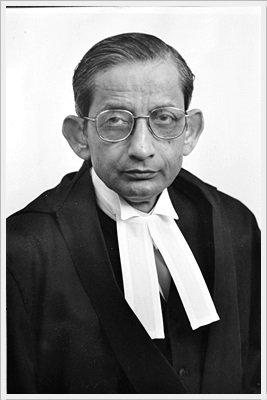
V.N.KHARE, CJI.
Leave granted.
The authority of a State to appoint Additional Advocate
General in terms of Article 165 of the Constitution of India is the
core question involved in this appeal which arises out of a
judgment and order dated 30.4.1998 passed by the High Court of
Andhra Pradesh in Writ Petition No.13202 of 1998.
The appellants herein filed the aforementioned writ petition
questioning the appointment of two Additional Advocate Generals by
the Government of Andhra Pradesh on various grounds. The main
contention of the appellants raised before the High Court as also
before us, however, is that having regard to the expression used in
Article 165 of the Constitution of India appointment of more than
one Advocate General is not contemplated therein.
The High Court negatived the said contention holding : (i)
Having regarding to Article 367 of the Constitution of India as
also Section 13 of the General Clauses Act, 1897, the provision in
singular for appointment of an Advocate General would include
plural; (ii) Having regard to the fact that Additional Advocate
Generals have been appointed in the States of Rajasthan, Jammu &
Kashmir and Kerala, there is no reason as to why Additional
Advocate Generals cannot be appointed in the State of Andhra
Pradesh.; and (iii) Merely because there is a post of Additional
Advocate General, the same would not mean and imply that Additional
Advocate General can perform the constitutional statutory
functions.
In support of its findings, reliance has been placed on M.K.
Padmanabhan vs. State of Kerala [(1978) 1 LAB.I.C. 1336]; Regional
Transport Authority, Jodhpur vs. Sitaram [AIR 1993 Rajasthan 76];
and Bhadreswar vs. S.N. Choudhury [AIR 1985 Gauhati 32].
Mr.Har Dev Singh, learned Senior Counsel appearing on behalf
of the appellants, in support of the appeal contended that having
regard to the fact that Article 165 of the Constitution of India is
clear and unambiguous and, thus, being not open to any
interpretation, the provisions of Section 13 of the General Clauses
Act as also Article 367 of the Constitution of India could not be
invoked as the same applies in dealing with interpretation "unless
http://JUDIS.NIC.IN SUPREME COURT OF INDIA Page 2 of 6
the context otherwise requires".
The submission of the learned senior counsel is that Article
367 is applied having regard to Article 372 of the Constitution of
India which in turn deals with adaptation of existing law, which
has got no relevance in the instant case. The learned counsel
urged that if such an interpretation is given to Article 165 of the
Constitution of India, Articles 53, 63, 74, 76, 124, 148, 168, 216,
234 and 280 of the Constitution of India will have to be
interpreted similarly which would lead to absurdity. It was
contended that Advocate General appointed under Article 165 of the
Constitution of India is not only required to discharge
constitutional functions assigned to him, as for example, he has a
right to address the Houses of Legislature under Article 177 of the
Constitution; but also statutory functions in terms of Section 302
of the Code of Criminal Procedure, Section 92 of the Code of Civil
Procedure and Section 23 of the Advocates Act. Furthermore, he as
a leader of the Bar has a right of pre-audience. It was submitted
that as the appointment of Additional Advocate General by the
Government of Andhra Pradesh in purported exercise of its power
under Article 165 of the Constitution of India was without
jurisdiction, the same are liable to be set aside and such
appointment cannot be saved by tracing their source of power to
Article 162 of the Constitution of India.
Mr. Sudhir Chandra, learned Senior Counsel appearing on
behalf of the respondents, on the other hand, contended that the
appointment of Additional Advocate General has necessitated because
of the growth and spread of the State activities, as a result
thereof it is not possible for an Advocate General alone to handle
the heavy work involved on behalf of the State. The learned
counsel further contended that even if it be held that the State
has no power to appoint Additional Advocate General in terms of
Article 165 of the Constitution of India, such power must be held
to exist under Article 162 thereof.
Article 165 of the Constitution of India reads thus :
"165. Advocate-General for the State - (1)
The Governor of each State shall appoint a
person who is qualified to be appointed a
Judge of a High Court to be Advocate General
for the State.
(2) It shall be the duty of the Advocate
General to give advice to the Government of
the State upon such legal matters, and to
perform such other duties of a legal
character, as may from time to time be
referred or assigned to him by the Governor,
and to discharge the functions conferred on
him by or under this Constitution or any other
law for the time being in force.
(3) The Advocate-General shall hold
office during the pleasure of the Governor,
and shall receive such remuneration as the
Governor may determine."
A bare reading of the said provision clearly go to show that
power of the Governor of the State in this behalf is to appoint a
person who is qualified to be appointed a Judge of a High Court.
Similar expressions have been used by the Constitution-makers for
http://JUDIS.NIC.IN SUPREME COURT OF INDIA Page 3 of 6
the purpose of appointment of a holders of constitutional posts
including the Attorney General of India, Comptroller and Auditor
General of India, the Chief Justice and Judges of the High Courts
and Supreme Court. The constitutional scheme, thus, is that when a
constitutional post is required to be filled up by a person having
the qualification specified therefor, he would alone perform the
duties and functions, be it constitutional or statutory, attached
to the said office. The Constitution does not envisage that such
functions be performed by more than one person. The reason
therefor is obvious. If more than one person is appointed to
discharge the constitutional functions as also the statutory
functions, different Advocate Generals may act differently
resulting in a chaos. The State and the other litigants would in
such an event would be totally at a loss as to which opinion the
decision to be acted upon. The office of the Advocate General is a
public office. He not only has a right to address the Houses of
Legislature but also is required to perform other statutory
functions in terms of Section 302 of Code of Criminal Procedure,
Section 92 of the Code of Civil Procedure and Section 23 of the
Advocates Act. Each of such functions by the Advocate General is
of great public importance. Such public functions are required to
be performed by the holder of a constitutional post having regard
to his stature and keeping in view the fact that the State intended
to endow such responsibility upon him.
The Government of a State as a litigant can appoint as many
as it likes lawyers to defend it. For the said purpose, the State
is not prohibited from conferring such designation on such legal
practitioners as it may deem fit and proper. But, the State, in
our considered view, cannot appoint more than one Advocate General.
The decisions of the High Courts including the impugned
judgment, as noticed hereinbefore, have proceeded on the basis
that having regard to the provisions of Section 13 of the General
Clauses Act and Article 367 of the Constitution of India, a
singular would include a plural. The High Courts while adopting
the said view, in our opinion, committed an error insofar as they
failed to take into consideration the crucial words occurring in
Article 367 of the Constitution "unless the context otherwise
requires".
It is a well-settled principle of law that the provisions of
the Constitution shall be construed having regard to the
expressions used therein. The question of interpretation of a
constitution would arise only in the event the expressions
contained therein are vague, indefinite and ambiguous as well
capable of being given more than one meaning. Literal
interpretation of the Constitution must be resorted to. If by
applying the golden rule of literal interpretation, no difficulty
arises in giving effect to the constitutional scheme, the question
of application of the principles of interpretation of a statute
would not arise only.
In Gurudevdatta Vksss Maryadit and Others vs. State of
Maharashtra and Others [(2001) 4 SCC 534] , this Court held :
"Further we wish to clarify that it is
a cardinal principle of interpretation of
statute that the words of a statute must be
understood in their natural, ordinary or
popular sense and construed according to
their grammatical meaning, unless such
construction leads to some absurdity or
unless there is something in the context or
in the object of the statute to suggest to
http://JUDIS.NIC.IN SUPREME COURT OF INDIA Page 4 of 6
the contrary. The golden rule is that the
words of a statute must prima facie be given
their ordinary meaning. It is yet another
rule of construction that when the words of
the statute are clear, plain and
unambiguous, then the courts are bound to
give effect to that meaning, irrespective of
the consequences. It is said that the words
themselves best declare the intention of the
law-giver. The courts have adhered to the
principle that efforts should be made to
give meaning to each and every word used by
the legislature and it is not a sound
principle of construction to brush aside
words in a statute as being inapposite
surpluses, if they can have a proper
application in circumstances conceivable
within the contemplation of the statute..."
In Balram Kumawat vs. Union of India and Others [(2003) 7 SCC
628], this Court held :
"The Courts will therefore reject that
construction which will defeat the plain
intention of the Legislature even though
there may be some inexactitude in the
language used. [See Salmon vs. Duncombe
[(1886) 11 AC 627 at 634]. Reducing the
legislation futility shall be avoided and in
a case where the intention of the
Legislature cannot be given effect to, the
Courts would accept the bolder construction
for the purpose of bringing about an
effective result. The Courts, when rule of
purposive construction is gaining momentum,
should be very reluctant to hold that the
Parliament has achieved nothing by the
language it used when it is tolerably plain
what it seeks to achieve. (See BBC
Enterprises Vs. Hi-Tech Xtravision Ltd.,
(1990) 2 All ER 118 at 122-3)"
We are, however, unable to agree with the submission of Mr. Har
Dev Singh to the effect that the appointments of Additional Advocate
Generals cannot be traced to the source of the State's power under
Article 162 of the Constitution of India. It is now well-settled
principles of law that non-mentioning or wrong mentioning of a
provision of law does not invalidate an order in the event it is
found that a power therefor exists.
In Union of India vs. Khazan Singh [AIR 1992 SC 1535], this
Court held :
"...The Appellate Authority did not mention
in its order as to under which sub-rule of
Rule 25(1) the appeal was being disposed of.
The tribunal while noticing Rule 25(1)(e) of
the rules and conceding that the Appellate
Authority could remand the case to the
disciplinary authority for further inquiry
under the said sub-rule, grossly erred in
setting aside the order on the concession of
the learned counsel to the effect that the
http://JUDIS.NIC.IN SUPREME COURT OF INDIA Page 5 of 6
Appellate Authority had passed the order
under Rule 25(1)(d) of the Rules..."
In State of Karnataka vs. Krishnaji Srinivas Kulkarni and
Others [(1994) 2 SCC 558], this Court held :
"...Quotation of a wrong provision does not
take away the jurisdiction of the
authorities to inquire under Section 79-B(3)
of the Act..."
The matter relating to the appointment of a legal
practitioner by a Government may be subject-matter of a
legislation. The State by amending the provisions of Sections 24
and 25 of the Code of Criminal Procedure may make a law regulating
the appointment of the Public Prosecutor or Additional Public
Prosecutor. Such a law can also be made for regulating appointment
of other State counsel. In absence of any legislation in this
behalf, various States have laid down executive instructions.
Thus, the State in exercise of its jurisdiction under Article 162
of the Constitution of India, is, in our considered view,
competent to appoint a lawyer of its choice and designate him in
such manner as it may deem fit and proper. Once it is held that
such persons who are although designated as Additional Advocate
Generals are not authorised to perform any constitutional or
statutory functions, indisputably such an appointment must be held
to have been made by the State in exercise of its executive power
and not in exercise of its constitutional power. Consequently,
Additional Advocate General so appointed is not in constitutional
scheme and does not hold constitutional office.
For the reasons aforementioned, we are of the opinion that
the impugned Government orders need not be set aside. For the
aforementioned we upheld the judgment under appeal, albeit for
different reasons. The appeal is dismissed. No costs.
L.......T.......T.......T.......T.......T.......T.......T.......T.......T.......T.......T...
....T.......T.......T.......T.......T.......T.......T....R.
Appeal (civil)#Appeal (civil) 4051 of 1996#1996#M/s Pepsi Foods Limited#Collector of Centra
l Excise, Chandigarh#2003-11-25#25622#4051#P. VENKATARAMA REDDI###
Appeal (crl.)#Appeal (crl.) 104-106 of 2003#2003#Bikau Pandey and Ors.#State of Bihar#2003-
11-25#25623#104-106#DORAISWAMY RAJU###
Appeal (civil)#Appeal (civil) 10906 of 1996#1996#Shanti Kumar Panda#Shakutala Devi#2003-11-
03#25624#10906#R.C. LAHOTI###
Appeal (civil)#Appeal (civil) 11483 of 1996#1996#Amrendra Pratap Singh#Tej Bahadur Prajapat
i & Ors.#2003-11-21#25625#11483#R.C. LAHOTI###
Appeal (civil)#Appeal (civil) 9130 of 2003#2003#Ameer Trading Corporation Ltd.#Shapoorji Da
ta Processing Ltd.#2003-11-18#25626#9130#CJI###
Appeal (civil)#Appeal (civil) 14178-14184 of 1996#1996#Brij Behari Sahai (Dead) through L.R
s., etc. etc.#State of Uttar Pradesh#2003-11-28#25627#14178-14184#Doraiswamy Raju###
Appeal (crl.)#Appeal (crl.) 1968 of 1996#1996#Goa Plast (P) Ltd.#Chico Ursula D'Souza#2003-
11-20#25628#1968#B.P. Singh###
Writ Petition (crl.)#Writ Petition (crl.) 199 of 2003#2003#Ashok Kumar Pandey#The State of
West Bengal#2003-11-18#25629#199#DORAISWAMY RAJU###
Appeal (crl.)#Appeal (crl.) 20 of 2003#2003#Surendra Paswan#State of Jharkhand#2003-11-28#2
5630#20#DORAISWAMY RAJU###
Appeal (crl.)#Appeal (crl.) 278 of 1997#1997#Vidyadharan#State of Kerala#2003-11-14#25631#2
78#DORAISWAMY RAJU###
Appeal (crl.)#Appeal (crl.) 292 of 1997#1997#State of Madhya Pradesh.#Awadh Kishore Gupta a
nd Ors.#2003-11-18#25632#292#DORAISWAMY RAJU###
###State of Punjab & Anr.#M/s Devans Modern Brewaries Ltd. & Anr.#2003-11-20#25633##CJI.###
Appeal (crl.)#Appeal (crl.) 331 of 1997#1997#Shriram#State of Madhya Pradesh#2003-11-24#256
34#331#DORAISWAMY RAJU###
http://JUDIS.NIC.IN SUPREME COURT OF INDIA Page 6 of 6
Appeal (civil)#Appeal (civil) 3630-3631 of 2003#2003#The Prohibition & Excise Supdt., A.P.
& Ors.#Toddy Tappers Coop. Society, Marredpally & Ors.#2003-11-17#25635#3630-3631#CJI.###
Appeal (crl.)#Appeal (crl.) 371-372 of 2003#2003#Ram Dular Rai & Ors.#State of Bihar#2003-1
1-27#25636#371-372#S.B. Sinha.###
Appeal (civil)#Appeal (civil) 4075-4081 of 1998#1998#Nair Service Society#Dist. Officer, Ke
rala Public Service Commission & Ors.#2003-11-17#25637#4075-4081#CJI.###
Appeal (civil)#Appeal (civil) 4698-4700 of 1994#1994#State of U.P. & Ors.#Lalji Tandon (Dea
d)#2003-11-03#25638#4698-4700#R.C. LAHOTI###
Appeal (crl.)#Appeal (crl.) 506 of 1997#1997#State of Karnataka#Puttaraja#2003-11-27#25639#
506#DORAISWAMY RAJU###
Appeal (crl.)#Appeal (crl.) 519-521 of 2003#2003#Goura Venkata Reddy
Vs.#State of Andhra Pradesh#2003-11-19#25640#519-521#DORAISWAMY RAJU###
Appeal (crl.)#Appeal (crl.) 530-531 of 2003#2003#Bhargavan & Ors.
#State of Kerala #2003-11-17#2564
1#530-531#DORAISWAMY RAJU###
Appeal (civil)#Appeal (civil) 7371 of 2002#2002#N.D. Thandani (Dead) By Lrs.
#Arnavaz Rustom Printer & Anr. #2003-11-24#25642#7371#R
.C. LAHOTI###
Appeal (civil)#Appeal (civil) 9205-07 of 2003#2003#The Land Acquisition Officer, Nizamabad,
District, Andhra Pradesh #Nookala Rajamallu and Ors. #2003-11
-21#25643#9205-07#DORAISWAMY RAJU###
Transfer Petition (crl.)#Transfer Petition (crl.) 77-78 of 2003#2003#K. Anbazhagan
#The Superintendent of Police & ors.#2003-11-18#25644#77
-78#S.N. VARIAVA###
Appeal (civil)#Appeal (civil) 7868 of 1995#1995#ITW Signode India Ltd.
#Collector of Central Excise #2003-11-19#25645#7868#CJI###

 Login with google
Legal Notes
Add a Note....