
This matter originated from the process of appointing eight positions within the Indian Administrative Service (IAS) for the Karnataka cadre, specifically targeting non-State Civil Service officers. The Central Administrative Tribunal ...
No Acts & Articles mentioned in this case
http://JUDIS.NIC.IN SUPREME COURT OF INDIA Page 1 of 13
CASE NO.:
Appeal (civil) 5883-5891 of 2007
PETITIONER:
M.V.Thimmaiah & Ors
RESPONDENT:
Union Public Service Commission & Ors.
DATE OF JUDGMENT: 13/12/2007
BENCH:
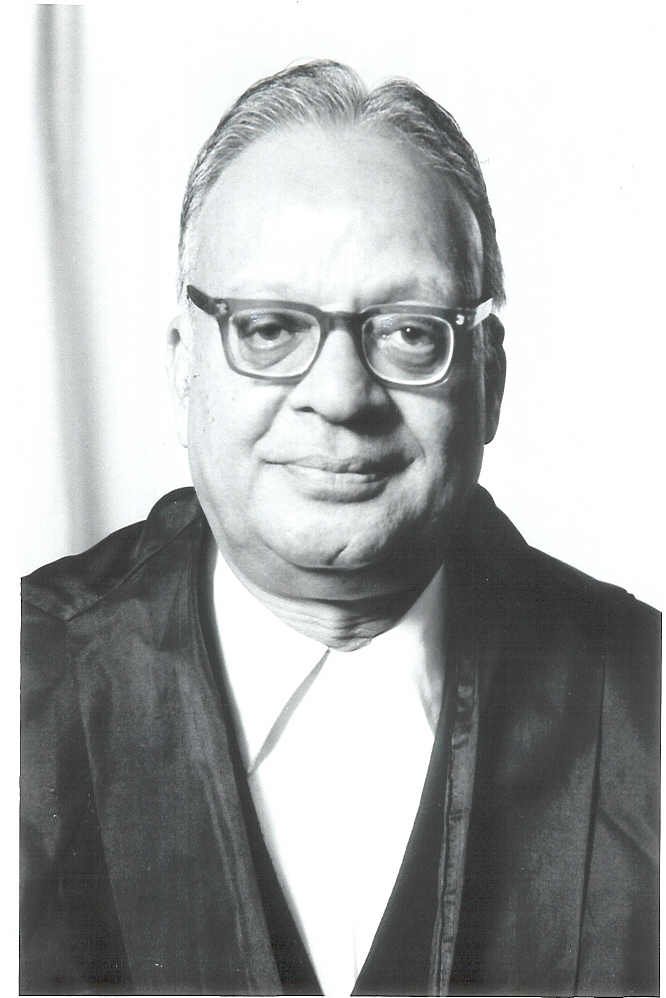
A.K.MATHUR & MARKANDEY KATJU
JUDGMENT:
J U D G M E N T
[Arising out of S.L.P.(c) Nos.23060-23068 of 2005]
With:
Civil Appeal Nos. 5894-5902 of 2007
[Arising out of S.L.P.(c) Nos.23484-23492 of 2005]
Civil Appeal Nos. 5903-5911 of 2007
[Arising out of S.L.P.(c) Nos.23571-23579 of 2005]
Civil Appeal No. 5912 of 2007
[Arising out of S.L.P.(c) No.23852 of 2005]
Civil Appeal Nos. 5913-5921 of 2007
[Arising out of S.L.P.(c) No.25764-25772 of 2005]
Civil Appeal No. 5922 of 2007
[Arising out of S.L.P.(c) No.900 of 2006]
Contempt Petition ) No.131 of 2006 in
S.L.P.(c) Nos.23060-23068 of 2005.
A.K.MATHUR,J.
1. Leave granted in all the Special Leave Petitions.
2. All these appeals arise against the common order dated 6.10.2005
passed by the Division Bench of the High Court of Karnataka while
disposing of a bunch of petitions arising out of the common order dated
4.10.2004 passed by the Central Administrative Tribunal, Bangalore Bench
(hereinafter to be referred to as the Tribunal). The Tribunal by the
aforesaid order set aside the recommendations of the Selection Committee
to fill up 8 vacancies belonging to the non-State Civil Service
Officers of Government of Karnataka to the Indian Administrative Service
(IAS) of Karnataka cadre on the ground of mala fides, arbitrariness and
also on the ground that the Selection Committee without application of
mind had awarded marks to the selected candidates in a discriminatory
manner. It was also held by the Tribunal that the Selection Committee
was not properly constituted as per the provisions of Regulation 3 of
the Indian Administrative Service (Appointment by Promotion)
Regulations, 1955 (hereinafter to be referred to as the Regulations of
1955). Out of the bunch of petitions which were filed before the
Karnataka High Court, two petitions were filed by the Union Public
Service Commission ( hereinafter to be referred to as the Commission),
first is that the Chairman of the Selection Committee, Shri Subir Dutta,
Member, U.P.S.C. against whom the allegation of mala fide was leveled
and it was upheld by the Tribunal, second one challenging the finding of
http://JUDIS.NIC.IN SUPREME COURT OF INDIA Page 2 of 13
the Tribunal that the Selection Committee was not properly constituted
and the Selection Committee acted arbitrarily and in a discriminatory
manner and awarded marks to the selected candidates. Another batch of
petitions (seven in number) was filed by the selected candidates whose
names were recommended for appointment to the I.A.S. and two writ
petitions were filed by the persons who were not short-listed by the
Screening Committee. Hence, all these petitions were clubbed together
and were disposed of by the common order as aforesaid.
3. Learned Division Bench of the Karnataka High Court after
hearing all the parties found that the allegation of mala fide leveled
against Shri Subir Dutta, Member of the Commission was not well founded,
that the Selection Committee was properly constituted and the Committee
did not act in arbitrary or discriminatory manner while awarding the
marks to the selected candidates. Hence the order of the Tribunal was
set aside. Aggrieved against this order passed by the Division Bench of
the Karnataka High Court dated 6.10.2005, the present appeals were filed
by the aggrieved persons. Hence, the appeals have now finally come up
before us for disposal.
4. The appointment to the I.A.S. from the State cadre can be made
other than the State Civil Service in case an incumbent is having
outstanding merit and ability and holds a gazetted post in a
substantive capacity and has completed not less than eight years of
service in the State Government on the first day of January of the year
in which his case is being considered in any post which has been
declared equivalent to the post of Deputy Collector in the State Civil
Service. The candidates shall not exceed five times the posts proposed
to be filled up during the year. An incumbent should not have attained
the age of 54 years, as per the Regulations of 1997. Regulation 5 says
that a list shall be prepared of the suitable candidates by the
Committee after scrutiny of service records and personal interview. The
Committee has been defined in Regulation 2(i)(a) which means a Committee
as constituted under Regulation 3 of Regulations, 1955. As per the
Regulations, the Committee shall be headed by the Chairman of the
Commission or if the Chairman fails to attend, by any other Member of
the Commission. The Chairman or the Member of the Commission shall
preside over the meetings. Regulation 3(3) further says that the
absence of a member, other than the Chairman or Member of the
Commission, shall not invalidate the proceedings of the Committee if
more than half the members of the Committee had attended the meeting.
Regulation 3(3) which will have relevant bearing reads as under:
\023 3(3) The absence of a member, other than
the Chairman or Member of the Commission, shall not
invalidate the proceedings of the Committee if more
than half the members of the Committee had attended
the meetings.\024
Apart from the Member of the Commission, as per the schedule referred to
for the State, the following members shall also be the members of the
Committee which includes the Chief Secretary to the Government;
Additional Chief Secretary to the Government; Principal Secretary to
Government, Revenue Department; Senior most Divisional Commissioner and
two nominees of the Central Government. This Selection Committee after
scrutiny of the records and calling for personal interview will prepare
a list and recommend the names of the suitable candidates to the State
Government concerned, which shall forward to the Commission for its
approval along with the records of all members of the State Civil
Service included in the list; the records of all members of the State
Civil Service who are proposed to be superseded by the recommendations
made in the list and the observations, if any, of the State Government
on the recommendations of the Committee to the Central Government and
the Central Government shall also forward their observations, if any, on
the recommendations of the Committee to the Commission. Thereafter, the
http://JUDIS.NIC.IN SUPREME COURT OF INDIA Page 3 of 13
Commission as per Regulation 7 of 1997 shall consider the list prepared
by the Committee; observations, if any, of the Central Government or the
State Government concerned, on the recommendations of the Committee and
approve the list subject to the provisions of Regulation 7(2) of the
Regulations, 1997. As per Regulation 7(2); if the Commission considers
it necessary to make any changes in the list received from the State
Government, the Commission shall inform the State Government and the
Central Government of the changes proposed and after taking into account
these comments, if any, of the State Government and the Central
Government, may approve the list finally with such modification, as may
in its opinion be just and proper. That list shall be forwarded to the
Central Government and the Central Government shall make appointment on
the basis of the list but if the Central Government is of the opinion
that it is necessary or expedient so to do in the public interest may
not appoint any person and it is within the domain of the Central
Government and it need not record its reasons or communicate the same to
the Commission. In this scheme of the Rules, the factual controversy
shall be examined.
5. In the present case eight vacancies were advertised and the
process of recruitment to these vacancies was undertaken. The State
Government constituted a Screening Committee for short-listing of the
Officers not belonging to the State Civil Service. The Committee was
headed by Shri B.S.Patil, Chief Secretary to the Government and four
other Members who were the Secretaries to the Government of Karnataka.
As per Circular dated 30.3.2002 the Government had directed various
Heads of the Department to send a list eligible suitable officers who
fulfil the aforesaid eligibility criteria. In pursuance of this circular
79 names were received from different Departments and their cases were
scrutinized by the Screening Committee with reference to their records
for short-listing the names which could be sent to the Commission for
selection to the I.A.S. cadre. Since the number of persons to be
considered shall not exceed five times the vacancies proposed to be
filled up in that year, therefore, as against eight vacancies 40
candidates were to be short-listed. The Screening Committee short-listed
40 candidates on the basis of the service records out of the 79
candidates whose names were received from different Departments.
Besides, the name of one more person was sent to the Selection
Committee for selection because of the order passed by the Tribunal.
Thus, in total names of 41 persons were sent for consideration against
eight vacancies. The Selection Committee after scrutinizing the cases
and after interviewing 39 candidates selected eight candidates and two
candidates remained absent. Though a petition was filed before the
Tribunal by one person who was not selected and stay order was obtained
that was challenged before the High Court and the High Court allowed the
writ petition and vacated the interim order passed by the Tribunal
staying the selection and permitted the selection to be taken to its
logical conclusion subject to the condition that the order passed by the
Tribunal shall be subject to challenge before this Court. Then one
Special Leave Petition was filed before this Court against the order
passed by the Division Bench vacating the stay order passed by the
Tribunal that Special Leave Petition was dismissed on 23.7.2004.
Thereafter, the matter was finally heard by the Tribunal and the
Tribunal set aside the selection of eight selected candidates of the
Karnataka cadre to the I.A.S. The Tribunal was of the view that the
Selection Committee was not properly constituted as per the provisions
of Regulation 3 of the Regulations, 1955 and the Tribunal further took
the view that the selection of eight candidates stood vitiated as a
result of mala fide on the part of Shri B.S.Patil, Chief Secretary and
Shri Subir Dutta, Member of the Commission who was the Chairman of the
Selection Committee. It was further observed by the Tribunal that the
selection was not fair and selection was being made in an arbitrary
manner. However, the name of two persons who were not short-listed was
rejected by the Tribunal on the ground that there was no arbitrariness
for their non-inclusion. That order was challenged by them before the
High Court by filing writ petition. The Division Bench of the High
http://JUDIS.NIC.IN SUPREME COURT OF INDIA Page 4 of 13
Court after examining the matter found that all the grounds raised by
the writ petitioners were not sustainable.
6. The controversy involving the selection could be divided into
two parts; (i) mala fide and (ii) the constitution of the Selection
Committee and the selection of the candidates. So far as the first
argument with regard to mala fide is concerned, Shri Subir Dutta was not
impleaded as a party, but subsequently, he was impleaded as a party
respondent. The first ground which was alleged is that the select list
is not only arbitrary but also a product of favouritism shown to the
selected candidates notwithstanding the fact that the appellants had
outstanding records but their names were not included solely for the
reason that the Selection Committee was headed by Shri Subir Dutta,
Member of the Commission and Shri B.S.Patil, the Chief Secretary to the
Government being one of the constituents of the Committee being
interested in the candidature of Respondents 5 to 12 before the
Tribunal and as a result of such selection, their candidatures have not
been considered in a proper and objective manner and they did not
receive a fair treatment from the Selection Committee. It is alleged
that the selection was vitiated on the ground that Shri Subir Dutta,
who was the Chairman of the Selection Committee was appeased with the
piece of land in the city of Bangalore i.e. he was allotted a site in
Bangalore irrespective of the fact that whether he was eligible or not.
It was submitted that during the process of selection and on the basis
of interview, a site has been bartered away in favour of Shri Subir
Dutta and in that the former Chief Secretary to the Government, Shri
B.S.Patil has shown a great interest. Therefore, on account of this
favouritism was shown to respondents 5 to 12 before the Tribunal, the
applicants before the Tribunal have been denied their legitimate
selection and therefore, in sum total, the allegation of mala fide
against Shri Subir Dutta is that a site was allotted to him to appease
him and secure favourable selection in respect of Respondents 5 to 12.
The High Court in order to verify the element of truth sent for the
original file relating to the allotment of residential site to Shri
Subir Dutta from Bangalore Development Authority wherein it is noted
that on 11.4.2003 a note was placed by Shri B.S.Patil, the Chief
Secretary, to the Chief Minister making a request that a site be
allotted to Shri Subir Dutta as he has attachment to the State of
Karnataka and he has been helpful both for selecting Bangalore for bi-
annual Air Shows and for grant of defence land for the purpose of road
network in Bangalore. For that on 17.4.2003 the Chief Minister approved
the proposal of the Chief Secretary for allotment of a residential site
to Shri Subir Dutta who was at that time the Defence Secretary. After
that necessary formalities for allotment was undertaken. On 17.4.2003
when a site was allotted to Shri Subir Dutta, he was the Defence
Secretary to Government of India and he was not a Member of the
Commission and he became a Member of the Commission only on 1.7.2003 and
assumed charge on 4.7.2003 as Member of the Commission. The selection
took place in November, 2003. Therefore, the Division Bench of the High
Court rejected the allegation of mala fide to be far-fetched. We gave
our thoughtful consideration to this allegation. There is no correlation
with this selection. It is too far fetched to connect with this case
that Shri Subir Dutta who was given the residential site in lieu of his
service rendered to the State of Karnataka, would necessarily favour the
candicates. The short-listing was done by the Screening Committee
headed by the Chief Secretary along with four Secretaries of the State
and there was no mala fide intention in short-listing of these persons,
now to think that just because Shri Dutta was allotted some land so that
necessarily he would favour these selected candidates only is nothing
but figment of imagination of the appellants. To connect the selection
with the previous allotment of land to Shri Subir Dutta has hardly any
connection between the two. In the selection process Shri Subir Dutta
was one of the Members along with others. All the Officers who were to
be selected belonged to Karnataka State and it is not specific that any
of the selected candidates has in any manner actively associated with
the allotment of land to Shri Subir Dutta. It is too remote to connect
http://JUDIS.NIC.IN SUPREME COURT OF INDIA Page 5 of 13
the selection of these candidates with the allotment of the site to Shri
Subir Dutta. We do not find any connection that any of the selected
candidates has in any manner directly or indirectly associated himself
in the allotment of the site in favour of Shri Subir Dutta. As it
appears from the file which was summoned by the High Court that the
proposal was mooted out by the Chief Secretary and it was approved by
the Chief Minister. Therefore, there appears no direct or indirect
connection with the selection of candidates and allotment of residential
site in favour of Shri Subir Dutta. As such, the allegations are too
far-fetched to render the entire selection invalid on the ground of so
called mala fide. This is purely flight of imagination and we strongly
reject the allegation of mala fide against Shri Subir Dutta, the
Chairman of the Selection Committee.
7. So far as the allegation of mala fide against Shri B.S.Patil
is concerned, he was not impleaded as a party. Therefore, the
allegation of mala fide could not be entertained by the Tribunal. As
such, the allegation of mala fide against Shri B.S.Patil could not be
taken into consideration and rightly so, by the High Court as well as by
the Tribunal. The allegation of mala fide is very easy to be levelled
and it is very difficult to substantiate it, specially in the matter of
selection or whoever is involved in the decision making process. People
are prone to make such allegation but the Courts owe a duty to
scrutinize the allegation meticulously because the person who is making
the allegation of animous sometimes bona fidely or sometimes mala fidely
due to his non-selection. He has a vested interest. Therefore, unless
the allegations are substantiated beyond doubt, till that time the Court
cannot draw its conclusion. Therefore, we reject the allegation of mala
fide.
8. Now, coming to the constitution of the Selection Committee and
the selection undertaken by the Committee, so far as the constitution of
the Selection Committee is concerned, one of the submissions was that
the Divisional Commissioner who was supposed to be the Member of the
Selection Committee was not there. Therefore, the whole selection stood
vitiated. So far as this argument is concerned, suffice it to say that
the post of Divisional Commissioner was abolished by the State
Government with effect from 1.4.2003 and the said fact was informed to
the Commission about the abolition of the post and it was requested to
suitably amend the schedule as per Regulation 3 of the Regulations of
1955. Since the post of Divisional Commissioner was not in existence and
the same having been abolished there was no question of including the
Divisional Commissioner as a Member of Selection Committee specially
when the Government of Karnataka has already informed the Commission to
amend the schedule. When the post of Divisional Commissioner was not
there that would not render the selection or would not make the
Selection Committee non-functional as out of the seven Members six
Members participated in the Selection Committee and Regulation 3
clearly says that absence of a Member, other than the Chairman or
Member of the Commission, shall not invalidate the proceedings of the
Committee if more than half the Members of the Committee had attended
its meetings. Therefore, this contingency has already been taken care by
Regulation 3(3) that in case any Member is unable to participate in the
selection process except the Member of the Commission and more than
half of the members have attended the meeting, then the proceedings of
the Committee shall not vitiate in the absence of such Member. As such
the Selection Committee in the absence of Divisional Commissioner cannot
be said to be not properly constituted. More so there is no prejudice
caused to the appellants as out of the seven Members, six Members of
the Selection Committee were there which is more than 50%. As such,
nothing turns on this. We hold that the Selection Committee was properly
constituted.
9. Now, comes the question with regard to the selection of the
candidates. Normally, the recommendations of the Selection Committee
cannot be challenged except on the ground of mala fides or serious
violation of the statutory Rules. The Courts cannot sit as an appellate
authority to examine the recommendations of the Selection Committee like
http://JUDIS.NIC.IN SUPREME COURT OF INDIA Page 6 of 13
the Court of appeal. This discretion has been given to the Selection
Committee only and Courts rarely sit in court of appeal to examine the
selection of the candidates nor is the business of the Court to examine
each candidate and record its opinion. In this connection, learned
senior counsel for the appellants has taken us through various following
decisions of this Court.
(i) AIR 2003 SC 3044
Surya Dev Rai v. Ram Chander Rai & Ors.
(ii) (1993) 3 SCC 319
P.M.Bayas V. Union of India & Ors.
(iii) (1985) 4 SCC 417
Ashok Kumar Yadav & Ors. V. State of
Haryana & Ors. Etc.
(iv) (1981) 1 SCC 722
Ajay Hasia & Ors. V.
Khalid Mujib Sehravardi & Ors.
(v) 2007 (3) SCALE 219
Union Public Service Commission v.
S.Thiagarajan & Ors.
Mr.P.P.Rao, learned senior counsel appearing for the private respondents
invited our attention to the following decisions of this Court.
(i) (1976) 3 SCC 583
Dr.G.Sarana V. University of Lucknow & Ors.
(ii) (1980) @ SCC 355
Mrs. Kunda S.Kadam v. Dr.K.K.Soman & Ors.
(iii) (2002) 1 SCC 749
Ashok Nagar Welfare Association & Anr. V
R.K.Sharma & Ors.
Learned Senior Counsel for the Commission invited our attention to the
following decisions of this Court.
(i) (1973) 2 SCC 836
Union of India v. Mohan Lal Capoor & Ors.
(ii) (1981) 4 SCC 159
Lila Dhar V. State of Rajasthan & Ors.
(iii) (1985) 4 SCC 417
Ashok Kumar Yadav & Ors. V. State of
Haryana & Ors. Etc.
(iv) 1986 (Supp) SCC 617
R.S.Dass V. Union of India & Ors.etc.
(v) 1987 (Supp) SCC 401
State of U.P. V. Rafiquddin & Ors. Etc.
(vi) (1988) 2 SCC 242
Union Public Service Commission V.
Hiranyalal Dev & Ors. Etc.
http://JUDIS.NIC.IN SUPREME COURT OF INDIA Page 7 of 13
(vii) (1983) 3 SCC 241
Mehmood Alam Tariq & Ors. V.
State of Rajasthan & Ors.
(viii) (1990) 1 SCC 305
Dalpat Abasaheb Solunke & Ors. V.
Dr.B.S.Mahajan & Ors.
(ix) 1992 Supp. (2) SCC 481
National Institute of Mental Health
And Neuro Sciences v. Dr.K.Kalyana Raman & Ors.
(x) (1993) 1 SCC 17
Indian Airlines Corporation v.
Capt. K.C.Shukla & Ors.
(xi) 1993) 3 SCC 319
P.M.Bayas v. Union of India & Ors. Etc.
(xii) 1994 Supp. (1) SCC 454
C.P.Kalra v. Air India through its
Managing Director, Bombay & Ors.
(xiii) (1997) 1 SCC 280
Anil Katiyar (Mrs.) v. Union of India & Ors.
(xiv) (1997) 9 SCC 151
All India State Bank Officers\022Federation & Ors. V.
Union of India & Ors. Etc.
(xv) (1998) 3 SCC 694
Union of India & Anr. V.
N.Chandrasekharan & Ors.
(xvi) (2004) 6 SCC 786
Inder Parkash Gupta v.
State of J & K & Ors.
(xvii) (2006) 6 SCC 395
K.H.Siraj v, High Court of Kerala & Ors.
10. Keeping in view the ratio laid down by this Court in several
decisions, now we shall examine the argument of learned senior counsel
for the appellants which had been addressed. But we may at the very out
set observe that the Court while considering the proceedings of the
Selection Committee does not sit in a court of appeal. Courts have
limited scope to interfere, either selection is actuated with mala fide
or statutory provisions have not been followed. In the present case, 39
candidates were examined by the Selection Committee for being
recommended for appointment to the I.A,S. The selection process took
place between 24.11.2003 and 28.11.2003 whereby the Selection Committee
scrutinized the service records of the individual candidates and
interviewed them and the Selection Committee selected those candidates
who were found to be having outstanding merit and ability. The
Commission has fixed 50 marks for scrutiny of the service records and
50 marks were allotted for interview. It was also decided by the
Commission that the candidates would be eligible for selection only if
they secure 50% marks in each of the two components i.e. 25 marks in the
scrutiny of the service records and 25 marks in the interview. The
Commission has further laid down the norms for awarding marks for the
scrutiny of service records. 10 marks are awarded to a candidate if on
an assessment of service record he was found to be outstanding, 8 marks
if the service record was found to be very good and 5 marks if it was
http://JUDIS.NIC.IN SUPREME COURT OF INDIA Page 8 of 13
good. Candidates who have failed to secure 25 marks in the interview
were not held to be qualified. Similarly, the candidates who failed to
secure 25 marks on the basis of the service records were also not held
to be eligible. However, on facts no person was rejected on the ground
that he failed to secure 25 marks either on the basis of the service
records or on the basis of interview. The Tribunal while scrutinizing
the records sent by the Selection Committee set aside the selection of
eight candidates namely Sarvashri Anwar Pasha and K.Ramanna Naik, who
according to the Tribunal were wrongly selected. The block period is
five years for which the confidential records of the candidates were
scrutinized by the Selection Committee i.e. from 1997-98 to 2001-02. It
is alleged that the confidential report of Shri Anwar Pasa for the year
1998-99 was written on 14.6.2002 and for the year 1999-2000 was written
on 15.6.2002. It is further alleged that these confidential reports were
written beyond the time limit prescribed by Rule 8 of the Karnataka
Civil Services (Performance Reports) Rules, 1994 (hereinafter to be
referred to as the \023Rules of 1994\024) and the same could not have been
looked into by the Selection Committee. Therefore, the selection of Shri
Anwar Pasha was invalid. It was found by the Selection Committee that
the Annual Confidential Reports of this Officer for these two years
were not written within the time limit prescribed as required under Rule
8 of the Rules of 1994. But it was pointed out that Rule 8 of the Rules
of 1994 was amended in 1999 and the time limit prescribed was done away
with retrospective effect. It was provided as per clause (b) of Rule 5
of the amending Rules of 1999 that the reports written or reviewed or
accepted in accordance with the 1994 Rules as amended in the year 1999
shall be deemed to be valid for the purpose of that rule. But in view of
the retrospective amendment of the Rules of 1999, the time limit having
been done away with the reports could have been taken into
consideration but it was further pointed out that the Rules of 1994 were
repealed in 2000 and the provisions of Karnataka Civil Services
(Performance Reports) Rules, 2000 (hereinafter to be referred to as the
Rules of 2000) came into force. Rule 13 of the Rules of 2000 provided
that the repeal shall not affect the previous operation of the 1994
Rules or anything duly done or suffered there under or affect any right,
liability or obligation acquired, accrued or incurred under those Rules.
Therefore, so far as the annual confidential reports in respect of
Shri Anwar Pasa which were written after the period of two years should
not have been taken into consideration by the Selection Committee, does
not survive because the Rules of 2000 repealed the Rules of 1994 and
consequential amendment of Rules of 1999 was done away with. Therefore,
the reports for the years 1998-99 and 1999-2000 cannot be taken away and
these two ACRs cannot be ignored and it has been rightly not ignored
by the Selection Committee. More so, if the ACRS are not written or
reviewed, then the incumbent is not responsible for it and why should he
suffer on account of that. The authority who is under obligation to
complete the formalities having failed to do so till the lapse of time
why the incumbent should be punished. We fail to appreciate the
submissions of the parties before the Tribunal and the view taken by the
Tribunal also. It was also pointed that the operation of the Rules of
1999 was stayed by the Tribunal, that may be so. But even thereafter
also when the Rules of 2000 have repealed the Rules of 1994, then what
turns on the stay order granted by the Tribunal and we cannot hold the
incumbent responsible for it and deprive him the due consideration if
there is failure on the part of the officers to discharge their duties
in writing the ACRs, the incumbent should not be allowed to suffer.
Therefore, we are of opinion that it is not a case in which there was
any statutory breach of Rules committed by the Selection Committee in
taking into consideration the ACRs of Shri Anwar Pasha. In the case of
another candidate i.e. Shri K.Ramanna Naik, his confidential reports for
the years 2000-2001 and 2002-2002 were not written in time in terms of
Rule 8 of the Rules of 1994. Therefore, special reports were obtained,
that too is also covered by the Karnataka Civil Services (Performance
Reports) (Amendment) Rules, 1996. Rule 11-A says that when performance
reports in respect of officers are not available for one or more years,
http://JUDIS.NIC.IN SUPREME COURT OF INDIA Page 9 of 13
the appointing authority, for the reasons to be recorded in writing, may
direct the concerned reporting officer or the reviewing authority to
prepare and submit the report within a specified time for the entire
period or for each year for which the report was not written. There
again the question is failure on the part of the reporting officer or
the reviewing authority not writing the report of the officer for which
the officer cannot be made to suffer. Therefore, in this background,
provisions have been made for special reports and in the administrative
jurisprudence special reports can be sought for in respect of any
officer whenever his case comes for consideration and if the Selection
Committee wants to have the up to date report of that incumbent. It is
the established practice to call for such kind of special reports. The
idea is that for not reporting the annual confidential reports of the
incumbent, why the incumbent should be made to suffer. Therefore, the
Selection Committee or the concerned authority can always ask for the
annual confidential reports which were not written for a particular year
by the reporting authority or by the reviewing authority or in some
cases it can also seek a special report. Such practice cannot be said to
be unusual practice in administrative jurisprudence. In the present
case, it appears that a special report in respect of Sh. K. Ramanna
Naik was obtained and that was considered by the Selection Committee.
Therefore, this procedure adopted by the Selection Committee cannot be
found to be arbitrary or in any way discriminatory. Consideration of
both these Officers cannot be faulted on that ground.
11. It is also contended that the marking given by the Selection
Committee was arbitrary. The grievance was that confidential report of
Shri S.Daya Shankar for the year 2000-2001 was not available and in
case of Sri R. Pramapriya, the confidential report for the year 1997=98
was not available. Yet the reports of Shri S.Daya Shankar was assessed
to be outstanding and Shri R.Ramapriya was assessed to be very good
without there being any basis for it. This was found by the Tribunal
to be patently arbitrary. It is the selection process and what
prevailed with the Committee after review of the annual confidential
reports of all these officers cannot be dilated in writing. When the
Selection Committee sits and considers the candidature of both the
officers and in case of both the officers, looking at the 5 years
annual confidential reports, one is found to be over all outstanding
and the other is found to be over all very good, this marking of the
Selection Committee cannot be interfered with in extraordinary
jurisdiction or even by the Tribunal. We fail to understand how the
Tribunal can sit as an appellate authority to call for the personal
records and constitute selection committee to undertake this exercise.
This power is not given to the Tribunal and it should be clearly
understood that the assessment of the Selection Committee is not subject
to appeal either before the Tribunal or by the Courts. One has to give
credit to the Selection Committee for making their assessment and it is
not subject to appeal. Taking the over all view of the ACRs of the
candidates, one may be held to be very good and another may be held to
be good. If this type of interference is permitted then it would
virtually amount that the Tribunals and the High Courts started sitting
as Selection Committee or act as an appellate authority over the
selection. It is not their domain, it should be clearly understood, as
has been clearly held by this Court in a number of decisions. Our
attention was invited to a decision of this Court in R.S.Dass (supra)[
1986 (Supp.) SCC 617] wherein at paragraph 28 it was held as follows:
\023 It is true that where merit is the sole
basis of promotion, the power of selection becomes
wide and liable to be abused with less difficulty. But
that does not justify presumption regarding arbitrary
exercise of power. The machinery designed for
preparation of Select List under the regulations for
promotion to All India Service, ensures object and
impartial selection. The Selection Committee is
constituted by high ranking responsible officers
presided over by Chairman or a Member of the Union
http://JUDIS.NIC.IN SUPREME COURT OF INDIA Page 10 of 13
Public Service Commission. There is no reason to hold
that they would not act in fair and impartial manner
in making selection. The recommendations of the
Selection Committee are scrutinized by the State
Government and if it finds any discrimination in the
selection it has power to refer the matter to the
Commission with its recommendations. The Commission is
under a legal obligation to consider the views
expressed by the State Government along with the
records of officers, before approving the Select List.
The Selection Committee and the Commission both
include persons having requisite knowledge, experience
and expertise to assess the service records and
ability to adjudge the suitability of officers. In
this view we find no good reasons to hold that in the
absence of reasons the selection would be made
arbitrary. Where power is vested in high authority
there is a presumption that the same would be
exercised in a reasonable manner and if the selection
is made on extraneous considerations, in arbitrary
manner the courts have ample power to strike down the
same and that is an adequate safeguard against the
arbitrary exercise of power. \023
12. Our attention was invited to a decision of this Court in Union
Public Service Commission v. Hiranyalal Dev & Ors etc.[(1988) 2 SCC 242]
wherein it was held as follows:
\023 The mere fact that the Selection Committee
erred in taking into account the non-existent adverse
remarks does not necessarily mean that the respondent
should have been categorized or considered as \021very
good\022 vis-`-vis others who were also in the field of
choice. How to categorize in the light of the relevant
records and what norms to apply in making the
assessment are exclusively the functions of the
Selection Committee. This function had to be
discharged by the Selection Committee by applying the
same norm and tests and the selection was also to be
made by the Selection Committee as per the relevant
rules. The powers to make selection were vested unto
the Selection Committee under the relevant rules and
the Tribunal could not have played the role which the
Selection Committee had to play by making conjectures
and surmises. The proper order for the Tribunal to
pass under the circumstances was to direct the
Selection Committee to reconsider the merits of the
respondent vis-`-vis the official who was junior to
him. The jurisdiction of the Supreme Court under
Article 136 in this respect is, however, wider and
cannot be equated with that of the Tribunal.\024
13. Our attention was invited to a decision of this Court in
Dalpat Abasaheb Solunke & Ors. V. Dr.B.S.Mahajan & Ors. [(1990) 1 SCC
305] wherein it was observed as follows:
\023 It is not the function of the court to hear
appeals over the decisions of the Selection Committees
and to scrutinize the relative merits of the
candidates. Whether a candidate is fit for a
particular post or not has to be decided by the duly
constituted Selection Committee which has the
expertise on the subject. The court has no such
expertise. In the present case the University had
constituted the Committee in due compliance with the
relevant statutes. The Committee consisted of experts
and it selected the candidates after going through all
the relevant material before it. In sitting in appeal
over the selection so made and in setting it aside on
http://JUDIS.NIC.IN SUPREME COURT OF INDIA Page 11 of 13
the ground of the so called comparative merits of the
candidates as assessed by the court, the High Court
went wrong and exceeded its jurisdiction. \023
14. Similarly in National Institute of Mental Health and Neuro
Sciences v. Dr.K.Kalyana Raman & Ors. [ 1992 Supp. (2) SCC 481], this
Court held that the expert committee finding should not be lightly
inferred. It was held as follows :
\023 The function of the Selection Committee is
neither judicial nor adjudicatory. It is purely
administrative. Where selection has been made by the
assessment of relative merits of rival candidates
determined in the course of the interview of
candidates possessing the required eligibility and
there is no rule or regulation brought to the notice
of the Court requiring the Selection Committee to
record reasons, the Selection Committee is under no
legal obligation to record reasons in support of its
decision of selecting one candidate in preference to
another. Even the principles of natural justice do not
require an administrative authority or a Selection
Committee or an examiner to record reasons for the
selection or non-selection of a person in the absence
of statutory requirement.\024
15. Our attention was invited to a decision of this Court in
P.M.Bayas v. Union of India & Ors. [(1993) 3 SCC 319]. In this case
with regard to the IAS (Recruitment) Rules, 1954 which contemplated that
special cases from among persons and special circumstances occurring in
the rules could justify the selection of the incumbents or not, in that
context, their Lordships held as follows:
\023 We are satisfied that there were \023special
circumstances\024 before the State Government to make
recruitment under the Regulations. In the face of
clear pleadings on the record the Tribunal was not
justified in holding that there as no material on the
record to show the existence of \023special
circumstances\024. The Tribunal was wholly unjustified
in asking the Central Government to show the existence
of \023special circumstances\024 in terms of Rule 8(2) of
the Rules. As interpreted by us the scheme of the
Rules and the Regulations clearly show that it is the
State Government which has to be satisfied regarding
the existence of \023special circumstances\024.\024
16. Our attention was invited to a decision of this Court in Anil
Katiyar (Mrs.) v. Union of India & Ors. [(1997) 1 SCC 280], it was
observed as follows:
\023The question is whether the action of the DPC in
grading appellant as \023very good\024 can be held to be
arbitrary. Shri G.L.Sanghi, the learned Senior Counsel
appearing for the Union Public Service Commission,
has placed before us the confidential procedure
followed by the DPCs in the Union Public Service
Commission for giving overall gradings, including that
of \023outstanding\024, to an officer. Having regard to the
said confidential procedure which is followed by the
Union Public Service Commission, we are unable to hold
that the decision of the DPC in grading the appellant
as \023very good\024 instead of \023outstanding\024 can be said to
be arbitrary. No ground is, therefore, made out for
interference with the selection of Respondent 4 by the
DPC on the basis of which he has been appointed as
Deputy Government Advocate. But, at the same time, it
must be held that the Tribunal was in error in going
into the question whether the appellant had been
rightly graded as \023outstanding\024 in the ACRs for the
years 1990-91 and 1991-92. The observations of the
http://JUDIS.NIC.IN SUPREME COURT OF INDIA Page 12 of 13
Tribunal that out of the two \023outstanding\024 gradings
given to the appellant one \023outstanding\024 grading does
not flow from various parameters given and the reports
entered therein, cannot, therefore, be upheld....\024
Therefore, in view of catena of cases, Courts normally do not sit in
the court of appeal to assess the ARCs and much less the Tribunal can be
given this power to constitute an independent Selection Committee over
the statutory Selection Committee. The guidelines have already been
given by the Commission as to how the ACRs to be assessed and how the
marking has to be made. These guidelines take care of the proper
scrutiny and not only by the Selection Committee but also the views of
the State Government are obtained and ultimately the Commission after
scrutiny prepares the final list which is sent to the Central Government
for appointment. There also it is not binding on the Central Government
to appoint all the persons as recommended and the Central Government can
withhold the appointment of some persons so mentioned in the select
list for reasons recorded. Therefore, if the assessment of ACRs in
respectof Shri S.Dayashankar and Shri R.Ramapriya should have been made
as \023outstanding\024 or \023very good\024 it is within the domain of the Selection
Committee and we cannot sit in the court of appeal to assess whether
Shri R.Ramapriya has been rightly assessed or Shri Dayashankar has been
wrongly assessed. The overall assessment of ACRs of both the Officers
were taken; one was found to be \023outstanding\024 and the second one was
found to be \023very good\024. This assessment cannot be made subject of
Courts or Tribunal\022s scrutiny unless actuated by mala fide.
17. In the case of Shri S.B.Kolhar, Shri R.S.Phonde and Shri
Puttegowda, the assessment of the reporting officers and the reviewing
officers in the State have been found to be \023outstanding\024. But the
Selection Committee downgraded the assessment to \023very good\024 and this
has provided grounds to the Tribunal to interfere with the selection of
others. The Selection Committee normally abides by the assessment made
by the reporting officer and the reviewing authority. But the Selection
Committee is not powerless. After reviewing the candidates\022 performance,
the Selection Committee can certainly make its own assessment. The
guidelines which have been issued by the Commission also enables the
Selection Committee to assess the remarks made by the reporting officer
or the reviewing officer and after taking into consideration various
factors like the meritorious work done or any punishment or adverse
remarks made or subsequently expunged on representation can review the
assessment about the candidates. Such review of the assessment is fully
within the competence of the Selection Committee and in this connection
the observations of this Court may be relevant in Ramanand Prasad Singh
& Anr. V. Union of India & Ors. Etc. [(1996) 4 SCC 64], which reads as
under :
\023 The Committee applies its mind to the service
records and makes its own assessment of the service
records of the candidates marking them as outstanding,
very good, good and so on. The selection Committee
does not necessarily adopt the same grading which is
given by the Reporting/ Reviewing Officer in respect
of each of the candidates. In fact the Selection
Committee makes an overall relative assessment of the
confidential report dossiers of the officers in the
zone of consideration. Thus, it does not evaluate the
confidential report dossier of an individual in
isolation. It is after this comparative assessment
that the best candidates are put in the Select List.\005\024
18. Our attention was invited to a decision of this Court in UPSC
v. K.Rajaiah & Ors. [ (2005) 10 SCC 15]wherein it has been held as
follows:
\023 That being the legal position, the Court
should not have faulted the so-called down gradation
of the first respondent for one of the years. Legally
speaking, the term\024 downgradation\024 is an inappropriate
http://JUDIS.NIC.IN SUPREME COURT OF INDIA Page 13 of 13
expression. The power to classify as \023outstanding\024,
\023very good\024 , \023good\024 and \023unfit\024 is vested with the
Selection Committee. That is a function incidental to
the selection process. The classification given by the
State Government authorities in the ACRs is not
binding on the Committee. No doubt, the Committee is
by and large guided by the classification adopted by
the State Government but, for good reasons, the
Selection Committee can evolve its own classification
which may be at variance with the gradation given in
the ACRs. That is what has been done in the instant
case in respect of the year 1993-94. Such
classification is within the prerogative of the
Selection Committee and no reasons need be recorded,
though it is desirable that in a case of gradation at
variance with that of the State Government, it would
be desirable to record reasons. But having regard to
the nature of the function and the power confided to
the Selection Committee under Regulation 5(4), it is
not a legal requirement that reasons should be
recorded for classifying an officer at variance with
the State Government\022s decision.\024
Therefore, the view taken by the High Court is correct that it is always
within the power of the Selection Committee to record its own assessment
about the selection which may be at variance with that of the reporting
officer or reviewing officer.
19. It was also pointed out that in the case of Shri N. Sriraman
and Shri K.Ramana Naik, the Selection Committee downgraded their
reports from \023outstanding\024 to \023very good\024 yet they were selected.
Similar is the case with Sri K.L.Lokanatha who has not been selected.
Like wise the Selection Committee upgraded the assessment for the year
2001-02 from \023very good\024 to \023outstanding\024 yet he could not be selected.
Therefore, this is also the process of selection and the Selection
Committee constituted by the Commission and headed by the Member of the
Commission, we have to trust their assessment unless it is actuated
with malice or apparent mistake committed by them. It is not in the case
of pick and choose, while selection has been made rationally. The
selection by expert bodies unless actuated with malice or there is
apparent error should not be interfered with. Lastly, the High Court
considered the case of the two candidates who were eliminated by the
Selection Committee and their cases were not sent to the Commission for
selection to the I.A.S.cadre. The High Court found that this was the
selection process by the Screening Committee headed by the Chief
Secretary and these persons were not found more meritorious to be
recommended for appointment. This assessment of the Screening Committee
was found by the High Court to be proper and there was nothing on
record to show that the candidates who were short-listed were not
meritorious.
20. As a result of our above discussion, we find that there is no
merit in these appeals and consequently, the appeals are dismissed.
There would be no order as to costs.
Contempt Petition ) No.131 of 2006:
21. In view of the order passed in the civil appeals, we find no
merit in the contempt petition and the same is dismissed.

 Login with google
Legal Notes
Add a Note....