
As per case facts, the appeals arose from a judgment by the High Court questioning an award from the Motor Accidents Claims Tribunal. A claim petition was filed by the ...

No Acts & Articles mentioned in this case
1
REPORTABLE
IN THE SUPREME COURT OF INDIA
CIVIL APPELLATE JURISDICTION
CIVIL APPEAL NOS. 242243 OF 2020
(Arising out of SLP (Civil) Nos. 976977 of 2020)
(Diary No. 47693 OF 2018)
National Insurance Company Limited …Appellant(s)
Versus
Birender and Ors. …Respondent(s)
WITH
CIVIL APPEAL NO. 244 OF 2020
(Arising out of SLP (Civil) No. 978 of 2020)
(Diary No. 17683 OF 2019)
J U D G M E N T
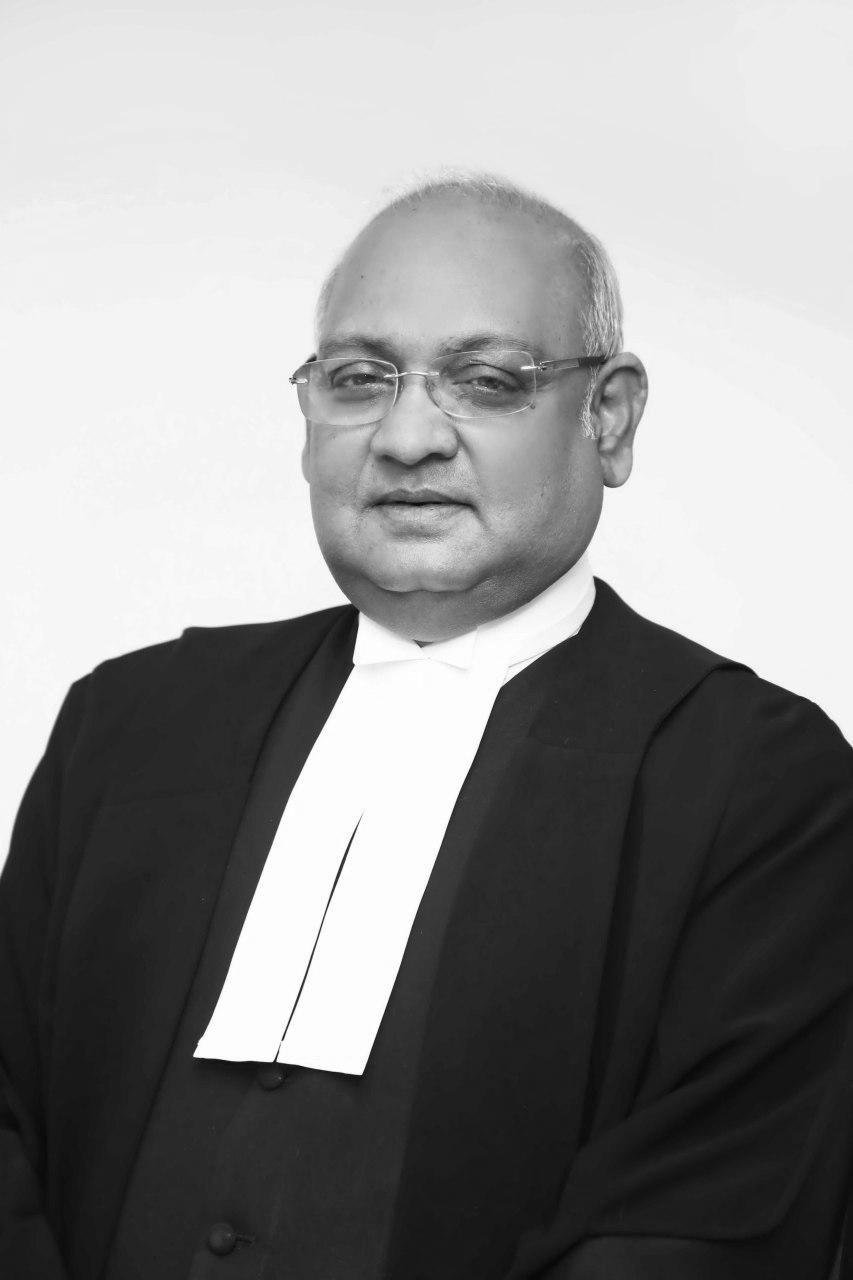
A.M. Khanwilkar, J.
1.Delay condoned.
2.Leave granted.
3.These civil appeals emanate from the common judgment and
order dated 8.8.2018 passed by the High Court of Punjab and
Haryana at Chandigarh (for short, ‘the High Court’) in cross appeals
being F.A.O. Nos. 1341 of 2016 (O&M) and 4023 of 2016 (O&M),
2
questioning the correctness of the award dated 4.12.2015 passed by
the Motor Accidents Claims Tribunal, Jind (for short, ‘the Tribunal’) in
M.A.C.T. Case No. 205 of 2014. The former appeal (arising out of
S.L.P.(C) Nos. 976977/2020 @ Diary No. 47693/2018) has been
preferred by the insurance company and the latter appeal (arising out
of S.L.P.(C) No. 978/2020 @ Diary No. 17683/2019) by the claimants
respondent Nos. 1 and 2. The parties are referred to as per their
status in the former appeal for the sake of convenience.
4.The claim petition was filed by the respondent Nos. 1 and 2
herein, who are the major sons of Smt. Sunheri Devi (deceased). The
deceased was on her way to attend the office of Tehsildar, Uchana
(where she was working as a Peon) from Dharoli Khera village on
20.10.2014 at about 9.00 a.m., travelling as a pillion rider on a
motorcycle bearing No. HR32G8749. At that time, a dumper/tipper
bearing registration No. HR56A3260 coming from the opposite
direction, being driven in a rash and negligent manner, collided with
the motorcycle, resulting in fatal injuries sustained to the deceased to
which she succumbed.
5.The respondent Nos. 1 and 2 claimed an amount of
Rs.50,00,000/ (Rupees fifty lakhs only) along with interest at the rate
of 12% per annum on the assertion that the deceased was earning
3
Rs.28000/ per month (Rs.21000/ as salary and Rs.7000/ as family
pension of her husband), she was hale and healthy and was the only
bread earner of her entire family and that they were largely dependant
upon her income and have also been deprived of her love and
affection. The appellant disputed the claim and pleaded that the
accident did not occur with the offending vehicle (the dumper/tipper)
or due to fault of its driver, and that the respondent Nos. 1 and 2
were majors and not dependant upon the deceased and as such not
entitled for any compensation. Further, the vehicle in question was
being plied in contravention of terms and conditions of the insurance
policy and the driver was not holding a valid and effective driving
licence. Resultantly, the insurance companyappellant was not liable
to pay compensation.
6.After analysing the evidence on record, the Tribunal held that
the accident of the deceased occurred due to rash and negligent
driving of the offending vehicle. The Tribunal further noted that the
driver and the owner of offending vehicle have placed on record the
driving licence of the driver, valid insurance policy, public carrier
permit and the registration certificate of the offending vehicle and the
appellant having failed to lead any evidence to prove that the terms
and conditions of the insurance policy were violated, cannot be
4
absolved of its liability. The Tribunal also noted that though the
respondent Nos. 1 and 2 were major and earning hands, the fact that
they were legal heirs of the deceased and have been deprived of the
pecuniary benefits through the deceased cannot be denied.
7.Having decided the above issues in favour of the respondent
Nos. 1 and 2, the Tribunal while determining the quantum of
compensation took note of the gross monthly salary of the deceased
as on September, 2014, which according to her service record was
Rs.23,123/ and the net take home salary was Rs.16,918/. The
Tribunal did not consider the family pension for computation, as the
deceased was getting it in her own right as widow and the same could
not be reckoned. Her date of birth was 1.4.1967 and date due for
retirement was 31.3.2027, for which multiplier of ‘13’ was applied.
The deduction towards personal expenses was kept at 50% as the
respondent Nos. 1 and 2 were major and earning hands. Thus, the
loss of dependency was determined at Rs. 17,15,532/. In addition,
an amount of Rs.25,000/ was awarded on account of funeral
expenses, etc. and the total compensation was computed at
Rs.17,40,532/ along with interest at the rate of 9% per annum from
the date of institution of petition. The driver, owner and insurer of
the offending vehicle were held jointly and severally liable.
5
8.Against the award passed by the Tribunal, cross appeals were
preferred being F.A.O. No. 1341 of 2016 (O&M) filed by the appellant
and F.A.O. No. 4023 of 2016 (O&M) filed by the respondent Nos. 1
and 2. The appellant (insurance company) primarily contended that
the respondent Nos. 1 and 2 are not entitled to compensation for loss
of dependency as they are major and earning and also because the
family of the deceased was entitled to receive financial assistance
under the Haryana Compassionate Assistance to the Dependants of
Deceased Government Employees Rules, 2006 (in short, ‘the 2006
Rules’). The respondent Nos. 1 and 2 contended that being major and
also earning by itself cannot be regarded as ineligibility to claim
compensation. Further, the Tribunal has wrongly assessed loss of
dependency on takehome salary instead of the drawing salary and
without considering the family pension received by the deceased had
she been alive. They further claimed that the deduction of personal
expenses should be onethird (1/3
rd
) instead of 50%.
9.The High Court by considering the monthly salary for computing
compensation as Rs.23,123/, benefits of future prospects at 30%,
applying a multiplier of ‘13’ and deduction for personal expenses at
50% held that the respondent Nos. 1 and 2 were entitled to loss of
dependency qua loss of income at Rs.23,44,672/. The High Court,
6
in addition, while considering the loss of dependency qua loss of
pension by taking monthly pension at Rs.7,000/, applying a
multiplier of ‘13’ and deduction for personal expenses at 50%, held
that Rs.5,46,000/ would be payable towards this head. The
compensation under conventional heads was also increased from
Rs.25,000/ to Rs.30,000/. Therefore, the total compensation
payable was determined as Rs.29,20,672/. The High Court further
noted that financial assistance available to the family of the deceased,
under the 2006 Rules would be Rs.33,29,712/ and deducted 50% of
the said amount from compensation whilst relying upon a judgment
of the same High Court in New India Assurance Co. Ltd. v. Ajmero
and others
1
. The High Court then deducted that amount of
Rs.16,64,856/ from the compensation amount of Rs.29,20,672/
determined by it. Resultantly, the High Court reduced the
compensation awarded by the Tribunal to the extent of Rs.4,84,716/
and gave liberty to the appellant to recover the excess amount, if
already paid.
10.The former appeal is preferred by the appellant on the ground
that the High Court ought to have deducted the entire amount of
financial assistance under the 2006 Rules, instead of deducting only
1 F.A.O. No. 2648 of 2016, decided on 31.07.2017
7
50% thereof. Reliance was placed on the judgment of this Court in
Reliance General Insurance Co. Ltd. v. Shashi Sharma and Ors.
2
.
It is urged that claim for loss of dependency is unavailable to the
respondent Nos. 1 and 2 in the facts of the present case, they being
major sons of the deceased who were married and also gainfully
employed. Reliance is placed on Manjuri Bera (Smt) v. Oriental
Insurance Co. Ltd. & Anr.
3
. It is urged that the respondent Nos. 1
& 2 may be entitled only to compensation under conventional heads
as held in National Insurance Company Limited v. Pranay Sethi
& Ors.
4
.
11.The latter appeal has been preferred by the respondent Nos. 1
and 2, primarily on the ground that the High Court erred in deducting
50% of the amount from compensation instead of onethird (1/3
rd
).
Further, deduction of 50% amount of the financial assistance
receivable under the 2006 Rules on the assumption that the
respondent Nos. 1 and 2 are eligible therefor is a manifest error.
Reliance is also placed on the decision of the High Court in Ajmero
(supra). It is urged that the High Court ought to have considered that
the respondent Nos. 1 and 2 were dependant on the deceased and
2 (2016) 9 SCC 627
3 (2007) 10 SCC 643
4 (2017) 16 SCC 680
8
that they have been deprived of her love and affection and income and
thus entitled to compensation as claimed in the original application in
that regard.
12.We have heard Mr. Amit Kumar Singh, learned counsel for the
insurance company (appellant) and Ms. Abha R. Sharma, learned
counsel for the respondent Nos. 1 and 2. The principal issues which
arise for our consideration are as follows:
(i)Whether the major sons of the deceased who are married and
gainfully employed or earning, can claim compensation under
the Motor Vehicles Act, 1988 (for short, ‘the Act’)?
(ii)Whether such legal representatives are entitled only for
compensation under the conventional heads?
(iii)Whether the amount receivable by the legal representatives of
the deceased under the 2006 Rules is required to be deducted as
a whole or only portion thereof?
13.Reverting to the first issue that needs to be answered on the
basis of the scheme of the Act. Section 166 of the Act provides for
filing of application for compensation by persons mentioned in
clauses (a) to (d) of subSection (1) thereof. Section 166 of the Act, as
applicable at the relevant time, reads thus:
9
“Section 166. Application for compensation. (1) An
application for compensation arising out of an accident of
the nature specified in subsection (1) of section 165 may be
made
(a) by the person who has sustained the injury; or
(b) by the owner of the property; or
(c)where death has resulted from the accident, by
all or any of the legal representatives of the
deceased; or
(d) by any agent duly authorised by the person
injured or all or any of the legal representatives
of the deceased, as the case may be:
Provided that where all the legal representatives of the
deceased have not joined in any such application for
compensation, the application shall be made on behalf of or
for the benefit of all the legal representatives of the deceased
and the legal representatives who have not so joined, shall
be impleaded as respondents to the application.
(2) Every application under subsection (1) shall be made,
at the option of the claimant, either to the Claims Tribunal
having jurisdiction over the area in which the accident
occurred or to the Claims Tribunal within the local limits of
whose jurisdiction the claimant resides or carries on
business or within the local limits of whose jurisdiction the
defendant resides, and shall be in such form and contain
such particulars as may be prescribed:
Provided that where no claim for compensation under
Section 140 is made in such application, the application
shall contain a separate statement to that effect immediately
before the signature of the applicant.
(3)***
(4) The Claims Tribunal shall treat any report of accidents
forwarded to it under subsection (6) of section 158 as an
application for compensation under this Act.”
(emphasis supplied)
14.The legal representatives of the deceased could move application
for compensation by virtue of clause (c) of Section 166(1). The major
married son who is also earning and not fully dependant on the
deceased, would be still covered by the expression “legal
10
representative” of the deceased. This Court in Manjuri Bera (supra)
had expounded that liability to pay compensation under the Act does
not cease because of absence of dependency of the concerned legal
representative. Notably, the expression “legal representative” has not
been defined in the Act. In Manjuri Bera (supra), the Court observed
thus:
“9. In terms of clause (c) of subsection (1) of Section 166
of the Act in case of death, all or any of the legal
representatives of the deceased become entitled to
compensation and any such legal representative can file a
claim petition. The proviso to said subsection makes the
position clear that where all the legal representatives had not
joined, then application can be made on behalf of the legal
representatives of the deceased by impleading those legal
representatives as respondents. Therefore, the High Court
was justified in its view that the appellant could maintain a
claim petition in terms of Section 166 of the Act.
10.…..The Tribunal has a duty to make an award,
determine the amount of compensation which is just and
proper and specify the person or persons to whom such
compensation would be paid. The latter part relates to the
entitlement of compensation by a person who claims for the
same.
11.According to Section 2(11) CPC, “legal representative”
means a person who in law represents the estate of a de
ceased person, and includes any person who intermeddles
with the estate of the deceased and where a party sues or is
sued in a representative character the person on whom the
estate devolves on the death of the party so suing or sued.
Almost in similar terms is the definition of legal representa
tive under the Arbitration and Conciliation Act, 1996 i.e. un
der Section 2(1)(g).
12. As observed by this Court in Custodian of Branches of
BANCO National Ultramarino v. Nalini Bai Naique [1989 Supp
(2) SCC 275 the definition contained in Section 2(11) CPC is
inclusive in character and its scope is wide, it is not confined
to legal heirs only. Instead it stipulates that a person who
11
may or may not be legal heir competent to inherit the prop
erty of the deceased can represent the estate of the deceased
person. It includes heirs as well as persons who represent
the estate even without title either as executors or adminis
trators in possession of the estate of the deceased. All such
persons would be covered by the expression “legal represen
tative”. As observed in Gujarat SRTC v. Ramanbhai Prabhatb
hai [(1987) 3 SCC 234 a legal representative is one who suf
fers on account of death of a person due to a motor vehicle
accident and need not necessarily be a wife, husband, par
ent and child.”
In paragraph 15 of the said decision, while adverting to the provisions
of Section 140 of the Act, the Court observed that even if there is no
loss of dependency, the claimant, if he was a legal representative, will
be entitled to compensation. In the concurring judgment of Justice
S.H. Kapadia, as His Lordship then was, it is observed that there is
distinction between “right to apply for compensation” and “entitlement
to compensation”. The compensation constitutes part of the estate of
the deceased. As a result, the legal representative of the deceased
would inherit the estate. Indeed, in that case, the Court was dealing
with the case of a married daughter of the deceased and the efficacy
of Section 140 of the Act. Nevertheless, the principle underlying the
exposition in this decision would clearly come to the aid of the
respondent Nos. 1 and 2 (claimants) even though they are major sons
of the deceased and also earning.
15.It is thus settled by now that the legal representatives of the
deceased have a right to apply for compensation. Having said that, it
12
must necessarily follow that even the major married and earning sons
of the deceased being legal representatives have a right to apply for
compensation and it would be the bounden duty of the Tribunal to
consider the application irrespective of the fact whether the concerned
legal representative was fully dependant on the deceased and not to
limit the claim towards conventional heads only. The evidence on
record in the present case would suggest that the claimants were
working as agricultural labourers on contract basis and were earning
meagre income between Rs.1,00,000/ and Rs.1,50,000/ per annum.
In that sense, they were largely dependant on the earning of their
mother and in fact, were staying with her, who met with an accident
at the young age of 48 years.
16.The next issue is about the deduction of the amount receivable
by the legal representatives of the deceased under the 2006 Rules
from the compensation amount determined by the Tribunal in terms
of the decision of threeJudge Bench of this Court in Shashi Sharma
(supra). This Court, after analysing the relevant rules, opined as
follows:
“23. Reverting back to Rule 5, subrule (1) provides for the
period during which the dependants of the deceased
employee may receive financial assistance equivalent to the
pay and other allowances that was last drawn by the
deceased employee in the normal course without raising a
13
specific claim. Subrule (2) provides that the family shall
be eligible to receive family pension as per the normal
Rules only after the period during which they would
receive the financial assistance in terms of subrule (1).
Subrule (3) guarantees the family of a deceased government
employee of a government residence in occupation for a
period of one year from the date of death of the employee,
upon payment of normal rent/licence fee. By virtue of sub
rule (4), an ex gratia assistance of Rs 25,000 is provided to
the family of the deceased employee to meet the immediate
needs on the loss of the bread earner. Subrule (5) clarifies
that house rent allowance shall not be a part of allowance for
the purposes of calculation of assistance.
24.…..As regards the second part, it deals with income
from other source which any way is receivable by the
dependants of the deceased government employee. That
cannot be deducted from the claim amount for
determination of a just compensation under the 1988
Act.
25. The claimants are legitimately entitled to claim for the
loss of “pay and wages” of the deceased government
employee against the tortfeasor or insurance company, as
the case may be, covered by the first part of Rule 5 under the
1988 Act. The claimants or dependants of the deceased
government employee (employed by the State of Haryana),
however, cannot set up a claim for the same subject falling
under the first part of Rule 5—“pay and allowances”, which
are receivable by them from employer (the State) under Rule
5(1) of the 2006 Rules. In that, if the deceased employee was
to survive the motor accident injury, he would have
remained in employment and earned his regular pay and
allowances. Any other interpretation of the said Rules would
inevitably result in double payment towards the same head
of loss of “pay and wages” of the deceased government
employee entailing in grant of bonanza, largesse or source of
profit to the dependants/claimants…..
26. Indeed, similar statutory exclusion of claim receivable
under the 2006 Rules is absent. That, however, does not
mean that the Claims Tribunal should remain oblivious to
the fact that the claim towards loss of pay and wages of the
deceased has already been or will be compensated by the
employer in the form of ex gratia financial assistance on
compassionate grounds under Rule 5(1). The Claims Tri
bunal has to adjudicate the claim and determine the amount
of compensation which appears to it to be just. The amount
receivable by the dependants/claimants towards the head of
14
“pay and allowances” in the form of ex gratia financial assis
tance, therefore, cannot be paid for the second time to the
claimants. True it is, that the 2006 Rules would come into
play if the government employee dies in harness even due to
natural death. At the same time, the 2006 Rules do not ex
pressly enable the dependants of the deceased government
employee to claim similar amount from the tortfeasor or in
surance company because of the accidental death of the de
ceased government employee. The harmonious approach for
determining a just compensation payable under the 1988
Act, therefore, is to exclude the amount received or receiv
able by the dependants of the deceased government em
ployee under the 2006 Rules towards the head financial as
sistance equivalent to “pay and other allowances” that was
last drawn by the deceased government employee in the nor
mal course. This is not to say that the amount or payment
receivable by the dependants of the deceased government
employee under Rule 5(1) of the Rules, is the total entitle
ment under the head of “loss of income”. So far as the claim
towards loss of future escalation of income and other bene
fits is concerned, if the deceased government employee had
survived the accident can still be pursued by them in their
claim under the 1988 Act. For, it is not covered by the 2006
Rules. Similarly, other benefits extended to the dependants
of the deceased government employee in terms of subrule
(2) to subrule (5) of Rule 5 including family pension, life in
surance, provident fund, etc., that must remain unaffected
and cannot be allowed to be deducted, which, any way would
be paid to the dependants of the deceased government em
ployee, applying the principle expounded in Helen C. Re
bello v. Maharashtra SRTC, (1999) 1 SCC 90 and United In
dia Insurance Co. Ltd. v. Patricia Jean Mahajan, (2002) 6
SCC 281 cases.
27. A priori, the appellants must succeed only to the ex
tent of amount receivable by the dependants of the deceased
government employee in terms of Rule 5(1) of the 2006
Rules, towards financial assistance equivalent to the loss of
pay and wages of the deceased employee for the period speci
fied.”
(emphasis supplied)
The learned Judge of the High Court has, however, after adverting to
the decision of the same High Court in Ajmero (supra), went on to
observe that 50% of the amount receivable by the legal
15
representatives of the deceased towards financial assistance under
the 2006 Rules is required to be deducted from the compensation
amount. In the relied upon decision, the same learned Judge had
occasion to observe as follows:
“… However, perusal of the judgment would reveal that
the Court has not adverted to the issue that had the
Rules of 2006 extending assistance to family of a
deceased employee been not in existence, family would
have been entitled to pension to the extent of 50% of
the last drawn pay. As per the settled position in law, the
pensionary benefits available to family of a deceased
employee are not amenable for deduction for computing loss
of dependency. There is nothing on record suggestive of the
fact that in addition to compassionate assistance under the
Rules, family of the deceased is being paid pension till the
age of superannuation. Rather Rule 5(2) of the 2006 Rules
specifically denies family pension as per normal rules...”
(emphasis supplied)
17.The view so taken by the High Court is not the correct reading of
the decision of threeJudge Bench of this Court in Shashi Sharma
(supra) for more than one reason. First, this Court was conscious of
the fact that under Rule 5(2) of the 2006 Rules, the family pension
receivable by the family would be payable, however, only after the
period, during which the financial assistance is received, is
completed. In that context, in paragraph 24 of the reported decision,
the Court clearly noted that the amount towards family pension
cannot be deducted from the claim amount for determination of a just
compensation under the Act. Further, the High Court has
16
erroneously assumed that the family of the deceased would be
entitled for family pension amount immediately after the death of the
deceased employee. That is in the teeth of the scheme of the 2006
Rules, in particular Rule 5(2) thereof. The said Rules provide for
financial assistance on compassionate grounds, as also, other
benefits to the family members of the deceased employee and as a
package thereof, Rule 5(2) stipulates that the family pension as per
the normal rules would be payable to the family members only after
the period of delivery of financial assistance is completed. The
validity of this provision is not put in issue. Suffice it to say that the
view taken by the High Court in Ajmero (supra) is a departure from
the scheme envisaged by the 2006 Rules, in particular, Rule 5(2).
That cannot be countenanced.
18.As a matter of fact, in the present case, the High Court
committed manifest error in assuming that the respondent Nos. 1 and
2 would be eligible to receive financial assistance under the 2006
Rules. The eligibility to receive such financial assistance has been
spelt out in Rule 3 of the 2006 Rules read with the provision of
Pension/Family Pension Scheme, 1964. It appears that major sons
and married daughters are not included in the definition. However,
we need not dilate on that aspect in the present proceedings any
17
further. It has come in the evidence of Gobind Singh, Clerk in SDM
Office (PW1) that the legal representatives of the deceased have not
submitted any request for getting financial assistance till he had
deposed. Indeed, respondent No. 1, who had entered the witness box,
did depose that they had applied for getting salary of their deceased
mother. The fact remains that there is no clear evidence on record
that respondent Nos. 1 and 2 are held to be eligible to get financial
assistance or in fact, they are getting such financial assistance under
the 2006 Rules. The High Court, therefore, instead of providing for
deduction of the amount receivable by the legal representatives of the
deceased on this count (under the 2006 Rules), from the
compensation amount, should have independently determined the
compensation amount and ordered payment thereof subject to legal
representatives of the deceased filing affidavit/declaration before the
executing Court that they have not received nor would they claim any
amount towards financial assistance under the 2006 Rules, so as to
become entitled to withdraw the entire compensation amount.
19.Reverting to the determination of compensation amount, it is
noticed that the Tribunal proceeded to determine the compensation
amount on the basis of netsalary drawn by the deceased for the
relevant period as Rs.16,918/ per month, while taking note of the
18
fact that her grosssalary was Rs.23,123/ per month (presumably
below taxable income). Concededly, any deduction from the gross
salary other than tax amount cannot be reckoned. In that, the actual
salary less tax amount ought to have been taken into consideration
by the Tribunal for determining the compensation amount, in light of
the dictum of the Constitution Bench of this Court in paragraph 59.3
of Pranay Sethi (supra).
20.Similarly, the High Court despite having taken note of the
submission made by the respondent Nos. 1 and 2 that the deduction
for personal expenses of the deceased should be reckoned only as
onethird (1/3
rd
) amount for determining loss of dependency,
maintained the deduction of 50% towards that head as ordered by the
Tribunal. This Court in Pranay Sethi (supra), in paragraph 37,
adverted to the dictum of this Court in Sarla Verma (Smt.) & Ors.
vs. Delhi Transport Corporation & Anr.
5
with approval, wherein it
is held that if the dependant family members are 2 to 3, as in this
case, the deduction towards personal and living expenses of the
deceased should be taken as onethird (1/3
rd
). In other words, the
deduction towards personal expenses to the extent of 50% is
excessive and not just and proper considering the fact that the
5 (2009) 6 SCC 121 (para 30)
19
respondent Nos. 1 and 2 alongwith their respective families were
staying with the deceased at the relevant time and were largely
dependant on her income.
21.Be that as it may, the Tribunal, for excluding the amount
received by the deceased as family pension due to demise of her
husband, had noted in paragraph 26, as under:
“26.Learned counsel for the claimants further requested
that about to family pension being drawn by the deceased
also be calculated for the purpose of assessing the
compensation. This contention and assertion of learned
counsel for the claimants does not carry any conviction with
the Tribunal because the deceased was getting family
pension in her own right as the widow of the deceased and
cannot be termed as her income for the purpose of
computing the amount of compensation.”
The High Court, without reversing the said finding, proceeded to
include the amount of Rs.7,000/ per month received by the deceased
as pension amount after demise of her husband. We are in
agreement with the view taken by the Tribunal and for the same
reason, have to reverse the conclusion recorded by the High Court to
include the said amount as loss of dependency. That could not have
been taken into account, as the same was payable only to the
deceased being widow and not her income as such for the purpose of
computing the amount of compensation.
20
22.Considering the above, respondent Nos. 1 and 2 would be
entitled for compensation to be reckoned on the basis of loss of
dependency, due to loss of gross salary (less tax amount, if any) of the
deceased and future prospects and deduction of only onethird (1/3
rd
)
amount towards personal expenses of the deceased. As regards the
multiplier ‘13’ applied by the Tribunal and the High Court, the same
needs no interference. As a result, on the facts and in the
circumstances of this case, the amount payable towards
compensation will have to be recalculated on the following basis:
Loss of dependency due to loss of income calculated at
Rs.31,26,229.60/ [(Rs.23,123/ x 12 x 13) + (30% future
prospects) – (1/3
rd
deduction for personal expenses)]. In
addition, the claimants would be entitled for a sum of
Rs.70,000/ towards conventional heads in terms of dictum
in paragraph 59.8 of Pranay Sethi (supra). Thus, a total
sum of Rs.31,96,230/ (Rupees thirtyone lakhs ninetysix
thousand two hundred thirty only), as rounded off, is
payable to the claimants.
However, this amount alongwith interest at the rate of 9% per annum
from the date of filing of the claim petition till payment, will be
21
payable subject to the outcome of the application made by the
respondent Nos. 1 and 2 to the competent authority for grant of
financial assistance under the 2006 Rules. If that application is
allowed and the amount becomes payable towards financial
assistance under the said Rules to the specified legal representatives
of the deceased, commensurate amount will have to be deducted from
the compensation amount alongwith interest component thereon.
The respondent Nos. 1 and 2, therefore, can be permitted to withdraw
the compensation amount only upon filing of an affidavitcum
declaration before the executing Court that they have not received nor
would claim any amount towards financial assistance under the 2006
Rules and if already received or to be received in future on that
account, the amount so received will be disclosed to the executing
Court, which will have to be deducted from the compensation amount
determined in terms of this order. The compensation amount,
therefore, be paid to the respondent Nos. 1 and 2 subject to the above
and upon giving an undertaking before the executing Court to
indemnify the insurance company (appellant) to that extent.
23.The appeals are partly allowed in the aforementioned terms with
no order as to costs. Pending interlocutory applications, if any, shall
stand disposed of.
22
............................, J
(A.M. Khanwilkar)
............................, J
(Dinesh Maheshwari)
New Delhi;
January 13, 2020.

 Login with google
Legal Notes
Add a Note....