
These appeals involving common questions of law and fact were taken up for hearing together and are being disposed of by this common judgment.

No Acts & Articles mentioned in this case
REPORTABLE
IN THE SUPREME COURT OF INDIA
CIVIL APPELLATE JURISDICTION
CIVIL APPEAL NO. OF 2009
(Arising out of SLP (C) No.3372 of 2007)
New India Assurance Co. Ltd. … Appellant
Versus
Kusum & Ors. … Respondents
WITH
CIVIL APPEAL NO. OF 2009
(Arising out of SLP (C) No.4176 of 2007)
United India Insurance Co. Ltd. …. Appellant
Versus
Darshan Singh and others …. Respondents
J U D G M E N T
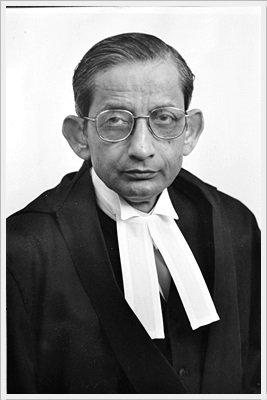
S.B. Sinha, J.
1.Leave granted.
2.These appeals involving common questions of law and fact were
taken up for hearing together and are being disposed of by this common
judgment.
3.We would, however, notice the fact of the matter from CA @ Special
Leave Petition (C) No.3372 of 2007.
On or about 14.7.1999, respondent No.3 was traveling in a bus
bearing Registration No.PB-23-0189 which met with an accident as a result
of which the deceased, Sanjay Kumar, got injured and while being taken to
the hospital, he succumbed thereto. The said bus was owned by New Patiala
Bus Service (Regd.) Sirhind, the respondent No.4 herein.
Legal representatives of the deceased filed a claim petition before the
Motor Accidents Claim Tribunal which by its order dated 4.12.2001
awarded a sum of Rs.2,68,800 by way of compensation. The learned
Tribunal held that the driver of the bus had not been possessing a valid
driving licence. The primary liability to pay the said amount was held to be
that of respondent No.3 and 4, the driver and owner of the bus. The
appellant was directed to deposit the amount directing that the company
may recover the same from respondent Nos.3 and 4. Pursuant to the said
observations, the appellant company made payments to the claimants on or
about 15.3.2002 by depositing a sum of Rs.3,03,552/- by cheque.
2
4.On or about 8.5.2002 in terms of the order of the Tribunal, an
Execution Petition was filed, stating :
“11.That in the claim petition No.82-
T/99/26.9.2000 titled as Kusum widown of Sanjay
Kumar and others Vs. Raghbir Singh alias Prince
and others, the Hon’ble Court was pleased to allow
the claim petition partly on 4.12.2001 that the
claimants are held entitled to Rs.2,68,800/- as
compensation to be shared equally by them. The
claimants are also entitled to interest at the rate of
9 per cent per annum from the date of claim
application till its actual realization. Though the
primary liability to pay the amount of
compensation is that of respondent No.1 and 2
jointly and severally, however, it will also be open
to the Claimants to recover the same from
Respondent No.3 Insurance Company. As already
held above, the insurance company would be at
liberty to recover the same from Respondent No.1
and 2 in terms already mentioned in the preceding
paragraphs.
12.That as per the directions of this Hon’ble
Court, the DH/Applicant. Insurance Company has
deposited Rs.3,03,552/- in the Hon’ble Court on
30.3.2002 and DRO of this amount has also been
issued by this Hon’ble Court.
13.That as per the terms and conditions of the
award, the DH/Applicant is entitled to recover the
deposited amount of Rs.3,03,552/- along with 9%
interest on the deposited amount from 31.3.2002
onwards.
14.That the JDs/Respondents have not paid
even single penny to the Claimants or to the
DH/Applicant so far.
3
15.Hence, this execution application and it is
prayed that the execution application may please
be accepted. The JDs/Respondents may kindly be
directed to pay the amount of Rs.3,03,552/- along
with future interest at the rate of 12% on the
deposited amount till its actual realization failing
which the property of the JDs/Respondents may be
attached, auctioned to satisfy the award amount
and/or JDs/Respondents in the civil person as per
law.”
5.On receiving the said notice, the respondent No.3 by filing an
objection to the said Execution Petition raised a question that the said
Execution Petition was not maintainable and, in fact, a civil suit is required
to be filed for recovery of the amount. The said objection of Respondent
No.4 was sustained by the Executing Court by a judgment and order dated
12.6.2003, holding :
“I have considered the aforesaid case law cited at
the bar. Authority cited as un-reported Judgment
of the Hon’ble Delhi High Court, cited by the
learned counsel for Insurance Company – knows
decree-holder is not applicable to the facts of the
case in hand. In this case, liability of insurance
company was limited to the extent of Rs.15,000/-
which was ordered to be recovered from the owner
and it was observed that on the application of the
insurer the claim tribunal is supposed to issue a
certificate for recovery of the excess amount paid
by the Insurance Company to the collector and
collector is supposed to recover the same in the
same manner as arrears of land revenue from the
insured. Award passed in favour of the LRs of the
deceased can’t be treated as decree in favour of
4
Insurance Company. Insurance Company can
effect recover of the amount from the objector
through a regular civil suit as per the observations
of our own Hon’ble High Court reported in 2002-
1) PLR Page 39 and (2001-3) PLR Page 813 –
Supra by the learned counsel for the objector.
Further, proceedings in claim cases are of
summary nature for which no strict proof was
required but in the regular suit procedure for
providing document is strictly as per law. Thus,
execution application being not maintainable
stands dismissed. However, Insurance Company
has an independent right to recover the amount
from insured (Owner and Driver) as per award
through regular civil suit. File be consigned.”
6.An application under Article 227 of the Constitution of India filed
thereagainst by the appellant has been dismissed by the High Court by the
impugned judgment upon considering the decision of this Court in Oriental
Insurance Company Ltd. v. Shri Nanjappan & Ors. [(2004) 13 SCC 224],
stating :
“The reading of the judgment shows that the
Hon’ble Supreme Court in the facts and
circumstances of that case had directed that the
Insurance Company can recover the amount from
the insured and the Insurance Company shall not
be liable to file a separte suit. This cannot be said
to be laying down a precedent that in all cases
where the liability is fixed on the Insurance
Company, it can always recover the amount from
the owner/driver. In the given case, it is still open
to the owner to dispute the liability on the plea that
he had taken all necessary steps to see that the
5
driver had a licence and he had no means to find
out that the same was fake.”
7.An owner of a vehicle in terms of the provisions of the Motor
Vehicles Act is legally obligated to get the vehicle insured. The rights and
liabiltis of the parties to the contract of insurance would be governed thereby
subject to the provisions of the Motor Vehicles Act. One of the conditions
which would make the insurance company liable to reimburse the owner of
the vehicle in respect of payment of the amount of compensation in favour
of a claimant is that the driver of the vehicle must possess a valid driving
licence. The owner has a duty to see that a vehicle is driven by a person
having a valid driving licence. The licence of the driver of the said bus was
proved to be invalid. The owner did not raise any contention that he has
used due diligence in allowing the driver to drive the vehicle.
8.The courts, however, keeping in view the social justice doctrine in
mind wherefor the Act was enacted and in the interest of the claimants had
been passing such orders. The High Court has noticed the decision of this
Court in Nanjappa (supra), wherein it was held :
“8. Therefore, while setting aside the judgment of
the High Court we direct in terms of what has been
stated in Baljit Kaur case that the insurer shall pay
the quantum of compensation fixed by the
Tribunal, about which there was no dispute raised,
6
to the respondent claimants within three months
from today. For the purpose of recovering the
same from the insured, the insurer shall not be
required to file a suit. It may initiate a proceeding
before the executing court concerned as if the
dispute between the insurer and the owner was the
subject-matter of determination before the
Tribunal and the issue is decided against the owner
and in favour of the insurer. Before release of the
amount to the claimants, owner of the vehicle shall
be issued a notice and he shall be required to
furnish security for the entire amount which the
insurer will pay to the claimants. The offending
vehicle shall be attached, as a part of the security.
If necessity arises the executing court shall take
assistance of the Regional Transport Authority
concerned. The executing court shall pass
appropriate orders in accordance with law as to the
manner in which the insured, owner of the vehicle
shall make payment to the insurer. In case there is
any default it shall be open to the executing court
to direct realization by disposal of the securities to
be furnished or from any other property or
properties of the owner of the vehicle, the insured.
The appeal is disposed of in the aforesaid terms,
with no order as to costs.”
As noticed hereinbefore, similar directions were also issued in
National Insurance Co. Ltd. v. Baljit Kaur [(2004) 2 SCC 1] in the following
terms :
“21. The upshot of the aforementioned discussions
is that instead and in place of the insurer the owner
of the vehicle shall be liable to satisfy the decree.
The question, however, would be as to whether
keeping in view the fact that the law was not clear
so long such a direction would be fair and
7
equitable. We do not think so. We, therefore,
clarify the legal position which shall have
prospective effect. The Tribunal as also the High
Court had proceeded in terms of the decision of
this Court in Satpal Singh
1
. The said decision has
been overruled only in Asha Rani2. We, therefore,
are of the opinion that the interest of justice will be
subserved if the appellant herein is directed to
satisfy the awarded amount in favour of the
claimant, if not already satisfied, and recover the
same from the owner of the vehicle. For the
purpose of such recovery, it would not be
necessary for the insurer to file a separate suit but
it may initiate a proceeding before the executing
court as if the dispute between the insurer and the
owner was the subject-matter of determination
before the Tribunal and the issue is decided against
the owner and in favour of the insurer. We have
issued the aforementioned directions having regard
to the scope and purport of Section 168 of the
Motor Vehicles Act, 1988, in terms whereof, it is
not only entitled to determine the amount of claim
as put forth by the claimant for recovery thereof
from the insurer, owner or driver of the vehicle
jointly or severally but also the dispute between
the insurer on the one hand and the owner or driver
of the vehicle involved in the accident inasmuch as
can be resolved by the Tribunal in such a
proceeding.”
Yet again, in National Insurance Co. Ltd. v. Kusum Rai [2006) 3
SCALE 519], it was held :
“Thus, although we are of the opinion that the
appellant was not liable to pay the claimed amount
as the driver was not possessing a valid licence and
the High Court was in error in holding otherwise,
8
we decline to interfere with the impugned award,
in the peculiar facts and circumstances of the case,
in exercise of our jurisdiction under Article 136 of
the Constitution but we direct that the appellant
may recover the amount from the owner in the
same manner as was directed in Nanjappan
(supra).”
Yet again in Oriental Insurance Co. Ltd. v. Zaharulnisha [(2008) 12
SCC 385], this Court held :
“22. In the result, the appeal is allowed to the
limited extent and it is directed that the appellant
Insurance Company though not liable to pay the
amount of compensation, but in the nature of this
case it shall satisfy the award and shall have the
right to recover the amount deposited by it along
with interest from the owner of the vehicle viz.
Respondent 8, particularly in view of the fact that
no appeal was preferred by him nor has he chosen
to appear before this Court to contest this appeal.
This direction is given in the light of the judgments
of this Court in National Insurance Co. Ltd. v.
Baljit Kaur and Deddappa v. National Insurance
Co. Ltd.”
Again in Dedappa v. National Insurance Co. Ltd. [(2008) 2 SCC 595],
it was held :
“26. However, as the appellant hails from the
lowest strata of society, we are of the opinion that
in a case of this nature, we should, in exercise of
our extraordinary jurisdiction under Article 142 of
the Constitution of India, direct Respondent 1 to
pay the amount of claim to the appellants herein
9
and recover the same from the owner of the
vehicle viz. Respondent 2, particularly in view of
the fact that no appeal was preferred by him. We
direct accordingly.”
9.Whenever, thus, a direction has been issued by the Tribunal, it must
be held to have been done in exercise of its inherent power. It would be
travesty of justice, if the Insurance Company which is directed to pay the
amount and then face immense difficulties in executing a decree.
10We, therefore, are of the opinion that the impugned judgments cannot
be sustained. They are set aside accordingly. Appeals are allowed, the
executing courts are directed to proceed with the execution and dispose of
the same as expeditiously as possible.
.……………………….J.
[S.B. Sinha]
……………………..…J.
[Deepak Verma]
New Delhi;
August 4, 2009
10

 Login with google
Legal Notes
Add a Note....