
As per case facts, the original Order of a Co-ordinate Division Bench dated 14.05.2025 had set aside the proviso of Section 3 of the Punjab Apartment and Property Regulation Act, ...
No Acts & Articles mentioned in this case
IN THE HIGH COURT OF PUNJAB AND HARYANA AT
CHANDIGARH
104
Decided on : 22.08.2025
CM-7877-CWP-2025;
CM-9171-CWP-2025 in
RA-CW-240-2025 and
RA-CW-243-2025 in
CWP-13350-2021 (O&M)
M/S BAJWA DEVELOPERS LIMITED . .Petitioner
Versus
STATE OF PUNJAB AND OTHERS
. . . Respondents
RA-CW-242-2025 in
CWP-8941-2022 (O&M)
SUKHJINDER SINGH AND OTHERS . .Petitioners
Versus
STATE OF PUNJAB AND OTHERS
. . . Respondents
RA-CW-252-2025 in
CWP-20106-2021 (O&M)
NEW SUNNY ENCLAVE RESIDENTS SOCIAL WELFARE
ASSOCIATION REGD AND ANOTHER
. .Petitioners
Versus
STATE OF PUNJAB AND OTHERS
. . . Respondents
RA-CW-243-2025 in
CWP-13350-2021 (O&M) and connected cases
-2-
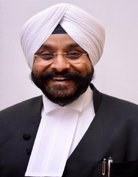
CORAM: HON'BLE MR. JUSTICE HARSIMRAN SINGH SETHI
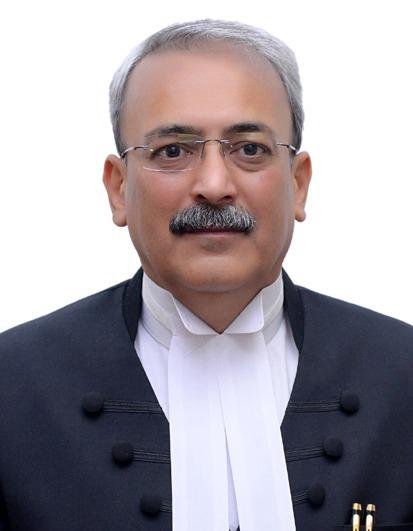
HON'BLE MR. JUSTICE VIKAS SURI
PRESENT: Mr. Gurminder Singh, Sr. Advocate
Mr. Maninderjit Singh Bedi, Advocate General, Punjab
Mr. T.P.S. Chawla, Sr. D.A.G. Punjab
for review-applicant/respondent No.1 (in CM-7877-CWP-2025
in RA-CW-240-2025 in CWP-13350-2021).
Ms. Anu Chatrath, Senior Advocate with
Ms. Dhamanpreet Kaur, Advocate,
Mr. Shekhar Verma, Advocate
Ms. Deepti Singh, Advocate
Mr. Sudhir Nar, Advocate
Mr. Nishant Maini, Advocate
for review-applicant/respondent No.2 (GMADA)
(in RA-CW-243-2025 in CWP-13350-2021).
Mr. Rakesh Dhiman, Advocate for the applicants
(in CM-9171-CWP-2025 in RA-CW-240-2025
in CWP-13350-2021).
Mr. Rupinder Khosla, Senior Advocate with
Mr. Aman Sharma, Advocate,
Mr. Yogender Verma, Advocate,
Mr. Chirag Suri, Advocate
for review-applicant/respondent No.3
(in RA-CW-252-2025 in CWP-20106-2021).
Mr. Vijay Kumar Jindal, Senior Advocate with
Mr. Akshay Jindal, Advocate,
Mr. Pankaj Gautam, Advocate
Mr. Navjot Singh, Advocate
for non-applicants/petitioners (in CWP-13350-2021) and
for respondent No.7 (in CWP-8941-2022).
Ms. Puja Chopra, Petitioner in person in CWP-20106-2021.
Mr. Pawan Kumar, Advocate for
Mr. Saurabh Arora, Advcoate for non-applicant/petitioners
in RA-CW-242-2025.
RA-CW-243-2025 in
CWP-13350-2021 (O&M) and connected cases
-3-
****
HARSIMRAN SINGH SETHI , J. (Oral)
1. Present bunch of review applications involve common point of
law and common set of facts, hence, they are being dealt together.
2. The present review applications have been filed f or the
reviewing of the order dated 14.05.2025 passed by the Co-ordinate Division
Bench of this Court, by which, the proviso of Section 3 of the Punjab
Apartment and Property Regulation, Act, 1995 (herein after referred to ‘1995
Act’) has been held ultra-virus and same has been set-aside.
3. Learned Senior counsel for the review-applicants/State submits
that in the main writ petitions, as there was no challenge to the provisions
of Sections 3 and 5 of the 1995 Act and even no opportunity has been
granted to the State to defend the same, but still vide order dated 14.05.2025,
Co-ordinate Bench of this Court has set-aside the proviso of law, hence, the
order dated 14.05.2025 is liable to be reviewed.
Learned Senior counsel appearing on behalf of the review-
applicant/State argues that the contentions which were actually raised by
the non-applicant/petitioners in CWP No. 13350 of 2021 titled as ‘M/S
Bajwa Develpers Limited versus State of Punjab and others’ was that the
land for building 200 feet wide road which was actually constructed by
GMADA, and the said road was within the area owned by the petitioner,
whether the petitioner is entitled for the compensation of the said land as
the same had been acquired by the GMADA and further whether such
compensation for the land taken for constructing the road by GMADA is to
be adjusted qua the External Development Charges which were payable by
RA-CW-243-2025 in
CWP-13350-2021 (O&M) and connected cases
-4-
the petitioner i.e. Bajwa Developers.
4. Learned Senior counsel for the review applicant submits that any
findings given by the Co-ordinate Bench on the said issue was within the
jurisdiction of the Court as to arrive at a decision but the Co-ordinate Bench
went beyond the pleadings while setting aside the proviso of Section 3 of
1995 Act by declaring the same as ultra-virus and that too without giving
opportunity to the State to defend the proviso of Section 3 of the 1995.
5. Learned Senior counsel for the review applicant further submits
that the same amounts to apparent error in the judgment dated 14.05.2025
itself which needs to be rectified by exercising the jurisdiction under Section
114 of the CPC by reviewing the judgment dated 14.05.2025.
6. Learned Senior counsel appearing on behalf of the non-
applicant/petitioners submits that though the primary contention was with
regard to the adjustment of the compensation which the petitioners were
entitled for upon acquisition of the land which was in the ownership of the
petitioner on which land 200 feet wide road has been constructed by
GAMADA and adjusting the said payable towards External Development
Charges, license fee etc. payable by the petitioner, but, the prayer was also
made in the petition that the land which has been taken away from the
petitioner under instructions dated 31.12.2013 (Annexure P-18) is incorrect
and the said land should also reverted back to the petitioner hence, while
adjudicating the said plea, proviso of Section 3 of 1995 Act has been set-
aside and it is incorrect on the part of the review applicant to argue that
without there being any such pleading, the proviso of Section 3 of 1995 Act
has been set-aside.
RA-CW-243-2025 in
CWP-13350-2021 (O&M) and connected cases
-5-
7. Learned Senior counsel for the non-applicant/petitioner though
concedes the fact that there was no challenge to Sections 3 and 5 of the 1995
Act or even with regard to the instructions dated 31.12.2013 (Annexure P-
18) but while considering the plea that the land taken from the petitioner to
construct the housing scheme for the Economically Weaker Section should
be reverted, the said issue was dealt with and the decision dated 14.05.2025
arrived at by the Co-ordinate Division Bench of this Court cannot be made
subject matter of the review and in case, the applicant-respondents are
aggrieved with the order dated 14.05.2025 passed by Co-ordinate Division
Bench of this Court, they can only have the remedy of filing the appeal
against the said order.
8. Learned Senior counsel appearing on behalf of the non-
applicant/petitioner while placing reliance upon the judgment passed by the
Hon’ble Supreme Court of India in Special Leave Petition (c ) No. 18983 of
2023 titled as ‘Bihar Rajya Dafadar Chaukidar Panchayat (Magadh
Division) versus State of Bihar and others’, decided on 19.03.2025, submits
that the Court has power to set aside the provisions of law, if found
unconstitutional even without there-being any such challenge and in case,
the same has been set-aside while exercising the jurisdiction by the
competent Court of law, the only remedy of filing of appeal is available with
the aggrieved party and not the review, hence, the present review application
may kindly be dismissed.
9. We have heard learned counsel for the respective parties and
have gone through the case file with their able assistance.
10. Before proceeding further, it may be noticed that the Co-ordinate
RA-CW-243-2025 in
CWP-13350-2021 (O&M) and connected cases
-6-
Bench while hearing the review applications, has already stayed the
judgment dated 14.05.2025, the review of which has been sought.
11. The question which has been raised before this Court in the
review application is whether, without giving any opportunity of hearing to
the State, the Court had the jurisdiction to set-aside the proviso of Section 3
of 1995 Act, which relates to binding the developers to reserve 15 % of the
total area of the land for the Economically Weaker Section.
12. Further, it needs to be seen as to what was the issue raised by the
petitioner before this Court which lead to the passing of the judgment dated
14.05.2025, the review of which order has been sought.
13. It may be noticed that the Co-ordinate Division Bench of this
Court decided the question of law which was posed before the Court
keeping in view the respective pleadings by the parties qua the said question
of law.
14. In the present case, as per the petitioner itself, on the basis of
pleadings, the following question of law was raised to be decided by the
Court and the same was mentioned in paragraph No. 4 which is as under:-
“4. That keeping in view the facts and circumstances
mentioned above, the solitary question of law which arises for
kind consideration of this Hon'ble Court in the present writ
petition as to whether the respondents, who are a welfare State,
can force its citizen to pay the dues without paying the dues
outstanding towards such a citizen.”
RA-CW-243-2025 in
CWP-13350-2021 (O&M) and connected cases
-7-
16. A bare perusal of the above reproduction would show that the
question of law which arose before the Court was whether, a welfare state
can force the citizen to pay the dues without paying the dues/compensation
which is admissible to such a citizen.
17. Hence, the only question raised before the Court was whether,
without paying the compensation for which the petitioner was entitled for
upon acquisition of certain area of land belonging to the petitioner by
GMADA for constructing 200 feet wide road, the petitioner can be forced to
pay the External Development Charges, license fee etc. which the petitioner
was liable to pay keeping in view the agreement between the petitioner and
the State-GMADA.
18. The said question is not even remotely connected with the
validity of proviso of Section 3 of 1995 Act. Once, a particular question
which arose for determination did not had any direct or even indirect relation
to Section 3 of 1995 Act, the Court could not have decided the same while
adjudicating the lis between the parties.
19. Though , it cannot be said that the Court does not have power to
frame a question in case, the court feels that the particular question of law
needs to be decided but the same has to be decided by framing a question of
law by a judicial order and then giving an opportunity to all the parties to
submit their pleadings before deciding the said question of law.
20. In the present case, the pleadings does not relate to the challenge
to proviso of Section 3 of 1995 Act and there is no rebuttal with regard to
the validity of such provisions i.e. Section 3 of 1995 Act at the hands of the
State or even the GMADA.
RA-CW-243-2025 in
CWP-13350-2021 (O&M) and connected cases
-8-
21. At this Stage, learned Senior Counsel for the
non-applicant/petitioner submits that it is also incorrect that the State was
not given opportunity to defend Section 3 of 1995 Act and submits that in the
counter affidavit dated 24.04.2025 filed by the Sanjeev Kumar, Land
Acquisition Collector, Urban Development Department S. A. S. Nagar,
PUDA Bhawan, Sector, 62 SAS Nagar, the same has been dealt with by
respondents themselves hence, it is incorrect on the part of the State to
contend that without giving any opportunity to the State, the proviso of
Section 3 of 1995 Act has been set-aside.
22. In order to appreciate the said contention, the averments made in
paragraph No. 9 of the affidavit dated 24.04.2025 which is being relied upon
by learned Senior Counsel for the non-applicant/petitioner is as under:-
“9. That further with regard to contention of the Petitioner
that 16.19 acres of land has been got transferred by GMADA for
EWS, it is humbly submitted that as per Industrial Policy -2009
and provisions of the Punjab Apartment and Property
Regulation Act, 1995, the Petitioner Company was bound to
reserve 5% area for providing housing to Economically Weaker
Sections (EWS) in Its Mega Housing Project and 10% area
under residential plots in case of Plotted colony and 10% of
total number of apartments In case of Group Housing Colony
Economically Weaker Sections (EWS). Since the Petitioner
falled to comply with this policy/provision by providing
developed houses to Economically Weaker Sections (EWS) of
RA-CW-243-2025 in
CWP-13350-2021 (O&M) and connected cases
-9-
Soclety nor the developed residential plots/ apartments reserved
for this category, were allotted to the eligible persons of this
category, therefore, as per Policy issued by the Government of
Punjab, Housing and Urban Development vide *notification no.
4255 dated 31.12.2013 (Annexure P-18), Petitioner Company is
bound to transfer the area kept reserved as EWS in the approved
Lay Out Plans in Its projects free of cost to GMADA and no land
cost is payable to the Petitioner Company.”
23. A bare perusal of the above reproduction would show that the
reliance has been placed upon the provisions of 1995 Act to rebut the
contention of the petitioner that the petitioner was not bound to reserve the
land for providing housing to Economically Weaker Sections (EWS).
Nothing has come on record with regard to the validity of provisions of
Section 3 of 1995 Act which was put to the respondents to explain before the
Court.
24. With regard to the contention of learned Senior Counsel for the
non-applicant/petitioner, that there was an another affidavit dated 02.09.2022
filed by Jasleen Kaur Sandhu, Land Acquisition Collector, Urban
Development Department, PUDA Bhawan, Section 62, SAS Nagar.
25. It may be noticed that the paragraph No. 9 of the affidavit dated
02.09.2022 is verbatim to the paragraph No. 9 of affidavit dated 24.04.2025
as reproduced herein above, hence, it cannot be said that there was a
challenge to the validity of Section 3 of 1995 act which was being discussed
rather, justification was being given by the State as to why the agreement
between the petitioner and the State contained a clause for reserving 15 % of
RA-CW-243-2025 in
CWP-13350-2021 (O&M) and connected cases
-10-
the total area of land for housing to EWS.
26. Learned Senior Counsel for the non-applicant /petitioner submits
that the said issue was argued and thereafter, the findings have been
recorded by the Competent Court of Law on Section 3 of 1995 Act.
27. Learned Senior Counsel for the non-applicant-petitioner has
further submitted that the Court had the jurisdiction to set-aside a provisions
of law even if the same has not been challenged and the reliance is being
placed upon the judgment passed by Honorable Supreme Court of India in
Bihar Rajya Dafadar Chaukidar Panchayat (Magadh Division)’s case
(supra).
28. It may be noticed that the argument can only be based upon the
pleadings and not general argument especially when the validity of a
legislation is to be decided. The State has to be given due opportunity to
defend the same before any finding is recorded on the said issue. Nothing has
come on record that at any given point of time before passing the order dated
14.05.2025, the State was given the opportunity to present its view with
regard to the reserving of 15 % of area by a developers in favour of the
economical weaker section, which provisions relates to uplifting a particular
section of a society, which was being done as per Sections 3 &5 of 1995
Act.
29. Further, with regard to the reliance being placed onBihar Rajya
Dafadar Chaukidar Panchayat (Magadh Division)’s case (supra), it may be
noticed that the Hon’ble Supreme Court of India in the above mentioned case
has dealt with a contention as to whether any provision which has not been
challenged can be set-aside by the Court or not.
RA-CW-243-2025 in
CWP-13350-2021 (O&M) and connected cases
-11-
30 In this regard, the relevant observations/paragraphs of the
judgment passed by Hon’ble Supreme Court of India in Bihar Rajya
Dafadar Chaukidar Panchayat (Magadh Division)’s case (supra) are as
under:-
“28. The next contention that the offending proviso was
not under challenge in the writ petition and, therefore, the
Division Bench ought not to have struck it down is liable to be
rejected for the reason that follows.
29. Several decisions have been cited in support
of the aforesaid contention. We need not refer to them
individually.
30. Law is well settled that a law, be it a primary
legislation or a subordinate legislation (rules, regulations or
orders made under the authority of a primary legislation),
cannot be struck down by a court unless there is a direct
challenge to such legislation. It is also a well-established
principle of Constitutional Law that constitutional questions
should not be decided in vacuum and that they must be decided
only if and when they arise properly on the pleadings of a given
case and where it is found necessary to decide them for a proper
decision of the case.
RA-CW-243-2025 in
CWP-13350-2021 (O&M) and connected cases
-12-
31. However, the common thread that runs through all
these precedents laying down such law is that the party
aggrieved in each case, seeking relief from the court, omitted to
lay a challenge to the law and the said omission impeded the
grant of relief to such party.
32. The situation here is completely different. The
respondent no.7 was seeking relief from the High Court relying
on the offending proviso. In a case where the party aggrieved
seeks enforcement of a provision of a rule, which is seemingly
unconstitutional, would he raise the plea of its 18
unconstitutionality? It would be imprudent for him to do so and
hence, the answer cannot but be in the negative. While
considering the plea of the respondent no.7, the Division Bench
found the offending proviso to be so obtrusively unconstitutional
that notwithstanding absence of a specific challenge thereto, it
proceeded to declare the same as void. Although the Division
Bench had no occasion to refer to the decisions that we have
referred to above, nothing much turns on it. The Division Bench
must be presumed to be aware of the law on the subject that
appointment cannot be claimed as a hereditary right and, thus,
without even a challenge being laid to the offending proviso
thought of striking it down. We do not see any illegality in such
an approach.
RA-CW-243-2025 in
CWP-13350-2021 (O&M) and connected cases
-13-
33. However, a caution needs to be sounded.
While not suggesting for a moment that the course of action
which the Division Bench adopted in this case can routinely be
adopted, we see no reason as to why the power to suo motu
declare a subordinate legislation invalid, on the ground of its
being manifestly contrary to a Fundamental Right read with
binding precedents in terms of Article 141, should not be
conceded to be within the vast reserve of powers of the
Constitutional Courts. Though exercise of powers, suo motu, in
an appropriate case in exercise of jurisdiction under Article 226
of the Constitution cannot be doubted, it is indubitable that such
power has to be exercised sparingly and with due care, caution
and circumspection. We are minded and do hold that, a writ
court, when it finds its conscience to be pricked in a rare and
very exceptional case by the patent unconstitutionality of a
subordinate legislation connected 19 with the issue it is seized
of, may, upon grant of full opportunity to the State to defend the
subordinate legislation and after hearing it, grant a declaration
as to unconstitutionality and/or invalidity of such legislation.
After all, as the sentinel on the qui vive, it is not only the duty of
the writ courts in the country to enforce Fundamental Rights of
individuals, who approach them, but it is equally the duty of the
writ courts to guard against breach of Fundamental Rights of
others by the three organs of the State. This power is a plenary
power resident in all the Constitutional Courts. Should, in a
RA-CW-243-2025 in
CWP-13350-2021 (O&M) and connected cases
-14-
given case, it be found that there has been an egregious
violation of a Fundamental Right as a result of operation of a
subordinate legislation and the issue is concluded by a binding
decision of this Court, we consider it the duty of the writ courts
to deliver justice by declaring the subordinate legislation void to
safeguard rights of others who might not still have been affected
thereby. We reiterate, it can only be done rarely and in cases
which stand out from the ordinary.
34. Consciously, we have deliberately kept primary
legislation out of the sweep of such power firstly, in deference to
legislative actions, which are presumed to be constitutional,
secondly, because of the position it holds in the hierarchy of
laws, and thirdly, because we know of no decision of this Court
where a primary legislation was outlawed without a formal
challenge being laid or a decision of a writ court striking down
a primary legislation not under challenge being upheld.
35. It is not that a presumption of
constitutionality is not to be drawn qua subordinate legislation;
but, when a challenge to the constitutionality of 20 a
subordinate legislation is examined, like a rule framed not in
exercise of conferment of power by a statute but in terms of the
proviso to Article 309 of the Constitution (as in the present
case), it is open to the court to apply a more nuanced approach.
RA-CW-243-2025 in
CWP-13350-2021 (O&M) and connected cases
-15-
After all, a subordinate legislation is seen as removed from the
democratic process that is closely knit with primary legislation
and hence, a more rigorous scrutiny in appropriate cases may
not be inapt. The level of presumption may indeed vary,
depending on factors such as (i) the nature of the subordinate
legislation; (ii) the extent it is found to be in derogation either of
the Constitution or the parent legislation which is its source;
(iii) the exigencies and the manner in which the subordinate
legislation is brought into force; and (iv) the potential impact on
individual rights as well as public interest.
36. We are more than certain that should the
State, in such a case of declaration of a subordinate legislation
as void without a direct challenge being laid, consider itself
aggrieved, it would surely approach the superior court to have
such declaration annulled. Interestingly, in the present case, it is
not the State but the beneficiaries of the offending proviso who
seek annulment of the declaration made by the Division Bench,
giving us good reason to believe that the respondent no. 1 is not
aggrieved. In the absence of a challenge from the respondent no.
1 and its acceptance of the impugned judgment and order, the
members of the petitioning union who are mere beneficiaries do
not have a better claim.”
31. A bare perusal of the above reproduction would show that the
RA-CW-243-2025 in
CWP-13350-2021 (O&M) and connected cases
-16-
observation has been given by the Hon’ble Supreme Court of India while
passing judgment in Bihar Rajya Dafadar Chaukidar Panchayat (Magadh
Division)’s case (supra) with regard to the setting aside of the provisions of
law which was being relied upon a particular party to claim a relief and the
Court has come to the conclusion that the relief cannot be granted based
upon such law, which according to the Court is ultra-virus.
32. It is further clear from the said reproduction that even while
doing such exercise due opportunity is to be given to the State or the
Authority, which has brought into such rules, regulations and legislation.
Hence, the observations made by Hon’ble Supreme Court of India in Bihar
Rajya Dafadar Chaukidar Panchayat (Magadh Division)’s case (supra) is
on an entirely different facts especially when, in the present case, the setting
aside of the provisions of Section 3 of 1995 Act and the consequential
polices which have been issued by the State including Annexure P-19 is
by accepting the plea of the non-applicant/petitioner that the same is causing
prejudice to the developers hence, the observations of the Hon’ble Supreme
Court of India in Bihar Rajya Dafadar Chaukidar Panchayat (Magadh
Division)’s case (supra) in paragraphs No. 31 and 32 are on the particular
facts and not a general principle i.e. without granting of opportunity to the
agency which enacted the particular provisions which is being set aside, due
opportunity has to be given to the State.
33. From the facts which have been narrated herein before with
regard to the validity of Section 3 of 1995, it is clear that no opportunity had
been afforded to the respondents by the Court before recording the findings
in the order dated 14.05.2025 and rather, from a bare perusal of the order
RA-CW-243-2025 in
CWP-13350-2021 (O&M) and connected cases
-17-
passed it can be seen that no stand of the State is even noticed in the
impugned order while adjudicating the validity of proviso of Section 3 of
1995 Act.
34. The last argument of the learned Senior counsel for the non-
applicant/petitioner is that even where legislation has been set-aside, the
only remedy available is to file an appeal and not review and the reliance is
being placed upon paragraph No. 36 of the Bihar Rajya Dafadar Chaukidar
Panchayat (Magadh Division)’s case (supra) passed by the Hon’ble
Supreme Court of India, which paragraph has already been reproduced
herein above.
35. It may be noticed that it is only in the case where after due
opportunity to the State, any provisions enacted by the State has been set-
aside, the remedy will be appeal but where, any provisions of law has been
set-aside, which is beyond the pleading or without giving due opportunity to
the State to defend, the remedy of review will be open keeping in view the
judgment passed by Hon’ble Supreme Court of India in Civil Appeal No.
5798-99 of 2008 titled as Bachhaj Nahar versus Nilima Mandal and
Another, decided on 23.09.2008. The relevant paragraph No. 13 of the said
judgment is as under:-
“13.
The object of issues is to identify from the pleadings the
questions or points required to be decided by the courts so as
to enable parties to let in evidence thereon. When the facts
necessary to make out a particular claim, or to seek a
particular relief, are not found in the plaint, the court cannot
RA-CW-243-2025 in
CWP-13350-2021 (O&M) and connected cases
-18-
focus the attention of the parties, or its own attention on that
claim or relief, by framing an appropriate issue. As a result
the defendant does not get an opportunity to place the facts
and contentions necessary to repudiate or challenge such a
claim or relief. Therefore, the court cannot, on finding that the
plaintiff has not made out the case put forth by him, grant
some other relief. The question before a court is not whether
there is some material on the basis of which some relief can be
granted. The question is whether any relief can be granted,
when the defendant had no opportunity to show that the relief
proposed by the court could not be granted. When there is no
prayer for a particular relief and no pleadings to support such
a relief, and when defendant has no opportunity to resist or
oppose such a relief, if the court considers and grants such a
relief, it will lead to miscarriage of justice. Thus it is said that
no amount of evidence, on a plea that is not put forward in the
pleadings, can be looked into to grant any relief.
”
36. Not only this, another aspect has to be looked into as to whether.
on the date of the decision dated 14.05.2025, Sections 3 & 5 of the 1995 Act
which have been set-aside was in the Rule Book or not?
37. It may be noticed that proviso of Section 3 of 1995 Act, which
has been noticed in the judgment dated 14.05.2025 was not the part of the
Statute on the date of the order passed by Co-ordinate Bench as the same
had already been amended in the year 2021 which fact has been ignored by
the Co-ordinate Division Bench of this Court while passing the order dated
14.05.2025. The amended provision has not been noticed by learned Co-
RA-CW-243-2025 in
CWP-13350-2021 (O&M) and connected cases
-19-
ordinate Bench. Once, Section 3 of the 1995 Act had already been amended
and the amended Statute has not been looked into, setting aside the un-
amended section 3 of the 1995 Act, it will be a mistake apparent on record
so as to give the power of review to the Court.
38. Learned Senior Counsel appearing on behalf of th e non-
applicant/petitioner concedes that the provisions of Section 3 of 1995 Act
noticed in the judgment dated 14.05.2025 stood amended in the year 2021
and the amended provisions have not been taken into consideration but the
Division Bench, which clearly shows that there is an apparent mistake in the
judgment itself which needs to be looked into and will be within the
parameters of Section 114 of CPC as well Order 47 Rule 1 of CPC.
39. Further, it may be noticed that the setting aside of the Proviso of
Section 3 of the 1995 Act has a ramification qua the whole of the State Of
Punjab and the license given not only to the petitioner but to all other
developers qua the reservation of land for the Community of Economically
Weaker Section at a subsidized rates by invoking Sections 3 & 5 of 1995
Act. Hence, the view of the State was very necessary and the State was
required to be given due opportunity to defend the provisions of law before
any consideration to be given qua the provisions of Section 3 of 1995 Act as
the said issue is not only related to the petitioner but to all the developers in
the State of Punjab.
40. Keeping in view the totality of facts and circumstances noticed
herein above as there is an apparent mistake on facts i.e. unamended Section
3 of 1995 Act but has been considered and set-aside and that too without
noticing the amended provisions which exist on the date of judgment passed
RA-CW-243-2025 in
CWP-13350-2021 (O&M) and connected cases
-20-
by learned Co-ordinate Bench, the review applications are allowed.
Consequently, the order dated 14.05.2025 is re-called and the main writ
petitions are restored to its original number and status.
CWP-13350-2021
CWP-8941-2022
CWP-20106-2021
To be listed as per Roster.
A photocopy of this order be placed on the file of connected
case.
(HARSIMRAN SINGH SETHI)
JUDGE
( VIKAS SURI )
JUDGE
22.08.2025
Riya
Whether speaking/reasoned: Yes/No
Whether Reportable: Yes/No

 Login with google
Legal Notes
Add a Note....