
As per case facts, the petitioner, an undergraduate student, was debarred from an end-semester examination in a subject due to attendance falling below the required 75percent, despite having submitted medical ...
W.P.(C) No.12973 of 2026 Page 1 of 23
IN THE HIGH COURT OF ORISSA AT CUTTACK
W.P.(C) No.12973 of 2026
(An application under Article 226 and 227 of the Constitution
of India)
Omm Patnaik
… Petitioner
- versus-
State of Odisha and others … Opposite Parties
Advocates appeared in the case through hybrid mode:
For Petitioner : Mr.S. P. Mishra,
Sr. Advocate with
Miss. S Rout, Advocate
-versus-
For Opp.Parties
: Mr. T. K. Dash, A.G.A.
Mr. B. Routray,
Sr. Advocate with
Mr. S. Routray, Advocate
(For O.P. Nos.3, 4 and 5)
---------------------------------------------------------------------------
CORAM:
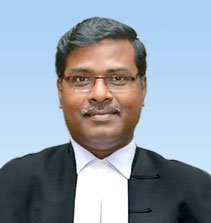
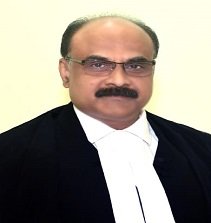
THE HONOURABLE MR. JUSTICE B. P. ROUTRAY
THE HONOURABLE MR. JUSTICE SASHIKANTA MISHRA
Date of Hearing: 24.6.2026: Date of Judgment:29.6.2026
W.P.(C) No.12973 of 2026 Page 2 of 23
Sashikanta Mishra,J. The petitioner, a student of BBM (Hons) in
XIM University, Bhubaneswar, being debarred from
appearing in the End-Semester Examination-II for the
first year in the subject ‘Introduction to OB & HR’
because of shortage of attendance has filed this Writ
Petition seeking the following relief;
“It is therefore prayed that your Lordships may be
graciously pleased to admit the writ application, call
for the records, issue Rule NISI calling upon the
opposite parties, to show-cause as to why
a) the Debarment Notice/Order dated 07.04.2026
issued by Opposite Party No.3 (vide Annexure-7)
insofar as it debarred the Petitioner from appearing in
the End-Term Examination-Il for the subject
"Introduction to OB & HR" shall not be set-
aside/quashed:
b) the Opposite Parties-Authorities shall not be directed
to permit the Petitioner to appear in the said End-Term
Examination-II in the subject "Introduction to OB & HR
through the Make-up Examination for Program (vide
Annexure-11) and to declare his result accordingly
And in the event, the opposite parties fail to show-
cause or show insufficient cause, the said Rule be
made absolute and
a) the Debarment Notice/Order dated 07.04.2026
issued by Opposite Party No. 3 (vide Annexure-7)
insofar as it debarred the Petitioner from appearing in
the End-Term Examination-II for the subject
"Introduction to OB & HR shall be set-aside/quashed,
b) the Opposite Parties-Authorities shall be directed to
permit the Petitioner to appear in the said End-Term
Examination-II in the subject "Introduction to OB & HR
W.P.(C) No.12973 of 2026 Page 3 of 23
through the Make-up Examination for All UG Program
(vide Annexure-11) and to declare his result
accordingly.
And may further be pleased to pass any other writ(s),
order(s), direction(s) and relief(s) as deemed fit and
proper
And for this act of kindness the petitioner shall as in
duty bound ever pray.”
2. Be it noted that originally, by order dated
05.5.2026, the Writ Petition was disposed of permitting
the Petitioner to appear in the supplementary
examination to be held either from 1
st July, 2026 or from
1
st February, 2027. However, the petitioner sought
review of the said order in RVWPET No.117/2026. After
hearing the parties, this Court, by order dated 24.6.2026
allowed the application for review by recalling the order
dated 5.5.2026 passed in this Writ Petition. This is how
the Writ Petition came to be heard again on merits.
FACTS:
3. Bereft of unnecessary details, the facts of the case
are as follows;
The petitioner took admission in the Four-Year Full-
Time Bachelor’s Degree Programme namely, BBM (Hons.)
W.P.(C) No.12973 of 2026 Page 4 of 23
for the academic Session 2025-2029 in the School of
Commerce, XIM University, Bhubaneswar. The petitioner
successfully completed the First Semester Examination
from 22.7.2025 to 08.12.2025. During the Second
Semester, which commenced from 09.12.2025 and
continued till 16.4.2026, the petitioner fell ill and
sustained back injury due to accidental fall from the
stairs. As such, he was placed under complete medical
care with restrictions imposed on his daily activities.
Under such circumstances, the petitioner submitted a
leave application to the University on 18.12.2025 along
with medical prescriptions and documents seeking
medical leave. He thus remained absent from 16.12.2025
to 02.1.2026 during which period a total of 6 classes
were conducted. The petitioner’s absence in the classes
was marked as ‘Absent Medical’. Again on 30.3.2026, he
was diagnosed with acute respiratory tract infection
accompanied with high fever and other complications,
which continued till 04.4.2026. As such, he was
constrained to submit a leave application on 01.4.2026.
Despite such application seeking leave on medical
W.P.(C) No.12973 of 2026 Page 5 of 23
grounds, the University authorities issued the impugned
order dtd.7.4.2026 debarring him from appearing in the
End-Semester Examination in the subject ‘Introduction
to OB and HR’ on the ground that his attendance was
64.41%. The petitioner attempted to meet the authorities
on several occasions to justify his absence but to no
avail. He therefore, approached the Odisha Human
Rights Commission in Case No.1312/2026. By order
dated 10.4.2026, the Commission refused to interfere in
the matter but left it open to the University to take a
decision. Despite such order, the authorities did not take
any action for which the petitioner approached the
National Human Rights Commission by filing a complaint
registered as Case No.301/18/28/2026. The National
Commission by order dated 16.4.2026 directed the
authorities to permit the petitioner to appear in the
examination scheduled to be held on the same day on
humanitarian grounds and also called upon them to
submit a compliance report. Though the petitioner
brought the order of the National Commission to the
notice of the authorities, they did not comply with the
W.P.(C) No.12973 of 2026 Page 6 of 23
same for which the petitioner was constrained to file the
present writ Petition.
4. According to the petitioner, the classes were held in
a compressed and accelerated manner between
31.3.2026 and 04.4.2026 whereby, 9 classes were held in
5 days. During such time, the petitioner’s medical
condition did not allow him to attend the classes which
he duly brought to the notice of the authorities. It is
further contended that as per the provisions of the
Student Manual of Policies 2025-2026 (for short, the
Manual) of the University, the petitioner’s absence on
medical grounds can be condoned by permitting him to
appear in a make-up examination in the subject in
question. According to the petitioner, the relevant
provisions of the Manual have not been considered in the
proper perspective by the University authorities.
5. The case of the University, on the other hand, is
that there is no provision in the Manual to conduct a
make-up examination for a student who has been
debarred in one subject for lack of attendance. It is stated
that as per the relevant provisions a student is required
W.P.(C) No.12973 of 2026 Page 7 of 23
to attend minimum 75% of classes in all individual
courses failing which he shall not be allowed to appear in
the End-Semester Examination. The petitioner’s
attendance was 64.41% in the subject ‘Introduction to
OB and HR’. Therefore, he was rightly debarred in that
subject and duly intimated on 07.4.2026. It is further
stated that as per the provisions, in case of grave
personal tragedy or hospitalization, a student can
approach the Controller of Examinations for conduct of
supplementary examination with approval of the Dean of
the School. Said supplementary examination will be
taken in the next available semester in the same year.
However, if the total attendance falls below 75% or the
student has been debarred from appearing in an End-
Term Examination, he shall have to take the
supplementary examination with the junior batch in the
next year. There is no provision in the Manual as well as
in the UGC Regulation to conduct specific examination
for students debarred in the Mid-Term Examination or
End-Term Examination. Debarment in such Semester
requires giving of the entire course in the supplementary
W.P.(C) No.12973 of 2026 Page 8 of 23
examination. A student cannot choose a particular
component to appear in the supplementary examination.
64 batchmates of the petitioner being faced with similar
situation have agreed to appear in the supplementary
examination scheduled to commence from 01.7.2026.
The petitioner, instead of appearing in the said
examination seeks conduct of a make-up examination for
him which is not permissible. The petitioner while taking
admission had undertaken to maintain 75% attendance
and that he would be debarred in case it falls below the
said percentage. The University is ready to permit the
petitioner to appear in the supplementary examination.
SUMISSIONS:
6. Heard Mr. S. P. Mishra, learned Senior counsel with
Miss S. Rout, learned counsel for the Petitioner, Mr. T. K.
Dash, learned Addl. Government Advocate for the State
and Mr. B. Routray, learned Senior counsel with Mr. S.
Routray for the University (Opp. Party Nos.3, 4 and 5).
7. Mr. Mishra, learned Senior counsel would argue
that the University authorities have taken an
unnecessarily rigid stance in respect of a student, who
W.P.(C) No.12973 of 2026 Page 9 of 23
was forced to remain absent on some dates owing to
medical exigencies. His case ought to have been
considered on a separate footing considering the fact that
his attendance in all other subjects was more than the
required percentage. It is further submitted by Mr.
Mishra that the authorities have misconstrued/mis-
applied the relevant provisions of the Manual. In this
context, Mr. Mishra has referred to Clauses 10.5, 12.1
and 12.3 of the said Manual. He also refers to the order
of the Controller of Examinations issued with approval of
the Vice Chancellor of the University on 16.03.2026
providing for make-up examination for all U.G.
programmes. According to Mr. Mishra, this provision
squarely applies to a student, who has missed the Mid-
Semester or an End-Semester Examination due to
absence with prior permission from the Dean. Since the
petitioner being medically indisposed had submitted
application seeking leave and the same was duly reflected
in the record of attendance, it is implied that such
absence was with prior intimation to the Dean. It is not a
case of the petitioner remaining willfully absent but one
W.P.(C) No.12973 of 2026 Page 10 of 23
where he was forced by circumstances beyond his
control. Mr. Mishra also argues that the very manner of
holding 9 classes in 5 days shows that the University
authorities were themselves guilty of non-adherence to
the teaching schedule. If the petitioner’s absence in those
9 classes is condoned, his percentage would go beyond
the required 75%. Under such circumstances, forcing the
petitioner to forgo one full year in order to appear in the
supplementary examination in the following year with his
juniors would seriously prejudice his career. To buttress
his contentions, Mr. Mishra has cited a judgment of a
Division of the High Court of Patna in the case of All
India Students Federation through Abhishek Anand,
Member, Bihar State Council vs. State of Bihar and
others,
1 which we shall refer to at the appropriate stage
later.
8. Mr. T. K. Dash, learned Addl. Government Advocate
would submit that the State has no role to play in the
matter as the University has its own Manual to follow.
Nevertheless, he fairly submits that this being a case of
1
2016 SCC Online Pat 7383
W.P.(C) No.12973 of 2026 Page 11 of 23
non-attendance of classes by a student on medical
grounds, having the effect of adversely affecting his
career, it is for the University authorities to consider the
matter from such perspective.
9. Learned Senior counsel Mr. Routray would argue
that the University cannot go beyond the provisions of
the Manual issued by it. As per the said provisions, a
student failing to secure the minimum required
attendance without prior permission of the Dean has to
be debarred from appearing in the examination. All
students including the petitioner had submitted
undertaking to such effect at the time of admission and
therefore, cannot claim any special privilege at this stage.
Mr. Routray further argues that admittedly, the petitioner
had attended classes below 75% in the subject in
question. Therefore, as per Clause 10.1 read with Clause
10.7, 11.1, 15 (iii) (2) read with 15 (iii) (4) of the Manual,
the petitioner was rightly debarred. Nevertheless, as per
the provisions of Clause 15 (iii) (2) he can still appear in
the supplementary examination scheduled to commence
from 01.7.2026 for which he has already registered. This
W.P.(C) No.12973 of 2026 Page 12 of 23
examination is being conducted for all the students
having backlogs as well as those who have been
debarred. The petitioner not having complied with the
procedure prescribed for obtaining leave of absence
cannot be given any special treatment. It is further
argued that the make-up examination is available only
for Post-Graduate students. The office order regarding
extension of such facility to Under-Graduate students
has not been acted upon as it is not provided for in the
Manual. Since the Petitioner’s case comes within the
purview of Clause 15(iii) (2) as he was hospitalized and as
his total attendance is below 75%, he shall have to take
the supplementary examination with the junior batch in
the next year. Making a departure will result in setting a
wrong precedent and will also amount to discrimination
in respect of 64 batchmates of the petitioner.
ANALYSIS AND FINDINGS:
10. As already stated, this is a case where the petitioner
did not attend as many as 9 classes on the ground of his
ill-health. This is not disputed by the University
authorities. In fact, the reason for his absence has been
W.P.(C) No.12973 of 2026 Page 13 of 23
duly acknowledged in the record of attendance for the
relevant dates by mentioning ‘Absent Medical’. This
implies that the petitioner’s assertion that he had sought
leave of absence on medical grounds by duly intimating
the authorities is correct. It is also not disputed that out
of a total 59 classes held in the subject ‘Introduction to
OB and HR’ the petitioner remained absent on medical
grounds on 9 dates. His total attendance is said to be 38
classes out of 59. So, if his absence in 9 classes is
condoned, the total attendance would come to 38+9=47.
While 38 out of 59 amounts to 64.41%, 47 out of 59
would amount to 79%.
11. Having observed as above, we may now refer to the
Manual which, interestingly, both parties have heavily
relied upon in support of their rival contentions. As it
appears, the Manual issued w.e.f. June, 2025 is in two
parts - Post Graduate Programme and Under Graduate
Programme. Clause 10 pertains to ‘Attendance’. Clause
10.5 being relevant is extracted below;
“10.5. Exemption from attending classes is not
permissible for reasons other than personal physical
W.P.(C) No.12973 of 2026 Page 14 of 23
illness, grave personal tragedy and university official
work The provision of 25% absence is only to
accommodate these reasons only.”
12. Leave of absence is governed under Clause-12, 12.1
and 12.3 being relevant are reproduced below;
“12. LEAVE OF ABSENCE
12.1. For any leave as mentioned in section 10.5, the
student shall have to seek and obtain prior permission
from the Dean. Such leave of absence may be granted
by the Dean on application along with documentary
evidences. Any other types of leaves may be rejected
by the Dean upon his sole discretion
12.3. Students missing classes due to health reasons
are required to produce valid medical certificate along
with doctor's prescription and original GST bill for the
medicines purchased, GST bills for any medical tests
and a Medical Certificate of Fitness while joining
back.”
13. From a conjoint reading of these provisions, it
would be clear that ordinarily, exemption from attending
classes is not permissible save for reasons of physical
illness, personal tragedy, etc. to the extent of 25%. It is
also provided that leave of absence has to be sought and
prior permission obtained. In the instant case, as
already stated, the fact that the petitioner sought for
leave of absence and also appears to have been granted
leave is substantiated by necessary endorsement in the
record of attendance referred above.
W.P.(C) No.12973 of 2026 Page 15 of 23
14. The question is, what would be the remedy available
to a student in such case. The answer is to be found in
Clause 15(iii). Clause 15 (iii) (2) provides for conduct of
supplementary examination in case of grave personal
tragedy or hospitalization of a student. Thus, in such a
situation the student has to take supplementary
examination. In the instant case, the petitioner was
debarred from appearing in the examination. Debarment
of the student is permissible and prescribed under
Clause 10.4 of the Manual, which is reproduced below;
“Absence without prior permission/intimation for leave
from the Dean is considered to be a serious breach of
discipline, and the student is liable for appropriate
disciplinary action, besides reduction in grade points
and or debarment from the end semester
examination.”
15. We have already held that the petitioner had duly
intimated the authorities of his medical condition and
sought leave for such purpose. A copy of the leave
application is enclosed as Annexure-6 to the Writ
Petition. It is therefore, not a case of absence of the
Petitioner without prior permission/intimation for leave
from the Dean. The impugned letter of debarment
W.P.(C) No.12973 of 2026 Page 16 of 23
dtd.07.4.2026 also does not spell out any reason
whatsoever for debarment except for mentioning his
percentage of attendance in the subject in question as
64.41%. Strictly applying the provisions of the Manual,
we find no justified reason for debarment of the
petitioner. To such extent therefore, the impugned order
of debarment cannot be sustained.
16. While the ordinary remedy available would be as
provided under Clause 15(iii) (2) yet, it has been
emphatically argued on behalf of the Petitioner that the
authorities are empowered to hold a make-up
examination for the petitioner also. A holistic reading of
the Manual reveals that make-up examination is
available only for P.G. courses. Clause 4.8.1 is the
relevant provision and is reproduced below;
“If a student has missed a mid-term or an end-term
examination due to absence with prior permission
from the Dean, s/he should report his/her presence to
the Dean and Controller of Examinations within one
week of returning to the campus for the purpose of
make-up examination. Necessary arrangements shall
be made by the CoE Office to conduct a make-up
examination within two weeks of her/his re- joining.”
W.P.(C) No.12973 of 2026 Page 17 of 23
17. There is no specific provision akin to Clause 4.8.1
for Under Graduate Programme. But then, by an order
issued from the office of the Controller of Examinations of
the University and communicated to the students by
e-mail on 16.3.2026, the facility of make-up examination
was also extended to all U.G. Programmes. Said e-mail
categorially mentioned that the proposal was approved by
the Vice Chancellor. It has been argued on behalf of the
University that the aforesaid order has not been acted
upon being contrary to the Manual. We are unable to
accept such argument firstly, for the reason that no
material is placed before us to substantiate such
contention. Secondly, in view of the Disclaimer provided
to the Scope and Applicability of the Manual, as
reproduced below, there can be no doubt that the
University has the power to make changes in and
addition to the Policies.
“ Disclaimer
The statements made in this Student Manual of
Policies (MoP) and all other information contained
herein are believed to be correct at the time of
publication. However, XIM University, reserves the
sole right to make changes in and additions to the
policies, regulations, conditions governing student
conduct, degree requirements, fees, or any other
W.P.(C) No.12973 of 2026 Page 18 of 23
information or statements in this Manual at any time
as deemed necessary.
The University shall not be held responsible for any
hardship, expense or inconvenience caused to
students or any other individuals due to such
changes, additions, omissions, or errors regardless of
the manner in which they occur.”
[Emphasis added]
The order extending the facility of make-up
examination to U.G. Programmes has to be understood in
this context. Thirdly, having itself issued the order it is
not open to the University to turn around and
subsequently say that the same has no effect being
contrary to the Manual.
18. Had such facility not been extended to the U.G.
Programmes, the matter would have been different and
the only remedy for an affected student would have been
to take Supplementary Examination as provided under
Clause 15(iii)(2) of the Manual. Since the additional
facility of make-up examination is available, there is no
reason why the same shall not be extended in an
appropriate case. From what has been narrated above,
we are convinced that the present case is an appropriate
case for application of the order.
W.P.(C) No.12973 of 2026 Page 19 of 23
19. We may now, refer to the judgments cited at the bar.
In the case of Regional Engineering College,
Hamimpur and others vs. Ashutosh Pandey
2
, (cited by
Mr. Routray) the student in question had absented
himself from classes and did not apply for condonation.
Despite being informed of the shortfall, he submitted
application for condonation after lapse of three months.
The Principal refused to grant condonation as the
absence was in excess of the discretionary percentage of
10%. The facts of the present case are clearly
distinguishable from the cited case inasmuch as the
petitioner herein not only applied for grant of leave at the
appropriate time but also the period of his absence was
well within the permissible limit of 25%. The cited case
has therefore, no application.
20. In the case of Ashok Kumar Thakur Vs.
University of Himachal Pradesh and others
3, (cited by
Mr. Routray) the Supreme Court found that on the facts
of that case, it was beyond the jurisdiction or competence
2
2002 (9) SCC 720
3
1973 (2) SCC 298
W.P.(C) No.12973 of 2026 Page 20 of 23
of the Principal to condone the deficiencies of the student
in the matter of attendance of Lecturers. As such, it
refused to grant the relief claimed by the petitioner. Such
is not the case at hand inasmuch as the University, as
already discussed, has ample power to condone the
absence of a student from Classes in case of unforeseen
circumstances like ill-health etc.
21. In the case of All India Students Federation
(Supra) (cited by Mr. Mishra) the regulations in question
permitted the authorities to condone the shortfall in
attendance in case of serious illness or other unavoidable
circumstances. It was a case where the Principal and Vice
Chancellor did not exercise the discretion vested on them
by the regulations. Holding that the regulation is punitive
in nature with adverse civil consequences, the Court held
that the authorities are duty bound to consider whether
the lack of attendance was deliberate and was in
conscious disregard of the norms of Policy. The following
observations of the Court are noteworthy;
“31- Thus, just because the attendance of a student
has fallen below the prescribed attendance of 75%,
W.P.(C) No.12973 of 2026 Page 21 of 23
the penal consequences, as mentioned in Regulation
5, will not automatically follow in the event of a prayer
made by the student citing the grounds for his
absence. The Principal or the Vice Chancellor, as the
case may, are duty bound to consider whether the
lack of attendance was deliberate and was in
conscious disregard of norms of College. In a case,
when the absence from classes was not in defiance of
the Authority or a deliberate conduct on the part of the
student, the discretion to condone the attendance has
to be, ordinarily, exercised in favour of the student in
view of the severe consequences likely to follow if such
discretion is not exercised.
32- A Teacher, let us bear in mind, faces the challenge
of shaping the career of students so that they can
become useful citizens of the Nation and, thus,
contribute towards its development. In view of the
responsibility cast upon the Teacher, whenever
circumstances arises for taking punitive measures
against a student, he has to be very cautious in his
approach, because the punitive measures may ruin
the career of his students. It is in this backdrop that
we propose to deal with this case.”
22. After analyzing the provisions, the facts and law
relating to issue of mandamus in such cases, the Court
ultimately observed as follows:
“58- The present case reveals an extremely sad
approach of educationists. In such an emergent case,
as the one at hand - when every moment is painful to
pass - if the Court delays or hesitates to step in and
issue appropriate directions, the consequences would
be too disastrous inasmuch as it may severely shake
the confidence of the people in the ability of the Courts
to maintain rule of law and do justice. Hence, in view
of the fact that the announcement or publication of the
result of the examinees, who have already appeared
in their respective examination, has been stayed by
this Court, any further delay may cause
immeasurable harm to the candidates, who have
already appeared as examinees in their respective
examinations. We, therefore, direct that the Principal,
Patna Women's College, to condone the attendance of
all those students, who have inadequate attendance
W.P.(C) No.12973 of 2026 Page 22 of 23
to the extent of 70%. We also direct the Vice
Chancellor, Patna University, to condone the
attendance of those students, who have inadequate
attendance up to 60%. All these students be allowed
to appear in their respective examinations within a
period of 15 days from today. The results of the
examination of the students, who have already
appeared in their respective examinations, be
published and declared along with the results of
examinations of those students, whose inadequate
attendances have been directed to be condoned by us.
The entire result shall be declared within the
scheduled date so that the students do not suffer any
further. Upon publication of the results, the Vice-
Chancellor of the Patna University and the Principal,
Patna Women's College, shall lay before this Court a
comprehensive report so as enable this Court to give
such further direction(s) as may be warranted by the
facts and attending circumstances of the present
case.”
In view of the facts attending the present case, we
are in respectful agreement with the above observations.
CONCLUSION:
23. Thus, from a conspectus of the analysis of facts,
law, contentions raised and the discussions made, we are
of the considered view that the order of debarment of the
petitioner was contrary to the provisions of the Manual
and otherwise unjustified. We are also of the view that
the benefit of make-up examination can be extended to
the Petitioner. Accordingly, we allow the Writ Petition.
The impugned order of debarment dated 7.4.2026 is
hereby quashed. The University authorities are directed
W.P.(C) No.12973 of 2026 Page 23 of 23
to conduct a make-up examination for the petitioner in
the subject ‘Introduction of OB and HR’ as early as
possible, preferably within a period of two weeks from
today without insisting upon him to appear in the
forthcoming supplementary examination.
............................................
Sashikanta Mishra, J.
B. P. Routrary, J. I agree.
....................................
B. P. Routrary, J.
Ashok Kumar Behera
In a significant ruling concerning University Attendance Rules and Student Debarment, the High Court of Orissa recently addressed a student's challenge against being debarred from examinations due to low attendance. This case, a compelling read for legal professionals and students alike, is now available on CaseOn, offering detailed insights into the court's interpretation of academic regulations.
The core issue before the High Court of Orissa was whether a student, Omm Patnaik, could be justifiably debarred from an end-semester examination in 'Introduction to OB & HR' due to an attendance shortfall (64.41% against a 75% requirement), especially when their absence was due to documented medical reasons.
The legal framework governing this case primarily involved the XIM University's Student Manual of Policies 2025-2026 (the 'Manual'). Key provisions included Clause 10 (Attendance), Clause 10.5 (Exemption from attending classes for physical illness, personal tragedy up to 25% absence), Clause 12.1 (Requirement for prior Dean permission for leave), Clause 12.3 (Medical certificates for health reasons), and Clause 10.4 (Debarment for absence without prior permission/intimation). A crucial aspect was an order from the Controller of Examinations dated 16.3.2026, approved by the Vice-Chancellor, which extended make-up examination facilities to all Undergraduate (U.G.) Programmes—a provision originally specified for Postgraduate (P.G.) courses under Clause 4.8.1. The court also considered the Manual's 'Disclaimer' which explicitly allows the University to make changes and additions to its policies. Judicial precedents cited included All India Students Federation through Abhishek Anand, Member, Bihar State Council vs. State of Bihar and others (Patna High Court), Regional Engineering College, Hamimpur and others vs. Ashutosh Pandey, and Ashok Kumar Thakur Vs. University of Himachal Pradesh and others.
Omm Patnaik, a BBM (Hons) student at XIM University, found himself debarred from an end-semester examination due to an attendance of 64.41% in one subject. The student contended that their absence, covering 9 classes, was strictly due to medical exigencies, including a back injury and acute respiratory infection. Crucially, these absences were duly intimated to the University and recorded as 'Absent Medical' in official records. The petitioner argued that if these 9 missed classes were condoned, their attendance would reach 79%, comfortably exceeding the 75% minimum requirement.
The University, however, maintained a stricter stance. They argued that their Manual allowed make-up examinations only for P.G. students and that the email extending this facility to U.G. students, despite being approved by the Vice-Chancellor, was not acted upon due to its supposed conflict with the Manual. The University also pointed to the student's prior undertaking to maintain 75% attendance and asserted that making an exception would set a negative precedent and be discriminatory towards other students.
The High Court meticulously analyzed these competing arguments. It observed that the student had indeed provided prior intimation of their medical condition, and this was acknowledged by the University. Significantly, the debarment order itself only cited the attendance percentage, not a failure to intimate. The court therefore concluded that, *strictly applying the Manual*, the debarment was not justified because Clause 10.4, which permits debarment, specifically applies to absence *without* prior permission or intimation.
A key turning point in the court's analysis was the make-up examination facility. While the Manual initially confined this to P.G. courses, the subsequent order by the Controller of Examinations, approved by the Vice-Chancellor, explicitly extended this facility to U.G. Programmes. The University's argument that this order was disregarded due to a conflict with the Manual was dismissed. The court referenced the Manual's own 'Disclaimer,' which grants the University the 'unassailable right to make changes in and additions to the policies.' This effectively validated the extension of the make-up examination facility to U.G. students.
The court also distinguished the precedents cited by the University. In Regional Engineering College, the student had failed to apply for condonation, and their absence significantly exceeded any discretionary limits. In Ashok Kumar Thakur, the Principal lacked the specific authority to condone. In contrast, Omm Patnaik had applied for leave, and the XIM University, through its policy updates and disclaimer, possessed the power to condone such absences. The court found persuasive the reasoning in All India Students Federation (Patna High Court), which emphasized the importance of exercising discretion for non-deliberate absences to prevent punitive measures from unfairly harming a student's career.
CaseOn.in offers 2-minute audio briefs that help legal professionals quickly grasp the essence of such nuanced rulings, making it easier to analyze the application of university regulations and the scope of judicial intervention in academic matters.
Ultimately, the High Court concluded that the debarment order against Omm Patnaik was contrary to the University's own Manual provisions and therefore unjustified. It affirmed that the benefit of a make-up examination could and should be extended to the petitioner, especially given the documented medical reasons for absence and the University's own policy updates. The court consequently quashed the debarment order and directed the University to conduct a make-up examination for Omm Patnaik in 'Introduction to OB and HR' as early as possible, preferably within two weeks, without requiring him to appear in the forthcoming supplementary examination.
This judgment from the High Court of Orissa provides a crucial interpretation of academic attendance policies and the discretion vested in educational institutions. It highlights that when a student's absence is due to genuine medical exigencies, duly intimated and acknowledged, debarment for attendance shortfall may be unjustified, especially if condoning the missed classes brings their attendance above the minimum threshold. The court emphasized that university authorities must act reasonably and apply their policies, including subsequent amendments like the extension of make-up examination facilities, in a manner that supports student welfare without being overly rigid.
For lawyers, this case serves as a precedent regarding the interpretation of institutional policies and the extent of discretion educational bodies possess. It underscores the importance of a holistic reading of university manuals, including disclaimers that allow for policy changes, and the judicial willingness to intervene when debarment orders are found to be arbitrary or contrary to established rules. It also provides guidance on distinguishing cases based on factual nuances, particularly concerning prior intimation of absence.
For students, this judgment is vital. It reinforces the importance of documenting and officially communicating medical or other legitimate reasons for absence. It also offers a ray of hope that genuine hardships, when properly brought to the attention of authorities, might warrant a more flexible application of attendance rules, potentially preventing career setbacks. It empowers students to understand their rights within the framework of university regulations.
All information provided in this article is for informational purposes only and does not constitute legal advice. While efforts have been made to ensure accuracy, readers should consult with a qualified legal professional for advice pertaining to their specific circumstances. CaseOn and the author are not liable for any actions taken or not taken based on the content of this article.

 Login with google
Legal Notes
Add a Note....