
By the way appeal appellant seek to challenge the judgment passed by the High court of Bombay

No Acts & Articles mentioned in this case
Page 1 1
REPORTABLE
IN THE SUPREME COURT OF INDIA
CRIMINAL APPELLATE JURISDICTION
CRIMINAL APPEAL NOS.2604-2610 OF 2014
ARISING OUT OF
SPECIAL LEAVE PETITION (CRL) NOs. 9133-9139 OF 2010
POOJA RAVINDER DEVIDASANI … APPELLANT
VERSUS
STATE OF MAHARASHTRA & ANR. … RESPONDENTS
JUDGMENT
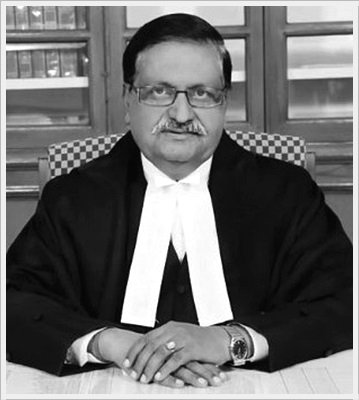
N.V. RAMANA, J.
Leave granted.
2.These appeals by special leave are filed by the appellant
challenging the impugned judgment and order dated 6
th
October,
2010 passed by the High Court of Judicature at Bombay in Writ
Petition Nos. 614-620 of 2010 whereby the High Court dismissed the
writ petitions filed by the appellant seeking quashing of the
complaints filed by the Respondent No.2 under Section 138 read with
Page 2 2
Section 141 of the Negotiable Instruments Act, 1881 (hereinafter
referred to as “the N.I. Act”).
3.The brief facts of these appeals are that Respondent No. 2, a
finance Company, filed seven complaints under the N.I. Act against
the appellant and others viz., (1) Complaint No. 3370/SS/2008
claiming Rs.1,64,69,801-14 (2) Complaint No. 3641/SS/2008 claiming
Rs.1,06,55,289-91 (3) Complaint No. 3368/SS/2008 claiming Rs.
1,41,95,806-40 (4) 3640/SS/2008 claiming Rs. 85,21,294/- (5)
3369/SS/2008 claiming Rs. 1,88,12,292/- (6) 3642/SS/2008 claiming
Rs. 1,69,95,353-50 and (7) Complaint No. 4086/SS/2009 for a claim
of Rs. 8,08,973-25. In all the complaints the allegation was that the
Respondent No. 2 Company had extended trade finance facility to
M/S Elite International Pvt. Ltd. to which the appellant was a Director
at the relevant time and several Cheques (119 in number) issued by
M/S Elite International Pvt. Ltd. aggregating to Rs.8,64,58,810-16, in
discharge of its liability towards part payment, stood dishonoured with
the banker’s remarks “insufficient funds”. According to the
complainant, at the material time, the accused (appellant) was in
charge and at the helm of affairs of M/S Elite International Pvt. Ltd.
and therefore she is vicariously liable for the default of the Company
Page 3 3
as she is responsible for the conduct of its business. Metropolitan
Magistrate, 12
th
Court, Bandra, Mumbai took cognizance of the
complaints and issued process against the accused (appellant) for
the offence punishable under Section 138 of the N.I. Act.
4.The aggrieved appellant filed Criminal Writ Petitions before the
High Court under Section 482, Cr.P.C. seeking quashing of the
criminal proceedings pending before the Metropolitan Magistrate. The
High Court initially by an interim order dated 28
th
July, 2010 granted
stay of the criminal proceedings qua the appellant and directed the
trial to be proceeded against the other accused. Finally, by the
impugned order, the High Court dismissed the writ petitions filed by
the appellant. Challenging the said order of dismissal, the appellant
has preferred these appeals before this Court.
5.The main contention advanced by the learned counsel for the
appellant is that the appellant is merely a housewife who was
appointed as a Non-Executive Director of M/s Elite International
Private Ltd. and had no active role in the conduct of business of the
Company, particularly in the issuance of the cheques in question. As
a matter of fact, the appellant had resigned as the Director much
Page 4 4
before the issuance of the cheques in question, her resignation was
also approved by the Board of Directors in the meeting held on 17
th
December, 2005. The resignation of the appellant as Director of M/S
Elite International Pvt. Ltd. has also been informed to the Registrar of
Companies by Form No. 20B under Section 159, Schedule V, Part II
of the Companies Act, 1956 when the annual return for the year
ending on 31
st
March, 2006 was filed. The trade facility was
sanctioned by the Respondent No. 2 on 19
th
January, 2005 as per the
Letter of Guarantee executed by the appellant on the same date.
The effective date of resignation of the appellant as Director of the
Company was 17
th
December, 2005. With the result of approval of
her resignation by the Board of Directors, the appellant ceased to
play any role in the activities of the Company. The Cheques in
question were issued by the Company in the year 2008 i.e. about two
and half years after resignation of the appellant as Director. This fact
itself emphasizes that the appellant was not involved in the affairs of
the Company when the Cheques were issued and had no role either
in the conduct of the business of the Company or in issuing the
Cheques.
Page 5 5
6.After resignation of the appellant as a Director, Form 32 under
the Companies Act, 1956, pursuant to Section 303(2), was filed by
M/S Elite International Pvt. Ltd. on 20
th
December, 2005 with the
Registrar of Companies indicating the appointments and changes
among Directors. In the said Form 32, the names of two Directors
who were newly appointed were shown with remarks “appointed as a
Director-Operations” and against the name of the appellant the
remarks “resigned as a Director” were shown. Taking note of this
Form 32, Respondent No. 2 arrayed the newly appointed Directors as
accused Nos. 4 & 5 in the complaints. It is thus clear that the
Respondent No. 2 is well aware of the fact that the appellant was no
longer a part of M/S Elite International Pvt. Ltd, yet initiated criminal
proceedings fastening vicarious liability on the appellant.
7.Learned counsel submitted that to fasten vicarious liability it is
necessary under Section 141 of the N.I. Act that the complainant
must aver and prove how and in what manner the appellant was
responsible in the conduct of the business of the Company. The
complainant shall also state in the light of proviso to Section 141(1),
in what capacity the appellant was in charge of day to day affairs of
the default Company at the relevant time, particularly when cheques
Page 6 6
were issued. Respondent No. 2 (complainant) did not fulfill these
prerequisites contemplated by the Act but sought to impute the
appellant with vicarious liability only on account of the fact that the
appellant had attended the Board Meeting of M/S Elite International
Pvt. Ltd. held on 14
th
August, 2004. In that meeting, the Board of
Directors authorized another Director to execute necessary
documents in connection with trade finance facility from Respondent
No. 2. The mere presence of the appellant in the Board Meeting on
14
th
August, 2004 would not amount to an offence punishable under
Section 138 of the N.I. Act. Merely arraying a Director of a Company
as an accused in the Complaint and making a bald or cursory
statement without attributing any specific role, that the Director is
responsible for the conduct of the business would not make a case of
vicarious liability against a Director of the company under Section 141
of the N.I. Act. Similarly, simply stating that the appellant was in
charge of the affairs of the Company would not be sufficient to justify
the allegation under Section 138 of the N.I. Act. In other words, the
complainant must explain the role specifically attributable to the
appellant in the commission of the offence. Placing reliance on this
Court’s judgment in National Small Industries Corporation Vs.
Page 7 7
Harmeet Singh Paintal & Anr. (2010) 3 SCC 330 learned counsel
submitted that the law is well settled by this Court in a catena of
cases that the complainant should specifically show as to how and in
what manner the accused was responsible.
8.Despite Respondent No. 2 has knowledge of the resignation of
the appellant as Director of the Company and she has no role in the
issuance of cheques in question, yet as an arm twisting measure, the
complainant arrayed the appellant in the complaint as a defaulter and
initiated criminal proceedings against her. Knowing fully well about
the change of Directors, Respondent No. 2 unnecessarily dragged
the name of appellant into the litigation in a casual and callous
manner and initiated criminal proceedings against her along with the
existing Directors of the Company which is untenable under the law.
The Metropolitan Magistrate without proper application of mind issued
process and the High Court also erred in construing the penal
provision enunciated under the N.I. Act, and wrongfully dismissed the
Criminal Writ Petitions filed by the appellant under Section 482,
Cr.P.C.
Page 8 8
9.In support of his contention that the appellant was no more a
Director of the Company and responsible for the conduct of its
business at the relevant time, learned counsel relied upon the
following:
(i)Agenda item 4 of the Minutes of the Board meeting dated 17
th
December, 2005 which reads as under:
“4. RESIGNATION OF DIRECTOR
Chairman placed before the Members of the Board a
letter received from Ms. Pooja Devidasani tendering her
resignation as a Director of the Company.
Members of the Board noted the same and then they
unanimously resolved as under:
RESOLVED THAT resignation tendered by Ms. Pooja
Devidasani be and is hereby accepted from the
conclusion of this Board Meeting”.
(ii)Form 32 submitted to the Registrar of Companies in pursuance
of requirements of provisions of the Companies Act, 1956 in which
against the name of appellant, it was shown as “resigned as a
Director”. Whereas against the names of Mr. Hitesh Haria and Mr.
Parag Tejani, the words “appointed as a Director-Operations” were
shown. Against the column “Date of appointment or change” the
dates against all the above three persons were shown as 17
th
December, 2005. Taking note of these changes, Respondent No. 2
Page 9 9
arrayed the newly added Directors as defaulters, but not omitted the
appellant who has resigned as a Director which is specified in the
very Form 32.
(iii)The Annual Return filed by the Company for the year ending
31
st
March, 2006 which also showed that the appellant was no longer
a Director of the Company. In Column IV of the Annual Return
against the name of appellant, it was clearly mentioned as “Date of
ceasing : 17-12-2005”.
(iv)A letter dated 5
th
February, 2009 issued by the default
Company in favour of Respondent No. 2. In the said letter, while
forwarding certain details/information, a list of Directors was also
sent. The said list did not contain name of the appellant.
Learned counsel for the appellant submitted that in the light of
the above Respondent No. 2 was fully aware that appellant was
ceased to be a Director of the Company (a) prior to the issuance of
cheques (b) prior to the dishonor of cheques (c) prior to the date of
issuance of legal notice (d) prior to the expiry of 15 days period after
issuance of legal notice after which cause of action to file criminal
complaints arose and (e) prior to the filing of the criminal complaints.
Page 10 10
10.Learned counsel finally submitted that the allegations set out in
the complaint do not constitute any offence against the appellant and
the High Court committed a manifest error in interpreting Section 141
of the N.I. Act in its proper perspective, which led to travesty of
justice. He therefore urged for setting aside the impugned judgment
and quash the criminal proceedings against the appellant.
11.Learned senior counsel appearing for the respondents, on the
other hand, supported the impugned judgment of the High Court and
submitted that by dismissing the writ petitions of the appellant the
High Court had neither committed any illegality nor misinterpreted the
provisions of the N.I. Act. Vehemently contending that the resignation
of the appellant itself is a disputed fact, he submitted that no certified
copy of Form 32 was produced by the appellant and only a certified
copy of Annual Return has been filed before this Court. Under
Section 79 of the Evidence Act, 1872, a Court can presume
genuineness of a document only when a certified copy is filed. Even if
certified copy of Form 32 is produced by the appellant to contend that
at the time of issuance of cheques, she had already resigned, when
such Form 32 is disputed by the complainant, it shall be the bounden
duty of the appellant to prove such Form 32 by leading evidence in
Page 11 11
the trial. Only supplying a copy of Form 32, without proving its
contents, would not be sufficient to quash a complaint under Section
138 read with Section 141 of the N.I. Act.
12.In support of his contention that when the Form 32 furnished by
the appellant was disputed by the Respondent No. 2 the High Court
cannot draw an inference on the basis of such disputed document,
learned counsel relied on decisions of this Court in Chand Dhawan
Vs. Jawahar Lal (1992) 3 SCC 317, Malwa Cotton and Spinning
Mills Ltd. Vs. Virsa Singh Sidhu (2008) 17 SCC 147. Therefore, the
High Court was right in dismissing the writ petitions preferred by the
appellant. Hence the appellant cannot take the plea of her resignation
to escape from legal liability that too when the resignation itself is a
disputed fact. Unless and until trial takes place, it cannot be held that
the appellant is no more a Director and not liable. At the material time
relating to the financial transaction between Respondent No. 2 and
the accused Company, the appellant was a Director and looking after
the day to day affairs of the Company as a Director and hence she is
liable to be prosecuted since she had connived in the commission of
offence.
Page 12 12
13.Learned counsel further submitted that apart from the
averments made in the complaint, the appellant has also executed an
irrevocable Letter of Guarantee on 19
th
January, 2005 in favour of
Respondent No. 2—Complainant, for availing trade finance facility. In
the said Letter of Guarantee, the appellant categorically undertook
that in the event of the Company failing or neglecting or refusing to
pay the amount remaining unpaid, the same would be payable by
her. She further agreed that her liability and obligation under the
Guarantee shall be continuing, absolute, unconditional and
irrevocable until the borrower is fully discharged from all liabilities,
irrespective of any disputes or differences between the parties. The
binding clause of the guarantee reads:
“I, the Guarantor, expressly, irrevocably and
unconditionally agree that your Company shall be entitled
to enforce this Guarantee without making any demand on
or taking any proceedings against the Client for all the
amounts due and payable by the Client to your Company
under and in relation to the Agreement”.
The cheques in question were issued on the basis of the said
Guarantee given by the appellant and on the simple ground of
resignation she cannot deviate from vicarious liability as per the
assurance given by her in the Letter of Guarantee.
Page 13 13
14.Learned counsel for the respondents made a reference to the
Judgment of this Court in Gunmala Sales Private Ltd. Vs. Anu
Mehta & Ors. (Criminal Appeal No. 2228 of 2014) decided on
October 17, 2014 and submitted that once in a complaint filed under
Section 138 read with Section 141 of the N.I. Act, the basic averment
is made that the Director was in charge of and responsible for the
conduct of the business of the Company at the relevant time when
the offence was committed, the Magistrate can issue process against
such Director and the basic averment is sufficient to make out a case
against the Director. Hence, learned senior counsel concluded that
there is no illegality in issuing process against the appellant.
15.We have given our thoughtful consideration to the arguments
advanced by the counsel on either side at length. The questions that
arise for determination are (i) whether the appellant is liable for
prosecution under Section 138 read with Section 141 of the N.I. Act
for the alleged offence of dishonor of cheques committed by the
default Company?; (ii) whether the High Court was right in dismissing
the writ petitions filed by the appellant seeking quashing of the
criminal proceedings initiated against her by the Respondent No. 2?
Page 14 14
16.Before delving into the merits of the case, it would be apt to
take note of relevant portions of the complaints filed by Respondent
No. 2 which read thus:
“I say that the accused No. 2 to 5 on behalf of accused
No. 1 have approached us with request for trade finance
facility and accordingly the said facility has been granted
by us to the accused as per their request and
requirement.
I say that accused No. 1 is private limited Company of
which accused No. 2, 3 & 5 are Directors and accused
No. 4 is the Director & authorized signatory of accused
No. 1 M/S Elite International Pvt. Ltd.—Imprest. At all
material time relevant and relating to the complaint,
accused No. 2 to 5 were and are in charge of and
responsible for the conduct of business of accused No. 1
and are also looking after day to day affairs of accused
No. 1. It is further submitted that accused No. 2 to 5 with
accused No. 1 are liable to be prosecuted and / or
connived in the commission of the present offence, in
their capacity as a Director/signatory of the said private
limited Company.
I say that as narrated in para 4 accused No. 2 to 5 being
responsible for the affairs of accused No. 1 i.e. private
limited Company are liable to be prosecuted for having
committed a criminal offence in the event of failure on
their part to comply with the requisitions contained in the
statutory notice dated 03-11-08, which was sent to them
both under R.P.A.D. & U.P.C. on 06/11/08. I say that
notice was received by all the accused on or about
08/11/08 and notice sent through U.P.C. are deemed to
have been served. However, accused have failed and
neglected to make our payment under the above said
dishonored cheques”.
Page 15 15
17.There is no dispute that the appellant, who was wife of the
Managing Director, was appointed as a Director of the Company—
M/S Elite International Pvt. Ltd. on 1
st
July, 2004 and had also
executed a Letter of Guarantee on 19
th
January, 2005. The cheques
in question were issued during April, 2008 to September, 2008. So far
as the dishonor of Cheques is concerned, admittedly the cheques
were not signed by the appellant. There is also no dispute that the
appellant was not the Managing Director but only a non-executive
Director of the Company. Non-executive Director is no doubt a
custodian of the governance of the Company but does not involve in
the day-to-day affairs of the running of its business and only monitors
the executive activity. To fasten vicarious liability under Section 141
of the Act on a person, at the material time that person shall have
been at the helm of affairs of the Company, one who actively looks
after the day-to-day activities of the Company and particularly
responsible for the conduct of its business. Simply because a person
is a Director of a Company, does not make him liable under the N.I.
Act. Every person connected with the Company will not fall into the
ambit of the provision. Time and again, it has been asserted by this
Court that only those persons who were in charge of and responsible
Page 16 16
for the conduct of the business of the Company at the time of
commission of an offence will be liable for criminal action. A Director,
who was not in charge of and was not responsible for the conduct of
the business of the Company at the relevant time, will not be liable for
an offence under Section 141 of the N.I. Act. In National Small
Industries Corporation (supra) this Court observed:
“Section 141 is a penal provision creating vicarious
liability, and which, as per settled law, must be strictly
construed. It is therefore, not sufficient to make a bald
cursory statement in a complaint that the Director
(arrayed as an accused) is in charge of and responsible
to the company for the conduct of the business of the
company without anything more as to the role of the
Director. But the complaint should spell out as to how and
in what manner Respondent 1 was in charge of or was
responsible to the accused Company for the conduct of
its business. This is in consonance with strict
interpretation of penal statutes, especially, where such
statutes create vicarious liability.
A company may have a number of Directors and to make
any or all the Directors as accused in a complaint merely
on the basis of a statement that they are in charge of and
responsible for the conduct of the business of the
company without anything more is not a sufficient or
adequate fulfillment of the requirements under Section
141.
18.In Girdhari Lal Gupta Vs. D.H. Mehta & Anr. (1971) 3 SCC
189, this Court observed that a person ‘in charge of a business’
Page 17 17
means that the person should be in overall control of the day to day
business of the Company.
19.A Director of a Company is liable to be convicted for an offence
committed by the Company if he/she was in charge of and was
responsible to the Company for the conduct of its business or if it is
proved that the offence was committed with the consent or
connivance of, or was attributable to any negligence on the part of the
Director concerned [See: State of Karnataka Vs. Pratap Chand &
Ors. (1981) 2 SCC 335].
20.In other words, the law laid down by this Court is that for
making a Director of a Company liable for the offences committed by
the Company under Section 141 of the N.I. Act, there must be
specific averments against the Director showing as to how and
in what manner the Director was responsible for the conduct of
the business of the Company.
21.In Sabitha Ramamurthy & Anr. Vs. R.B.S.
Channbasavaradhya (2006) 10 SCC 581, it was held by this Court
that it is not necessary for the complainant to specifically reproduce
the wordings of the section but what is required is a clear statement
Page 18 18
of fact so as to enable the court to arrive at a prima facie opinion that
the accused is vicariously liable. Section 141 raises a legal fiction.
By reason of the said provision, a person although is not
personally liable for commission of such an offence would be
vicariously liable therefor. Such vicarious liability can be
inferred so far as a company registered or incorporated under
the Companies Act, 1956 is concerned only if the requisite
statements, which are required to be averred in the complaint
petition, are made so as to make the accused therein vicariously
liable for the offence committed by the company. By verbatim
reproducing the wording of the Section without a clear statement of
fact supported by proper evidence, so as to make the accused
vicariously liable, is a ground for quashing proceedings initiated
against such person under Section 141 of the N.I. Act.
22.As held by this Court in Pepsi Foods Ltd. & Anr. Vs. Special
Judicial Magistrate & Ors. (1998) 5 SCC 343, summoning of an
accused in a criminal case is a serious matter. Criminal law cannot be
set into motion as a matter of course. The order of the Magistrate
summoning the accused must reflect that he has applied his mind to
the facts of the case and the law applicable thereto. He has to
Page 19 19
examine the nature of allegations made in the complaint and the
evidence both oral and documentary in support thereof and would
that be sufficient for the complainant to succeed in bringing charge
home to the accused. It is not that the Magistrate is a silent spectator
at the time of recording of preliminary evidence before summoning of
the accused. The Magistrate has to carefully scrutinise the evidence
brought on record and may even himself put questions to the
complainant and his witnesses to elicit answers to find out the
truthfulness of the allegations or otherwise and then examine if any
offence is prima facie committed by all or any of the accused.
23.In Gunmala Sales Private Ltd. (supra) on which learned
counsel for the respondents has heavily relied, this Court at Para
33(c) held :
“In the facts of a given case, on an overall reading of the
complaint, the High Court may, despite the presence
of the basic averment, quash the complaint because
of the absence of more particulars about role of
the Director in the complaint. It may do so
having come across some unimpeachable,
uncontrovertible evidence which is beyond suspicion
or doubt or totally acceptable circumstances which
may clearly indicate that the Director could not
have been concerned with the issuance of cheques
and asking him to stand the trial would be abuse of
Page 20 20
the process of the court. Despite the presence of
basic averment, it may come to a conclusion that no
case is made out against the Director. Take for
instance a case of a Director suffering from a
terminal illness who was bedridden at the relevant
time or a Director who had resigned long before
issuance of cheques. In such cases, if the High
Court is convinced that prosecuting such a Director
is merely an arm-twisting tactics, the High Court may
quash the proceedings. It bears repetition to state that
to establish such case unimpeachable, uncontrovertible
evidence which is beyond suspicion or doubt or some
totally acceptable circumstances will have to be brought
to the notice of the High Court. Such cases may be few
and far between but the possibility of such a case being
there cannot be ruled out”.
24.In the light of the law laid down by this Court, the present case
be examined. It is not in dispute that two persons, namely, Parag
Tejani and Hitesh Haria, were inducted as Director-Operations of the
Company w.e.f. 17
th
December, 2005 by virtue of a resolution passed
by the Company on the same date. It is on the same date the
appellant had ceased to be a Director as per the Annual Report which
is not disputed by the Respondent No. 2. A perusal of the Complaint
shows that Respondent No. 2 has made the newly appointed
Directors-Operations Parag Tejani and Hitesh Haria also as accused
stating that all the accused approached him with a request for trade
Page 21 21
finance facility and accordingly the said facility was granted as per
their request. It thus gives an impression that Respondent No. 2 is
well aware of the change of Directors in the accused Company. In
spite of knowing the developments taken place in the Company that
the appellant was no longer a Director of the Company and two new
Directors were inducted, the Respondent No. 2 has chosen to array
all of them as accused in the Complaints. Moreover, Respondent No.
2 had not disputed this fact emphatically in the proceedings before
the High Court. We have gone though the reply affidavit filed by
Respondent No. 2 before the High Court of Bombay.
25.A bare reading of the averment of Respondent No. 2 before the
High Court, suggests that his case appears to be that the appellant
has not proved her resignation in unequivocal terms and it is a
disputed question of fact. It is noteworthy that the respondent No. 2
except making a bald statement and throwing the burden on the
appellant to prove authenticity of documents, has not pleaded
anywhere that the public documents Form 32 and Annual Return are
forged and fabricated documents. Curiously, respondent No. 2 on
the one hand raises a doubt about the genuineness of Form 32, a
public document, through which the default Company had
Page 22 22
communicated the change of Directors to the Registrar of the
Companies with the effect of resignation of the appellant and
induction of two Directors-Operations and on the other hand, he has
arrayed the two newly appointed Directors-Operations as accused
whose names were communicated to the Registrar of Companies by
the very same Form 32. The respondent/complainant cannot be
permitted to blow hot and cold at the same time. When he denies the
genuineness of the document, he cannot act upon it and array the
newly appointed Directors as accused.
26.We have also perused the copy of Annual Return filed by M/S
Elite International Pvt. Ltd. for the year 2006, on 31
st
March, 2006
furnished in Form 20B as per Section 159 of the Companies Act,
1956. Column IV of Schedule V – Part II of the Annual Return,
requires information regarding Directors/Manager/Secretary (Past
and Present) in which against the name of Devidasani Ravinder
Pooja—appellant it was mentioned “Date of ceasing : 17-12-2005”.
Admittedly, a certified copy of the Annual Return became part of
record. Hence, we are of the considered opinion that the factum of
appellant resigning from the Board of Directors is established.
Page 23 23
27.Unfortunately, the High Court did not deal the issue in a proper
perspective and committed error in dismissing the writ petitions by
holding that in the Complaints filed by the Respondent No. 2, specific
averments were made against the appellant. But on the contrary,
taking the complaint as a whole, it can be inferred that in the entire
complaint, no specific role is attributed to the appellant in the
commission of offence. It is settled law that to attract a case under
Section 141 of the N.I. Act a specific role must have been played by a
Director of the Company for fastening vicarious liability. But in this
case, the appellant was neither a Director of the accused Company
nor in charge of or involved in the day to day affairs of the Company
at the time of commission of the alleged offence. There is not even a
whisper or shred of evidence on record to show that there is any act
committed by the appellant from which a reasonable inference can be
drawn that the appellant could be vicariously held liable for the
offence with which she is charged.
28.In the entire complaint, neither the role of the appellant in the
affairs of the Company was explained nor in what manner the
appellant is responsible for the conduct of business of the Company,
was explained. From the record it appears that the trade finance
Page 24 24
facility was extended by the Respondent No. 2 to the default
Company during the period from 13
th
April, 2008 to 14
th
October,
2008, against which the Cheques were issued by the Company which
stood dishonored. Much before that on 17
th
December, 2005 the
appellant resigned from the Board of Directors. Hence, we have no
hesitation to hold that continuation of the criminal proceedings
against the appellant under Section 138 read with Section 141 of the
N.I. Act is a pure abuse of process of law and it has to be interdicted
at the threshold.
29.So far as the Letter of Guarantee is concerned, it gives way for
a civil liability which the respondent No. 2—complainant can always
pursue the remedy before the appropriate Court. So, the contention
that the cheques in question were issued by virtue of such Letter of
Guarantee and hence the appellant is liable under Section 138 read
with Section 141 of the N.I. Act, cannot also be accepted in these
proceedings.
30.Putting the criminal law into motion is not a matter of course.
To settle the scores between the parties which are more in the nature
of a civil dispute, the parties cannot be permitted to put the criminal
Page 25 25
law into motion and Courts cannot be a mere spectator to it. Before a
Magistrate taking cognizance of an offence under Section 138/141 of
the N.I. Act, making a person vicariously liable has to ensure strict
compliance of the statutory requirements. The Superior Courts should
maintain purity in the administration of Justice and should not allow
abuse of the process of the Court. The High Court ought to have
quashed the complaint against the appellant which is nothing but a
pure abuse of process of law.
31.For all the foregoing reasons, we are of the view that this is a fit
case for quashing the complaint, and accordingly allow these appeals
by setting aside the impugned judgment passed by the High Court
and quash the criminal proceedings pending against the appellant
before the Trial Court.
.….…………………………………………...J.
(SUDHANSU JYOTI MUKHOPADHAYA)
…………… .....………………………………J.
(N.V. RAMANA)
NEW DELHI
DECEMBER 17, 2014

 Login with google
Legal Notes
Add a Note....