
As per case facts, an arbitration award granted Rajasthan State Electricity Board workmen retrospective pay. Provident Fund authorities sought contributions from these arrears. The Board contested, claiming arrears weren't "basic ...
No Acts & Articles mentioned in this case
http://JUDIS.NIC.IN SUPREME COURT OF INDIA Page 1 of 6
PETITIONER:
PRANTIYA VIDHUT MANDAL MAZDOORFEDERATION ETC. ETC.
Vs.
RESPONDENT:
RAJASTHAN STATE ELECTRICITY BOARDAND ORS. ETC.ETC.
DATE OF JUDGMENT23/04/1992
BENCH:
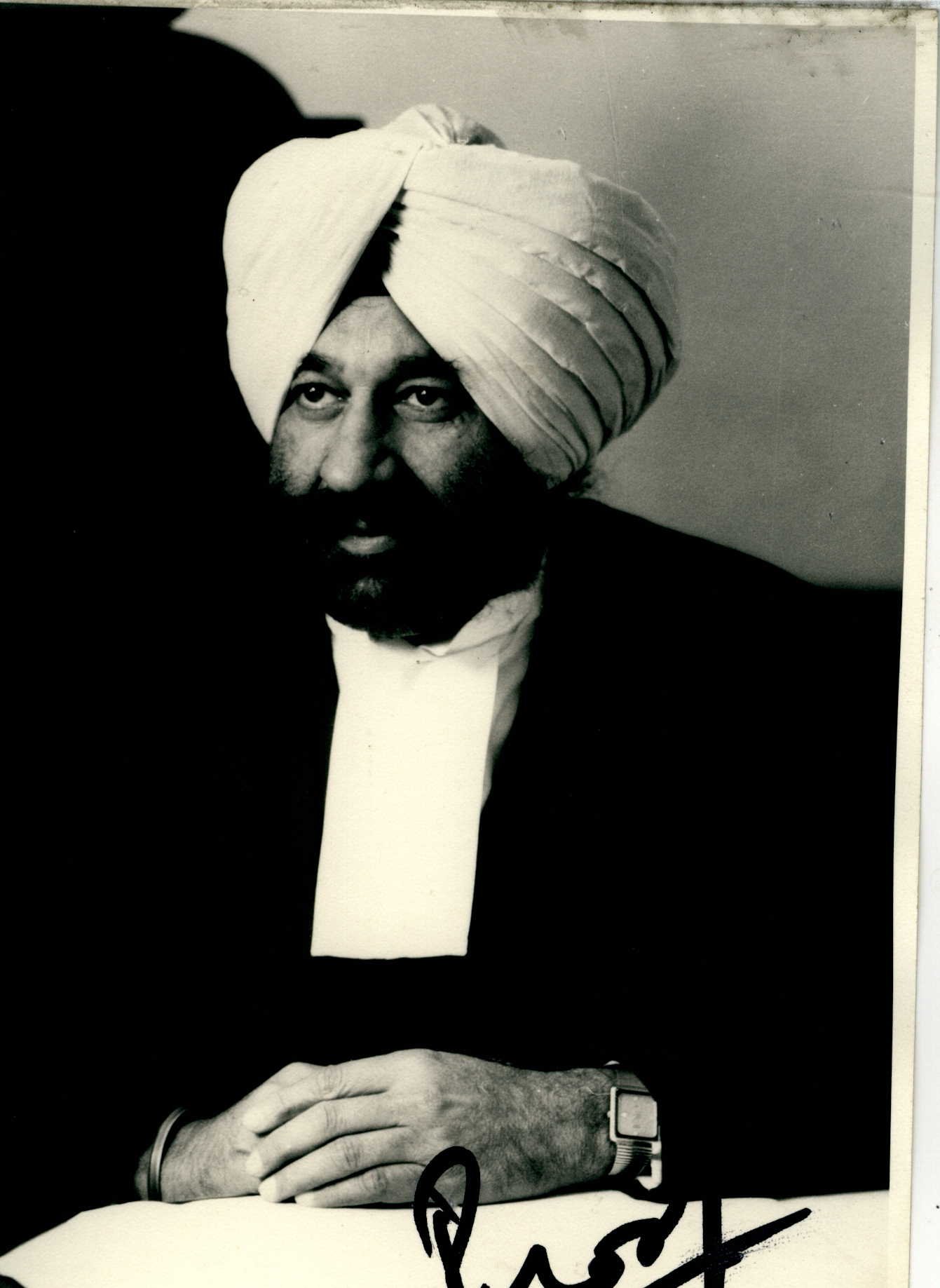
KULDIP SINGH (J)
BENCH:
KULDIP SINGH (J)
YOGESHWAR DAYAL (J)
CITATION:
1992 AIR 1737 1992 SCR (2) 757
1992 SCC (2) 723 JT 1992 (3) 51
1992 SCALE (1)922
ACT:
Employee's Provident Funds and Miscellaneous Provisions
Act, 1952
Sections 2(b) and 6-``Basic wages for the time being
payable''-Interpretation of-Award under Industrial Disputes
Act-Gives revised pay scales to employees with retrospective
effect-Arrears of wages paid to employees-Provident fund-
Contribution-Employees liability to pay-Deduction from wage
arrears of employees-Whether arises.
HEADNOTE:
A dispute regarding wages and other conditions of serv-
ice arose between the State Electricity Board-Respondent
No.1, and its workmen. The parties arrived at a settlement
as a result of which the dispute was referred to the arbi-
trators under the Industrial Disputes Act.
The arbitrators entered upon the reference and gave an
award dated May 20, 1980, according to which various catego-
ries of workmen were to be paid higher wages with effect
from April 1, 1980. The arrears of pay and other benefits
accrued to the workmen were to be paid in four equal instal-
ment. The first instalment was payable on December 1, 1985
and the remaining three at an interval of six months each.
The Provident Fund authorities issued directions that
the provident fund contributions be deducted from the ar-
rears paid to the workmen. Accordingly, when the first
instalment was disbursed, the Board deducted the employees
contribution and also made its own contribution as required
under the Provident Fund Act. However, at the time of the
second instalment, the Board filed a Writ Petition under
Article 226 challenging the directions of the Provident Fund
authorities, contending that arrears payable to the employ-
ees as a result of the award of the arbitrators were not the
``basic wages'' under section 2(b) of the Provident Fund
Act.
758
A single Judge of the High Court dismissed the Writ
Petition, but on appeal a Division Bench set aside the
judgement and allowed the Writ petition, holding that the
contribution is to be paid on wages `for the time being
payable to the employees' and not on wages, the payment of
http://JUDIS.NIC.IN SUPREME COURT OF INDIA Page 2 of 6
which, even at a future date, is undecided and does not
arise out of the contract of employment, and that wages
payable under an award of the arbitrators cannot be termed
as deferred wages so as to mean that they had accrued at a
particular time but were payable at a later date according
to the terms of the contract.
Two appeals were filed against the judgement of the
Division Bench to this Court, one by the Regional Provident
Fund Commissioner and the other by the workmen of the Board.
Allowing the appeals, and setting aside the judgement of
the Division Bench, this Court,
HELD: 1.(i) The expression ``basic wages for the time
being payable to each of the employees'' under section 6 of
the Industrial Disputes Act means the basic wages at the
relevant time. When the existing pay-scales are revised with
effect from the back-date, then the revised-wages posterior
to that date are the ``basic wages for the time being pay-
able''. The High Court fell into error in giving a strained
interpretation to the provisions of the Provident Fund and
Miscellaneous Provisions Act. [764 C]
1.(ii) When the original emoluments earned by an employ-
ee were ``basic wages'' under the Provident Fund Act, the
substituted emoluments as a result of the award are to be
regarded as``basic wages''.[763 E]
2. When an award gives revised pay-scales, the employees
become entitled to the revised emoluments and where the said
revision is with the retrospective effect, the arrears paid
to employees, as a consequence, are the emoluments earned by
them while on duty. [763 C]
3. The reference to the arbitration, the acceptance of
the award by the parties and the resultant wage increase
with retrospective effect are the direct consequences of the
settlement between the workmen and the Board. Revision of
wage structure as a result of an award under the Industrial
Disputes Act, has to be taken as a part of the contract of
employment in the context of the Provident Fund and Miscel-
laneous
759
Provisions Act. [763 E]
Harihar Polyfibres v. The Regional Director ESI Corpora-
tion, [1985]1 SCR, referred to.
4. The workmen have inherent right to collective bar-
gaining under the Industrial Disputes Act. The demands
raised by the workmen through their unions are decided by
conciliation, settlement or adjudication under the Act.
These are time-consuming proceedings. When ultimately the
dispute is settled/decided in workers' favour, the accrued
benefit may be made available to them from a back date. [764
A]
In the instant case, the award given in the year 1985
has been made operative from April 1, 1980. It would be in
conformity with the objects of the Provident Fund and Mis-
cellaneous Provisions Act, which is a social welfare legis-
lation, to hold that the revised pay-scales have become part
of the contract of employment with effect from April 1,
1980. [764 B]
JUDGMENT:
CIVIL APPELLATE JURISDICTION : Civil Appeal No. 1790 of
1992.
From the Judgement and Order dated 30.6.1987 of the
Rajasthan High Court in D.B. Special Appeal (Writ) No.305 of
1986.
http://JUDIS.NIC.IN SUPREME COURT OF INDIA Page 3 of 6
A.K. Goel for the Appellant.
Vijay Bahuguna, V.C. Mahajan, S.K. Jain, Ms.Sushma Suri
and Ms.C.K. Sucharita for the Respondents.
The Judgement of the Court was delivered by
KULDIP SINGH, J. Special leave granted.
The question for our consideration in these appeals is
whether arrears of wages, as result of wage-increase-award
under the Industrial Disputes Act, 1947(The Act), would come
within the definition of ``basic wages'' under Section 2(b)
of the Provident Fund and Miscellaneous Provisions Act,
1952(The Fund Act).
A dispute regarding wages and other conditions of serv-
ice arose between the Rajasthan State Electricity Board (The
board) and its workmen. The parties arrived at a settlement
as result of which the
760
dispute was referred to the arbitrators under the Act. The
arbitrators entered upon the reference and gave an award
dated May 20, 1985. The relevant part of the award is re-
produced as under:-
``The matters in dispute (terms of reference)
are as under:-
(1) Wages increase :
(a) What should be the Minimum wages for
regular unskilled workmen of Rajasthan State
Electricity board in pay Scales No.1 with
effect from April 1, 1980 ?
(b) What should be the wages structure of
different categories of workmen of Rajasthan
State Electricity Board covered under pay
scale Nos.1 to 6 with effect from April 1,
1980 ?
Decisions on matters in dispute (terms of
reference)
After hearing the arguments on behalf of the
parties and considering the documents supplied
by them, and taking into account other rele-
vant matters, our decisions on the matters in
dispute are given below:-
The minimum wages for regular unskilled work-
men of RSEB in pay scale No.1 with effect
from 1st April, 1980 shall be Rs.400 (Four
hundred only) with NIL Dearness Allowance or
any other addition to wages in the nature of
Dearness Allowance, henceforth referred to as
D.A.
Revised pay scales: on the basis of minimum
basic pay of Rs.400 with NIL DA, Revised pay
scales Nos.1 to 6 shall be as per Annexure-I
to this Award with NIL DA with effect from 1st
April, 1980.''
According to the award various categories of workmen
were to be paid higher wages with effect from April 1, 1980.
The arrears of pay and other benefits accrued to the workmen
were to be paid in four equal instalments. The first in-
stalment was payable on December 1, 1985 and the remaining
three at an interval of six months each. The Provident Fund
authorities issued directions that provident fund contribu-
tions be deducted from the arrears paid to workmen. Accord-
ingly when the first instalment was disbursed
761
the Board deducted the employees contribution and also made
its own contributions as required under the Fund Act. Howev-
er, at the time of the second instalment, the Board filed a
writ petition under Article 226 of the Constitution of India
http://JUDIS.NIC.IN SUPREME COURT OF INDIA Page 4 of 6
before the Rajasthan High Court challenging the directions
of the Provident Fund authorities on the ground that arrears
payable to the employees as a result of the award of the
arbitrators were not the ``basic wages'' under Section 2(b)
of the Fund Act. A learned Single Judge of the High Court
dismissed the writ petition. On appeal, a Division Bench of
the High Court set aside the judgement of the learned Single
Judge and allowed the writ petition on the following reason-
ing:-
"If a contract of employment provides for payment
of wages at a future date then it may fall within
the definition of wages as the same becomes payable
under the contract of employment, wages payable
under some statute or payable under orders of a
Court cannot be said to be wages payable under a
contract of employment. The Scheme framed under
Section 6 of the P.F. Act provides for calculation
of the contribution on basis of the emoluments
actually drawn during a whole month. The employer
has to submit a consolidated statement of the
employees who are members of the fund alongwith
their basic wages and this return is to be submit-
ted within a prescribed time. If subsequently there
is a change in the basic wages then there is no
provision in the scheme for preparing an amended
statement. The contribution recovered from the
employees has to be entered every month by the
employer in the contribution card. A monthly entry
once made will have to remain there unchanged.
Unless there is a specific provision in the scheme
for payment of contribution to the fund, the same
cannot be said to be payable by implication.
Contribution is to be paid on wages 'for the time
being payable to the employees' and not on wages,
the payment of which, even at a future date, is
undecided and does not arise out of the contract of
employment. Wages payable under an award of the
arbitrators cannot be termed as deferred wages so
as to mean that they had accrued at a particular
time but were payable at a later date according to
the terms of the contract. It has also not been
shown that the reference of disputes to the arbi-
trators was under the terms of the employment so
as to include wages
762
Payable under the award into the definition of
wages under S.2(b)of the P.F.Act, wages payable
under the award are neither in the nature of incre-
ments payable to an employee nor wages which have
remained unpaid due to some reason".
These two appeals by the regional Provident Fund
Commissioner, Jaipur Rajashtan and by the workmen
of the Board are against the Judgment of the Divi-
sion bench of the High Court.
Sections 2 (b) and 6 of the act which are relevant are
reproduced hereunder:-
2(b) "BASIC WAGES" means all emoluments which are
earned by an employee while on duty or on leave
with wages in accordance with the terms of the
contract of employment and which are paid or pay-
able in cash to him, but does not include -
(i) cash value of any food concession;
(ii) any dearness allowance (that is to say, all
cash payments by what ever name called paid to an
employee on account of a rise in the cost of liv-
http://JUDIS.NIC.IN SUPREME COURT OF INDIA Page 5 of 6
ing), house rent allowance, over-time allowance,
bonus, commission or any other similar allowance
payable to the employee in respect of his employ-
ment or of work done in such employments.
(iii) any presents made by the employer".
(6) " contributions and matters which may be
provided for in scheme;- the contribution which
shall be paid by the employer to the Fund shall be
six and a quarter per cent of the basic
wages[dearness allowance and retaining allowance
(if any)] for the time being payable to each of the
employees (whether employed by him directly or by
or through a contractor) and the employees' contri-
butions shall be equal to the contribution payable
by the employer in respect of him and may, if any
employee so desires and if the scheme makes provi-
sion therefore, be an amount not exceeding eight
and one-third per cent of his basic wages(dearness
allowance and retaining allowance (if any)....."
763
Reading the above quoted two sections together the
expression "basic wages" means:-
(i) All emoluments which are earned by an employee
while on duty or on leave;
(ii) with wages in accordance with the terms of the
contract of employment;
(iii) which are paid or payable in cash; and
(iv) are payable for the time being to each of the
employees.
When an award gives revised pay-scale the employees
become entitled to the revised emoluments and where the said
revision is with retrospective effect, the arrears paid to
the employees, as a consequence, are the emoluments earned
by them while on duty.
We do not agree with the Division Bench of High court
that the wages which are substituted from back-date as a
result of an award under the Act are not the basic wages as
defined under the Fund Act. If the original emoluments
earned by an employee were "basic wages" under the Fund act,
there is no justification to hold that the substituted
emoluments as a result of the award are not the "basic
wages". The reference to the arbitration, the acceptance of
the award by the parties and the resultant wage-increase
with retrospective effect, are the direct consequences of
the settlement between the workmen and the Board. We are of
the view that revision of wage-structure, as a result of an
award under the Act, has to be taken as a part of the con-
tract of employment in the context of the Fund Act. This
court in Harihar Polyfibres v. The regional Director ESI
Corporation [1985] 1 SCR 712 while dealing with the defini-
tion of wages under Employees' State Insurance Act 1948 held
as under:-
"Now , under the definition first, whatever remu-
neration is paid or payable to an employee the
terms of the contract of the employment, express or
implied is wages; thus if remuneration is paid in
terms of the original contract of employment or in
terms of settlement arrived at between the employer
and the employees which by necessary implication
becomes part of the contract of employment it is
wages".
764
The workmen have inherent right to collective-bargain-
ing under the act. The demands raised by the workmen through
their unions are decided by conciliation, settlement or
http://JUDIS.NIC.IN SUPREME COURT OF INDIA Page 6 of 6
adjudication under the Act. These are time-consuming Pro-
ceedings. When ultimately the dispute is settled/decided in
workers favour the accrued -benefit may be made available
to them from back-date. This is what has happened in the
present case. The award given in the year 1985 has been made
operative from April 1,1980. Under the circumstances it
would be in conformity with the objects of the Fund Act,
which is a social welfare legislation, to hold that the
revised pay-scales have become part of the contract of
employment with effect from April 1,1980.
The expression" basic wages for the time being payable
to each of the employees" under Section 6 of the Act means
the 'basic wages" at the relevant time. When the existing
pay-scales are revised with effect from back-date then the
revised-wages posterior to that date are the "basic wages
for the time being payable". The High Court in our view fell
into error in giving a strained interpretation to the provi-
sions of the Fund Act.
We, therefore, allow the appeals, set aside the judg-
ment of the Division bench of the High court and dismiss the
writ petition of the Board with costs. We quantify the costs
as Rs.10000 to be paid to the workmen.
N.V.K. Appeals allowed
765

 Login with google
Legal Notes
Add a Note....