
This appeal arises from an order of the High Court of Punjab and Haryana at Chandigarh, which dismissed a Letters Patent Appeal (LPA) and upheld the decision of the learned ...
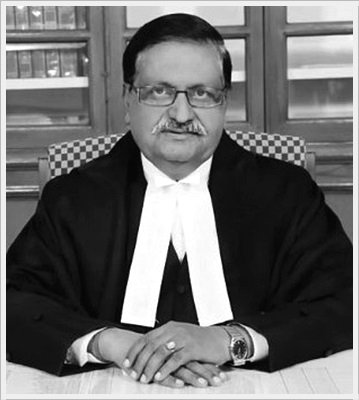

No Acts & Articles mentioned in this case
Page 1 C.A.@ SLP© No.22487 of 2012 - 1 -
IN THE SUPREME COURT OF INDIA
CIVIL APPELLATE JURISDICTION
CIVIL APPEAL NO. 8434 OF 2014
(Arising out of SLP(C) NO. 22487 of 2012)
RAGHUBIR SINGH ………APPELLANT
Vs.
GENERAL MANAGER,
HARYANA ROADWAYS, HISSAR ………RESPONDENT
J U D G M E N T
Leave granted.
2. This appeal has been filed by the appellant
against the order dated 09.01.2012 passed by the High
Court of Punjab and Haryana at Chandigarh in L.P.A.
No. 20 of 2012, whereby the High Court dismissed the
L.P.A. and affirmed the order dated 14.11.2011 passed
by the learned Single Judge of the High Court in the
C.W.P. No.20996 of 2011, urging various grounds.
3. The necessary relevant facts are stated hereunder
to appreciate the case of the appellant and to
ascertain whether the appellant is entitled for the
relief as prayed in this appeal.
In 1976, the appellant joined the Haryana
Roadways as a conductor. On 10.08.1993, the appellant
Page 2 C.A.@ SLP© No.22487 of 2012 - 2 -
was charged under Section 409 of the Indian Penal Code
in a criminal case at the instance of the respondent
for alleged misappropriation of the amount collected
from tickets and not depositing the cash in relation
to the same in time. The appellant was arrested by the
Jurisdictional police and sent to judicial custody on
15.09.1994. Further, on 21.10.1994 the services of the
appellant were terminated by the General Manager,
Haryana Roadways, Hissar, the respondent herein. On
15.11.1994, the appellant upon being released on bail
was given an oral assurance by the respondent that he
will be reinstated to the post after his acquittal by
the Court.
4. On 11.07.2002, upon being acquitted by the Court of
Judicial Magistrate, First Class, Hissar, in Crl. Case
No. 33-I of 1994, the appellant reported to join his
duty, but he was informed by the respondent that his
services stood terminated w.e.f. 21.10.1994. The
appellant served the demand notice upon the respondent
which was not acceded to and therefore, the industrial
dispute with regard to order of termination from his
services was raised before the conciliation officer.
Page 3 C.A.@ SLP© No.22487 of 2012 - 3 -
On failure of the conciliation proceedings before him,
the industrial dispute was referred by the State
Government in exercise of its statutory power under
Section 10 (1) (c) of the Industrial Disputes Act,
1947 (for short ‘the Act’) to the Labour Court, Hissar
for adjudication of the existing industrial dispute in
relation to the order of dismissal of the appellant
from his services. After adjudication of the points of
dispute referred to it, the Labour Court vide its
award dated 22.05.2009 declared that the termination
of the appellant from his services was illegal and
passed an award of reinstatement of the appellant with
60% back wages from the date of issuance of demand
notice till publication of the award and full back
wages thereafter, till reinstatement.
5. Aggrieved by the same, the respondent-Haryana
Roadways filed C.W.P. No. 13366 of 2009 before the
High Court of Punjab and Haryana at Chandigarh. The
High Court vide its order dated 01.04.2010 set aside
the award dated 22.05.2009 and remanded the case back
to the Labour Court for fresh adjudication in the
light of the applicability of the provisions of
Page 4 C.A.@ SLP© No.22487 of 2012 - 4 -
Article 311(2)(b) of the Constitution of India, to the
appellant/workman.
6. The Labour Court vide its award dated 17.05.2011 in
R.M. No.3 of 2010 answered the reference by passing an
award against the appellant on the ground that the
reference of the industrial dispute is time barred.
The appellant challenged the correctness of the said
award by filing a Civil Writ Petition No.20996 of 2011
before the High Court, which was dismissed on
14.11.2011 by the learned single Judge of the High
Court holding that the decision of the disciplinary
authority of the respondent is in the public interest
and therefore, the same does not warrant interference.
7. The appellant thereafter filed Letters Patent Appeal
No. 20 of 2012 before the Division Bench of the High
Court against the order of the learned single Judge.
The same was dismissed vide order dated 09.01.2012 on
the ground that the services of the appellant were
terminated by the respondent on 21.10.1994 in exercise
of the powers conferred upon it under the provisions of
Article 311(2)(b) of the Constitution of India,
Page 5 C.A.@ SLP© No.22487 of 2012 - 5 -
whereas the appellant had raised the industrial dispute
vide the demand notice in the year, 2002. The Division
Bench of the High Court found no illegality or
irregularity in the impugned judgment passed by the
learned single Judge of the High Court.
8. Aggrieved by the impugned judgment and order dated
09.01.2012 of the High Court of Punjab and Haryana,
the appellant has filed this appeal urging various
grounds.
9. It has been contended by the learned counsel for
the appellants that the services of the appellant was
illegally terminated from his services on the ground
of alleged misconduct of unauthorised absence, and no
enquiry was conducted before the termination of
services of the appellant. Further, it is contended
that the reasons accorded by the respondent are not
justified for dispensing with the inquiry procedure in
relation to the allegations against the appellant and
invoking the provisions of Article 311(2)(b) of the
Constitution of India and the respondent had
terminated the services of the appellant without
complying with the principles of natural justice.
Page 6 C.A.@ SLP© No.22487 of 2012 - 6 -
10. The learned Additional Advocate General for the
State of Haryana, Mr. Narender Hooda has vehemently
contended that the Labour Court was right in rejecting
the reference of the industrial dispute being on the
ground that it was barred by limitation by answering
the additional issue No. 2 by placing reliance upon
the decision of this Court in the case of Assistant
Engineer, Rajasthan State Agriculture Marketing Board,
Sub-Division, Kota v. Mohan Lal
1
wherein this Court has
held as under:-
“19. We are clearly of the view that
though Limitation Act, 1963 is not
applicable to the reference made under
the Industrial Disputes Act, 1947, but
delay in raising industrial dispute is
definitely an important circumstance
which the Labour Court must keep in
view at the time of exercise of
discretion irrespective of whether or not
such objection has been raised by the
other side. The legal position
laid down by this Court in
Assistant Engineer, Rajasthan Development
Corporation and Anr. v. Gitam Singh
(2013) 5 SCC 136 that before exercising
its judicial discretion, the Labour Court
has to keep in view all relevant factors
including the mode and manner of
appointment, nature of employment, length
of service, the ground on which
termination has been set aside and the
1
(2013) 14 SCC 543
Page 7 C.A.@ SLP© No.22487 of 2012 - 7 -
delay in raising industrial dispute
before grant of relief in an industrial
dispute, must be invariably followed.”
11. In our view of the facts and circumstances of the
case on hand, the reference was made by the State
Government to the Labour Court for adjudication of the
existing industrial dispute; it has erroneously held
it to be barred by limitation. This award was further
erroneously affirmed by the High Court, which is bad
in law and therefore the same is liable to be set
aside. According to Section 10(1) of the Act, the
appropriate government ‘at any time’ may refer an
industrial dispute for adjudication, if it is of the
opinion that such an industrial dispute between the
workman & the employer exists or is apprehended.
Section 10(1) reads as follows:
“10(1)[Where the appropriate government
is of opinion that any industrial dispute
exists or is apprehended, it may at any
time], by order in writing-
(a) refer the dispute to a Board for
promoting a settlement thereof; or
(b) refer any matter appearing to be
connected with or relevant to the dispute
to a court for inquiry; or
Page 8 C.A.@ SLP© No.22487 of 2012 - 8 -
(c) refer the dispute or any matter
appearing to be connected with, or
relevant to, the dispute, if it relates
to any matter specified in the Second
Schedule, to a Labour Court for
adjudication; or
(d) refer the dispute or any matter
appearing to be connected with, or
relevant to, the dispute , whether it
relates to any matter specified in the
Second Schedule or the Third Schedule, to
a Tribunal for adjudication.”
Thus, it is necessary for us to carefully observe
the phrase ‘at any time’ used in this section.
Therefore, there arises an issue whether the question
of limitation is applicable to the reference of the
existing industrial dispute that would be made by the
State Government either to the Labour Court or
Industrial Tribunal for adjudication at the instance
of the appellant. This Court in Avon Services
Production Agencies (Pvt.) Ltd. v. Industrial
Tribunal, Haryana & Ors.
2
, after interpreting the
phrases ‘at any time’ rendered in Section 10(1) of the
Act, held thus:-
“7…….Section 10(1) enables the
appropriate Government to make reference
of an industrial dispute which exists or
2
(1979) 1 SCC 1
Page 9 C.A.@ SLP© No.22487 of 2012 - 9 -
is apprehended at any time to one of the
authorities mentioned in the section. How
and in what manner or through what
machinery the Government is apprised of
the dispute is hardly relevant.……The only
requirement for taking action under
Section 10(1) is that there must be some
material before the Government which will
enable the appropriate Government to form
an opinion that an industrial dispute
exists or is apprehended. This is an
administrative function of the Government
as the expression is understood in
contradistinction to judicial or quasi-
judicial function…”
Therefore, it is implicit from the above case
that in case of delay in raising the industrial
dispute, the appropriate government under Section
10(1) of the Act has the power, to make reference to
either Labour Court or Industrial Tribunal, if it is
of the opinion that any industrial dispute exists or
is apprehended at any time, between the workman and
the employer. Further, in Sapan Kumar Pandit v. U.P.
State Electricity Board & Ors.
3
, it is held by this
Court as under:-
“15.There are cases in which lapse of
time had caused fading or even eclipse
of the dispute. If nobody had kept the
dispute alive during the long interval
it is reasonably possible to conclude in
3
(2001)6 SCC 222
Page 10 C.A.@ SLP© No.22487 of 2012 - 10 -
a particular case that the dispute
ceased to exist after some time. But
when the dispute remained alive though
not galvanized by the workmen or the
Union on account of other justified
reasons it does not cause the dispute to
wane into total eclipse. In this case
when the Government have chosen to refer
the dispute for adjudication
under Section4K of the U.P. Act the High
Court should not have quashed the
reference merely on the ground of delay.
Of course, the long delay for making the
adjudication could be considered by the
adjudicating authorities while moulding
its reliefs. That is a different matter
altogether. The High Court has obviously
gone wrong in axing down the order of
reference made by the Government for
adjudication. Let the adjudicatory
process reach its legal culmination.”
(Emphasis laid by the court)
12. Therefore, in our considered view, the
observations made by this Court in the Rajasthan State
Agriculture Marketing Board case (supra) upon which
the learned Additional Advocate General for the State
of Haryana has placed reliance cannot be applied to
the fact situation of the case on hand, for the reason
that the Labour Court has erroneously rejected the
reference without judiciously considering all the
relevant factors of the case particularly the points
of dispute referred to it and answered the 2
nd
issue
Page 11 C.A.@ SLP© No.22487 of 2012 - 11 -
regarding the reference being barred by limitation but
not on the merits of the case. The said decision has
no application to the fact situation and also for the
reason the catena of decisions of this Court referred
to supra, wherein this Court has categorically held
that the provisions of Limitation Act under Article
137 has no application to make reference by the
appropriate government to the Labour Court/Industrial
Tribunal for adjudication of existing industrial
dispute between workmen and the employer.
13. In the case on hand, no doubt there is a delay in
raising the dispute by the appellant; the Labour Court
nevertheless has the power to mould the relief
accordingly. At the time of adjudication, if the
dispute referred to the Labour Court is not
adjudicated by it, it does not mean that the dispute
ceases to exist. The appropriate government in
exercise of its statutory power under Section 10(1)(c)
of the Act can refer the industrial dispute, between
the parties, at any time, to either the jurisdictional
Labour Court/Industrial Tribunal as interpreted by
Page 12 C.A.@ SLP© No.22487 of 2012 - 12 -
this Court in the Avon Services case referred to
supra. Therefore, the State Government has rightly
exercised its power under Section 10(1)(c) of the Act
and referred the points of dispute to the Labour Court
as the same are in accordance with the law laid down
by this Court in Avon Services & Sapan Kumar Pandit
cases referred to supra.
14. Further, the workman cannot be denied to seek
relief only on the ground of delay in raising the
dispute as held in the case of S.M. Nilajkar &
Ors. v. Telecom District Manager, Karnataka
4
it was
held by this Court as follows-
“17. It was submitted on behalf of the
respondent that on account of delay in
raising the dispute by the appellants the
High Court was justified in denying
relief to the appellants. We cannot
agree...... In Ratan Chandra Sammanta and
Ors. v. Union of India and Ors.
(supra)1993 AIR SCW 2214, it was held
that a casual labourer retrenched by the
employer deprives himself of remedy
available in law by delay itself, lapse
of time results in losing the remedy and
the right as well. The delay would
certainly be fatal if it has resulted in
material evidence relevant to
adjudication being lost and rendered not
available. However, we do not think that
the delay in the case at hand has been so
4
(2003)4 SCC 27
Page 13 C.A.@ SLP© No.22487 of 2012 - 13 -
culpable as to disentitle the appellants
for any relief.....”
(Emphasis laid by the Court)
In view of the legal principles laid down by this
Court in the above judgment, the reference of the
industrial dispute made in the case on hand by the
State Government to the Labour Court to adjudicate the
existing industrial dispute between the parties was
made within a reasonable time, considering the
circumstances in which the workman was placed,
firstly, as there was a criminal case pending against
him and secondly, the respondent had assured the
workman that he would be reinstated after his
acquittal from the criminal case. Moreover, it is
reasonable to adjudicate the industrial dispute in
spite of the delay in raising and referring the
matter, since there is no mention of any loss or
unavailability of material evidence due to the delay.
Thus, we do not consider the delay in raising the
industrial dispute and referring the same to the
Labour Court for adjudication as gravely erroneous and
it does not debar the workman from claiming rightful
relief from his employer.
Page 14 C.A.@ SLP© No.22487 of 2012 - 14 -
15. In the case of Ajaib Singh v. The Sirhind Co-
Operative Marketing Cum-Processing Service Society
Limited & Anr .
5
this Court has opined that relief
cannot be denied to the workman merely on the ground
of delay, stating that:-
“10. It follows, therefore, that the
provisions of Article 137 of the
Schedule to Limitation Act, 1963 are
not applicable to the proceedings under
the act and that the relief under it
cannot be denied to the workman merely
on the ground of delay. The plea of
delay if raised by the employer is
required to be proved as a matter of
fact by showing the real prejudice and
not as a merely hypothetical defence.
No reference to the labour court can be
generally questioned on the ground of
delay alone. Even in a case where the
delay in shown to be existing, the
tribunal, labour court or board,
dealing with the case can appropriately
mould the relief by declining to grant
back wages to the workman till the date
he raised the demand regarding his
illegal retrenchment/ termination or
dismissal. The Court may also in
appropriate cases direct the payment of
part of the back wages instead of full
back wages.....”
(Emphasis laid by the Court)
5
(1999)6 SCC 82
Page 15 C.A.@ SLP© No.22487 of 2012 - 15 -
16. Hence, we are of the opinion, having regard to the
fact and circumstances of the case that there is no
delay or latches on the part of the workman from the
date of his acquittal in the criminal case.
Thereafter, upon failure of the respondent in adhering
to the assurance given to the workman that he would be
reinstated after his acquittal from the criminal case,
the workman approached the conciliation officer and
the State Government to make a reference to the Labour
Court for adjudication of the dispute with regard to
the order of dismissal passed by the respondent.
Keeping in mind the date of acquittal of the appellant
and the date on which he approached the conciliation
officer by raising the dispute, since the respondent
had not adhered to its assurance, the State Government
had rightly referred the dispute for its adjudication.
Therefore it cannot be said that there was a delay on
the part of the appellant in raising the dispute and
getting it referred to the Labour Court by the State
Government.
Page 16 C.A.@ SLP© No.22487 of 2012 - 16 -
17. Further, the Labour Court on an erroneous
assumption of law framed the additional issue
regarding the limitation in raising the dispute and
its reference by the State Government to the Labour
Court. Thus, the Labour Court has ignored the legal
principles laid down by this Court in the cases
referred to supra. The award passed by the Labour
Court was accepted erroneously by both the learned
single Judge and the Division Bench of the High Court
by dismissing the Civil Writ Petition & the Letters
Patent Appeal without examining the case in its proper
perspective, keeping in view the power of the State
Government under Section 10(1)(c) and the object and
intendment of the Act. Not adjudicating the existing
industrial dispute on merits between the parties
referred to it may lead to disruption of industrial
peace and harmony, which is the foremost important
aspect in Industrial Jurisprudence as the same would
affect the public interest at large.
18. The Labour Court has failed to exercise its
statutory power coupled with duty by not going into
the merits of the case and adjudicating the points of
Page 17 C.A.@ SLP© No.22487 of 2012 - 17 -
dispute referred to it while answering the additional
issue No. 2 framed by it regarding limitation.
Therefore, it is a fit case for us to exercise the
jurisdiction of this Court for the reason of non
adjudication of dispute on merits between the parties
with regard to the justifiability of the order of
dismissal passed by respondent.
19. In the instant case, as could be seen from the
order No.5278/ECC dated 21.10.1994, the charge sheet
bearing No. 8648/ECC dated 08.09.1994 was sent to the
village residence of the appellant through special
messenger of the respondent. However, the charge sheet
was not served upon the appellant according to the
said order; for the reason that the appellant was
neither found in his village residence nor did anyone
know of his whereabouts. Therefore, the appellant was
informed through the newspaper ‘Dainik Tribune’ dated
04.10.1994 that he should join his duties and deposit
the amount regarding tickets within 15 days of
publication of the notice and submit his reply.
Despite the same, the appellant neither joined his
duties nor filed his reply. Since the appellant was
Page 18 C.A.@ SLP© No.22487 of 2012 - 18 -
being unresponsive, the respondent was of the view
that it is in public interest to not keep the
appellant in its service. Therefore, an order under
Article 311(2)(b) of the Constitution was passed,
giving effect to order of termination of services of
the appellant and disentitling him of any benefits for
the period of absence.
20. From the reason mentioned in the termination
order, it is clear that the appellant continuously
remained absent from his duties for more than five
months. Despite the publication of the notice, the
appellant neither joined his duty nor did he submit
his reply. Therefore, the respondent straight away
passed an order of termination without conducting an
enquiry as required in law against the appellant to
prove the alleged misconduct of unauthorised absence
by placing reliance upon Article 311(2)(b) of the
Constitution of India.
21. In view of the undisputed facts narrated as above,
it is clear that no enquiry was conducted by the
appellant against the workman to prove the alleged
misconduct of unauthorised absence from his duties.
Page 19 C.A.@ SLP© No.22487 of 2012 - 19 -
The reason for dispensing with the enquiry is not at
all forthcoming in the order of termination which
refers to the aforesaid constitutional provision. With
regard to conduct and discipline of its employees the
respondent is bound to follow the Industrial
Employment Standing Orders Act, 1946. The Labour Court
has failed to take into account these important legal
aspects of the case and has erroneously rejected the
reference by answering the additional issue no.2 on
the question of limitation which is totally irrelevant
and not adjudicating the points of dispute on merits
has rendered its award bad in law. This amounts to
failure to exercise its statutory power coupled with
duty.
22. We are of the considered view that the
disciplinary proceedings initiated by the respondent
under Rule 7 of the Haryana Civil Services (Punishment
and Appeal) Rules, 1987 are not only untenable in law
but also contrary to the legal principles laid down by
this Court. The appellant being a workman as defined
under Section 2(s) of the Act is an employee of the
respondent therefore he will be governed by the Model
Page 20 C.A.@ SLP© No.22487 of 2012 - 20 -
Standing Orders framed under the Industrial Employment
(Standing Orders) Act, 1946.
23. Thus, the fact remains that the disciplinary
proceedings were not initiated under the provisions of
the Industrial Employment (Standing Orders) Act, 1946.
The respondent, both before the Labour Court and the
High Court, has erroneously placed reliance on the
order of termination passed against the workman
without producing any evidence on record to justify
the alleged misconduct of unauthorised absence of the
appellant. Therefore, the points of dispute referred
to the Labour Court should have been answered
affirmatively by it and an award granting the reliefs
as prayed by the appellant should have been passed.
This aspect of the matter is not examined by the High
Court either in the Writ Petition or in the Letters
Patent Appeal. Therefore, the impugned judgment and
order of the High Court and award of the Labour Court
are bad in law and liable to be set aside.
24. Both the Labour Court and the High Court have
failed to examine the findings recorded in the order
Page 21 C.A.@ SLP© No.22487 of 2012 - 21 -
of termination which was the subject-matter of
reference made by the state government for
adjudication. The Labour Court and the High Court have
failed to examine another important aspect that there
is neither any tenable explanation nor any material
evidence produced by the respondent before the courts
below to justify its adoption of the Haryana Civil
Services (Punishment and Appeal) Rules for initiating
the disciplinary proceedings against the appellant-
workman. In the absence of plea and material documents
produced by the respondent, the proceedings initiated
and passing of the order of termination is bad in law.
The appellant is a workman in terms of Section 2(s) of
the Act, therefore, Model Standing Orders framed under
the provisions of Industrial Employment (Standing
Orders) Act of 1946 and the principles of natural
justice are required to be followed by the respondent
for initiating disciplinary proceedings and taking
disciplinary action against the workman. Since the
respondents have not followed the procedure laid down
therein from the beginning till the passing of the
Page 22 C.A.@ SLP© No.22487 of 2012 - 22 -
order of termination, the same is vitiated in law and
hence, liable to be set aside.
25. We are of the view that the Labour Court and the
High Court have erred in not deciding the industrial
dispute between the parties on the basis of admitted
facts, firstly, the enquiry not being conducted for
the alleged misconduct of unauthorised absence by the
appellant from 02.04.1993 and secondly, the enquiry
being dispensed with by invoking Article 311(b)(2) of
the Constitution of India without any valid reason.
Moreover, an order stating the impossibility of
conducting the enquiry and dispensing with the same
was not issued to the appellant. The reasoning
assigned in the order of termination is bad in law.
Therefore, the impugned judgment, order and award of
the High Court and the Labour Court are required to be
set aside as the same are contrary to the provisions
of the Act, principles of natural justice and the law
laid down by this Court in catena of cases referred to
supra.
Page 23 C.A.@ SLP© No.22487 of 2012 - 23 -
26. In addition to the above findings and reasons, the
case of Calcutta Dock Labour Board and Ors. v. Jaffar
Imam and Ors
6
. is aptly applicable to the fact
situation of the case on hand. In the aforesaid case,
the respondents had been detained under the Preventive
Detention Act, 1950. Thereafter, they were terminated
by the appellants without being given a reasonable
opportunity to show cause as to why they shouldn’t be
terminated. It was held by this Court as follows:-
“13.Even in regard to its employees who
may have been detained under the Act, if
after their release the appellant wanted
to take disciplinary action against them
on the ground that they were guilty of
misconduct, it was absolutely essential
that the appellant should have held a
proper enquiry. At this enquiry,
reasonable opportunity should have been
given to the respondents to show cause
and before reaching its conclusion, the
appellant was bound to lead evidence
against the respondents, give them a
reasonable chance to test the said
evidence, allow them liberty to lead
evidence in defence, and then come to a
decision of its own. Such an enquiry is
prescribed by the requirements of natural
justice and an obligation to hold such an
enquiry is also imposed on the appellant
6
AIR 1966 SC 282
Page 24 C.A.@ SLP© No.22487 of 2012 - 24 -
by clause 36(3) of the Scheme of 1951 and
cl. 45(6) of the Scheme of 1956. It
appears that in the present enquiry, the
respondents were not given notice of any
specific allegations made against them,
and the record clearly shows that no
evidence was led in the enquiry at all.
It is only the detention orders that were
apparently produced and it is on the
detention orders alone that the whole
proceedings rest and the impugned orders
are founded. That being so, we feel no
hesitation in holding that the Court of
Appeal was perfectly right in setting
aside the respective orders passed by the
two leaned single Judges when they
dismissed the three writ petitions filed,
by the respondents.
14.……The circumstance that the
respondents happened to be detained can
afford no justification for not complying
with the relevant statutory provision and
not following the principles of natural
justice. Any attempt to short-circuit the
procedure based on considerations of
natural justice must, we think, be
discouraged if the rule of law has to
prevail, and in dealing with the question
of the liberty and livelihood of a
citizen, considerations of expediency
which are not permitted by law can have
no relevance whatever… ”
(Emphasis laid by the Court)
Page 25 C.A.@ SLP© No.22487 of 2012 - 25 -
27. In the present case, before passing the order of
dismissal for the act of alleged misconduct by the
workman-appellant, the respondent should have issued a
show cause notice to the appellant, calling upon him
to show cause as to why the order of dismissal should
not be passed against him. The appellant being an
employee of the respondent was dismissed without
conducting an enquiry against him and not ensuring
compliance with the principles of natural justice. The
second show cause notice giving an opportunity to show
cause to the proposed punishment before passing the
order of termination was also not given to the
appellant-workman by the respondent which is mandatory
in law as per the decisions of this Court in the case
of Union of India and others v. Mohd. Ramzan Khan
7
and
Managing Director, ECIL, Hyderabad, v. Karunakar
8
.
28. With respect to the case on hand, the appellant
was on unauthorised absence only due to the fact that
7
(1991)1 SCC 588
8
(1993)4 SCC 727
Page 26 C.A.@ SLP© No.22487 of 2012 - 26 -
he had genuine constraints which prevented him from
joining back his duties. The unauthorised absence of
the appellant which lead to his termination was due to
the fact that the he was falsely implicated in the
criminal case filed at the instance of the respondent
and that he must have had reasonable apprehension of
arrest and was later in judicial custody. It is to be
noted that out of the total period of the alleged
unauthorised absence, the appellant was under judicial
custody for two months due to the criminal case filed
against him at the instance of the respondent.
29. Further, assuming for the sake of argument that
the unauthorised absence of the appellant is a fact,
the employer is empowered to grant of leave without
wages or extraordinary leave. This aspect of the case
has not been taken into consideration by the employer
at the time of passing the order of termination.
Therefore, having regard to the period of unauthorised
absence and facts and circumstances of the case, we
deem it proper to treat the unauthorised absence
period as leave without wages. In our view, the
Page 27 C.A.@ SLP© No.22487 of 2012 - 27 -
termination order is vitiated since it is
disproportionate to the gravity of misconduct alleged
against him. The employment of the appellant-workman
with the respondent is the source of income for
himself and his family members’ livelihood, thereby
their liberty and livelihood guaranteed under Article
21 of the Constitution of India is denied as per the
view of this Court in its Constitution Bench decision
in Olga Tellis & Ors. v. Bombay Municipal Corporation
and Ors.
9
wherein it was held as under:-
“32.....The sweep of the right to life
conferred by Article 21 is wide and far
reaching. It does not mean merely that
life cannot be extinguished or taken
away as, for example, by the imposition
and execution of the death sentence,
except according to procedure
established by law. That is but one
aspect of the right to life. An equally
important facet of that right is the
right to livelihood because, no person
can live without the means of living,
that is, the means of livelihood. If
the right to livelihood is not treated
as a part of the constitutional right
to life, the easiest way of depriving a
person his right to life would be to
deprive him of his means of livelihood
to the point of abrogation. Such
deprivation would not only denude the
life of its effective content and
meaningfulness but it would make life
9
(1985)3 SCC 545
Page 28 C.A.@ SLP© No.22487 of 2012 - 28 -
impossible to live. And yet, such
deprivation would not have to be In
accordance with the procedure
established by law, if the right to
livelihood is not regarded as a part of
the right to life. That, which alone
makes it possible to live, leave aside
what makes life liveable, must be
deemed to be an integral component of
the right to life. Deprive a person of
his right to livelihood and you shall
have deprived him of his life.....”
30. The appellant workman is a conductor in the
respondent-statutory body which is an undertaking
under the State Government of Haryana thus it is a
potential employment. Therefore, his services could
not have been dispensed with by passing an order of
termination on the alleged ground of unauthorised
absence without considering the leave at his credit
and further examining whether he is entitled for
either leave without wages or extraordinary leave.
Therefore, the order of termination passed is against
the fundamental rights guaranteed to the workman under
Articles 14, 16, 19 and 21 of the Constitution of
India and against the statutory rights conferred upon
him under the Act as well as against the law laid down
by this Court in the cases referred to supra. This
Page 29 C.A.@ SLP© No.22487 of 2012 - 29 -
important aspect of the case has not been considered
by the courts below. Therefore, the impugned award of
the Labour Court and the judgment & order of the High
Court are liable to be set aside.
31. The rejection of the reference by the Labour Court
by answering the additional issue no. 2 regarding the
delay latches and limitation without adjudicating the
points of dispute referred to it on the merits amounts
to failure to exercise its statutory power under
Section 11A of the Act. Therefore, we have to
interfere with the impugned award of the Labour Court
and the judgment & order of the High Court as it has
erroneously confirmed the award of the Labour Court
without examining the relevant provisions of the Act
and decisions of this Court referred to supra on the
relevant issue regarding the limitation.
32. Further, in the case of The Managing Director,
U.P. Warehousing Corporation and Ors., v. Vijay
Narayan Vajpayee
10
, in which the ratio decidendi has
got relevance to the fact situation of the case on
hand this Court held as under :-
10
(1980)3 SCC 459
Page 30 C.A.@ SLP© No.22487 of 2012 - 30 -
“21.The question whether breach of
statutory regulations or failures to
observe the principles of natural justice
by a statutory Corporation will entitle
an employee of such Corporation to claim
a declaration of continuance in service
and the question whether the employee is
entitled to the protection of Arts. 14
and 16 against the Corporation were
considered at great length in Sukhdev
Singh & Ors. v. Bhagatram Sardar Singh
Raghuvanshi & Anr. (1) The question as to
who may be considered to be agencies or
instrumentalities of the Government was
also considered, again at some length, by
this Court in Ramana Dayaram Shetty v.
The International Airport Authority of
India & Ors.(2)
22. I find it very hard indeed to
discover any distinction, on principle,
between a person directly under the
employment of the Government and a person
under the employment of an agency or
instrumentality of the Government or a
Corporation, set up under a statute or
incorporated but wholly owned by the
Government..... There is no good reason
why, if Government is bound to observe
the equality clauses of the constitution
in the matter of employment and in its
dealings with the employees, the
Corporations set up or owned by the
Government should not be equally bound
and why, instead, such Corporations could
become citadels of patronage and
arbitrary action. In a country like ours
which teems with population, where the
State, its agencies, its
instrumentalities and its Corporations
Page 31 C.A.@ SLP© No.22487 of 2012 - 31 -
are the biggest employers and where
millions seek employment and security, to
confirm the applicability of the equality
clauses of the constitution, in relation
to matters of employment, strictly to
direct employment under the Government is
perhaps to mock at the Constitution and
the people. Some element of public
employment is all that is necessary to
take the employee beyond the reach of the
rule which denies him access to a Court
so enforce a contract of employment and
denies him the protection of Arts. 14 and
16 of the Constitution. After all
employment in the public sector has grown
to vast dimensions and employees in the
public sector often discharge as onerous
duties as civil servants and participate
in activities vital to our country's
economy. In growing realization of the
importance of employment in the public
sector, Parliament and the Legislatures
of the States have declared persons in
the service of local authorities,
Government companies and statutory
corporations as public servants and,
extended to them by express enactment the
protection usually extended to civil
servants from suits and prosecution. It
is, therefore, but right that the
independence and integrity of those
employed in the public sector should be
secured as much as the independence and
integrity of civil servants.”
(Emphasis given by the Court)
The above cardinal legal principles laid down by this
Court with all fours are applicable to the case on
hand for the reasons that the respondent is a
Page 32 C.A.@ SLP© No.22487 of 2012 - 32 -
statutory body which is under the control of the State
Government and it falls within the definition of
Article 12 of the Constitution of India and therefore
Part III of the Constitution is applicable to its
employees.
33. Once the reference is made by the State Government
in exercise of its statutory power to the Labour Court
for adjudication of the existing industrial dispute on
the points of dispute, it is the mandatory statutory
duty of the Labour Court under Section 11A of the Act
to adjudicate the dispute on merits on the basis of
evidence produced on record. Section 11A was inserted
to the Act by the Parliament by the Amendment Act 45
of 1971 (w.e.f. 15.12.1972) with the avowed object to
examine the important aspect of proportionality of
punishment imposed upon a workman if, the acts of
misconduct alleged against workman are proved. The
“Doctrine of Proportionality” has been elaborately
discussed by this Court by interpreting the above
provision in the case of Workmen of Messrs Firestone
Page 33 C.A.@ SLP© No.22487 of 2012 - 33 -
Tyre & Rubber Company of India v. Management & Ors.
11
as under:-
“33. The question is whether section 11A
has made any changes in the legal
position mentioned above and if so, to
what extent? The Statement of objects
and reasons cannot be taken into account
for the purpose of interpreting the
plain words of the section. But it gives
an indication as to what the Legislature
wanted to achieve. At the time of
introducing section 11A in the Act, the
legislature must have been aware of the
several principles laid down in the
various decisions of this Court referred
to above. The object is stated to be
that the, Tribunal should have power in
cases, where necessary, to set aside the
order of discharge or dismissal and
direct reinstatement or award any lesser
punishment. The Statement of objects and
reasons has specifically referred to the
limitation on the powers of an
Industrial Tribunal, as laid, down by
this Court in Indian Iron & Steel Co.
Ltd. V. Their Workmen (AIR 1958 SC130 at
P.138).
34. This will be a convenient stage to
consider the contents of section 11A. To
invoke section 11A, it is necessary that
an industrial dispute of the type
mentioned therein should have been
referred to an Industrial Tribunal for
adjudication. In the course of such
adjudication, the Tribunal has to be
satisfied that the, order of discharge
or dismissal was not justified. If it
11
1973(1) SCC 813
Page 34 C.A.@ SLP© No.22487 of 2012 - 34 -
comes to such a conclusion, the Tribunal
has to set aside the order and direct
reinstatement of the workman on such
terms as it thinks fit. The Tribunal has
also power to give any other relief to
the work-man including the imposing of a
lesser punishment having due regard to
the circumstances. The proviso casts a
duty on the Tribunal to rely only on the
materials on record and prohibits it
from taking any fresh evidence.”
Thus, we believe that the Labour Court and the High
Court have failed in not adjudicating the dispute on
merits and also in not discharging their statutory
duty in exercise of their power vested under Section
11A of the Act and therefore, the impugned judgment,
order and award are contrary to the provisions of the
Act and law laid down by this Court in the above
case.
34. Further, the object of insertion of Section 11A
of the Act is traceable to the International Labour
Organisation resolution as it is stated in the case
of Workmen of Messrs Firestone Tyre & Rubber case
(supra) that:-
“3.The International Labour Organisation,
in its recommendation (No. 119)
concerning termination of employment at
the initiative of the employer adopted in
June 1963, has recommended that a worker
Page 35 C.A.@ SLP© No.22487 of 2012 - 35 -
aggrieved by the termination of his
employment should be entitled, to appeal
against the termination among others, to
a neutral body such as an arbitrator, a
court, an arbitration committee or a
similar body and that the neutral body
concerned should be empowered to examine
the reasons given in the termination of
employment and the other circumstances
relating to the case, and to render a
decision on the justification of the
termination. The International Labour
Organisation has further recommended that
the neutral body should be empowered (if
it finds that the termination of
employment was unjustified) to order that
the worker concerned, unless reinstated
with unpaid wages, should be paid
adequate compensation or afforded some
other relief.
In accordance with these recommendations,
it is considered that the Tribunal's
power in an adjudication proceeding
relating to discharge or dismissal of a
workman should not be limited and that
the Tribunal should have the power in
cases wherever necessary, to set aside
the order of discharge or dismissal and
direct reinstatement of the workman on
such terms and conditions, if any, as it
thinks fit or give such other relief to
the workmen including the award of any
lesser punishment in lieu of discharge or
dismissal as the circumstances of the
case may require. For this purpose, a new
section 11A is proposed to be inserted in
the Industrial Disputes Act, 1947....”
Therefore, we are of the firm view that the Labour
Court and the High Court have failed to adjudicate the
Page 36 C.A.@ SLP© No.22487 of 2012 - 36 -
dispute referred to it on the merits. This has lead to
gross miscarriage of justice and therefore, we have to
exercise our jurisdiction under Article 136 of the
Constitution of India and interfere with the impugned
judgment, order and award of the High Court and the
Labour Court to do justice to the workman who has been
relentlessly litigating for his legitimate rights.
35. Having regard to the facts and circumstances of
this case, we are of the view that it is important to
discuss the Rule of the ‘Doctrine of Proportionality’
in ensuring preservation of the rights of the workman.
The principle of ‘Doctrine of Proportionality’ is a
well recognised one to ensure that the action of the
employer against employees/workmen does not impinge
their fundamental and statutory rights. The above said
important doctrine has to be followed by the
employer/employers at the time of taking disciplinary
action against their employees/workmen to satisfy the
principles of natural justice and safeguard the rights
of employees/workmen.
36. The above said “Doctrine of Proportionality”
should be applied to the fact situation as we are of
Page 37 C.A.@ SLP© No.22487 of 2012 - 37 -
the firm view that the order of termination, even if
we accept the same is justified, it is
disproportionate to the gravity of misconduct. In this
regard, it would be appropriate for us to refer to
certain paragraphs from the decision of this Court in
the case of Om Kumar and Ors. v. Union of India
12
,
wherein it was held as under:-
“66. It is clear from the above
discussion that in India where
administrative action is challenged
under Article 14 as being
discriminatory, equals are treated
unequally or unequals are treated
equally, the question is for the
Constitutional Courts as primary
reviewing Courts to consider
correctness of the level of
discrimination applied and whether it
is excessive and whether it has a nexus
with the objective intended to be
achieved by the administrator. Hence
the Court deals with the merits of the
balancing action of the administrator
and is, in essence, applying
'proportionality' and is a primary
reviewing authority.
67. But where, an administrative action
is challenged as 'arbitrary' under
Article 14 on the basis of Royappa (as
in cases where punishments in
disciplinary cases are challenged), the
12
(2001)2 SCC 386
Page 38 C.A.@ SLP© No.22487 of 2012 - 38 -
question will be whether the
administrative order is 'rational' or
'reasonable' and the test then is the
Wednesbury test. The Courts would then
be confined only to a secondary role
and will only have to see whether the
administrator has done well in his
primary role, whether he has acted
illegally or has omitted relevant
factors from consideration or has taken
irrelevant factors into consideration
or whether his view is one which no
reasonable person could have taken. If
his action does not satisfy these
rules, it is to be treated as
arbitrary. [In G.B. Mahajan vs.
Jalgaon Municipal Council] AIR 1991 SC
1153 )]. Venkatachaliah, J. (as he then
was) pointed out that 'reasonableness'
of the administrator under
Article 14 in the context of
administrative law has to be judged
from the stand point of Wednesbury
rules. In Tata's Cellular vs. Union of
India AIR 1996 SC 11 , Indian Express
Newspapers vs. Union of India
(: [1986]159ITR856(SC) ), Supreme Court
Employees' Welfare Association vs.
Union of India and Anr. (1989)II LLJ
506 SC ) and UP. Financial Corporation
v. GEM CAP (India) Pvt. Ltd. ( [1993]2
SCR 149 ), while Judging whether the
administrative action is 'arbitrary'
under Article 14(i.e. otherwise then
being discriminatory), this Court has
confined itself to a Wednesbury review
always.
68. Thus, when administrative action is
attacked as discriminatory under
Article 14, the principle of primary
Page 39 C.A.@ SLP© No.22487 of 2012 - 39 -
review is for the Courts by applying
proportionality. However, where
administrative action is questioned as
'arbitrary' under Article 14, the
principle of secondary review based on
Wednesbury principles applies.”
37. Additionally, the proportionality and punishment
in service law has been discussed by this Court in
the Om Kumar case (supra) as follows:-
“69. The principles explained in the
last preceding paragraph in respect of
Article 14 are now to be applied here
where the question of 'arbitrariness'
of the order of punishment is
questioned under Article 14.
70. In this context, we shall only
refer to these cases. In Ranjit Thakur
vs. Union of India (1988CriLJ158),
this Court referred to
'proportionality' in the quantum of
punishment but the Court observed that
the punishment was 'shockingly'
disproportionate to the misconduct
proved. In B.C. Chaturvedi v. Union of
India: (1996)ILLJ1231SC), this Court
stated that the Court will not
interfere unless the punishment awards
was one which shocked the conscience
of the Court. Even then, the court
would remit the matter back to the
authority and would not normally
substitute one punishment for the
other. However, in rare situations,
the Court could award an alternative
penalty. It was also so stated in
Ganayutham.”
Page 40 C.A.@ SLP© No.22487 of 2012 - 40 -
38. With respect to the proportionality of the
punishment of ‘censure’, it was further observed by
this Court in the Om Kumar case (supra) that:-
“75. After giving our anxious
consideration to the above submissions
and the facts and the legal principles
above referred to, we have finally
come to the conclusion that it will be
difficult for us to say that among the
permission minor punishments, the
choice of the punishment of 'censure'
was violative of the Wednesbury rules.
No relevant fact was omitted nor
irrelevant fact was taken into
account. There is no illegality. Nor
could we say that it was shockingly
disproportionate. The administrator
had considered the report of Justice
Chinnappa Reddy Commission, the
finding of the Inquiry Officer, the
opinion of the UPSC which was given
twice and the views of the Committee
of Secretaries. Some were against the
officer and some were in his favour.
The administrator fell that there were
two mitigating factors (i) the
complicated stage at which the officer
was sent to DDA and (ii) the absence
of malafides. In the final analysis,
we are not inclined to refer the
matter to the Vigilance Commissioner
for upward revision of punishment.”
39. Now, it is necessary for this Court to examine
another aspect of the case on hand, whether the
Page 41 C.A.@ SLP© No.22487 of 2012 - 41 -
appellant is entitled for reinstatement, back wages
and the other consequential benefits. In the case of
Deepali Gundu Surwase V. Kranti Junior Adhyapak
Mahavidyalaya (D. Ed) and Ors.
13
, this Court opined as
under:-
“22. The very idea of restoring an
employee to the position which he held
before dismissal or removal or termination
of service implies that the employee will
be put in the same position in which he
would have been but for the illegal action
taken by the employer. The injury suffered
by a person, who is dismissed or removed
or is otherwise terminated from service
cannot easily be measured in terms of
money. With the passing of an order which
has the effect of severing the employer
employee relationship, the latter's source
of income gets dried up. Not only the
concerned employee, but his entire family
suffers grave adversities. They are
deprived of the source of sustenance. The
children are deprived of nutritious food
and all opportunities of education and
advancement in life. At times, the family
has to borrow from the relatives and other
acquaintance to avoid starvation. These
sufferings continue till the competent
adjudicatory forum decides on the legality
of the action taken by the employer. The
reinstatement of such an employee, which
is preceded by a finding of the competent
judicial/quasi judicial body or Court that
the action taken by the employer is ultra
vires the relevant statutory provisions or
13
(2013) 10 SCC 324
Page 42 C.A.@ SLP© No.22487 of 2012 - 42 -
the principles of natural justice,
entitles the employee to claim full back
wages. If the employer wants to deny back
wages to the employee or contest his
entitlement to get consequential benefits,
then it is for him/her to specifically
plead and prove that during the
intervening period the employee was
gainfully employed and was getting the
same emoluments. Denial of back wages to
an employee, who has suffered due to an
illegal act of the employer would amount
to indirectly punishing the concerned
employee and rewarding the employer by
relieving him of the obligation to pay
back wages including the emoluments.
23. A somewhat similar issue was
considered by a three Judge Bench in
Hindustan Tin Works Pvt. Ltd. v. Employees
of Hindustan Tin Works Pvt. Ltd.
(supra)......The relief of reinstatement
with continuity of service can be granted
where termination of service is found to
be invalid. It would mean that the
employer has taken away illegally the
right to work of the workman contrary to
the relevant law or in breach of contract
and simultaneously deprived the workman of
his earnings. If thus the employer is
found to be in the wrong as a result of
which the workman is directed to be
reinstated, the employer could not shirk
his responsibility of paying the wages
which the workman has been deprived of by
the illegal or invalid action of the
employer. Speaking realistically, where
termination of service is questioned as
invalid or illegal and the workman has to
go through the gamut of litigation, his
capacity to sustain himself throughout the
Page 43 C.A.@ SLP© No.22487 of 2012 - 43 -
protracted litigation is itself such an
awesome factor that he may not survive to
see the day when relief is granted. More
so in our system where the law's
proverbial delay has become stupefying. If
after such a protracted time and energy
consuming litigation during which period
the workman just sustains himself,
ultimately he is to be told that though he
will be reinstated, he will be denied the
back wages which would be due to him, the
workman would be subjected to a sort of
penalty for no fault of his and it is
wholly undeserved. Ordinarily, therefore,
a workman whose service has been illegally
terminated would be entitled to full back
wages except to the extent he was
gainfully employed during the enforced
idleness. That is the normal rule. Any
other view would be a premium on the
unwarranted litigative activity of the
employer. If the employer terminates the
service illegally and the termination is
motivated as in this case viz. to resist
the workmen's demand for revision of
wages, the termination may well amount to
unfair labour practice. In such
circumstances reinstatement being the
normal rule, it should be followed with
full back wages.....
In the very nature of things there cannot
be a strait-jacket formula for awarding
relief of back wages. All relevant
considerations will enter the verdict.
More or less, it would be a motion
addressed to the discretion of the
Tribunal. Full back wages would be the
normal rule and the party objecting to it
must establish the circumstances
necessitating departure. At that stage the
Tribunal will exercise its discretion
keeping in view all the relevant
Page 44 C.A.@ SLP© No.22487 of 2012 - 44 -
circumstances. But the discretion must be
exercised in a judicial and judicious
manner. The reason for exercising
discretion must be cogent and convincing
and must appear on the face of the record.
When it is said that something is to be
done within the discretion of the
authority, that something is to be done
according to the Rules of reason and
justice, according to law and not humour.
It is not to be arbitrary, vague and
fanciful but legal and regular.....
24. Another three Judge Bench considered
the same issue in Surendra Kumar Verma v.
Central Government Industrial Tribunal-
cum-Labour Court, New Delhi (supra) and
observed: Plain common sense dictates that
the removal of an order terminating the
services of workmen must ordinarily lead
to the reinstatement of the services of
the workmen. It is as if the order has
never been, and so it must ordinarily lead
to back wages too... ...In such and other
exceptional cases the court may mould the
relief, but, ordinarily the relief to be
awarded must be reinstatement with full
back wages. That relief must be awarded
where no special impediment in the way of
awarding the relief is clearly shown.
True, occasional hardship may be caused to
an employer but we must remember that,
more often than not, comparatively far
greater hardship is certain to be caused
to the workmen if the relief is denied
than to the employer if the relief is
granted.”
(Emphasis supplied by this Court)
Page 45 C.A.@ SLP© No.22487 of 2012 - 45 -
40. The above critical analysis of law laid down by
this Court in the case referred to supra, is very much
relevant to the case on hand, which is neither
discussed nor considered and examined by the courts
below while answering the reference made by the State
Government and passing the award, judgments & orders
in a cavalier manner. Thus, the lives of the appellant
and his family members have been hampered. Further, on
facts, we have to hold that the order of termination
passed is highly disproportionate to the gravity of
misconduct and therefore shocks the conscience of this
Court. Hence, we hold that the appellant is entitled
for the reliefs as prayed by him in this appeal.
41. In view of the foregoing reasons, the award of the
Labour Court and the judgment & order of the High
Court are highly erroneous in law. Therefore, the same
are required to be interfered with by this Court in
exercise of the appellate jurisdiction as there is
miscarriage of justice for the workman in this case.
42. It is an undisputed fact that the dispute was
raised by the workman after he was acquitted in the
Page 46 C.A.@ SLP© No.22487 of 2012 - 46 -
criminal case which was initiated at the instance of
the respondent. Raising the industrial dispute
belatedly and getting the same referred from the State
Government to the Labour Court is for justifiable
reason and the same is supported by law laid down by
this Court in Calcutta Dock Labour Board (supra). Even
assuming for the sake of the argument that there was a
certain delay and latches on the part of the workman
in raising the industrial dispute and getting the same
referenced for adjudication, the Labour Court is
statutorily duty bound to answer the points of dispute
referred to it by adjudicating the same on merits of
the case and it ought to have moulded the relief
appropriately in favour of the workman. That has not
been done at all by the Labour Court. Both the learned
single Judge as well as the Division Bench of the High
Court in its Civil Writ Petition and the Letters
Patent Appeal have failed to consider this important
aspect of the matter. Therefore, we are of the view
that the order of termination passed by the
respondent, the award passed by the Labour Court and
the judgment & order of the High Court are liable to
Page 47 C.A.@ SLP© No.22487 of 2012 - 47 -
be set aside. When we arrive at the aforesaid
conclusion, the next aspect is whether the workman is
entitled for reinstatement, back wages and
consequential benefits. We are of the view that the
workman must be reinstated. However, due to delay in
raising the industrial dispute, and getting it
referred to the Labour Court from the State
Government, the workman will be entitled in law for
back wages and other consequential benefits from the
date of raising the industrial dispute i.e. from
02.03.2005 till reinstatement with all consequential
benefits.
43. For the foregoing reasons, we grant the following
reliefs to the workman by allowing this appeal:
(i) The award of the Labour Court, judgment and
orders passed by the High Court are set aside;
(ii)The respondent is directed to reinstate the
appellant-workman with back wages from the
date of raising the industrial dispute i.e.
02.03.2005 till the date of his reinstatement
with all consequential benefits such as
continuity of service, wage revisions and
other statutory monetary benefits as the
Page 48 C.A.@ SLP© No.22487 of 2012 - 48 -
respondent has been litigating the dispute
without tenable and acceptable reason; and
(iii)Since the appellant-workman was compelled to
take on this long battle of litigation to get
his rights enforced from the Court of law, the
respondent is directed to implement this order
within six weeks from the date of receipt of
the copy of this Judgment.
The appeal is allowed. No costs.
……………………………………………………………………… J.
[SUDHANSU JYOTI MUKHOPADHAYA]
……………………………………………………………………… J.
[V. GOPALA GOWDA]
New Delhi,
September 3, 2014

 Login with google
Legal Notes
Add a Note....