
As per case facts, a land dispute motivated Ram Kumar and others to attack Kamla, her sons, and two laborers, Om and Mahender, while they were ploughing land. Om and ...
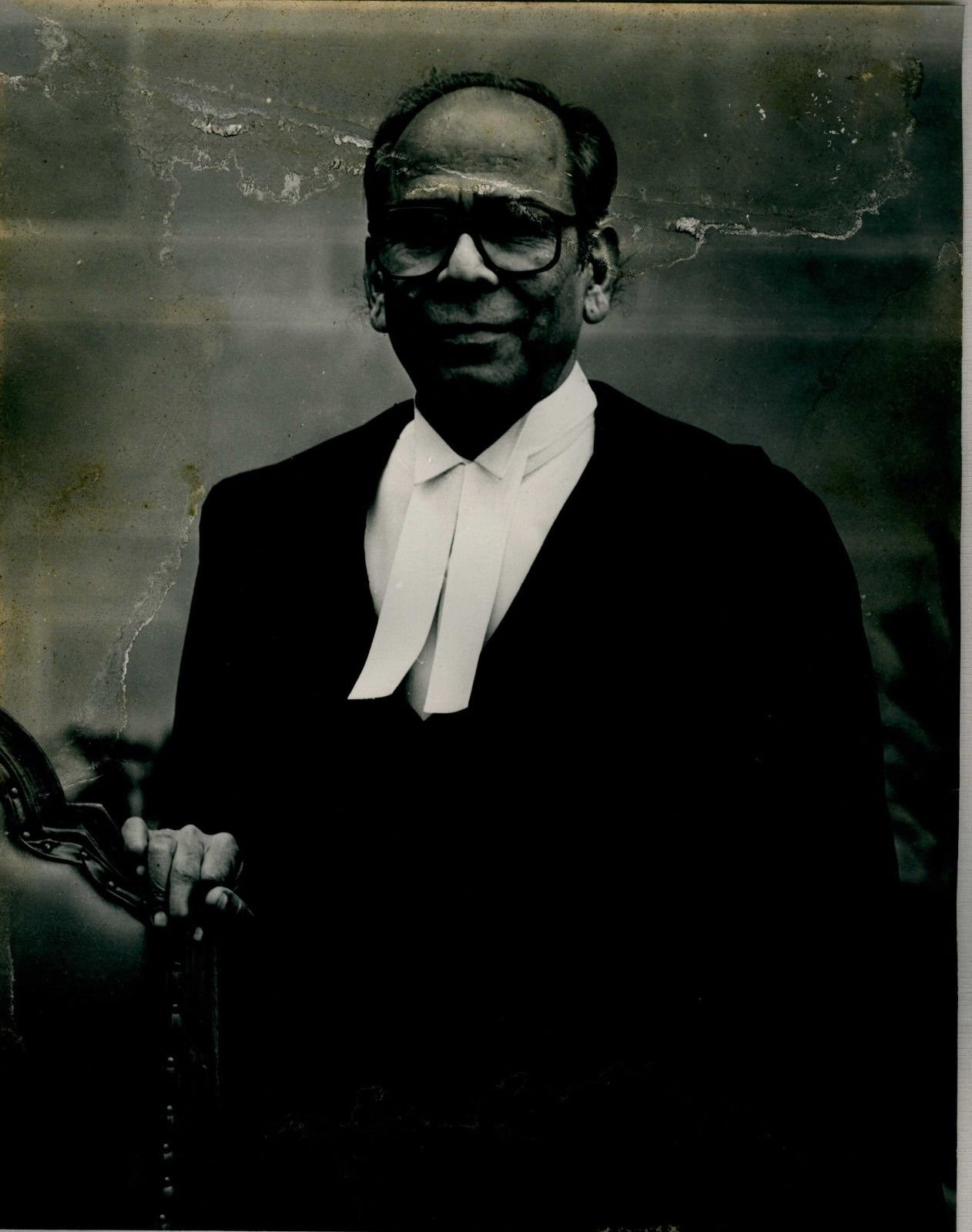
http://JUDIS.NIC.IN SUPREME COURT OF INDIA Page 1 of 9
CASE NO.:
Appeal (crl.) 32 of 1992
PETITIONER:
RAM KUMAR
RESPONDENT:
STATE OF HARYANA
DATE OF JUDGMENT: 07/10/1994
BENCH:
DR. A.S. ANAND & FAIZAN UDDIN
JUDGMENT:
JUDGMENT
1994 Suppl (4) SCR 335
The Judgment of the Court was delivered by
FAIZAN UDDIN, J.
1. This is an appeal under Section 379 of the Code of Criminal Procedure
preferred by the appellant Ram Kumar challenging the judgment and order of
the High Court of Punjab & Haryana passed in Criminal Appeal No. 418-DBA
of 1986 convicting the appellant under Section 302/34 for causing the
murder of Mahinder and sentencing him to life imprisonment as well as under
Section 307/34 for attempt to commit murder of Kamla, PW 3 and her son
Rajinder, PW 4 sentencing him to undergo rigorous imprisonment for three
years on each count directing all the sentences to run concurrently, after
reversing the judgment and order of the Session Judge, Hissar in Sessions
Trial No. 80/48 A/1985 decided on 7.1.1986 whereby the appellant and the
other three co-accused namely, Nanu, Razari and Saatlal were acquitted.
2. The complainant Smt. Kamla, PW 3 was wedded to Ram Kumar, son of co-
accused Nanu Ram (since deceased) about 14 years before the occurrence. The
father of Nanu Ram owned and possessed 76 killas of land which he had
transferred in favour of his grand son Ram Kumar, the husband of Kamla.
Ram Kumar executed a will in respect of 50 killas of land in favour of
his parents in equal shares, the co-accused Nanu being his father. The
rest of 26 killas of land remained with Ram Kumar and on his death about
four and a half years before: the occurrence the said land came under the
cultivation of his wife Smt. Kamla, the daughter-in-law of the co-accused
Nanu Ram. During the life time of her husband Ram Kumar, Smt. Kamla
started living separate from her in-laws alongwith her husband. She has
two sons, namely Dharambir and Rajinder, PW 4 and two daughters. Smt.
Kamla was cultivating land with the help of labourers and used to go out
for household work against the wishes of her father-in-law, Nanu Ram. Nanu
Ram was a source of trouble to her and often created problems in her way
in the cultivation of the land for which Kamla reported the matter to: the
Police as a result of which proceedings under Section 107/151 of the Code
of Criminal Procedure were initiated against him and produce of land was
given to Kamla. Thereafter the land had to be left uncultivated for one
year. This according to the prosecution provided motive to commit the
crime.
3. On 23,12.83 Smt. Kamla, PW 3 hired a tractor of one Ram Prasad for
ploughing her land and went to the land alongwith her two sons Dharambir
aged 91/2 years and Rajinder, PW4 aged about 8 years. Deceased Om Prakash
was working with her as a labourer who had also gone to the land alongwith
them. The tractor Was driven by the driver Mahender. After ploughing 2
killas of land it started becoming dark and, therefore, the ploughing was
stopped at about 7.00 PM. While returning to the village Kamla alongwith
http://JUDIS.NIC.IN SUPREME COURT OF INDIA Page 2 of 9
her two sons named above sat on the left mud-guard of the tractor while Om
Prakash was sitting on the right mud-guard of the tractor driven by
Mahender. When the tractor reached near the doul (boundary) of the land
belonging to Kamla, she saw in tractor light the co-accused Nanu Ram (her
father-in-law) and Santlal (who is the husband of daughter of Nanu Ram)
armed with pistols and the appellant Ram Kumar (who is the brother of the
wife of Nanu Ram) armed with gun. Nanu Ram raised a lalkara that he would
teach her a lesson in getting the land cultivated with the help of Other
persons. Saying so Nanu Rain from a point blank distance fired a shot from
his pistol at Om who fell down from the tractor and died. The driver
Mahender turned the tractor aside with speed towards the field of one Mukha
Harijan and then brought it to a halt. Kamla, her two sons and the driver
Mahender got down from the tractor and hid themselves in cotton crop
standing in a nearby field. The accused Nanu Ram and Santlal as well as
the appellant Ram Kumar fired three shots at them after they had gone into
the hiding place but none of them was hurt. After a shortwhile they rushed
towards the bus stand of the village Dhand to a distance of about 19-20
Julias and the accused Nanu Ram, Sandal and the appellant Ram Kumar chased
them and again fired three shots at them. One bullet hit the left side of
the back of chest of Kamla, PW 3 as a result of which she fell down.
Mahinder was hit by a bullet as a result of which he also fell down in a
pit on the road side. Rajinder, PW 4 the son of Kamla sustained a bullet
injury on his left foot. After a shortwhile Kamla, PW 3 managed to get up
and she alongwith her two sons went to a nearby house of one Chhabila where
she took shelter during the night. Mahinder succumbed to his injuries on
the spot.
4. In the morning at about 8/830 AM Kamla, PW 3 hired a Jeep of one Hazari
and she along with her injured son Rajinder reached Civil Hospital Adampur
at about 9.45 AM where Dr. J.M. Gandhi, PW 2 examined Kamla and her son
Rajinder on 24.12.83 at 10.30 AM and 11 AM respectively. Dr. Gandhi sent
information Ext. PE to the Police Station, Adampur at 10.15 AM on 24.12.83
stating that Kamla and Rajinder had fire arm injuries on their person. Oh
receiving the Information the ASI Bhana Ram, PW6 alongwith some Constables
reached the Civil Hospital, Adampur and recorded the statement Ext. PG of
Kamla, PW 3 after obtaining the opinion of the doctor the she was fit to
make the statement. ASI Bhana Ram collected medico legal reports to the
injured witnesses and alongwith the statement of PW 3 forwarded the same
to the Police Station, Adampur where FIR PG/2 was registered at 11.40 AM
on 24.12.83.
5. Thereafter ASI Bhana Ram proceeded to the place of occurrence and found
the dead body of Mahender lying near the bus stand of village Dhand. He
prepared the inquest report Ext. PB/3 of the dead body of Mahinder. He
then proceeded towards the place where the dead body of Om was lying and
prepared the inquest report Ext. PA/3 of deceased Om. He also picked up
the blood stained earth from near the dead body of Om and also two empty
cartridges from the spot which were seized vide Ext. P-17 and P-18 The
tractor standing at some distance from the dead body of Om was also seized.
One empty cartridge lying near the dead body of Mahinder was also seized
vide memo Ext. PM. After preparing the site plan the two dead bodies were
sent for post-mortem examination.
6. Dr. R. P. Shingal, PW 1 performed an autopsy on the dead body of Om on
24.12.83 at 11.30 AM and found the following injuries on his person :-
Lacerated wound 1cm x 1cm with inverted margins on the right parietal
region. Blackening and scorching was present around the wound alongwith
tattooing. On dissection the doctor found a big haematoma on right and left
parietal region of the skull in sub cutaneous tissues. On removing the
haematoma fracture of right parietal bone, frontal bone and left parietal
bone was found. On removing the vault of skull there was track from right
parietal region of brain to opposite parietal region through the brain
matter. There was a fracture of left zygomatic and maxillary bone. A
metallic piece was found in the sub-cutaneous tissue in left zygomatic
http://JUDIS.NIC.IN SUPREME COURT OF INDIA Page 3 of 9
region which was sealed.
In the opinion of the doctor the time that elapsed between the injury and
death was instantaneous and the time between the death and post-mortem was
within 48 hours. The cause of death was shock and harneorrhage as a result
of injury described above which was ante-mortem in nature and sufficient in
the ordinary course of nature to cause death.
7. Doctor Shingal also performed an autopsy over the dead body of Mahinder
on 25.12.83 at 1230 PM and found the following injury :-
Lacerated wound with inverted margins measuring 1cm x 3/4cm on the
back of left side of chest. Tatooing was present around the margins of the
wound. No blackening and charring was found. On dissection the doctor found
that the left pleura opposite the wound was torn, left pleural cavity was
full of blood. There was laceration of the left Lung. A metallic piece was
found at site of fracture in second rib. In sub-cutaneous tissue there was
sub-cutaneous haemotoms opposite site of fracture of rib on left side of
the front of chest. The doctor also found a corresponding tear in the shirt
and jersy.
In the opinion of the doctor the time that elapsed between injury and death
was within a few minutes and between death and post-mortem 48 hours. The
cause of death was shock and hemorrhage as a result of injury described
above which was ante- mortem in nature and sufficient to cause death in the
ordinary course of nature.
8. On 24.12.83 at 10.30 AM Dr. J.M. Gandhi, PW 2 medically examined
Rajender, PW 4 and found the following injuries on his person:-
1. Lacerated wound 1.5cm x 1cm x bone deep on the interior aspect of left
foot, fresh bleeding and margins were inverted.
2. A lacerated wound 2cm x 2cm x bone deep on the left foot near the heel
with irregular margins, crushed tissues.
3. A lacerated wound 2cm x 2cm x bone deep on the posterior aspect of left
big toe just below the nail and fresh bleeding. These injuries were
Caused within 24 hours by firearm. All the injuries were simple in
nature.
9. On the same day Dr. Gandhi had examined Kamla, PW 3 at 11 AM and
found the following injury on her person ;-
"A lacerated wound 2cm x 2cm x cavity deep over chest back of left side,
just below the lower and of scapula with irregular margins. The margins of
the wound were inverted. There was also cor-responding hole over the
sweater, shirt and banian with blood stains. There was a bum mark over
the sweater in the hole."
In the opinion of the doctor the probable duration of the injury was
within 24 hours caused by a firearm. After X-ray fracture of 8th rib
was detected and foreign body was present on the left side chest.
10. After the occurrence the accused persons could not be apprehended
and it was only on 27.9.84 after about 9 months that the Inspector Om
Prakash, DSP Kirpal Singh and ASI Krishan Chand apprehended the
accused Nanu, the appellant Ram Kumar and Hazari while going to Bhatookala
from Adampur. At the time of arrest the co-accused Nanu was carrying a 12
bore licensed gun seized as per Ext. P-20 with two cartridges Ext.
P-21 and P- 22. The appellant Ram Kumar was carrying a pistol P-23 and 2
live cartridges Ext. P-24 and P-25, while acquitted accused Hazari was
carrying a pistol Ext. P-26 and 3 live cartridges Exts. P-27, P-28 and
P-29. After receiving the reports of the Ballistic Expert and Serologist
charge sheet against the accused Nanu, the appellant Ram Kumar and Hazari
http://JUDIS.NIC.IN SUPREME COURT OF INDIA Page 4 of 9
was put up to stand the trial under Sections 302, 302/34 and 307/34 of the
Penal Code as well as under Section 25/27 of the Arms Act. Later on by an
application dated 14.2.85 filed by the complainant Kamla, PW 3, 4th
accused Santlal was also summoned by the Sessions Judge by his order dated
28.2.85 to stand the trial alongwith the above named accused per-sons.
11. At the trial the appellant as well as the other accused persons
adjured their guilt and pleaded false implication. They also adduced
evidence in defence vide DW 1, Parmanand, DSP Fatehabad who had inspected
the spot on 25.12.83 and L.A, Kumar, DW 2, Assistant Director Ballistics,
F.S.L. Madhuban, Karnai.
12. On 7.5.85 the Public Prosecutor gave up some of the prosecution
witnesses including Pappu, Dalip, Ranbir and Sohanial as according to the
prosecution they were won over. But after the close of the evidence when
arguments were heard the learned Trial Judge found it expedient to examine
the aforementioned persons given up by prosecution as according t6 the
learned Trial Judge they were the eye witnesses to the incident and could
throw light on the prosecution case and, therefore, Pappu, CW 1, Dalip, CW
2, Ranbir, CW 3 and Sohanial, CW 4 were examined as Court witnesses. The
appellants were again given an opportunity to adduce further evidence in
defence and the accused persons examined Shri J.C. Sethi, DW 3, an
advocate who had filed a criminal complaint on behalf of Ram Pratap, the
father of deceased Mahinder against Harchand and others under Sections
302/148, 149 and 304 of the Penal Code.
13, On evaluation of the entire evidence and the material on record the
learned Trial Judge acquitted the appellant as well as the three co-
accused, namely, Nanu, Hazari Lal and Santlal holding that the state-
ment Ext. PG said to have been made by Kamla, PW 3 in the hospital to ASI
Bhana Ram, PW 6 was ante-timed, there was unexplained delay of 32 hours in
sending the report to the Magistrate concerned, the inquest reports were
also not prepared at the alleged time, ASI Bhana Ram, PW 6 did not mention
in the inquest reports the location of the empties found lying by the
side of the dead bodies and that the deceased Om would not have been fired
from close range as deposed by Kamla, PW 3. On these findings the learned
Trial Judge took the view that the prosecution had failed to bring home the
guilt against any of the accused persons including the appellant and,
therefore, acquitted them all from the offences they were charged with.
14. The State of Haryana preferred an appeal against the judgment and order
of acquittal The co-accused Nanu Ram died during the pen-dency of the
appeal before the High Court and, therefore, the appeal against him
abated. The High Court maintained the acquittal of the co-ac-cused Hazari
and Santlal but reversed and set aside the findings with regard to the co-
accused Nanu Ram and the appellant. The High Court took the view that the
co-accused deceased Nanu Ram was liable to be convicted under Sections 302
and 302/34 for causing death of Om and Mahinder and also under Section
307/34 for causing injuries to Kamla and Rajinder but since he died on
25.10.90 the appeal against him had abated. The appellant Ram Kumar has
been convicted under Section 302/34 of the Penal Code for causing the
death of Om and, therefore, he has been sentenced to undergo life
imprisonment and to pay a fine of Rs. 5000; in default of payment of fine
to undergo further rigorous imprisonment for two years. The High Court has
further directed that in case of recovery of fine the same will be paid to
the heirs of deceased Om. The appellant has been further convicted under
Section 307/34 of the Penal Code on two counts for causing injuries to
Kamla, PW 3 and her son Rajinder, PW 4 for which he has been sentenced to
undergo rigorous imprisonment for three years on each count. All the
sentences had been directed to run concurrently. It is against these
convictions and sentences that the appellant Ram Kumar has preferred this
appeal before this Court.
15. Learned counsel for the appellant contended that the Trial Court had
recorded the order of acquittal of all the accused persons including the
http://JUDIS.NIC.IN SUPREME COURT OF INDIA Page 5 of 9
appellant giving sound and cogent reasons for disbelieving the prosecution
case and, therefore, the High Court should not have interfered with the
order of acquittal merely because another view on an appraisal of the
evidence on record was possible. In this connection it may be pointed out
that the powers of the High Court in an appeal from order of acquittal
to reassess the evidence and reach its own conclusions under Sections 378
arid 379 Cr.P.C, are as extensive as in any appeal against the order of
conviction. But as a rule of prudence, it is desirable that the High Court
should give proper weight and consideration to the view of the Trial Court
with regard to the credibility of the witness, the presumption of innocence
in favour of the accused, the right of the accused to the benefit of any
doubt and the slowness of appellate Court in justifying a finding of fact
arrived at by a Judge who had the advantage of seeing the witness. No doubt
it is settled law that if the main grounds on which the Court below has
based its order acquitting the accused, are reasonable and plausible, and
the same cannot entirely and effectively be dislodged or. demolished, the
High Court should not disturb the order of acquittal. We shall, therefore,
examine the evidence and the material on record to see whether the
conclusions recorded by the Trial Court in acquitting the appellant are
reasonable and plausible or the same are vitiated by some manifest
illegality or the con-clusion recorded by the Trial Court are such which
could not have been possibly arrived at by any Court acting reasonably and
judiciously which may in other words be characterised as perverse.
16. Learned counsel appearing for the appellant first contended that the
First Information Report Ext. PG/2 was ante-timed as held by the learned
Trial Judge which demolishes the entire prosecution story but the said
finding has been unreasonably disturbed by the High Court. We have perused
the relevant evidence and the material on record in this behalf and find
that the learned Trial Judge had fallen in serious error in rejecting the
First Information Report by holding that it was unduly delayed and ante-
timed. It is no doubt true that there was some delay in lodging the First
Information Report. But it may be noted that the incident had occurred at
about 730 PM on 23.12.83 and the report Ext, PG was made by Smt. Kamla, PW
3 next day i.e. 24.12.83 at 10.30 AM to ASI Bhana Ram, PW 6 while she was
in Civil Hospital, Adampur. But this delay has been adequately explained by
the prosecution which has not been appreciated by the learned Trial Judge
in right perspective. As stated earlier the occurrence took place in the
evening of 23.12.83 in the out-skirts of village Dhand and the Police
Station, Adampur is at a distance of about 18 kms. from village Dhand.
Admittedly the injured Smt. Kamla, PW 3 is a widow having four minor
children one of whom was also injured in the occurrence. After she and her
soil Rajinder, PW 4 received bullet injuries they saved their lives by
taking shelter in the house of one Chhabila, There was no other major male
member in her family except her two minor sons and the only male member in
the family was the accused Nanu since deceased. Om who had gone with her
for ploughing the land and Mahinder the driver of the tractor, both were
killed in the occurrence. In such circumstances it could not be expected
from a widow and injured lady Kamla without risk to her life to proceed to
Police Station in the dead of night and that too in the winter season to
lodge the report. She was thus forced by the circumstances not to hazard to
go and make the report same night in order to avoid the delay. Next
morning, however, at about 8/8.30 AM she hired the jeep and proceeded from
the village alongwith her injured son Rajinder, PW 4 and the other son
Dharambir and reached the Primary Health Centre, Adampur at about 10.30
AM where Kamla, PW 3 and her injured son Rajinder, PW 4 were medically
examined by Dr. J.M. Gandhi, PW 2 at 10.30 and 11 AM respectively. In
response to the intimation sent by Dr. Gandhi to the Station House Officer,
Adampur, the ASI Bhana Ram, PW 6 arrived at the Health Centre at about
10.30 AM on 24.12.83 and recorded the statement Ext. PG of Smt. Kamla, PW
3 at 11.30 AM on the basis of which First Information Report Ext, PG/2 was
recorded in the Police Station and offence was registered. The learned
Trial Judge totally oblivious of all these facts and circumstances which
led to the delay in making the First Information Report, took a very hyper-
technical and unrealistic view in holding that the delay Was not explained
http://JUDIS.NIC.IN SUPREME COURT OF INDIA Page 6 of 9
ignoring the relevant reasons and attending circumstances by reason of
which the report was delayed. The High Court took into consideration all
these factors and took a realistic view that the delay was sufficiently
explained and, in our opinion rightly so.
17. The reasons which weighed with the learned Trial Judge in holding that
the report was ante-timed are that the maker of the report Kamla, PW 3
did not know that Om and Mahinder had died as she made no inquiries as to
what had happened to them after the firing and whether they were dead or
alive yet she stated in the report Ext, PG that Om and Mahinder had died.
The learned Trial Judge also observed that while taking shelter in the
night in the house of Chhabila she did not ascertain the condition of Om
and Mahinder and had not established any contact with them before making
the report yet she made a statement in the report that they were dead and
this fact according to the learned Session Judge was indicative of the
fact that the report was ante-timed. In our opinion the view taken by
learned Session Judge is absolutely unreasonable and devoid of logic and,
therefore, the High Court Was justified in reversing this finding as well
for the reason that Kamla had left the village Dhand for the Primary Health
Centre, Adampur at about 8.30 AM and by that time it was known to all
the: villagers including Kamla that Om and Mahinder had succumbed to their
bullet injuries. There was, therefore nothing unusual in the report in
which Kamla stated that Om and Mahinder both had died in the occurrence
having received bullet injuries.
18. The learned counsel for the appellant then urged that the special
report of the occurrence was not sent to the Magistrate concerned
forthwith in accordance with the provisions of Section 157 of the Code of
Criminal Procedure which also cast a doubt on the First Information Report
as to the time and manner of occurrence. In this connection it may be
noted that the report was received by the Magistrate concerned at about
2.30 AM on 25.12.83 which was sent through the Constable Satya Pal, PW
7. Satya Pal deposed that he first went to Fatehabad. He delivered the
special report to the Superintendent of Police at 8.00 AM as Superintendent
of Police was not available before 8.00 AM and, therefore, he had to wait
till then. He then proceeded to Hissar from Fatehabad to deliver the
report to the Magistrate concerned. When he reached Hisar he found the
house of Chief Judicial Magistrate locked. He then went to the Police
Station, Sadar where he learnt that Mrs. Snehlata Sharma was the Duty
Magistrate and, therefore, he reached her residence at 2.30 AM and
delivered the report. Under these facts and circumstances it could not be
said that the sending of the report was unduly delayed. Even if we assume
that there was some delay it was on account of constable Satya Pal, PW 7.
The learned counsel appearing for the appellant was unable to point out any
possible prejudice that may have been caused to the appellant par-ticularly
when the statement of Kamla was recorded at 10.30 AM and on the basis of
which First Information Report was also reduced into writing at 11.30 AM
on 24.12.83. The ASI Bhana Ram, PW 6 had reached the place of occurrence
and the inquest report of both the dead bodies were also prepared on
24.12.83 and seizure of incriminating articles were ef-fected.
19. Learned counsel for the appellant next contended that the learned
Trial Judge had rejected the evidence of Smt. Kamla, PW 3 and her son
Rajinder, PW 4 having found the same contradictory to each other having
concealed the true version from the Court and their testimony was
inconsistent with the medical evidence and Ballistic Expert but the High
Court committed a grave error in accepting their version as truthful in
basing the convictions of the appellant. It was submitted that in fact it
bad become dark at the time When the occurrence took place and there being
no source of light it was not possible for the said witnesses to identify
the assailants and they had falsely implicated the accused persons
including the appellant. Learned counsel further urged that in any case
there were independent witness who were withheld by the prosecution and
who were ultimately examined as Court witnesses and thus prosecution
preferred only to examine the partisan witnesses who had a clear motive
http://JUDIS.NIC.IN SUPREME COURT OF INDIA Page 7 of 9
to falsely implicate the appellant and, therefore, the Trial Court was
justified in rejecting their evidence. After giving a careful consideration
to the submissions made by the learned counsel for the appellant and after
making a dose and careful scrutiny of the evidence of Smt. Kamla, PW 3
and her son Rajinder, PW 4 besides other evidence available on record, we
find that all the aforementioned submissions advanced by the learned
counsel for the appellant are without any substance or merit.
20. Smt, Kamla, PW 3 and Rajinder, PW 4 both sustained bullet injuries in
the same occurrence and, therefore, their presence at the time of
occurrence cannot be doubted at all. Their presence is even accepted by
four persons who were examined as Court witnesses. Smt. Kamla, PW 3 in her
statement has given a graphic picture and the sequence of events which took
place in which Om and Mahinder lost their lives by gun shot injuries fired
by deceased accused Nanu and the appellant as well as the bullet injuries
sustained by her and her son Rajinder at the hands of deceased accused
Nanu and the appellant. She deposed that she had hired the tractor of Ram
Partap of village Dhand on 23.12.83 and went to the field alongwith the
deceased Om and her two sons Rajinder and Dharam-bir to plough the land.
The deceased Mahinder was driving the tractor. After ploughing the land
they started going back home on the tractor at about 7/7.30 PM. She herself
and her two sons were seated on the left mud-guard of the tractor while
deceased Om was seated on the right mud-guard of the tractor. When they
reached at the boundary of her field she saw in the tractor light the
deceased accused Nanu, the appellant Ram Kumar and the acquitted accused
Santlal standing there armed with pistols and gun. Nanu raised a lalkara
that he would teach them a lesson for getting the land cultivated by
others. Nanu fired at Om who fell down from the tractor and then the
tractor driver Mahinder took the tractor towards the field of Mukha
Harijan. There they left the tractor and all of them rushed for hiding
themselves to save their lives. They all hid in the cotton crop when three
shots were fired towards them but no one was hit. They then proceeded
towards the village hiding themselves in the Field and when they reached
near the Bus Stand Nanu and the other two accused, namely the appellant Ram
Kumar and Santlal again raised a lalkara and all the three started firing.
She received the bullet injury on the back On the left side chest and fell
down. She further deposed that Mahinder driver and her son Rajinder were
also hit and thereafter the accused persons ran away. She along with her
two sons, Rajinder and Dharambir took shelter in the night in the house of
one chhabila and then next morning proceeded on a jeep to the hospital,
Adampur. Similar is the statement made by Rajinder, PW4. Their evidence is
consistent and corroborated by the First Information Report and the medical
evidence which has been discussed in the early part of this judgment
21. Smt. Kamla PW 3 deposed in cross-examination that the deceased Nanu
had fired at Om from a distance of one hand and touching the barrel of his
pistol with the head of Om. She further deposed that she herself and
Mahinder were hit by bullet from a distance of about 1 or 2 karam only. She
received the bullet injury on back on the left side and Mahinder was hit
on the back. This statement finds complete corroboration from the medical
evidence. Dr. Shingal PW 1 who performed autopsy of dead body of Om found
lacerated wound with inverted margins in the right parietal region.
Blackening scorching and tattooing was also found around the wound which
indicated that Om was shot at from a point Blank range as deposed by Kamla.
Similarly Dr. Shingal PW 1 also found lacerated wound with inverted
margins on back of left side chest of deceased Mahinder with tattooing
marks around the margins of wound. A metallic piece was also found embedded
in his second rib. Dr. Gandhi who ex-amined Kamla PW 3 found a lacerated
wound on back of her left side chest and margins of wound were inverted. He
also found foreign body em-bedded on her left side chest. The medical
evidence thus fully corroborated the statement of Kamla PW 3. It may also
be noticed here that the weapons of offence were not recovered and as
such the evidence of Ballistic expert L.A. Kumar, Asstt. Director,
Forensic Science Laboratory is not of any assistance in this case
particularly in view of the fact that the weapons which he examined
http://JUDIS.NIC.IN SUPREME COURT OF INDIA Page 8 of 9
were country made pistols which are non-standard weapons while in cross-
examination he based his statement on standard weapons.
22. It is clear from the evidence of PW 3 and PW 4 discussed above that
they saw the appellant and the: other two co-accused in the tractor light.
Both these witnesses have stated that it was Mahinder who was driving the
tractor and not Dalip as asserted by the learned counsel for the appellant,
Learned Trial Judge rejected the evidence of these two eye-wit-nesses PW 3
and PW 4 mainly on the ground that neither Smt. Kamla herself nor through
Chhabila informed the Sarpanch of Panch of the Village Same night about the
occurrence that two persons have been killed and they have been injured nor
sent any intimation to the father of deceased Om whose house was nearby.
The learned Trial Judge on these reasonings took the view that in fact
these two eye- witnesses were not sure about their assailants and it was
for this reason that they did riot inform anyone in the village. The High
Court after analysing the evidence and facts and cir-cumstances of the case
rejected this reasoning by taking the view that it was a winter night in
which two persons were killed in the village and, therefore, out of fear
nobody would have preferred to risk his life to go out during night hours
to inform the Panch, Sarpanch or father of deceased Om or any other
villagers particularly when the dispute was between the daughter-in-law and
father-in-law, In our opinion the view taken by the High Court is the only
reasonable view and the Trial Court had fallen in serious error in
rejecting the testimony of the two eye-witnesses PW 3 and PW 4 on flimsy
and trivial grounds.
23. It may be pointed out that Pappu, Dalip, Ranbir and Sohanlal besides
other persons were also cited by the prosecution as witnesses to the
incident but they were given up by the prosecution stating that they had
been won over by the accused persons. The learned Trial Judge, however,
preferred to examine these four persons as CW 1, CW 2, CW 3 and CW 4.
Reading of their statement will go to show that they are not truthful
witnesses and, therefore, they were rightly given up by the prosecution oh
the ground that they were won over, Pappu, CW 1 while admitting the
presence of Kamla, PW 3 and her sons and also the presence of deceased Om
and Mahinder made a false statement that the tractor was driven by Dalip.
He deposed that he did not know as to who had fired the shots and the
reason for declining to make the correct statement is obvious. In cross-
examination he admitted that he was cultivating the land of Nanu, the
deceased. Dalip who according to the defence was driving the tractor was
examined as CW 2 but interestingly enough he himself did not depose that
he was driving the tractor. On the contrary he admits the presence of the
deceased Mahinder and Om in the field of Kamla, PW 3. He deposed that he
was not aware of the fact as to who had fired shots as a result of which
Om and Mahinder died. He also stated that Ranbir, CW 3 and Sohanlal CW 4
were also cultivating the land of the deceased accused Nanu. Ranbir, CW 3
admits his presence at the place of occurrence as Well as the presence of
deceased Om and Mahinder but stated that he had not seen the assailants. He
admitted that he was cultivating the land of the accused Nanu which he had
obtained on lease from Panchayat. Similar is the statement of Sohanlal, CW
4.
24. The accused persons had also examined Advocate Sethi as DW 3 who had
filed a criminal complaint in the Court of Magistrate, Hissar under
Sections 302, 148, 149 and 104 of the Penal Code on behalf of Ram Partap,
the father of deceased Om. He admitted that he was engaged by the accused
of the instant case. This complaint appears to have been filed at the
instance of the accused of the instant case against Harchand and others to
show that they were not involved in the occurrence in question but Harchand
and others were the persons responsible for the same. Overall assessment
of the evidence of all these CWs goes to show that they did not come
forward with the true version of the incident and were out to help the
deceased accused Nanu as they were closely associated and interested with
him as they were cultivating his land. In the facts and circumstances
discussed above it is absolutely clear that the findings recorded by the
http://JUDIS.NIC.IN SUPREME COURT OF INDIA Page 9 of 9
trial are against the weight of evidence on record and the same are
perverse. The learned Trial Judge was wholly unjustified and unreasonable
in acquitting the accused appellant. After a dose scrutiny of the evidence
and the material on record discussed above we are of the firm opinion that
the view taken by the High Court is the only possible view and, therefore,
the High Court was fully justified in reversing the judgment and order of
acquittal passed by the learned Session Judge and rightly held the
deceased accused Nanu and the appellant responsible for the two deaths and
an attempt on the life of PW 3 and PW 4.
25. Consequently for the reasons stated above the appeal fails and is
hereby dismissed.
The Supreme Court of India’s ruling in Ram Kumar v. State of Haryana stands as a critical judicial precedent on the principles governing the reversal of an acquittal and the evidentiary weight of an injured eyewitness. This landmark judgment, available for review on CaseOn, meticulously outlines the circumstances under which an appellate court is justified in overturning a trial court's decision, balancing the presumption of innocence with the imperative to deliver substantive justice.
The case originates from a bitter family and land dispute. The complainant, Smt. Kamla (PW3), was the daughter-in-law of the co-accused Nanu Ram. After her husband's death, she began cultivating a 26-killa parcel of land, which was met with hostility from her father-in-law. This ongoing conflict set the stage for the tragic events that followed, providing a clear motive for the crime.
On the evening of December 23, 1983, Smt. Kamla was returning from her fields on a tractor with her two young sons and a labourer, Om Prakash. The tractor was driven by Mahender. As they journeyed home, they were ambushed by her father-in-law Nanu Ram, the appellant Ram Kumar, and another accused, Santlal, all armed with firearms.
In a brutal assault, Nanu Ram fired a point-blank shot at Om Prakash, killing him instantly. As the driver, Mahender, attempted to flee, he too was shot and later succumbed to his injuries. Smt. Kamla and her sons scrambled for safety in a nearby cotton field, but the attackers pursued them, firing multiple shots. Smt. Kamla sustained a bullet wound to her chest, and her son, Rajinder, was shot in the foot. They managed to find shelter at a neighbour's house for the night.
Despite the harrowing testimony of the surviving victims, the Sessions Judge acquitted all the accused. The court cited several reasons for its decision:
The State of Haryana appealed this decision. The High Court of Punjab & Haryana undertook a thorough re-evaluation of the evidence. It overturned the acquittal of Ram Kumar and the deceased Nanu Ram (whose appeal abated upon his death), convicting Ram Kumar for murder and attempt to murder under Sections 302/34 and 307/34 of the Indian Penal Code. This led to the present appeal before the Supreme Court.
The central issue before the Supreme Court was whether the High Court was justified in reversing the Trial Court's order of acquittal, especially when the law presumes an accused's innocence, which is further fortified by an acquittal.
The Court reiterated the established legal principle under Section 378 of the Code of Criminal Procedure. An appellate court has the full power to review evidence in an appeal against acquittal. However, as a rule of prudence, it should not interfere unless the trial court's findings are “perverse,” “unreasonable,” or based on a “manifest illegality.” The testimony of an injured eyewitness is considered to be of the highest evidentiary value and should not be discarded on flimsy grounds.
The Supreme Court systematically dismantled the reasoning of the Trial Court, finding it to be flawed and unrealistic.
Understanding the nuances of witness credibility and procedural delays is crucial for legal professionals. Services like CaseOn.in’s 2-minute audio briefs provide a quick and effective way for lawyers and students to grasp the core reasoning in complex rulings like this, saving valuable time while staying informed.
The Supreme Court concluded that the Trial Court's findings were perverse and against the weight of the evidence. It held that the High Court was fully justified in re-appreciating the evidence and reversing the erroneous acquittal. The view taken by the High Court was deemed the only possible one based on the facts. Consequently, the appeal filed by Ram Kumar was dismissed, and his conviction was upheld.
This case serves as a vital lesson for legal practitioners and students alike.
Disclaimer: This article is for informational purposes only and does not constitute legal advice. Readers are advised to consult with a qualified legal professional for any legal concerns.

 Login with google
Legal Notes
Add a Note....