
This is a criminal appeal filed before the Supreme Court of India by the accused against the order of the High Court. The trial court initially convicted the accused ...

No Acts & Articles mentioned in this case
Page 1 REPORTABLE
IN THE SUPREME COURT OF INDIA
CRIMINAL APPELLATE JURISDICTION
CRIMINAL APPEAL NO.1838 OF 2009
Ravi Kapur … Appellant
Versus
State of Rajasthan … Respondent
J U D G M E N T
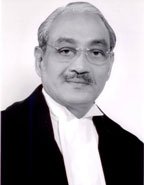
Swatanter Kumar, J .
1.The present appeal is directed against the judgment of the
High Court of Judicature for Rajasthan at Jaipur Bench, Jaipur,
dated 12
th
August, 2008.
2.The facts giving rise to the present appeal in brief are :
One Sukhdev Singh, PW2, had informed and made a
statement, parcha bayan, Ex.P2, to the police at the police station
M.I.A. Alwar on 20
th
April, 1991 stating that at about 9.15 a.m.
on that very day, he was going in a jeep to Govindgarh from Alwar
1
Page 2 to attend the marriage of his brother-in-law, Joga Singh. When
they reached Baggad Tiraya, one jeep bearing no. RNA-638 was
also going ahead of his jeep and in the said jeep, his wife, Chet
Kaur, daughter Rinki, father-in-law, Lahori Singh, mother-in-law,
Gita and paternal uncle father-in-law (Fufi sasur) Niranjan Singh
and his wife Kailashwati and his brother-in-law Multan Singh and
his son Tinku were travelling. A maruti car was also going ahead
of them. Bus No. RNA 339 was coming from Baggad Tiraya side
at a very high speed. The driver of the Maruti car immediately
turned his car to one side to save himself and the bus crashed
into the jeep bearing no. RNA-638. As a result of this fatal
accident, Chet Kaur, Rinki, Geeta and the jeep driver died on the
spot. The condition of the other occupants of the jeep,
particularly Lahori Singh, Niranjan Singh, Kailashwanti and
Tinku was very critical and they were admitted to the hospital
where they later died. According to this witness, the bus was
being driven by Ravi Kapur who took the bus towards large pits
in the agricultural fields and after parking the bus there, he ran
away from the spot.
3.On the basis of Ex.P2, a case under Section 304-A of the
Indian Penal Code, 1860 (for short, the ‘IPC’) was registered
against the accused Ravi Kapur. The Investigating Officer, PW11,
2
Page 3 conducted the investigation, prepared the site plan, Ex.P3, and
recorded the statement of various witnesses. A chargesheet
[report under Section 173 of the Code of Criminal Procedure,
1973 (for short the ‘Cr.P.C.’)] was filed against the accused under
Sections 279, 337, 338 and 304-A IPC. The court framed charges
against the accused and he was put to trial.
4.The prosecution examined as many as 11 witnesses
including four eye-witnesses, doctors and the Investigating Officer
himself. Upon closing of the case of the prosecution, all the
incriminating evidence against the accused was put before him
and his statement under Section 313 of the Cr.P.C. was recorded
wherein he took the stand of complete denial and stated that the
case of the prosecution was false. The trial court, vide its
judgment dated 11
th
May, 2006, held that the prosecution has not
been able to prove its case beyond reasonable doubt and the
accused was entitled to an order of acquittal. Consequently, the
Court acquitted the accused Ravi Kapur of all the above-
mentioned charges. At this stage itself, we may refer to the
relevant extract of the judgment of the trial court, which is the
reasoning for acquitting the accused:
“Now only 3 witnesses remain to be
considered in the instant case, viz., P.W.2-
Sukhdev Singh; P.W.4-Multan Singh and
3
Page 4 P.W.11-Sohan Lal who is the investigating
officer. The Court has to consider
testimonies adduced by these witnesses and
has to see whether it is proved from the
statements of these witnesses that accused
was driving the bus rashly and negligently
and hit the jeep or not and whether accused
Ravi Kapur was driving the said bus no.RNA-
339 at the time of the accident or not? In
this regard, P.W.2-Sukhdev Singh who is
also the person who lodged first information
report has stated in his parcha statement
Ex.P2 (sic) that one Maruti Van was gone
ahead of jeep which had met with the
accident and his jeep was behind the said
jeep involved in accident. All these three
vehicles were on one side of the road and
were at a distance of 20 Ft. from each other.
One bus came no. RNA-339 towards them
near Bagar tiraha and this bus was driven
rashly and negligently and directly hit the
jeep. However, the Maruti car which was
ahead of accident jeep and the jeep in which
he was travelling and which was behind the
accident jeep, escaped in the said accident by
bus. Both these vehicles swerved towards
kuchha side of the road. This witness has
mentioned in his first information report that
driver of the Bus no.RNA-339 hit the jeep
with intention to kill the persons travelling in
the accidented jeep. He has further stated
that he identified the driver of the bus and he
was accused Ravi Kapur. He was identified
by the passers-by also and they also
disclosed his name. Therefore, now this
Court has to see whether facts disclosed by
this witness in his parcha statement – first
information report, stand fully proved or not?
Conclusion which can be drawn from perusal
of examination in chief of this witness is that
this witness has stated in statement before
court that Maruti car was ahead of all and
the jeep in which he was sitting was behind
the Maruti car and the jeep which met with
4
Page 5 the accident was in behind (sic) the above
vehicles. Therefore, in the circumstances
there is contradiction in the statements of
this witness given by him in his parcha
statement and in court with regard to fact as
to whether the accidented jeep was in front
or rear of the aforesaid vehicles. In his
statement in court he states that the jeep in
which he was sitting was behind the
accidented jeep and he himself was sitting
behind driver’s seat. Therefore, in such
circumstances it cannot be safely accepted
that this witness has actually seen the
accident. Because there are material self-
contradictions regarding the fact as to
whether the jeep of this witness was ahead or
behind the accidented jeep….
…In the circumstances it is not clear from
the statements of this witness whether driver
of the bus was negligent, what was the speed
of the bus and accidented jeep was in its
right side of the road. This witness also
states that there was one jeep and a maruti
car ahead the accidented jeep, but drivers of
both these vehicles saved their vehicles from
the bus and therefore the bus hit the jeep in
which this witness was sitting. Court has to
see that if driver of the bus was actually
driving the bus rashly and negligently, then
why he did not collide with the jeep and
maruti car which were plying ahead the
accidented jeep and why it collided with the
accidented jeep. The court has also to
consider whether the accident was due to
over-taking of the jeep by the driver of the
jeep. Because witnesses who appeared on
behalf of prosecution have stated that right
side of bus suffered moch. But prosecution
has not filed any mechanical expert report
nor has produced any expert witness in this
regard which could have proved that the bus
actually hit the jeep from front. It is also not
clear whether any loss was caused to bus in
5
Page 6 front or not. Conclusion which can be drawn
out from perusal of statement made by
P.W.11-Sohan Lal/investigating officer in his
cross examination, is that accident took
place at a place where there was a
turn/crossing on road and therefore both the
drivers of the bus as well as jeep ought to
have been careful and cautious. Moreover it
is also not clear from statement of this
witness that the bus had actually collided
with the front portion of jeep. He has stated
that accident could have been caused due to
over-taking of the middle vehicle. Whereas
this witness ought to have been proved that
the accident is a head-on collision between
bus and jeep. Apart from this, this witness
did not conduct identification proceedings of
the accused because the persons present at
the spot had told him that Ravi Kapur is the
accused and he is the owner and driver of
the bus. This witness has not clarified as to
why he did not send any notice under
Section 133 of M.V. Act to the owner of
vehicle. Therefore, in these circumstances, it
is apparent from statements of this witness
that neither notice under Section 133 of
M.V.Act was given to owner of the bus nor
identification proceedings of accused were
held. Although persons at the spot had told
that Ravi Kapur was driver of the bus, but
prosecution has not produced and examined
any such independent witness who was
present at the spot at the time of this
accident who could have explained that Ravi
Kapur was driving the bus no. RNA-339.
Infact prosecution ought to have recorded the
statements of eye witnesses and produced
them in court which could have corroborated
statement of P.W.2-Sukhdev that Ravi Kapur
was driving Bus No.RNA-339 at the time of
accident and also the identification
proceedings of accused were very necessary
because both the witnesses who have been
produced by prosecution, have not identified
6
Page 7 accused Ravi Kapur or that the accident was
caused to rash and negligent driver of the
bus by Ravi Kapur. One of the witness has
stated that he saw the driver running away
from the spot, but he has not stated that he
saw the driver of the bus hitting the jeep.
Notice under Section 133 of the M.V. Act was
very necessary which could have proved that
Ravi Kapur was actually driving the bus
no.RNA-339 at the time of accident.
Moreover, none of the prosecution witnesses
have explained that the bus was being driven
rashly and negligently….”
5.The above findings recorded by the trial court were reversed
by the High Court, which set aside the judgment of acquittal.
Upon appreciating the evidence, the High Court, vide its judgment
dated 12
th
August, 2008, came to the conclusion that the
judgment of the trial court was incorrect and while particularly
dealing with the issue of grant of notice under Section 133 of the
Motor Vehicles Act, 1988 (for short, ‘the Act’), the Court held as
under :
“Now so far as notice under section 133 of
the Motor Vehicles Act was concerned which
was not served upon the owner, because the
statement of PW.2 Sukh Dev Singh, Multhan
Singh P.W.4 stated that the accused
respondent was the driver and they have
identified him on the spot as well as in the
court also. In such situation, service of
notice under section 133 of the Motor Vehicle
upon the owner has no relevancy. As such,
in the light of the statement of PW.2 Sukh
Dev Singh and P.W.4 Multhan Singh no
identification parade is necessary. The FIR
7
Page 8 Ex.P.1 shows that the name of the accused
respondent has already mentioned.”
6.The High Court convicted the accused under Section 304-A
IPC and awarded him simple imprisonment for two years with
fine of Rs.5000/-, in default of payment of fine, to undergo
further imprisonment of six months. The Court also convicted
the accused for offences under Sections 279 and 337 of the IPC,
awarding him six months simple imprisonment with fine of
Rs.1000/-, in default of payment of fine to undergo one month
simple imprisonment and one month simple imprisonment with
fine of Rs.500/-, in default of payment of fine to undergo 15 days
rigorous imprisonment, respectively. Aggrieved from the judgment
of conviction and order of sentence passed by the High Court, the
present Special Leave Petition has been filed.
7.Mr. Patwalia, learned senior advocate appearing for the
appellant, while raising a challenge to the judgment of the High
Court, has prayed that the judgment of acquittal recorded by the
Trial Court be restored and the judgment of the High Court be set
aside. The learned counsel has raised the following submissions:
(a)It is a settled principle of law that the Appellate Court
should normally not interfere with the judgment of
acquittal unless it is perverse and contrary to the evidence
8
Page 9 on record. The scope of an appeal against an order of
acquittal is very limited and the High Court, in the present
case, has exceeded its jurisdiction in reversing the
judgment of acquittal passed by the Trial Court.
(b)There is no evidence on record to identify or link the
accused with the commission of the offence, i.e., whether or
not he was driving the said vehicle. In fact, according to
the counsel, there is no direct evidence to show that the
accused Ravi Kapur was driving the bus involved in the
accident.
(c)Even if it is presumed that the accused was the person
driving the bus at the relevant time, still there is no
evidence to prove that he drove the bus rashly and
negligently.
In absence of any evidence on these two counts, the
appellant is entitled to acquittal.
8.While refuting the above-said arguments, the learned
counsel appearing for the State has contended that there are eye-
witnesses to the occurrence who have categorically stated the
entire incident. After the case had been remanded by the Court
of Special Judge, by order dated 28
th
October, 1999, in regard to
9
Page 10 the issue of non-holding the test identification parade and non-
examination of the doctor, the Trial Court had disturbed its own
earlier judgment of conviction dated 24
th
June, 1999 vide its
above-mentioned judgment dated 11
th
May, 2006. This
subsequent judgment of the Trial Court was challenged before the
High Court. The High Court reversed the judgment of acquittal to
that of conviction. This itself shows that there were apparent
errors and complete lack of proper appreciation of evidence in the
later judgment of the Trial Court. Therefore, that judgment
should not be restored by this Court. According to him, the
statements of PW2, PW4 and PW11 clearly establish the case of
rash and negligent driving by the accused. There is no material
contradiction between the statements of the witnesses and the
parcha statement, etc. The judgment of the High Court does not
call for any interference by this Court.
9.Firstly, we would discuss the last contention raised on
behalf of the appellant, as it relates to appreciation of evidence by
this Court, particularly keeping in view the fact that the
impugned judgment is a judgment of reversal against the
judgment of acquittal.
10.In order to examine the merit or otherwise of contentions (b)
and (c) raised on behalf of the appellant, it is necessary for the
10
Page 11 Court to first and foremost examine (a) what is rash and negligent
driving; and (b) whether it can be gathered from the attendant
circumstances. Rash and negligent driving has to be examined in
light of the facts and circumstances of a given case. It is a fact
incapable of being construed or seen in isolation. It must be
examined in light of the attendant circumstances. A person who
drives a vehicle on the road is liable to be held responsible for the
act as well as for the result. It may not be always possible to
determine with reference to the speed of a vehicle whether a
person was driving rashly and negligently. Both these acts
presuppose an abnormal conduct. Even when one is driving a
vehicle at a slow speed but recklessly and negligently, it would
amount to ‘rash and negligent driving’ within the meaning of the
language of Section 279 IPC. That is why the legislature in its
wisdom has used the words ‘manner so rash or negligent as to
endanger human life’. The preliminary conditions, thus, are that
(a) it is the manner in which the vehicle is driven; (b) it be driven
either rashly or negligently; and (c) such rash or negligent driving
should be such as to endanger human life. Once these
ingredients are satisfied, the penalty contemplated under Section
279 IPC is attracted.
11
Page 12 11.‘Negligence’ means omission to do something which a
reasonable and prudent person guided by the considerations
which ordinarily regulate human affairs would do or doing
something which a prudent and reasonable person guided by
similar considerations would not do. Negligence is not an
absolute term but is a relative one; it is rather a comparative
term. It is difficult to state with precision any mathematically
exact formula by which negligence or lack of it can be infallibly
measured in a given case. Whether there exists negligence per se
or the course of conduct amounts to negligence will normally
depend upon the attending and surrounding facts and
circumstances which have to be taken into consideration by the
Court. In a given case, even not doing what one was ought to do
can constitute negligence.
12.The Court has to adopt another parameter, i.e., ‘reasonable
care’ in determining the question of negligence or contributory
negligence. The doctrine of reasonable care imposes an obligation
or a duty upon a person (for example a driver) to care for the
pedestrian on the road and this duty attains a higher degree
when the pedestrian happen to be children of tender years. It is
axiomatic to say that while driving a vehicle on a public way,
there is an implicit duty cast on the drivers to see that their
12
Page 13 driving does not endanger the life of the right users of the road,
may be either vehicular users or pedestrians. They are expected
to take sufficient care to avoid danger to others.
13.The other principle that is pressed in aid by the courts in
such cases is the doctrine of res ipsa loquitur. This doctrine
serves two purposes – one that an accident may by its nature be
more consistent with its being caused by negligence for which the
opposite party is responsible than by any other causes and that
in such a case, the mere fact of the accident is prima facie
evidence of such negligence. Secondly, it is to avoid hardship in
cases where the claimant is able to prove the accident but cannot
prove how the accident occurred. The courts have also applied
the principle of res ipsa loquitur in cases where no direct evidence
was brought on record. The Act itself contains a provision which
concerns with the consequences of driving dangerously alike the
provision in the IPC that the vehicle is driven in a manner
dangerous to public life. Where a person does such an offence he
is punished as per the provisions of Section 184 of the Act. The
courts have also taken the concept of ‘culpable rashness’ and
‘culpable negligence’ into consideration in cases of road accidents.
‘Culpable rashness’ is acting with the consciousness that
mischievous and illegal consequences may follow but with the
13
Page 14 hope that they will not and often with the belief that the actor has
taken sufficient precautions to prevent their happening. The
imputability arises from acting despite consciousness (luxuria).
‘Culpable negligence’ is acting without the consciousness that the
illegal and mischievous effect will follow, but in circumstances
which show that the actor has not exercised the caution
incumbent upon him and that if he had, he would have had the
consciousness. The imputability arises from the neglect of civic
duty of circumspection. In such a case the mere fact of accident
is prima facie evidence of such negligence. This maxim suggests
that on the circumstances of a given case the res speaks and is
eloquent because the facts stand unexplained, with the result
that the natural and reasonable inference from the facts, not a
conjectural inference, shows that the act is attributable to some
person’s negligent conduct. [Ref. Justice Rajesh Tandon’s ‘An
Exhaustive Commentary on Motor Vehicles Act, 1988’ (First Edition,
2010].
14.We have noticed these principles in order to examine the
questions raised in the present case in their correct perspective.
We may notice that certain doctrines falling in the realm of
accidental civil or tortuous jurisprudence, are quite applicable to
14
Page 15 the cases falling under criminal jurisprudence like the present
one.
15.Now, we may refer to some judgments of this Court which
would provide guidance for determinatively answering such
questions. In the case of Alister Anthony Pareira v. State of
Maharashtra [(2012) 2 SCC 648] where the driver of a vehicle was
driving the vehicle at a high speed at late hours of the night in a
drunken state and killed seven labourers sleeping on the
pavement, injuring other eight, this Court dismissing the appeal,
laid down the tests to determine criminal culpability on the basis
of ‘knowledge’, as follows :
“41. Rash or negligent driving on a public
road with the knowledge of the dangerous
character and the likely effect of the act and
resulting in death may fall in the category of
culpable homicide not amounting to murder.
A person, doing an act of rash or negligent
driving, if aware of a risk that a particular
consequence is likely to result and that result
occurs, may be held guilty not only of the act
but also of the result . As a matter of law—in
view of the provisions of IPC—the cases
which fall within the last clause of Section
299 but not within clause “Fourthly” of
Section 300 may cover the cases of rash or
negligent act done with the knowledge of the
likelihood of its dangerous consequences and
may entail punishment under Section 304
Part II IPC. Section 304-A IPC takes out of
its ambit the cases of death of any person by
doing any rash or negligent act amounting to
culpable homicide of either description.”
15
Page 16 16.Again, in the case of Naresh Giri v. State of M.P. [(2008) 1
SCC 791], where a train had hit a bus being driven by the
appellant at the railway crossing and the bus was badly damaged
and two persons died, this Court, while altering the charges from
Section 302 IPC to Section 304-A IPC, observed :
“7. Section 304-A IPC applies to cases where
there is no intention to cause death and no
knowledge that the act done in all probability
will cause death. The provision is directed at
offences outside the range of Sections 299
and 300 IPC. Section 304-A applies only to
such acts which are rash and negligent and
are directly the cause of death of another
person. Negligence and rashness are
essential elements under Section 304-A.
8. Section 304-A carves out a specific offence
where death is caused by doing a rash or
negligent act and that act does not amount
to culpable homicide under Section 299 or
murder under Section 300. If a person
wilfully drives a motor vehicle into the midst
of a crowd and thereby causes death to some
person, it will not be a case of mere rash and
negligent driving and the act will amount to
culpable homicide. Doing an act with the
intent to kill a person or knowledge that
doing an act was likely to cause a person's
death is culpable homicide. When intent or
knowledge is the direct motivating force of
the act, Section 304-A has to make room for
the graver and more serious charge of
culpable homicide. The provision of this
section is not limited to rash or negligent
driving. Any rash or negligent act whereby
death of any person is caused becomes
16
Page 17 punishable. Two elements either of which or
both of which may be proved to establish the
guilt of an accused are rashness/negligence;
a person may cause death by a rash or
negligent act which may have nothing to do
with driving at all. Negligence and rashness
to be punishable in terms of Section 304-A
must be attributable to a state of mind
wherein the criminality arises because of no
error in judgment but of a deliberation in the
mind risking the crime as well as the life of
the person who may lose his life as a result
of the crime. Section 304-A discloses that
criminality may be that apart from any mens
rea, there may be no motive or intention still
a person may venture or practise such
rashness or negligence which may cause the
death of other. The death so caused is not
the determining factor.
9. What constitutes negligence has been
analysed in Halsbury's Laws of England (4th
Edn.), Vol. 34, Para 1 (p. 3), as follows:
“1. General principles of the law of
negligence.—Negligence is a specific tort
and in any given circumstances is the
failure to exercise that care which the
circumstances demand. What amounts
to negligence depends on the facts of
each particular case. It may consist in
omitting to do something which ought
to be done or in doing something which
ought to be done either in a different
manner or not at all. Where there is no
duty to exercise care, negligence in the
popular sense has no legal
consequence. Where there is a duty to
exercise care, reasonable care must be
taken to avoid acts or omissions which
can be reasonably foreseen to be likely
to cause physical injury to persons or
property. The degree of care required in
17
Page 18 the particular case depends on the
surrounding circumstances, and may
vary according to the amount of the risk
to be encountered and to the magnitude
of the prospective injury. The duty of
care is owed only to those persons who
are in the area of foreseeable danger;
the fact that the act of the defendant
violated his duty of care to a third
person does not enable the plaintiff who
is also injured by the same act to claim
unless he is also within the area of
foreseeable danger. The same act or
omission may accordingly in some
circumstances involve liability as being
negligent, although in other
circumstances it will not do so. The
material considerations are the absence
of care which is on the part of the
defendant owed to the plaintiff in the
circumstances of the case and damage
suffered by the plaintiff, together with a
demonstrable relation of cause and
effect between the two.”
13. According to the dictionary meaning
“reckless” means “careless”, regardless or
heedless of the possible harmful
consequences of one's acts. It presupposes
that if thought was given to the matter by the
doer before the act was done, it would have
been apparent to him that there was a real
risk of its having the relevant harmful
consequences; but, granted this,
recklessness covers a whole range of states of
mind from failing to give any thought at all to
whether or not there is any risk of those
harmful consequences, to recognising the
existence of the risk and nevertheless
deciding to ignore it.”
18
Page 19 17.In the case of Mohd. Aynuddin alias Miyam v. State of A.P.
[(2000) 7 SCC 72], wherein the appellant was driving a bus and
while a passenger was boarding the bus, the bus was driven
which resulted in the fall of the passenger and the rear wheel of
the bus ran over the passenger. This Court, drawing the
distinction between a rash act and a negligent act held that it was
culpable rashness and criminal negligence and held as under :
“7. It is a wrong proposition that for any
motor accident negligence of the driver
should be presumed. An accident of such a
nature as would prima facie show that it
cannot be accounted to anything other than
the negligence of the driver of the vehicle may
create a presumption and in such a case the
driver has to explain how the accident
happened without negligence on his part.
Merely because a passenger fell down from
the bus while boarding the bus, no
presumption of negligence can be drawn
against the driver of the bus.
9. A rash act is primarily an overhasty act. It
is opposed to a deliberate act. Still a rash act
can be a deliberate act in the sense that it
was done without due care and caution.
Culpable rashness lies in running the risk of
doing an act with recklessness and with
indifference as to the consequences. Criminal
negligence is the failure to exercise duty with
reasonable and proper care and precaution
guarding against injury to the public
generally or to any individual in particular. It
is the imperative duty of the driver of a
vehicle to adopt such reasonable and proper
care and precaution.”
19
Page 20 18.In light of the above, now we have to examine if negligence in
the case of an accident can be gathered from the attendant
circumstances. We have already held that the doctrine of res ipsa
loquitur is equally applicable to the cases of accident and not
merely to the civil jurisprudence. Thus, these principles can
equally be extended to criminal cases provided the attendant
circumstances and basic facts are proved. It may also be noticed
that either the accident must be proved by proper and cogent
evidence or it should be an admitted fact before this principle can
be applied. This doctrine comes to aid at a subsequent stage
where it is not clear as to how and due to whose negligence the
accident occurred. The factum of accident having been
established, the Court with the aid of proper evidence may take
assistance of the attendant circumstances and apply the doctrine
of res ipsa loquitur. The mere fact of occurrence of an accident
does not necessarily imply that it must be owed to someone’s
negligence. In cases where negligence is the primary cause, it
may not always be that direct evidence to prove it exists. In such
cases, the circumstantial evidence may be adduced to prove
negligence. Circumstantial evidence consists of facts that
necessarily point to negligence as a logical conclusion rather than
20
Page 21 providing an outright demonstration thereof. Elements of this
doctrine may be stated as :
The event would not have occurred but for someone’s
negligence.
The evidence on record rules out the possibility that
actions of the victim or some third party could be the
reason behind the event.
Accused was negligent and owed a duty of care towards
the victim.
19.In the case of Thakur Singh v. State of Punjab [(2003) 9 SCC
208], the petitioner drove a bus rashly and negligently with 41
passangers and while crossing a bridge, the bus fell into the
nearby canal resulting in death of all the passengers. The Court
applied the doctrine of res ipsa loquitur since admittedly the
petitioner was driving the bus at the relevant time and it was
going over the bridge when it fell down. The Court held as under:
“4. It is admitted that the petitioner himself
was driving the vehicle at the relevant time.
It is also admitted that bus was driven over a
bridge and then it fell into canal. In such a
situation the doctrine of res ipsa loquitur
comes into play and the burden shifts on to
the man who was in control of the
automobile to establish that the accident did
21
Page 22 not happen on account of any negligence on
his part. He did not succeed in showing that
the accident happened due to causes other
than negligence on his part.”
20.Still, in the case of Mohd. Aynuddin (supra), this Court has
also stated the principle :
“8. The principle of res ipsa loquitur is only a
rule of evidence to determine the onus of
proof in actions relating to negligence. The
said principle has application only when the
nature of the accident and the attending
circumstances would reasonably lead to the
belief that in the absence of negligence the
accident would not have occurred and that
the thing which caused injury is shown to
have been under the management and
control of the alleged wrongdoer.”
21.It has also been stated that the effect of this maxim,
however, depends upon the cogency of the inferences to be drawn
and must, therefore, vary in each case. In light of these
principles, let us examine the facts of the present case and the
evidence on record. The contention raised is that there is not
even an iota of evidence to show that either the accused was
driving the vehicle or, as alleged, he was driving the same rashly
and negligently. The concerned police officer had recorded
‘Parcha statement’ (Exhibit P2) of Sukhdev, who in Court was
examined as PW2. In furtherance to this statement, a First
Information Report (FIR) was registered. It was stated in this
22
Page 23 document that on 20
th
April, 1991, Sukhdev was going from Alwar
to Govindgarh sitting in the jeep to attend the marriage of his
brother-in-law. It was at about 9.15 a.m. when they reached near
crossing of Bagad Tiraya, ahead of that jeep was one jeep RNA
638 in which his wife and other family members were travelling.
One more Maruti van was running ahead of that jeep. A bus RNA
339 was approaching in fast speed from the side of Baggad.
Maruti van which having saved itself took to the side and the
driver of the Bus with an intention to kill the passengers collided
with the jeep RNA 638. Chet Kaur, Rinki, Geeta and the driver
died at the spot and the condition of the rest, i.e., Niranjan Singh,
Lahori Singh, Kailash, Vainto and Tinku was serious. They were
admitted to hospital. At the time of the accident, the bus was
being driven by Ravi Kumar (Kapur) who was identified by the
passersby who told his name to Sukhdev. Along with him, others
sitting in the jeep also identified the bus driver. The driver parked
the vehicle beneath the pit on the road and fled away. Upon his
examination as PW2, this witness stated that the Maruti van got
down on the kachha road side and even their own jeep was pulled
to the kachha side but the third jeep collided with the bus from
the front side. He identified that the accused person in the Court
was driving the bus himself and confirmed his statement in
23
Page 24 parcha bayan (statement), Exhibit P2. He was subjected to a
detailed cross-examination in which he admitted that he did not
see the bus driver while sitting in the jeep, though he had seen
the accused while the accused was getting down from the bus and
that this fact was not in his statement (Exhibit P2) because he did
not remember. The passersby had told him the name of the
driver which was recorded in Exhibit P2. He stated that Exhibit
P3, the site plan, was not prepared in his presence and his
signatures were obtained in the hospital.
22.PW1, Ms. Sheela Gupta, stated that Joga Singh and relatives
were going in another vehicle ahead of the vehicle in which she
was travelling. It collided with the bus. She was unconscious and
she did not see anybody or the driver of the bus.
23.PW3, Subhash Chawla, in his examination, admitted the
accident but stated that he did not know the name of the driver of
the bus and also that the jeep behind him was giving horns and
as soon as the jeep in the middle reached the accident took place.
He was declared hostile.
24.PW4, Multan Singh, has also similarly stated the facts
leading to the accident. He stated that he was sitting in the
second jeep. According to him, the bus came with speed from the
24
Page 25 side of Delhi road. It was a private bus and it hit the jeep. The
bus was coming on the wrong side and it hit the front of the jeep.
He also got injuries on his head and back. When he got down
and stood, he saw the driver running away. Though he was
injured, he claims to have seen the driver and confirmed that the
said driver was present in Court and identified the accused. In
his cross-examination, he stated that on collision, he heard sound
like cracker burst.
25.PW11, Sohan Lal, is the investigating officer who confirmed
having written the ‘parcha statement’ in furtherance to which he
proceeded to the site and thereafter recorded the FIR No.119/91
under Section 304 IPC. He prepared the site plan, Exhibit
P29/P3 of the place of occurrence, prepared inquest reports and
seized bus No.RNA 339 vide seizure memo Exhibit P31 and the
jeep vide seizure memo Exhibit P32. In his cross-examination, he
admitted that the place of occurrence was a turn around. He did
not remember whether the jeep hit the front of the bus and it was
not recorded in Exhibit P32 as to which portion of the jeep hit the
bus. He stated, “I don’t know whether driver Ravi Kapur was
present at the spot or not. I don’t know whether the bus
passengers were there or not. But bus was there. I tried to
inquire from the passengers but they had already left. Test
25
Page 26 identification of accused was not got done from the injured
because all the people present at the spot had already told me
about the accused”.
26.According to the learned counsel appearing for the appellant,
there are contradictions in the statements of these witnesses and
the site plan Exhibit P29/P3 does not exhibit any negligence on
behalf of the appellant. The appellant was not driving the vehicle
involved in the accident and as such he is entitled to acquittal.
27.We are not impressed with this contention. Firstly, the bus
was seized vide seizure memo Exhibit P31 and was later on given
on superdari to the owner of the bus, i.e., the accused. This bus
was certainly involved in the accident, in fact, there is no serious
dispute before us that the accident between the jeep RNA 638 and
the bus RNA 339 took place at the place of occurrence. If one
examines Exhibit P29/P3, it is clear that it was a narrow road
which was about 18 ft. in width and the accident had occurred at
a turning point of the road. The accident took place at point 8.
The jeep in which number of people died remained stationed at or
around point XA while the point 8 shows mud divider (dam-
bandh), the accident had taken place at point 1 and point 8 where
the bus was parked was at a distance which clearly show that the
bus had been moved after the accident. Applying the principle of
26
Page 27 res ipsa loquitur, it can safely be inferred that it was a serious
accident that occurred at a turning point in which number of
people had died. After the accident, the bus driver moved the bus
away to a different point. If what is submitted on behalf of the
appellant had even an iota of truth in it, the most appropriate
conduct of the bus driver would have been to leave the vehicle at
the place of accident to show that he was on the extreme left side
of the road (his proper side for driving) and the jeep which was
trying to overtake the other vehicle had come on the wrong side of
the road resulting in the accident. This would have been a very
material circumstance and relevant conduct of the driver.
28.All the witnesses, PW1, PW2 and PW4, have so stated.
There is consistency in the statement of the witnesses that the
accused was driving the vehicle and after parking the vehicle at a
place away from the place of occurrence, he had run away. We
have no reason to disbelieve the statements of these witnesses
which are fully supported by the documentary evidence, Exhibit
P2, to which there was hardly any challenge during the cross-
examination of PW11. We are unable to notice any serious or
material contradiction in the statements of the prosecution
witnesses much less in Exhibit P2, the parcha statement of PW2.
Minor variations are bound to occur in the statements of the
27
Page 28 witnesses when their statements are recorded after a considerable
lapse from the date of occurrence. The Court can also not ignore
the fact that these witnesses are not very educated persons. The
truthfulness of the witnesses is also demonstrated from the fact
that PW1, even in her examination-in-chief, stated that she was
unconscious and did not see the driver. Nothing prevented her
from making a statement that she had actually seen the accused.
Thus, we have no hesitation in holding that the three witnesses,
i.e., PW1, PW2 and PW4 have given a correct eye account of the
accident. We find their statements worthy of credence and there
is no occasion for the Court to disbelieve these witnesses. It is a
settled principle that the variations in the statements of witnesses
which are neither material nor serious enough to affect the case of
the prosecution adversely are to be ignored by the courts. {Ref.
State v. Saravanan and Anr. [(2008) 17 SCC 587]; and Sunil
Kumar Sambhudayal Gupta v. State of Maharasthtra [(2010 13
SCC 657]}. It is also a settled principle that statements of the
witnesses have to be read as a whole and the Court should not
pick up a sentence in isolation from the entire statement and
ignoring its proper reference, use the same against or in favour of
a party. The contradictions have to be material and substantial
so as to adversely affect the case of the prosecution. Reference in
28
Page 29 this regard can be made to Atmaram & Ors. v. State of Madhya
Pradesh [(2012) 5 SCC 738].
29.In the case of Nageshwar Shri Krishna Ghobe v. State of
Maharasthra [(1973) 4 SCC 23], this Court observed that the
statements of the witnesses who met with an accident while
travelling in a vehicle or those of the people who were travelling in
the vehicle driven nearby should be taken and understood in their
correct perspective as it is not necessary that the occupants of the
vehicle should be looking in the same direction. They might have
been attracted only by the noise or the disturbance caused by the
actual impact resulting from the accident itself. The Court held
as under :
“6. In cases of road accidents by fast moving
vehicles it is ordinarily difficult to find
witnesses who would be in a position to
affirm positively the sequence of vital events
during the few moments immediately
preceding the actual accident, from which its
true cause can be ascertained. When
accidents take place on the road, people
using the road or who may happen to be in
close vicinity would normally be busy in their
own pre-occupations and in the normal
course their attention would be attracted
only by the noise or the disturbance caused
by the actual impact resulting from the
accident itself. It is only then that they would
look towards the direction of the noise and
see what had happened. It is seldom — and
it is only a matter of coincidence — that a
person may already be looking in the
29
Page 30 direction of the accident and may for that
reason be in a position to see and later
describe the sequence of events in which the
accident occurred. At times it may also
happen that after casually witnessing the
occurrence those persons may feel
disinclined to take any further interest in the
matter, whatever be the reason for this
disinclination. If, however, they do feel
interested in going to the spot in their
curiosity to know some thing more, then
what they may happen to see there, would
lead them to form some opinion or
impression as to what in all likelihood must
have led to the accident. Evidence of such
persons, therefore, requires close scrutiny for
finding out what they actually saw and what
may be the result of their imaginative
inference. Apart from the eye-witnesses, the
only person who can be considered to be
truly capable of satisfactorily explaining as to
the circumstances leading to accidents like
the present is the driver himself or in certain
circumstances to some extent the person
who is injured. In the present case the
person who died in the accident is obviously
not available for giving evidence. The bhaiya
(Harbansingh) has also not been produced as
a witness. Indeed, failure to produce him in
this case has been the principal ground of
attack by Shri Pardiwala and he has
questioned the bona fides and the fairness of
the prosecution as also the trustworthiness
of the version given by the other witnesses.”
30.The learned counsel for the appellant, while relying upon the
judgment of this Court in the case of Mulla & Anr. v. State of Uttar
Pradesh [(2010) 3 SCC 508] and Amit v. State of Uttar Pradesh
[(2012) 4 SCC 107], argued that none of the witnesses had
30
Page 31 actually seen the accused driving the vehicle and, therefore, in
absence of the test identification parade, it has to be held that the
accused was not driving the vehicle and that he was not
identified. In the case of Mulla (supra), relied upon by the learned
counsel, the Court had observed that it is desirable that a test
identification parade should be conducted as soon as possible
after the arrest of the accused to avoid any mistake on the part of
the witnesses.
31.On the other hand, to contra this submission, the learned
counsel appearing for the State relied on the judgment of this
Court in the case of Myladimmal Surendran & Ors. v. State of
Kerala [(2010) 11 SCC 129] to say that the test identification
parade in the facts and circumstances of the case was not
necessary and in any case no prejudice has been caused to the
accused and holding of test identification parade is not always
necessary.
32.In the present case, the accused had been seen by PW2 and
PW4. In addition, they had also stated that the passersby had
informed them that the accused was driving the bus and, in fact,
he was the owner of the bus. One fact of this statement is
established that the bus in question was given on superdari to the
accused. It is also stated by these persons that after they had
31
Page 32 seen the accused, he had run away from the place where he
parked the vehicle. These witnesses also identified the accused in
the Court. It is not the case of the accused before us that he had
been shown to the witnesses prior to his being identified in the
Court. The Court identification itself is a good identification in the
eyes of law. It is not always necessary that it must be preceded
by the test identification parade. It will always depend upon the
facts and circumstances of a given case. In one case, it may not
even be necessary to hold the test identification parade while in
the other, it may be essential to do so. Thus, no straightjacket
formula can be stated in this regard. We may refer to a judgment
of this Court in the case of Shyamal Ghosh v. State of West Bengal
[2012 (6) SCALE 381] wherein this Court has held that the Code
of Criminal Procedure, 1973 (for short “Cr.P.C.) does not oblige
the investigating agency to necessarily hold the test identification
parade without exception. The Court held as under :
“55.On behalf of accused Shyamal, it was
also contended that despite the identification
parade being held, he was not identified by
the witnesses and also that the identification
parade had been held after undue delay and
even when details about the incident had
already been telecasted on the television.
Thus, the Court should not rely upon the
identification of the accused persons as the
persons involved in the commission of the
32
Page 33 crime and they should be given the benefit of
doubt.
56. The whole idea of a Test Identification
Parade is that witnesses who claim to have
seen the culprits at the time of occurrence
are to identify them from the midst of other
persons without any aid or any other source.
The test is done to check upon their veracity.
In other words, the main object of holding an
identification parade, during the
investigation stage, is to test the memory of
the witnesses based upon first impression
and also to enable the prosecution to decide
whether all or any of them could be cited as
eyewitnesses of the crime.
57.It is equally correct that the CrPC does
not oblige the investigating agency to
necessarily hold the Test Identification
Parade. Failure to hold the test
identification parade while in police custody,
does not by itself render the evidence of
identification in court inadmissible or
unacceptable. There have been numerous
cases where the accused is identified by the
witnesses in the court for the first time. One
of the views taken is that identification in
court for the first time alone may not form
the basis of conviction, but this is not an
absolute rule. The purpose of the Test
Identification Parade is to test and
strengthen the trustworthiness of that
evidence. It is accordingly considered a safe
rule of prudence to generally look for
corroboration of the sworn testimony of the
witnesses in court as to the identity of the
accused who are strangers to them, in the
form of earlier identification proceedings.
This rule of prudence is, however subjected
to exceptions.Reference can be made to
Munshi Singh Gautam v. State of M.P.[(2005)
9 SCC 631], Sheo Shankar Singh v State of
Jharkhand and Anr. [(2011) 3 SCC 654].
33
Page 34 58.Identification Parade is a tool of
investigation and is used primarily to
strengthen the case of the prosecution on the
one hand and to make doubly sure that
persons named accused in the case are
actually the culprits. The Identification
Parade primarily belongs to the stage of
investigation by the police. The fact that a
particular witness has been able to identify
the accused at an identification parade is
only a circumstance corroborative of the
identification in court. Thus, it is only a
relevant consideration which may be
examined by the court in view of other
attendant circumstances and corroborative
evidence with reference to the facts of a given
case.”
33.In our considered view, it was not necessary to hold the test
identification parade of the appellant for two reasons. Firstly, the
appellant was already known to the passersby who had recognized
him while driving the bus and had stated his name and, secondly,
he was duly seen, though for a short but reasonable period, when
after parking the bus, he got down from the bus and ran away.
34.Equally without merit is the contention on behalf of the
appellant that the Court should draw adverse inference against
the prosecution as the investigating officer did not serve notice
under Section 133 of the Act upon the owner of the vehicle. The
High Court has rightly rejected this contention on the basis that
the driver of the vehicle was identified at the place of occurrence
34
Page 35 and even passersby had informed the prosecution witnesses that
the driver, Ravi Kapur, was the owner of the vehicle. The name of
the accused was duly recorded in the FIR itself. This fact
remained undisputed. With some emphasis, it was even argued
before us that he was not driving the vehicle, though it was not
disputed that he is the registered owner of the vehicle in question.
If that be so, when the statement of the accused under Section
313 of the Cr.P.C. was recorded by the Trial Court, except denial,
he did not state anything further. For reasons best known to the
accused, instead of stating as to whom he had given his vehicle
for being driven on that date, he preferred to maintain silence and
denied the case of the prosecution.
35.It is true that the prosecution is required to prove its case
beyond reasonable doubt but the provisions of Section 313
Cr.P.C. are not a mere formality or purposeless. They have a dual
purpose to discharge, firstly, that the entire material parts of the
incriminating evidence should be put to the accused in
accordance with law and, secondly, to provide an opportunity to
the accused to explain his conduct or his version of the case. To
provide this opportunity to the accused is the mandatory duty of
the Court. If the accused deliberately fails to avail this
opportunity, then the consequences in law have to follow,
35
Page 36 particularly when it would be expected of the accused in the
normal course of conduct to disclose certain facts which may be
within his personal knowledge and have a bearing on the case.
36.In our considered view, no prejudice has been caused to the
accused by non-serving of the notice under Section 133 of the Act
and, in any case, the accused cannot take any advantage thereof.
37.Lastly, we may proceed to discuss the first contention raised
on behalf of the accused. No doubt, the Court of appeal would
normally be reluctant to interfere with the judgment of acquittal
but this is not an absolute rule and has a number of well accepted
exceptions. In the case of State of UP v. Banne & Anr. [(2009) 4
SCC 271], the Court held that even the Supreme Court would be
justified in interfering with the judgment of acquittal of the High
Court but only when there are very substantial and compelling
reasons to discard the High Court’s decision. In the case of State
of Haryana v. Shakuntala & Ors. [2012 (4) SCALE 526], this
Court held as under :
“36.The High Court has acquitted some
accused while accepting the plea of alibi
taken by them. Against the judgment of
acquittal, onus is on the prosecution to show
that the finding recorded by the High Court
is perverse and requires correction by this
Court, in exercise of its powers under Article
136 of the Constitution of India. This Court
36
Page 37 has repeatedly held that an appellate Court
must bear in mind that in case of acquittal,
there is a double presumption in favour of
the accused. Firstly, the presumption of
innocence is available to such accused under
the fundamental principles of criminal
jurisprudence, i.e., that every person shall
be presumed to be innocent unless proved
guilty before the court and secondly, that a
lower court, upon due appreciation of all
evidence has found in favour of his
innocence. Merely because another view is
possible, it would be no reason for this Court
to interfere with the order of acquittal.
37.In Girja Prasad (Dead) By Lrs. v. State of
M.P. [(2007) 7 SCC 625], this Court held as
under:-
“28.Regarding setting aside acquittal
by the High Court, the learned Counsel
for the appellant relied upon Kunju
Muhammed v. State of Kerala (2004) 9
SCC 193, Kashi Ram v. State of M.P.
AIR 2001 SC 2902 and Meena v. State
of Maharashtra 2000 Cri LJ 2273. In
our opinion, the law is well settled. An
appeal against acquittal is also an
appeal under the Code and an Appellate
Court has every power to reappreciate,
review and reconsider the evidence as a
whole before it. It is, no doubt, true
that there is presumption of innocence
in favour of the accused and that
presumption is reinforced by an order
of acquittal recorded by the Trial Court.
But that is not the end of the matter.
It is for the Appellate Court to keep in
view the relevant principles of law, to
reappreciate and reweigh the evidence
as a whole and to come to its own
conclusion on such evidence in
37
Page 38 consonance with the principles of
criminal jurisprudence.”
38.In Chandrappa v. State of Karnataka
[(2007) 4 SCC 415], this Court held as
under:-
“42. From the above decisions, in our
considered view, the following general
principles regarding powers of the
appellate court while dealing with an
appeal against an order of acquittal
emerge:
(1) An appellate court has full
power to review, reappreciate and
reconsider the evidence upon
which the order of acquittal is
founded.
(2) The Code of Criminal
Procedure, 1973 puts no
limitation, restriction or condition
on exercise of such power and an
appellate court on the evidence
before it may reach its own
conclusion, both on questions of
fact and of law.
(3) Various expressions, such as,
“substantial and compelling
reasons”, “good and sufficient
grounds”, “ very strong
circumstances”, “ distorted
conclusions”, “glaring mistakes”,
etc. are not intended to curtail
extensive powers of an appellate
court in an appeal against
acquittal. Such phraseologies are
more in the nature of “flourishes of
language” to emphasise the
reluctance of an appellate court to
38
Page 39 interfere with acquittal than to
curtail the power of the court to
review the evidence and to come to
its own conclusion.
(4) An appellate court, however,
must bear in mind that in case of
acquittal, there is double
presumption in favour of the
accused. Firstly, the presumption
of innocence is available to him
under the fundamental principle
of criminal jurisprudence that
every person shall be presumed to
be innocent unless he is proved
guilty by a competent court of law.
Secondly, the accused having
secured his acquittal, the
presumption of his innocence is
further reinforced, reaffirmed and
strengthened by the trial court.
(5) If two reasonable conclusions
are possible on the basis of the
evidence on record, the appellate
court should not disturb the
finding of acquittal recorded by the
trial court.”
39.In C. Antony v. K.G. Raghavan Nair
[(2003) 1 SCC 1], this Court held :-
“6. This Court in a number of cases
has held that though the appellate
court has full power to review the
evidence upon which the order of
acquittal is founded, still while
exercising such an appellate power
in a case of acquittal, the appellate
court, should not only consider
every matter on record having a
bearing on the question of fact and
the reasons given by the courts
below in support of its order of
39
Page 40 acquittal, it must express its
reasons in the judgment which led
it to hold that the acquittal is not
justified. In those line of cases this
Court has also held that the
appellate court must also bear in
mind the fact that the trial court
had the benefit of seeing the
witnesses in the witness box and
the presumption of innocence is
not weakened by the order of
acquittal, and in such cases if two
reasonable conclusions can be
reached on the basis of the
evidence on record, the appellate
court should not disturb the
finding of the trial court. (See Bhim
Singh Rup Singh v. State of
Maharashtra1 and Dharamdeo
Singh v. State of Bihar.)”
40.The State has not been able to make
out a case of exception to the above settled
principles. It was for the State to show that
the High Court has completely fallen in error
of law or that judgment in relation to these
accused was palpably erroneous, perverse or
untenable. None of these parameters are
satisfied in the appeal preferred by the State
against the acquittal of three accused.”
38.In the present case, there are more than sufficient reasons
for the High Court to interfere with the judgment of acquittal
recorded by the Trial Court. Probably, this issue was not even
raised before the High Court and that is why we find that there
are hardly any reasons recorded in the judgment of the High
Court impugned in the present appeal. Be that as it may, it was
not a case of non-availability of evidence or presence of material
40
Page 41 and serious contradictions proving fatal to the case of the
prosecution. There was no plausible reason before the Trial Court
to disbelieve the eye account given by PW2 and PW4 and the
Court could not have ignored the fact that the accused had been
duly identified at the place of occurrence and even in the Court.
The Trial Court has certainly fallen in error of law and
appreciation of evidence. Once the Trial Court has ignored
material piece of evidence and failed to appreciate the prosecution
evidence in its correct perspective, particularly when the
prosecution has proved its case beyond reasonable doubt, then it
would amount to failure of justice. In some cases, such error in
appreciation of evidence may even amount to recording of
perverse finding. We may also notice at the cost of repetition that
the Trial Court had first delivered its judgment on 24
th
June, 1999
convicting the accused of the offences. However, on appeal, the
matter was remanded on two grounds, i.e., considering the effect
of non-holding of test identification parade and not examining the
doctor. Upon remand, the Trial Court had taken a different view
than what was taken by it earlier and vide judgment dated 11
th
May, 2006, it had acquitted the accused. This itself became a
ground for interference by the High Court in the judgment of
acquittal recorded by the Trial Court. From the judgment of the
41
Page 42 Trial Court, there does not appear to be any substantial
discussion on the effect of non-holding of the test identification
parade or the non-examination of the doctor. On the contrary,
the Trial Court passed its judgment on certain assumptions.
None of the witnesses, not even the accused, in his statement,
had stated that the jeep was at a fast speed but still the Trial
Court recorded a finding that the jeep was at a fast speed and was
not being driven properly. The Trial Court also recorded that a
suspicion arises as to whether Ravi Kapur was actually driving
the bus at the time of the accident or not and identification was
very important.
39.We are unable to understand as to how the Trial Court could
ignore the statement of the eye-witnesses, particularly when they
were reliable, trustworthy and gave the most appropriate eye
account of the accident. The judgment of the Trial Court,
therefore, suffered from errors of law and in appreciation of
evidence both. The interference by the High Court with the
judgment of acquittal passed by the Trial Court does not suffer
from any jurisdictional error.
40.For the reasons afore-recorded, we find no merit in the
present appeal. The same is dismissed accordingly.
42
Page 43 ………...….…………......................J.
(Swatanter Kumar)
………...….…………......................J.
(Fakkir Mohamed Ibrahim Kalifulla)
New Delhi,
August 16, 2012
43

 Login with google
Legal Notes
Add a Note....