
The appellant appeal passed by Additional Sessions Judge in which question arises that whether a school leaving certificate can be issued by the primary school would attract section 35 of ...

No Acts & Articles mentioned in this case
http://JUDIS.NIC.IN SUPREME COURT OF INDIA Page 1 of 7
CASE NO.:
Appeal (crl.) 362 of 1999
PETITIONER:
Ravinder Singh Gorkhi
RESPONDENT:
State of U.P.
DATE OF JUDGMENT: 12/05/2006
BENCH:
S.B. Sinha & P.P. Naolekar
JUDGMENT:
J U D G M E N T
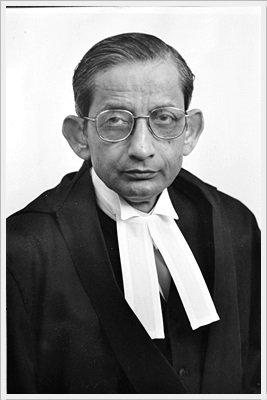
S.B. SINHA, J :
Whether a school leaving certificate purported to have been issued by
the authorities of a primary school would attract the provision of Section 35
of the Indian Evidence Act, 1872 is in question in this appeal which arises
out of a judgment and order dated 23.09.1997 passed by the High Court of
Allahabad in Criminal Appeal No.3368 of whereby and whereunder the
appeal preferred by the appellant from an order dated 29.11.1979 passed by
the Additional Sessions Judge, Bulandshahr in Sessions Trial No. 293 of
1979 was dismissed.
The appellant herein was said to have been born on 01.06.1963. He
was involved in a criminal case relating to the murder of one Chhattrapal
which took place on 15.05.1979. The allegation against the appellant was
that he along with his father Surendra, Satish Chandra, Narendra and Ramji
Lal attacked him with a country-made pistol and knife. The appellant is said
to have been armed with a country-made pistol.
The said deceased while traveling on a cycle was fired at, whereupon
he threw his cycle on the road and rushed towards the shop of one
Chhitariya and entered therein to save his life. The accused persons chased
him, entered into the said shop and killed him by firing from the country-
made pistols and knife. At the trial all the accused persons were convicted of
commission of the said offence and were sentenced to undergo rigorous
imprisonment for life. An appeal preferred by the accused persons including
the appellant herein was dismissed by the High Court by reason of the
impugned judgment.
Before the trial judge in his statement under Section 313 of the Code
of Criminal Procedure a purported statement was made by the appellant
herein that he was aged 16 years whereas the court assessed his age to be 18
years. He indisputably did not claim any benefit of the provisions of the
Uttar Pradesh Children Act, 1951 (for short, 'the Act'), which was
applicable in the case.
Before this Court for the first time, a contention was raised that as the
appellant was a minor on the date of commission of the offence, he was
entitled to the benefit thereof in terms of the provision of Section 2 (4) of the
Act. Whereas special leave petition filed by the other accused persons was
dismissed, notice was directed to be issued in the special leave petition filed
by the appellant herein. On the aforementioned question, parties exchanged
their affidavits. A Division Bench of this Court by an order dated
11.12.1998 through it appropriate to refer the question in regard to his age to
the Sessions Judge, Bulandshahr before whom the parties were directed to
appear on 04.01.1999 to lead both oral and documentary evidences. The
learned Sessions Judge was asked to return his findings to this Court.
The learned Sessions Judge, Bulandshahr pursuant to or in furtherance
http://JUDIS.NIC.IN SUPREME COURT OF INDIA Page 2 of 7
of the said direction allowed the parties to adduce evidence. Relying upon
or on the basis of the school leaving certificate wherein the date of birth of
the appellant was recorded to be 01.06.1963, he was held to be a minor on
the date of occurrence i.e. 15.05.1979. The appellant in his statement
recorded on 26.09.1979 disclosed his age to be 16 years; but the learned
Sessions Judge opined that he appeared to be 18 years of age.
The learned Sessions Judge, however, did not rely upon the other
evidences produced on behalf of the appellant, namely, horoscope and
extract of 'Parivar Register'. He further did not put any reliance on the
testimony of the mother of the appellant.
Mr. P.S. Mishra, the learned Senior Counsel appearing on behalf of
the appellant, submitted that in view of the findings arrived at by the learned
Sessions Judge, Bulandshahr, the appellant was entitled to the benefit of the
provisions of the Act and in that view of the matter no sentence of life
imprisonment could have been imposed upon him.
The Uttar Pradesh Children Act, 1951 was enacted to provide for the
custody, protection, treatment and rehabilitation of children and for the
custody, trial, punishment of youthful offenders, and for the amendment of
the Reformatory Schools Act. 1897 in its application to the State of Uttar
Pradesh. Sub-section (4) of Section 2 defines a "child" to mean a person
under the age of sixteen years. Section 63 of the Act, however, provides that
where a child is charged with an offence together with any other person not
being a child then notwithstanding anything contained in the said Act the
child may be tried together with the adult in accordance with the provisions
of the Code of Criminal Procedure and nothing in the said Act shall require
the child to be tried by a Juvenile Court but the sentence, if any, awarded to
the child shall be in accordance with the provisions of the Act.
Ordinarily a Juvenile Court was required to be established in terms of
the provisions of the said Act as envisaged under Section 60 thereof. In this
case, admittedly, apart from the appellant herein all other accused persons
were adults. A joint trial was held in terms of the provisions of the Code of
Criminal Procedure. At no point of time any exception thereto was taken by
or on behalf of the appellant. Before us no contention has been raised that
the trial was illegal.
The only question which has been raised and arises for consideration
is as to whether having regard to the provision of Section 27 of the Act, the
sentence awarded against the appellant herein was illegal.
For the purpose of determining the aforementioned question, we may
notice a few provisions of the said Act.
Section 27 of the Act reads as under :
"Sentence that may not be passed on child.- Notwithstanding
anything to the contrary contained in any law, no Court shall
sentence a child to death or transportation or imprisonment for
any term or commit him to prison in default of payment of fine
:
Provided that a child who is twelve years of age or
upwards may be committed to prison when the Court certifies
that he is of so unruly, or of so depraved a character that he is
not fit to be sent to an approved school and that none of the
other methods in which the case may legally be dealt with is
suitable."
Section 30 of the Act, however, empowers the Court to discharge
youthful offender or to commit him to suitable custody. Section 31 provides
for payment of fine by the parents of the child. Section 32 provides for
http://JUDIS.NIC.IN SUPREME COURT OF INDIA Page 3 of 7
detention in case of certain crimes by children, which reads as under :
"Detention in case of certain crimes by children.-(1) When a
child is found to have committed an offence of so serious a
nature that the Court is of opinion that no punishment which
under the provisions of this Act it is authorized to inflict is
sufficient, the Court shall order the offender to be kept in safe
custody in such place or manner as it thinks fit and shall report
the case for the orders of the State Government.
(2) Notwithstanding the provisions of Section 13 the
State Government may order any such child to be detained in
such place and on such conditions as it thinks fit, and while so
detained the child shall be deemed to be in legal custody :
Provided that no period of detention so ordered shall
exceed the maximum period of imprisonment to which the child
could have been sentenced for the offence committed."
We have noticed hereinbefore that the learned Sessions Judge,
Bulandshahr in his report dated 17.02.1999 did not rely upon any evidence
other than the school leaving certificate. He not only disbelieved the
statement of the mother of the appellant but also did not place any reliance
upon the other documentary evidences adduced on behalf of the appellant,
namely, the horoscope and the 'Parivar Register'. No exception having
been taken to by the parties we accept the said part of the report. We are,
thus, required only to consider as to whether the School Leaving Certificate
is reliable.
The purported school leaving certificate was sought to be proved by
Chandra Pal Singh, Head Master of the Primary Pathshala, Hajratpur. In
his cross-examination, he categorically stated that the date of birth of the
appellant might have been disclosed by the appellant at the time of
admission. He did not have any personal knowledge with regard thereto.
No enquiry was made as regards the age of the appellant while he was
admitted in the institution. He accepted that it was quite possible that the
age disclosed by the guardian may be more or less.
The school leaving certificate was said to have been issued in the year
1998. A bare perusal of the said certificate would show that the appellant
was said to have been admitted on 01.08.1967 and his name was struck off
from the roll of the institution on 06.05.1972. The said school leaving
certificate was not issued in ordinary course of business of the school There
is nothing on record to show that the said date of birth was recorded in a
register maintained by the school in terms of the requirements of law as
contained in Section 35 of the Indian Evidence Act. No statement has
further been made by the said Head Master that either of the parents of the
appellant who accompanied him to the school at the time of his admission
therein made any statement or submitted any proof in regard thereto. The
entries made in the school leaving certificate, evidently had been prepared
for the purpose of the case. All the necessary columns were filled up
including the character of the appellant. It was not the case of the said Head
Master that before he had made entries in the register, age was verified. If
any register in regular course of business was maintained in the school;
there was no reason as to why the same had not been produced.
In the counter affidavit filed on behalf of the State, it has categorically
been stated that the appellant had been a history sheeter; as many as 34 cases
for commission of heinous crimes have been filed against him, which
included cases under Sections 302, 392, 395 and 364 of the Indian Penal
Code; a large number of cases under the U.P. Goonda Act; and Section 25
and 27 of the Arms Act. One case was filed against him under Section 302
as early as in 1973 and the last case which had been filed against him was in
1996 under Section 395/364-A of the Indian Penal Code. It is, therefore,
http://JUDIS.NIC.IN SUPREME COURT OF INDIA Page 4 of 7
unlikely that the appellant was not aware of his legal right.
The school leaving certificate was not an original one. It was merely
a second copy. Although it was said to have been issued in July 1972, the
date of issuance of the said certificate has not been mentioned. The copy
was said to have been signed by the Head Master on 30.04.1998. It was
accepted before the learned Additional Sessions Judge, Bulandshahr on
27.01.1999. The Head Master has also not that the copy given by him was a
true copy of the original certificate. He did not produce the admission
register.
There cannot, however, be any doubt whatsoever that the certificate
was issued for the purpose of the case. The father of the appellant was also
an accused. He was described as 'Surender Pal Singh'. The appellant had
also been described as 'Ravinder Pal Singh S/o Surender Pal Singh'. Before
us, the father's name has been described as 'Surender Singh', the
appellant's name has been shown as 'Ravinder Singh Gorkhi'; whereas the
name of the student in the school leaving certificate has been shown as
'Ravinder Pal Singh'.
Determination of the date of birth of a person before a court of law,
whether in a civil proceeding or a criminal proceeding, would depend upon
the facts and circumstances of each case. Such a date of birth has to be
determined on the basis of the materials on records. It will be a matter of
appreciation of evidence adduced by the parties. Different standards having
regard to the provision of Section 35 of the Evidence Act cannot be applied
in a civil case or a criminal case.
Mr. Mishra, however, would urge that while in a civil dispute a strict
proof may be necessary, in a criminal case and particularly in the case of a
juvenile, the court may consider any evidence which may be brought on
records by the parties. We do not agree.
Section 35 of the Evidence Act would be attracted both in civil and
criminal proceedings. The Evidence Act does not make any distinction
between a civil proceeding and a criminal proceeding. Unless specifically
provided for, in terms of Section 35 of the Evidence Act, the register
maintained in ordinary course of business by a public servant in the
discharge of his official duty, or by any other person in performance of a
duty specially enjoined by the law of the country in which, inter alia, such
register is kept would be a relevant fact. Section 35, thus, requires the
following conditions to be fulfilled before a document is held to be
admissible thereunder : (i) it should be in the nature of the entry in any
public or official register;; (ii) it must state a fact in issue or relevant fact;
(iii) entry must be made either by a public servant in the discharge of his
official duty, or by any person in performance of a duty specially enjoined
by the law of the country; and (iv) all persons concerned indisputably must
have an access thereto.
A question was raised as to whether the determination of the age of a
child should be made on the basis of the date on which the occurrence took
place or when, he was produced before the court. The said question came up
for consideration in the context of the provisions of the Juvenile Justice Act,
2000 before a Constitution Bench in Pratap Singh v. State of Jharkahand and
Anr [(2005) 3 SCC 551]. It was held that the date of commission of the
offence would be the relevant date.
In terms of the aforementioned decision of the Constitution Bench
such determination is required to be made even if at the relevant time, the
juvenile crossed the age of eighteen years. In absence of any other statute
operating in the field, Section 35 will have application and the court, while
determining such age would depend upon the materials brought on records
by the parties which would be admissible in evidence in terms of Section 35
of the Act.
http://JUDIS.NIC.IN SUPREME COURT OF INDIA Page 5 of 7
In Birad Mal Singhvi v. Anand Purohit [(1988 Supp. SCC 604], this
Court held:
"To render a document admissible under Section 35, three
conditions must be satisfied, firstly, entry that is relied on must
be one in a public or other official book, register or record;
secondly, it must be an entry stating a fact in issue or relevant
fact; and thirdly, it must be made by a public servant in
discharge of his official duty, or any other person in
performance of a duty specially enjoined by law. An entry
relating to date of birth made in the school register is relevant
and admissible under Section 35 of the Act but the entry
regarding the age of a person in a school register is of not much
evidentiary value to prove the age of the person in the absence
of the material on which the age was recorded."
(emphasis supplied)
In Sushil Kumar v. Rakesh Kumar [(2003) 8 SCC 673], this Court as
regards determination of age of a candidate in terms of Section 36(2) of the
Representation of the People Act, 1951 observed :
"32. The age of a person in an election petition has to be
determined not only on the basis of the materials placed on
record but also upon taking into consideration the
circumstances attending thereto. The initial burden to prove the
allegations made in the election petition although was upon the
election petitioner but for proving the facts which were within
the special knowledge of the respondent, the burden was upon
him in terms of Section 106 of the Evidence Act. It is also trite
that when both parties have adduced evidence, the question of
the onus of proof becomes academic [see Union of India v.
Sugauli Sugar Works (P) Ltd. and Cox and Kings (Agents) Ltd.
v. Workmen. Furthermore, an admission on the part of a party
to the lis shall be binding on him and in any event a
presumption must be made that the same is taken to be
established."
This Court therein followed, inter alia, Birad Mal Singhvi (supra) and
several other decisions.
In Updesh Kumar and Others v. Prithvi Singh and Others [(2001) 2
SCC 524], this Court having regard to the overwhelming evidence came to
the opinion that the Respondent No. 1 had attained the age of 21 years as on
the date of his application for the allotment of the retail outlet. In that case
also reliance was placed on the matriculation certificate holding that the
correction of the date of the birth in the certificate was an official act and the
must be presumed to have been done in accordance with law.
We, however, notice that in Ramdeo Chauhan alias Raj Nath v. State
of Assam [(2001) 5 SCC 714], as regard applicability of the provision of
Section 35 of the Indian Evidence Act, 1872 vis-`-vis a school register, it
was stated :
"19. It is not disputed that the register of admission of
students relied upon by the defence is not maintained under any
statutory requirement. The author of the register has also not
been examined. The register is not paged (sic) at all. Column 12
of the register deals with "age at the time of admission". Entries
1 to 45 mention the age of the students in terms of years,
months and days. Entry 1 is dated 25-1-1988 whereas Entry 45
is dated 31-3-1989. Thereafter except for Entry 45, the page is
totally blank and fresh entries are made w.e.f. 5-1-1990,
apparently by one person up to Entry 32. All entries are dated
5-1-1990. The other entries made on various dates appear to
have been made by one person though in different inks. Entries
for the years 1990 are up to Entry 64 whereafter entries of 1991
http://JUDIS.NIC.IN SUPREME COURT OF INDIA Page 6 of 7
are made again apparently by the same person. Entry 36 relates
to Rajnath Chauhan, son of Firato Chauhan. In all the entries
except Entry 32, after 5-1-1990 in column 12 instead of age
some date is mentioned which, according to the defence is the
date of birth of the student concerned. In Entry 32 the age of the
student concerned has been recorded. In column 12 again in the
entries with effect from 9-1-1992, the age of the students are
mentioned and not their dates of birth. The manner in which the
register has been maintained does not inspire confidence of the
Court to put any reliance on it. Learned defence counsel has
also not referred to any provision of law for accepting its
authenticity in terms of Section 35 of the Evidence Act. The
entries made in such a register cannot be taken as a proof of age
of the accused for any purpose."
We are, however, not oblivious of a decision of this Court in Bhola
Bhagat v. State of Bihar [(1997) 8 SCC 720], wherein an obligation has been
cast on the court that where such a plea is raised having regard to the
beneficial nature of the socially-oriented legislation, such a plea should be
examined with great care. We are, however, of the opinion that the same
would not mean that a person who is not entitled to the said benefit would be
dealt with leniently only because such a plea is raised. Each plea must be
judged on its own merit. Each case has to be considered on the basis of the
materials brought on records.
The aforementioned decisions have been noticed by this Court in
Zakarius Lakra and Others v. Union of India and Another [(2005) 3 SCC
161], wherein a Bench of this Court while entertaining an application under
Article 32 of the Constitution of India opined that although the same was not
maintainable, but having regard to the decision of this Court in Rupa Ashok
Hurra v. Ashok Hurra [(2002) 4 SCC 388], the review petition should be
allowed to be converted into curative petition. [See also Raj Singh v. State
of Haryana \026 (2000) 6 SCC 759].
We are, however, not concerned in this case with such a situation.
The deposition of the Head Master of the school in this case did not
satisfy the requirements of the law laid down in the aforementioned
decisions.
Mr. Mishra, however, relied upon Umesh Chandra v. State of
Rajasthan [(1982) 2 SCC 202]. Therein a register maintained by a public
school of repute had been produced. This Court relied thereupon, opining
that Section 35 cannot be read with Sections 73 and 74 of the Evidence Act.
If a public school maintains a register in ordinary course of business, the
same would be admissible in evidence.
We have not been shown as to whether any register was required to
be maintained under any statute. We have further not been shown as to
whether any register was maintained in the school at all. The original
register has not been produced. The authenticity of the said register, if
produced, could have been looked into. No person had been examined to
prove as to who had made entries in the register. The school leaving
certificate which was not issued by a person who was in the school at the
time when the appellant was admitted therein, cannot be relied upon.
Reliance has also been placed by Mr, Mishra on Bhoop Ram v. State
of U.P. [(1989) 3 SCC 1], wherein the appellant was treated to be a child
within the meaning of Section 2(4) of the Act; upon taking into
consideration three factors : (i) that the appellant had produced a school
certificate and correctness whereof was not questioned; (ii) the learned trial
Judge thought it fit to award the lesser sentence of imprisonment for life
instead of capital punishment when he pronounced the judgment on
http://JUDIS.NIC.IN SUPREME COURT OF INDIA Page 7 of 7
19.09.1977 on the ground that the appellant was 17 years of age which gave
credence to the appellant's case that he was less than 16 years of age on
03.10.1975 when the offences were committed; and (iii) although he was
medically examined, for determination of age, the doctor based his opinion
only on an estimate and possibility of an error of creeping into the said
opinion could not be ruled out. This Court, therefore, took into consideration
more than one factors in accepting the plea of the appellant therein that he
was minor on the date of commission of the offence.
We have noticed hereinbefore that in this case the learned Sessions
Judge had discarded all other evidences which have been adduced on behalf
of the appellant in support of his contention that he was minor on the date of
commission of the offence. Entry of a date of birth in the school records is
merely a piece of evidence. Having regard to the experience of the court, in
Birad Mal Singhvi (supra), it was opined that the same should be authentic
in nature.
The age of a person as recorded in the school register or otherwise
may be used for various purposes; namely, for obtaining admission; for
obtaining an appointment; for contesting election; registration of marriage;
obtaining a separate unit under the ceiling laws; and even for the purpose of
litigating before a civil forum, e.g. necessity of being represented in a court
of law by a guardian or where a suit is filed on the ground that the plaintiff
being a minor he was not appropriately represented therein or any
transaction made on his behalf was void as he was minor. A court of law for
the purpose of determining the age of a party to the lis, having regard to the
provisions of Section 35 of the Evidence Act will have to apply the same
standard. No different standard can be applied in case of an accused as in a
case of abduction or rape, or similar offence where the victim or the
prosecutrix although might have consented with the accused, if on the basis
of the entries made in the register maintained by the school, a judgment of
conviction is recorded, the accused would be deprived of his constitutional
right under Article 21 of the Constitution, as in that case the accused may
unjustly be convicted.
We are, therefore, of the opinion that that until the age of a person is
required to be determined in a manner laid down under a statute, different
standard of proof should not be adopted. It is no doubt true that the court
must strike a balance. In case of a dispute, the court may appreciate the
evidence having regard to the facts and circumstance of the case. It would
be a duty of the court of law to accord the benefit to a juvenile, provided he
is one. To give the same benefit to a person who in fact is not a juvenile
may cause injustice to the victim. In this case, the appellant had never been
serious in projecting his plea that he on the date of commission of offence
was a minor. He made such statement for the first time while he was
examined under Section 313 of the Code of Criminal Procedure.
The family background of the appellant is also a relevant fact. His
father was a 'Pradhan' of the village. He was found to be in possession of
an unlicensed firearm. He was all along represented by a lawyer. The court
estimated his age to be 18 years. He was tried jointly with the other accused.
He had been treated alike with the other accused. On merit of the matter
also the appellant stands on the same footing as other accused.. The
prosecution has proved its case. In fact no such plea could be raised as the
special leave petition of the persons similarly situated was dismissed when
the court issued notice having regard to the contention raised by him for the
first time that he was minor on the date of occurrence.
Having regard to the peculiar facts and circumstances of this case, we
do not accept the report of the learned Sessions Judge.
For the reasons aforementioned, we do not find any merit in this
appeal which is dismissed accordingly.

 Login with google
Legal Notes
Add a Note....